About
I am Lluciocc, a French computer science student and open-source developer focused on building polished, useful software from product idea to release. My work spans desktop engineering, full-stack development, developer tooling, multimedia systems, and low-level experimentation, with a strong preference for local-first applications and thoughtful user experiences.
I build primarily with Python, C, C#, TypeScript, GTK, Qt, React, Node.js, .NET, GStreamer, and SQLite. Beyond implementation, I care about architecture, packaging, cross-platform delivery, CI, accessibility, documentation, and the small product decisions that make software enjoyable to use every day.
My AI/ML experience includes applied deep-learning exploration and an internship at Digiactivity, while projects such as Groovia let me explore signal analysis, metadata enrichment, ranking, and algorithmic automation in a real product context.
Open To
- Open-source collaboration on Linux, GNOME, developer tooling, and systems projects
- Software engineering and applied AI/ML learning opportunities
- Product-focused projects that combine engineering, design, and practical impact
- Contributions involving desktop applications, multimedia, automation, or developer experience
Tech Stack
Featured Projects
⭐ Vish — Visual Bash EditorA graphical, node-based editor that makes Bash scripting more visual and approachable while preserving the power of real shell workflows.
| Area | Details |
|---|---|
| Stack | Python, GTK, Bash, PTY integration, Flatpak |
| Scale | Node editor, command palette, projects, themes, execution environment, undo/redo, and extension utilities |
| Performance | Direct shell execution with responsive visual editing and project-oriented state management |
| Security | Explicit script execution, local project storage, and sandbox-aware desktop distribution |
| Impact | Turns Bash composition into an accessible visual workflow for learners and experienced users |
| Repository | github.com/Lluciocc/Vish |
Vish brings together language tooling, visual programming, terminal integration, desktop UX, packaging, and an extensible ecosystem of themes and utilities.
BoredOS — Operating System EngineeringA collaborative hobby operating system project used to explore native UI, low-level development, tooling, and operating-system architecture.
| Area | Details |
|---|---|
| Stack | C, Assembly, cross-GCC, Limine, QEMU, native UI toolkit |
| Scale | Kernel and userspace experimentation, native applications, build tooling, and a file-manager implementation |
| Performance | Native compiled code, direct platform integration, and low-overhead UI components |
| Security | Explicit contribution policy, documented security expectations, and review-oriented development practices |
| Impact | Delivered a native file-manager experience while building practical knowledge of OS internals |
| Repository | github.com/BoredOS/BoredOS |
My work around BoredOS includes a native file manager, windowing and menu behavior, split views, previews, documentation, and the engineering discipline required by a shared low-level codebase.
Groovia — Modern Local Music PlayerA modern, album-first music player designed around a polished local library, animated playback experience, lyrics, playlists, artist discovery, and an experimental Auto DJ system.
| Area | Details |
|---|---|
| Stack | Python, GTK 4, Libadwaita, GStreamer, SQLite, Meson |
| Scale | Complete desktop product with library scanning, playback, playlists, metadata, lyrics, packaging, and multi-platform work |
| Performance | Local database, cached metadata, background library operations, and performance-aware optional audio analysis |
| Security | Local-first data model, scoped filesystem access, Flatpak sandboxing, and minimal external-service usage |
| Impact | Combines a GNOME-native experience with an ambitious Auto DJ workflow for everyday local music listening |
| Repository | github.com/Lluciocc/groovia |
Groovia is an end-to-end product engineering project: interface design, audio pipelines, persistence, third-party metadata, Linux integration, Windows and experimental macOS packaging, CI, documentation, and community feedback all shape the application.
Shapebound — GNOME Polyomino PuzzleA native GNOME puzzle game built around placing, rotating, and flipping polyomino pieces across handcrafted and procedurally generated challenges.
| Area | Details |
|---|---|
| Stack | Python, GTK 4, Libadwaita, backtracking algorithms, Flatpak |
| Scale | Campaign levels, procedural generation, solver, seed support, undo/redo, and keyboard controls |
| Performance | Constraint-aware backtracking and validation designed for responsive puzzle generation and solving |
| Security | Offline-first gameplay with no required account, telemetry, or remote data processing |
| Impact | Packages algorithmic problem-solving in an accessible, native desktop game experience |
| Repository | github.com/Lluciocc/Shapebound |
Shapebound combines application architecture with search algorithms, deterministic generation, interaction design, accessibility, and GNOME platform conventions.
Connex — Linux Network ManagerA Linux networking application that provides both graphical and command-line workflows for managing Wi-Fi and common network operations.
| Area | Details |
|---|---|
| Stack | Python, GTK 3, NetworkManager, nmcli, Linux |
| Scale | GUI and CLI workflows for Wi-Fi, VPN, proxy, QR sharing, Bluetooth, and network diagnostics |
| Performance | Native system-tool integration and asynchronous handling for network operations |
| Security | Delegates privileged network changes to established Linux system services and avoids duplicating credential storage |
| Impact | Brings frequently used Linux networking operations into one approachable interface |
| Repository | github.com/Lluciocc/connex |
Connex demonstrates system integration across desktop UI, command-line tooling, subprocess management, network state, and distribution packaging.
Experience
Applied AI / Deep Learning Intern — Digiactivity
2025
Practical introduction to applied deep-learning workflows in a professional development environment.
- Explored the lifecycle of data-driven and deep-learning solutions
- Connected experimentation with concrete software-engineering constraints
- Strengthened Python, data-processing, and technical problem-solving skills
Unity Development Experience — Studio XP
2022 — 2024
Multi-year practical experience building interactive projects and strengthening production-oriented Unity development skills.
- Developed interactive functionality with C# and Unity
- Practiced iterative implementation, debugging, and project organization
- Built experience translating design goals into working software
Programming & Developer Tools Experience — Geekschool
2021 — 2022
Early professional exposure to software development through web, Python, Java plugin, and developer-workflow projects.
- Built programming foundations across several languages and environments
- Created tools aimed at automating and improving developer workflows
- Practiced collaborative problem-solving and delivery
IT Discovery Internship — 2S-IT, Luxembourg
Professional discovery experience focused on information technology and real-world engineering environments.
- Observed professional IT workflows and infrastructure practices
- Developed a broader understanding of software and systems careers
- Strengthened autonomy, curiosity, and technical communication
Achievements
| Recognition | Details |
|---|---|
| Open-Source Product Engineering | Designed, built, packaged, and maintained multiple complete Linux desktop applications |
| Cross-Platform Delivery | Extended desktop projects across Linux, Windows, and experimental Apple Silicon packaging workflows |
| Native OS Development | Delivered substantial native file-manager work while learning C, Assembly, toolchains, and OS internals |
| Developer Tooling | Built visual scripting, automation, Unity tooling, and workflow-focused open-source projects |
| Community-Driven Iteration | Regularly turns issue reports, design critique, and testing feedback into product improvements |
Certifications
No third-party certifications are publicly listed. Current work is demonstrated through shipped open-source projects, technical internships, and hands-on engineering.
GitHub Analytics
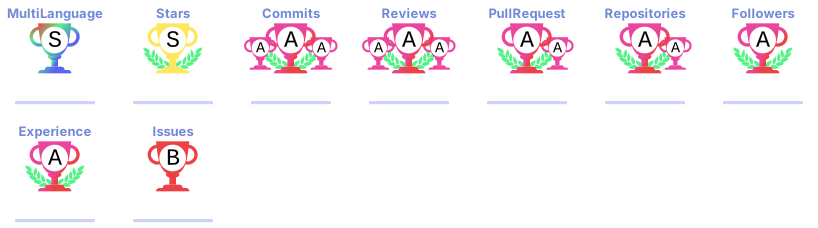
GitHub Trophies
Contribution Activity

Contribution Snake

Connect