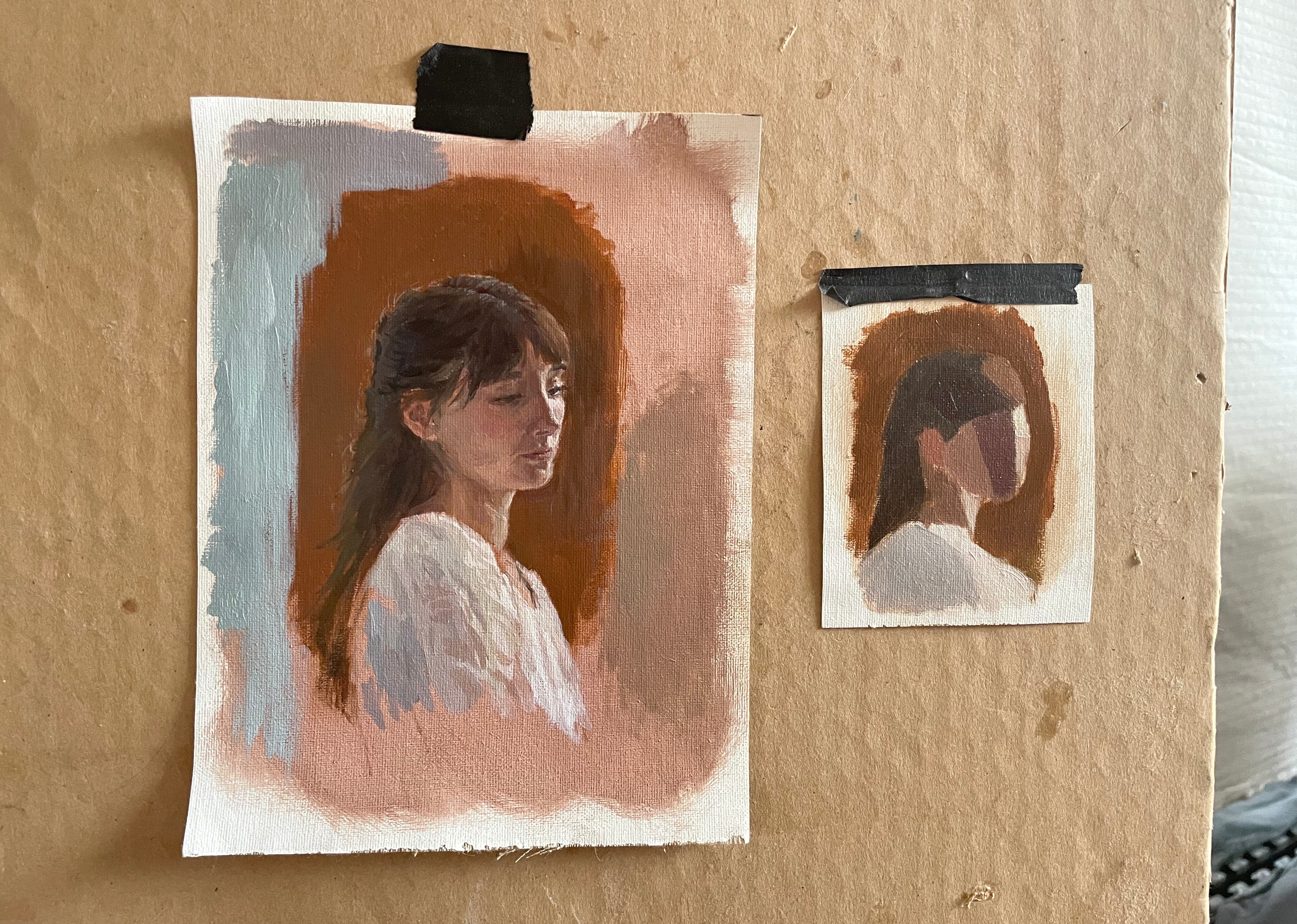
When I was twelve, I spent an entire summer at my aunt’s house. My only sources of entertainment were Bejeweled Blitz and Facebook Messenger, and the only kids around were my cousin and sister, aged two and six, so I was quite understandably bored out of my mind. This was probably the reason that I spontaneously started drawing fruit.
The first subject I attempted was a banana in a water glass. It came out more banana-looking than I expected, and I was so pleased with this that I drew every fruit and vegetable in the house over the next few weeks: apples, carrots, onions, a head of lettuce, and so on. Eventually, I decided to branch out—I was so good at bananas that surely this new game of “copying real life” was a breeze. Why not draw my own face?
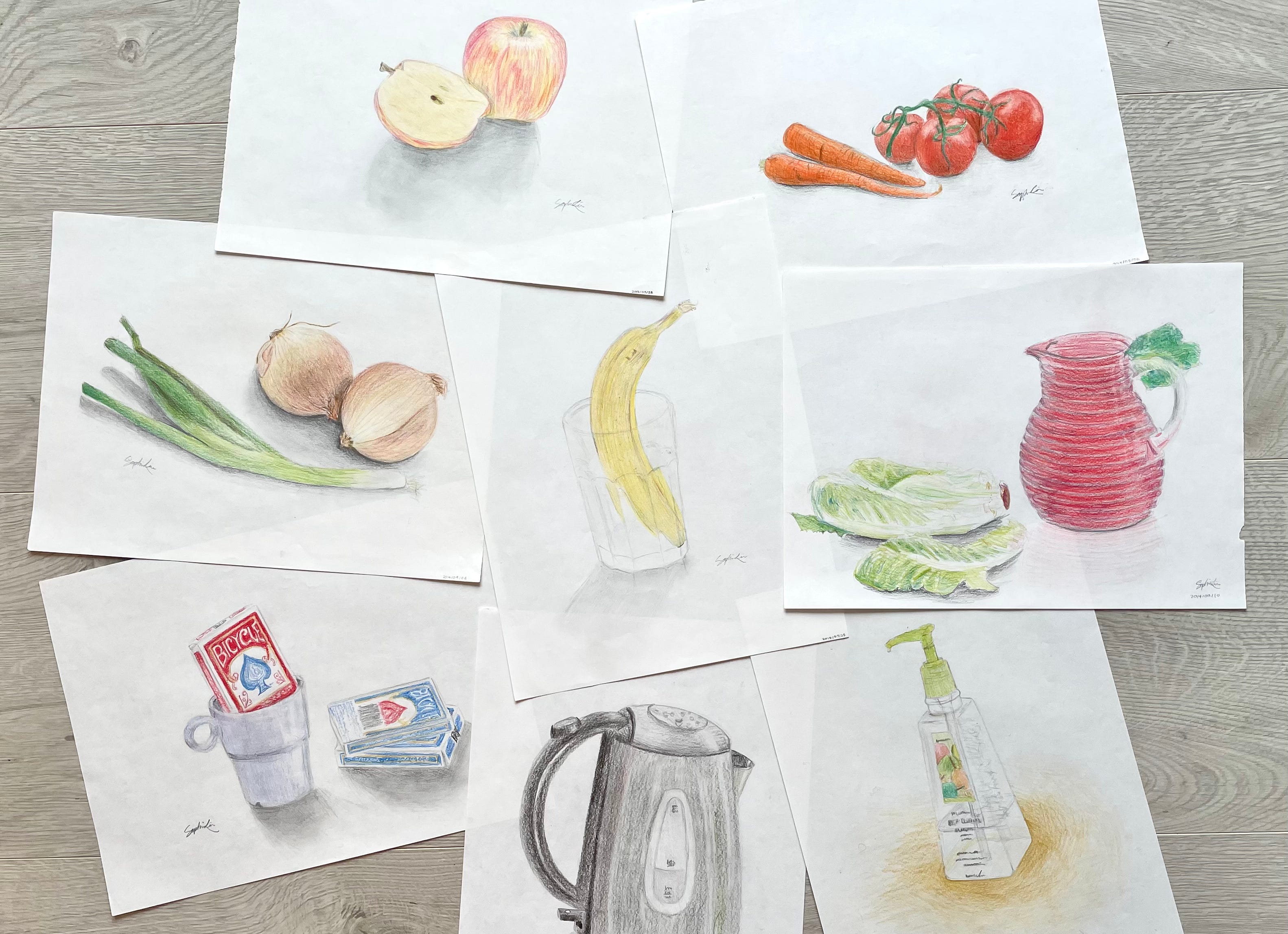
Up until now, I had largely gotten away with drawing things the way I thought they “should” look. A tomato was a shiny red sphere, with a star-shaped top and a stem. But trying to draw my face in the way I understood a face—as composed of two eyes, a nose, a mouth, and some hair—was a horrid disaster. Something had gone appallingly wrong in the process, and I couldn’t see any hint of “me” when I looked at it. I buried my self-portrait attempt under a growing pile of vegetable portraits, and eventually threw it away.
In the fall, I started attending a new school across town. On the half-hour bus ride every morning, I would download reference pictures of random models onto my tiny phone and obsessively try to copy them into my sketchbook. This felt like repeatedly throwing myself against the wall of my own inability. But eventually, I started to see discrepancies I couldn’t see before: every face had its own shape, and every shape created a different playground for light, and I could only perceive these things if I concentrated for long enough that I forgot what I was supposed to be drawing.
In other words, I learned that you could get better at drawing people if you pretended they were bananas. Or better yet, no particular thing at all.
Are you drawing what you see or what you know?
— Timothy Stotz
Betty Edwards, whose method claims to be able to teach even the most incapable layman how to draw in five days, is one of many great resources that is probably more effective than throwing yourself at a wall. She teaches portraiture in a bottom-up fashion: her students learn to draw edges, then shapes, then relative size and shape, then light and shadow, then finally the whole, which should actually just emerge as a result of handling the first four correctly.
I think most untrained people who try to draw a face are approaching it in the opposite direction. They begin: “Now I will draw an eye”. Then they fill in the things that “an eye” should have — an almond shape, an iris, a pupil, a tear duct, eyelashes, and so on… The result is cartoonish, even alien, paradoxically. The true shape of the eye only emerges when you can trick yourself into forgetting what it is, and treat it as purely a collection of shapes and shadows.
“You can’t take the eye of one beautiful woman and put it in the face of another… it belongs to her and to nobody else.”
— Timothy Stotz
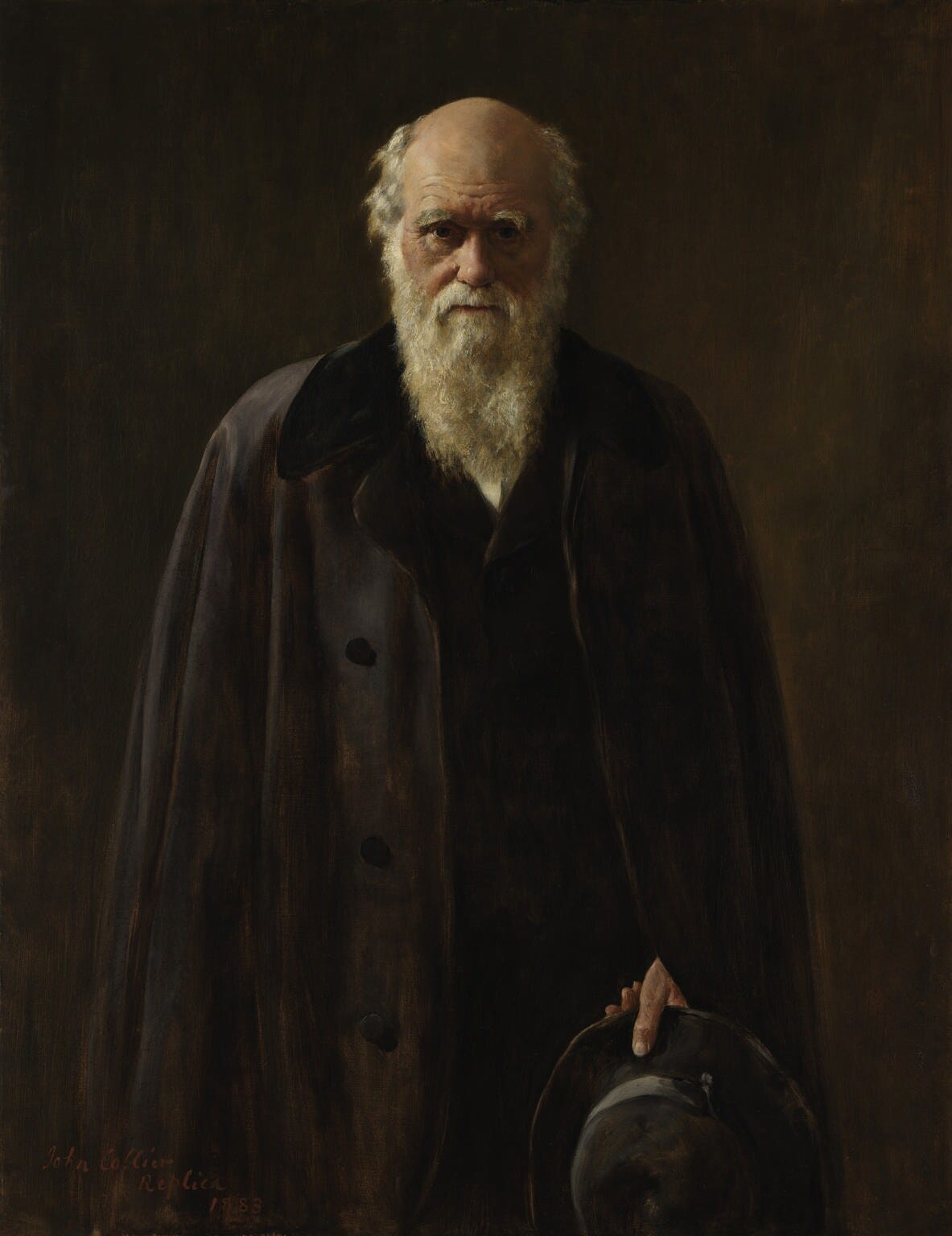
The National Portrait Gallery in London is such an inspiring place to visit because it’s a collection that feels so dense with stories. There’s a life-size bust of Florence Nightingale, who revolutionized nursing. There’s a portrait of Charles Darwin, which made me viscerally feel that he was a Real Guy outside of words in a textbook. I doubt I’d have felt so awed if the rooms were instead filled with pictures of fruit.
These portraits are compelling not because they look the way a person is “supposed” to look — sure, they’ve got eyes and a nose and a mouth, but nobody is copy-pasting those all over a wall and calling it the National Portrait Gallery. The portraits are special precisely because the features are the opposite of the platonic ideal: they’re imperfect in a very specific way, and because of this specificity, they belong to that human and to nobody else. There is no other face that has lived the story of their life.
There is something about knowing the story of someone’s life that makes them very sympathetic characters. For a long time I was gripped by Arthur Aron’s 36 Questions to Fall in Love, a series of progressively intimate questions that made strangers feel close to each other, and in one case, even get married.
Last summer, I attended a portrait intensive at Studio Escalier in Paris. When I spent five hours a day staring intently into the face of a live model, trying to transcribe her, I felt more of the same intimate vertigo that I did when I tried the 36 questions — like meditating with jhanas, which guide you to euphoric states by looping on the sensation of joy, it felt like the longer I stared at the model, the more captivated I was by the details of her particular face. In a way, this was helped by trying to be nonverbal about what I saw — the curve of her eyelid was just as exquisitely particular as the turn across her lower cheek, for which I had no name.1
I started fantasizing about flying home and asking my close friends, my relatives, everyone I cared about, to give me the gift of staring into space for a few hours straight.2 I wanted to capture the story of their face in time, as a gesture of love in both the process and the product.
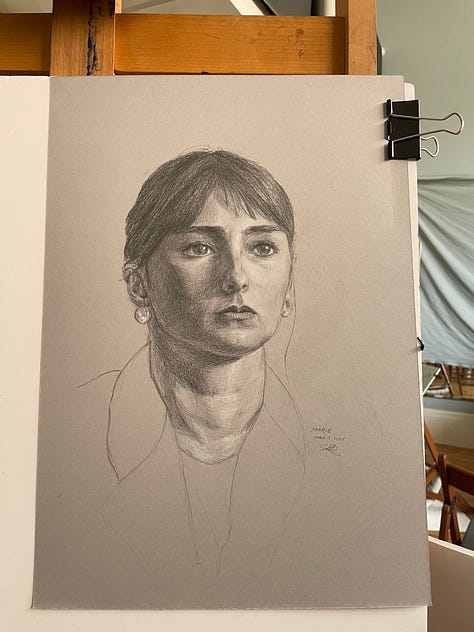
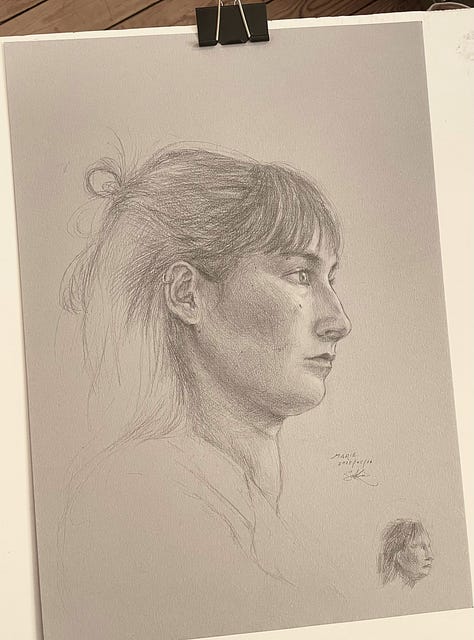
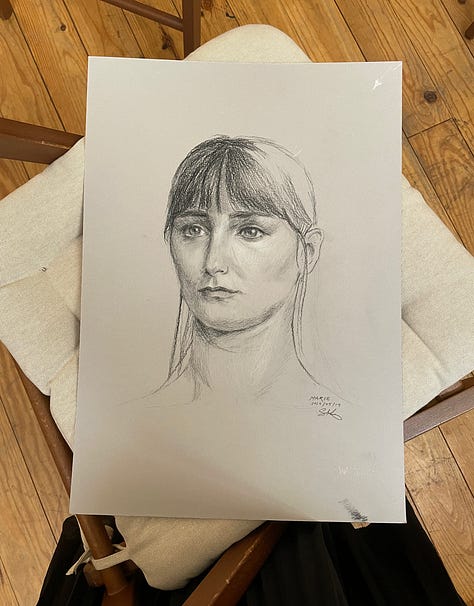
My point is, if you look hard enough, and do away with your preconceptions, you’ll see more than you thought there was. If you see for long enough, you’ll understand more. And the more you understand something, the easier it is to love. It all feels a bit silly in the end, like you can boil everything down to fundamental concepts that all equate to each other, that seeing is knowing is truth is beauty is meditation is love is art.
And yet none of it means anything until you feel it, until you try it, until you stare at her nose for long enough and forget it’s a nose and fall in love with the slant and the curve, and then fall in love again with how it is still, in fact, a nose, and it so surely belongs to her, just as she belongs to the world, and so do you.
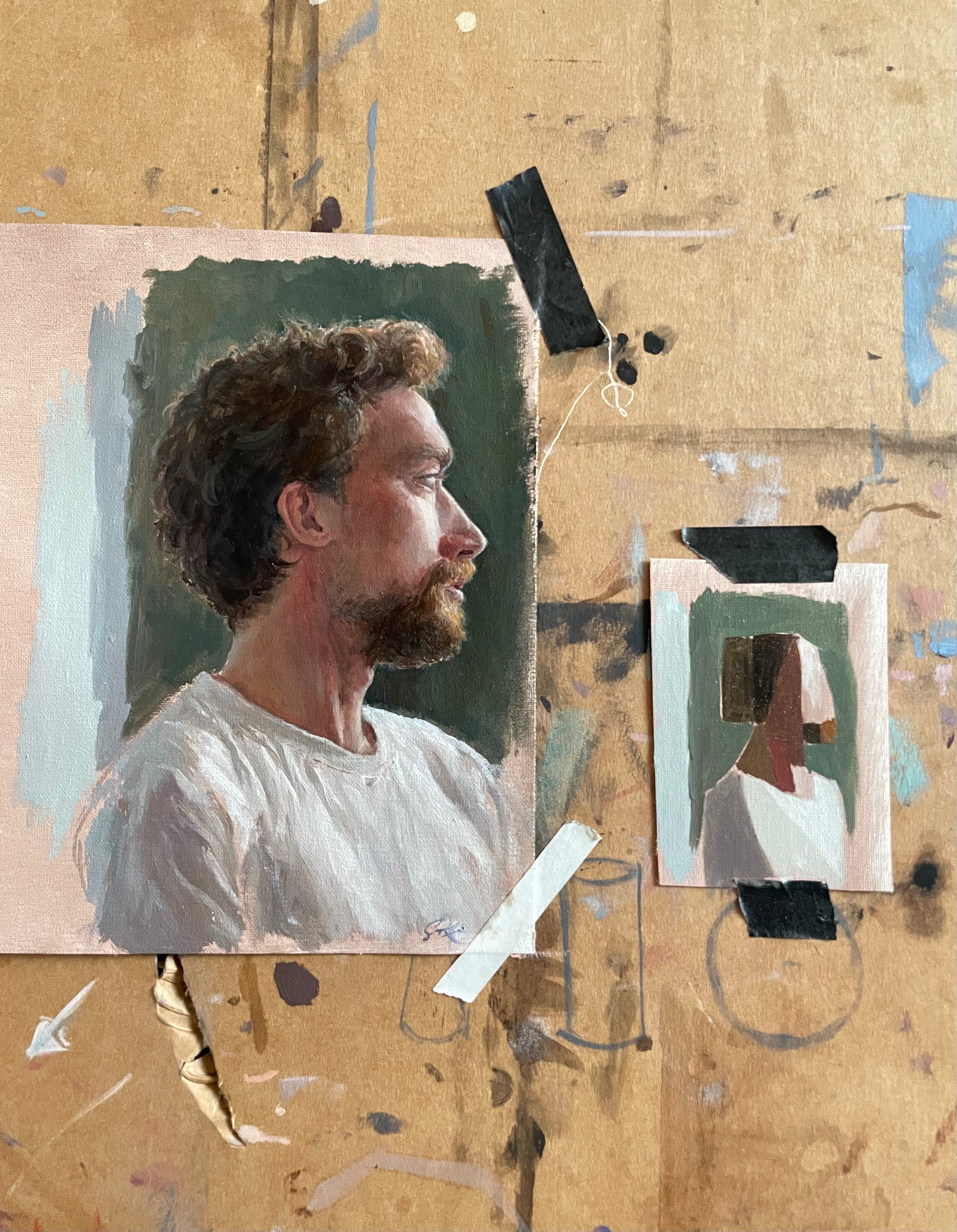
thank you to Grace for being my Paris partner in crime, and to Tim and Michelle for being amazing teachers
Helpfully, I know very little anatomy.
We were not actually this mean. The models got a 5-minute break every 25 minutes, with a long break after three sittings.
No posts