My favorite Instagram page over the past few months has been 123rollenbaan.nl, which appears to be the marketing account of a Dutch conveyor belt company.
Each of their videos demonstrates a different type of machine. A box travels across the conveyor belt and falls off the side, as European electronic music plays in the background. It’s simple and beautiful, and it’s clearly resonating with other people as well—as I write this, the account is about to pass 100,000 followers.

I think part of the appeal is that the account is upfront about what it is. The 123rollenbaan website is clearly advertised at the bottom of each video, and the captions get to the point: “beltconveyor for sale.” “beltconveyor in action.” The link in the bio actually sells conveyor belts.
What you see is what you get, which is so rarely the case nowadays. Digital marketing has gotten to the point where interesting videos often turn into advertisements halfway through, and it’s become exhausting having to constantly parse who is and isn’t trying to profit off you.
I also think it’s important that the account is foreign. It’s uncomfortable to be an American right now, and the Dutch hashtags feel like a refuge from everything that’s happening back home. Same with the unsophisticated editing style and the 2010s Avicii remixes, which elicit a nostalgic yearning for a simpler time. Perhaps this is the European equivalent to the “you met me at a very Chinese time in my life” memes. Both reject American norms in favor of a different cultural tradition.
But the real appeal is the absurdity. I shouldn’t be the target demographic for these videos. I’m not a conveyor belt consumer, and yet the algorithm recommended them to me anyway. 123rollenbaan is literal proof that Instagram is incorrect about me as a person. For all their sophisticated user classification technology, something somewhere got incorrectly represented and now I’m getting Dutch industrial advertisements.
It’s usually so hard to identify when the algorithm is wrong, because it’s too easy to fall into the trap of thinking that the “For You Page” is really “for you.” And yet little things get caught in the cracks. A Chinese glycine manufacturer goes viral on TikTok. A local public library gets hundreds of thousands of views for its public service announcements. These videos are funny because they’re not meant for you. They are evidence of a misalignment between the self and the “algorithmic self,” that shadow-construction of your identity existing in a social media computer server.
But the map always bleeds into the territory, and your algorithmic self inevitably affects your actual self. Even if I wasn’t the initial audience for 123rollenbaan, I’ve really begun to enjoy their videos and look forward to seeing them when I open Instagram. An entire community has sprung up in their comments section, always brimming with positivity: “I love this account!” “this is so peak.” Then we all parasocially nerd out when the account posts a Christmas message or accedes to fan demands for a POV video.
Over time, in the same way that guys get really into trains or automobiles, I’ve felt myself develop a genuine fascination with the different types of conveyor belts. They come in spirals and short semi-circles. They have different inclines and treads and heights. More than once, I’ve found myself longingly staring at different products on the 123rollenbaan website, wondering how the aangedreven rollenbanen would look in my living room.
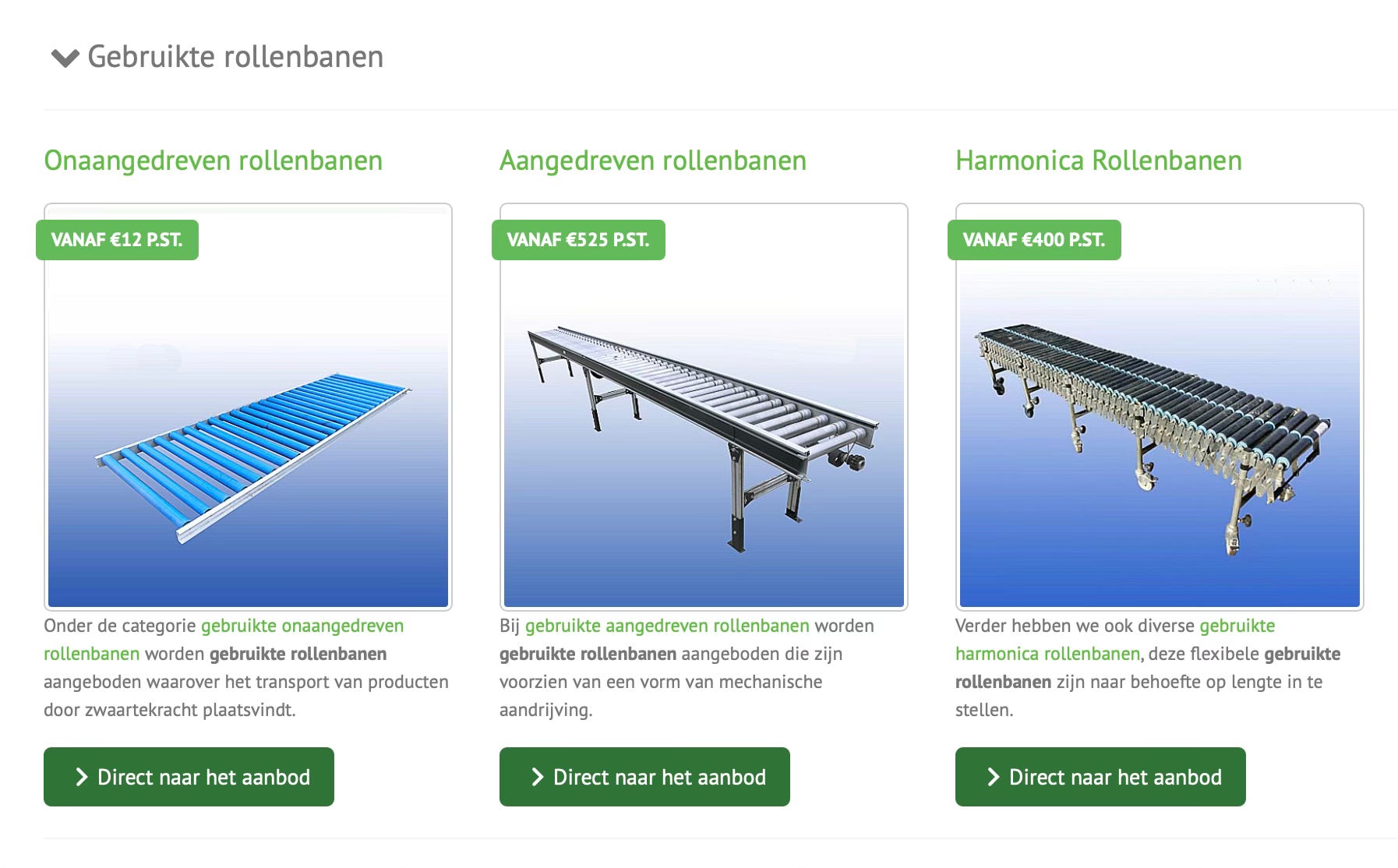
No, I’m not joking. I’m really into conveyor belts now, all because of this account I wasn’t ever supposed to see. It definitely started out ironically, but became more real with each subsequent video. To me, 123rollenbaan is simultaneously my happy innocent internet niche, and just really fucking cool, and a monument to how the algorithm has changed my identity.
That last point terrifies me, because if a mistake in the algorithm so easily sucked me into a conveyor belt echo chamber, what else is happening that I can’t see? This was an obvious misalignment, but there’s always a disconnect between the real self and the algorithmic self, meaning that every video changes me somehow. Other people, too, could just as easily be pulled into dangerous ideologies. Harmful ideas can be accidentally recommended, ironically enjoyed, and then genuinely adopted.
Admittedly, books and TV hold the same insidious potential to change our minds. But social media uniquely presents itself as if the message is already coming from you. The algorithm is supposed to “know you,” which lulls you into a greater sense of complacency. Really, they’re conveyor belts of identity, moving you from point A to point B even if you don’t feel a difference.
Upcoming events
January 29: Albany, NY - lecture for the New York State Writers Institute at SUNY Albany
February 25: Boulder, CO - lecture for CU Boulder Linguistics Department
February 26: Berkeley, CA - conversation with Nicole Holliday through the UC Berkeley Department of Linguistics, the Berkeley Forum, and the Berkeley Center for New Media
Please also consider buying my book Algospeak, on how social media is changing language!! Thanks for reading - I hope to be the 123rollenbaan of my own corner of the internet :)
No posts