
Always-on database with virtually unlimited scale
Build intelligent, mission-critical apps on a single database that unifies relational, graph, key-value, and search. Run anywhere with Spanner Omni.
Features
Multi-model: One database, many possibilities
Spanner's multi-model capabilities empower you to build intelligent, AI-enabled applications on top of your operational relational and NoSQL data by leveraging native integration with Gemini Enterprise Agent Platform, Spanner Graph for querying complex relationships, vector search for semantic search, built-in full-text search, —all with "true ZeroETL" interoperability. This unified approach eliminates data silos, saves costs, reduces operational and security touchpoints, and ensures data consistency across all models.
Foundation for agentic AI applications
Run anywhere
Spanner Omni is a downloadable version of Spanner, Google Cloud’s globally distributed, multi-model database. It extends Spanner's industry-leading scale, high availability, and strong global consistency to your infrastructure— on-premises, across clouds, or on your laptop. Spanner Omni is the ideal solution where you need cross-cloud resilience or a scale-out database that operates outside Google Cloud to power your agentic AI applications.
Real-time insights at the speed of business
Break down the silos between operational and analytical data. Spanner’s built-in columnar engine allows you to perform high-performance, ad hoc analytics on live data without impacting transactional throughput. For deeper analysis, Spanner integrates seamlessly with data lakehouses like BigQuery leveraging federated queries to analyze data across Spanner and BigQuery in real-time, or utilizing one-click reverse ETL to flow insights from your lakehouse back into Spanner.
Effortless scalability
Dream big, start small, and scale effortlessly as your needs grow. Spanner seamlessly handles growing datasets and demanding workloads with its horizontal read and "write" scalability. Automatic database sharding ensures optimal data distribution, while geo-partitioning brings data closer to your users for lower latency. Experience consistently high performance with workload-isolated query processing with Spanner Data Boost, even during peak demand.
Always On availability
Ensure your applications are always on, ready to serve your users. Spanner delivers up to 99.999% availability with automated maintenance and flexible deployment options. Choose from single-region, dual-region, or multi-region configurations to match your specific availability and fault-tolerance requirements.
Guaranteed consistent transactions
Say goodbye to data inconsistencies and the complexities of managing them. Spanner guarantees strong transactional consistency, meaning every read reflects the most recent updates, regardless of the size or distribution of your data. Build with confidence, knowing your applications always have a consistent view of your data.
Trusted security and compliance
Trust your data to a secure and compliant platform with Spanner. Enjoy centralized administration and control with Database Center, simplifying your cloud database management. Spanner offers enterprise-grade security and controls, including data encryption at rest and in transit, granular access management through Identity and Access Management (IAM), and compliance with industry standards. Protect your data further with robust backup and restore capabilities, including point-in-time recovery for operational peace of mind.
Database comparison
| Database attribute | Other Relational DB | Other Non-relational DB | Spanner |
|---|---|---|---|
Schema | Static | Dynamic | Dynamic |
SQL | Yes | No | Yes (PostgreSQL, Google SQL) |
Transactions | ACID (atomicity, consistency, isolation, durability) | Eventual | Strong-ACID with TrueTime ordering |
Scalability | Vertical (use a bigger machine) | Horizontal (add more machines) | Horizontal |
Availability | Failover (downtime) | High | High 99.999% SLA |
Replication | Configurable | Configurable | Automatic |
Gartner® ranked Spanner #1 for Lightweight Transaction Use Case. Get the full report.
Schema
Other Relational DB
Static
Other Non-relational DB
Dynamic
Spanner
Dynamic
SQL
Other Relational DB
Yes
Other Non-relational DB
No
Spanner
Transactions
Other Relational DB
ACID
(atomicity, consistency, isolation, durability)
Other Non-relational DB
Eventual
Spanner
Strong-ACID
with TrueTime ordering
Scalability
Other Relational DB
Vertical
(use a bigger machine)
Other Non-relational DB
Horizontal
(add more machines)
Spanner
Horizontal
Availability
Other Relational DB
Failover (downtime)
Other Non-relational DB
High
Spanner
High 99.999% SLA
Replication
Other Relational DB
Configurable
Other Non-relational DB
Configurable
Spanner
Automatic
Gartner® ranked Spanner #1 for Lightweight Transaction Use Case. Get the full report.
How It Works
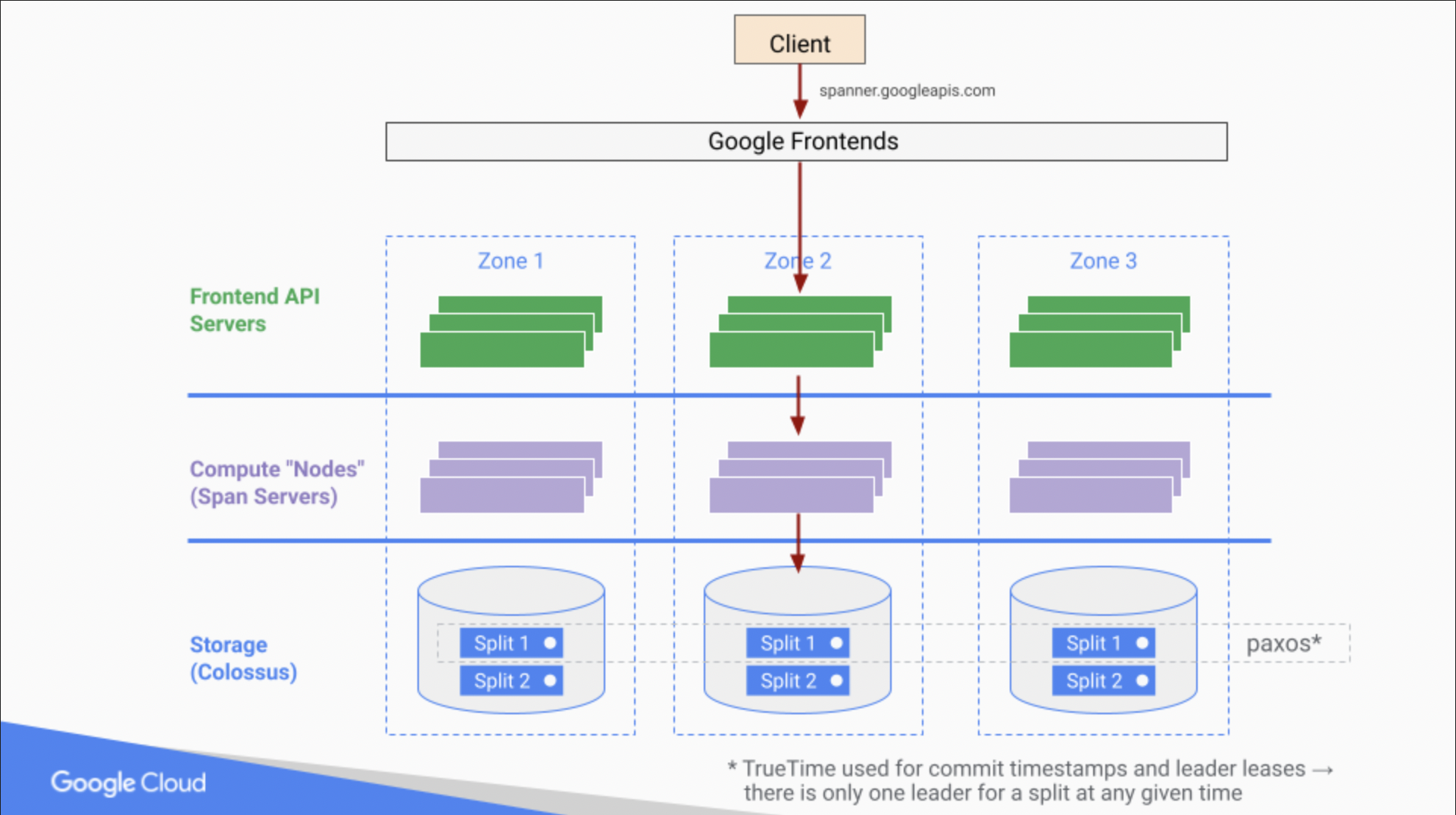
Spanner instances provide compute and storage in one or more regions. A distributed clock called TrueTime guarantees transactions are strongly consistent even across regions. Data is automatically "split" for scalability and replicated using a synchronous, Paxos-based scheme for availability.
Common Uses
Migration and modernization
Tutorials, quickstarts, & labs
Streamline MySQL and Cassandra modernization
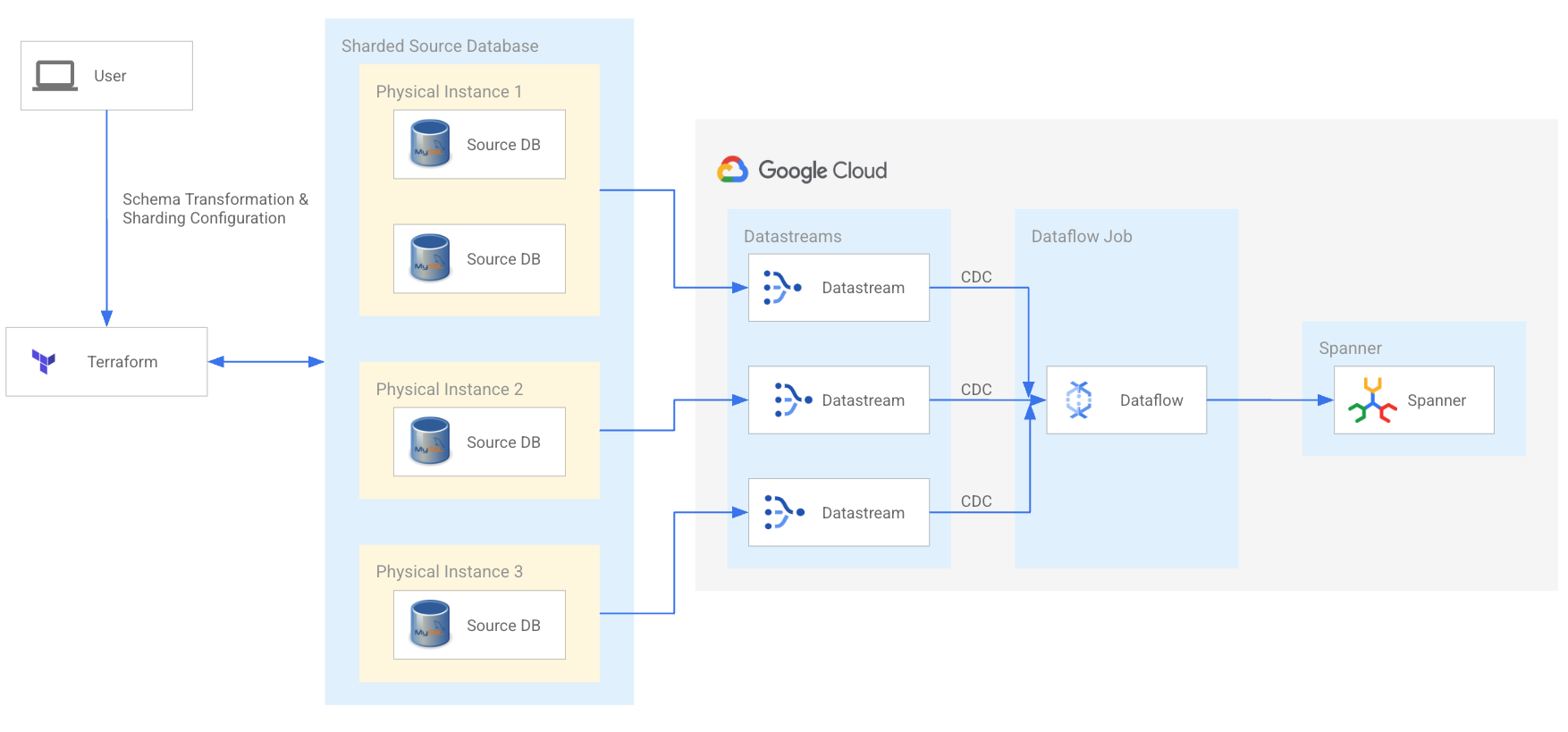
Modernize your sharded MySQL and Cassandra workloads to superpower your development teams and scale for the next phase of growth. Take advantage of open-source Spanner migration tool and a network of qualified services and technology partners that can streamline your migration.
Streamline MySQL and Cassandra modernization
Modernize your sharded MySQL and Cassandra workloads to superpower your development teams and scale for the next phase of growth. Take advantage of open-source Spanner migration tool and a network of qualified services and technology partners that can streamline your migration.
Hybrid and multicloud resilience
Tutorials, quickstarts, & labs
Ensure business continuity across diverse environments
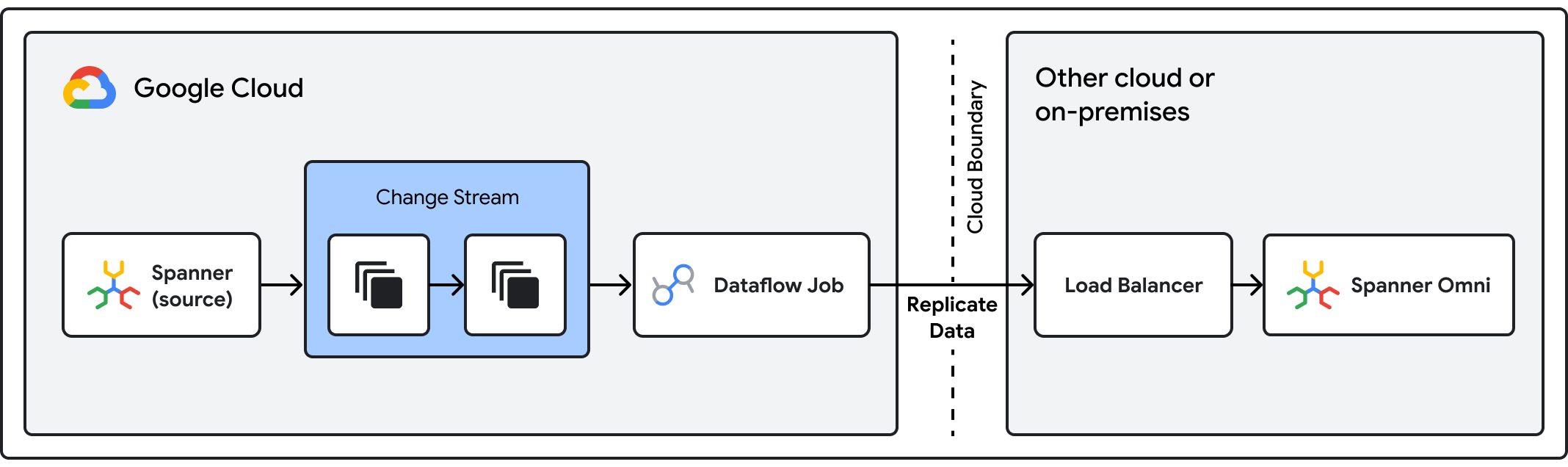
Build truly resilient, high-availability architectures that extend beyond the boundaries of a single cloud provider. By deploying Spanner Omni in a secondary cloud or on-premises data center as a "hot/cold" failover site for your primary Spanner managed service in Google Cloud, you create a critical safety net. This "primary/secondary" architecture reduces vulnerability to service disruptions and helps meet strict "stressed exit" regulatory requirements for financial services.
Ensure business continuity across diverse environments
Build truly resilient, high-availability architectures that extend beyond the boundaries of a single cloud provider. By deploying Spanner Omni in a secondary cloud or on-premises data center as a "hot/cold" failover site for your primary Spanner managed service in Google Cloud, you create a critical safety net. This "primary/secondary" architecture reduces vulnerability to service disruptions and helps meet strict "stressed exit" regulatory requirements for financial services.
User profile and entitlements
Tutorials, quickstarts, & labs
Manage critical user data securely at any scale
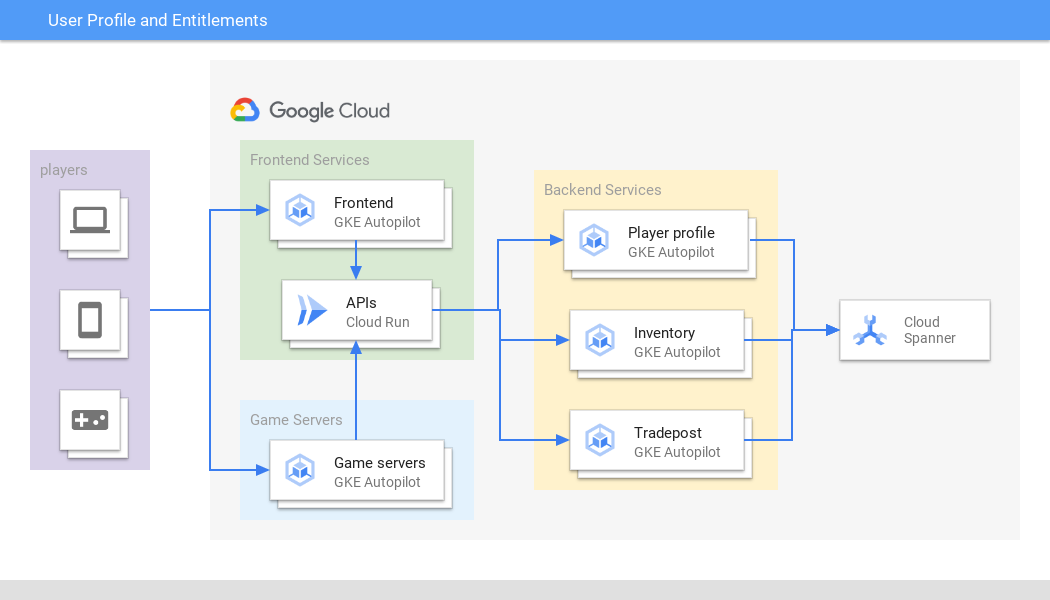
User profile management is a critical function that requires Spanner's scalability, availability, and global consistency. It is the entry point for players across games, platforms, and regions. Similarly financial services companies manage customer information and product offerings using Spanner.
Manage critical user data securely at any scale
User profile management is a critical function that requires Spanner's scalability, availability, and global consistency. It is the entry point for players across games, platforms, and regions. Similarly financial services companies manage customer information and product offerings using Spanner.
Financial ledger
Tutorials, quickstarts, & labs
Gain up-to-date, consistent view of global transactions
Unify financial transactions, trades, settlements, and positions across the globe into a consolidated trade ledger built on Spanner that guarantees external consistency and scalability. Consolidation of data helps in quickly adapting to changing market conditions and regulatory requirements. Similarly retail/ecommerce businesses use Spanner for inventory ledger.
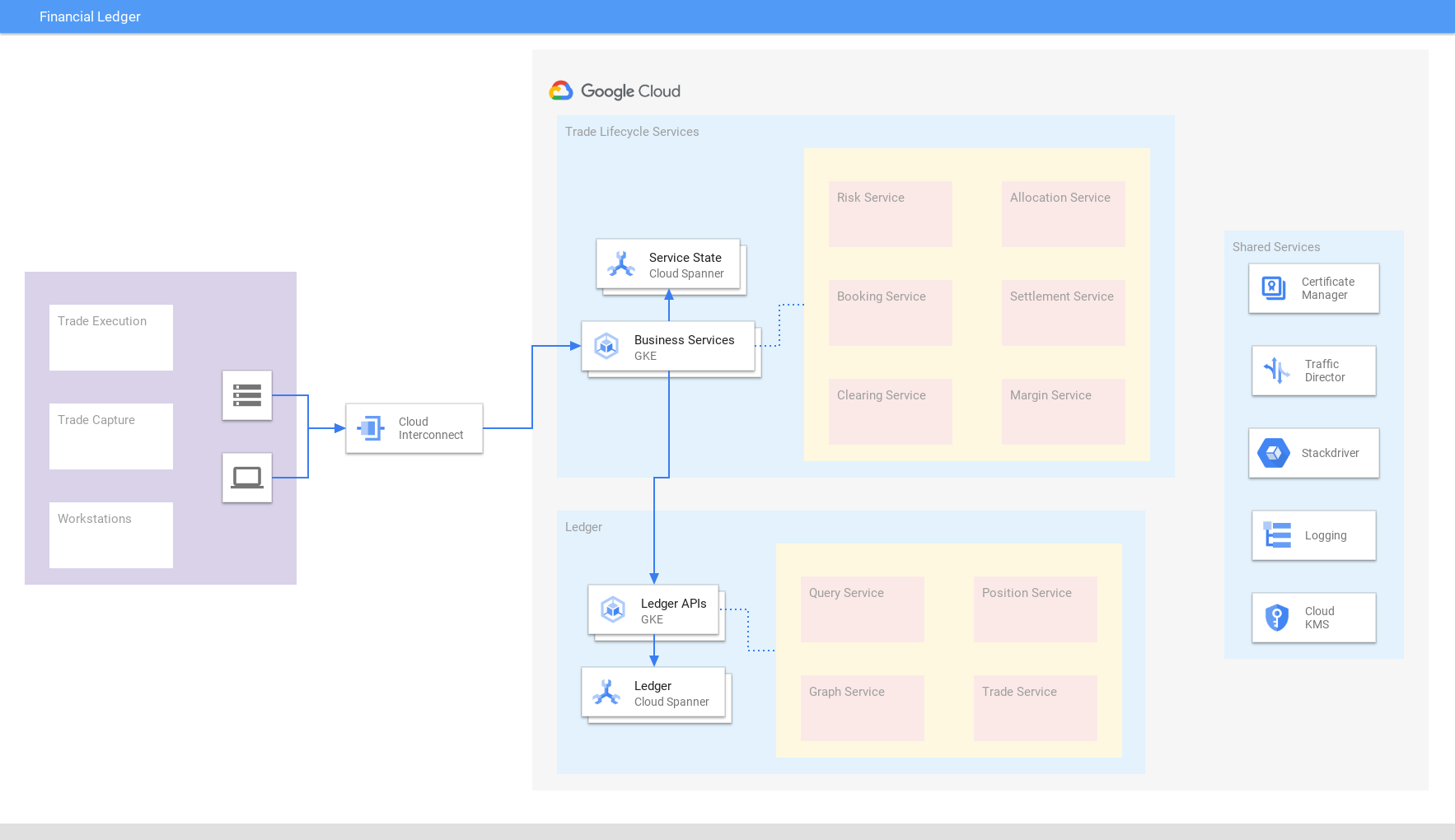
Gain up-to-date, consistent view of global transactions
Unify financial transactions, trades, settlements, and positions across the globe into a consolidated trade ledger built on Spanner that guarantees external consistency and scalability. Consolidation of data helps in quickly adapting to changing market conditions and regulatory requirements. Similarly retail/ecommerce businesses use Spanner for inventory ledger.
Online banking
Tutorials, quickstarts, & labs
Deliver always-on interactivity for digital experiences
Consumers expect access to their critical financial data on their devices outside of regular banking hours. Allow your developers to focus on new experiences rather than operational overhead, such as manual sharding or eventual consistency. Reduce risk and downtime with 99.999% availability and zero maintenance.
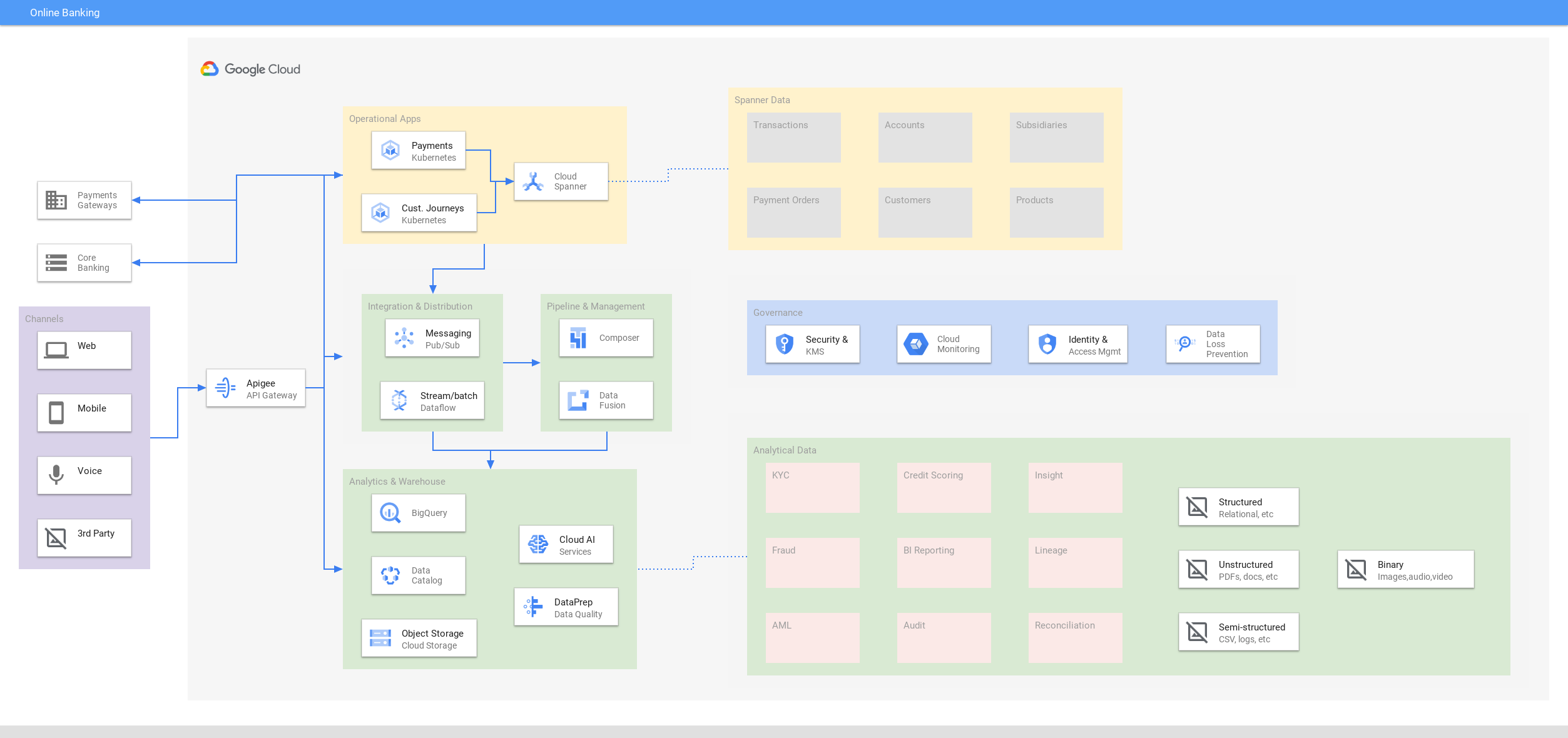
Deliver always-on interactivity for digital experiences
Consumers expect access to their critical financial data on their devices outside of regular banking hours. Allow your developers to focus on new experiences rather than operational overhead, such as manual sharding or eventual consistency. Reduce risk and downtime with 99.999% availability and zero maintenance.
Omni-channel inventory management
Tutorials, quickstarts, & labs
Provide a consistent view across multiple channels and apps
Spanner provides a high-performance, single source of truth for retail inventory and orders across online, in-store, distribution centers, and shipping to match inventory with demand, improving customer experience and profitability. Game companies similarly use Spanner to store in-game inventory data.
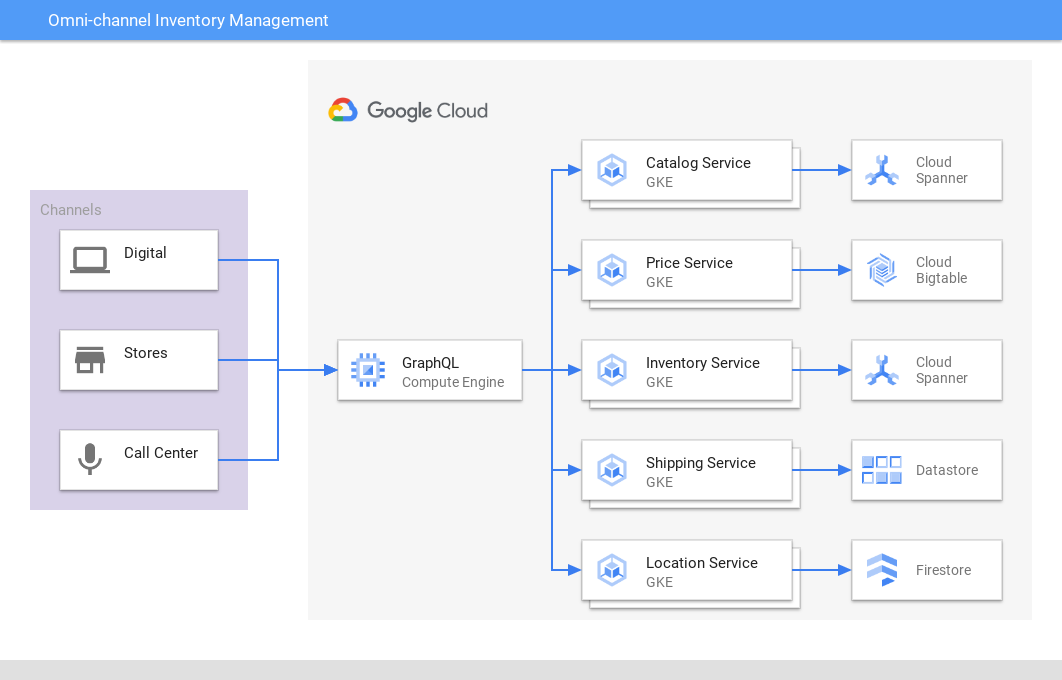
Provide a consistent view across multiple channels and apps
Spanner provides a high-performance, single source of truth for retail inventory and orders across online, in-store, distribution centers, and shipping to match inventory with demand, improving customer experience and profitability. Game companies similarly use Spanner to store in-game inventory data.
Knowledge graph
Tutorials, quickstarts, & labs
Reveal hidden relationships and connections in your data
With Spanner Graph, you can develop knowledge graphs that capture the complex connections between entities, represented as nodes, and their relationships, represented as edges. These connections provide rich context, making knowledge graphs invaluable for developing knowledge base systems and recommendation engines. With integrated search capabilities, you can seamlessly blend semantic understanding, keyword-based retrieval, and graph for comprehensive results.
Reveal hidden relationships and connections in your data
With Spanner Graph, you can develop knowledge graphs that capture the complex connections between entities, represented as nodes, and their relationships, represented as edges. These connections provide rich context, making knowledge graphs invaluable for developing knowledge base systems and recommendation engines. With integrated search capabilities, you can seamlessly blend semantic understanding, keyword-based retrieval, and graph for comprehensive results.
Generate a solution
What problem are you trying to solve?
What you'll get:
Step-by-step guide
Reference architecture
Available pre-built solutions
Pricing
| How Spanner pricing works | Spanner pricing is based on compute capacity, Spanner Data Boost, database storage, backup storage, replication, and network usage. Compute pricing varies depending on the edition and configuration selected. Committed use discounts can further reduce the compute price. | |
|---|---|---|
| Service | Description | Price (USD) |
Compute | Standard edition Packed with a comprehensive suite of established capabilities for regional (single-region) configurations Compute capacity is provisioned as processing units or nodes (1 node = 1000 processing units). | Starting at $0.030 per 100 processing units per hour per replica |
Enterprise edition Provide additional multi-model and advanced search capabilities with enhanced operational simplicity and efficiency Compute capacity is provisioned as processing units or nodes (1 node = 1000 processing units). | Starting at $0.041 per 100 processing units per hour per replica | |
Enterprise Plus edition Support the most demanding workloads with the highest levels of availability, performance, compliance, and governance Compute capacity is provisioned as processing units or nodes (1 node = 1000 processing units). | Starting at $0.057 per 100 processing units per hour per replica | |
Data Boost | On-demand, isolated compute resources, including CPU, memory, and local data transfer | Starting at $0.00117 per serverless processing unit per hour |
Database storage | Price is based on the amount of data stored in the database and includes the cost of storage in read-write replicas and read-only replicas; witness replicas are free of charge. SSD storage Use SSD storage when you require low latency and high throughput for your operational data. | Starting at $0.10 per GB per month per replica for SSD |
HDD storage Use HDD storage for data that needs to be accessed less frequently and can tolerate higher read latencies and lower throughput. You can also configure tiering policies to move data from SSD to HDD after expiration of a specified time window. | Starting at $0.02 per GB per month per replica for HDD | |
Backup storage | Regional configuration Pricing is based on the amount of backup storage and includes the cost of storage in all replicas. | Starting at $0.10 per GB per month (incl. all replicas) |
Dual-region and multi-regional configuration Pricing is based on the amount of backup storage and includes the cost of storage in all replicas. | Starting at $0.30 per GB per month (incl. all replicas) | |
Replication | Intra-region replication | Free |
Inter-region replication | Starting at $0.04 per GB | |
Network | Ingress | Free |
Intra-region egress | Free | |
Inter-region egress | Starting at $0.01 per GB | |
How Spanner pricing works
Spanner pricing is based on compute capacity, Spanner Data Boost, database storage, backup storage, replication, and network usage. Compute pricing varies depending on the edition and configuration selected. Committed use discounts can further reduce the compute price.
Compute
Description
Standard edition
Packed with a comprehensive suite of established capabilities for regional (single-region) configurations
Compute capacity is provisioned as processing units or nodes (1 node = 1000 processing units).
Price (USD)
Starting at
$0.030
per 100 processing units per hour per replica
Enterprise edition
Provide additional multi-model and advanced search capabilities with enhanced operational simplicity and efficiency
Compute capacity is provisioned as processing units or nodes (1 node = 1000 processing units).
Description
Starting at
$0.041
per 100 processing units per hour per replica
Enterprise Plus edition
Support the most demanding workloads with the highest levels of availability, performance, compliance, and governance
Compute capacity is provisioned as processing units or nodes (1 node = 1000 processing units).
Description
Starting at
$0.057
per 100 processing units per hour per replica
Data Boost
Description
On-demand, isolated compute resources, including CPU, memory, and local data transfer
Price (USD)
Starting at
$0.00117
per serverless processing unit per hour
Database storage
Description
Price is based on the amount of data stored in the database and includes the cost of storage in read-write replicas and read-only replicas; witness replicas are free of charge.
SSD storage
Use SSD storage when you require low latency and high throughput for your operational data.
Price (USD)
Starting at
$0.10
per GB per month per replica for SSD
HDD storage
Use HDD storage for data that needs to be accessed less frequently and can tolerate higher read latencies and lower throughput. You can also configure tiering policies to move data from SSD to HDD after expiration of a specified time window.
Description
Starting at
$0.02
per GB per month per replica for HDD
Backup storage
Description
Regional configuration
Pricing is based on the amount of backup storage and includes the cost of storage in all replicas.
Price (USD)
Starting at
$0.10
per GB per month (incl. all replicas)
Dual-region and multi-regional configuration
Pricing is based on the amount of backup storage and includes the cost of storage in all replicas.
Description
Starting at
$0.30
per GB per month (incl. all replicas)
Replication
Description
Intra-region replication
Price (USD)
Free
Inter-region replication
Description
Starting at
$0.04
per GB
Network
Description
Ingress
Price (USD)
Free
Intra-region egress
Description
Free
Inter-region egress
Description
Starting at
$0.01
per GB
PRICING CALCULATOR
Estimate your monthly Spanner costs, tailored to your workload.
CUSTOM QUOTE
Connect with our sales team to get a custom quote for your organization.
Start your proof of concept
Create a 90-day Spanner instance for free
Learn how to use Spanner

Create and query a database in console

Get best practices for constructing SQL statements

Dive into coding with examples
Business Case
Explore how other businesses built innovative apps to deliver great customer experiences, cut costs, and increase ROI with Spanner.
- Forrester's Total Economic Impact™ study shows Spanner delivers a 132% ROI, 9-month payback period and multi-million dollar benefits for a representative composite organization. Download the full study to learn more.
- Gartner® identifies 13 Critical Capabilities for operational databases, and ranks Spanner #1 in the Lightweight Transactions Use Case. Get the full report.

How does Uber scale to millions of concurrent requests?
Explore how Uber redesigned its fulfillment platform leveraging Spanner.
Featured benefits and customers
Grow your business with innovative applications that scale limitlessly to meet any demand.
Lower TCO and free your developers from cumbersome operations to dream big and build faster.
Get superior price-performance and pay for what you use, starting at as low as $40 per month.
Partners & Integration
Take advantage of partners with Spanner expertise to help you at every step of the journey, from assessments and business case to migrations and building new apps on Spanner.
System integrators
System integrators
Spanner partners help you modernize applications and migrate to the cloud seamlessly. Find your ideal partner or third-party integration in our directory.
Frequently asked questions
Other resources and support
Frequently asked questions
FAQ
Is Spanner a relational or non-relational database?
Spanner simplifies your data architecture by bringing together relational, key-value, graph, and vector search workloads—all on the same database. It is a highly scalable database that combines unlimited scalability with relational semantics, such as secondary indexes, strong consistency, schemas, and SQL providing 99.999% availability in one easy solution. Hence, it’s suitable for both relational and non-relational workloads.
What is Spanner Omni?
Does Spanner use SQL?
Spanner provides two ANSI-based SQL dialects over the same rich set of capabilities: GoogleSQL and PostgreSQL. GoogleSQL shares syntax with BigQuery for teams standardizing their data management workflows. The PostgreSQL interface provides familiarity for teams who already know PostgreSQL and portability of schemas and queries to other PostgreSQL environments. For more information about the Spanner PostgreSQL interface, see our documentation.
How do I migrate databases to Spanner?
Migrating existing workloads to Spanner ensures a foundation for future growth, without having to compromise on reliability or price-performance. Spanner‘s multi-model interface is used today by innovative organizations across industries with operational workloads coming from relational databases, like MySQL and SQL Server, key-value stores, such as Cassandra or DynamoDB, along with graph, search, and document tools. The specific approach for a migration will depend on requirements around data volume, performance SLOs, and availability. Spanner migration tool provides end-to-end assessment, schema and data migration, and low-downtime cutover for sharded MySQL and Cassandra databases as well as assessment and migration for PostgreSQL. A qualified network of technology and services partners can accelerate migrations from just about any source.
What are the key considerations for operating Spanner?
Spanner is a fully managed database so it automatically provides comprehensive infrastructure management features, but there are some application-specific management actions that may be required depending on your workload. You will need to make sure that you have set up proper alerting and monitoring and that you are watching those closely to ensure production is always running smoothly. You need to understand what actions to take when traffic grows organically over time, or if there is peak traffic expected, or how to handle data corruption due to application bugs, and last but not least, how to troubleshoot performance issues and understand what components are responsible for increased latencies.