Scale your latency-sensitive applications with the NoSQL pioneer
Low-latency, Cassandra, and HBase-compatible NoSQL database service for machine learning, operational analytics, and user-facing applications.
Features
Low latency and high throughput
Bigtable is a key-value and wide-column store ideal for fast access to structured, semi-structured, or unstructured data. This makes latency-sensitive workloads like personalization a perfect fit for Bigtable.
Distributed counters and high read and write throughput per dollar makes it also a great fit for clickstream and IoT use cases, and even batch analytics for high-performance computing (HPC) applications, including training ML models.
Hybrid storage architecture
Bigtable automatic, seamless data tiering between RAM, SSD and HDD helps deliver high performance, cost effectively. Deliver ultra-low latencies with RAM while eliminating hotspot problems without need for a caching layer, tier infrequently accessed data to HDD for significant cost savings without managing data pipelines and headache of keeping data in sync between multiple systems.
SQL and continuous materialized views
Bigtable SQL empowers users to build fully-managed, real-time applications using familiar SQL syntax, with specialized features that preserve Bigtable flexible schema. You can also use the SQL interface to build incremental materialized views that simplify the creation of real-time metrics. A Bigtable materialized view will automatically keep data up to date by processing the changes as they arrive without impacting your write and read performance and scales automatically in response to the traffic.
Data model flexibility
Bigtable lets your data model evolve organically. Store anything from scalars, JSON, Protocol Buffers, Avro, Arrow to embeddings, images, and dynamically add/remove new columns as needed. Deliver low-latency serving or high-performance batch analytics over raw, unstructured data in a single database.
Easy migration from NoSQL databases
Bigtable offers Apache Cassandra and HBase APIs and migration tooling that enables faster and simpler onboarding by ensuring accurate data migration with reduced effort. HBase Bigtable replication library and Cassandra Proxy allow for no-downtime live migrations while Bigtable Data Bridge and Aerospike Migration Tool simplify migrations from Amazon DynamoDB and Aerospike respectively.
From a single zone up to eight regions at once
Apps backed by Bigtable can deliver low-latency reads and writes with globally distributed multi-primary configurations, no matter where your users may be. Zonal instances are great for cost savings and can be seamlessly scaled up to multi-region deployments with automatic replication. When running a multi-region instance, your database is protected against a regional failure and offers industry-leading 99.999% availability.
Write and read scalability with no limits
Bigtable decouples compute resources from data storage, which makes it possible to transparently adjust processing resources. Each additional node can process reads and writes equally well, providing effortless horizontal scalability. Bigtable optimizes performance by automatically scaling resources to adapt to server traffic, handling the sharding, replication, and query processing.
High-performance, workload-isolated data processing
Bigtable Data Boost enables users to run analytical queries, batch ETL processes, train ML models, or export data faster without affecting transactional workloads. Data Boost does not require capacity planning or management. It allows directly querying data stored in Google’s distributed storage system, Colossus using on-demand capacity letting users easily handle mixed workloads and share data worry-free.
Rich application and tool support
Easily connect to the open source ecosystem with the Apache HBase API. Build data-driven applications faster with seamless integrations with Apache Spark, Hadoop, GKE, Dataflow, Dataproc, Vertex AI Vector Search, and BigQuery. Meet development teams where they are with SQL and client libraries for Java, Go, Python, C#, Node.js, PHP, Ruby, C++, HBase, and integration with LangChain.
Agentic development
With MCP support, Agent Development Kit (ADK) and LangChain integration, build Agentic applications to support process automation or conversational user experiences with ease. Using Bigtable Agent Skills with Antigravity, your favorite IDE or CLI take your developer productivity to next level, build more and faster with Bigtable.
No hidden costs
No IOPS charges, no cost for taking or restoring backups, no disproportionate read/write pricing to impact your budget as your workloads evolve.
Real-time change data capture and eventing
Use Bigtable change streams to capture change data from Bigtable databases and integrate it with other systems for analytics, event triggering, and compliance.
Enterprise-grade security and controls
Observability
Disaster recovery
Take instant, incremental backups of your database cost-effectively and restore on demand. Store backups in different regions for additional resilience, easily restore between instances, or projects for test versus production scenarios.
How It Works
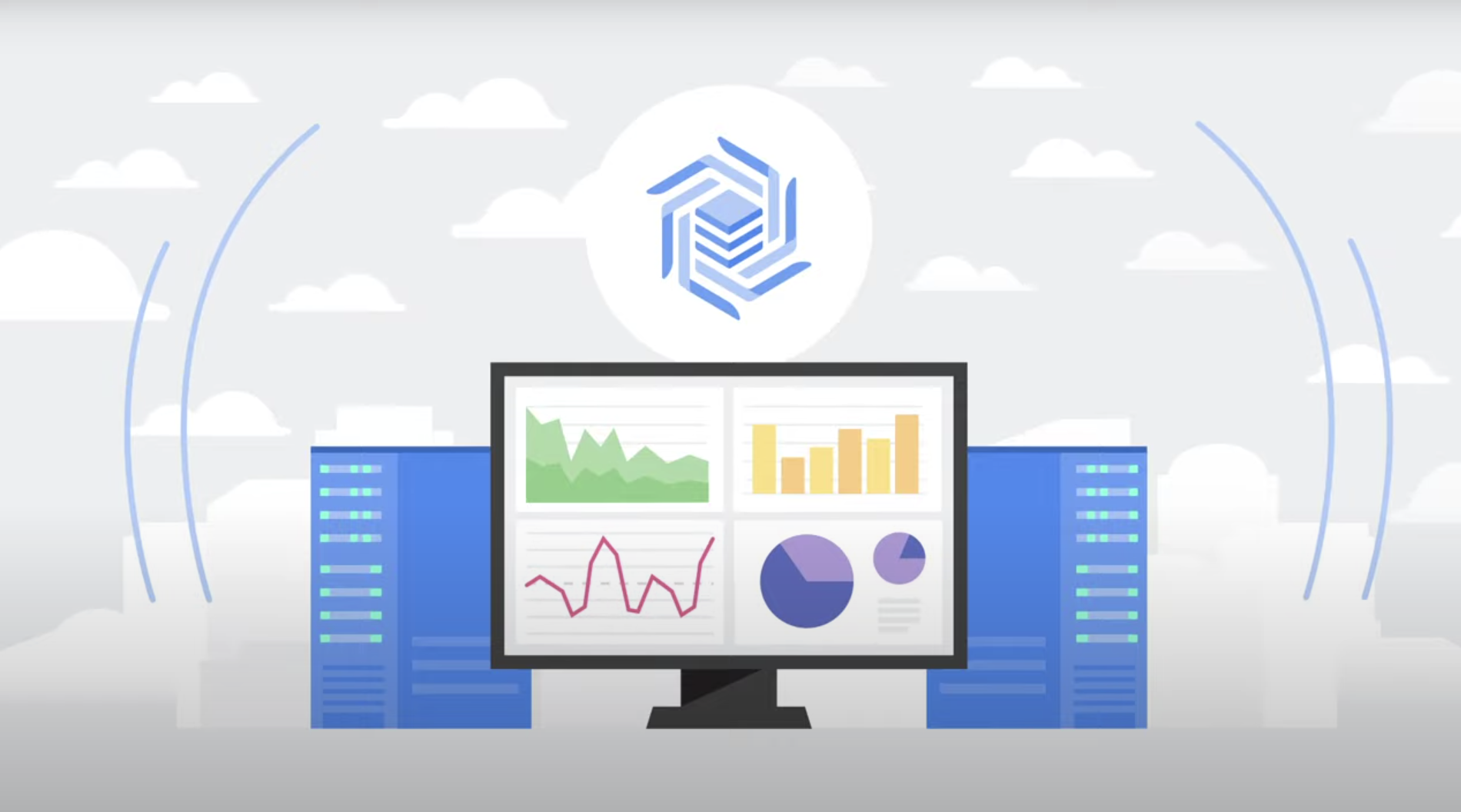
Bigtable instances provide compute and storage in one or more regions. Each Bigtable cluster can receive both reads and writes. Data is automatically "split" for scalability and replicated between clusters asynchronously. A distributed clock called TrueTime guarantees transactions are correctly ordered.
Common Uses
Real-time analytics
Learning resources
Increase data freshness and reduce query latency
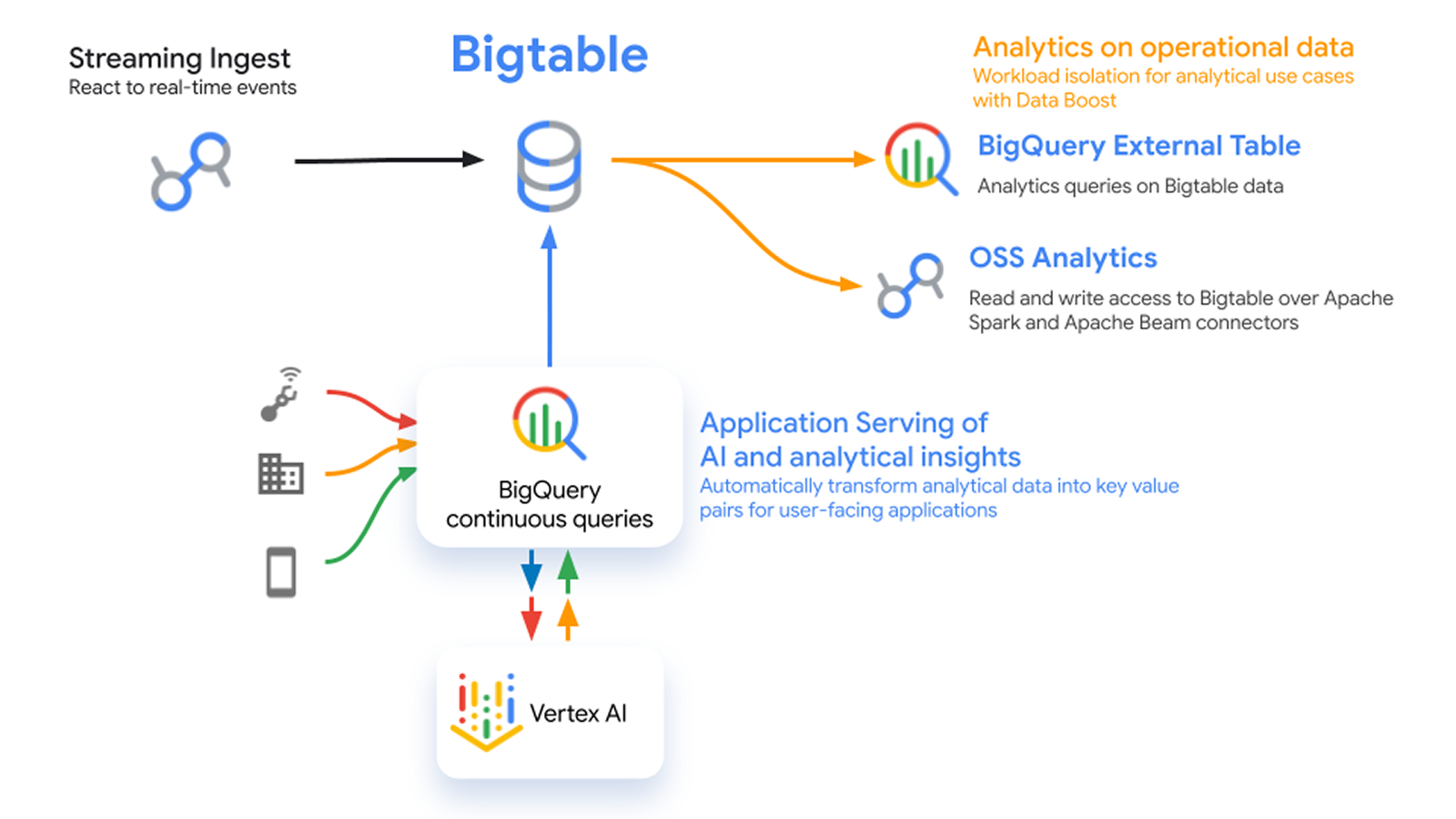
Bigtable is a high-performance, scalable database that excels at capturing, processing, and analyzing data in real-time. It aggregates data as it written, providing immediate insights into user behavior, A/B testing results, and engagement metrics. This real-time capability also fuels AI/ML models for interactive applications. Bigtable integrates seamlessly with both Dataflow, enriching streaming pipelines with low-latency lookups, and BigQuery, enabling real-time serving of analytics in user facing application and ad-hoc querying on the same data.
Increase data freshness and reduce query latency
Bigtable is a high-performance, scalable database that excels at capturing, processing, and analyzing data in real-time. It aggregates data as it written, providing immediate insights into user behavior, A/B testing results, and engagement metrics. This real-time capability also fuels AI/ML models for interactive applications. Bigtable integrates seamlessly with both Dataflow, enriching streaming pipelines with low-latency lookups, and BigQuery, enabling real-time serving of analytics in user facing application and ad-hoc querying on the same data.
AdTech and retail
Learning resources
Personalize experiences in real time
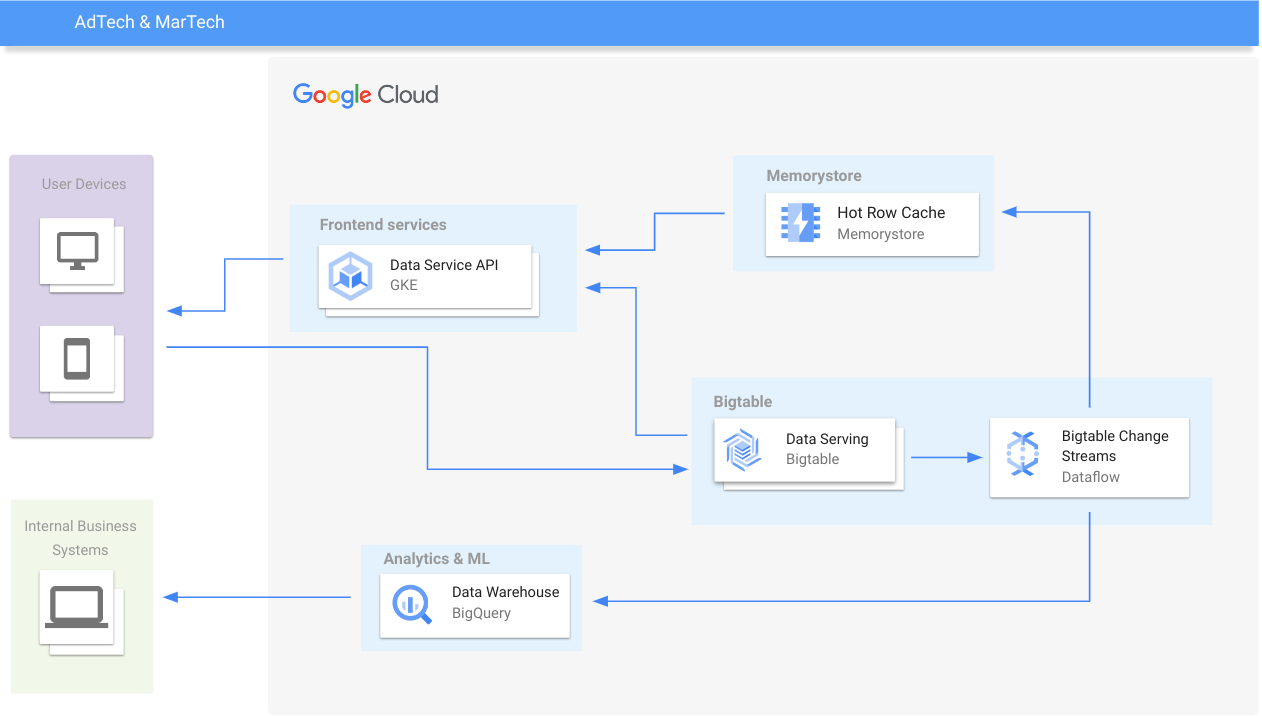
Track customer behavior and preferences for personalized ads, news feeds, discount offers, and product or content recommendations. Ingest high volume event streams and serve recommendations at low latency using a single database that automatically scales and rebalances for best performance. Bring data closer to your customers for best latencies with multi-region, multi-primary deployments, and reduce risk and downtime with 99.999% availability and zero maintenance.
Personalize experiences in real time
Track customer behavior and preferences for personalized ads, news feeds, discount offers, and product or content recommendations. Ingest high volume event streams and serve recommendations at low latency using a single database that automatically scales and rebalances for best performance. Bring data closer to your customers for best latencies with multi-region, multi-primary deployments, and reduce risk and downtime with 99.999% availability and zero maintenance.
Data fabric and operational analytics
Learning resources
Consolidate data silos and scale out legacy systems
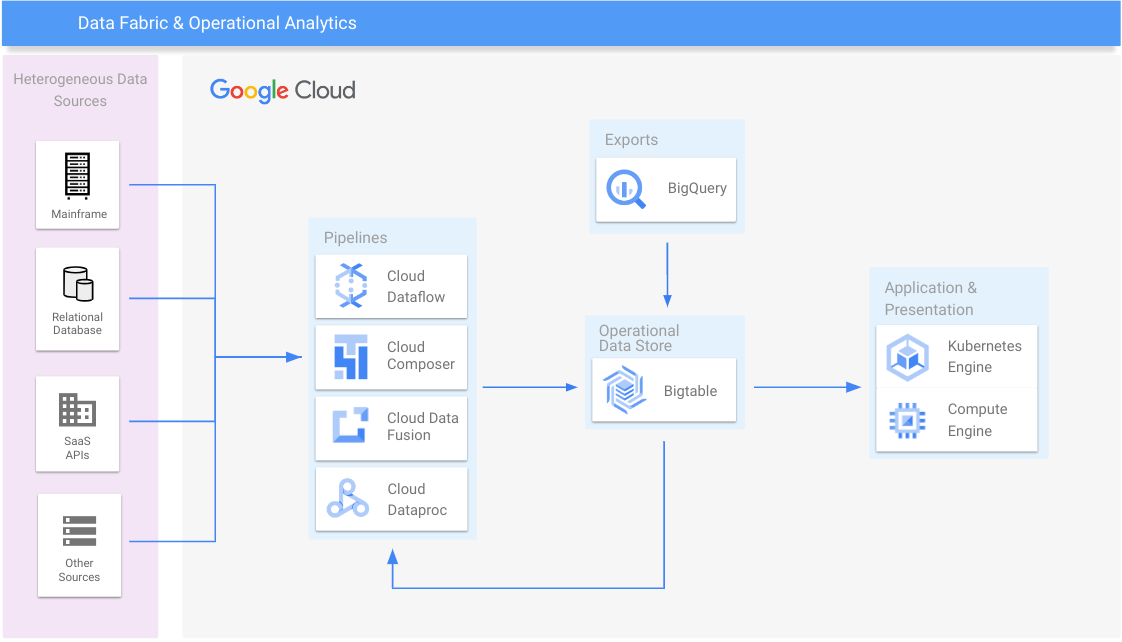
Ingest and integrate data from multiple databases, streaming sources, and mainframes in bulk or real time using integrations with BigQuery, Dataflow, Cloud Composer, and Cloud Data Fusion to build customer data platforms, operational data stores, digital integration hubs, semantic layers, or data fabrics to support low-latency API access and scalable in-app reporting.
Consolidate data silos and scale out legacy systems
Ingest and integrate data from multiple databases, streaming sources, and mainframes in bulk or real time using integrations with BigQuery, Dataflow, Cloud Composer, and Cloud Data Fusion to build customer data platforms, operational data stores, digital integration hubs, semantic layers, or data fabrics to support low-latency API access and scalable in-app reporting.
Cybersecurity
Learning resources
Detect malware, payment fraud, stop spam and scams
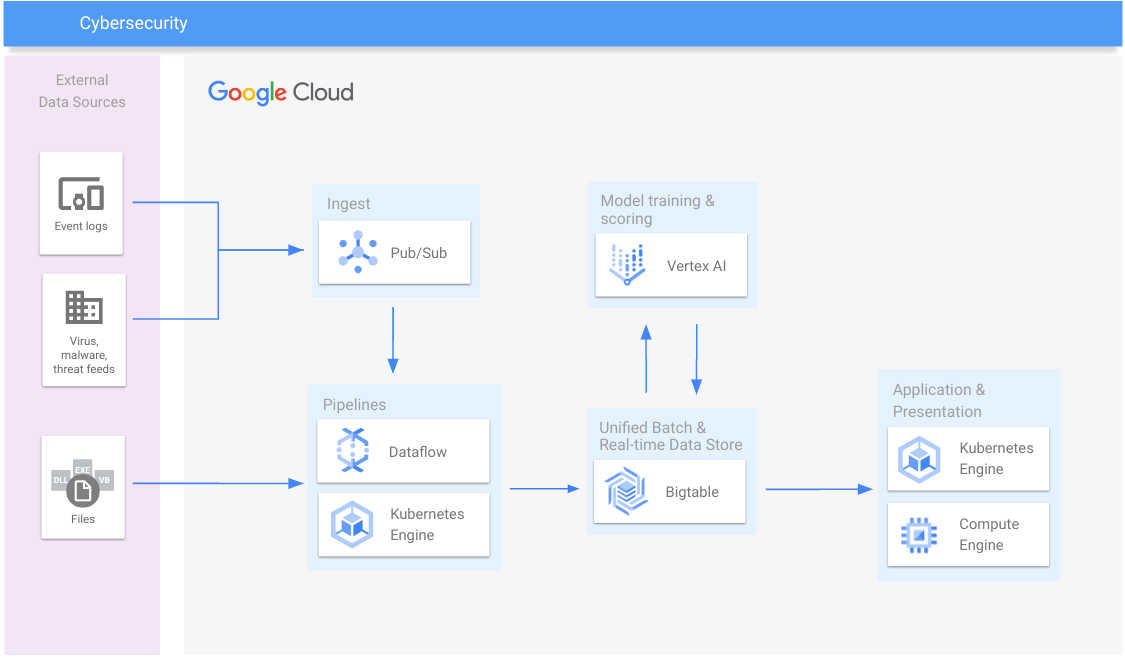
Capture fraud signals like user activity, catalog files, malware signatures and blocklists, unstructured content like product listings and reviews to identify counterfeit goods, spam accounts, scams, compromised hardware, and fraud in real time.
Detect malware, payment fraud, stop spam and scams
Capture fraud signals like user activity, catalog files, malware signatures and blocklists, unstructured content like product listings and reviews to identify counterfeit goods, spam accounts, scams, compromised hardware, and fraud in real time.
Time series and IoT
Learning resources
Manage time series data at any scale
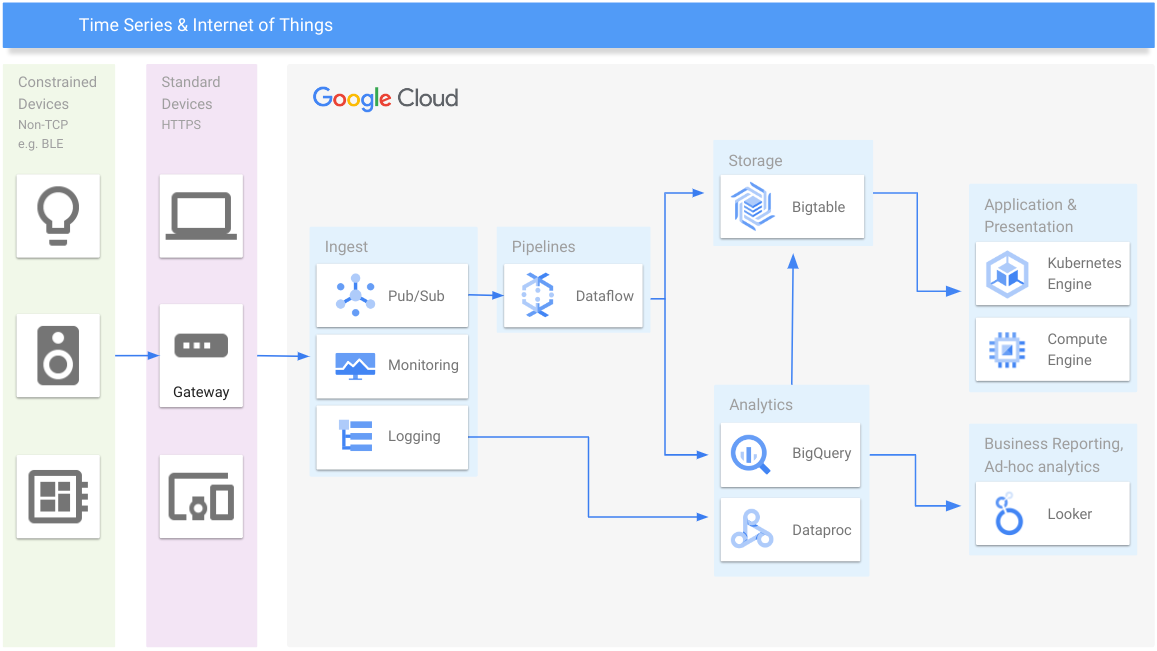
From financial time series to smart homes, weather sensors, online gaming logs, factory floor telemetry, connected cars, or event sourcing architectures, ingest large amounts of data without disrupting low-latency serving workloads to support real-time reporting, alerting, and predictive maintenance. Simplify data management with TTL rules, retain data cost-effectively using the storage medium of your choice at industry leading physical storage prices, and achieve high scan throughput for batch analytics without breaking a sweat.
Manage time series data at any scale
From financial time series to smart homes, weather sensors, online gaming logs, factory floor telemetry, connected cars, or event sourcing architectures, ingest large amounts of data without disrupting low-latency serving workloads to support real-time reporting, alerting, and predictive maintenance. Simplify data management with TTL rules, retain data cost-effectively using the storage medium of your choice at industry leading physical storage prices, and achieve high scan throughput for batch analytics without breaking a sweat.
Machine learning infrastructure
Learning resources
Scale model training and serving
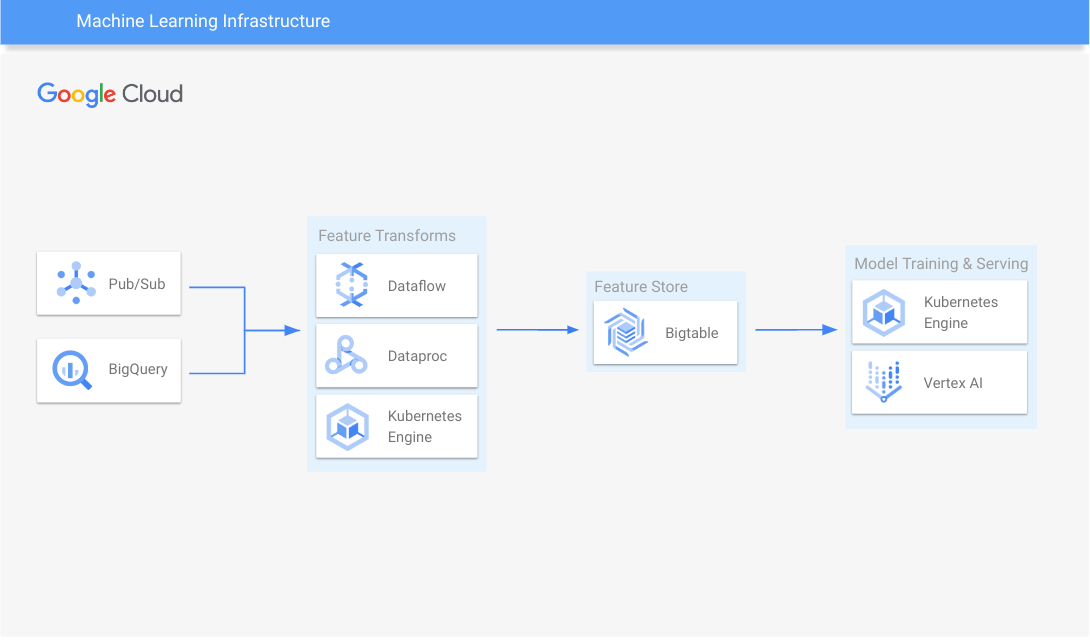
Build feature stores to support low-latency predictions, cache data from GCS for fast access by HPC clusters and ML frameworks, and snapshot model weights during training with high-throughput, low-latency reads and writes, granular access control, and workload isolation.
Scale model training and serving
Build feature stores to support low-latency predictions, cache data from GCS for fast access by HPC clusters and ML frameworks, and snapshot model weights during training with high-throughput, low-latency reads and writes, granular access control, and workload isolation.
Generate a solution
What problem are you trying to solve?
What you'll get:
Step-by-step guide
Reference architecture
Available pre-built solutions
Pricing
| How Bigtable pricing works | Bigtable pricing is based on compute capacity, database storage, backup storage, and network usage. Committed use discounts reduce the price further. | |
|---|---|---|
| Service | Description | Price |
Compute capacity | Enterprise edition Packed with key capabilities for machine learning, time series, operational analytics and user-facing applications at scale with low single-digit millisecond latency. Compute capacity is provisioned as nodes. | Starting at $0.65 per node per hour |
Enterprise Plus edition Support the most demanding workloads with the highest levels of configurability, performance, observability and governance. Includes all Enterprise edition capabilities and can deliver sub-millisecond latency. Compute capacity is provisioned as nodes. | Starting at $0.85 per node per hour | |
In-memory tier In-memory read throughput capacity for ultra-low latency reads with high hotspot resistance. Only available in Enterprise Plus edition. Read throughput is provisioned in 40,000 (1 KB) rows per second increments, up to 120,000 rows per second per node. | Starting at $0.20 per 40,000 rows per second capacity | |
Data Boost | On-demand, isolated compute resources for batch processing | Starting at $0.000845 per serverless processing unit per hour |
Data storage | SSD Pricing is based on the physical size of tables. Each replica is billed separately. Recommended for low-latency serving. | Starting at $0.17 per GB per month |
HDD Pricing is based on the physical size of tables. Each replica is billed separately. Infrequent Access (IA) uses HDD and is billed at same rate. | Starting at $0.026 per GB per month | |
Backups | Standard backups Pricing is based on the physical size of backups. Bigtable backups are incremental. | Starting at $0.026 per GB per month |
Hot backups Optimized for significantly reduced restore time. Pricing is based on the physical size of backups. | Starting at $0.12 per GB per month | |
Network | Ingress | Free |
Egress within same region | Free | |
Egress between regions | Starting at $0.10 per GB | |
Replication | Within same region | Free |
Between regions | Starting at $0.01 per GB | |
How Bigtable pricing works
Bigtable pricing is based on compute capacity, database storage, backup storage, and network usage. Committed use discounts reduce the price further.
Compute capacity
Description
Enterprise edition
Packed with key capabilities for machine learning, time series, operational analytics and user-facing applications at scale with low single-digit millisecond latency.
Compute capacity is provisioned as nodes.
Price
Starting at
$0.65
per node per hour
Enterprise Plus edition
Support the most demanding workloads with the highest levels of configurability, performance, observability and governance. Includes all Enterprise edition capabilities and can deliver sub-millisecond latency.
Compute capacity is provisioned as nodes.
Description
Starting at
$0.85
per node per hour
In-memory tier
In-memory read throughput capacity for ultra-low latency reads with high hotspot resistance. Only available in Enterprise Plus edition.
Read throughput is provisioned in 40,000 (1 KB) rows per second increments, up to 120,000 rows per second per node.
Description
Starting at
$0.20
per 40,000 rows per second capacity
Data Boost
Description
On-demand, isolated compute resources for batch processing
Price
Starting at
$0.000845
per serverless processing unit per hour
Data storage
Description
SSD
Pricing is based on the physical size of tables. Each replica is billed separately. Recommended for low-latency serving.
Price
Starting at
$0.17
per GB per month
HDD
Pricing is based on the physical size of tables. Each replica is billed separately. Infrequent Access (IA) uses HDD and is billed at same rate.
Description
Starting at
$0.026
per GB per month
Backups
Description
Standard backups
Pricing is based on the physical size of backups. Bigtable backups are incremental.
Price
Starting at
$0.026
per GB per month
Hot backups
Optimized for significantly reduced restore time. Pricing is based on the physical size of backups.
Description
Starting at
$0.12
per GB per month
Network
Description
Ingress
Price
Free
Egress within same region
Description
Free
Egress between regions
Description
Starting at
$0.10
per GB
Replication
Description
Within same region
Price
Free
Between regions
Description
Starting at
$0.01
per GB
PRICING CALCULATOR
Estimate your monthly Bigtable costs, including region-specific pricing and fees.
CUSTOM QUOTE
Connect with our sales team to get a custom quote for your organization.
Start your Bigtable proof of concept
Create a no-cost trial instance
Learn how to use Bigtable

Federate queries from BigQuery into Bigtable

Migrate from HBase, Cassandra, Aerospike, or DynamoDB to Bigtable

Dive into coding with examples
Business Case
Explore how other businesses built innovative apps to deliver great customer experiences, cut costs, and increase ROI with Bigtable
Explore how Box modernized their NoSQL databases with Bigtable
Box enhanced scalability and availability while reducing cost to manage, through a seamless migration.
Benefits and customers
Grow your business with innovative applications that scale limitlessly to meet any demand.
Get best-in-class price-performance and pay for what you use.
Migrate easily from other NoSQL databases and run hybrid or multicloud deployments with open source APIs and migration tools.
Partners & Integration
Take advantage of partners with Bigtable expertise to help you at every step of the journey, from assessments and business cases to migrations and building new apps on Bigtable.
System integrators
System integrators
Want to get more details about which partner or third-party integration is best for your business? Go to the partner directory.
Learn more
FAQ
What type of database is Bigtable?
Bigtable is a NoSQL database service, specifically a key-value store that allows for very wide tables with tens of thousands of columns, hence also referred to as a wide-column database or a distributed multi-dimensional map. Bigtable is a NoSQL database in the "Not only SQL" sense, rather than "zero SQL." It supports many capabilities beyond key-value lookups including aggregations and global secondary indexes.
Bigtable is most similar to popular open source projects it inspired, such as Apache HBase and Cassandra, and hence is the most common destination for customers that deal with large data volumes looking for a high-performance, cost-effective, fully managed NoSQL database solution on Google Cloud.
Does Bigtable support SQL?
In addition to its key-value APIs, Bigtable also supports SQL queries in three different ways:
- For low-latency application development, Bigtable offers a SQL query API that builds upon GoogleSQL with extensions for the wide-column data model resembling Cassandra Query Language (CQL). It supports 200+ functions including aggregations (GROUP BY), windowing, geospatial and JSON processing functions and vector search (kNN). Bigtable supports both standard and piped query syntax.
- For data science use cases or other kinds of batch processing and ETL, Bigtable supports SparkSQL using its Spark client.
- For users who want to do post-hoc exploratory analysis or blend data from multiple sources for batch analytics, Bigtable data can also be accessed from BigQuery. Simply register your Bigtable tables in BigQuery and query like any other BigQuery table without any ETL or data duplication.
How do I migrate databases to Bigtable?
Is Bigtable serverless?
Bigtable storage is billed per GB used similar to a serverless model. Bigtable also offers linear horizontal scaling and can automatically scale up and down compute resources in response to demand fluctuations. Hence it doesn’t require a long term capacity commitment for storage or compute. However, pricing for low-latency compute is capacity-based and billed per node, not per request where each node can serve up to 17K requests per second. This makes Bigtable price more favorable for larger workloads but less ideal for small applications, which may be more suitable for Google Cloud databases such as Firestore.
For batch data processing Bigtable offers Data Boost, which bills in Serverless Processing Units (SPU).
Is Bigtable a persistent cache?
Bigtable is a database with cache-like performance, not a cache with persistence. It offers powerful in-database processing capabilities, a SQL API, continuous materialized views and asynchronous secondary indexes while using RDMA technology to provide direct access to RAM for high throughput and performance not bound by database server's CPU capacity. Although it is possible to use Bigtable as a replacement for durable caching solutions like MemoryDB, the opposite isn't always true, as solutions like Redis were designed as a cache, not a database.