

Allô! 👋
Welcome (back) to good food at home, the monthly-ish newsletter featuring simple, seasonal, and sustainable meals, tips, and ideas. For more recipes, cooking Q&As + access to the full archive, do consider joining the community of readers who support the newsletter by also subscribing to seasonal sundays, the supplement that focuses on fresh produce at its peak!
Dark days. Long nights. A low-hanging sun.
November is a reminder that winter is no longer a faint memory but an ever-nearing certainty.
It is the month that ushers in late autumn — that languid season of preparing for all things freezing and somber — a slow, quiet edging toward the deep inevitable hush of nature’s long, yearly sigh into its restorative slumber.
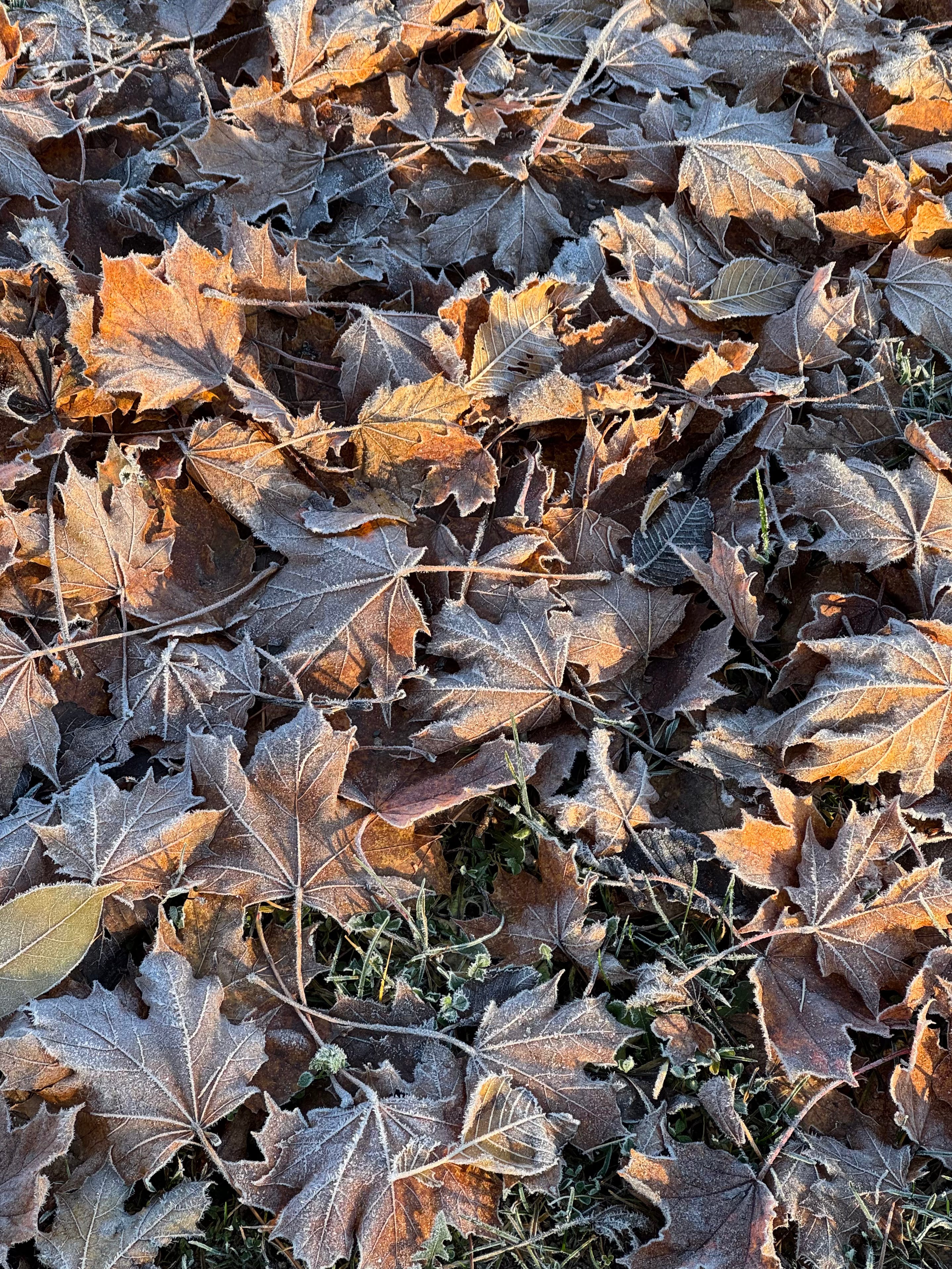
And what a dark time it is indeed. These days in Oslo, the moon rises before the working day has even wound down, lifting itself into the sky sometime in the mid-afternoon and lingering long through the night.
By mid-morning it is still loitering above rooftops, pale and persistent, while the sun — tired from a long, busy summer — barely manages to pull itself far above the low horizon.
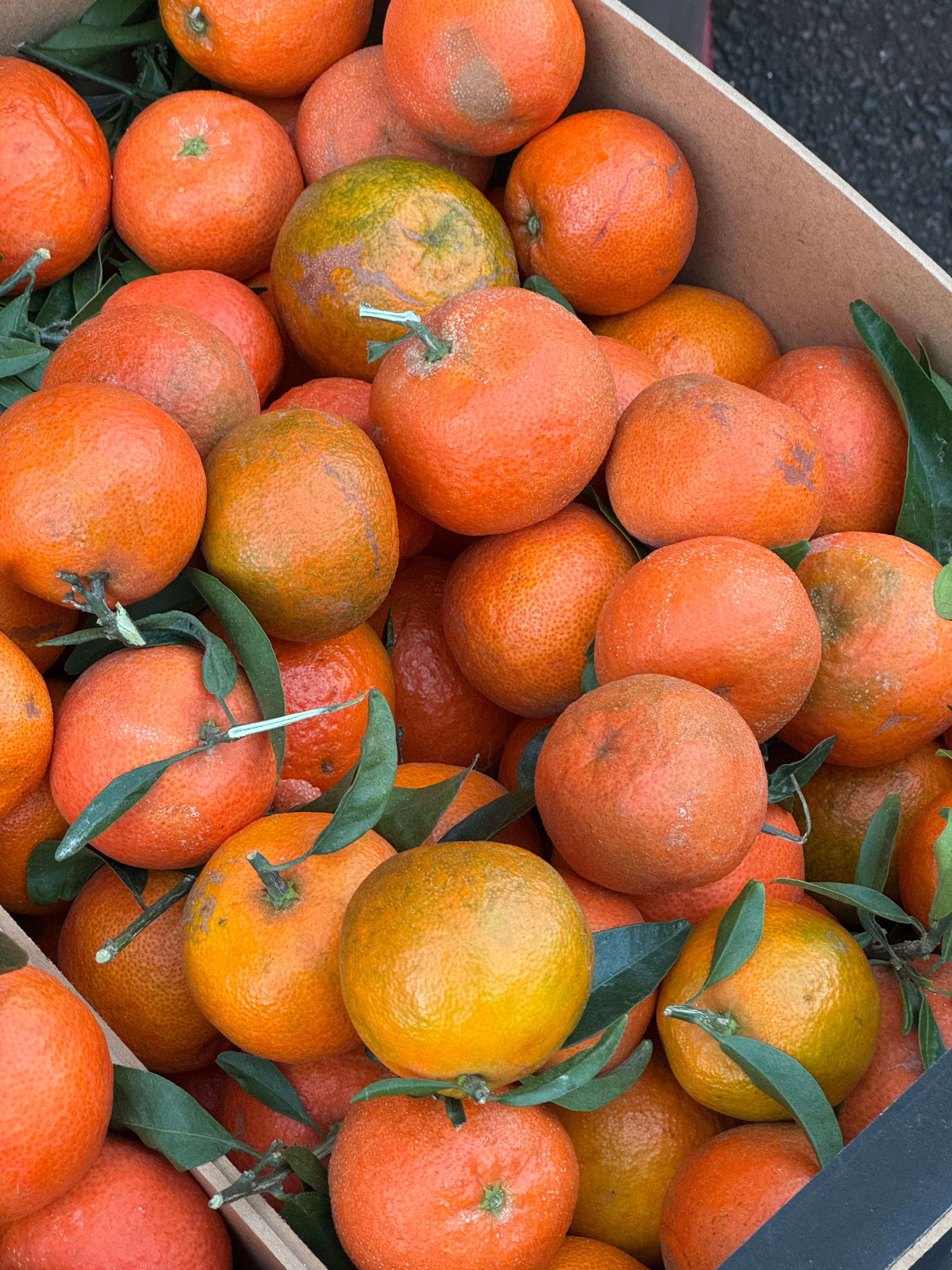
As I write, the last of the deciduous leaves have fallen, leaving it up to the evergreens and new-season citrus fruits to shine and offer us a verdant dash of foliaceous colour.
It’s almost as if the birds, the sun, the fields, and the trees have all agreed to lie low for the season.
Farm stands close their shutters, market stalls pack up or roll away and, with a sigh and a wave, we smile goodbye to one another — see you again sometime next spring!
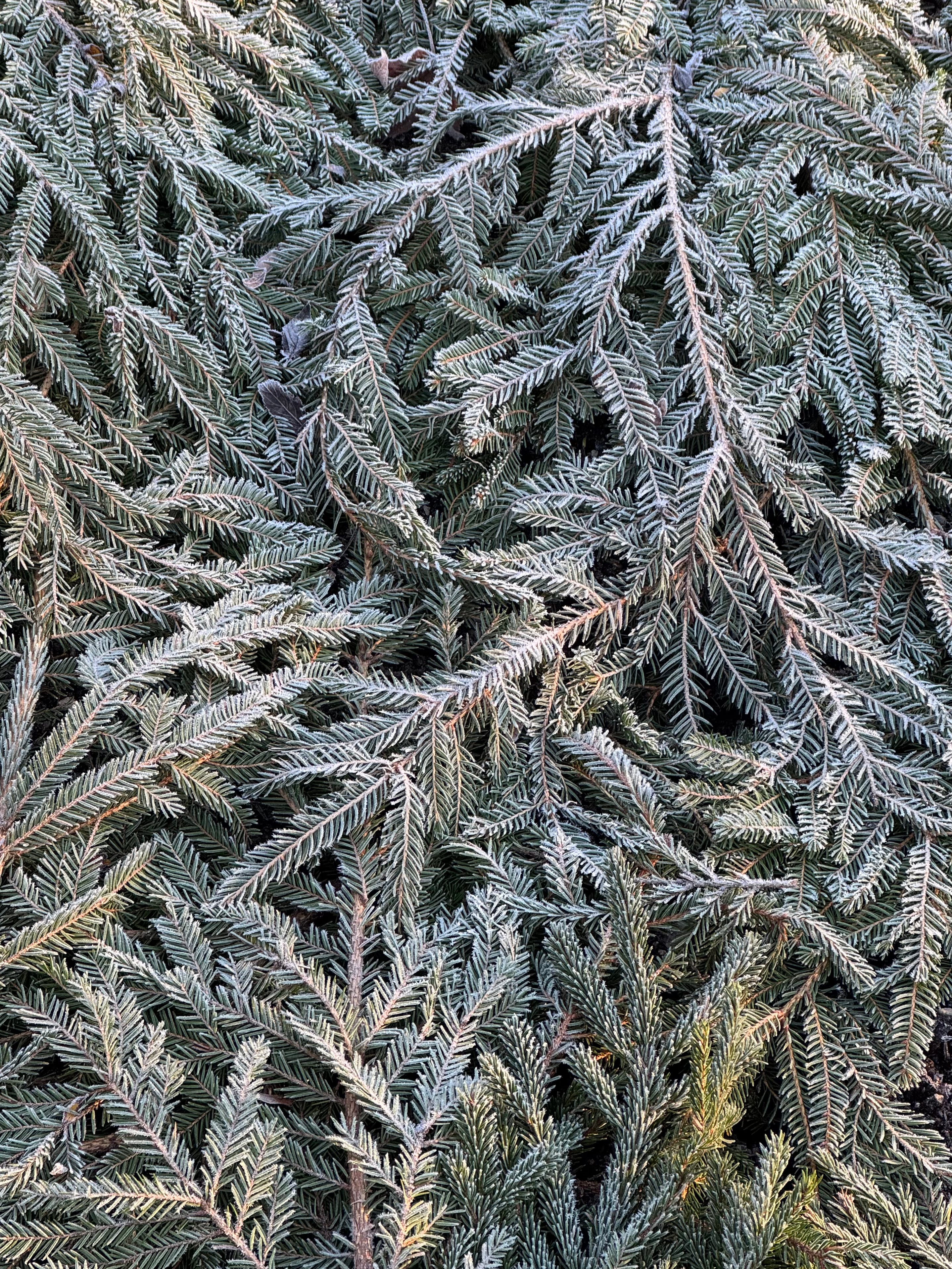
And yet, although the world quietens and folds in on itself, it doesn’t fall asleep entirely.
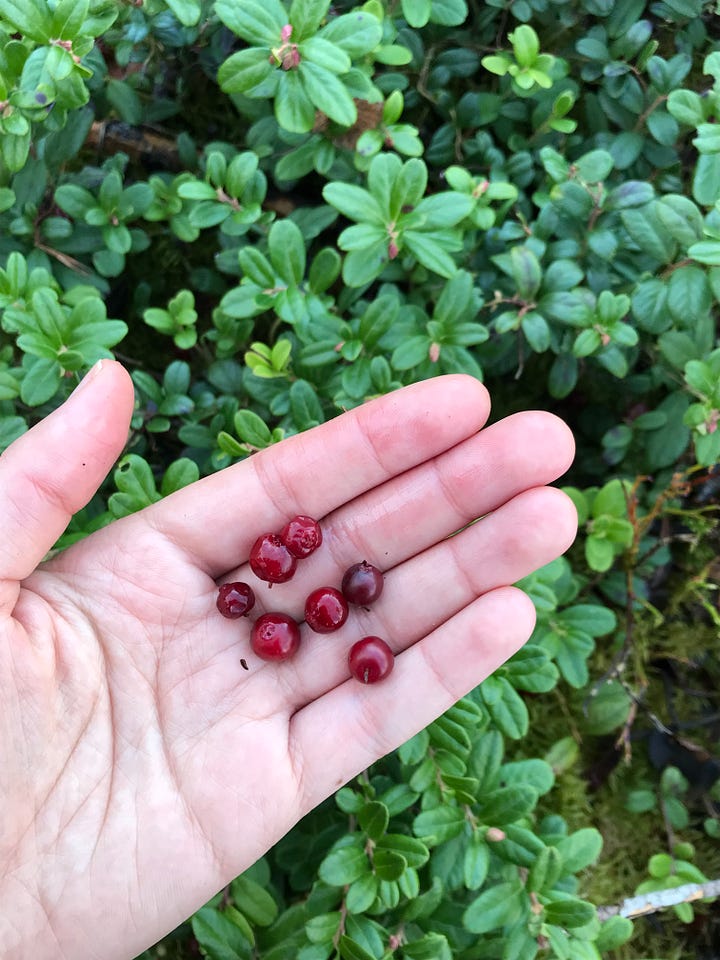
As ever, nature offers those who care to notice it something to hold. Now is the time when produce that thrives in darkness and frost comes into its own: sharp cranberries and heath berries, earthy parsnips and sunchokes, steely blue kales and red cabbages, hardy sages and rosemaries.
A touch of cold inevitably lends softness and sweetness to the most hardy of crops, rendering the nipping dark days of late autumn all the more pleasurable for those who choose to lean in.
ㅤ
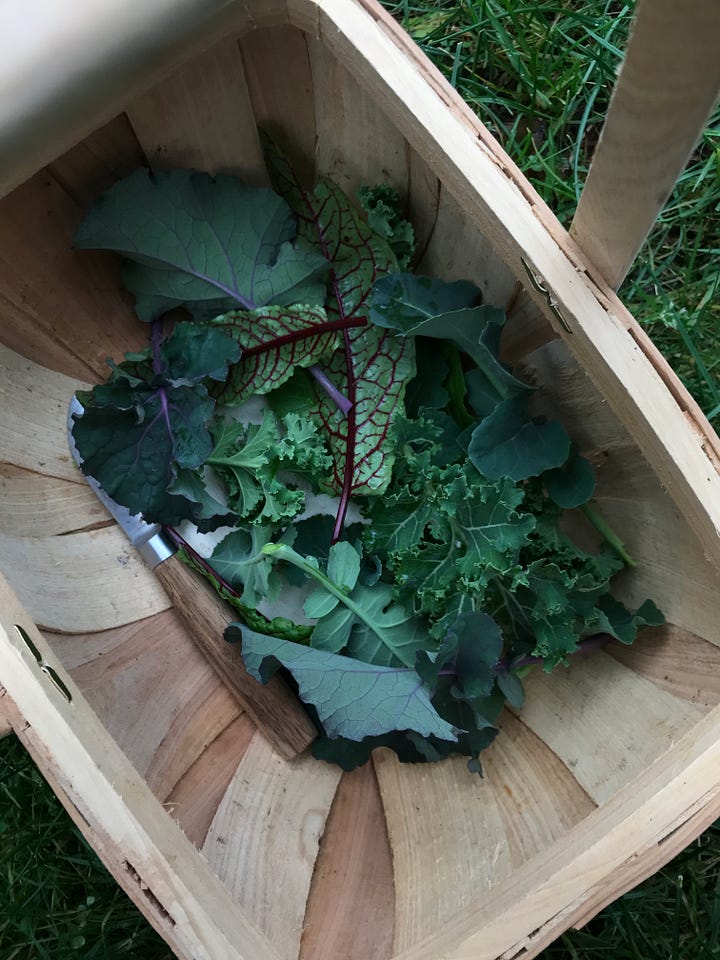
Even now, the season manages to charm with a few late surprises: black trumpet and turkey tail mushrooms still delight on forest walks, rosehips and juniper berries grow softer and deepen in flavour after a frost, sorrel and kale remain admirably defiant, thriving boldly when so much else opts to retreat.

Indoors, late autumn rituals return almost of their own accord. Last year, I shared one of my favourite ways to decorate for the dark winter months; this year again, late November rekindles the pull toward stringing together citrus garlands, threading popcorn into long fluffy ropes, fashioning colourful construction paper into festive chains, tying teeny evergreen bundles into fragrant wreaths, and crafting gingerbread into edible ornaments of all kinds.
Almost like clockwork, I find myself craving these small, familiar comforts — along with simmering cider on the stove; baking cakes studded with dried fruits, crystallised ginger, and dark hunks of chocolate; lighting a crackling evening fire to read or knit beside. Even the simple act of layering up with thin wool before stepping out for a deliberate walk at midday (the only hour that feels truly lit) becomes a grounding ritual, at times almost an introspective meditation on the season.
Yes, here in the north, the ever-changing light shapes not just rituals of habit and mood, but rituals of appetite too.
In late spring and summer I wake hungry and graze sparingly all day until the light finally dims. In late autumn and winter, however, hunger waits for the sun — which now means one large hearty meal in mid-morning, sometimes another at midday, and a final satisfying feast by sunset in the mid-afternoon.
Once the darkness settles again, it seems my whole body simply agrees: the light has dimmed and the kitchen is closed. Time instead to curl up under a blanket, to rest, recover, relax and restore.
Or, in my case, to renovate.

You may recall that this time last year I was telling you that I’d just moved and would, ever so briefly, not be able to develop new recipes while we did just a few small kitchen renovations. Well, one year on, and the kitchen is still a work in progress (long story short: what began as small cosmetic changes uncovered deeper structural issues, and now we’re taking the time to redo things properly).
A year without cooking, for someone whose work revolves around the stove, is pretty rough, I won’t lie. But I try to keep my mind on the bright side. (It’s only temporary. Things will get better. I will cook again.)
Unable to cook*, one of the main things that has kept me going is looking back at dishes and meals I’ve made in the past, and hope to recreate someday again. It turns out I have favourites I return to each season — something I hadn’t realised until I was forced to pause, turn around, and take stock of just how far I’d come. For me, this involuntary break has revealed that path more clearly; not only how far I’ve travelled, but also how far I still want to go. It’s also taught me that not being able to cook neither stops me from sharing my love of good food, nor dulls my desire to eat well, nor dims my reverence for ingredients tended by people who care. It has laid bare how deeply cooking roots me — how that love doesn’t wane even when I cannot chop, stir, or knead — and how, even when I feel I have nothing new to give, I still yearn to offer the little I have.
*by this, I mean to get creative with meals; I am very privileged and have been doing just fine with a small fridge-freezer, microwave, and a rotating selection of easy-to-eat-or-heat canned, dried, and frozen foods (oats, nuts, beans, sardines, and assorted vegetables will take you far!)

And so, in this November issue of good food at home, you’ll find my best advice for which ingredients to look out for this season, some late autumn meal inspiration from the archives, plus a hearty recipe for a warm balsamic salad I love to make this time of year — and, as always, a few parting links for curious minds and hungry hearts.
I hope you’ll enjoy!
ㅤ
Wishing you all a cheerful and restful December ahead,
👋simone

P.S. Like the newsletter? Leave it a ❤️ to help it grow!
at the market + in the produce aisle
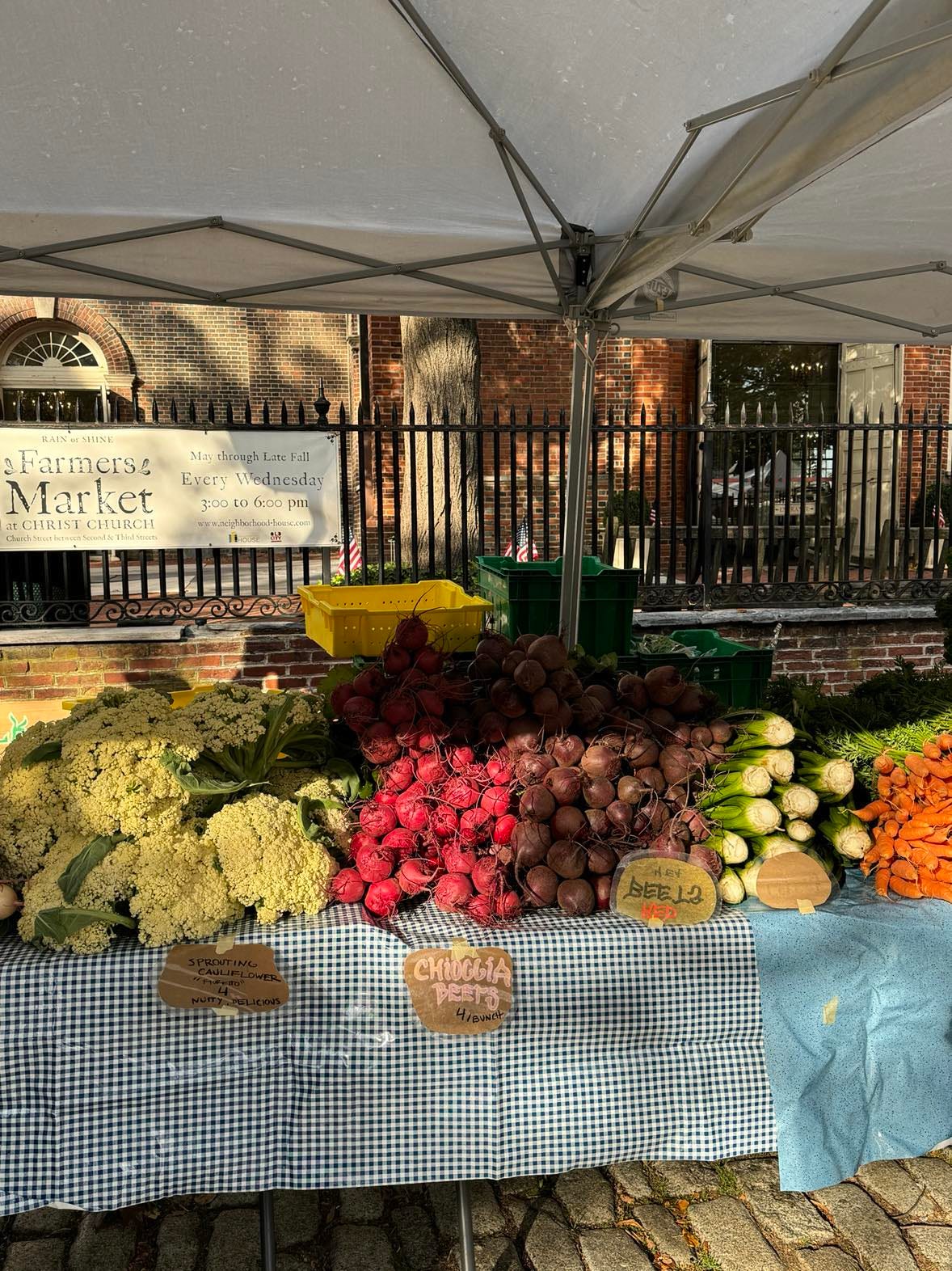
Although one might not think the end of autumn has much left to offer in terms of new produce (after all, the fields are looking bare and many farm stands are newly shut), the abundance continues, still brimming with a quiet rainbow of seasonal treasures.
ㅤ
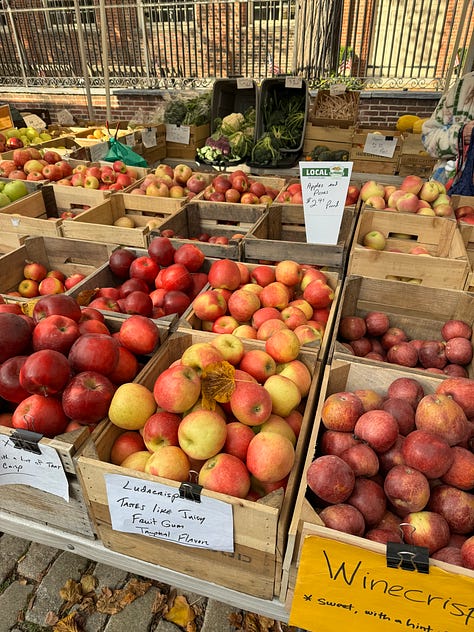
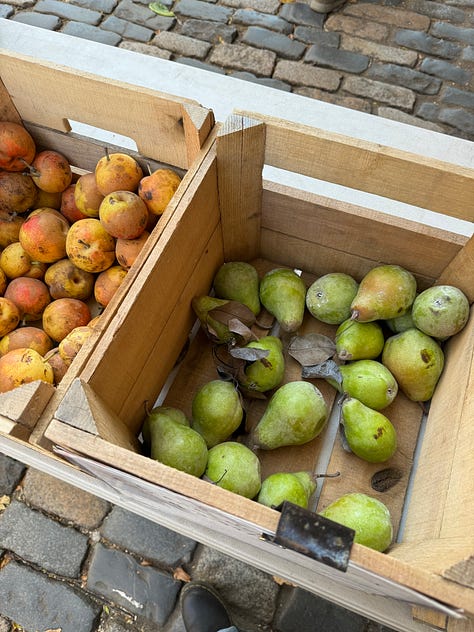
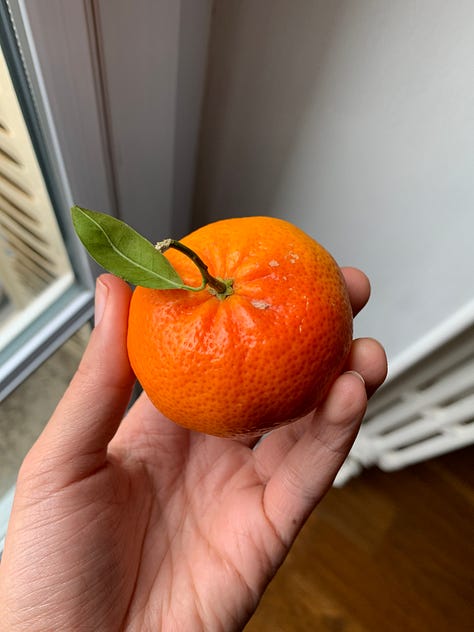
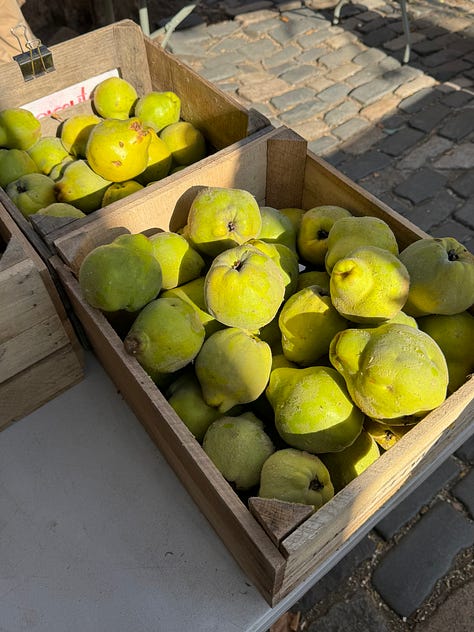
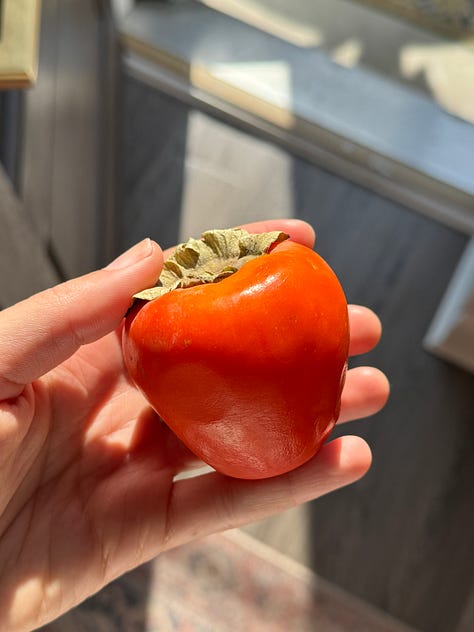
Persimmons, pomegranates, quinces, crab apples, and clementines are all at their best at the moment — grapefruit, cranberries, and kiwis now are too (not to mention, guavas, cherimoyas AKA custard apples, mangoes, Nashi pears, tangerines, mandarins, yuzu, bergamot, and prickly cactus pears). Apples and pears remain stalwart staples on the shelves, of course, but if you’ve been meaning to get a little adventurous in the fruit aisle, now would be an excellent time of year to branch out.
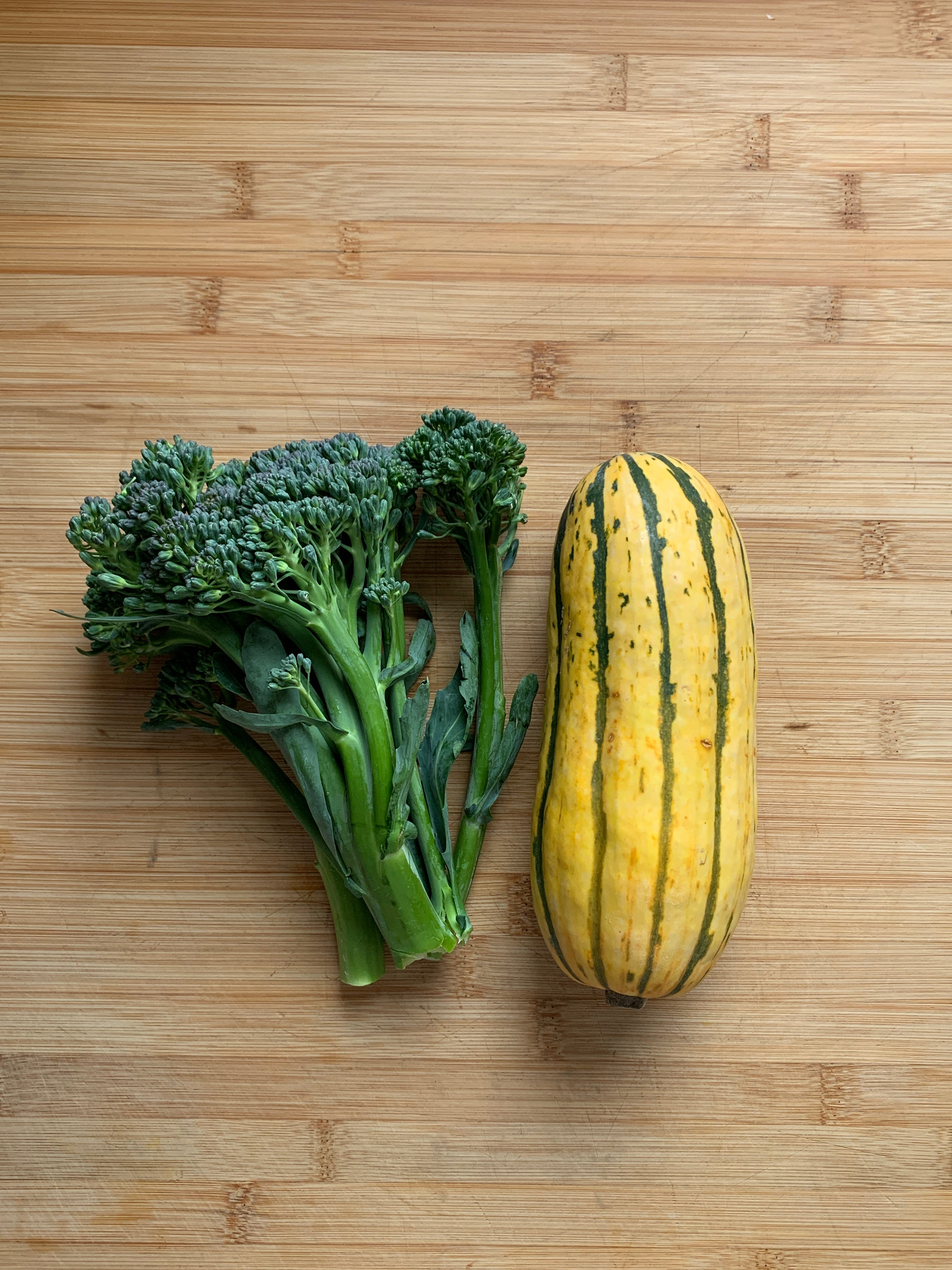
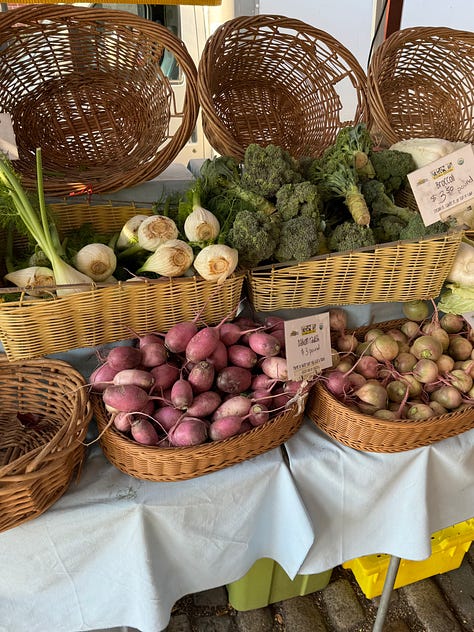
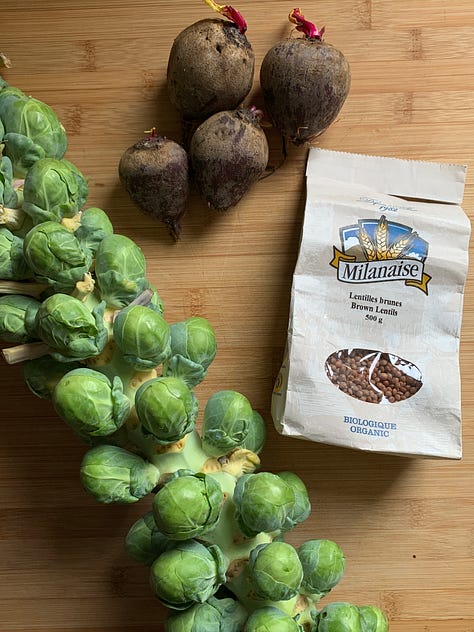
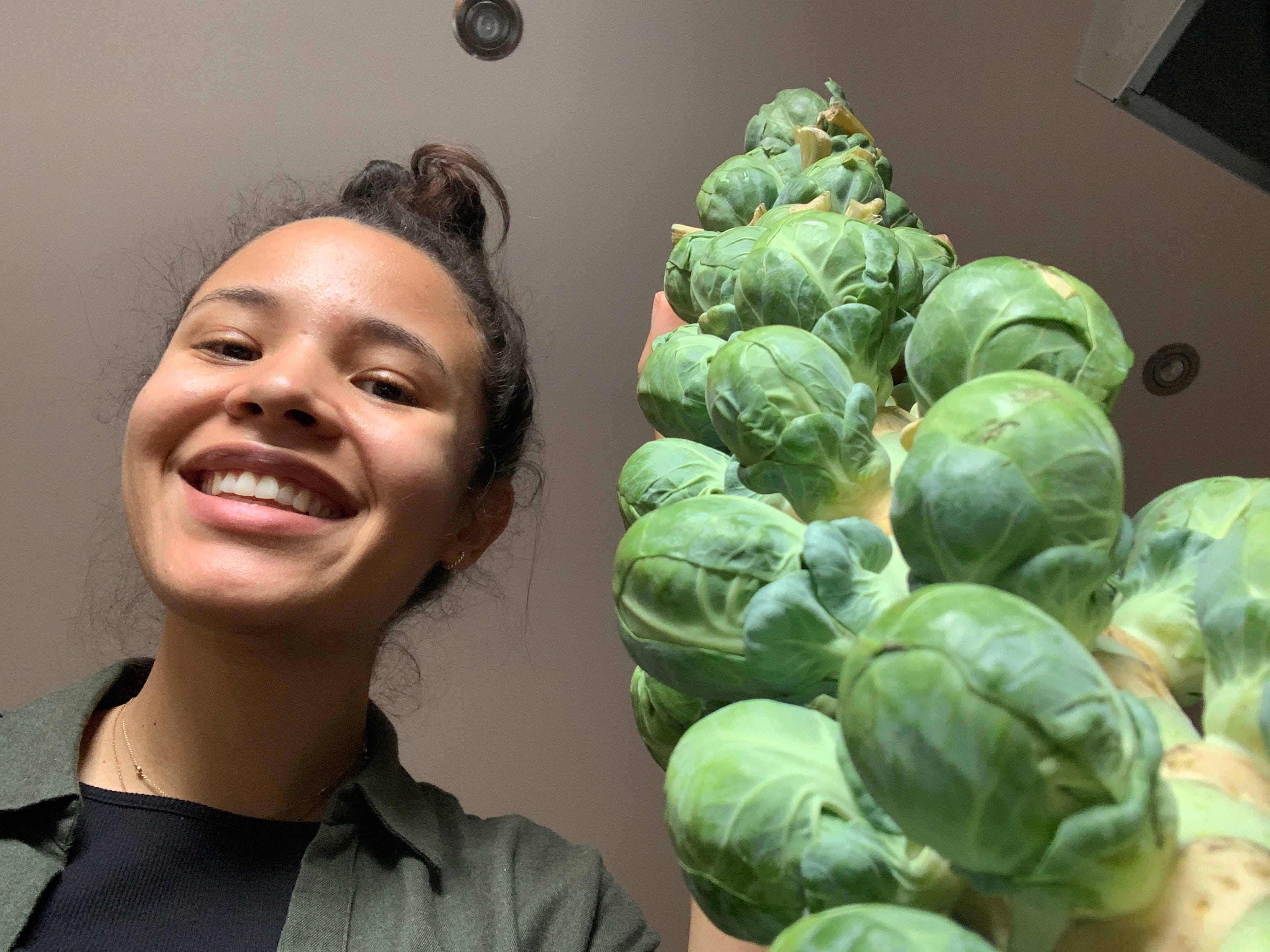
Vegetable-wise, there’s also still plenty to enjoy. Brussels sprouts, both green and purple, are perhaps tastiest at this time of year, as are many other cruciferous veg and leafy winter greens. Thanks to the cold brought on by the change in season, chicories like radicchio and escarole see their colour intensified and their bitterness especially mellowed at this time of year, all while the powdery blue hues of frost-nipped brassicas like collard greens and kales transform these familiar friends into something even more inviting. Cold-hardy leafy greens like corn salad (AKA mâche), tatsoi, winter purslane, and mizuna thrive equally after a frost and must also not be missed.
ㅤ
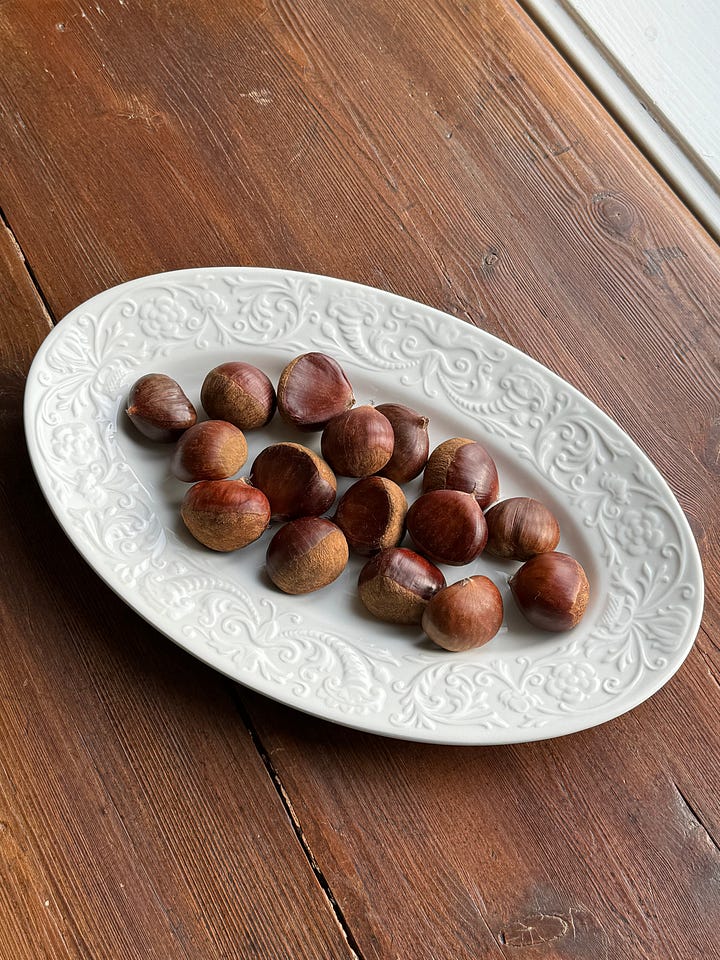
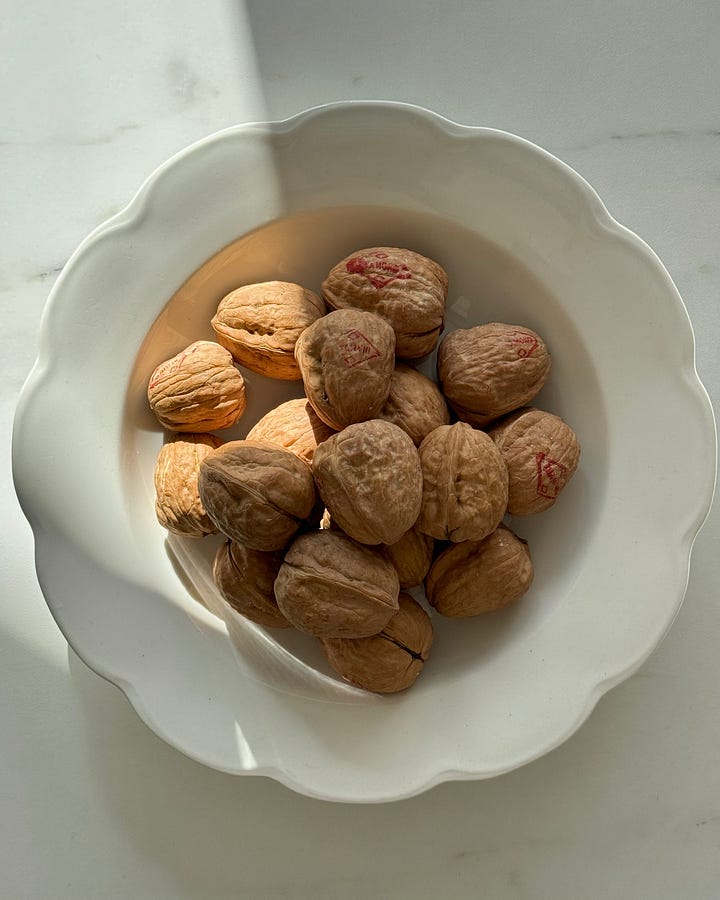
This late autumn, as well as Brussels sprouts, chicories, cabbages and kales of all colours and shapes, you’ll want to look for nuts like walnuts and pecans in their shells, the first leeks, plus beetroots and chard, winter radishes and Hakurei turnips, parsnips and carrots, sunchokes and salsify, rapini, minestra nera, broccoli, and cauliflower, rutabaga and celeriac, cardoons and artichokes, horseradish, and more, as well as classic dried and cured staples like alliums, potatoes, winter squashes, beans, seeds, herbs, whole grains, aromatics, and spices. Hardy herbs like parsley, chervil, sage, oregano, rosemary, and even mint can often be found fresh at this time of year, too.
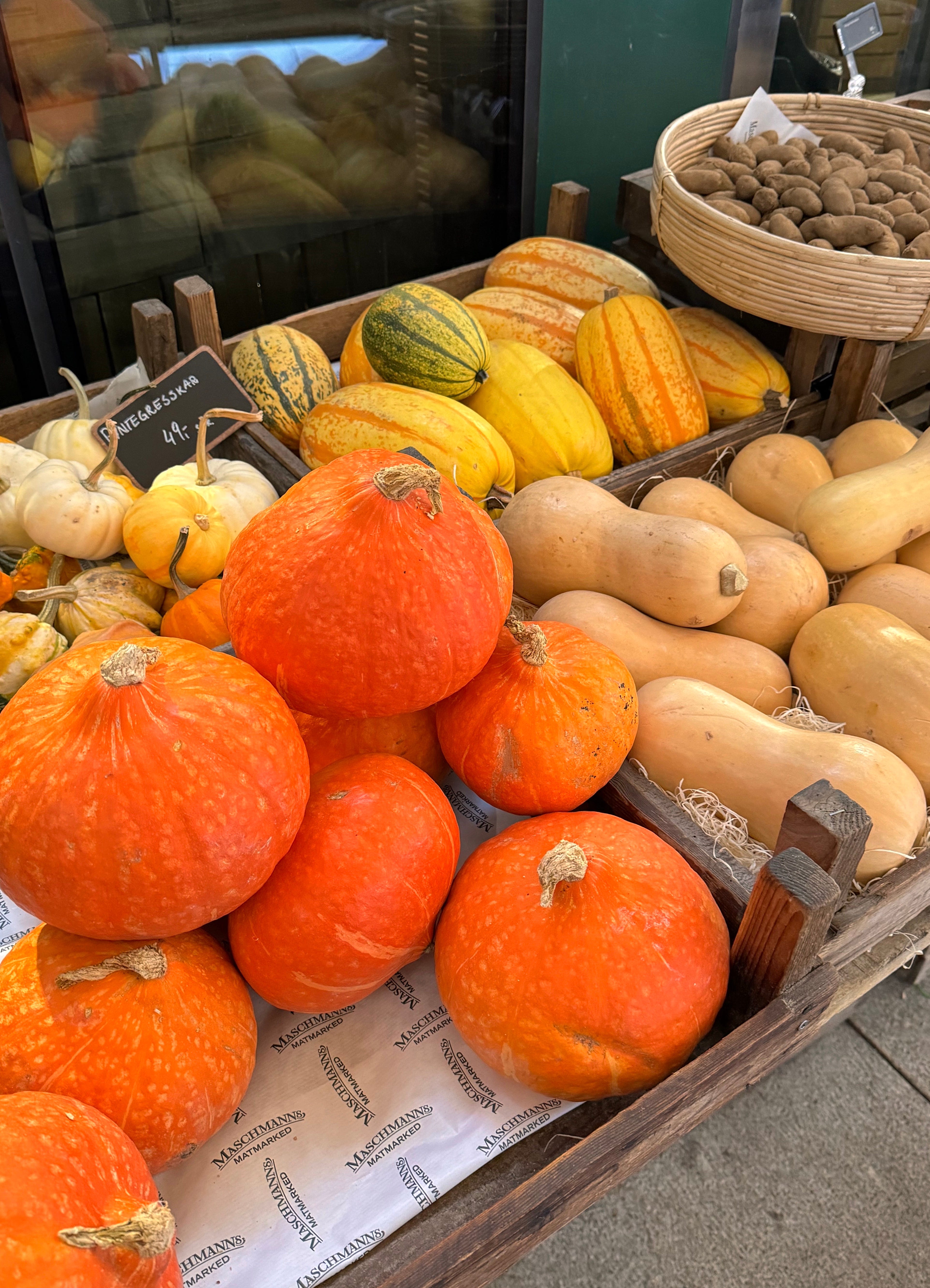
From the steely blue of leek tops to the nearly black green of dinosaur kale and the chocolatey purples of chard stems, cabbage leaves, and Brussels sprouts, passing through the vibrant oranges and reds of familiar and exotic fruits alike, it seems November’s — and, soon, December’s — radiantly restrained palette feels, after all, more than enough to keep the grey of the year’s darkest season at bay.
some seasonal inspiration
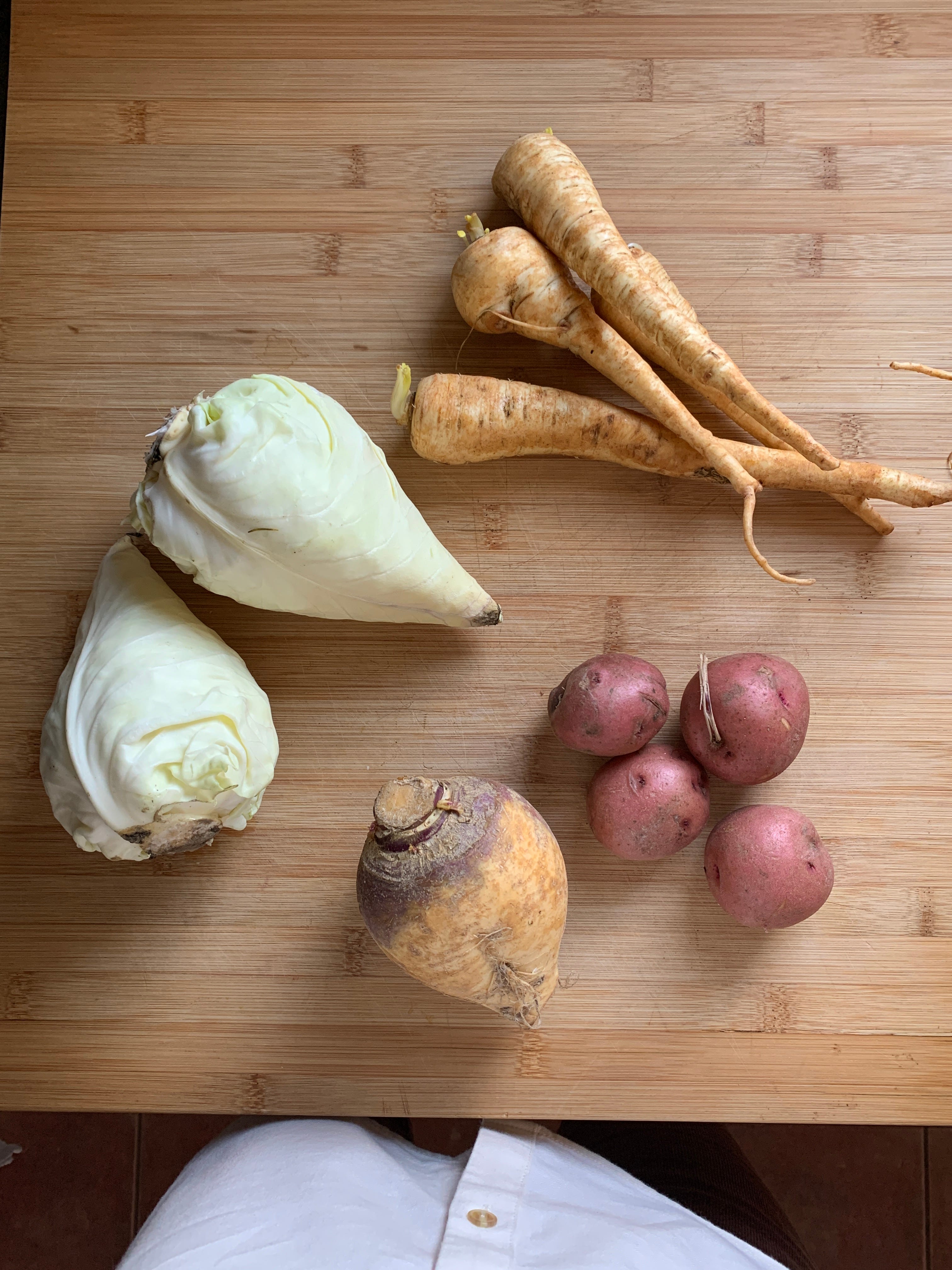
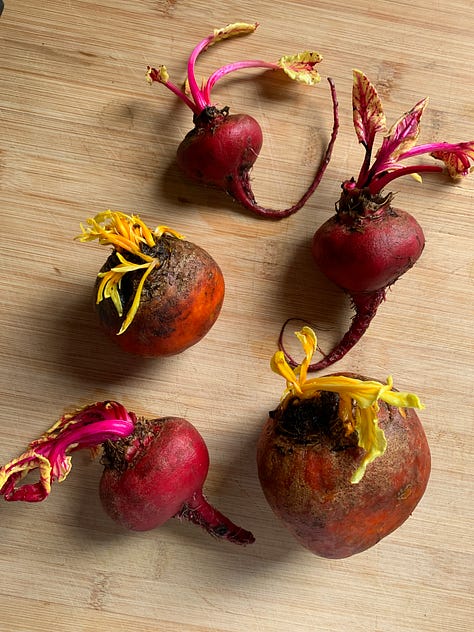
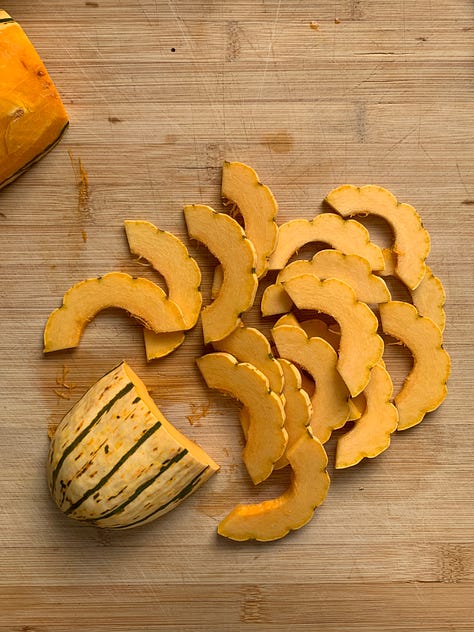
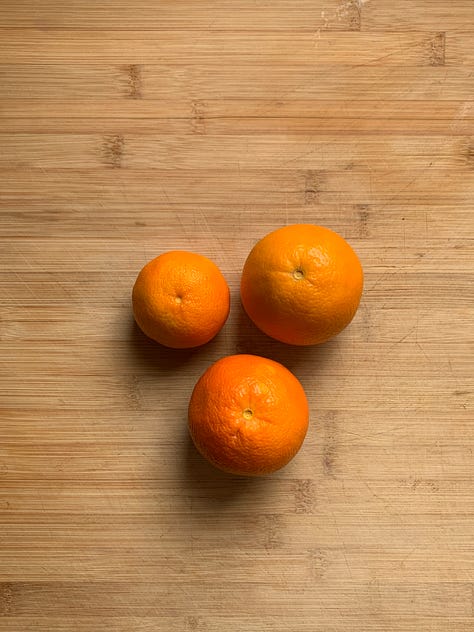
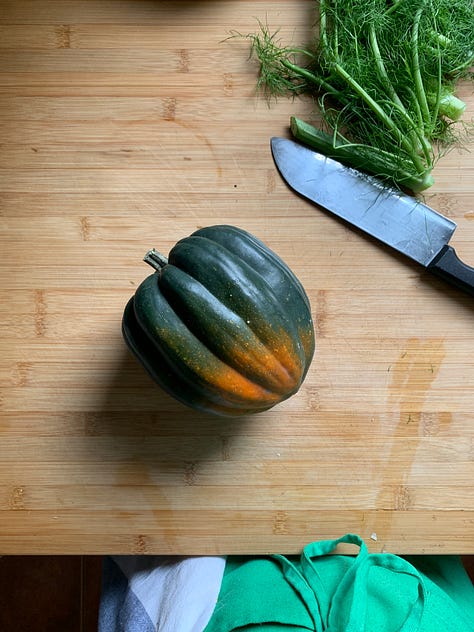
Autumn’s third act is — among other things — a time for dried fruits and freshly shelled nuts, tart heath berries brightened by the zing of early-season citrus, bitter brassicas and chicories mellowed by a dash of acid and a peppering of time. It’s a period made for adding depth with cured alliums and whole spices, heft via lentils and whole grains, and a little sparkle through pickles and ferments. Most of all, it’s a season for learning to love and reimagine the use of store-cupboard stalwarts like pumpkins and winter squashes, root vegetables and tubers, dried beans and tinned tomatoes — over and over (and over) again.
ㅤ
Yes, autumn’s end is the time for embracing dishes that beckon you to linger by the steady warmth of the stove or oven, that invite you to bask with anticipation in their gentle glow, with the quietly soothing knowledge that, before long, something delicious will be served; ready to be savoured slowly, with real pleasure and delight.
And if you’re not quite sure what to bring to the table over the next few weeks, I hope you’ll find both comfort and inspiration in these seasonally appropriate dishes and desserts from Instagram and the recipe archive.

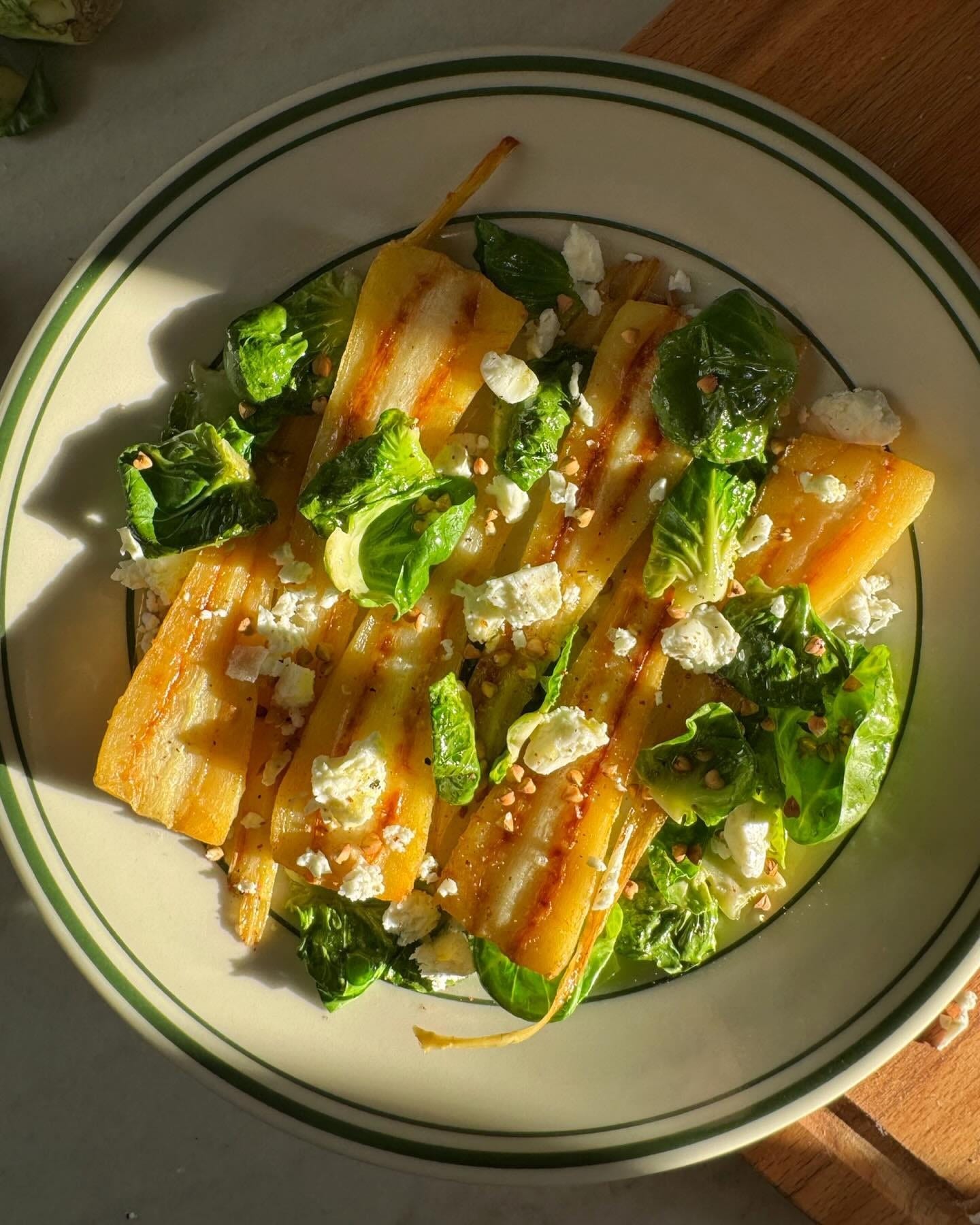
A simple side to brighten any dark day. Simply steam or boil some parsnips, then sizzle them with Brussels sprouts until sweet, tender, and perfectly irresistible. For more parsnip inspiration, try this dish with carrots, a cool tahini yogurt, and quick herb sauce.
ㅤ
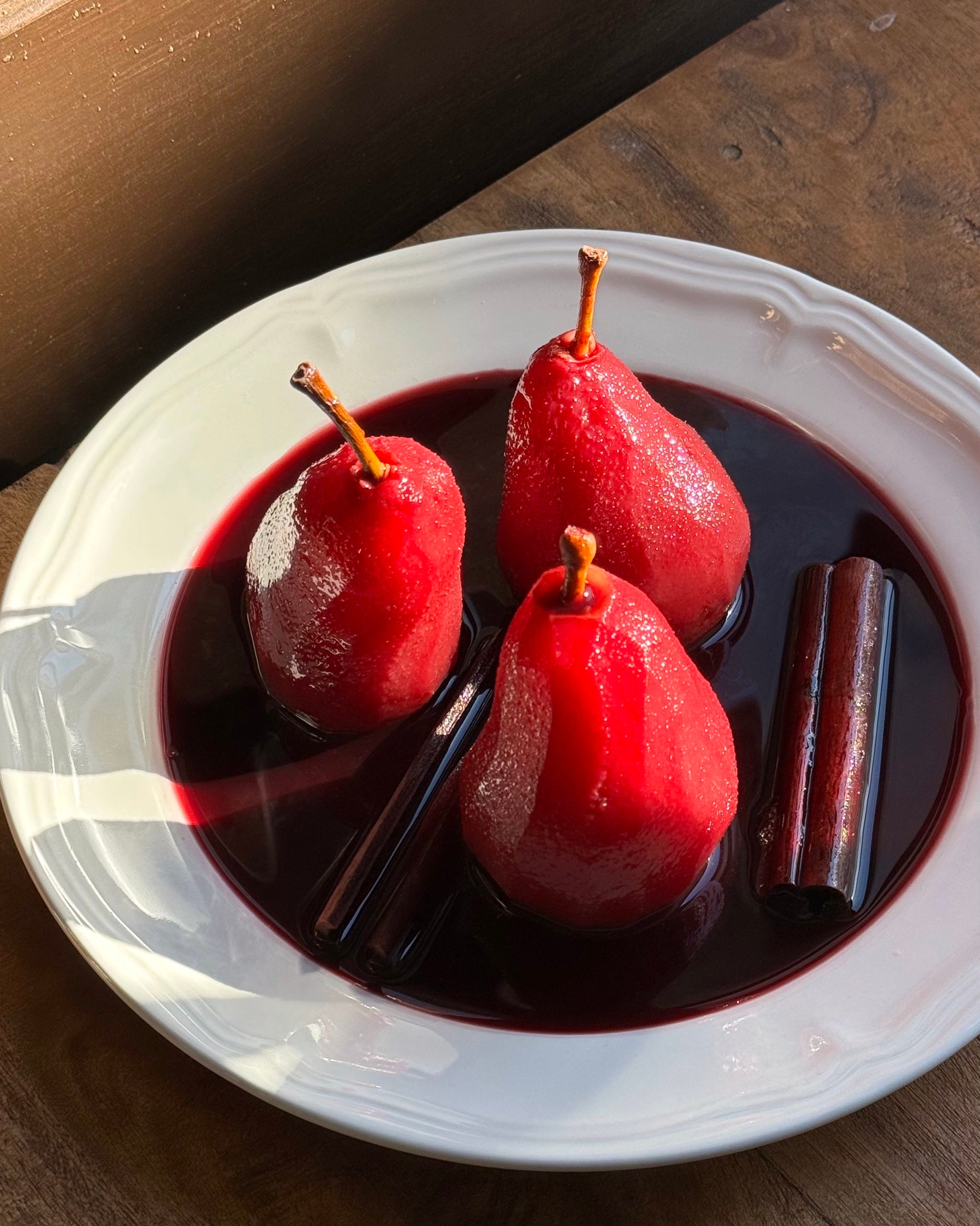
Between the sweet, softening aroma of poaching pears and the deeply enveloping fragrance of citrus and spices, preparing this dessert might as well double as a gentle session of aromatherapy.
ㅤ
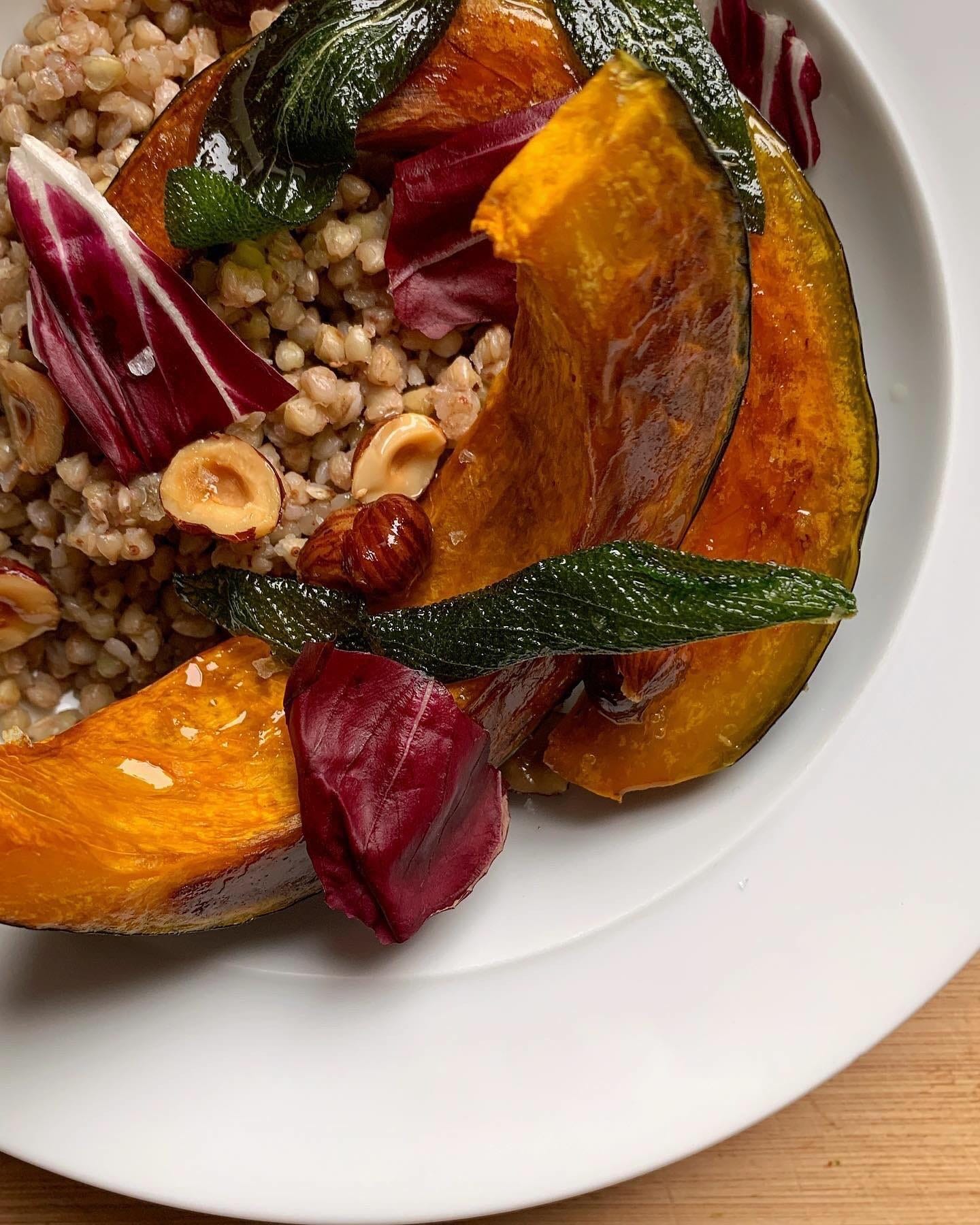
The marriage of squash, chicory, and savoury grains is made all the more blissful by topping the whole affair with softly sizzled sage and luscious hazelnuts, toasted ‘til just-golden.
ㅤ
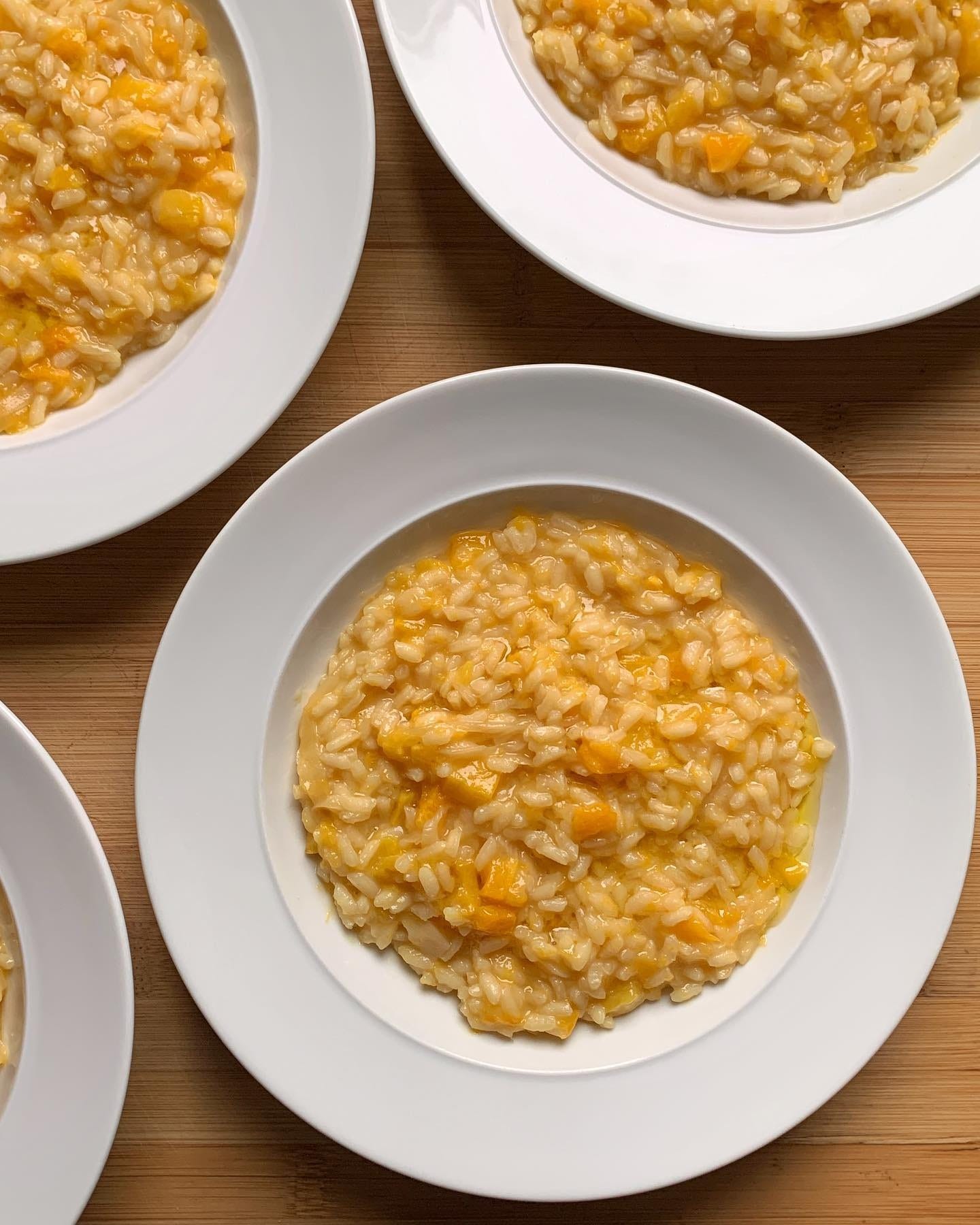
Cooked in a sage and saffron broth, this crowd-pleasing twist on the Italian classic is a pleasantly unhurried dish, softly sweet and soothing, both in the making and the enjoying.
ㅤ
...and more!
· a pumpkin chili ginger garlic soup
· caramelised pear & crystallised ginger scones
· green lentils, fast and slow
· a crispy chickpea caesar for all seasons
· steam-charred cabbage with hummus + hazelnuts
a recipe (of sorts)
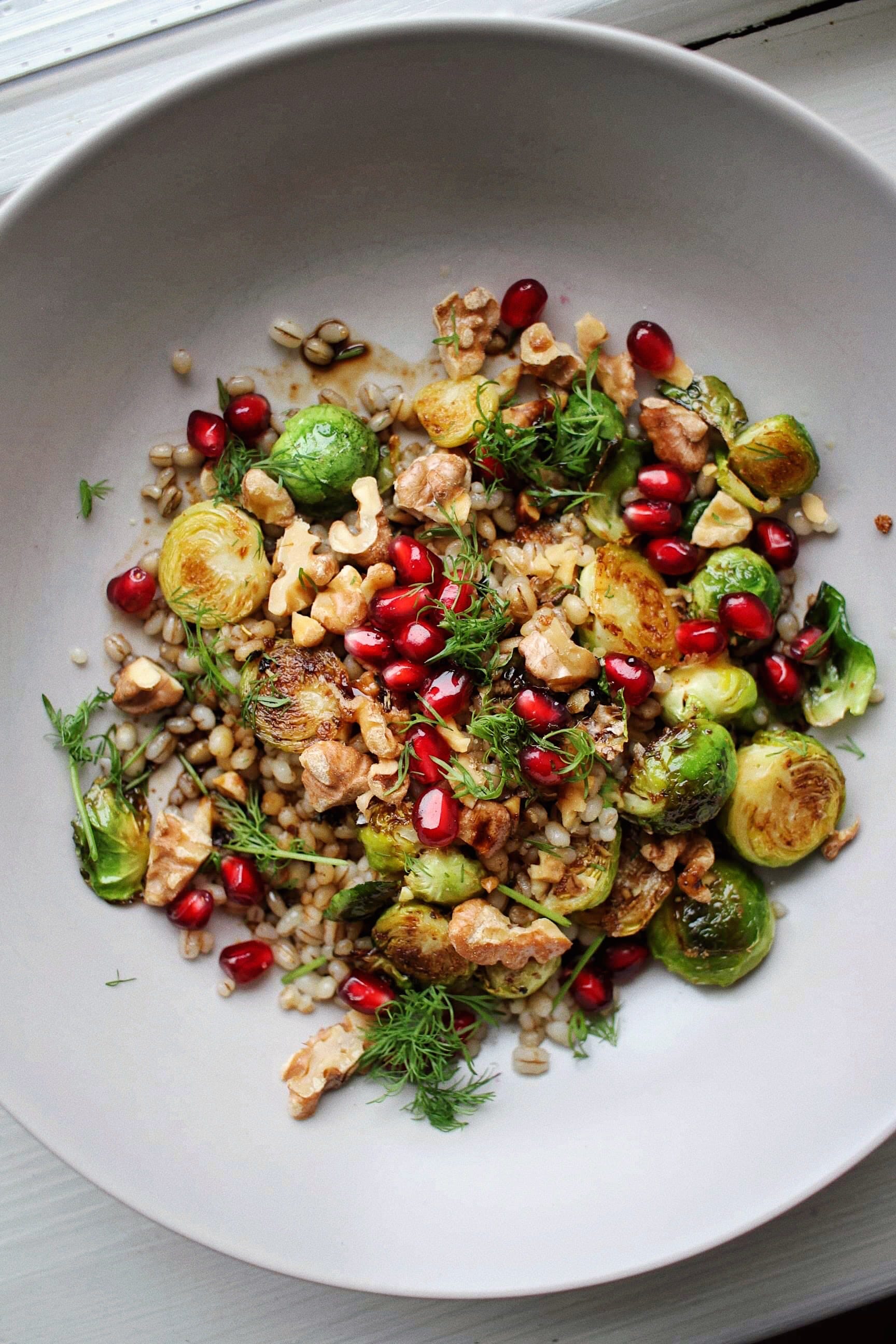
This isn’t exactly a recipe, as I haven’t tested it thoroughly, but instead more of a “how I made this” (and perhaps also a bit of cheerful encouragement to cook some more whole grains — they’re great in big batches! cook them in your rice cooker! freeze them in portions! add them to brothy aromatic soups!).
In any case, I make some variation of this dish every late autumn. It really is a treat.
Thank goodness for cooked grains in the fridge, just sitting there, ready and waiting to save the day when you need something simple! In this case: leftover barley, which became this warm balsamic salad, adorned with golden pan-fried Brussels sprouts, ruby red pomegranate seeds, and toasted golden walnuts.

WARM GRAIN SALAD WITH BRUSSELS SPROUTS & POMEGRANATE
makes approx. two portions
INGREDIENTS
FOR THE SALAD
~250g (a generous cup) cooked whole grains*, like barley, farro, spelt emmer, or wheat
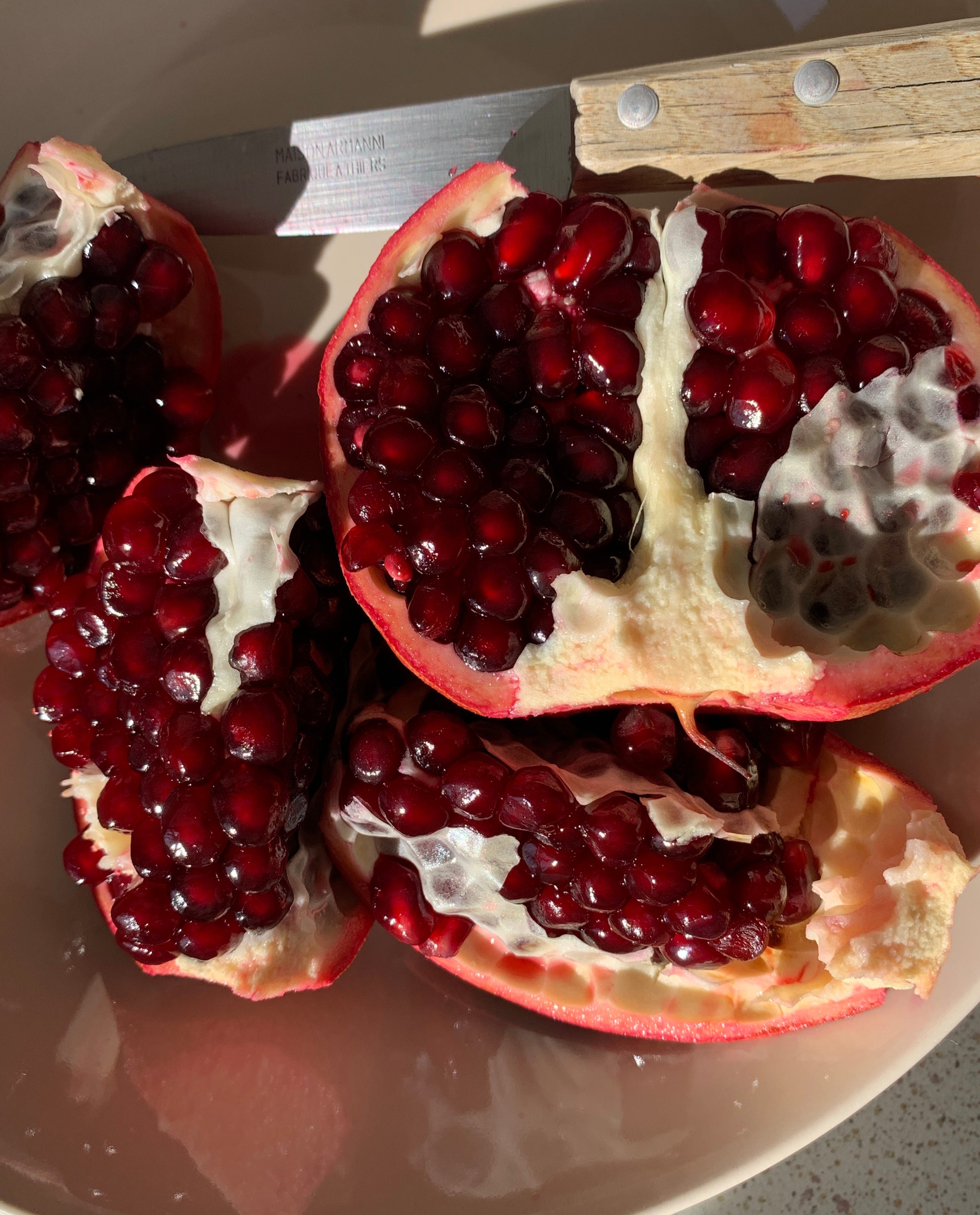
1 de-seeded pomegranate*, or one handful of seeds per serving
~12-16 fresh clean Brussels sprouts, approx. 6-8 per serving, depending on size
~20 shelled walnuts halves, or one handful per serving
extra virgin olive oil
sea salt
garlic powder
optional: fresh parsley, chervil, and/or fennel fronds
*if you don’t already have these ingredients prepped, see the steps below
ㅤ
FOR THE DRESSING
~2 Tbsp (30 ml) balsamic vinegar
~2 Tbsp (30 ml) Chinese black vinegar†
~1½ Tbsp (22ml) soy sauce, or tamari
~1 tsp (5 ml) pomegranate molasses‡
~½ tsp (2.5 ml) total of dried rosemary, onion, garlic and thyme, or of a similarly composed dried herb blend (I like Bragg’s Sprinkle seasoning)
black pepper, in a mill
†if you don’t have any Chinese black vinegar, just use more balsamic vinegar
‡if you don’t have any pomegranate molasses, go for date molasses, or a smidge of honey with a dash more balsamic vinegar instead
METHOD
If your grains aren’t already cooked, start by toasting around 80 grams of your chosen nutty whole grain (barley, farro, spelt, emmer, wheat, rye) in a dry pot over medium heat, tossing and shaking the grains regularly so they don’t burn, until they become slightly golden and fragrantly nutty, around 5 minutes. Top with water as per package instructions, bring to a boil, season well with salt, then reduce the heat to medium-low and immediately cover with a lid. Leave to simmer until al dente, as per your grain’s package instructions (anywhere from 25 to 60 minutes depending on the grain), draining any excess water away once cooked if necessary.
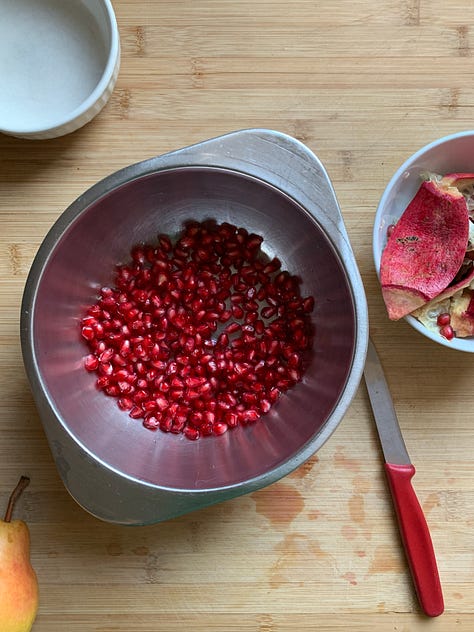
If your pomegranate isn’t already de-seeded, slice a shallow cap off the top of a pomegranate, removing just enough pith and skin to barely reveal the tops of the seeds inside, then score a shallow cut vertically along each of the fruit’s 5-to-6 ridges, from top to bottom. Using these scores as a guide, pull the pomegranate apart into sections over a bowl. Pick the seeds out from each section, separating them from the pith (some people like to do this into a bowl filled with water because the seeds with sink and the piths will float — I find this isn’t necessary and just makes more mess to clean), then place the good ones (bright red and firm; discard any that are mauve and mushy) in a container. Seal and refrigerate for later.
Prep your sprouts. Shallowly trim the bases off the bottom of 12 large or 16 small Brussels sprouts, just enough to remove any undesirable oxidation, but not too much, as you want to keep as many leaves attached to each sprout as you can. Discard any wilted or damaged outer leaves, then halve each Brussels sprout vertically down the middle.
Add enough olive oil to just coat the bottom of a medium-large frying pan, around two tablespoons, then set it over medium-low heat. Once the oil is hot, place the sprouts into the pan, cut-side down. Season with salt, then set a timer for 8 minutes.
Toast your nuts. Place two handfuls of shelled walnuts onto a small baking tray and leave them to toast in an oven set to 180°C/356°F until nutty and golden, around 7 minutes.
Make the dressing. In a small pot or frying pan placed over medium-low heat, add around two tablespoons of balsamic vinegar, two tablespoons of Chinese black vinegar, one and a half tablespoons of soy sauce, a teaspoon of pomegranate molasses. Bring to a gentle simmer, then season with about half a teaspoon of mixed dried rosemary, onion, garlic, and thyme, plus a generous amount of freshly ground black pepper, milled on a medium setting. Measurements don’t have to be precise here, so I trust you to use your intuition and eyeball ingredients to your liking (though you may also dip a cooked Brussels sprout into the vinaigrette to taste and adjust it, if necessary).
Once your Brussels sprout timer has gone off, flip over a sprout to see if it has nicely browned. If so, flip all the rest. (If not, cook one to two minutes more and check again.) Season the flipped sprouts with a light dusting of garlic powder, then scooch them to one side of the pan so that you can reheat your cooked grains in the other half (add in a bit more olive oil first if the pan is dry). Continue cooking for 3 to 4 minutes more, then remove the pan from the heat and gently stir the grains into the Brussels sprouts to combine.
Serve the dish. Time to plate up! Roughly chop the toasted walnuts. Divide the sizzled Brussels sprouts and warmed grains into two shallow bowls or deep plates. Pour a few tablespoons of the warm dressing over each serving, then top with the chopped walnuts, dividing them equally into each dish. Scatter a generous handful of pomegranate seeds over each portion, then top with a small sprinkle of gently chopped fresh tender herbs if you have some on hand (I used greenhouse dill here, but I think that fresh parsley, chervil, and/or fennel fronds would be better). Top with one last spoonful of warm dressing if you wish, then serve and enjoy!
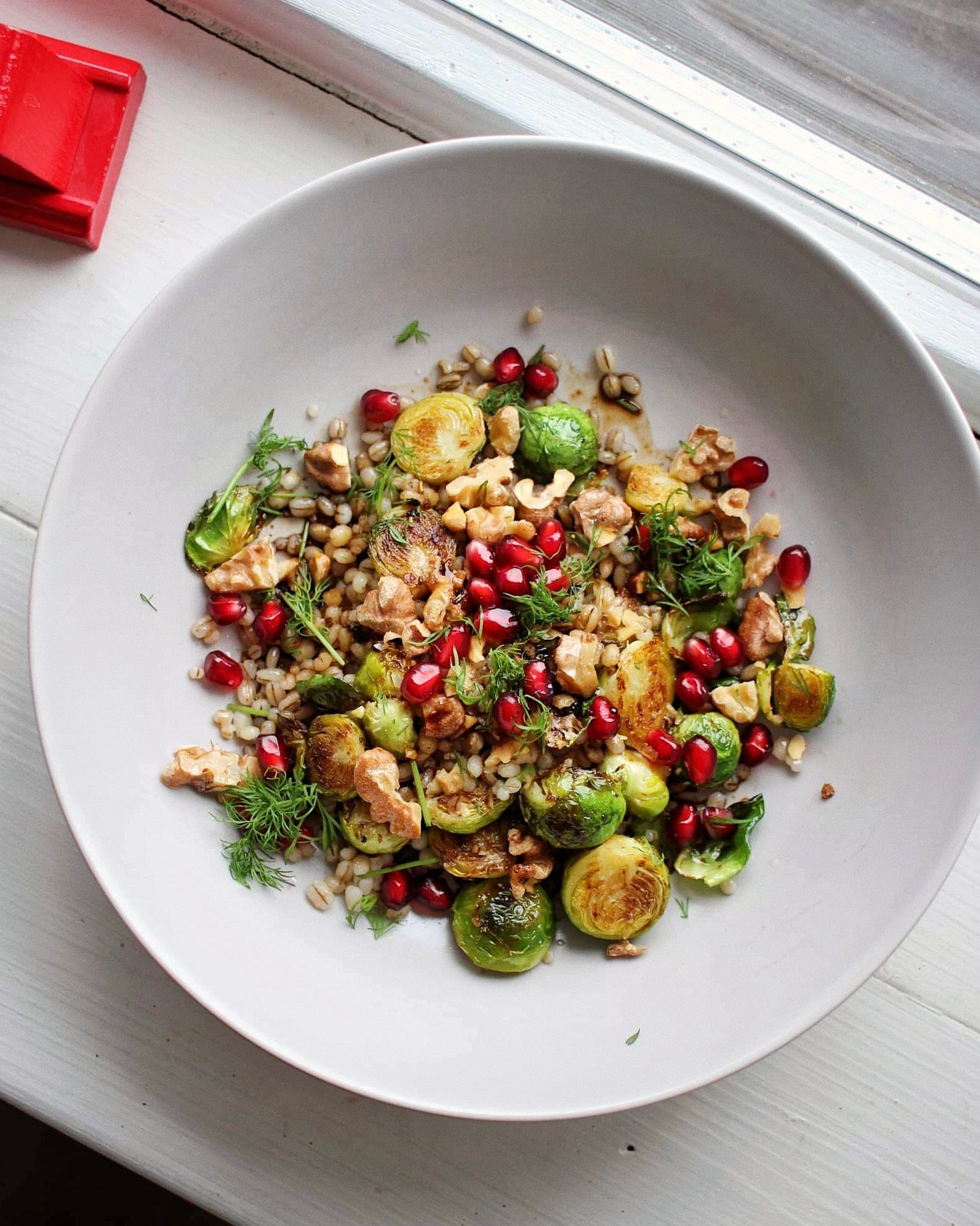
Makes a lovely lunch with colour and crunch, perfect for any late autumn’s day. For an even heartier dish, feel free to add cheese (say, feta) or legumes (like brown lentils) over top; or simply enjoy this dish as a side or appetiser to accompany something more substantial.
last, but not least:
In case you didn’t know, public health is my jam (more on that here, here, and here) — it informs everything I do! And, as always, I like to leave you with a few parting links relating to the topic, as food for thought:
🗒️ ONE ARTICLE
📘ONE BOOK
What to Eat Now: The Indispensable Guide to Good Food, How to Find It, and Why It Matters, by Marion Nestle
🎧 ONE PODCAST EPISODE
Can we eat better without paying more? | Feed: a food systems podcast
🗓️ ONE EVENT (IN CASE YOU MISSED IT)
Recording of the Launch of the Lancet Series on Ultra-processed Foods and Human Health (held Nov 19)
P.S. I always have a hard time just picking one of each so, in case you're interested, there's plenty more where that came from!

That’s all from me this month. See you again next time!
💌 If you enjoyed this post, please leave it a like, a comment, or a repost — this really helps make the newsletter more visible, so that others like you can find it too 💌
click here to see all meals on the site
click here for the newsletter archive
click here for more from instagram
