Tuesday, August 18th, 2026
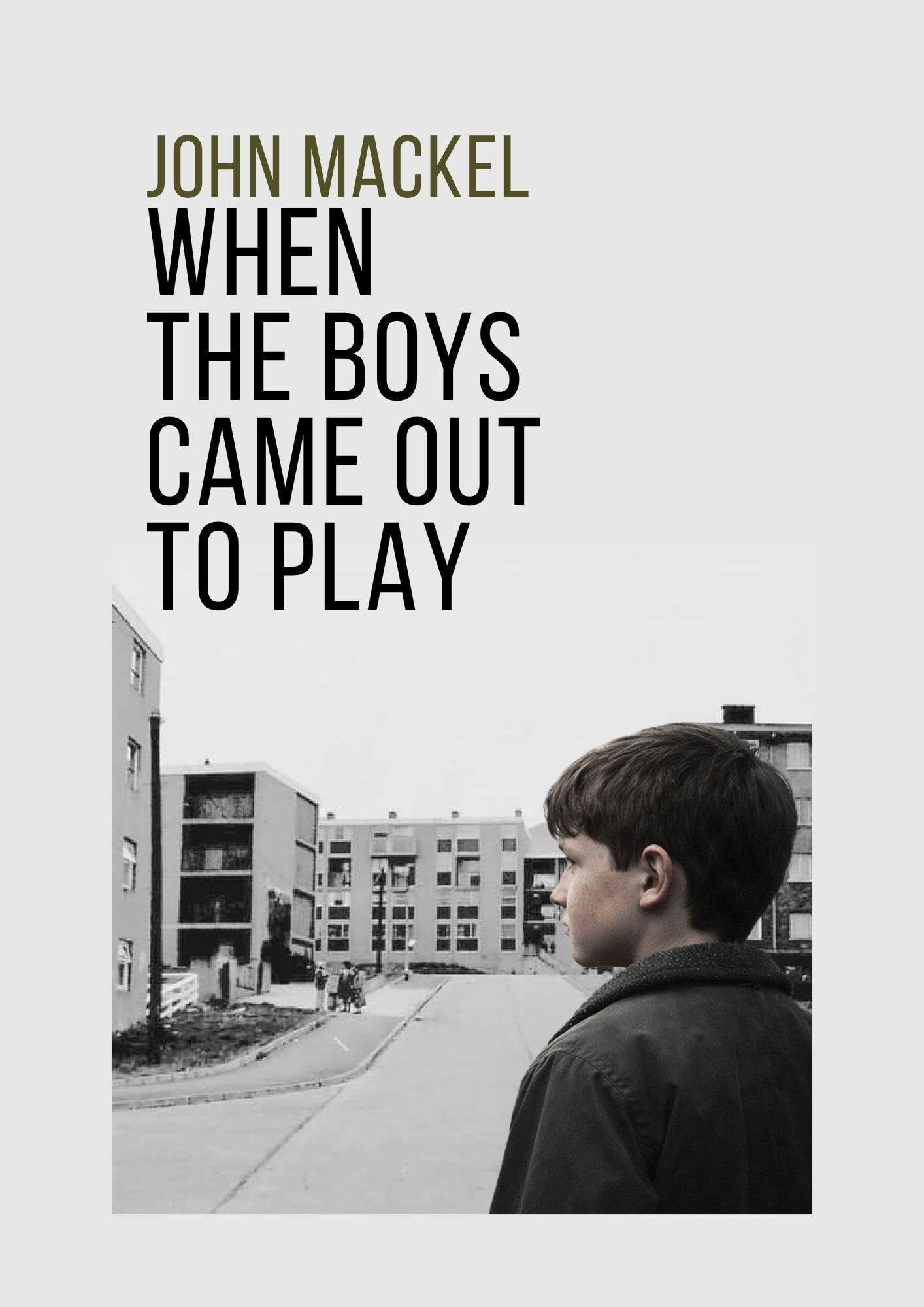
When The Boys Came Out To Play by John Mackel
I went to plenty of great sessions when I was in Belfast. One of the best was during Belfast Tradfest, out at The Hatfield with Bríd Harper, Muireann Nic Amhlaoibh, and Michael Rooney.

I ended up sitting next a lovely local fiddler named John. I saw him again the next day when I was at Ulster University for my workshop. He had a stand there, selling a new book of tunes that he had published. It’s called Pass It On. I couldn’t resist buying a copy. Then he mentioned that he also had a few copies of his brand new debut novel.
Now I was really intrigued. I told him to give me the elevator pitch and he said it was a semi-autobiographical work about growing up in Belfast druing The Troubles and finding solace in traditional Irish music.
There aren’t that many books about traditional Irish music, and certainly not many novels. “I’ll take one!” I said. He handed me a fresh copy of When The Boys Came Out To Play.
I started reading it when I got back to Brighton. To be honest, my expectations weren’t high. I shouldn’t expect too much from a self-published novel by a first-time author, right?
But I was completely captivated. I know it’s a cliché to talk about a book being un-put-downable, but I was seeking out opportunities during the day to crack it open again and read just one more chapter.
There’s nothing particularly clever about the prose, and that its strength. Some of the best writers understand how to let a story unfold through clear, direct writing. It sounds simple but it’s extremely hard to do it well.
This is a story told from a young boy’s point of view, and it genuinely feels like you’re seeing the world through his eyes. More than that, it feels like you’re right there experiencing events, some terrible and some transcendent.
This isn’t an epic story. It’s just the story of one child and his family. But I was completely invested in it.
Now look, just because I really like a book doesn’t mean that other people will. I always try to keep that in mind when I’m writing about any book I’ve read. But in this case, I really think John Mackel has written something excellent and I’d love for more people to discover it.
Do yourself a favour and get hold of When The Boys Came Out To Play. You won’t regret it.
Sunday, August 16th, 2026
Polytropus
Christopher Nolan’s adaptation of The Odyssey comes at just at the right time for me. I spent the last two years reading the Robert Fagles translation, finishing it just a few months ago.
When I heard that Christopher Nolan was adapting Homer’s poem, I thought it made perfect sense. I really like the way that he plays around with flashbacks and narrative structure—something that The Odyssey is absolutely stuffed with.
Meanwhile, inspired by Madeline Miller’s Circe, I’ve also been reading lots of modern retellings of Greek myths, including new takes on the events in The Odyssey.
I’ve mentioned it before, but one of the most interesting choices in these interpretations is how to treat the gods in these stories. Do they actually exist, directing the narrative? Or are events told in a purely factual way?
Claire North’s Songs of Penelope series has different gods narrate the story, but they themselves are non-interventionist. Likewise Pat Barker’s Trojan war trilogy is full of grit, avoiding supernatural occurrences.
So I was wondering what approach Christopher Nolan would take.
Having seen the film, it looks like it’s chock full of gods and monsters: Polyphemus the cyclops, the Laestrygonian giants, the song of the sirens, the sorcery of Circe, the fearsome Scylla and Charybdis.
But…
As with Homer’s original poem, all of those events are told in flashback. And they’re told by one very unreliable narrator. Odysseus, the much-travelled, adaptable, wily, ingenious, complicated man of twists and turns. His superpower is manipulation through storytelling.
Not only that, but Nolan combines two different story elements to have Odysseus narrate those supernatural events to Calypso having been drugged up on lotus leaves. He is, at this point, the last surviving member of his fleet. There is no one left to contradict his account. His men are dead, perhaps by cyclops, giant, whirlpool and monster, or perhaps by more mundane starvation, exhaustion and disease.
Recently I read Finn Mac Cool by Morgan Llywelyn about a hero from a different mythology:
For the characters in this book, their belief in magic is as real as their belief in the weather. But there are no supernatural powers here. If anything, Finn’s superpower is his ability to tell—and believe—tall tales involving supernatural intervention.
All the usual accounts of Finn Mac Cool’s prowess are retold as deeds that may have a basis in reality but then get exaggerated almost immediately.
It’s a framing device that works well. It’s all too easy to believe in the rise to power of a charismatic man skilled in controlling the narrative.
I think this is what Christopher Nolan has done with The Odyssey. Odysseus probably believes himself that he tricked a cyclops, fought giants, saw his crew turned into pigs, and led them between a whirlpool and a cliff monster.
But when he returns the real world of Ithica, there are no supernatural foes and no supernatural allies. Just a grubby story of disguise and household combat, a sort of Glencoe massacre, a Red Wedding, where Odysseus delivers the killing stroke to the very concept of xenia, a process he began with his Trojan horse deception.
We get one final reveal from the flashbacks, and it’s to show that the one supernatural character on-screen—Athena—is likely a figment of Odysseus’s conscience.
Knowing that we’ve been getting the narrative from a hallucinating traumatised combat veteran should make us question everything he’s been telling us. I’m looking forward to rewatching the film with this in mind.
Saturday, August 15th, 2026
Chíne tréile
When I was immersed in the Irish language for a week in Donegal last month, I made plenty of mistakes. But there’s one mistake that I’m actually quite pleased I made.
The emphasis at Oideas Gael is on conversational Irish, so our teacher would often put us into groups of around four people to discuss a particular topic. On one occasion, the topic was food.
We had some starter questions to ask one another to get the conversation going. One of the questions was about how we liked our eggs in the morning. One of my classmates described how her father, when he was in a hurry, would just crack an egg into a glass and gulp it straight down.
If you’re like me, this will immediately make you think of that scene in Rocky. I wanted to say:
Sin sa scannán Rocky!
…which means “that’s in the film Rocky!”.
But what actually came out was:
Sin sa rackán Sconny!
In my excitement, I made a spoonerism.
I’ve come across spoonerisms in English like “my lord is shoving leopard” or “no wucking furries” and I’ve certainly made some myself. But this was the first time it had happened in Irish.
Mistakes are never intentional, but something about this category of mistake felt different. Like, there must be a certain level of comfort with a language for your brain to make an off-the-cuff involuntary mix-up like that.
There are well-known milestones in learning any language. Having your first dream in that language. Making your first pun. This felt kind of like that.
Monday, August 10th, 2026
An tuath ’s ceart
I spent the last three weeks in the north of Ireland.
Myself and Jessica flew to Belfast where we spent the first night. We managed to get to a session that evening where we were warmly welcomed.
The next day we travelled to Donegal. A train from Belfast to Derry. A bus from Derry to Donegal Town. Finally another bus from Donegal Town to Glencolmcille, our home for the next week.
Oideas Gael
This was our second year coming to Oideas Gael to spend a week learning Irish in the beautiful surroundings of Glencolmcille. We both really enjoyed it last year but we weren’t sure whether lightning would strike twice for us.
We needn’t have worried. It was absolutely magical. The place is beautiful. The people are ridiculously friendly. And there was a session every single night in the local pub.


But we weren’t just there to enjoy the peaceful landscape and the fast fiddle tunes. We spent the week hard at work immersed in the Irish language.
There were eight different levels for the classes, ensuring that everyone was catered for no matter their proficiency. I spent the week in level six. Jessica was in level three, which is quite remarkable considering that last year she started from absolutely nothing at level one.
My teacher was great and so were my classmates. And it turned out that some of them were also heading the same way as us at the end of the week…
Belfast Tradfest
We conducted our intitial journey in reverse to get back to Belfast. We should up when Belfast Pride was in full swing, which was quite a shock to the system after the peace and quiet in Glencolmcille.
We were back for Belfast Tradfest. This is the one event we never miss. It’s easily the best-organised traditional music festival out there. Excellent classes, sessions, and concerts.


I had an excellent week attending a workshop with Macdara O’Faoláin and getting to some great sessions. I even got to practice a fair bit of Irish by going to the sessions at the Cultúrlann.
One of the things that makes Belfast Tradfest doable is the accommodation situation. Through the festival, you can book a room in modern student digs right in the heart of the city. This year they were offering the chance to stay there for an extra week…
The Fleadh
The fleadh is the biggest gathering of Irish music anywhere. It’s a week of non-stop music, dance, and—let’s be honest—drinking. I’ve never been to the fleadh before but this year I wanted to show my support for it. For the very first time, it was happening in Belfast. There was a time when that would’ve been unimaginable.
People have been talking about this all year. The general vibe has been hope tinged with worry. Everyone I know in Belfast really wanted the fleadh to succeed, but they were also prepared to be disappointed.
As it turned out, it was a huge success. That’s in no small part down to the people of Belfast. 1,300 people volunteered to help out at the event and it showed. Despite enermous crowds, everything felt managable, friendly, and fun.
I’m not usually one for big crowds but the vibes were so good that even I couldn’t help but get into the swing of it.
That said, when I wanted some good tunes I went outside the city centre to the Cumann Cultúrtha Mhic Reachtain for a nice morning session before hitting the streets.


I am so, so glad that the fleadh didn’t just go well, it exceeded expectations. I’ve been going to Belfast for the past few years and I sing the city’s praises to anyone who will listen, but I always got the impression that there was some scepticism. But now, anyone who’s been to the fleadh knows just how great this place is.
After three weeks in Ulster, it was time to head back to Brighton. Although, technically it wasn’t three straight weeks away from home…
Brighton
This is going to sound ridiculous (and it kind of is) but in between Belfast Tradfest and the fleadh, we nipped back home for a couple of nights. That’s because Nick Cave was playing his only UK date this year in Brighton, the town he called home for many years.
This might be the furthest I’ve travelled just for a gig, which is ironic because it was literally a short walk from our house.
I think I first saw Nick Cave And The Bad Seeds when I was living in Galway in the early 90s. I saw them in London in the early 2000s. I saw them in Brighton in the 2010s doing a warm-up gig. I couldn’t miss this this one. It was terrible for my carbon footprint, but the man knows how to put on a good show.
Sunday, August 9th, 2026
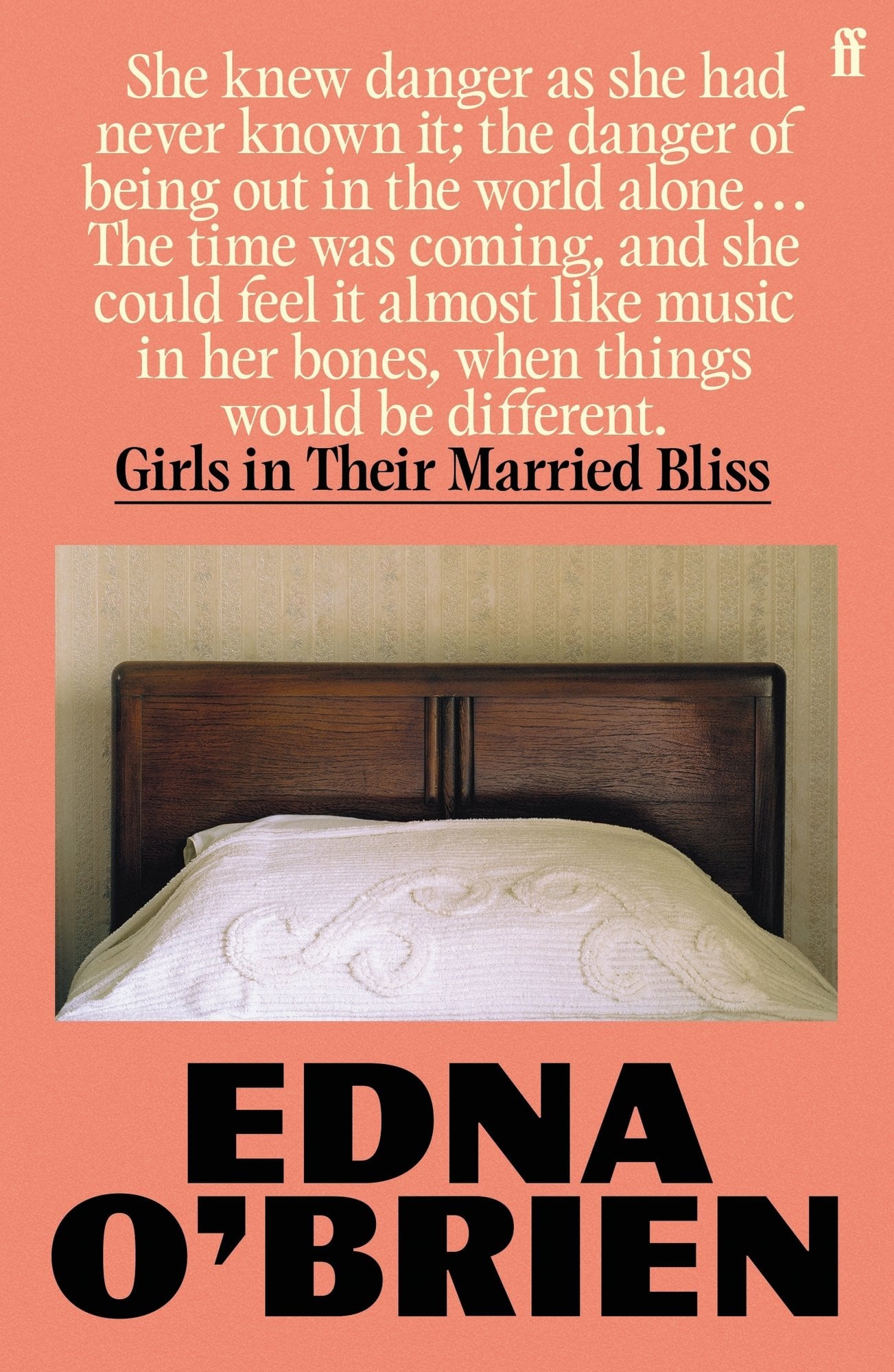
Girls In Their Married Bliss by Edna O’Brien
I really liked Edna O’Brien’s The Country Girls so when I saw a copy of Girls In Their Married Bliss for £1 in a local charity shop, I snapped it up even though it had the worst cover you could possibly imagine.
This is the second and final sequel to The Country Girls which means I’ve skipped over the middle book, The Lonely Girl. I’ll have to rectify that.
Once again the narrative centres on frenemies Kate and Baba but things are different this time around. For a start, we get the first-person perspective of both women this time. And the setting has moved to London, which probably explains the much darker tone of this book.
Things are grim. That grimness is described perfectly in O’Brien’s writing. The boredom and sordidness of this life is detailed as precisely as the city and its cold damp weather.
It’s a short book, which is probably just as well. I’m not sure I’d want to spend much more time in this milieu. But there’s no denying that it’s the work of a great writer giving a voice to people who’s story doesn’t often get told.
Thursday, August 6th, 2026
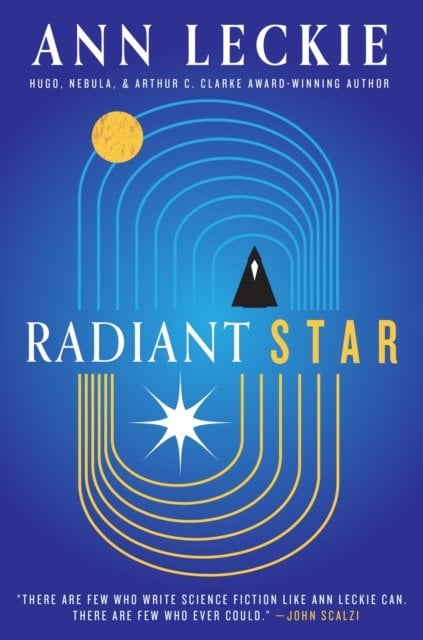
Radiant Star by Ann Leckie
I absolutely loved Ann Leckie’s Imperial Radch trilogy, particularly the first book, Ancillary Justice which blew me away when I first read it.
Since then I’ve enjoyed the other books she’s written in the same universe, dealing with the fallout of the events in the original series. Radiant Star is the latest addition to the canon.
I think the story falls into the category of planetary romance; the narrative is very much driven by the unique characteristics of the world we find ourselves on. Or should I say, in. The setting here is a rogue planet without a sun. Everything happens underground in an technology-mediated ecology that works great until it doesn’t.
This is a self-contained story with just vague rumours and nods to the events of the Imperial Radch trilogy. By the end of the book, those events—and the subsequent decisions reached in Translation State—make themselves felt keenly.
There’s a lot in here about infrastructure, admin, religion, hierarchy, social structures and power dynamics. I have to admit that the initial groundwork laid out at the start of the book was tough going, but once the story hit its stride, it really took off. Stick with it.
Any Ann Leckie book is guaranteed to be a good read, and Radiant Star is no exception. I thoroughly enjoyed this.
Wednesday, July 15th, 2026
Image to text
At The Web You Want event in Amsterdam last month, Léonie gave an absolutely fantastic talk. You can now read the whole thing: Accessibility is resistance!
She makes the very good point that generative tools are a necessary accessibility recourse when humans have failed to do their job properly.
Images without alt text? Somebody messed up. But this is damage that can be routed around with large language models.
So if you—like me—don’t like the idea of people using extractive generative tools made by the worst kind of people, pay heed:
If you want to resist AI, make accessibility part of everything you do, every decision you make, every product you design and build. Remove the need for people to use AI to compensate, and remember, accessibility is resistance.
Also last month, I wrote about enhancing images from a carousel to masonry using CSS Grid Lanes. Here’s the context:
Over on The Session, I added a little enhancement to the events and sessions listings recently. I make a call to the Google Places API to see if I can find a match for the venue, and if I do, pull in some photos.
Sidenote: right now there’s a major issue with this. None of the photos come with text descriptions. This is something I need to fix, and I’ve got some ideas on how to do that.
I was one of those people with a website that doesn’t have alt text for images. I was one of those people not doing their job.
The first fix I put in place was very much in keeping with the ethos of The Session. I added a form so that any member of the site can edit the alt text of the images in the carousel/masonry layout.
The Session is quite WikiPedia-like. Anyone can edit the track listings in the discography. Anyone can edit the details of any tune. Anyone can edit the details of any session or event. So it made sense to add one more thing that anyone can edit.
With that functionality in place, I put out the call:
If everyone were to take just one or two sessions or events and add alt text to the photos, it would really, really help make the site more accessible.
The community went to work and did a pretty good job.
But there are a lot images. I’d like to have a least some kind of alt text for all of them, even if it’s just a placeholder until someone gets around to adding something better.
I was going to have to use generative “AI”, wasn’t I?
Holding my nose, I investigated some alt-text-as-a-service APIs out there. I signed up for some trials and kicked the tyres. They were rubbish. I suspect most of them were vibe-coded.
The more I thought about it, the more I realised that I probably didn’t need the latest and greatest energy-guzzling large langauge models. Some good old-fashioned machine learning could do the trick here. I’m aiming to do a relatively straightforward transformation—image to text.
Check out the COCO project: Common Objects in Context. It’s a few years old now, but it’s basically a dataset that’s been trained on images.
Ah, but where did the training data come from?
All images in COCO were sourced from Flickr, a photo-sharing platform where users upload images under various Creative Commons licenses.
Works for me!
I found a model on Hugging Face that was created by Microsoft from the COCO data. Confusingly the model is called GIT. It’s nothing to do with version control. It stands for GenerativeImage2Text.
I downloaded the model and set to work creating a script to trawl through all those images and generate alt text if the image doesn’t already have one.
I should mention: the way that I store the alt text is not in a database, but in the file system. Every image has its own folder. Inside that folder there can also be a file called alt.txt.
So the script needed to loop through lots and lots of folders, generate alt text where needed, and save it into a text file in the same folder.
Python is the go-to language for working with models like GIT. But Python is not my strong suit, to put it mildly. And this was going to be a throwaway script that I was only going to use once. So I held my nose again and turned on Copilot in VSCode (I usually keep it switched off).
With the right instructions I was able to get a script that—crucially—I could read and understand. Then I switched off Copilot and had a shower to try to wash the shame away.
Long story short, the script worked.
The results are mostly fine. The alt text is functional. Sometimes it’s wrong, but not disastrously so. A human-generated image description will always be preferable, so any member of The Session can over-ride the placeholder alt text.
It took a few hours to loop through all those folders and generate all those text files. My laptop got hot. But doing it locally sure beats paying for tokens from the baddies.
While the utility is there, the current landscape of these frontier corporate models comes with massive ethical and environmental baggage. This is not a long term solution!
That’s exactly why my hope is that ethically trained open-weight models will eventually catch up and that in the next couple of years, we’ll have something with this level of capability that can run locally. That feels like a much better place to be with this technology.
Thursday, July 9th, 2026
Medea by Rosie Hewlett
In preparation for my jaunt to a Greek island, I figured it would be good to have some Greek-adjacent reading material with me to peruse on the beach. So I scoured the shelves of my local library to find a modern retelling of a Greek myth that I hadn’t already read. That’s where I found Medea by Rosie Hewlett.
The book attempts to rehabilitate—or at least give context to—one of the women of Greek legends who has been cast as a villain. See also Clytemnestra, Elektra, and more.
On the face of it, the book succeeds. We get to see how Medea’s actions were driven by her circumstances. But while it’s entirely believable that that Medea was manipulated by a conniving Jason, this framing takes away her agency somewhat.
The writing is perfectly fine if a little bodice-rippy at times. It was a perfectly good beach read.

Wednesday, July 8th, 2026
Speak at UX London 2027
Exactly one year from now, UX London 2027 will be wrapping up.
Mark your calendar: July 6th, 7th, and 8th, 2027. If you really want to be ahead of the curve, you can grab a very limited super early-bird ticket now before the price goes up.
I’m about to start putting the 2027 line-up together. The real reason why I’m mentioning an event that’s still a year away is that I’d like you to consider speaking at it. Yes, you.
Here’s the form you can fill out with your proposal. It can be a 30 minute talk or a 2.5 hour workshop.
Remember that UX London is a three-day event with each day having a specific theme:
- Tuesday, July 6 is discovery day with an emphasis on research and related topics.
- Wednesday, July 7 is design day, all about the nitty gritty aspects of actually making something; interface design, information architecture, accessibility.
- Thursday, July 8 is delivery day focusing on continuous improvement, whether that’s through design systems, cross-team collaboration, or any other strategies.
So if you’ve got a topic that you think is particularly relevant to one of those days, be sure to mention that in your proposal.
It should go without saying that if your proposal is accepted, you will be paid to speak. Alas, I have to say it because there are some events out there that don’t even manage to reach that very low bar.
I’ll be honest and say I’m not that interested in hearing from people like me, a middle-aged white dude. We have more than enough opportunities to spout our opinions. I’d much rather hear from people from different backgrounds with different experiences.
Have a look at the most recent line-up to get an idea of the kind of folks you’re likely to see on the UX London roster. Feel free to contact any of the previous speakers to ask them how they found the experience. You can also peruse some pictures to get an idea of the vibe.
Oh, and if you want to give an entire talk about “AI”, there are plenty of other conferences for that. That doesn’t mean you can’t talk about large language models or other generative tools, just don’t make it the focus of the talk. UX London isn’t about specific tools. So you won’t see a talk about AI for the same reason you won’t see a talk about Figma. It’s what you accomplish with the tools that counts. Make that the focus of your proposal.
I’d love to hear from you so please, submit your proposal. Submissions close in December, but the sooner you submit your proposal, the better.
Gaeilge sa Ghréig
“Radharc álainn” I said. Beautiful view.
“Nach ea!” he replied. Isn’t it?
He sounded surprised to be addressed in Irish. We were, after all, very far from Erin’s shores. The beautiful view in question was of the bay of Loggos on the Greek island of Paxos. But I knew that this person was a fluent Irish speaker. That’s why I figured he wouldn’t mind a chat as Gaeilge while we were both strolling along.
I was talking with Liam Ó Maonlaí. We were both on Paxos for the same reason; the annual Irish Wings festival, a small gathering of Irish and Greek musicians. Liam was there to play. Myself and Jessica were there to listen.
Of course we were also there to soak up the sun, swim in the crystal clear water, eat Greek food, and savour the very relaxed pace of life.
We had a lovely chat with Liam and his partner Marion. I didn’t tell him that I went to see Hothouse Flowers on multiple occasions in Cork city in the 1980s. I’m sure he gets plenty of that. But I probably should’ve mentioned how much I really enjoy his programme Cuan an Cheoil. There’s nothing I like better on a Sunday afternoon than to relax with one of the black and white videos on YouTube, listening to music and conversation in Irish.
The island of Paxos is small and the village of Loggos is really small, so it wasn’t all that surprising that we’d bump into the Irish musicians there for the festival. We met Muireann Nic Amhlaoibh on the beach and again, she seemed really pleased that we spoke Irish with her. And it was also lovely to see our friend Dónal O’Connor who we’ll be seeing again very soon at his excellent Belfast Tradfest.
It was really nice to have the opportunity to speak Irish with three excellent musicians, all from different Irish-speaking regions; Liam from Dublin, Muireann from the Aran Islands and West Kerry, and Donal from the Oriel region of county Louth.
We also saw Neil Finn. I didn’t say anything to him. I don’t know if he speaks any Irish.