
Journal 3262 Links 10868 Articles 87 Notes 8209
Sunday, August 16th, 2026
Polytropus
Christopher Nolan’s adaptation of The Odyssey comes at just at the right time for me. I spent the last two years reading the Robert Fagles translation, finishing it just a few months ago.
When I heard that Christopher Nolan was adapting Homer’s poem, I thought it made perfect sense. I really like the way that he plays around with flashbacks and narrative structure—something that The Odyssey is absolutely stuffed with.
Meanwhile, inspired by Madeline Miller’s Circe, I’ve also been reading lots of modern retellings of Greek myths, including new takes on the events in The Odyssey.
I’ve mentioned it before, but one of the most interesting choices in these interpretations is how to treat the gods in these stories. Do they actually exist, directing the narrative? Or are events told in a purely factual way?
Claire North’s Songs of Penelope series has different gods narrate the story, but they themselves are non-interventionist. Likewise Pat Barker’s Trojan war trilogy is full of grit, avoiding supernatural occurrences.
So I was wondering what approach Christopher Nolan would take.
Having seen the film, it looks like it’s chock full of gods and monsters: Polyphemus the cyclops, the Laestrygonian giants, the song of the sirens, the sorcery of Circe, the fearsome Scylla and Charybdis.
But…
As with Homer’s original poem, all of those events are told in flashback. And they’re told by one very unreliable narrator. Odysseus, the much-travelled, adaptable, wily, ingenious, complicated man of twists and turns. His superpower is manipulation through storytelling.
Not only that, but Nolan combines two different story elements to have Odysseus narrate those supernatural events to Calypso having been drugged up on lotus leaves. He is, at this point, the last surviving member of his fleet. There is no one left to contradict his account. His men are dead, perhaps by cyclops, giant, whirlpool and monster, or perhaps by more mundane starvation, exhaustion and disease.
Recently I read Finn Mac Cool by Morgan Llywelyn about a hero from a different mythology:
For the characters in this book, their belief in magic is as real as their belief in the weather. But there are no supernatural powers here. If anything, Finn’s superpower is his ability to tell—and believe—tall tales involving supernatural intervention.
All the usual accounts of Finn Mac Cool’s prowess are retold as deeds that may have a basis in reality but then get exaggerated almost immediately.
It’s a framing device that works well. It’s all too easy to believe in the rise to power of a charismatic man skilled in controlling the narrative.
I think this is what Christopher Nolan has done with The Odyssey. Odysseus probably believes himself that he tricked a cyclops, fought giants, saw his crew turned into pigs, and led them between a whirlpool and a cliff monster.
But when he returns the real world of Ithica, there are no supernatural foes and no supernatural allies. Just a grubby story of disguise and household combat, a sort of Glencoe massacre, a Red Wedding, where Odysseus delivers the killing stroke to the very concept of xenia, a process he began with his Trojan horse deception.
We get one final reveal from the flashbacks, and it’s to show that the one supernatural character on-screen—Athena—is likely a figment of Odysseus’s conscience.
Knowing that we’ve been getting the narrative from a hallucinating traumatised combat veteran should make us question everything he’s been telling us. I’m looking forward to rewatching the film with this in mind.
Saturday, August 15th, 2026
Chíne tréile
When I was immersed in the Irish language for a week in Donegal last month, I made plenty of mistakes. But there’s one mistake that I’m actually quite pleased I made.
The emphasis at Oideas Gael is on conversational Irish, so our teacher would often put us into groups of around four people to discuss a particular topic. On one occasion, the topic was food.
We had some starter questions to ask one another to get the conversation going. One of the questions was about how we liked our eggs in the morning. One of my classmates described how her father, when he was in a hurry, would just crack an egg into a glass and gulp it straight down.
If you’re like me, this will immediately make you think of that scene in Rocky. I wanted to say:
Sin sa scannán Rocky!
…which means “that’s in the film Rocky!”.
But what actually came out was:
Sin sa rackán Sconny!
In my excitement, I made a spoonerism.
I’ve come across spoonerisms in English like “my lord is shoving leopard” or “no wucking furries” and I’ve certainly made some myself. But this was the first time it had happened in Irish.
Mistakes are never intentional, but something about this category of mistake felt different. Like, there must be a certain level of comfort with a language for your brain to make an off-the-cuff involuntary mix-up like that.
There are well-known milestones in learning any language. Having your first dream in that language. Making your first pun. This felt kind of like that.
Thursday, August 13th, 2026
The Computer That Helped Win World War II - IEEE Spectrum
The unveiling ceremony is scheduled for September 29th:
The Milestone plaque recognizing Colossus is to be displayed outside Block H at Bletchley Park, near Milton Keynes, England.
The plaque is to read:
Six Colossus codebreaking computers operated in this building in 1944–1945. Designed by Thomas H. Flowers of the British Post Office, they enabled deciphering of encrypted radio messages transmitted between German commands across occupied Europe, North Africa, and the Soviet Union. The resulting military intelligence saved countless lives and helped shorten World War II. As the first successful large-scale application of digital electronics to computing, Colossus anticipated subsequent computer developments.
Oh Hello Ana - Towards a personal online third-space
I’m quite touched that I make an appearance in this great talk from Ana.
Against Doomerism – Terence Eden’s Blog
Doomerism always feels to me like a psyop designed to keep people dispirited.
Wednesday, August 12th, 2026
By the side of the train tracks the stinging nettles are suffering from the drought. They look sad — like they never knew what they are but have just been told.
— Denise Wilton
Blink and you’ll miss it, but apparently I was in a BBC news report from Belfast last week:
https://www.youtube.com/watch?v=Hyg3Gu1f-p4

Tuesday, August 11th, 2026
Monday, August 10th, 2026
An tuath ’s ceart
I spent the last three weeks in the north of Ireland.
Myself and Jessica flew to Belfast where we spent the first night. We managed to get to a session that evening where we were warmly welcomed.
The next day we travelled to Donegal. A train from Belfast to Derry. A bus from Derry to Donegal Town. Finally another bus from Donegal Town to Glencolmcille, our home for the next week.
Oideas Gael
This was our second year coming to Oideas Gael to spend a week learning Irish in the beautiful surroundings of Glencolmcille. We both really enjoyed it last year but we weren’t sure whether lightning would strike twice for us.
We needn’t have worried. It was absolutely magical. The place is beautiful. The people are ridiculously friendly. And there was a session every single night in the local pub.


But we weren’t just there to enjoy the peaceful landscape and the fast fiddle tunes. We spent the week hard at work immersed in the Irish language.
There were eight different levels for the classes, ensuring that everyone was catered for no matter their proficiency. I spent the week in level six. Jessica was in level three, which is quite remarkable considering that last year she started from absolutely nothing at level one.
My teacher was great and so were my classmates. And it turned out that some of them were also heading the same way as us at the end of the week…
Belfast Tradfest
We conducted our intitial journey in reverse to get back to Belfast. We should up when Belfast Pride was in full swing, which was quite a shock to the system after the peace and quiet in Glencolmcille.
We were back for Belfast Tradfest. This is the one event we never miss. It’s easily the best-organised traditional music festival out there. Excellent classes, sessions, and concerts.


I had an excellent week attending a workshop with Macdara O’Faoláin and getting to some great sessions. I even got to practice a fair bit of Irish by going to the sessions at the Cultúrlann.
One of the things that makes Belfast Tradfest doable is the accommodation situation. Through the festival, you can book a room in modern student digs right in the heart of the city. This year they were offering the chance to stay there for an extra week…
The Fleadh
The fleadh is the biggest gathering of Irish music anywhere. It’s a week of non-stop music, dance, and—let’s be honest—drinking. I’ve never been to the fleadh before but this year I wanted to show my support for it. For the very first time, it was happening in Belfast. There was a time when that would’ve been unimaginable.
People have been talking about this all year. The general vibe has been hope tinged with worry. Everyone I know in Belfast really wanted the fleadh to succeed, but they were also prepared to be disappointed.
As it turned out, it was a huge success. That’s in no small part down to the people of Belfast. 1,300 people volunteered to help out at the event and it showed. Despite enermous crowds, everything felt managable, friendly, and fun.
I’m not usually one for big crowds but the vibes were so good that even I couldn’t help but get into the swing of it.
That said, when I wanted some good tunes I went outside the city centre to the Cumann Cultúrtha Mhic Reachtain for a nice morning session before hitting the streets.


I am so, so glad that the fleadh didn’t just go well, it exceeded expectations. I’ve been going to Belfast for the past few years and I sing the city’s praises to anyone who will listen, but I always got the impression that there was some scepticism. But now, anyone who’s been to the fleadh knows just how great this place is.
After three weeks in Ulster, it was time to head back to Brighton. Although, technically it wasn’t three straight weeks away from home…
Brighton
This is going to sound ridiculous (and it kind of is) but in between Belfast Tradfest and the fleadh, we nipped back home for a couple of nights. That’s because Nick Cave was playing his only UK date this year in Brighton, the town he called home for many years.
This might be the furthest I’ve travelled just for a gig, which is ironic because it was literally a short walk from our house.
I think I first saw Nick Cave And The Bad Seeds when I was living in Galway in the early 90s. I saw them in London in the early 2000s. I saw them in Brighton in the 2010s doing a warm-up gig. I couldn’t miss this this one. It was terrible for my carbon footprint, but the man knows how to put on a good show.
Sunday, August 9th, 2026
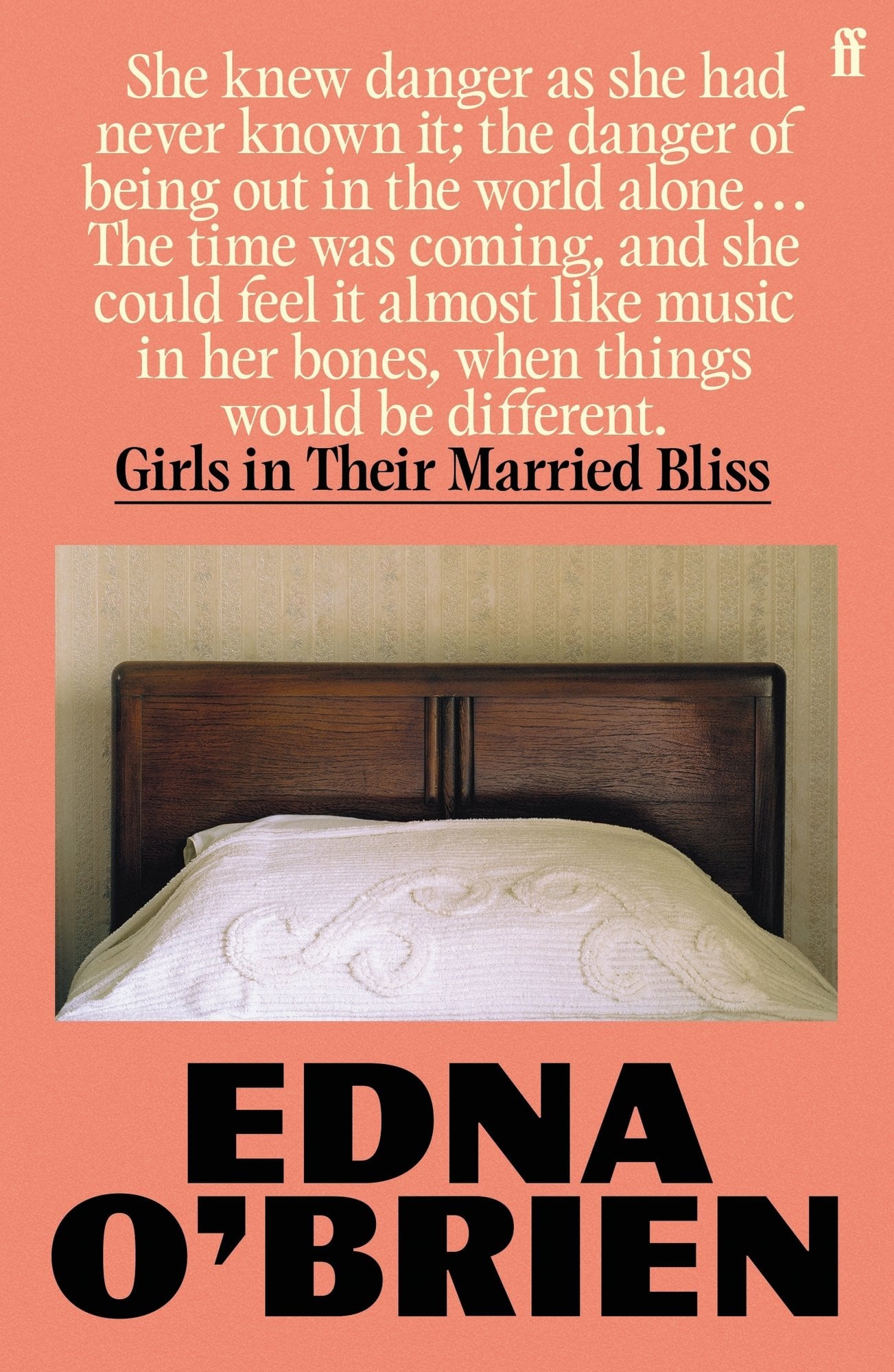
Girls In Their Married Bliss by Edna O’Brien
I really liked Edna O’Brien’s The Country Girls so when I saw a copy of Girls In Their Married Bliss for £1 in a local charity shop, I snapped it up even though it had the worst cover you could possibly imagine.
This is the second and final sequel to The Country Girls which means I’ve skipped over the middle book, The Lonely Girl. I’ll have to rectify that.
Once again the narrative centres on frenemies Kate and Baba but things are different this time around. For a start, we get the first-person perspective of both women this time. And the setting has moved to London, which probably explains the much darker tone of this book.
Things are grim. That grimness is described perfectly in O’Brien’s writing. The boredom and sordidness of this life is detailed as precisely as the city and its cold damp weather.
It’s a short book, which is probably just as well. I’m not sure I’d want to spend much more time in this milieu. But there’s no denying that it’s the work of a great writer giving a voice to people who’s story doesn’t often get told.
Saturday, August 8th, 2026
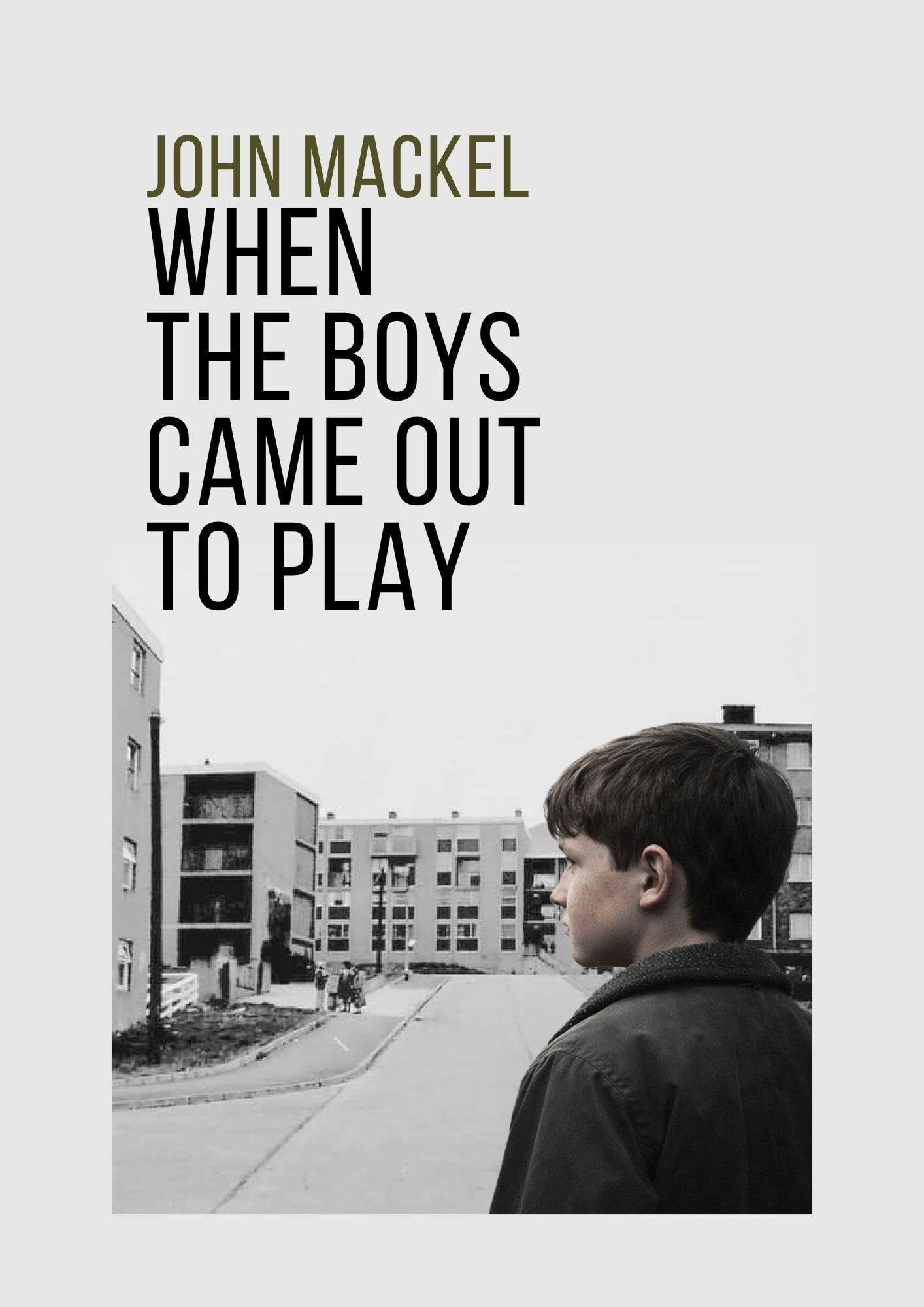
Reading When The Boys Came Out To Play by John Mackel.
Friday, August 7th, 2026
Friday evening street session in Belfast

Fiddletastic Friday afternoon session in Belfast

Witchy Friday morning session in Belfast
Thursday, August 6th, 2026


Róis agus Huartán beo i mBèal Féirste!
The Taoiseach just gatecrashed our session.
Thursday morning session in Belfast
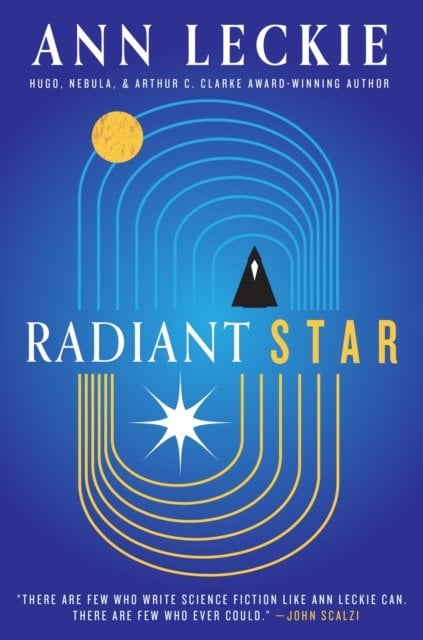
Radiant Star by Ann Leckie
I absolutely loved Ann Leckie’s Imperial Radch trilogy, particularly the first book, Ancillary Justice which blew me away when I first read it.
Since then I’ve enjoyed the other books she’s written in the same universe, dealing with the fallout of the events in the original series. Radiant Star is the latest addition to the canon.
I think the story falls into the category of planetary romance; the narrative is very much driven by the unique characteristics of the world we find ourselves on. Or should I say, in. The setting here is a rogue planet without a sun. Everything happens underground in an technology-mediated ecology that works great until it doesn’t.
This is a self-contained story with just vague rumours and nods to the events of the Imperial Radch trilogy. By the end of the book, those events—and the subsequent decisions reached in Translation State—make themselves felt keenly.
There’s a lot in here about infrastructure, admin, religion, hierarchy, social structures and power dynamics. I have to admit that the initial groundwork laid out at the start of the book was tough going, but once the story hit its stride, it really took off. Stick with it.
Any Ann Leckie book is guaranteed to be a good read, and Radiant Star is no exception. I thoroughly enjoyed this.
Wednesday, August 5th, 2026
Wednesday afternoon session in Belfast

Wednesday morning session in Belfast