
I went to a textile museum in Lowell, Massachusetts last month. It’s one of those places where they keep old industrial machines running so tourists can see what factories were like in the 1830s.
They turned on ninety power looms at once.
The sound was somewhere north of a jet engine. The docent handed out earplugs before we went in. Nineteenth-century mill workers didn’t get earplugs. They worked fourteen-hour shifts in that noise, six days a week, and a lot of them were deaf by thirty.
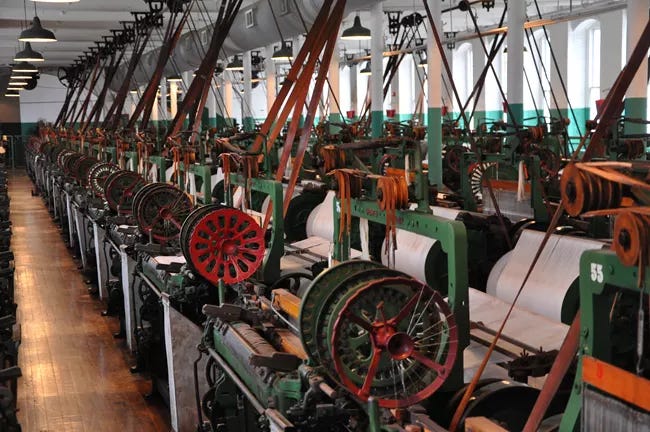
I walked out thinking about something that had nothing to do with deafness.
I was thinking: those looms never stopped. They just moved.
Lowell, Massachusetts → South Carolina → China → Bangladesh. Right now, this exact noise is happening in Dhaka. Women are standing at machines doing what New England farm girls did in 1830.
And here’s the weird part. Every stop along the way, people told completely different stories about what was happening.
In Lowell: “American ingenuity! National industry! Breaking free from British economic dependence!”
In 1990s China: “Socialism with Chinese characteristics! The people are getting rich!”
In Bangladesh: “Development! Globalization lifting the poor!”
These stories have nothing to do with each other. Some of them are ideological enemies. But the loom passed through all of them like they were nothing.
The loom doesn’t care about stories.
I’ve been turning this over in my head for weeks. I think the loom taught me something important about how the world actually works.
Let me tell you about Francis Cabot Lowell.
In 1810, this Boston merchant gets on a ship to England. He tells everyone he’s going for his health. He’s actually going to steal the most valuable industrial secret on Earth.
Britain in 1810 was basically what Silicon Valley is now, except instead of software, the killer app was cloth. The power loom—a machine that could weave fabric automatically—was the iPhone of its day. And Britain guarded it like Apple guards its source code. You couldn’t export blueprints. Skilled workers couldn’t emigrate. The penalty was severe.
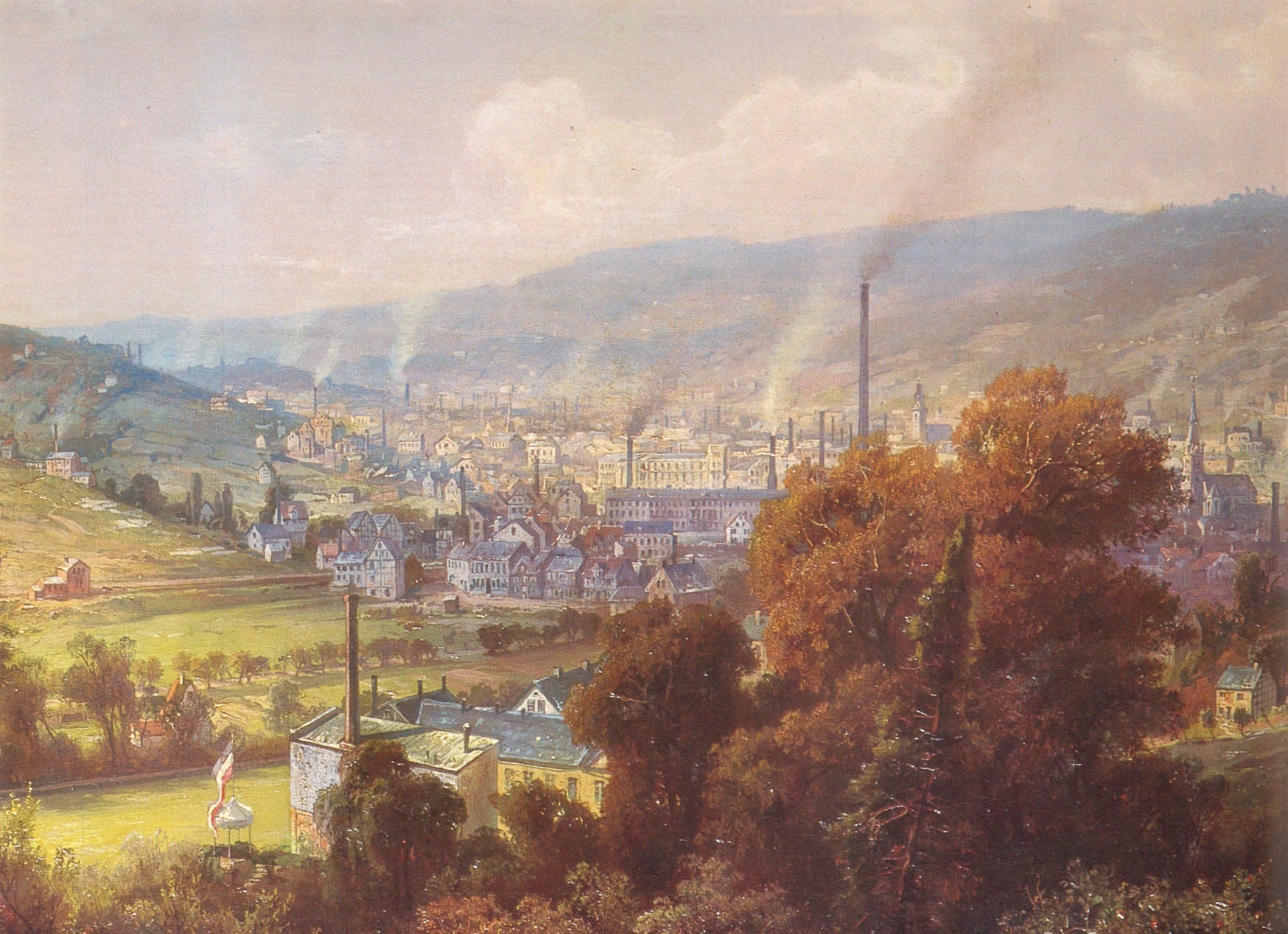
Lowell didn’t steal blueprints. He just... looked at the machines really carefully. For months. Then he sailed home with the whole thing in his head.
Later, people told this as a patriotic story. American entrepreneur outsmarts British empire! Founds domestic industry! Economic independence!
Good story. Probably not what Lowell was thinking.
Here’s what Lowell was thinking: British cloth can’t get into America right now.
Jefferson had just slapped an embargo on British goods. Then the War of 1812 started. Suddenly you couldn’t buy British textiles at any price. Everyone saw this as a disaster. Lowell saw a gap in the market.

He had one piece of the puzzle in his head (the machine). Boston had another piece (rich merchants with cash looking for investments). The Merrimack River had another piece (water power). And New England farms had the last piece (labor).
Put them together. The spread is profit.
Was it patriotism? Maybe. But certainly it was arbitrage. Patriotism was the story you told investors and newspapers. Arbitrage was the math you did in private.
Lowell was what you might call a clear-eyed player. He understood what game he was actually playing, and he played it. The story was a tool. The game was the point.
Lowell had a problem, though.
British factories ran on desperate people. Peasants kicked off their land, orphan children, the absolute bottom of society with no other options.
America didn’t have that. Land was too cheap. If your life sucked, you could just go west. Nobody was desperate enough to work in a factory.
So where do you find workers?
Lowell’s answer: young, unmarried women from New England farms.
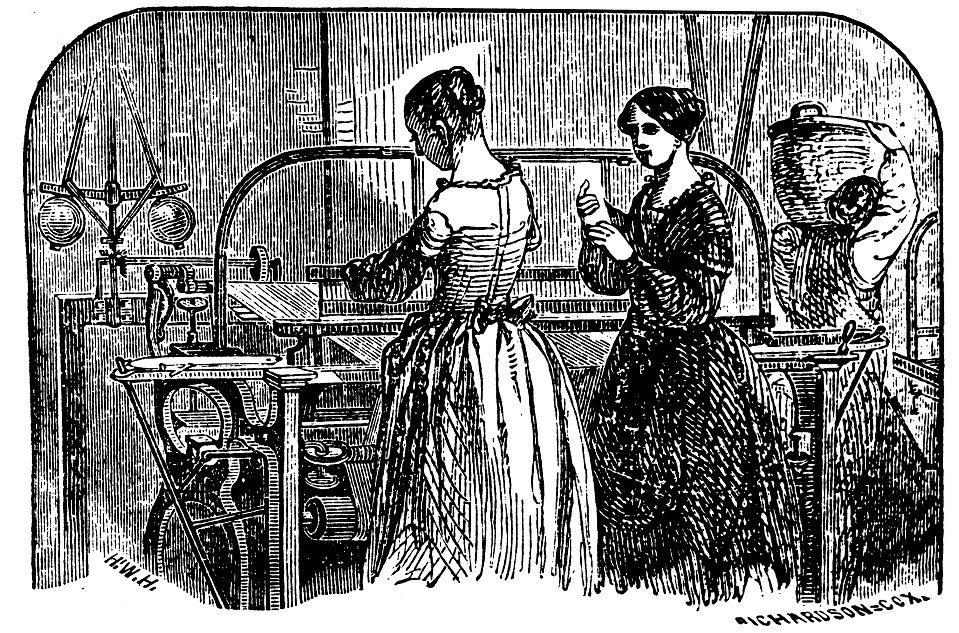
Think about the position these women were in. They couldn’t inherit the family farm—that went to sons. They couldn’t do much economically until they got married. They were, in a very real sense, leftovers of the patriarchal system. They had nowhere to be.
Patriarchy created the problem. Lowell exploited the problem.
To make it work, he had to convince their fathers to let them go. So he built dormitories. Hired chaperones. Made church attendance mandatory. Created a whole system of moral supervision that made the mills look respectable, almost like boarding schools.
This got called the “Lowell System” and people praised it as enlightened capitalism. Look how well they treat the workers! Dormitories! Libraries! Church!
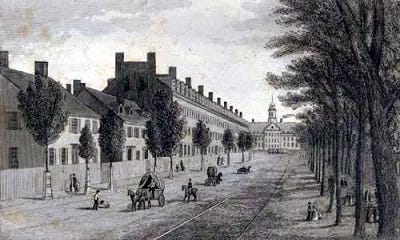
I don’t think Lowell believed any of it. This wasn’t morality. It was a transaction cost. You want these workers? You have to pay their fathers. The payment comes in the form of a story about moral supervision.
By 1823, there was an entire city where nothing had existed before. A decade later, Lowell was one of the biggest industrial centers in America.
Francis Cabot Lowell died in 1817. He never saw any of this.
Which tells you something: he’d built a system, not a personal empire. Once the system was running, it didn’t need him anymore.
Here’s what happened next.
The mills made money. When something makes money, it gets copied. More investors, more mills, more competition. Margins got squeezed.
Suddenly all that moral supervision stuff started looking expensive. Dormitories cost money. Chaperones cost money. Libraries cost money. When profits are fat, you can afford this. When profits get thin, you start looking for cuts.
Hours got longer. Wages got cut. Conditions got worse.
The mill girls pushed back. They went on strike in 1834. Again in 1836. They quoted the Declaration of Independence. They demanded their rights.
Then history made its move.
1845: the Irish Potato Famine.
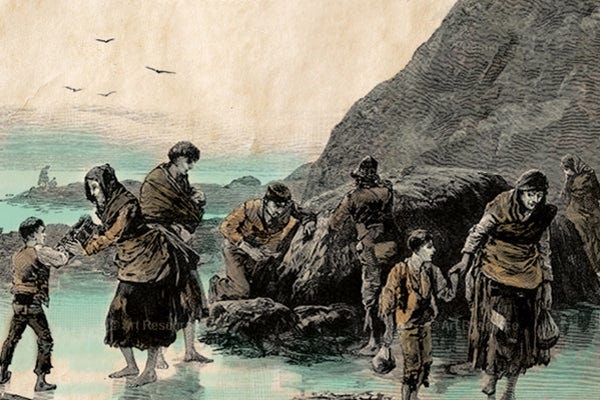
A million people died. Two million fled Ireland for America. They arrived with nothing, desperate for any work at any wage.
The mills didn’t need to court New England farm families anymore. Irish immigrants were cheaper and more desperate. They had zero bargaining power.
Within a few years, the wholesome story of the Lowell mill girls was over. The factories kept running. Different people.
Here’s what I want you to notice: nobody planned this. There was no conspiracy. No villain in a back room saying “let’s replace American women with Irish immigrants.”
The system faced cost pressure. A cheaper option appeared. The system took the cheaper option.
That’s it.
The system doesn’t know who you are. It doesn’t remember your contribution. It doesn’t care about your story. It asks one question: are you still the cheapest way to make cloth?
If yes, you stay. If no, you get replaced.
Then technology changed.
At first, one worker watched two looms. Then four. Then eight. Then twenty. Eventually the machines ran themselves and humans just monitored for problems.
Each improvement meant less human labor per yard of cloth.
Then geography changed.
Water power needs rivers. That limits where you can build. Steam engines broke that limit. Now factories could go anywhere.
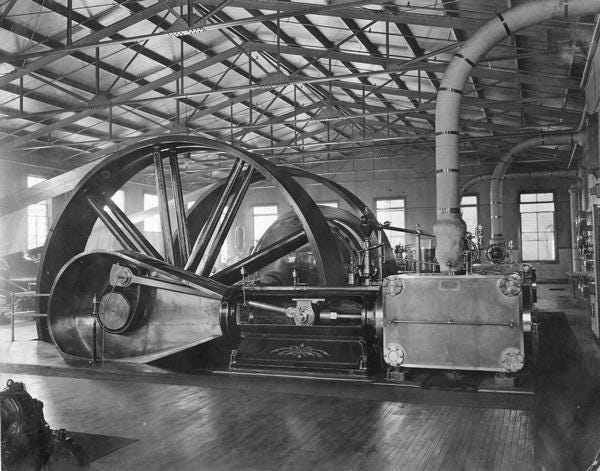
New England wages crept up. The South was cheaper. The industry migrated south. Lowell started dying.
This played out over decades. Factories closed. Young people left. The city hollowed out. The grand mills became ruins. The ruins became a museum.
The system didn’t stop. It just wasn’t in Massachusetts anymore.
Now here’s where it gets interesting.
The next major stop for the textile industry was, of all places, communist China.
Mid-twentieth century China had a whole different story going. No more capitalism! Workers own the means of production! Planned economy! The people are the masters now!
The state ran cotton mills. Workers got lifetime employment, housing, healthcare, retirement—the “iron rice bowl.” This was the opposite of Lowell. There, workers were expendable. Here, workers were supposedly in charge.
Thirty years later, that story changed too.
1978: Reform and Opening. Deng Xiaoping’s new story—socialism with Chinese characteristics, market economy, getting rich is glorious.
Foreign capital flooded in. And what industry landed first? Textiles. Low barriers, labor-intensive, perfect for exploiting China’s massive cheap workforce.
Suddenly there were factories all over the Pearl River Delta. Young women from villages living in dormitories, working twelve-hour shifts, sending money home.
I want you to picture 1830s Lowell next to 1990s Dongguan. Same machines. Same noise. Same young women. Same dormitories. Same hours.
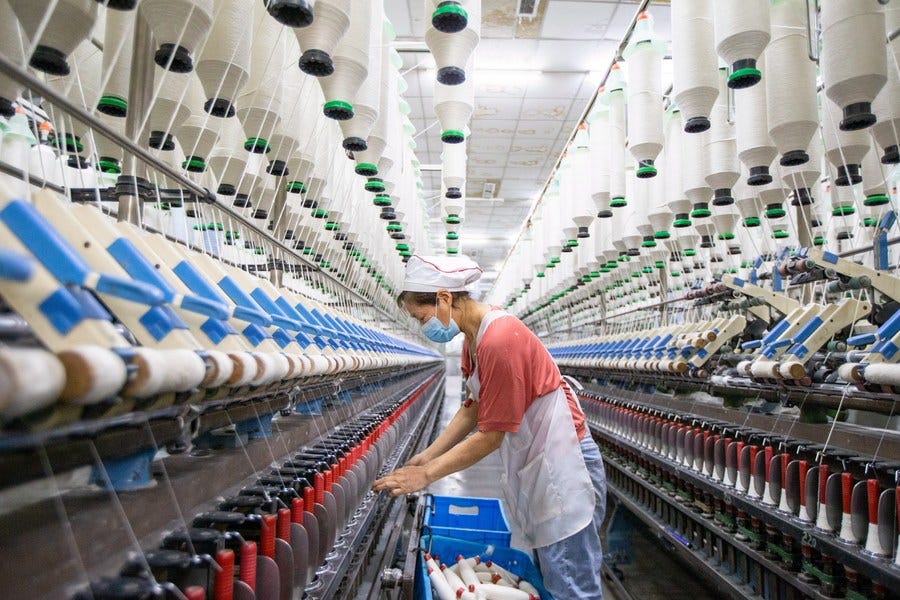
The stories couldn’t be more different. One is “capitalist exploitation.” One is “socialist market economy.” Close your eyes and listen to the looms. You can’t tell which ideology you’re in.
The system doesn’t care about ideology. It wears whatever costume the local players are wearing, as long as they play effectively.
Then Chinese wages rose.
Labor laws tightened. Workers gained leverage. And the system did exactly what it did in 1845: started looking for cheaper options.
Vietnam. Bangladesh. Cambodia. Ethiopia.
Beijing’s state-owned textile mills closed. The workers got laid off. The land got redeveloped. Now there are glass towers where the cotton mills used to be. The China World Trade Center. The CCTV building. Finance and tech companies.

The people working in those towers probably don’t think about what’s underneath them. They have their own story. Knowledge economy. Creative class. Human capital. Irreplaceable skills.
They’re sitting in seats that textile workers vacated.
The textile workers had stories too. They believed they were the working class, the masters of the nation. Before them, the Lowell mill girls had stories about independence and dignity. Before them, Irish immigrants had stories about new beginnings.
Every generation has stories. Every generation’s stories get overwritten by the next iteration.
Okay, so what’s going on here?
Humans need stories. We need to believe what we’re doing makes sense, fits into something larger. The American Dream. China Rising. Workers of the World Unite. Innovation and Disruption.
Stories motivate us. They comfort us. They give us identity.
Systems don’t need any of that.
A system just needs players. It doesn’t ask why you’re playing or what you believe. It asks: can you do the function efficiently?
Lowell told himself a story about national industry while calculating arbitrage margins. Mill girls told themselves a story about independence while the system saw cheap labor. Communist China told itself a story about eliminating capitalism while becoming capitalism’s most efficient factory floor.
Stories are painkillers. They make it bearable to be a cog. They let you believe you’re the hero of the movie instead of an extra.
But stories can also be tools.
Lowell used the “moral factory” story to acquire workers cheaply. China used the “reform and opening” story to attract foreign investment. Successful players understand the instrumental value of narrative. It moves resources. It reduces friction. It makes people cooperate willingly.
The question is: are you someone who believes stories, or someone who uses them?
People who believe stories are pieces on the board. They commit fully, then feel confused and betrayed when the game changes.
People who use stories are players. They know the story is surface. The game is underneath. Surfaces change. The game continues.
I have a weird respect for capitalism now.
Not moral respect. Morality doesn’t apply here any more than it applies to gravity.
Respect for its persistence.
Think about how many ideologies have tried to kill it. Or contain it. Or replace it. Mercantilism. Colonialism. Communism. Fascism. Nationalism. Globalism. Anti-globalism.
It passed through all of them. Still running.
It ran in Puritan New England. It ran through Catholic Irish immigrants. It ran in atheist China. It runs in Islamic countries. It runs wherever people agree to play.
It’s not really an ideology. It’s more like a discovery.
We discovered gravity. We discovered evolution. And somewhere along the way, we discovered that if you combine private property, contract enforcement, and price signals, you get a system that runs itself. No central authority needed. Works across cultures, religions, languages.
It’s like finding a law of social physics.
You can like it or hate it. You can try to regulate it. But you can’t pretend it doesn’t exist.
You know what’s happening right now.
AI.
Every few days someone tells me it’s a bubble. Overvalued. Most companies will fail. Lots of money will evaporate.
They might be right. But they’re missing the point.
Nobody knows what AI is actually for yet. Nobody knows which approaches will work. We’re in unexplored territory.
When the territory is unknown, the system’s strategy is: let lots of people try stuff. Most will fail. The failures get written off. The few successes get identified, copied, scaled.
Wasteful? Sure. But trial and error is how discovery works. You pay for wrong guesses to find right answers.
The moral critiques of AI—job displacement, inequality, concentration of power—might all be accurate. But they assume we get to vote on whether this technology happens.
We don’t.
If there’s efficiency to be gained, if there’s arbitrage to be captured, the system will find a way. Block it here, it emerges there. Restrict it in one industry, it seeps in from another.
Same pattern as always. The Lowell mill girls went on strike. The system routed around them with Irish immigrants. Every attempt to use narrative—moral, political, legal—to stop the system eventually gets bypassed.
The system doesn’t process narrative.
It simply processes efficiency.
I walked out of the museum and stood by the Merrimack River.
Still flowing. Dam still there. Mills silent.
Those same looms are running in Bangladesh right now.
I thought about the finance people in Beijing’s glass towers. They have their story. Knowledge work. Creativity. Human judgment. Can’t be automated.
They’re sitting where textile workers sat.
The textile workers had stories too.
What’s the difference between them?
Maybe just this: some people know they’re in a game. Some people think they’re living a story.
Knowing doesn’t mean you win. But when things shift, you’re not blindsided. You knew it was possible. You were already thinking about the next move.
Not knowing doesn’t mean you lose. But when things shift, the confusion is worse. You thought the story was real. You thought your position was secure. You were supposed to be the protagonist.
Lowell knew. He told national industry stories while doing arbitrage math. He used narratives to mobilize resources and arithmetic to make decisions.
The people who believed in “moral capitalism” didn’t know. When the system dropped the moral part, they couldn’t understand what had happened.
How many people in today’s knowledge economy know? How many don’t?
This game has been running for two hundred years. It’s passed through wars, famines, revolutions, ideological collapses. It doesn’t know your name. It doesn’t remember what you contributed. It won’t make an exception for your story.
It asks one question: are you the most efficient vehicle of the function?
If yes, resources flow to you. If no, you get replaced. Not out of malice. Out of the same logic that makes water flow downhill.
You can refuse to play. But that doesn’t put you outside the game. It just means you’ve given up agency. The game continues with or without you.
You can play while believing your story. That you’re special, essential, irreplaceable. This feels good until the next iteration hits.
Or you can play with your eyes open. Knowing stories are tools, not truths. Positions are temporary. The only durable advantage is the ability to keep adapting.
The last room of the museum has a plaque. Something about how Lowell’s history teaches us that industrialization brings prosperity and costs, and we should remember those who paid the price.
It’s a nice ending. Appropriate for a museum. You leave feeling thoughtful and slightly superior to the nineteenth century.
But that’s not the lesson.
The lesson is that the loom is still running.
It doesn’t care if you remember the costs. Doesn’t care about your moral reflections. Doesn’t care about your sympathy. It’s running right now, in the next cheap place, with the next batch of workers, wrapped in the next story.
You can be the person who walks through museums feeling wistful about the past.
Or you can be the person who notices the pattern and asks: where is it going next? And how do I position myself?
The loom doesn’t care which you choose.
It just keeps running.
No posts
Comments
Nothing yet. Say the first thing.
Sign in to join the conversation.