
I read Joukovsky’s debut a few weeks ago and wrote about it here, and generally I really enjoyed it (with a few gripes) so I was excitedly waiting for this to come out at the beginning of March.
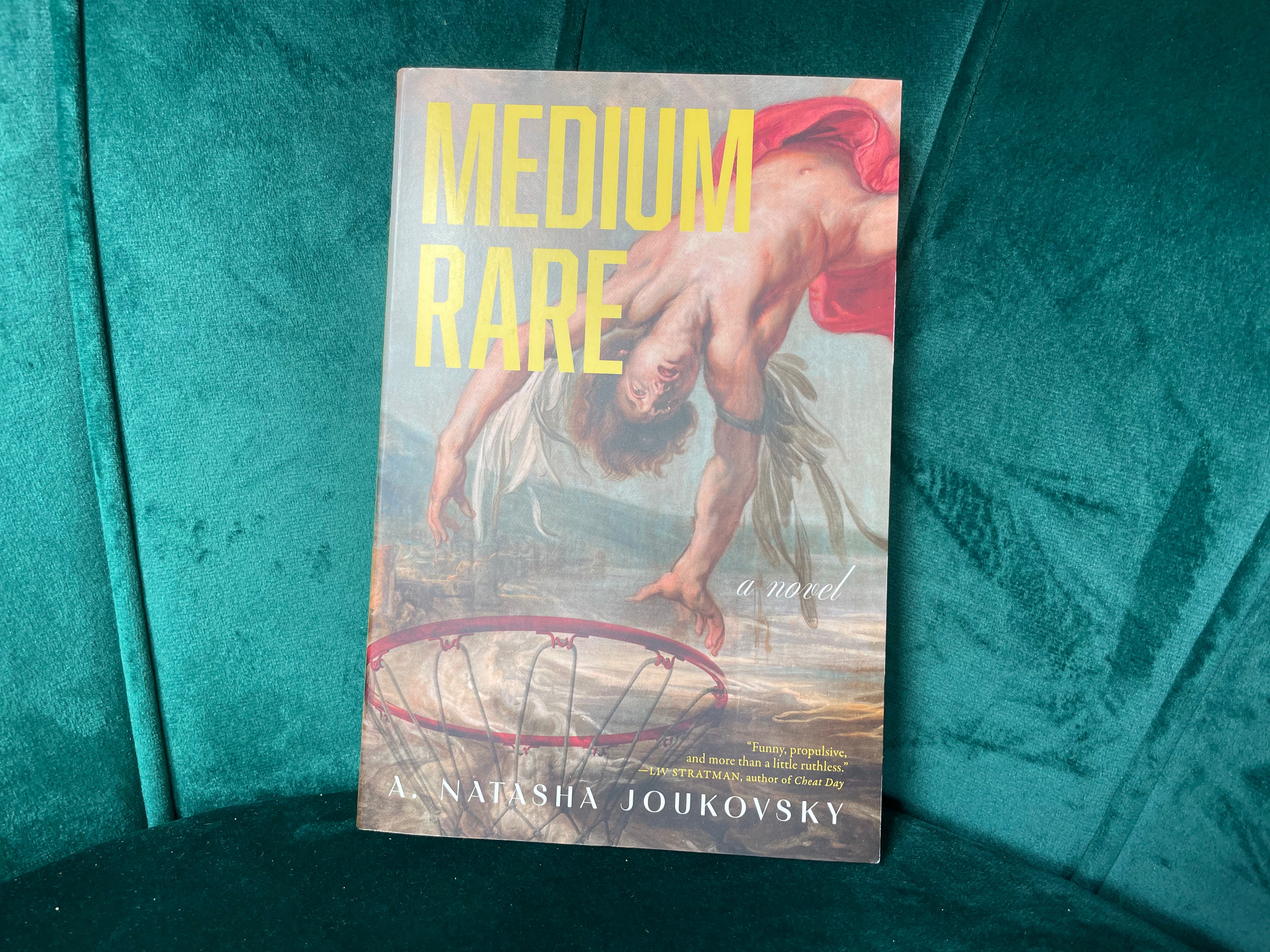
However, I unfortunately did not connect with Medium Rare as much as I wanted too— and not just because I don’t know anything about basketball (although that does play a part).
The conceit of this book is that a normal Joe Shmoe - Phil Phaeton - fills out a perfect March Madness bracket the same year that a Billionaire Tech Guy pledges a billion dollar prize for anyone who does just that. As was the case with Joukovksy’s first book, this is loosely inspired by greek myth, this time Icarus instead of Narcissus (Although it’s clear that the author is still concerned with image and digital reflection, based on some observations here, which I do always enjoy).
However, the narrator is not a removed, witty and slightly sardonic omniscient narrator as was the case in Portrait of a Mirror, instead it’s told from the point of view of Cassandra, a casual acquaintance of Phil and his wife Raleigh from college who becomes less and less casual and more and more of a friend and active character as the story goes on. Also, she’s a seer, like the Cassandra of classical myth.
This is really where the heart of the problems rest with me. First of all, the detached quips and witty satirical voice so well deployed in Portraits of a Mirror do not really land when coming from a specific character involved in the story. Secondly, it’s hard to really tell where the heart of this story is when Cassandra is telling it. Ostensiably, it’s about Phil, but we really learn very little about him at all. His “medium-ness” and “normalcy” is told to us quite a few times, but I don’t really know what that means outside of Cassandra’s view of him. I was left wanting to know a lot more about his life and feelings, since the story hinges on his actions and choices. but instead we get much more about his wife Raleigh, and her burgeoning friendship with Cassandra, although Cassandra initially looks down on the meek and more traditionally feminine Raleigh. Soon Cassandra sees that there is much more depth to Raleigh and they get quite close. However, although Cassandra is the narrator and becomes more involved in the plot as the story progresses, I also didn’t really have a grasp on who Cassandra was. The story sort of lingers in this unsatisfying triangle between the three, without ever committing to one main story or focus.
And then we get to the seer part, which I was really excited about before I read it. But basically, she’s not actually a seer? Or at least, nothing really comes of it? since it’s first person it could have been interesting to lean into her being convinced she’s a seer but the reality of it being kind of ambiguous, but it doesn’t feel like that’s the case here either. She does not know the outcome of any of the basketball games, or any specific tangible thing. What is being riffed on here seems to be a kind of “women’s intuition” or at least, men not listening to women for having common sense and knowing when a stupid thing isn’t going to turn out well. (in some cases it is other women who don’t listen to her, so the gender stuff isn’t that cut and dry, although being a woman is definitely a part of the story and impacts how people respond to her). I don’t know, I get what it was trying to do, and it is an interesting idea, but it didn’t stick the landing for me. There are a few moments when Cassandra talks about writing a book, it being published, and the fact that this book is her second book, and talking about the act of writing, and even calling it a “novel” that also didn’t really land for me. There is some playing with the unreliability of any narrator that I appreciated, and I think it could have been really cool, but ultimately the execution didn’t satisfy me.
There’s also the fact that a good portion of the first third of the book is narrating a play by play of basketball games. Maybe some readers are into that but it’s just not for me. Especially when there were so many questions I still had about the characters and wanted to see them interact with each other so I could get a better handle on who they were, I just truly didn’t care about the dribbles and baskets.
Even so, there’s still quite a lot to admire about Joukovsky’s writing and, although I was ultimately disappointed in this novel, I look forward to reading her next. I’m left echoing myself once again: make books longer!
No posts
Comments
Nothing yet. Say the first thing.
Sign in to join the conversation.