
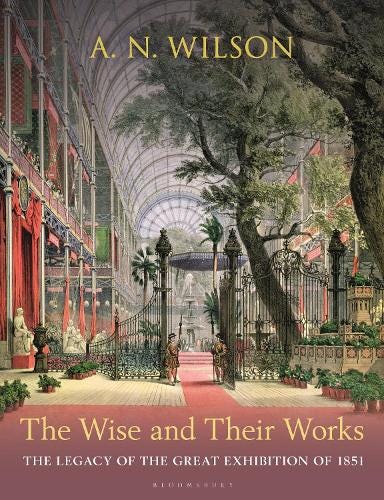
It’s been a busy time for me, so I must ask subscribers for forgive silence for over a month . My book about the Great Exhibition and its consequences, THE WISE AND THEIR WORKS has at last been published. The title comes from the inscription around the frieze outside the Royal Albert Hall, quoting from (the best book in …?) the BIble, Ecclesiastes - ‘The Wise and their Works are in the Hand of God’.
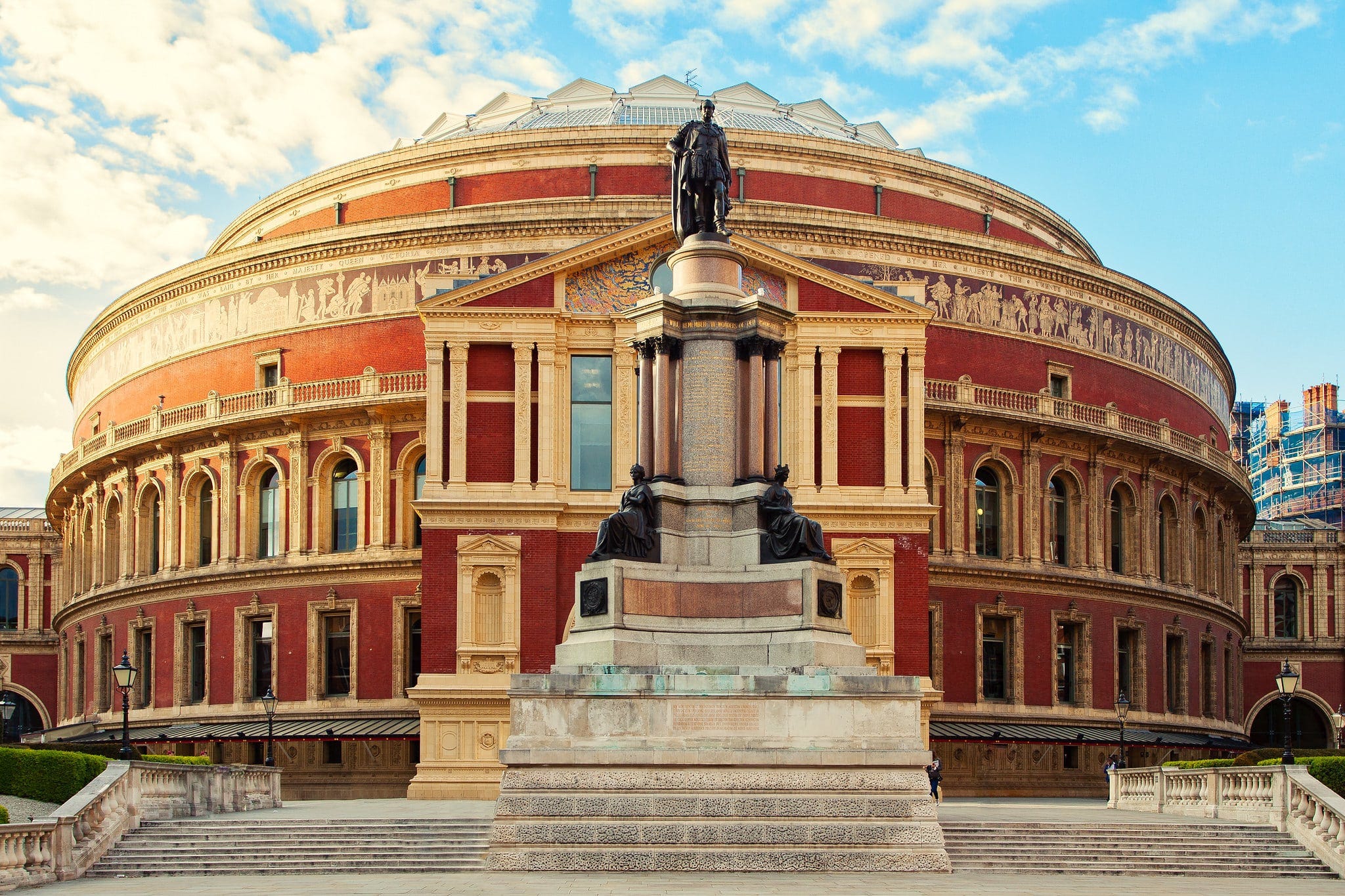
We had two absolutely spiffing parties . The first was in the Royal Albert Hall itself. (My title comes from tjhe Biblical quotation which emblazons the frieze of the Royal Albert Hall, ‘The Wise and their Works are in the hand of God’. ) It was organized by the 1851, and it was they who commissioned me to write the book.
The second party was in Hatchards’ bookshop in Piccadilly. It was organized by my adored publishers, Bloomsbury.
Certainly, the Royal Commission for the Exhibition of 1851 were wise, and their works were wonderful. Prince Albert. Sir Henry Cole. Henry Labouchere. Scott Russell. Lyon Playfair. These were men inspired. They conceived the idea, first of a great national exhibition to display the triumphs of British engineering and to suggest what was best in modern design. Albert persuaded tghem to make it an INTERNATIONAL exhibition, and it became a symbol of that optimistic generation’s belief in Free Trade, and their hope that Free Trade would bring universal peace.
Almost every country in the world sent exhibits. Only China kept itself to itself, understandably furious that the British had behaved so appallingly during the Opium Wars.
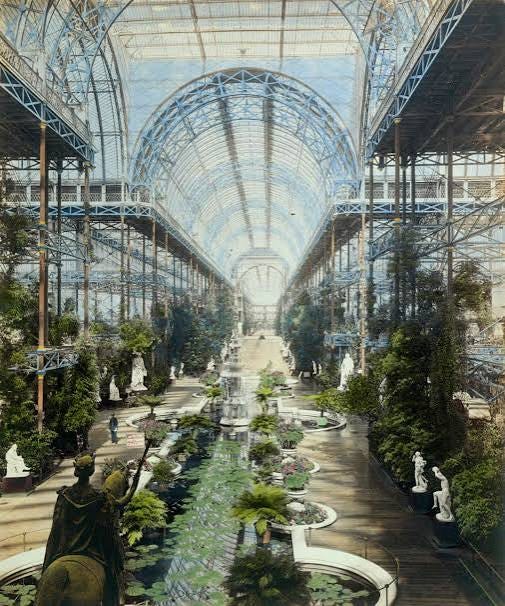
The nay-sayers predicted that the Exhibition would bring crime to London, wreck Hyde Park, spread diseases etc etc etc None of their fears were fulfilled. Six million people came to the Park in the course of the summer of 1851. Six million! If the exhibition had been a flop, every Commissioner would have lost a lot of money and some of them would have been ruined. As it was, they amassed a large sum, getting on for £200,000 in their money, which enabled them to fulfil Prince Albert’s dream - what is now the Albertopolis in South Kensington. The V and A Museum, the Natural History Museum, the Science Museum. Three world-class academies - for Science, Imperial College, for Music, the Royal College of Music, for the visual arts, the Royal College of Art, not to mention the Royal Albert Hall and many other institutions,
The Royal Commission for the Exhibition of 1851 is still in existence today, and because the Commissioners have included some clever financiers, it is sitting on a substantial sum of money which it uses to encourage scentific and engineering scholarships. It remembers that Prince Albert was 30 when he patronised the Great Exhibition. TheVictorian success story was a story of the young. We, by contrast, have an anti-young system, which saddles students with burdens of debt before they have even got their first job or a mortgage.
.
In the course of writing my book, I went to a number of functions and dinners when the scholars and fellows of ‘1851’ were lauded. They are such an impressive lot of men and women - young, and from all over the world. There are over a dozen Nobel prizewinners, who started out as 1851 scholars, including Ernest Rutherford and Peter Higgs, he of the particle.
Royal patronage has been one of the key ingredients in the success story. Prince Albert we know about. But his two sons, the Prince of Wales, Bertie, and Affir, Duke of Edinburgh, as well as being roues and playboys, were intensely musical and it was largely because of them that the Royal College of Music got off the ground.
The 1851 Commissioners built the British School at Rome. And in more recent times, under the patronage of Prince Philip, and now of Princess Anne, the work goes on of encouraging design,
Comments
Nothing yet. Say the first thing.
Sign in to join the conversation.