
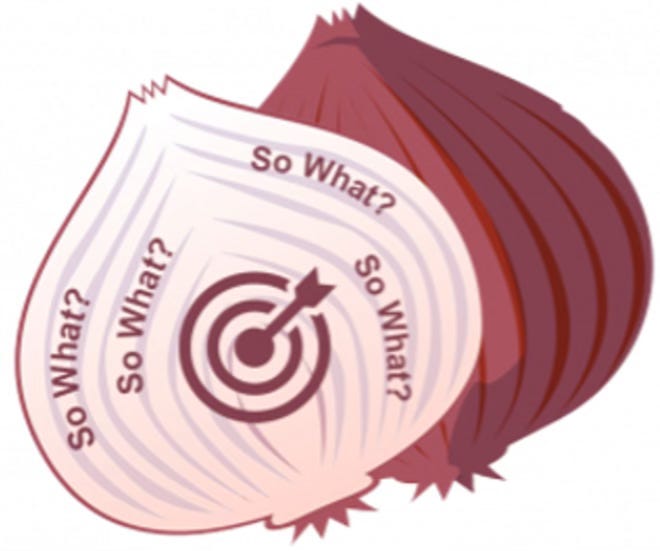
Good writing, I’ve come to believe, is less about adding and more about peeling—layer after layer of meaning until we arrive at the truth of what we really want to say.
For the truth of the matter is that, whether in writing or in life, meaning rarely lurks at the surface.
Perhaps that’s why arriving at the right sentence sometimes makes your eyes water. The sting comes from the work itself—first finding the thought that fits the truth like a glove, and then the cadence that carries it: the right verb, the right adjective, a comma or a dash placed just so.
Writing, like peeling an onion, is a painstaking process (though onions usually reveal their layers faster).
Each layer removed brings us closer to the core.
If reflections on writing, travel, and meaning resonate with you, consider subscribing.
The Chilean Nobel Laureate Pablo Neruda once wrote an entire poem celebrating the humble onion. In his famous Ode to the Onion, the onion becomes something luminous—its layers unfolding petal by petal until its quiet beauty reveals itself.
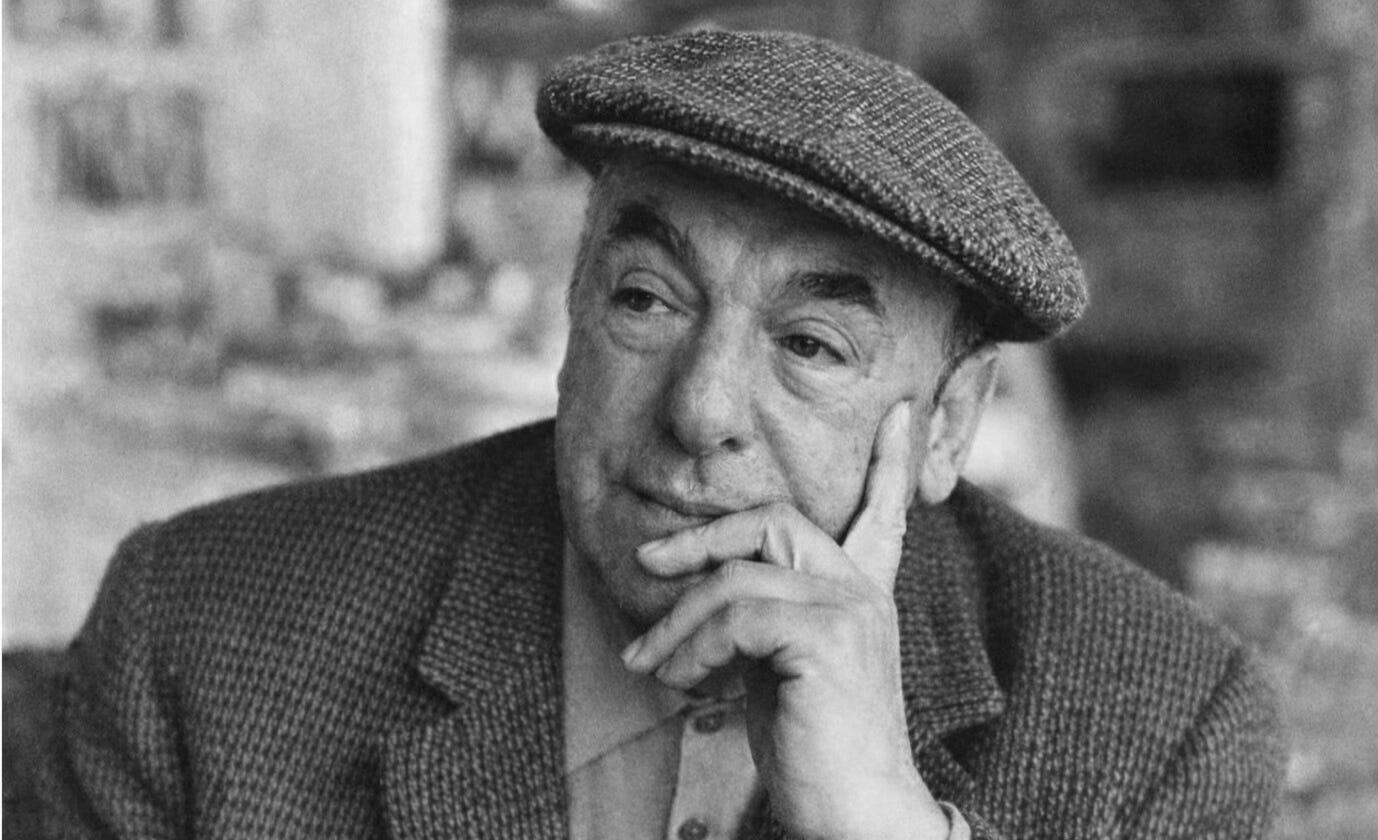
Neruda writes:
“You make us cry without hurting us.
I have praised everything that exists,
but to me, onion, you are
more beautiful than a bird
of dazzling feathers.”
Writing to unearth the truth or the deeper meaning of a story is a bit like locating the dazzle of a fidgety bird: the sudden flash of brilliant feathers that appears only for a moment before disappearing again.
When we first write about an idea, we usually begin with the outer layer.
I recently wrote about being enthralled by the miniature court scene of the Mughal emperor Aurangzeb in Dresden. At first glance, it was simply an object of beauty: gold, enamel, tiny figures arranged in perfect symmetry.
Yet the physical beauty is only the surface layers of the onion. As Neruda reminds us, the onion itself is destined for more:
so did the earth
make you,
onion
clear as a planet
and destined
to shine,
constant constellation,
round rose of water,
upon
the table
of the poor.
Our stories, too—like the onion in Neruda’s eyes—are destined for more.
It is the destiny of us poor writers—perpetual chasers of that deep-buried meaning—to find the “constellation” hidden beneath those layers, the faint fragrance of truth behind the glittering surface.
Even if writing is a profession that occasionally involves staring at a sentence for twenty minutes before moving a comma, half an inch across.
The Aurangzeb diorama in Dresden was an exquisite artifact.
So what?
(Writers learn quickly that the question “So what?” is both the most annoying and the most useful question in the craft).
It depicted the court of one of the world's most powerful emperors.
So what?
Aurangzeb ruled an empire that once seemed permanent.
So what?
Today, the empire is gone, but the craftsmanship remains.
The power that created the court vanished. Yet, the devotion that created the work survived.
Now we’ve reached the core.
The marvel was never the object itself.
It was the human meaning that endured.
Perhaps that is why Neruda saw such brilliance in something as ordinary as an onion. Layer by layer, the humble bulb reveals a hidden luminosity.
Writing works the same way. Beneath the surface of events, projects, and even empires lies the deeper story waiting to be uncovered. The writer’s task is simply to keep peeling—patiently, persistently—until the quiet constellation of meaning finally appears.
Text within this block will maintain its original spacing when published
And perhaps that is why travel, too—which I love and often write about—is never simply about reporting on places. It is a search for the deeper meaning that lies beneath them. Until, somewhere along the way, the fragrance of the earth reveals itself in its quiet truth.
And that is why writing, like Neruda’s onion,
“makes us cry without hurting us.”
The work may sting. The search may be slow. But when the right words finally arrive, something inside us settles—and the meaning, at last, reveals itself.
Meaningfully yours,
Anu Prabhala
If this essay resonated, feel free to share it with someone who loves writing and poetry.
No posts
Comments
Nothing yet. Say the first thing.
Sign in to join the conversation.