
You know a place has sass when the sandwich shop greeting you at the town’s entrance is called Blaa Blaa Blaa.
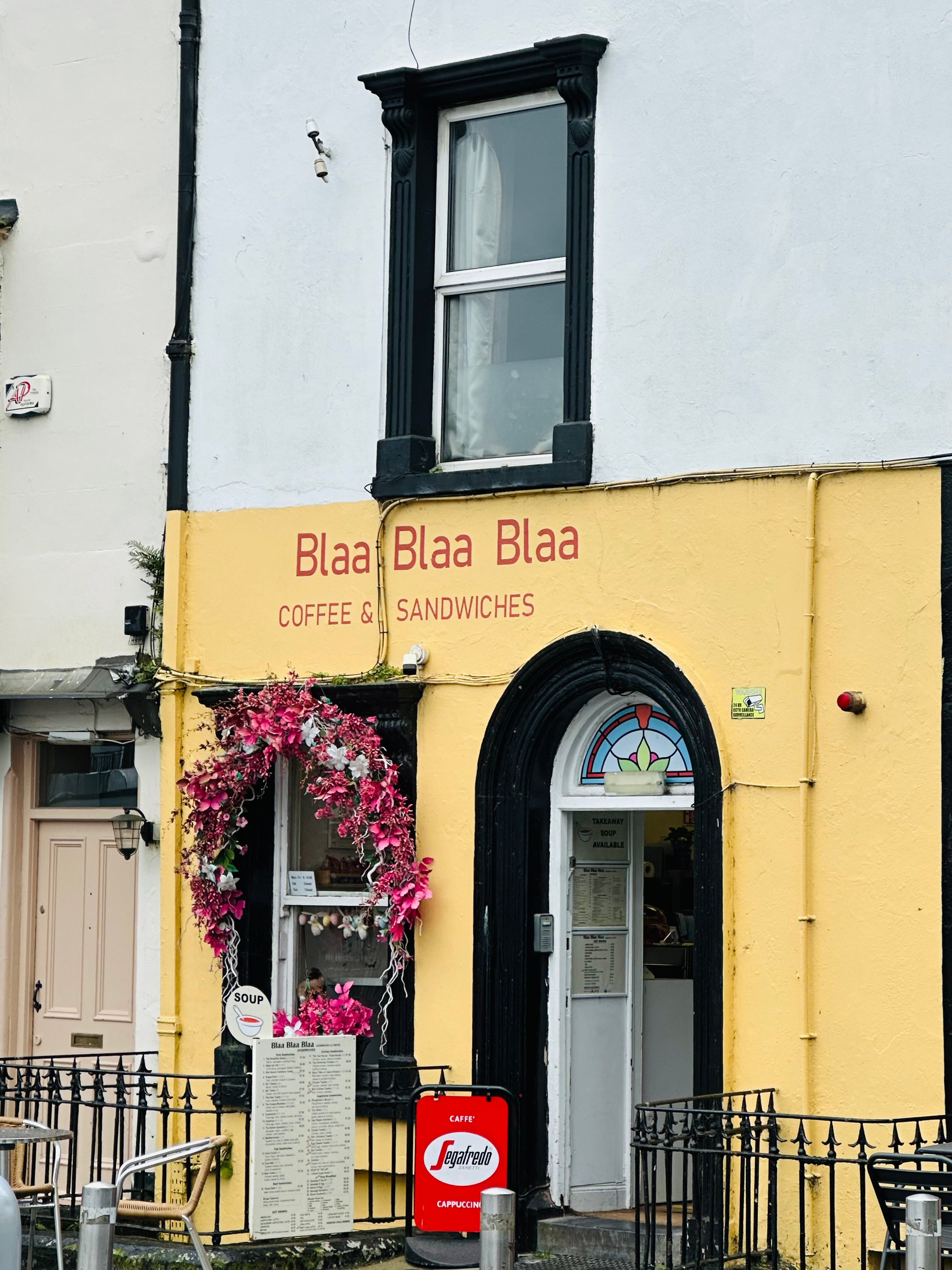
Yes, it’s historically grounded. Blaa is the local white bread roll, its name tracing back to the French blanc, a quiet linguistic echo of the Normans who shaped Kilkenny centuries ago.
But let’s be honest—the wink is unmistakable.
And somehow, that wink feels like Kilkenny itself.
Welcome to a town that happily claims to be the oldest in Ireland—though nearby Waterford might raise an eyebrow, with its Viking origins dating back to 914 AD. Kilkenny, for its part, began as a 6th-century monastic settlement founded by St. Canice before growing into a Norman stronghold centuries later.
A town that knows exactly what it is—old, storied, unmistakably medieval—and yet refuses to take itself too seriously.
Like our tour guide, Liam, a Kilkenny native who breathed life and soul—and that same unmistakable humor—into the town’s layered past.
Beginning, of course, with his claim that the Blaa Blaa Blaa café was named after him.
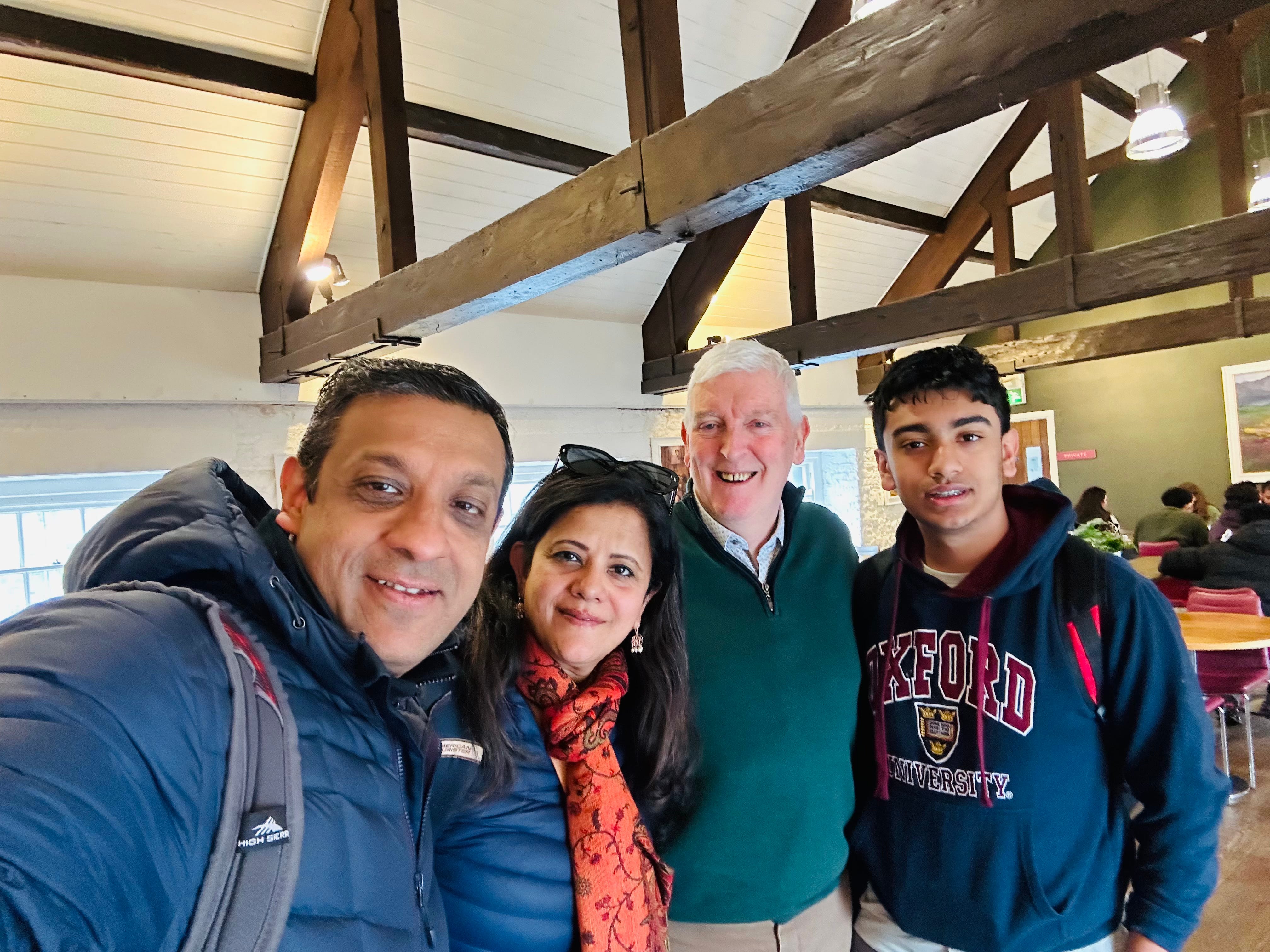
Hint: spend a day with Liam—through stories, songs, and his quick drop-ins at every seat—and you might begin to see why.
Also, after a day with Liam, fact and fiction themselves seemed to blur—much like Kilkenny, where history is as much felt as it is told.
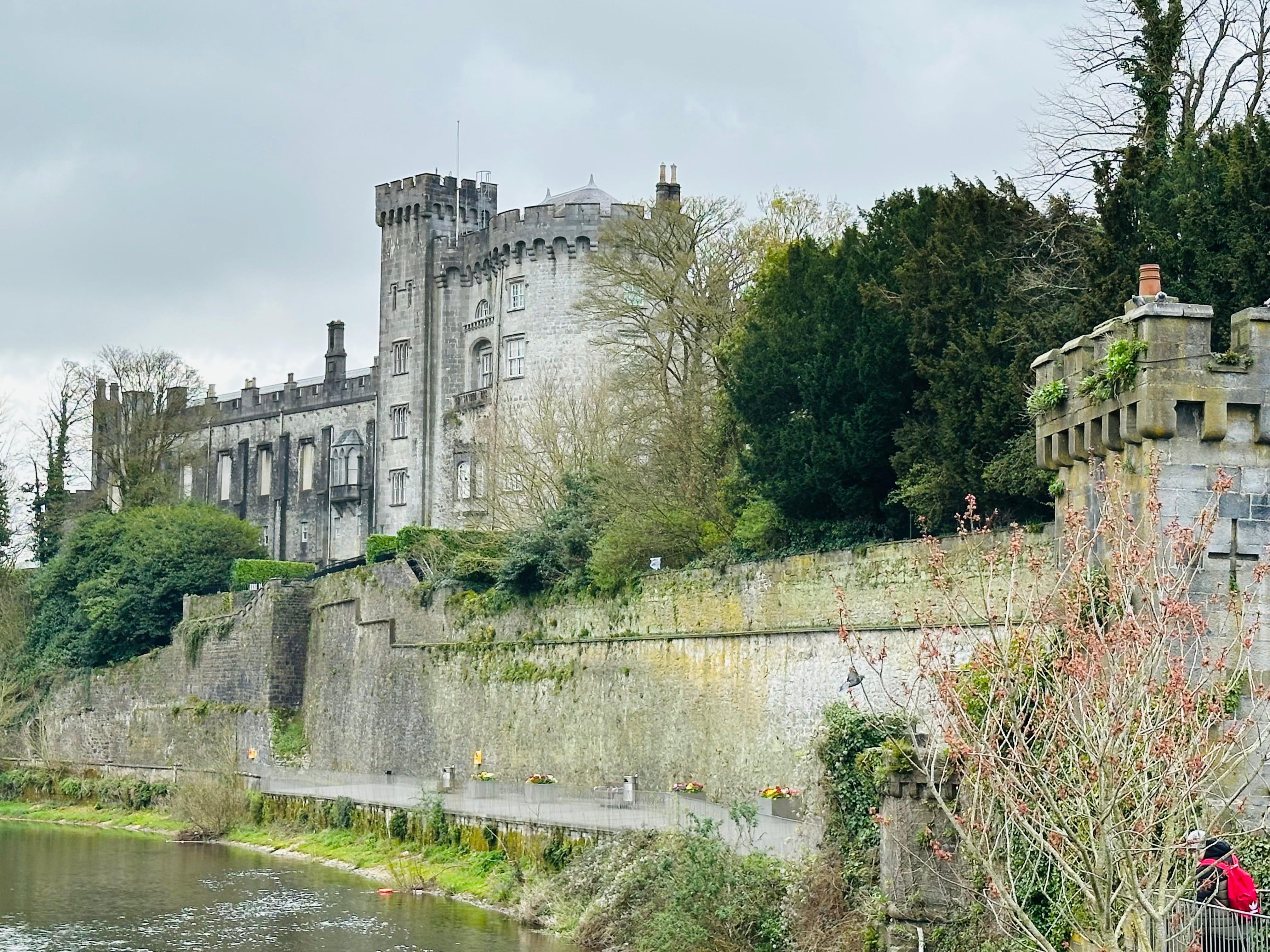
The town greets you with a picturesque castle. Of course, this is Ireland—castles and dungeons come with the territory. We stepped in somewhat half-heartedly—perhaps a bit castled out, if such a condition exists—only to be promptly distracted by Leena, a Siberian husky with far more charm than stone walls.
It didn’t take long to realize our time was better spent wandering the streets than inside yet another castle.
And that is where Kilkenny revealed itself.
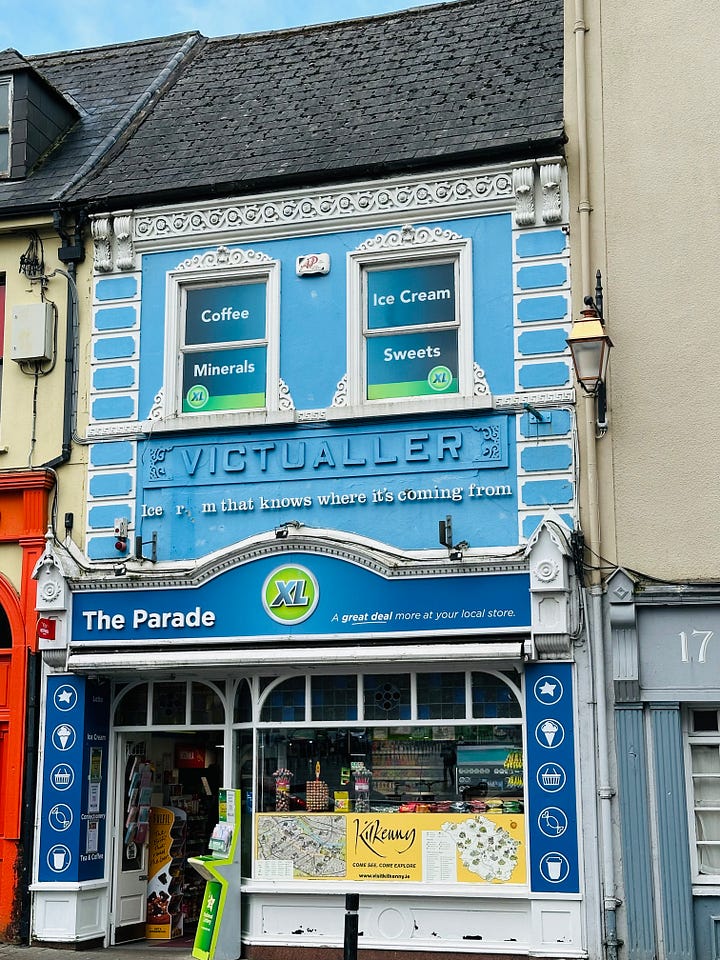
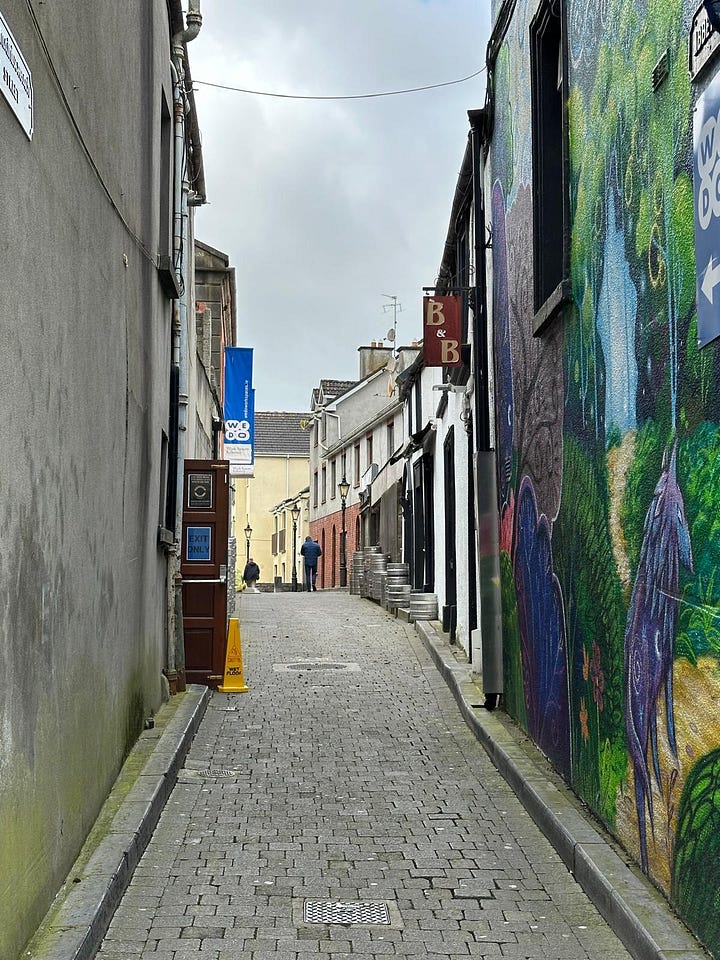
The Medieval Mile did not feel curated so much as lived in. Ancient stone arches opened into cafés and courtyards. Narrow streets folded into pubs, craft shops, bakeries, and storefronts with names like The House of the Victualler, as though the Middle Ages had simply lingered and adapted themselves to modern life.
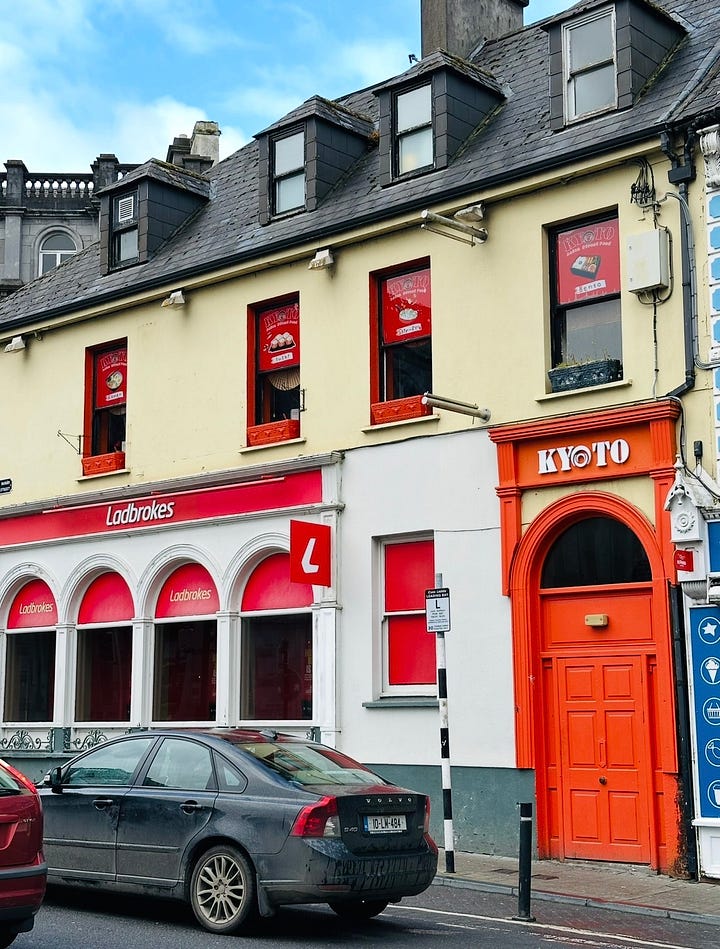
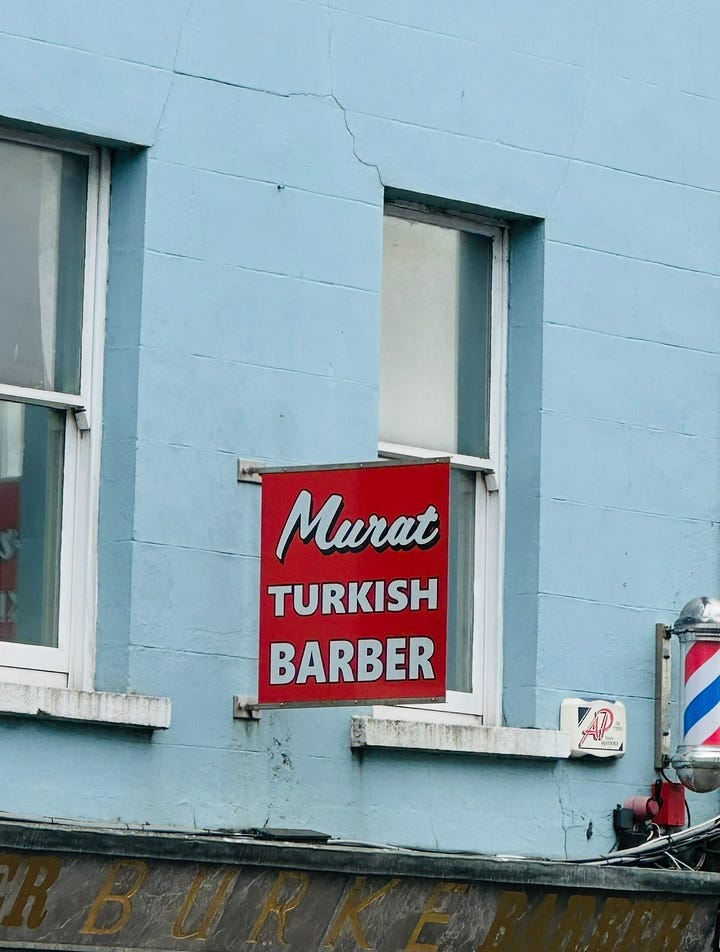
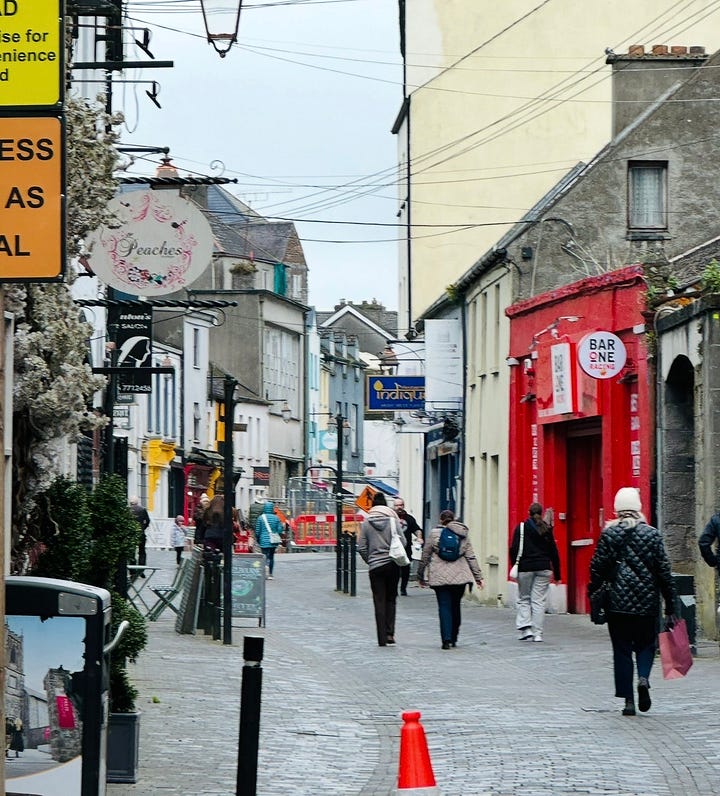
Elsewhere, Kilkenny seemed perfectly comfortable holding contradictions together. A Kyoto restaurant stood beside Ladbrokes. Turkish barbers—there seemed to be quite a few of them, though perhaps I noticed because my own brilliantly talented hairdresser and colorist back home is Turkish—operated beneath medieval stone facades. And a bold contemporary mural for the Smithwick’s Experience (“pronounce it Smidiks if you don’t want to sound like a tourist,” Liam advised) splashed modern color across centuries-old stone.
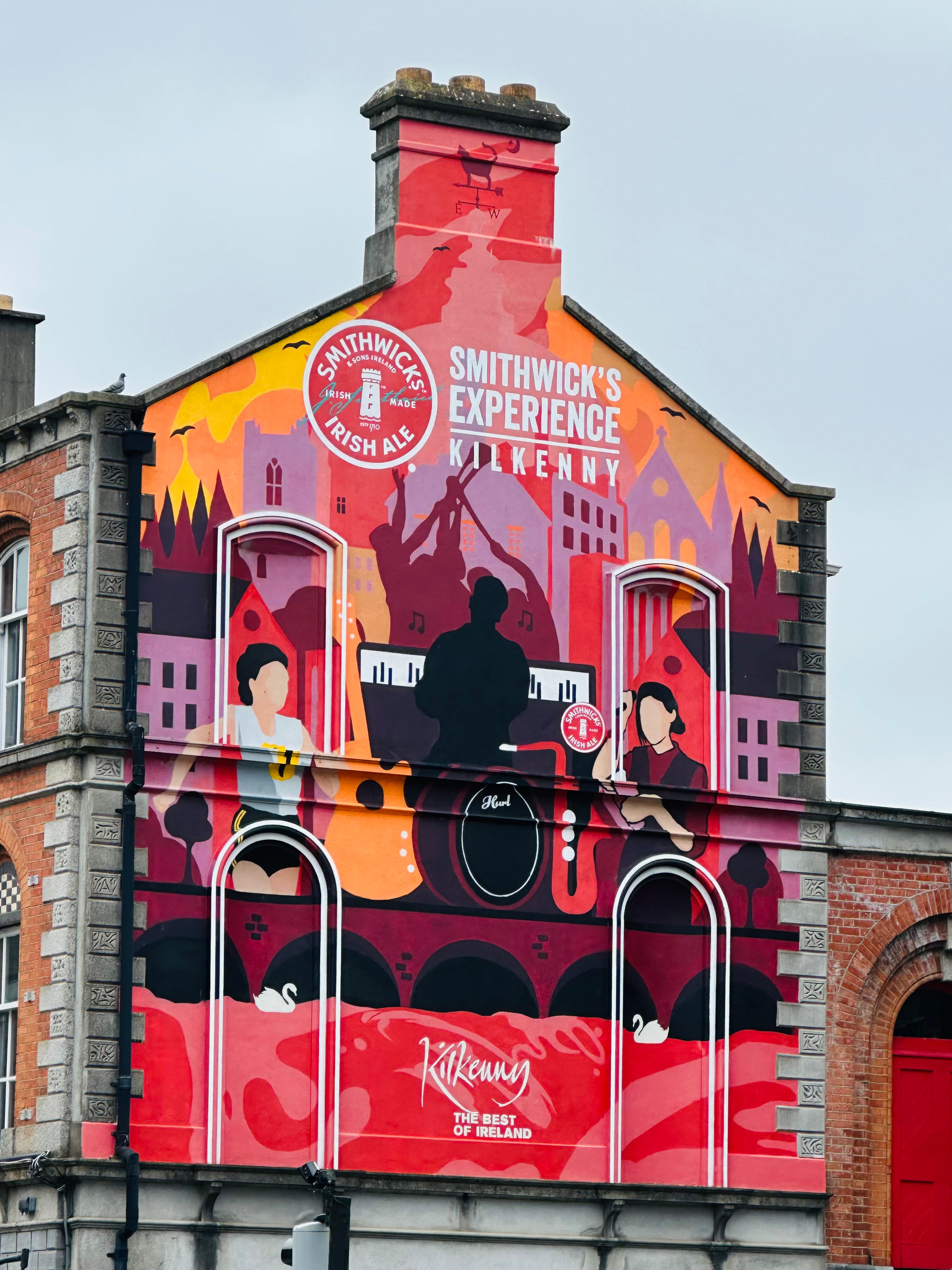
Nothing felt forced. Everything felt at once local and global.
Kilkenny was not preserved history behind glass. It was inhabited history.
Across from the Blaa Blaa Blaa café, a hurling match was frozen in stone, the castle steady behind it—history, pride, and a quiet wink, all within a few steps.
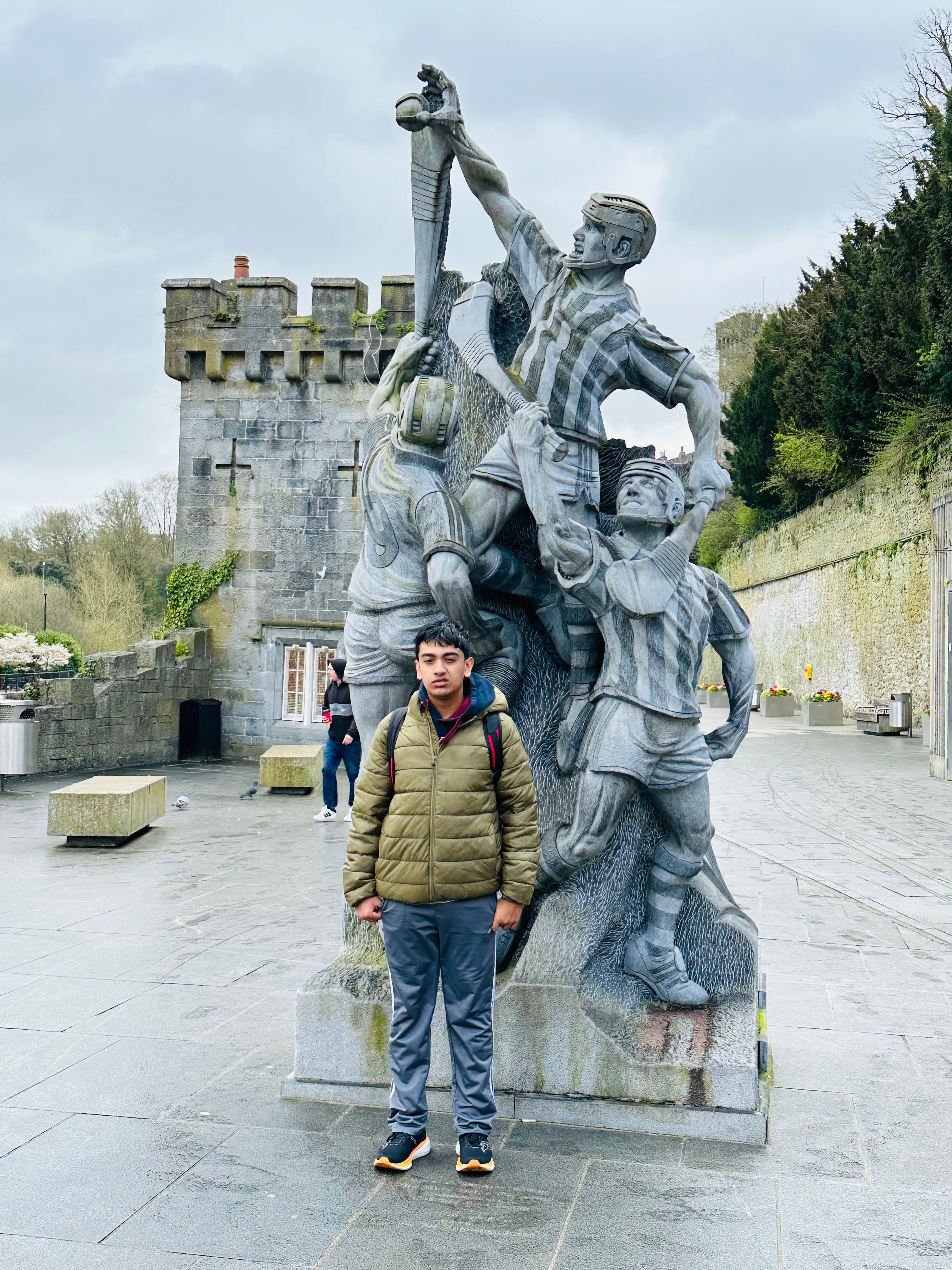
Sports, Liam explained, bordered on obsession here.
Kilkenny’s people took fierce pride in hurling, rugby, golf, horse racing, fishing—competition itself seemed woven into the town’s DNA. Liam jokingly called them “very competitive Celtic-Norman people,” a phrase that somehow captured both centuries of history and modern sporting confidence in a single breath.
His own childhood memories carried that same warmth and confidence.
An “idyllic childhood,” he called it—79 first cousins (rather like one endless big fat Indian wedding), rivers, fields, music, storytelling woven into daily life. And threaded through it all were those “insanely exciting and violent” hurling matches—first watched, then lived.
The friendliness was unmistakable too.
Liam told us everyone in Kilkenny says hello to one another. As if on cue, another mini-tram operator passing ours waved enthusiastically at Liam mid-tour. He waved right back without missing a sentence.
The gesture felt small. And yet it explained the city perfectly.
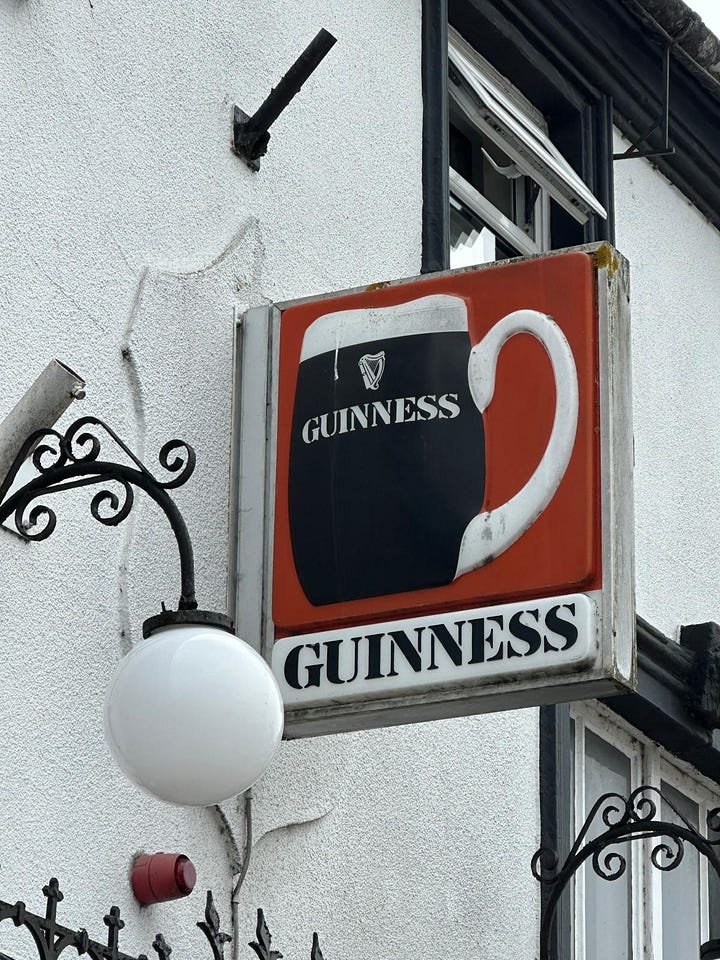
Even the pubs seemed woven into the social fabric rather than existing apart from it. Barrels of beer lined the side alleys beside old stone walls, waiting for evenings and weekends when, Liam explained, the city came fully alive.

Yet beneath the warmth and humor sat another history Liam spoke of more quietly—one tied to poverty, class, and survival.
For generations, many Irish Catholic families lived with hardship shaped by dispossession, limited opportunity, and survival under British rule. Large families, migration, endurance, and community became woven into the fabric of ordinary life across Ireland.
Liam spoke matter-of-factly about poverty within his own family history—not dramatically, simply as something woven into the inheritance of being Irish.



And perhaps that is part of what gives places like Kilkenny their particular warmth: communities shaped not merely by triumph, but by survival.
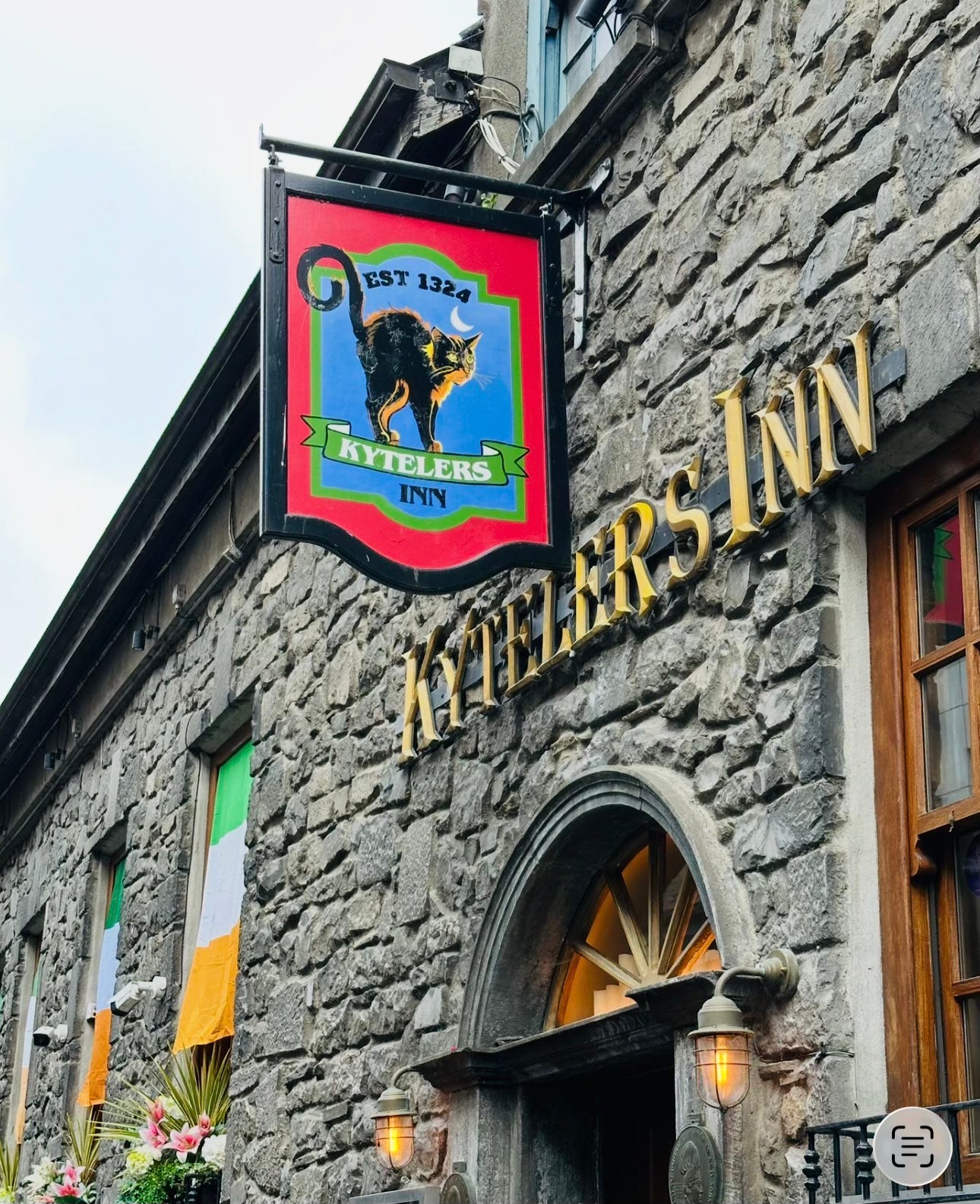
Which is perhaps why our tour eventually led us to Kyteler’s Inn—a medieval pub established in 1324 and associated with one of the town’s most enduring legends.
Somewhere between the laughter and the stories, Liam guided us into a darker past—that of Alice Kyteler, a wealthy Kilkenny woman accused of witchcraft in the 14th century.
It was a story not merely of superstition, but of power, inheritance, fear, and social tension. Alice escaped. Her servant did not.
And yet, unlike much of Europe, Ireland never fully descended into the mass hysteria of large-scale witch hunts.
Perhaps that, too, is part of Kilkenny’s character: a place that knows its darker history well enough not to become consumed by it.
And then there was the Black Abbey.
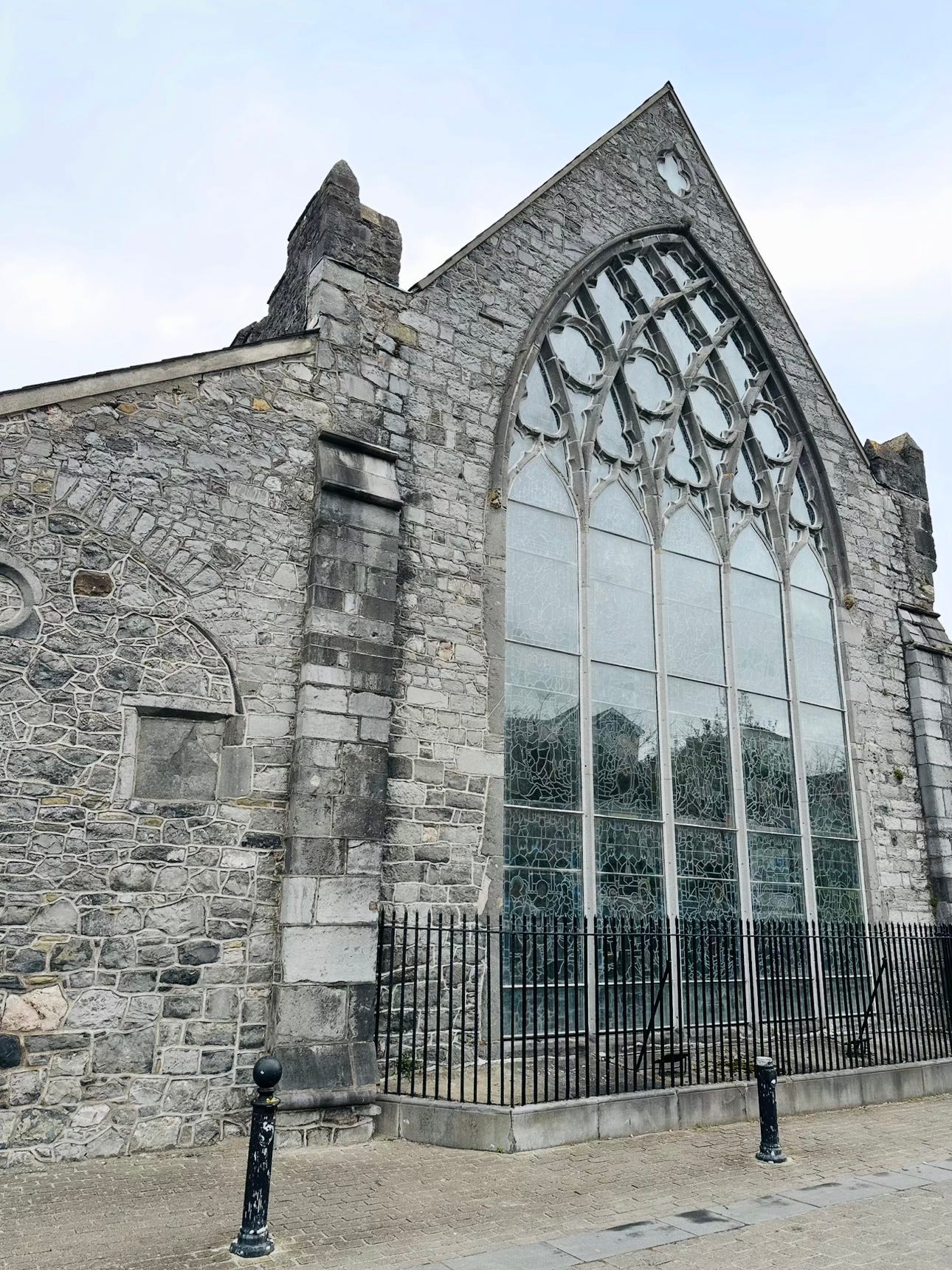
Founded in 1225 by the Dominican order—known as the “Black Friars” because of their black cloaks—the abbey carries within it centuries of survival and restoration. Floodwaters from the River Bregagh, a tributary of the Nore, once ravaged parts of the structure. Time and conflict scarred it repeatedly. Yet it endured.

Liam later told us that during one of the floods, his grandmother rowed a boat into the abbey to rescue statues floating inside.
Or, at least, Liamythology insists she did.
His father—a renowned seanchaí, or traditional Irish storyteller—later added that on their way in, they passed the baby Jesus swimming safely out of the church.
“It was the first time historians knew whether Jesus could swim,” Liam deadpanned.
And that absurdity felt perfectly Kilkenny: history and humor existing side by side.
Inside, the light changed.
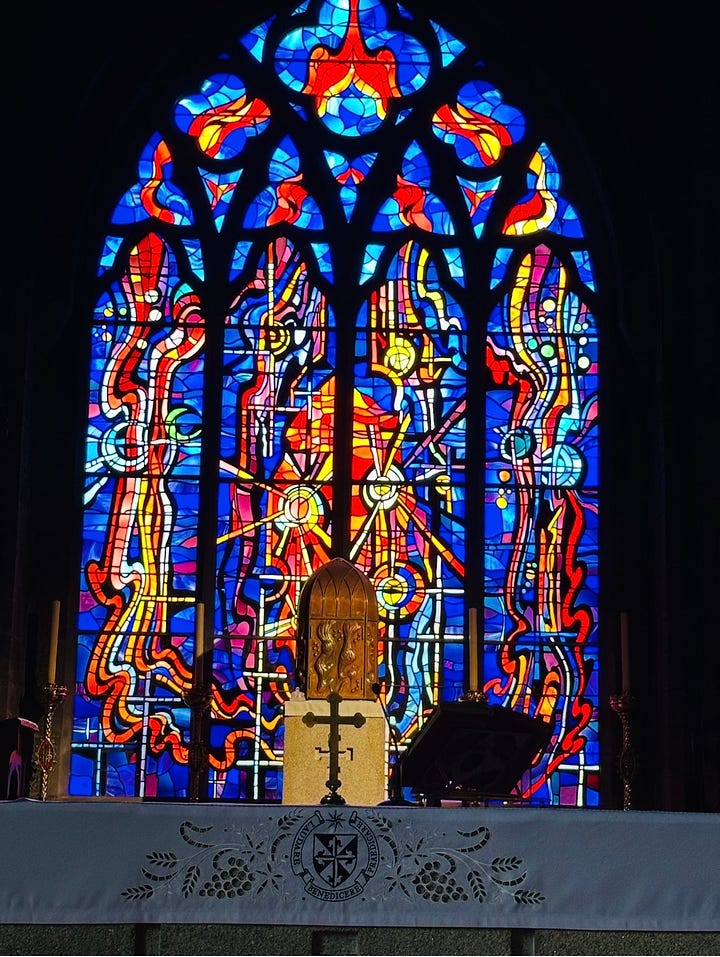
At the far end, a luminous stained-glass wall rose behind the altar, vibrant and almost otherworldly against the gray medieval stone. It felt less like something to look at and more like something to sit within.
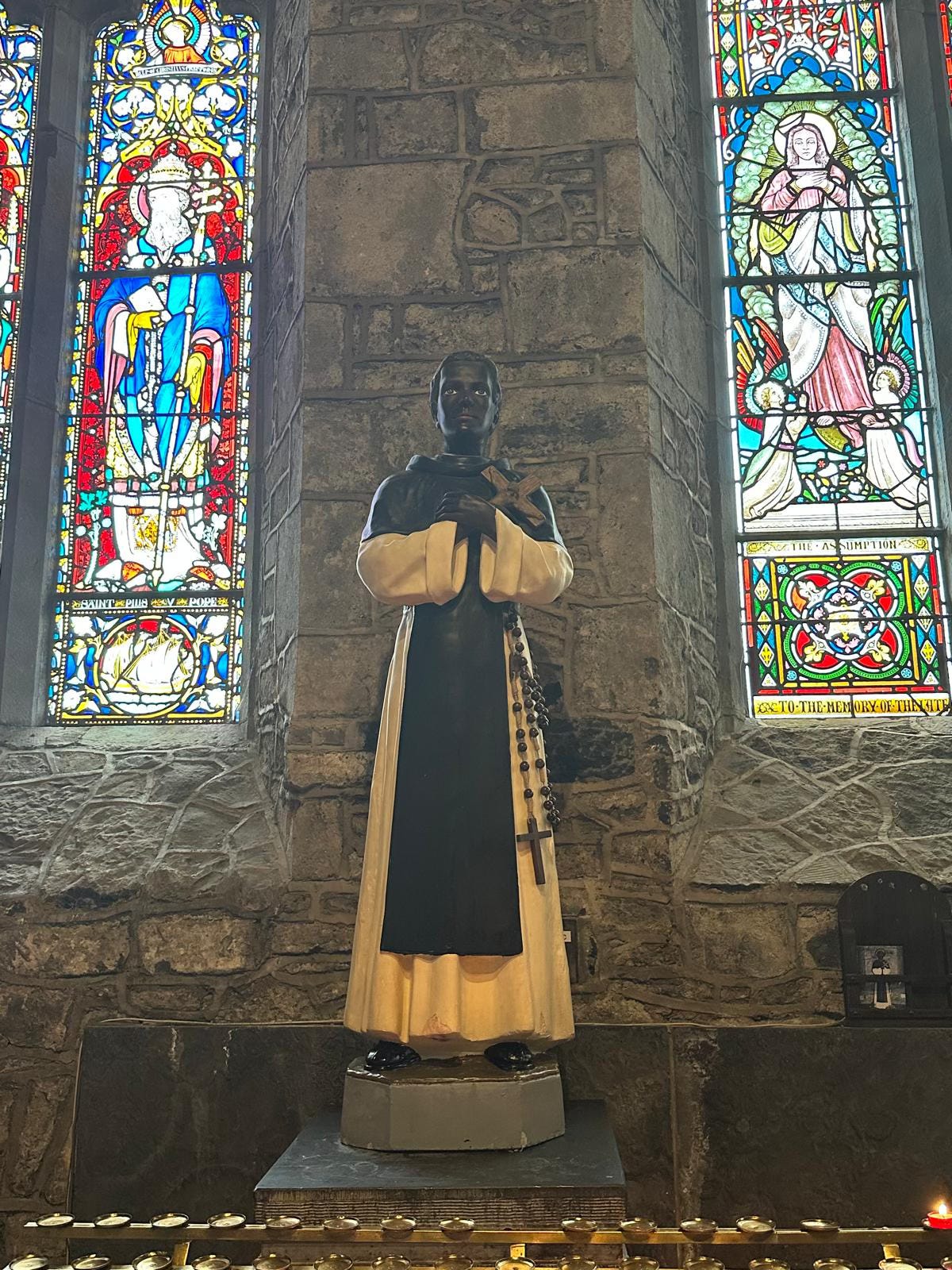
I found myself unexpectedly drawn to the figure of St. Martin de Porres, the dark-skinned Dominican saint standing quietly between the stained-glass windows.
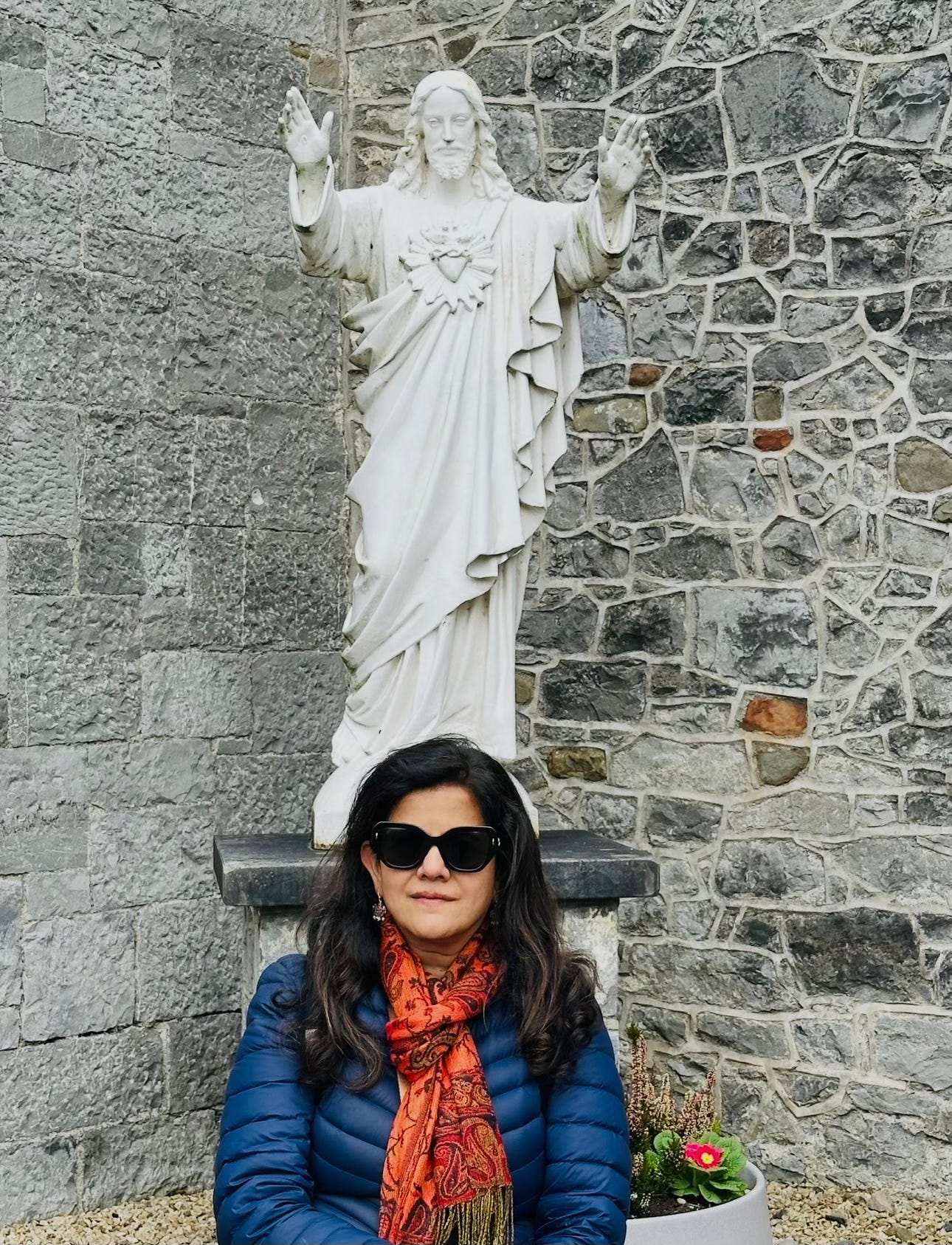
And outside, Christ.
Hands raised—not dramatically, but gently. Almost quietly.
A blessing that did not announce itself.
I sat there for a while.
And despite all the centuries of conflict, flood, poverty, conquest, rebellion, and reinvention surrounding the city, what I ultimately felt in Kilkenny was not heaviness.
It was warmth.
It was ease.
Kilkenny may not possess the raw, windswept majesty of places like Fanore, but it has something equally compelling: character.
There is wit here. Pride. Generosity. A touch of swagger.
Kilkenny seemed to contain a little bit of everything—history and humor, hardship and warmth, medieval stone and modern swagger—all delivered with a quiet wink.
Meaningfully yours,
Anu Prabhala
If this piece resonated, consider subscribing for free—and sharing it with someone who loves places that have swagger and attitude.
No posts
Comments
Nothing yet. Say the first thing.
Sign in to join the conversation.