
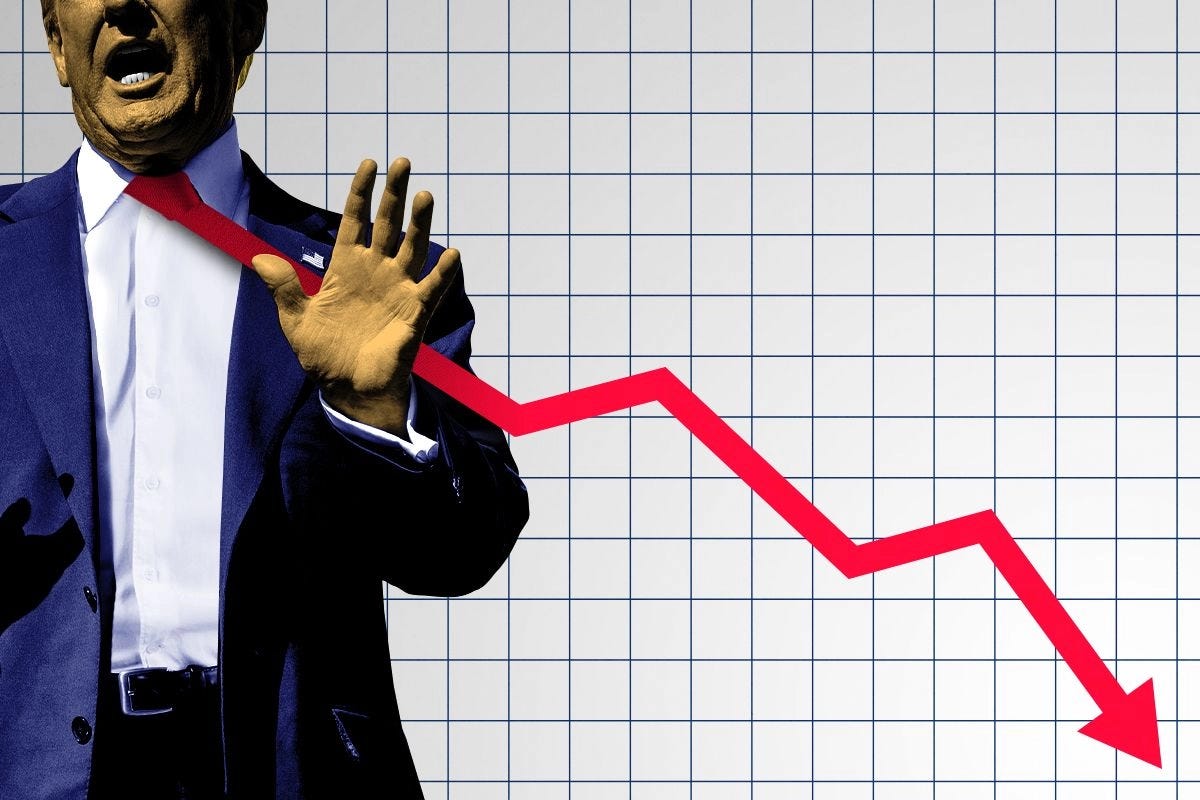
In February this year, Trump unleashed an Israeli/US war on Iran. Many speculated that this was a distraction from the Epstein files and slumping domestic popularity. But I think I have got to the bottom of the real reason. Trump is a closet degrowth proponent. So yes, his approach may be unconventional and does not align with best practice (degrowth is supposed to be planned to minimise negative social and economic impacts) but it is almost certain that his actions will lead to a shrinking of world economy. Indeed it is the view of many analysts that the closure of the Strait of Hormuz and the ensuing energy shock, which will not be short-lived, may spell the end of economic growth as we know it.
Thanks for reading An Uncommon Land! Subscribe for free to receive new posts and support my work.
That it is elevating the risk of a global recession is not just the view of the usual Cassandras I follow, such as the Honest Sorcerer, Richard Murphy, Nate Hagens and the like but also of such sober, non-alarmist institutions as the International Monetary Fund and the OECD. And the latest Trump-provoked energy crisis is on top of his sweeping introduction of tariffs, which through inflationary effects and suppression of consumer demand, are predicted by the IMF to have negative long-term effects on the global economy.
And here in New Zealand, we have a government that has been systematically pulling back its investment into the economy and enthusiastically encouraging the replacement of human jobs with AI, particularly in the public sector. This comes after already slashing thousands of public sector jobs and halting many projects, such as the iReX ferry project and numerous Kainga Ora housing developments. (Which comes at an eye-watering economic cost: a new report shows pausing, cancelling and delaying infrastructure projects has cost New Zealand an estimated $11.8 billion in the last 25 years.)
Slashing jobs and investment into public services and infrastructure is going to have major dampening effect on the economy. But let’s take a look at the likely downstream impacts of AI in particular. In a recent post, the Honest Sorcerer laid out how the accelerated uptake of AI across the economy is likely to suppress consumption. Why? For one, because people who no longer have jobs don’t tend to spend very much. Reduced consumer demand will lead to companies lowering their prices to stimulate demand, while at the same time attempting to increase efficiency by adopting more AI and laying off more human workers. Creating a vicious cycle - as he describes it, “A very hard to escape economic situation, where falling prices lead to lower wages, job losses, and delayed consumer spending—just like during the 1930’s.”
A worldwide recession will create a self-reinforcing spiral of reduced consumption. And as we know, over-consumption is the cause of overshoot, which has led to climate change and the breach of multiple other planetary boundaries.
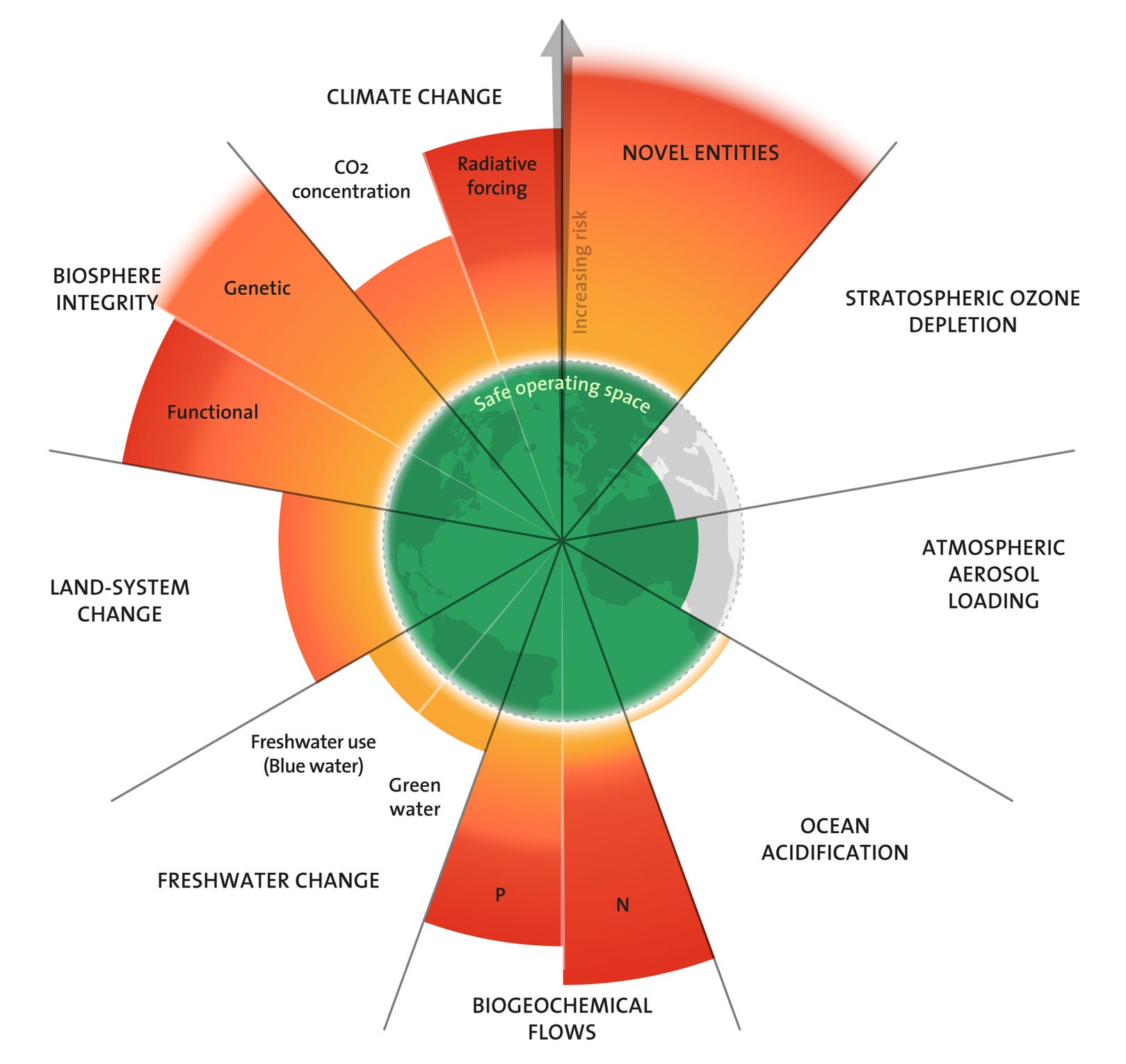
Was this Trump and Willis’ plan all along? To bring the global economy to the brink of collapse, destroy consumption and its negative biospheric impacts, all dressed up in a right-wing agenda? If so, quite ingenious - but it is a pity they didn’t follow more conventional degrowth approaches, as set out in Jason Hickel’s “Less is More”, Timothée Parique’s “Slow down or die” and Giorgos Kallis et al’s “The Case for Degrowth”, which would have involved fewer missiles and far less collateral damage.1
Thanks for reading An Uncommon Land! This post is public so feel free to share it.
Related posts
They also didn’t get the memo that the best way to reduce negative environmental impacts of the economy while delivering on human wellbeing is to invest into public services.
Comments
Nothing yet. Say the first thing.
Sign in to join the conversation.