
Customer Relationship Management (CRM) systems are everywhere—touted as essential for any business that wants to thrive in the digital era. But is all the excitement justified, or is CRM just the latest business buzzword? Let’s take a deeper look at CRM’s origins, why it’s become so popular, and what truly makes it valuable in today’s competitive landscape.
The enthusiasm for CRM isn’t just a passing fad. While many business technologies have come and gone, CRM has stuck around because it represents a fundamental shift: moving from transactional thinking to building meaningful, long-term customer relationships. At its core, CRM is less about software and more about a strategy for understanding and serving customers better. This strategic focus is what gives CRM its staying power, even as new tools and technologies emerge.
CRM as a concept took root in the late 1980s, growing out of relationship marketing. This new way of thinking put the customer relationship at the center, rather than just focusing on single transactions. It took decades for this approach to become mainstream, but by the 1990s, CRM had evolved from a theoretical framework into digital tools designed to help businesses nurture relationships with both current and prospective clients.
Since 1990s saw CRM transform from simple databases into, today’s comprehensive digital platforms. These systems allowed organisations to systematically collect, analyse, and act on customer data, enabling more personalised and effective engagement. This digitalization was a game-changer, making it possible to scale customer-centric strategies in ways that were previously impossible.
For much of the late 20th century, businesses were focused on internal resource management—optimizing people, processes, and capital to maximize efficiency and profitability. Enterprise Resource Planning (ERP) systems became the backbone of this approach, integrating and managing core business processes like accounting, inventory, HR, and supply chain.
Only after achieving operational efficiency could companies turn their attention to understanding and meeting client expectations.
This is where CRM systems began to shine, offering a different philosophy centered on clients and relationships rather than just internal processes.
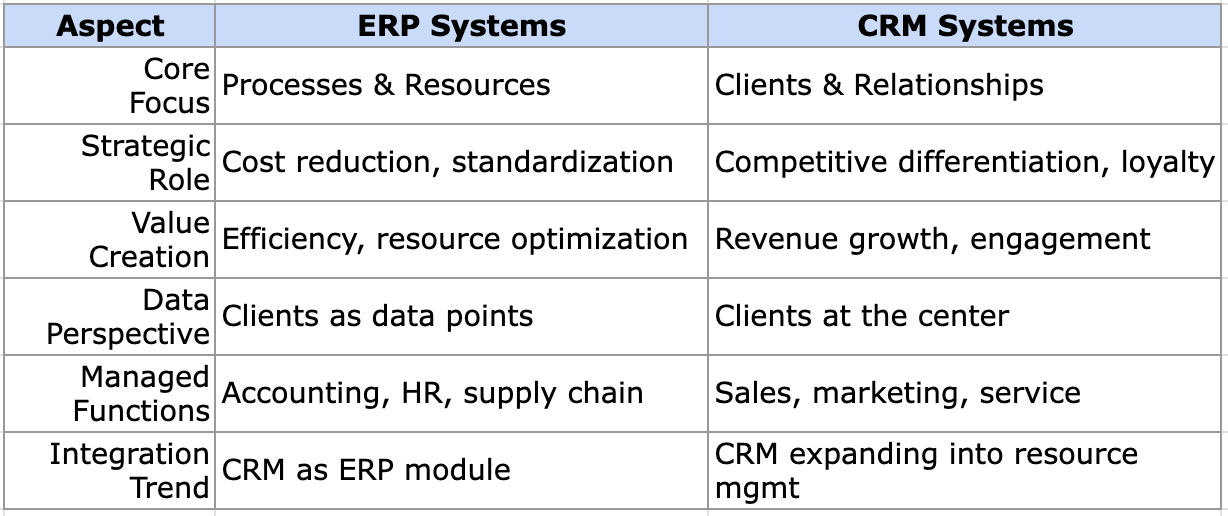
As the limitations of a purely resource-focused approach became clear, companies began to realize the strategic value of customer relationships. The integration of CRM tools marked a shift toward client-centricity, aligning business processes with the goal of delivering superior customer experiences. True operational efficiency, it turns out, isn’t just about streamlining internal processes—it’s about deeply understanding and consistently meeting customer expectations.
Achieving operational efficiency could only be achieved after companies focus their attention on understanding and meeting client expectations.
Today, CRM is viewed as a strategic enabler that helps build lasting, profitable relationships with customers. However, the journey from resource management to true client-centricity is ongoing, and finding the right balance between efficiency and customer focus remains a challenge for many organizations.
Customer-centricity isn’t just a buzzword—it’s a comprehensive approach that touches every aspect of a business. Key elements include:
Proactive Needs Analysis: Anticipating what customers want before they ask, using data analytics, market research, and direct engagement.
Customer Journey Mapping: Understanding every step of the customer’s experience, from initial awareness to post-purchase support.
Personalization at Scale: Delivering tailored products, services, and interactions efficiently, thanks to flexible systems and processes.
Cross-Functional Collaboration: Breaking down internal silos so all departments work together toward customer satisfaction.
Empowering Front-Line Staff: Giving employees the tools and authority to resolve issues and deliver exceptional service.
Continuous Feedback Loops: Collecting and acting on customer feedback to drive ongoing improvement.
Technology as an Enabler: Using CRM and other tools not just for automation, but to enhance the overall customer experience.
Research shows that 73% of companies with above-average customer experience outperform their competitors financially, highlighting the real-world impact of customer-centricity.
Many organizations fall into the trap of treating CRM as a quick technological fix, expecting the tool alone to deliver results. But without real change management and a customer-centric strategy, CRM’s potential often goes unrealized. Success requires aligning technology with company culture, processes, and leadership. Change management is essential to maximize system benefits and ensure lasting transformation.
Technology providers and consultants have a crucial role to play. They need to help organizations see that CRM isn’t magic. Real value comes from aligning digital tools with a genuine customer-first philosophy. This means:
Advising on culture shifts and process redesign
Focusing on change management and user adoption
Helping clients see CRM as a philosophy, not just software
Providers should empower organizations to prioritize long-term relationship value over short-term gains, and to recognize that technology is an enabler—not a replacement—for human connection and understanding.
Academic interest in CRM has exploded, with 1,940 CRM-related publications indexed in Scopus between 2010 and 2023, and 105 in 2023 alone. This surge in research activity shows growing recognition of CRM’s strategic importance. By contrast, ERP research has grown steadily, with about 7,000–8,000 ERP-related articles published annually, but the focus has shifted from implementation to integration and optimization, suggesting market maturation.
Historical Perspective: CRM research accelerated in the early 2000s, especially after 2015.
Citation Impact: The growing citation rate signals increasing influence, even with fewer publications than other management fields.
Thematic Evolution: Early research focused on sales force automation and customer data management. Recent trends include customer engagement, data mining, social CRM, and integration with business intelligence and AI.
Recent Acceleration: More ERP publications in the last three years, focus on integrations and digital transformation.
Thematic Shifts: Focus has moved from implementation challenges to process optimization and integration with business intelligence and CRM. Integration with AI and IoT are also gaining prominence.
Long-term studies show that companies with strong CRM strategies and a customer-centric culture consistently create more business value than those focused only on internal efficiency. Integrating ERP and CRM systems gives businesses a holistic view of operations and customers, enabling more informed decision-making and tailored services. Firms that embed customer-centric principles throughout their culture, processes, and decision-making frameworks are better positioned to identify high-value customers, optimize marketing, improve sales, and enhance loyalty and satisfaction.
Moving to a customer-centric model requires more than just buying software. It involves:
Change Management: Clear communication, stakeholder engagement, and support for employees at every level.
Training: Not just on tools, but on soft skills like empathy and problem-solving.
Cultural Evolution: Making customer experience part of everyone’s job, with leadership setting the tone.
Without integrated investment in change management, training, and cultural transformation, the potential of customer-centric tools remains untapped. The real competitive edge lies in an organization’s unique and deliberate approach to putting the customer at the heart of everything it does.
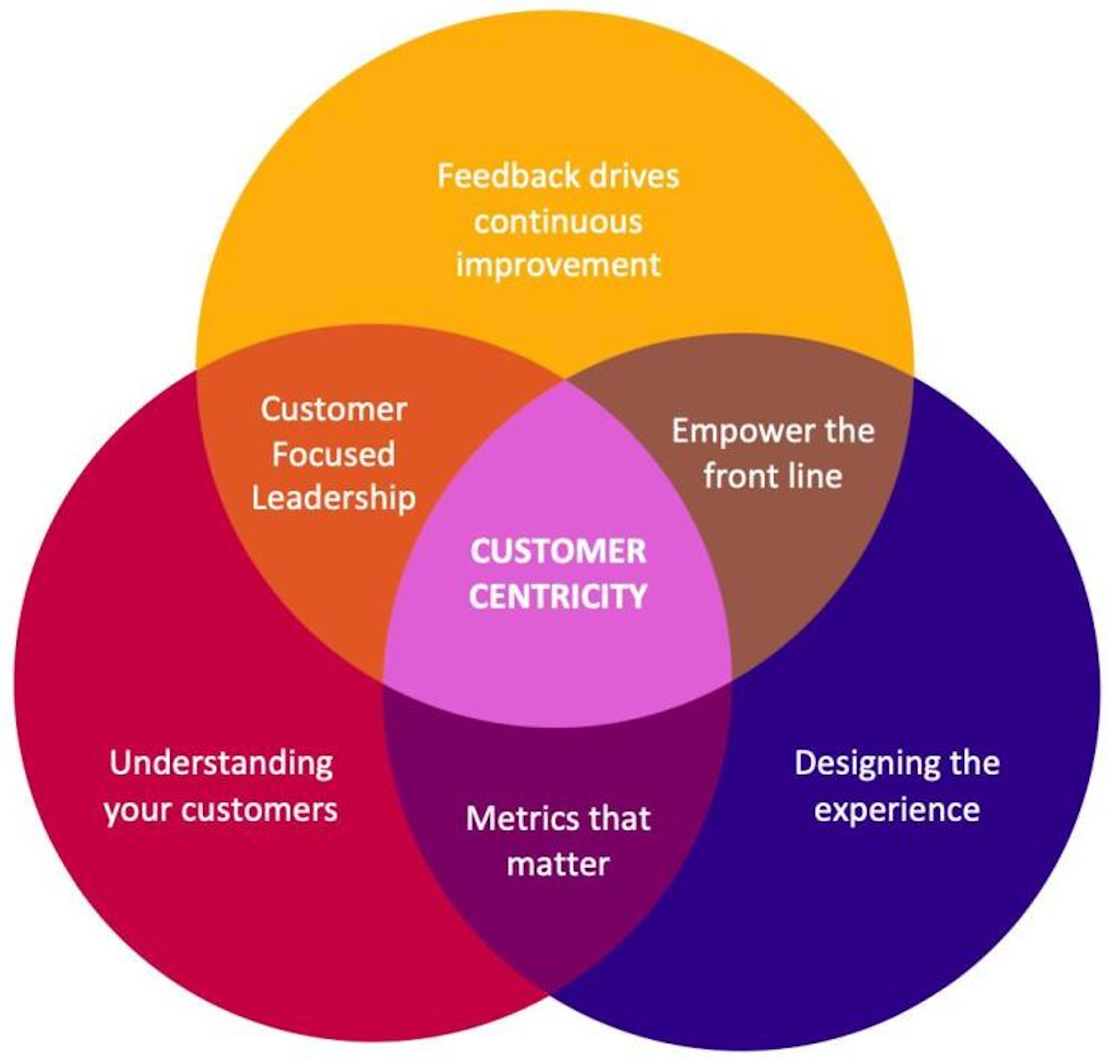
Over the past twenty years, customer centricity has surpassed internal resource management as the ultimate competitive advantage, driving demand for CRM solutions. Since Tomas Siebel launched the first digital CRM thirty years ago, the landscape has evolved, with businesses now actively engaging clients to foster brand loyalty and an informed choice.
In this new reality, relationships are paramount. CRM systems, unlike ERPs, prioritize clients, even expanding to include functions like invoicing and inventory, thus questioning the need for separate ERPs. This shift from resource optimization to client-centricity fuels CRM demand.
The risk relies on organizations seeking quick tech fixes instead of embracing the necessary change management and strategic thinking. Technology alone isn't enough; a mindset and process shift is crucial for Customer Relationship Management logic to exert benefits.
Ultimately, a CRM software is a tool; its power lies in a company's commitment to customer-first strategies, understanding needs, personalizing interactions, and building lasting relationships. The true competitive edge is in sustained Customer Experience and Loyalty, well beyond process optimisation.
Comments
Nothing yet. Say the first thing.
Sign in to join the conversation.