
Biology is code.
Peptides are the tip of the spear: they’re a short cut in a deeper value chain.
The body runs on biological code. You can intervene at different depths. Genome editing rewrites the source code. Epigenetic tuning changes which parts of that code get read. Peptides act further downstream, ready made signals that tell cells what to do.
Cell therapy gets the same end job done from the other direction, by inserting entirely new cells into the body. MiNK’s iNKTs are a powerful example of how that can save and improve lives.
Enjoy.
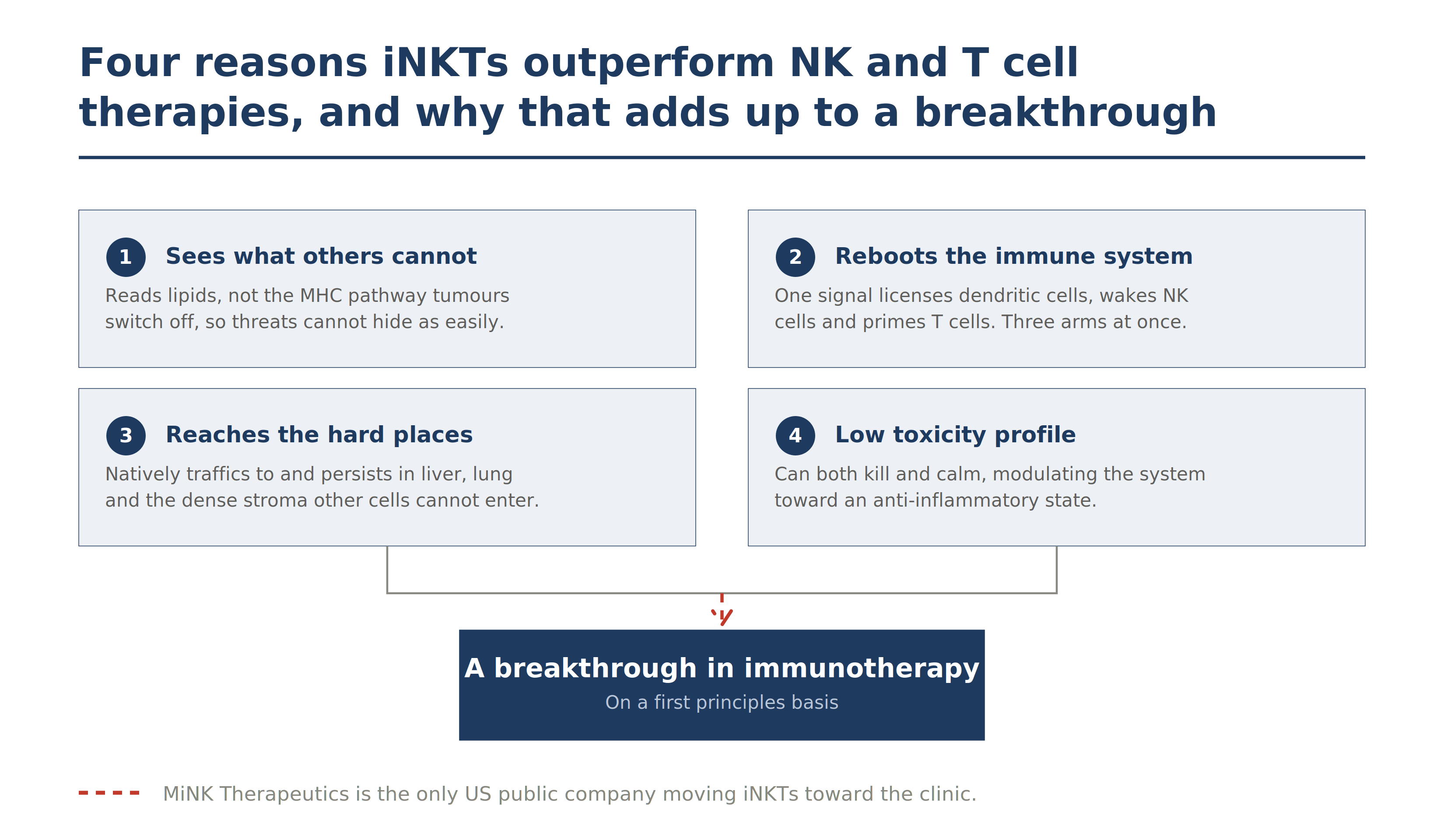
iNKTs (invariant natural killer T cells) are a high performance branch of the immune system that immunotherapy has historically left for dead. The only public company in the US moving iNKT towards the clinic is MiNK Therapeutics. iNKTs outperform natural killer and T cell based therapies in the following way:
They detect the bad guys through lipid sensing rather than the MHC pathway tumors learn to switch off, which means it’s far harder for tumors, viruses and bacteria to trick them into oblivion.
They reboot the immune system. A single activated iNKT licenses dendritic cells, wakes up natural killer cells, and primes conventional T cells, igniting three arms of immunity at once from one signal.
They natively traffic to and persist in tissues where other cell therapies fail. For example liver, lung, and the dense stroma of solid tumors (the hard, walled-off terrain conventional T cells can’t reach).
They present a low toxicity profile, because they can both kill the bad guys and modulate the immune system towards an anti-inflammatory state.
They are thus, on a first principles basis, a breakthrough in immunotherapy.
The primary reason iNKTs have been left behind in immunology is they weren't easy to manufacture. Low, donor dependent yields gated the field for two decades. IL-15 superagonist biology cracked that open, and MiNK has built its own proprietary process to make and store iNKTs at scale. MiNK then takes it a step further: it pairs its iNKTs with ImmunityBio's IL-15 superagonist Anktiva in the clinic, stacking two clinically validated immune mechanisms into one combination with early results in critically ill patients.
The immune system splits into two branches that evolved for different jobs. The innate branch is fast, blunt, and pre-programmed: it reacts to broad danger signals within minutes, kills indiscriminately, and never learns. The adaptive branch is slow, precise, and trainable: it takes days to recognise a specific threat, but once it does, it remembers forever. Almost every cell is committed to one branch or the other. iNKTs are a rare exception that combine a T cell receptor (adaptive hardware) but it fires instantly like an innate cell.
They sit at the junction between innate and adaptive immune cells.
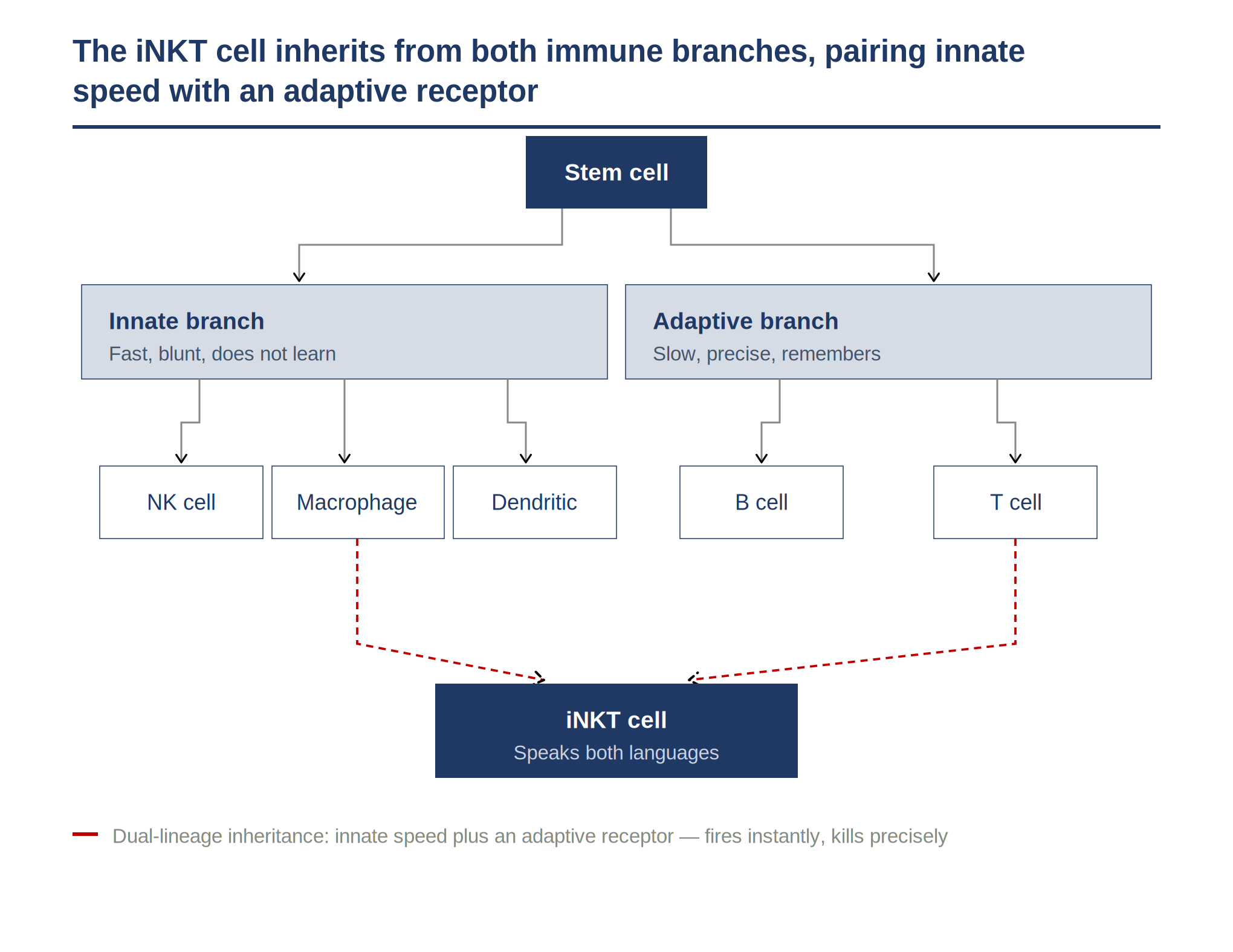
The usefulness comes from one structural fact: they recognise threats by reading lipids presented on a molecule called CD1d, rather than reading protein fragments (peptides) presented on MHC (Major Histocompatibility Complex), the display system cells use to show what is inside them to immune cells.
Conventional T cells need MHC to work, and the favourite escape trick of tumours and chronic viruses is to switch MHC off so they become invisible. CD1d does not switch off the same way, so iNKTs keep seeing the threat after conventional immunity has gone blind. And because CD1d is the same in everyone, an iNKT from one donor works in any patient. No matching, no rejection, no graft versus host. That is the entire basis for off the shelf cell therapy with genuine scalability.
Sometimes a viral peptide closely resembles one of the body's own peptides. T cells trained to attack the virus then cross react against healthy tissue that carries the lookalike peptide, and the immune system starts attacking the body itself. This is known as molecular mimicry, and it has been a particularly relevant phenomenon in the world since 2020.
iNKTs sidestep this entirely. Molecular mimicry is a quirk of peptide recognition and iNKTs do not read peptides. Reading lipids on a separate channel, they are not subject to the cross reactivity that turns the adaptive system against its own host.
But seeing the threat is only half of it. When an iNKT fires, it does not just kill. It releases a burst of signalling molecules, chiefly a cytokine called IFN gamma, that wake up the rest of the immune system in sequence. Other immune cells will do this to various degrees, but iNKTs matter most in the patients other immunotherapies cannot help: the ones whose innate or adaptive branches have already collapsed. The iNKT fires from a third axis that is still working, so it can restart the cells that have gone dark.
The chain runs like this. The iNKT licenses dendritic cells, the scouts that carry threat information back to the wider system. Those activated dendritic cells then prime conventional T cells, handing the slow, precise, trainable branch a target it can learn and remember. At the same time, the iNKT transactivates NK cells, switching on the innate killers that mop up any tumour cell which tried to hide by shutting off its MHC. One cell pulls three triggers, and each trigger recruits a different arm of immunity.
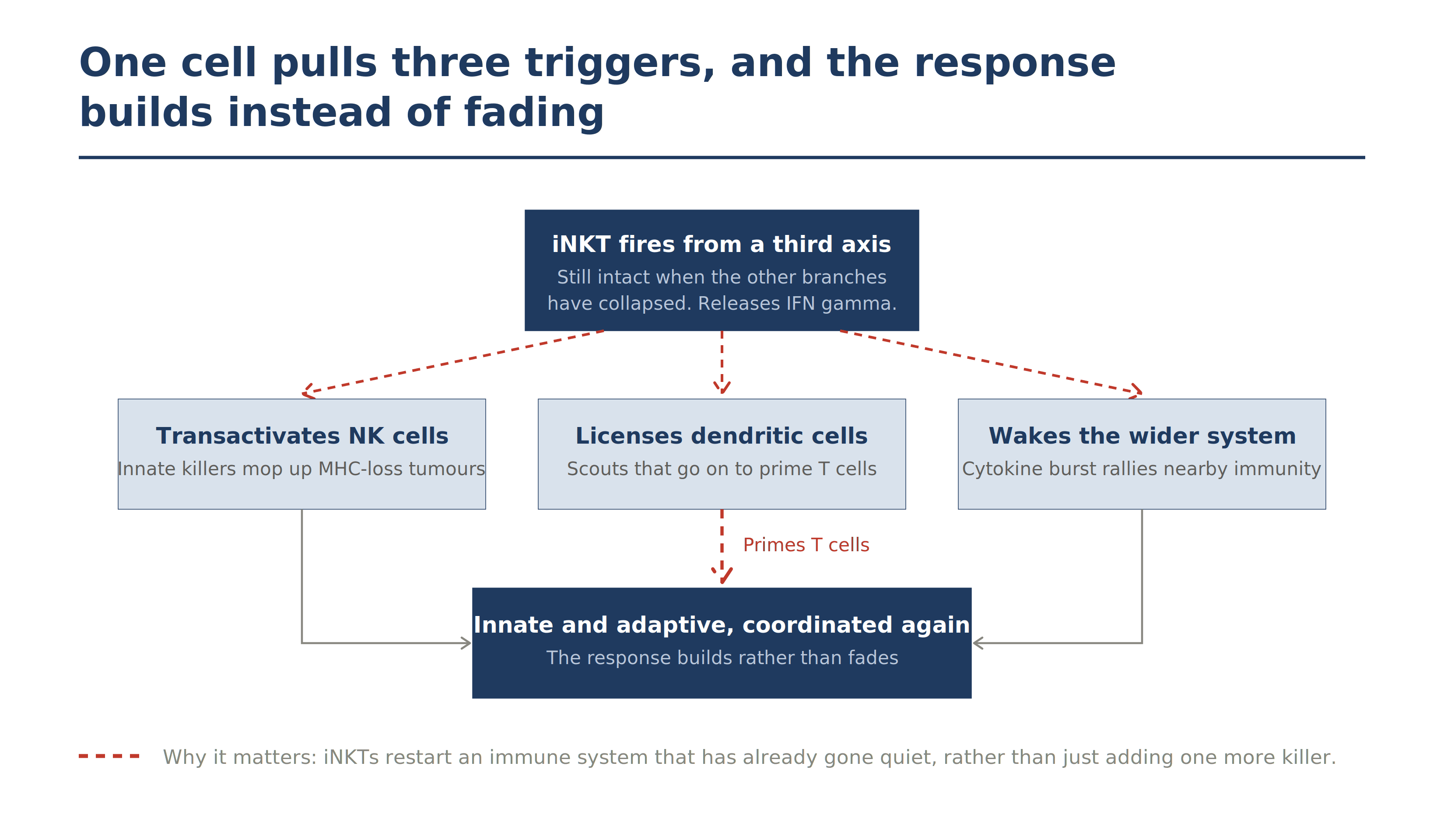
The reason this matters is that it is self amplifying. A conventional T cell kills what it is pointed at and stops there. An iNKT starts a cascade: it activates cells that activate further cells, and the response builds rather than fades. It does not just add another killer to the fight, it restarts the coordination between the innate and adaptive branches that chronic disease and cancer spend years dismantling. That is the literal sense in which it is a reboot. The system was not destroyed, it was switched off, and the iNKT turns it back on.
Solid tumours are clumps of cancer cells with a fortress around them. A layer of support cells lays down a dense, fibrous matrix around the tumour, walling it off from the bloodstream and from the immune system. This is the stroma, and it is the single biggest reason cell therapy has worked in blood cancers but stalled in solid ones. A conventional T cell can be engineered to recognise the tumour perfectly and still never reach it, because it cannot get through the wall. The drug is correct and the delivery fails.
iNKTs are different because they were built for this terrain. The body's own iNKTs spend their lives patrolling exactly these tissues: the liver, the lungs, and the dense fibrous environments where the stroma forms. That is their native beat. So when an iNKT is infused, it does not have to be coaxed into the hard places, it traffics there by default.
At the molecular level, this comes down to the receptors they carry. In the Biology module of my course I have a class just for ligands and receptors, because they are the grammar of the entire body.
Almost nothing in biology happens by a cell deciding to act. It happens because a signalling molecule, a ligand, fits into a receptor on the cell surface like a key into a lock, and that fit triggers everything downstream. Where a cell goes, what it kills, when it calms down, whether it lives or dies: all of it is receptors reading ligands. Understand the lock and key and you stop memorising biology and start predicting it.
Trafficking (where a cell goes to) is a pristine example of that.
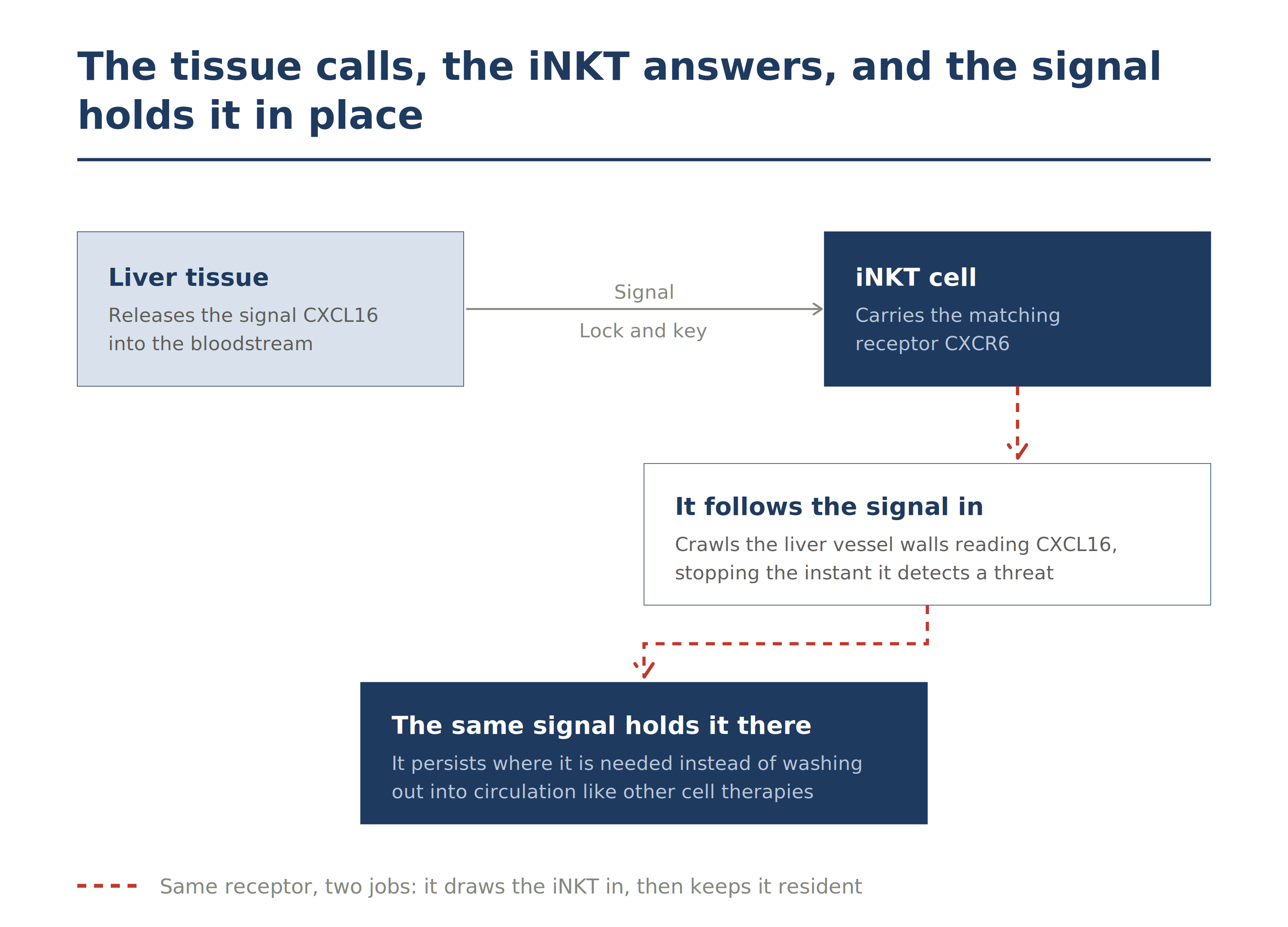
Tissues like the liver and lung constantly release a homing signal, a chemokine, into their surroundings. iNKTs carry the matching receptor, so they follow the signal straight to the source. In the liver the signal is a molecule called CXCL16 and the receptor is CXCR6, and the pairing is so central that iNKTs literally crawl along the walls of liver blood vessels reading it, stopping the instant they detect a threat. Strip that receptor away and iNKTs vanish from the liver almost entirely. The lung uses a different but identical idea, its own signal drawing in iNKTs that carry its own matching receptor.
The key point is that this receptor does not just attract iNKTs, it retains them. Most cell therapies wash out of tissue quickly. iNKTs are held in place by the same signal that drew them in, which is why they persist where they are needed rather than drifting back into circulation. They arrive at the fortress natively, and they stay.
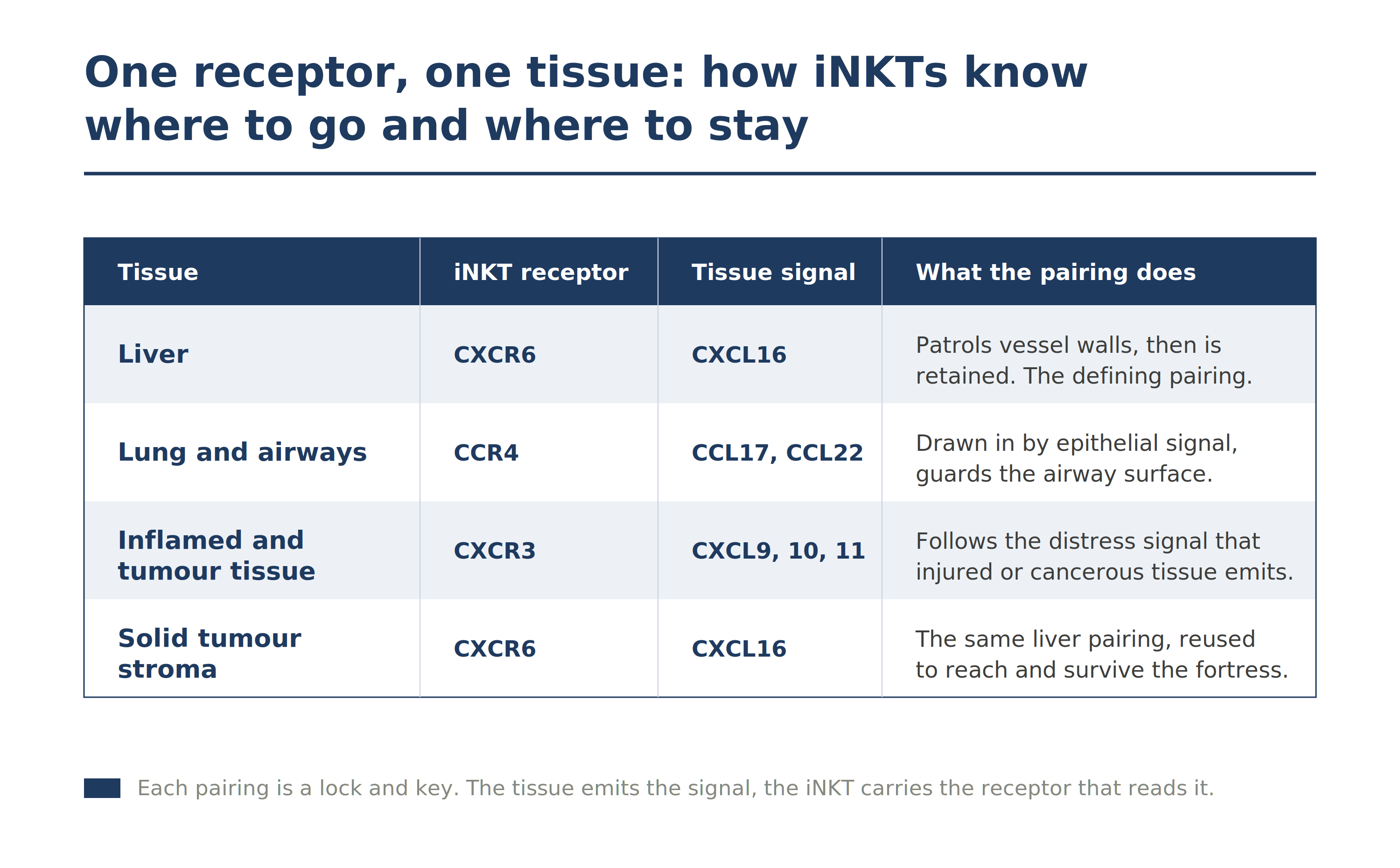
The table might suggest each receptor is locked to one organ, but one of them breaks that pattern in a way that matters enormously for cancer. CXCR3 does not home to a place, it homes to a state. Its signals, CXCL9, CXCL10 and CXCL11, are switched on by interferon, the alarm the body releases wherever it is under attack. So CXCR3 does not ask which organ it is in, it asks where the fighting is. Inflamed tissue lights up with these signals, and so do tumours, almost regardless of where they sit in the body. An iNKT carrying CXCR3 is therefore not a liver cell or a lung cell. It is a cell that follows danger to its source.
Hypothetically, this is the property that lets a single off the shelf iNKT pursue a tumour in the lung, the gut, the pancreas or the breast, because it is not navigating by anatomy, it is navigating by the distress signal that almost all solid tumours emit.
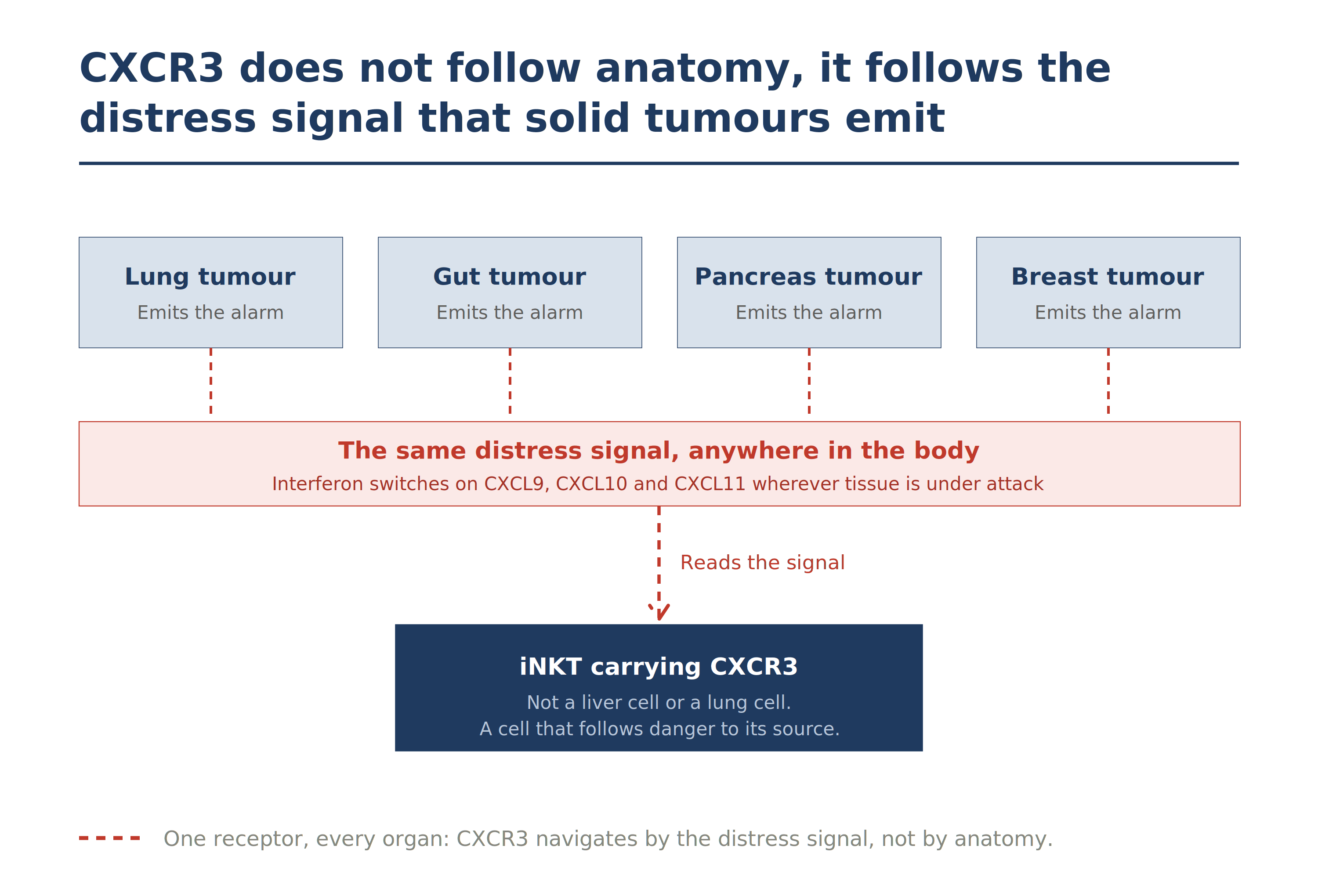
CXCR6, by contrast, stays narrow. It is the liver homing receptor, and it shows up against tumours only because tumours happen to switch on its specific ligand, CXCL16. The same key cut for the liver turns out to fit a few tumour locks too. Between them the two receptors sketch the opportunity: one that follows danger anywhere, and one that was built for a single organ but gets opportunistically reused. The first is the more powerful idea, and it is the reason an organ agnostic iNKT against solid tumours is not a fantasy but a mechanistic possibility.
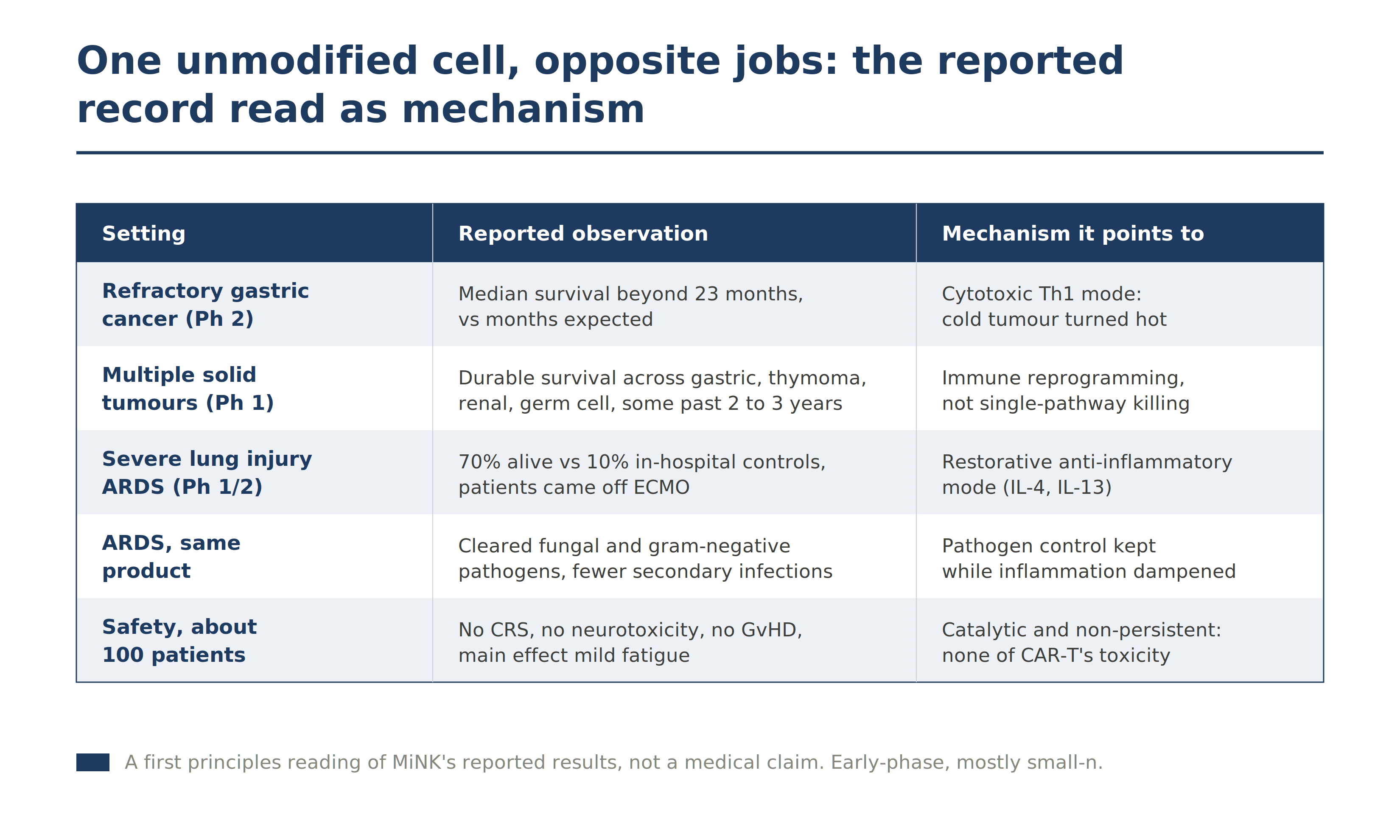
So far this has been mechanism: what the receptors are, where they point, and why the biology predicts an iNKT should be able to reach trouble almost anywhere in the body. The fair question is whether any of it actually shows up in patients. It does, at least as a signal. What follows is a first principles reading of MiNK’s own reported results, not a medical claim or an endorsement of the therapy.
The point is narrow but striking: across very different diseases, the same unmodified off the shelf cell, agenT-797 (a native iNKT with no engineering), appears to do what the biology predicts. In cancer it skews pro inflammatory and cytotoxic, turning cold tumours hot. In damaged lungs it does the opposite, calming runaway inflammation while still clearing pathogens.
One cell, opposite outputs, no re engineering between settings.
Whether these early signals hold up under randomised conditions is the open question, and the randomised lung injury readout due in the second half of 2026 is the first real test. But as a demonstration that the dual mode iNKT mechanism behaves in real patients the way first principles say it should, the pattern is unusually coherent.
The fourth advantage is the strangest one, and it follows directly from the reboot. Most therapies do one thing. A chemotherapy kills. A steroid suppresses. An iNKT does the appropriate thing for the situation it finds itself in, and the situation can be opposite from one disease to the next.
This dual capacity, cytotoxic when the problem is a hidden enemy and restorative when the problem is friendly fire, is why a single off the shelf cell can credibly be pointed at diseases as different as refractory gastric cancer and acute respiratory failure. One mechanism, two opposite jobs, selected by the tissue rather than by the engineer.
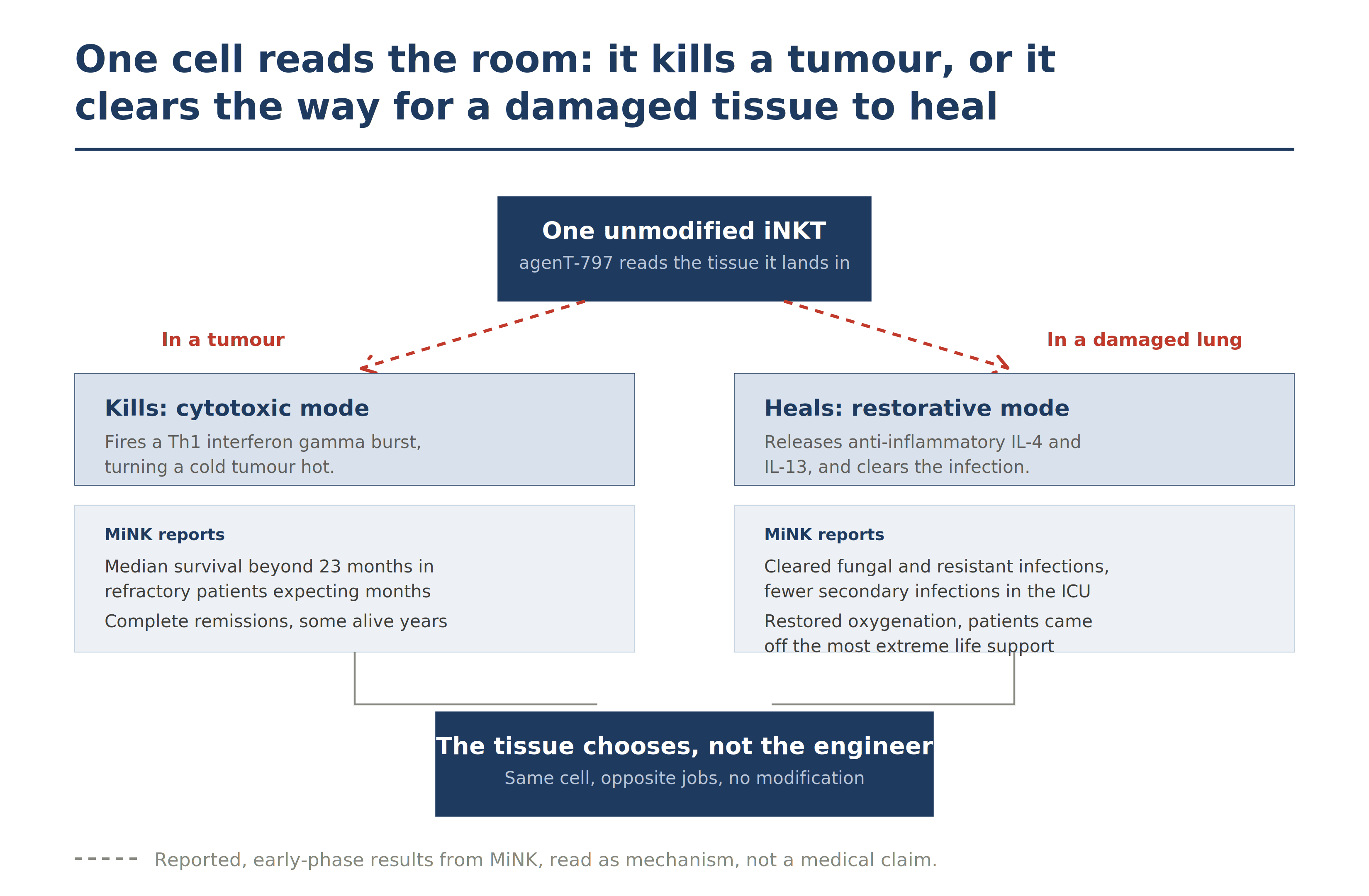
In a tumour, the job is to kill. The iNKT reads the cancerous tissue, fires in cytotoxic mode, and drives the Th1 interferon gamma response that turns a cold tumour hot. This is the mode behind MiNK’s oncology signals: in heavily pretreated, checkpoint refractory patients whose expected survival was measured in months, the company reports median survival beyond 23 months and several patients alive years after a single course, with complete remissions in cancers like metastatic testicular disease.
The cell is doing what a killer should do.
In a damaged lung, the job is the reverse. Here the threat is not a tumour hiding from the immune system, it is an immune system that has gone into overdrive and is destroying the tissue it is supposed to protect. The same unmodified iNKT, agenT-797, reads this environment and shifts into a restorative mode, releasing anti inflammatory signals like IL-4 and IL-13 rather than the cytotoxic burst it produces in cancer. It dampens the runaway inflammation instead of adding to it. This is not the cell being reprogrammed between diseases. It is the same cell reading two different rooms and responding correctly to each.
Crucially, calming the fire is only part of it. The iNKT also clears the pathogens that damaged tissue cannot fight off on its own. In MiNK's severe lung injury work, the cells cleared fungal and multidrug resistant gram negative infections and reduced the secondary infections that are often the actual cause of death in the ICU. This matters because the usual tradeoff in critical care is brutal: suppress the inflammation and you cripple the patient's ability to fight infection, but leave the inflammation and the tissue keeps burning.
The iNKT does not face that tradeoff, because it can dampen harmful inflammation while preserving, even enhancing, pathogen clearance. That is the combination conventional anti inflammatory approaches, including mesenchymal stromal cell therapies, have repeatedly failed to deliver.
The iNKT does not rebuild tissue the way a stem cell would. What it does is remove the two things preventing the tissue from healing itself: the runaway inflammation and the unchecked infection. Once both are gone, the body's own repair machinery can resume. In MiNK's ARDS patients this showed up as restored endothelial function and improved oxygenation, with patients coming off the most extreme form of life support. The iNKT did not regenerate the lung. It created the conditions under which the lung could recover.
MiNK's pipeline is best understood as one native cell plus two engineered upgrades, all built on the same chassis. The lead asset, agenT-797, is the unmodified iNKT we have been describing this whole time. It is the furthest along, and it is being pointed at strikingly different diseases precisely because the cell reads its environment rather than being engineered for one target. It is in clinical trials across solid tumours, graft versus host disease, and critical pulmonary failure, all with the same off the shelf product.
The near term catalyst sits here. MiNK has moved agenT-797 into a randomized Phase 2 trial in acute lung injury and ARDS, designed on a seamless Phase 2/3 track, with regulatory interactions underway and preliminary data expected in the second half of 2026. That readout is the single most important date on the calendar for this company, because it is the first time the platform faces a randomised, controlled test rather than the single arm and emergency use settings that produced the early signals.
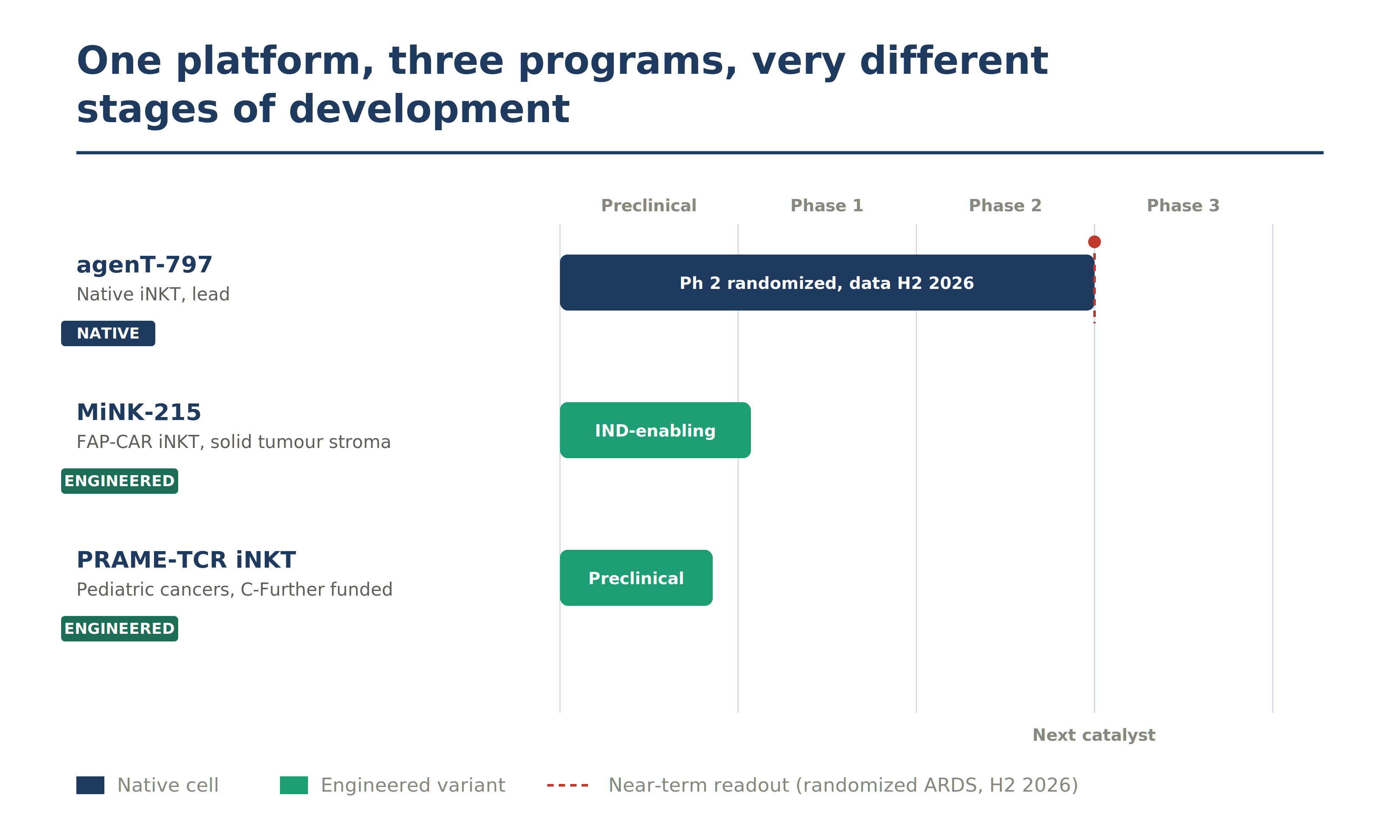
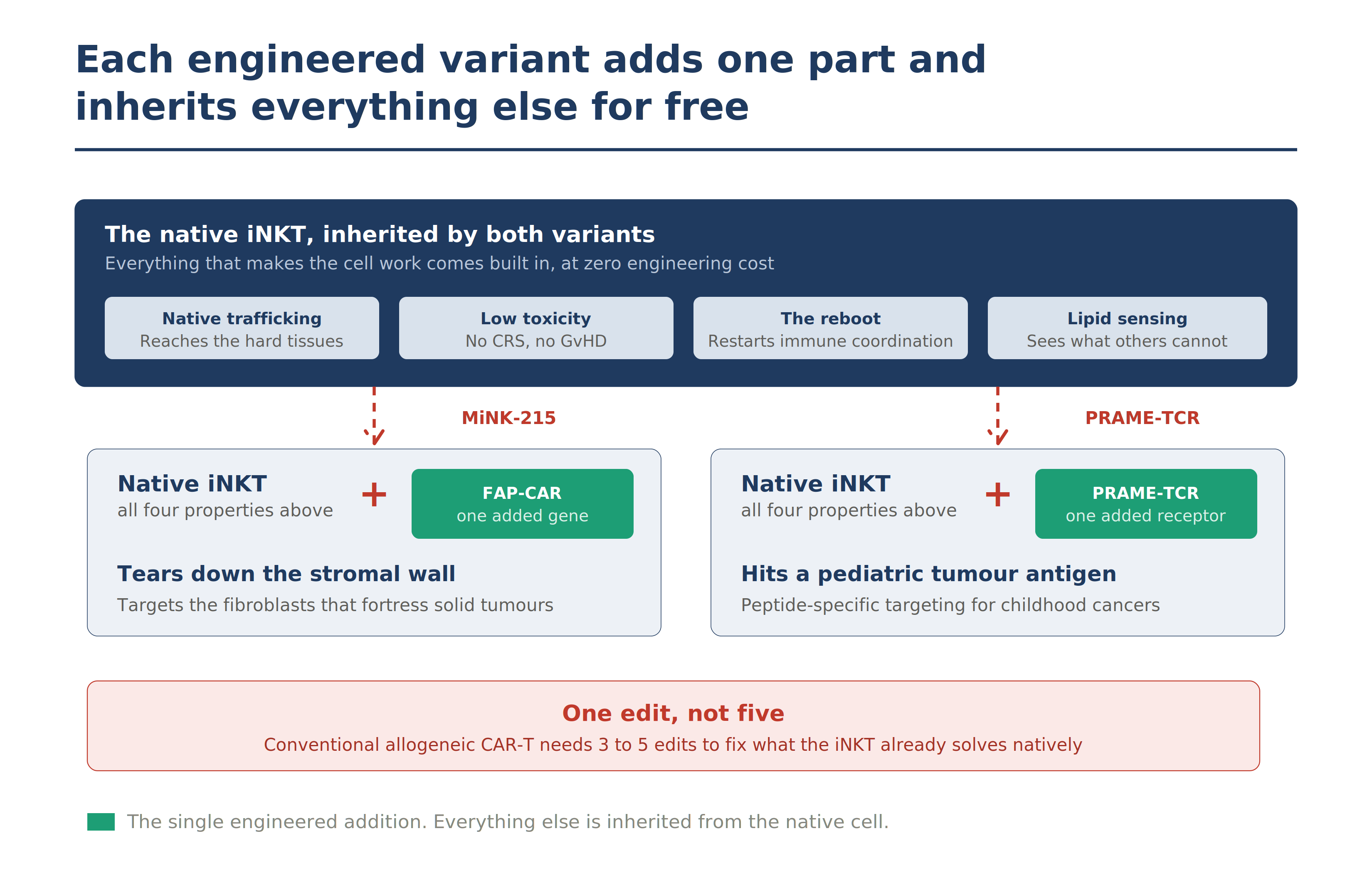
The two engineered programs add targeting to the native cell without touching its core biology. MiNK-215 bolts a FAP-CAR onto the iNKT to attack the cancer associated fibroblasts that build the stromal wall around solid tumours, the fortress described earlier. The PRAME-TCR program adds a peptide specific receptor aimed at pediatric cancers, advanced through the C-Further consortium on non-dilutive funding. Both are earlier than agenT-797, but both inherit the trafficking, the low toxicity, and the reboot for free, which is why MiNK can describe them as one-edit cells rather than the three-to-five-edit cells that conventional allogeneic CAR-T platforms require.
Start from the problem. A solid tumour is not just cancer cells, it is a fortress, and the wall is built by cancer associated fibroblasts that lay down dense fibrous tissue, secrete signals that suppress the immune system, and physically block immune cells from reaching the tumour inside. Most cell therapies aim at the tumour cells and never get through the wall.
MiNK-215 aims at the wall. The single added part is a CAR, a synthetic receptor, tuned to FAP, a protein found almost exclusively on those fibroblasts and almost nowhere on healthy adult tissue. That is the entire engineered change: one gene encoding one receptor that says “kill the cells building the wall.” Everything else is the native iNKT it was built from. So the cell still traffics to the tumour on its own, still senses lipids, still reboots the surrounding immune response, and now additionally tears down the stroma that was keeping every other therapy out.
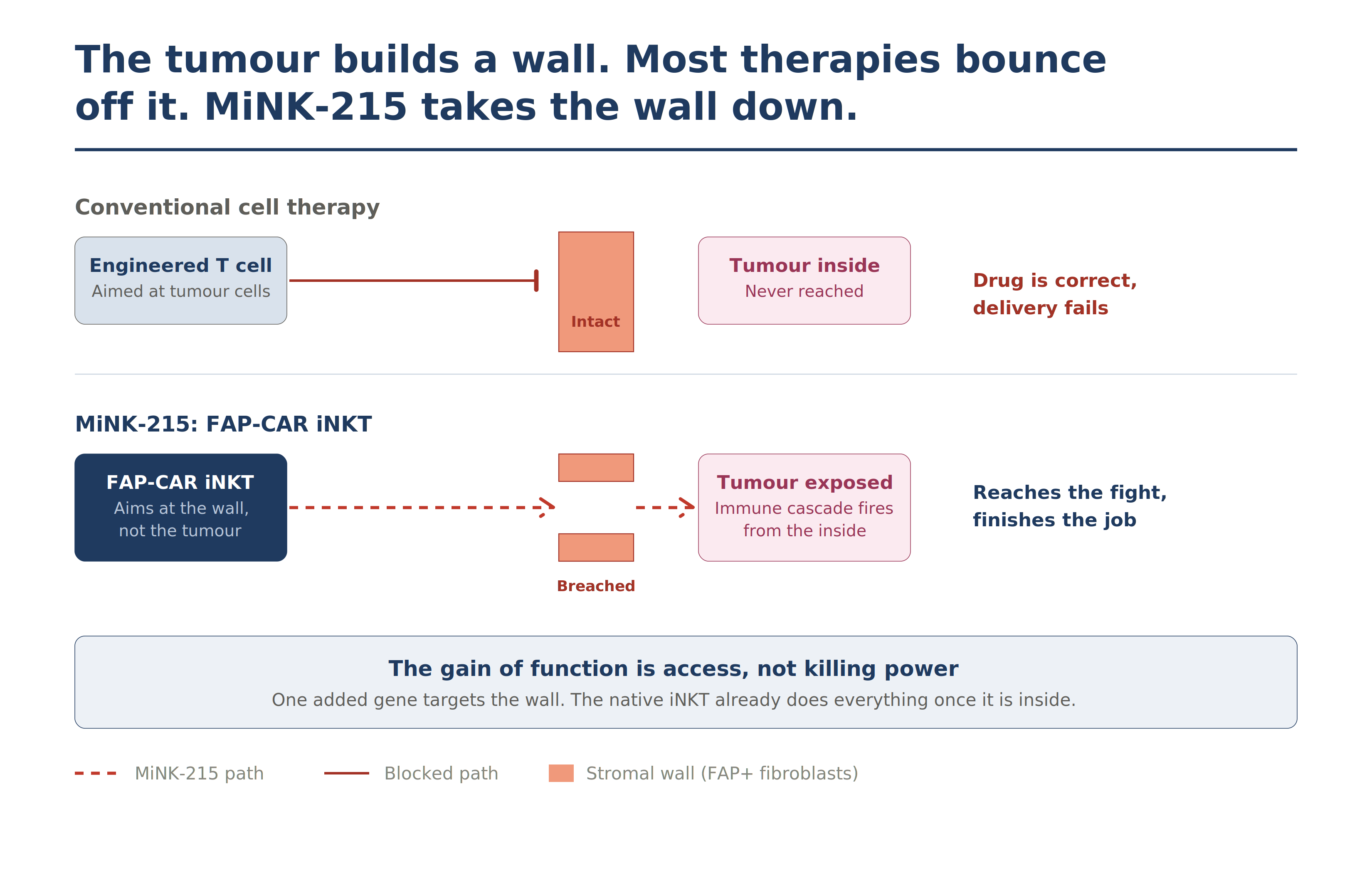
The gain of function is access. You are not making a better killer, you are making a cell that can reach the fight, demolish the fortifications, and let the immune cascade it already triggers finish the job from the inside.
Here the problem is precision in a setting where precision matters most. PRAME is a tumour antigen, a protein that appears on cancer cells but is largely absent from healthy tissue, and it shows up across several pediatric cancers.
The native iNKT recognises threats through lipids, which is broad and powerful but not aimed at any one specific protein. The added part is an engineered T cell receptor that recognises a PRAME peptide, giving the cell a second, sharper way to see: keep the native lipid sensing, and bolt on a sniper sight for one defined cancer marker. The gain of function is targeted specificity layered onto innate breadth. The cell still does everything a native iNKT does, the trafficking, the low toxicity, the immune reboot, and now also locks onto PRAME bearing tumour cells directly.
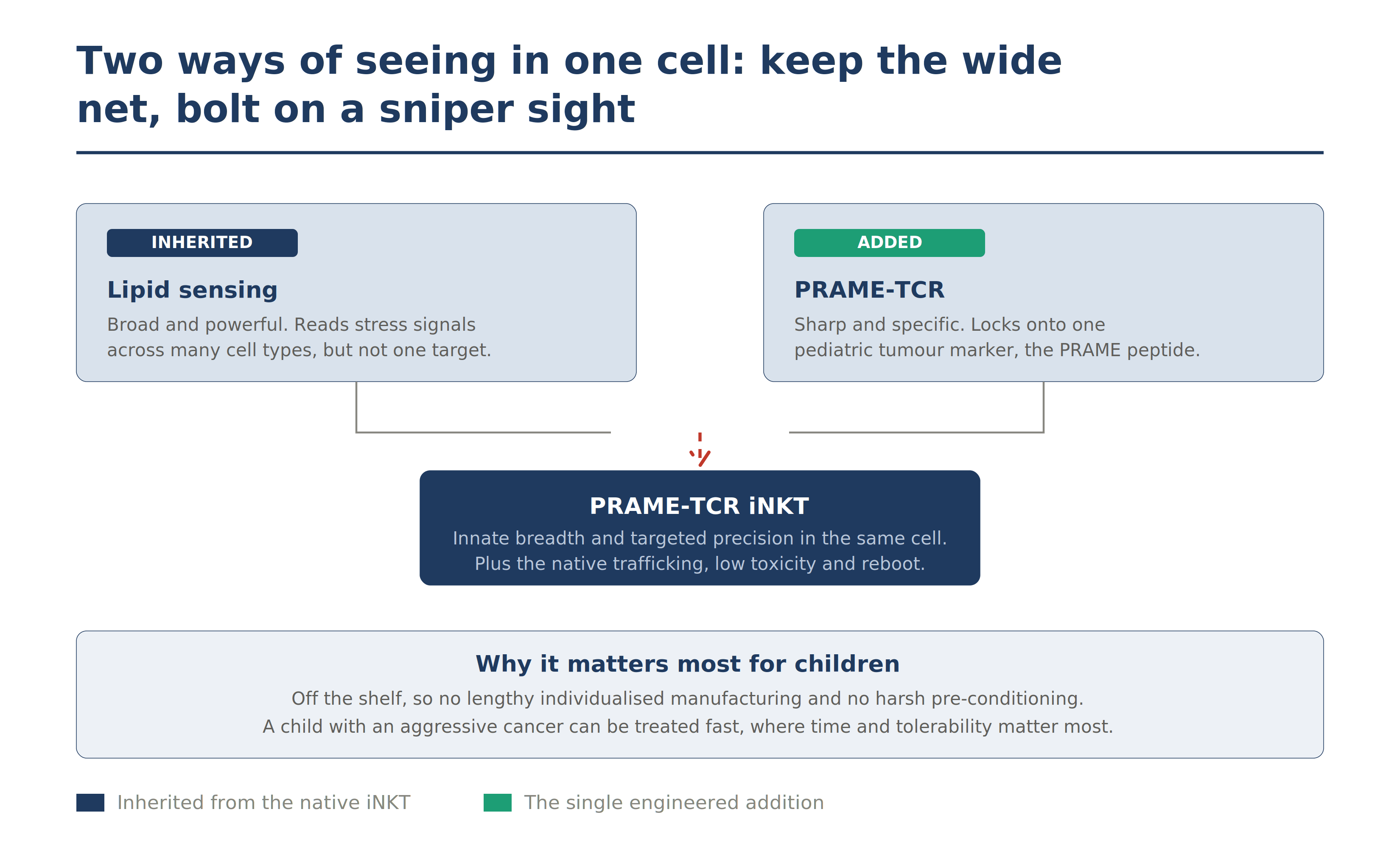
The reason this matters especially for children is practical as much as biological: an off the shelf cell needs no lengthy individualised manufacturing and no harsh pre conditioning, so a child with an aggressive cancer can be treated fast, with a cell that combines a precise target and a favourable safety profile, exactly where time and tolerability are most precious.
Step back and the individual programs matter less than the pattern they form. A drug treats one disease. A platform is one underlying technology that keeps producing new products, each cheaper and faster than the last because it reuses the same core. A system that solves a growing volume of acute customer pains, in a way that’s increasingly harder to replicate while producing more and more cash (if it works).
iNKT behaves like a platform because the native cell already does the hard part. The trafficking, the low toxicity, the reboot, the ability to kill in one setting and calm in another all come built in, so a new program does not start from scratch. In cancer it is a cytotoxic agent, in lung injury a restorative one, in transplant a tolerising one, and where a sharper aim is needed you add a single module, a FAP-CAR for stroma, a PRAME-TCR for pediatric tumours, rather than rebuilding the cell.
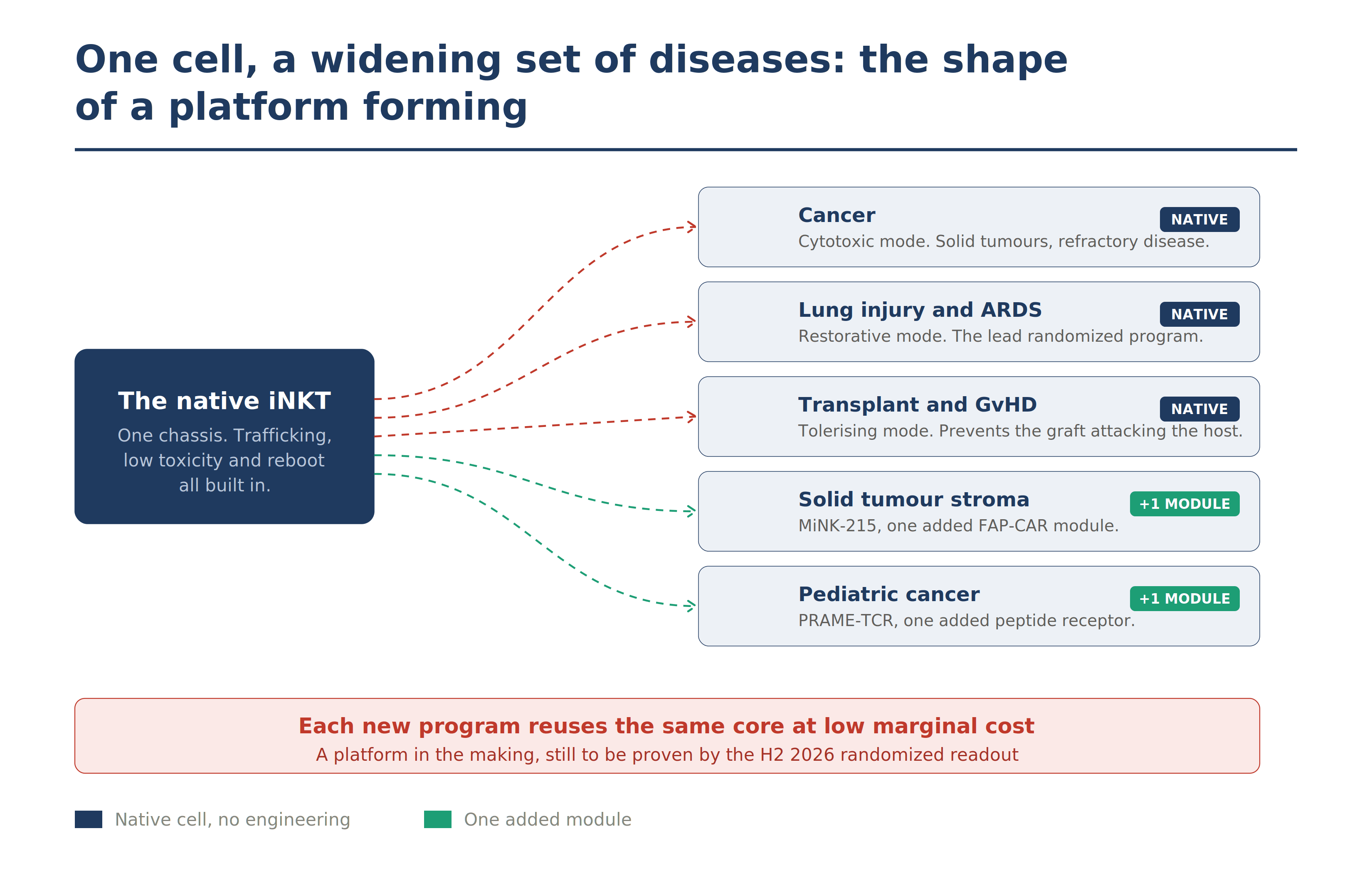
One chassis, many diseases, low marginal cost for each new shot on goal. That is the difference between owning a product and owning a platform, and it is why the addressable opportunity is not one indication but a widening set of them. The qualifier is "in the making." None of this is proven until a randomized trial says so, and the first real test arrives with the lung injury data in the second half of 2026. But mechanically, the architecture of a platform is already in place.
The most striking thing about MiNK is not any single result. It is that almost nobody else is here. For an asset class with this much theoretical promise, the competitive field is nearly empty, and the reasons it is empty are also the reasons it is hard to enter.
The first barrier is manufacturing, and it is the one that gated the entire field
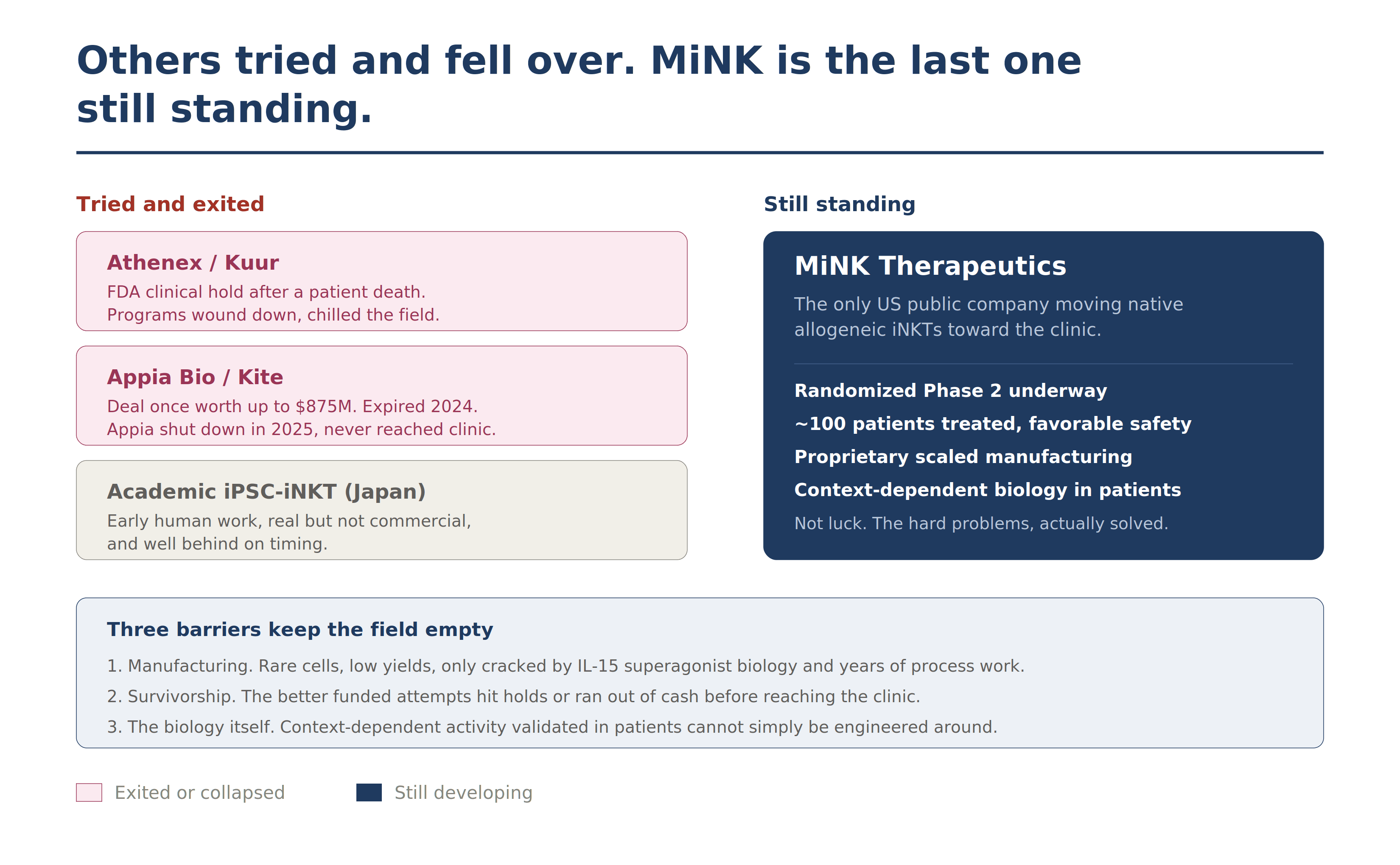
for two decades. iNKTs are rare cells, and historically the yield from a single donor was low and unreliable, which made an off the shelf product economically impossible. The unlock was IL-15 superagonist biology, which finally let iNKTs be expanded at scale, and MiNK built its own proprietary process around it. The company now reports getting roughly a billion cells per donor with stability measured in years, which is what turns a laboratory curiosity into a stockable, deployable drug. That process maturation took years and is not trivially copied.
The second barrier is that the rest of the field walked away or fell over. The companies that chased NKT based therapies have largely exited. Athenex's Kuur programs hit an FDA clinical hold after a patient death and wound down, which chilled capital across the whole space. And the one venture that looked like a serious rival, Appia Bio, partnered with Gilead's Kite on CAR-iNKTs in a deal once valued at up to $875 million, never made it. The Kite partnership expired in 2024 and Appia shut down in 2025, running out of cash just short of filing its first clinical application. In the public US market, MiNK is now effectively alone in moving native allogeneic iNKTs toward the clinic, not because the idea lacked backing, but because the execution is genuinely hard and the better funded attempts did not survive it.
The third barrier is the most durable. MiNK's real moat is not just that it makes iNKTs, it is the demonstrated context dependent biology: the same unmodified product behaving as a cytotoxic agent in cancer and a restorative one in lung injury, validated in patients. That is a property of the cell that a competitor cannot simply engineer around, and it sits on top of a decade of accumulated manufacturing and clinical know how. Capital chased CAR-T and CAR-NK for ten years because they fit the dominant mental model; iNKTs were dismissed as too rare, too hard to make, too unclear commercially.
MiNK spent that decade quietly solving exactly those problems, which is why the moat is structural rather than rhetorical. The barrier to entry is not a patent. It is the years of hard, failure prone work that everyone else either skipped or did not survive.
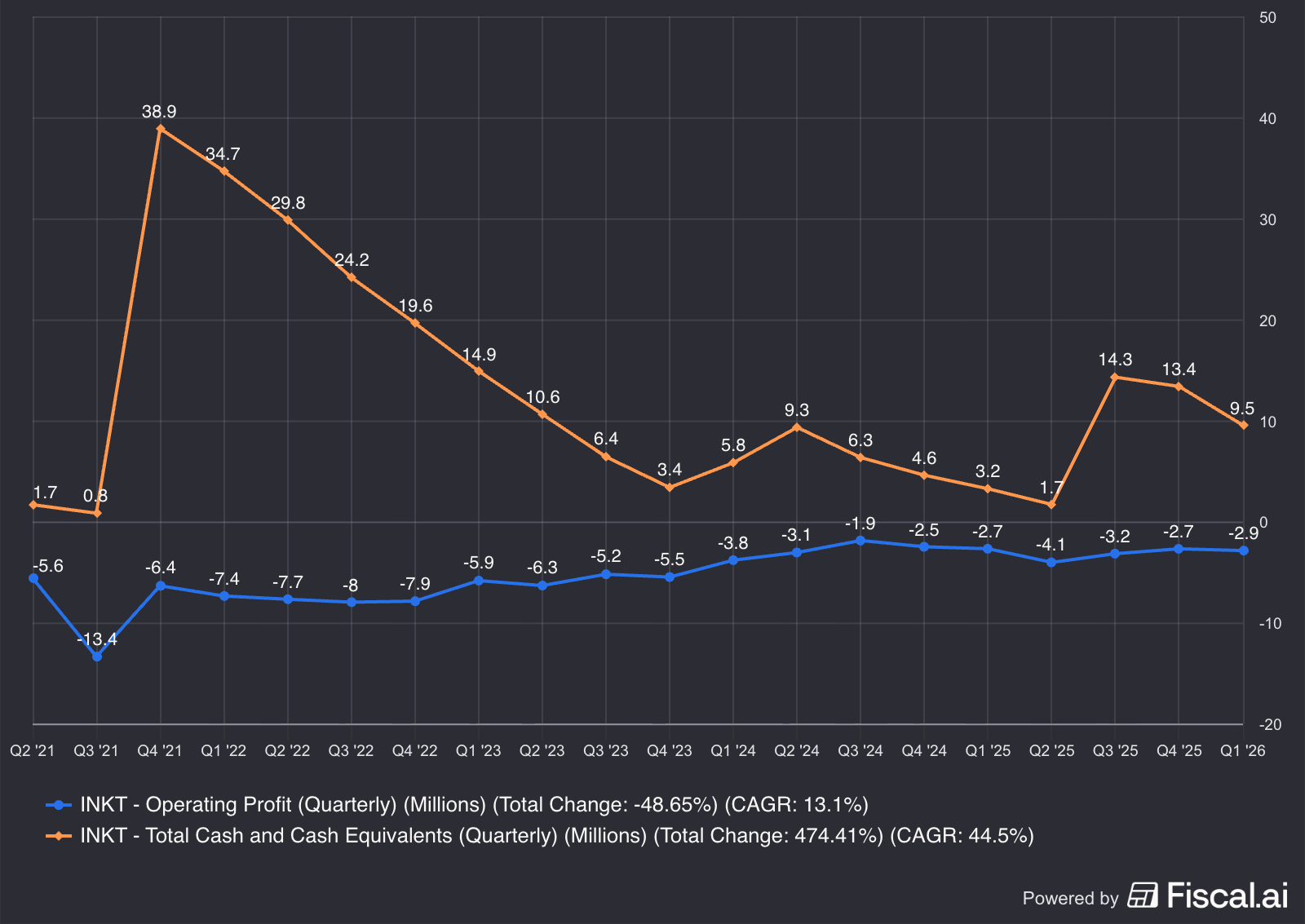
This is essentially a pre-revenue company with no debt, but lean operating expenses as they move the platform forward. Big financial and dilutive risk, but the platform shows great potential, with substantial upside if the H2 2026 readout is good. With a market cap of just ~$50M, this is a potentially vast asymmetry in the making.
⚡ If you enjoyed the post, please feel free to share with friends, drop a like and leave me a comment.
You can also reach me at:
Twitter: @alc2022
LinkedIn: antoniolinaresc
These are opinions only of the individual author. The contents of this piece do not contain investment and/or medical advice and the information provided is for educational purposes only and no discussions constitute an offer to sell or the solicitation of an offer to buy any securities of any company or any drug or medical treatment. All content is purely subjective and you should do your own due diligence.
Antonio Linares makes no representation, warranty or undertaking, express or implied, as to the accuracy, reliability, completeness or reasonableness of the information contained in the piece. Any assumptions, opinions and estimates expressed in the piece constitute judgments of the author as of the date thereof and are subject to change without notice. Any projections contained in the Information are based on a number of assumptions as to market conditions and there can be no guarantee that any projected outcomes will be achieved. Antonio Linares does not accept any liability for any direct, consequential or other loss arising from reliance on the contents of this presentation. Antonio Linares is not acting as your financial, legal, accounting, tax, medical or other adviser or in any fiduciary capacity.
No posts
Comments
Nothing yet. Say the first thing.
Sign in to join the conversation.