
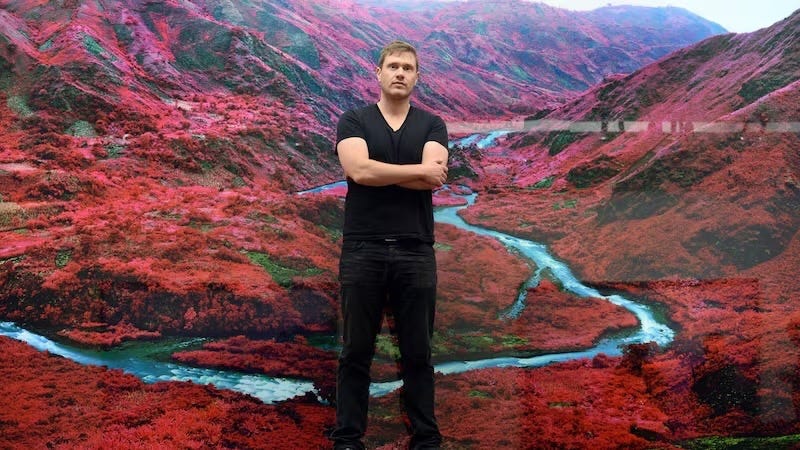
Some photographers show you the world as it looks.
Richard Mosse shows you the world in a way that makes you stop and think and question what you are really looking for. That is why he’s so popular. And that’s also why his photography makes people uneasy. Mosse was born in Ireland in 1980 and has spent his career documenting war, displacement, and environmental destruction with cameras most photographers would never have seen. He has represented Ireland at the Venice Biennale and won the Deutsche Börse Photography Prize and the Prix Pictet. He is still active today and has recently been at a series of exhibitions and in a 2026 artist talk on his project Broken Spectre.
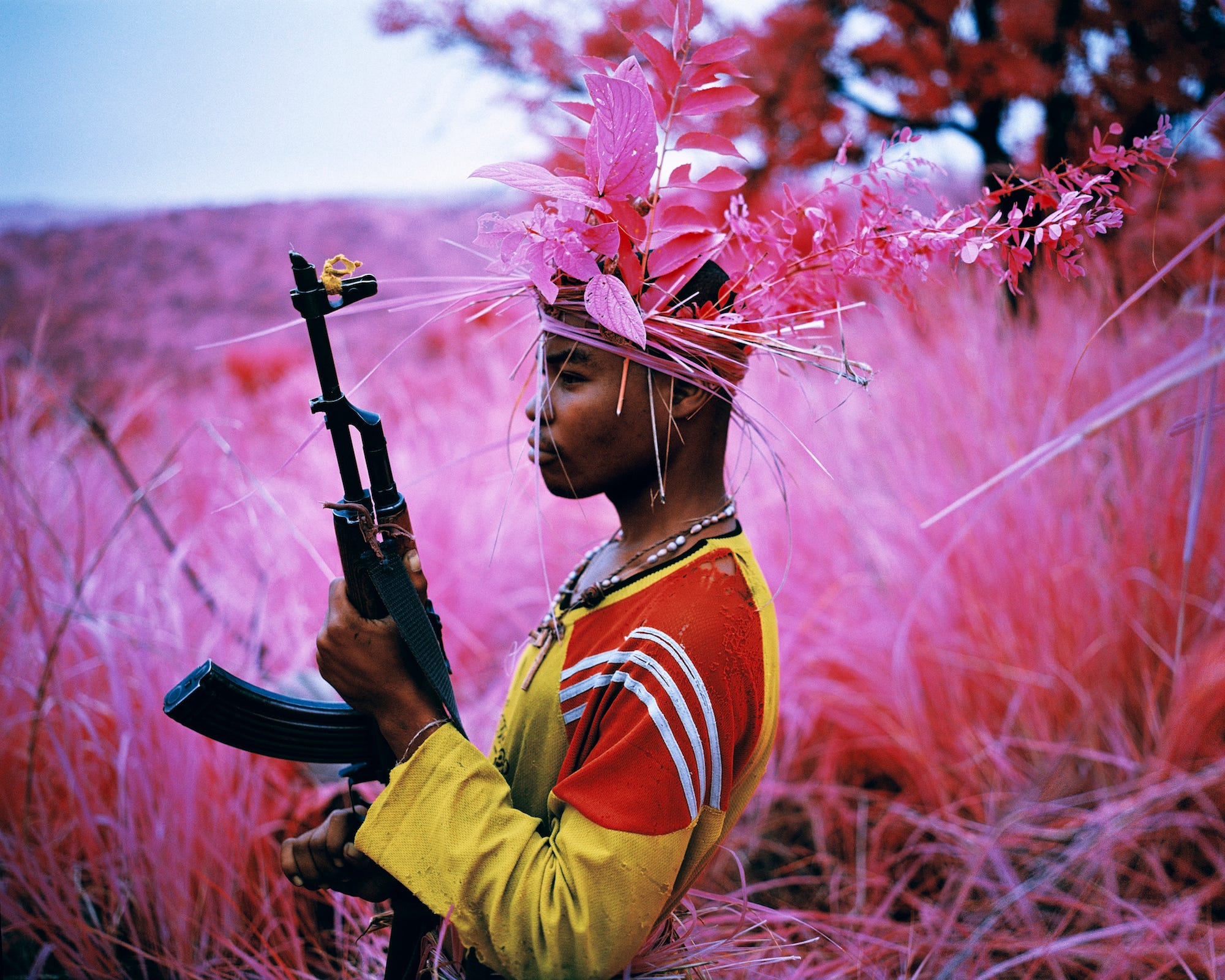
What first attracted many to Mosse was his work in the eastern Democratic Republic of Congo and his book Infra. Instead of the standard color film he used a discontinued infrared surveillance film that transformed green vegetation into wild pinks, reds, and lavenders. The result was startling. At first glance, the pictures seem dreamlike. But then you realize you are seeing conflict, fear, and a place marked by violence. That clash between beauty and brutality is the point. Mosse knows people tend to look away from suffering when it’s presented in familiar ways. He uses the odd look of the image to draw you into it.
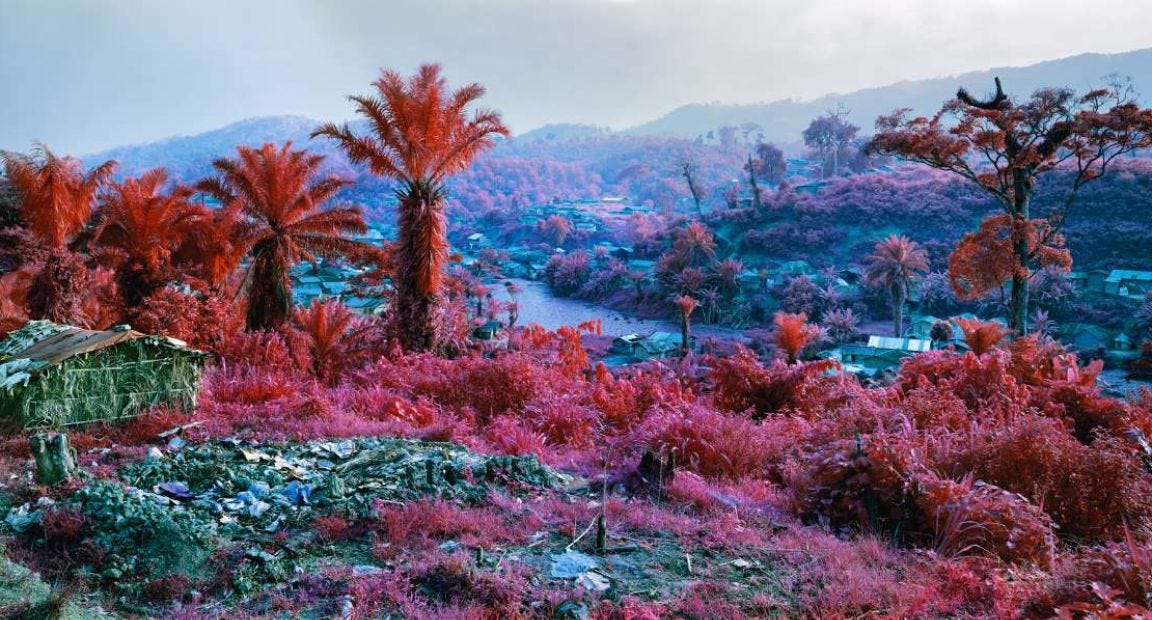
That is where the debate starts. And some people believe Mosse has expanded documentary photography by rejecting its familiar visual language. They see his work as a desperate push to make the crises that had gone ignored visible again. Others believe he aestheticizes pain. Or, in other words, they fear that because the pictures are so captivating, the subject itself is turning into a spectacle. I think that tension is what makes him worth looking at. He does not offer you the easy moral comfort of a simple document. He asks whether beauty can carry truth; whether beauty is always in the way of it.
Comments
Nothing yet. Say the first thing.
Sign in to join the conversation.