
Iran has surprised many people since 2025 with its outdoing of the US-Israeli partners in several theatres of battle, including military battle. The victory of the underdog is largely an outgrowth of the design and deployment of high-tech weaponry, but especially hypersonic anti-ballistic missiles.
The spectacle of a competitor outdoing a known superpower in warfare caused me to think of World War I. In that conflict, the German underdog sometimes outclassed its British imperial opponent by embracing and deploying the new technology of submarines
In the language of the Germans, a submarine were initially described as an Unterseeboot or das U-Boot. The English equivalent, U-boat, thus entered the English language.
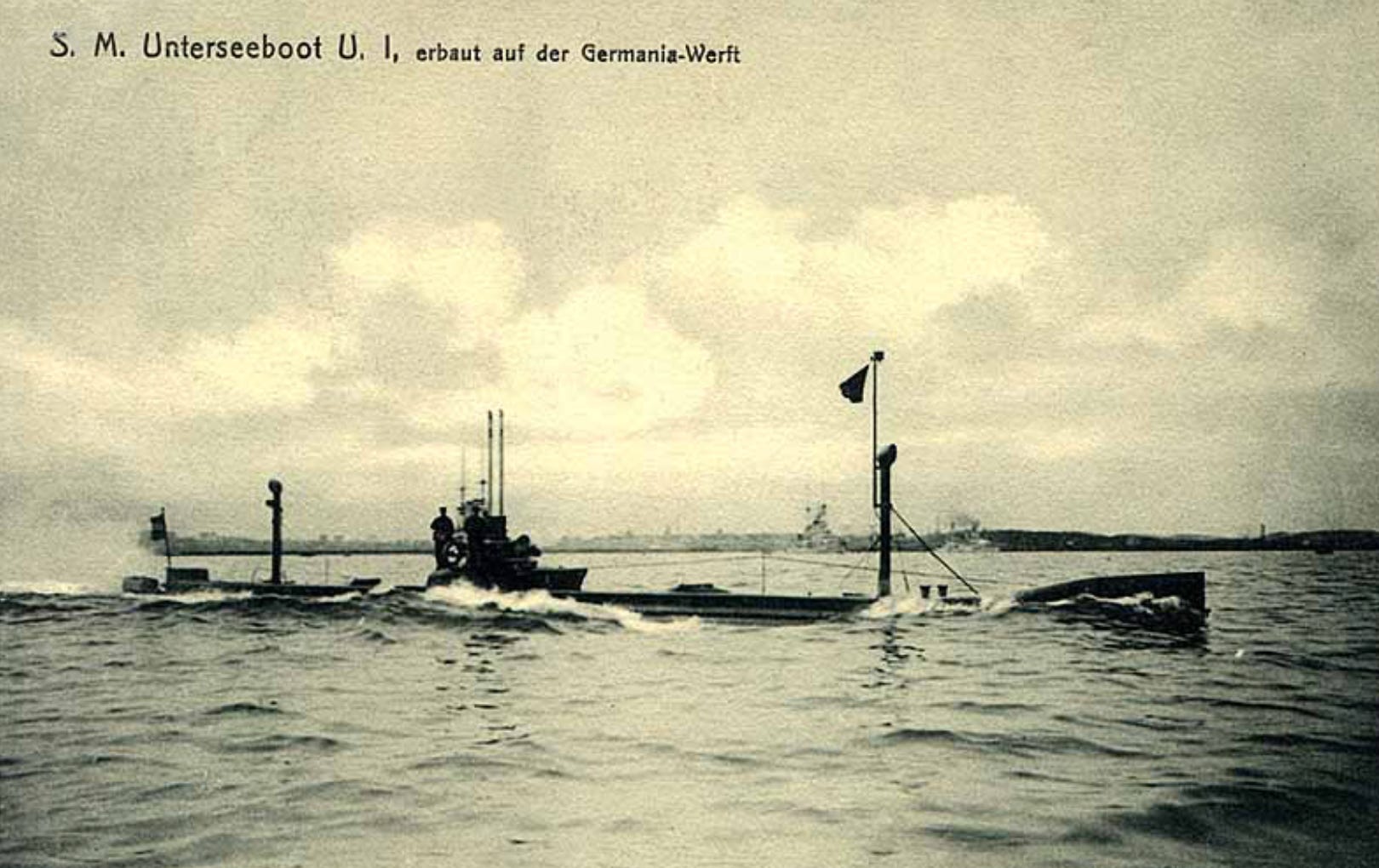
U-boats became crucial in 1914 when Germany, as well as its ally Austria-Hungary, faced a blockade of Central Europe thrown up by the massive Royal Navy. In that era the Royal Navy was still the strategic core of the British Empire. The government of Kaiser Wilhelm II had invested heavily in German U-boats equipped with self-powered torpedoes. The strategy proved sound and effective.
German innovations with U-boats changed the nature of warfare much as did Iranian innovations with hypersonic ballistic missiles. Both submarines and missile technology were not new but Germany and Iran both broke new frontiers of effectiveness in refining new systems to target and vanquish military foes.
Throughout the WWI both the Germans and the British-led side made diplomatic approaches to the US government imploring it to enter the war on their respective sides. As part of this diplomacy the US government sought and received a partial respite from submarine warfare, an aggression which affected American commercial trade with Europe.
In 1917 the German government resumed and elevated the submarine campaign. Germany’s shifting into high gear with its sophisticated deployment of U-Boats and precision torpedoes, might very well have won the war for Germany.
All that changed, however, when in April of 1917 the US government entered World War I on the British-led side. There is considerable evidence to indicate that elements of organized Jewry played a significant role in the behind-the-scenes prelude to the insertion of the US Armed Forces into the European war. To make a complex story simple, organized Jewry is thought to have caused the Wilson government to join the British-led side thus assuring victory to Germany’s enemies.
President Wilson’s agreement to enter WWI came with conditions. The price would be that the British government would use its international authority to set in motion the process of creating “a national home for the Jewish people” in Palestine. The British promise took the form of an imperial Letter to a representative of the Rothschild banking clan. Some members of the Rothschild dynasty had encouraged Jewish settlements in Palestine since the late 1800s.
The deal involved considerable covert intrigue among a circle of mostly Jewish conspirators. To mention a few, the operatives included Judge Louis D. Brandeis, Bernard Baruch, Samuel Untermeyer, Felix Frankfurter, and presidential adviser, Col. Edward House (not Jewish). Their manoeuvring led to the delivery of the Balfour Declaration. The delivery of the Balfour Declaration is often seen as the originating breakthrough of the nascent Zionist movement in the United States.
https://files.catbox.moe/pl89wm.pdf
The US role in the genesis of the Zionist movement would grow in stature to the point where the US government worked with Zionists during World War II. The agenda of gaining international recognition for a new country called Israel was one of the main goals of those that created the United Nations in 1945. The leaders and guides of the nascent UN sought, against some considerable opposition, to realize the British promise of bringing about a national home for the Jewish people in The Holy Land of all three Abrahamic religions.
Significantly for our times, in 1948 the Zionists pushing for the international recognition achieved their goal. This UN recognition of Israel came along with the the UN’s creation of a Genocide Convention. The Genocide Convention seems to have been adopted with the view that it signified the UN’s embrace of the ethos of “Never Again.” In light of the importance of Israel in the early workings of the United Nations, there is now much irony in the failure of an effective international response to the Palestinian Genocide.
The founding of the Zionist movement was consolidated in 1896 with the publication of Theodor Herzl’s Der Judenstaat. It took several decades before this movement gained wide acceptance in the Jewish world. Many Jews worried, with some justification, that the creation of the proposed Jewish nation state would raise suspicions about those Jews who opted against migrating to the envisaged country. They feared Jews outside Israel would be subjected to charges of dual loyalties.
To this day, Zionism is rejected by many orthodox Jews who argue that Judaism is a religion, not the legal basis for a country. Based in part on this viewpoint, some Haredi Jews refuse to be conscripted into the Israel Armed Forces because their fighting is implicitly to push forward the imposition of Zionism on The Holy Land of Palestine.
Before 1947-48 the character of organized Jewry was both veiled and constantly shifting both internationally as well as within predominantly non-Jewish institutions and governments. The nature of worldwide Jewry changed significantly after 1948 with the new existence of Israel as part of the UN-recognized international community. The global visibility of Israel, with its own political inner workings, is seen by many, however problematically, as a window into the group personality— the aspirations, and fears— of international Jewry.
In spite of the absence before 1948 of an internationally-recognized country to serve worldwide Jewry, Jews have sometimes acted aggressively in concert and as individuals in the making of world history, especially during the first half of the 20th Century. The main markers of this phenomenon have been World Wars One and Two as well as in the Russian Revolution. The outgrowth of this Revolution include the murderous machinations of the Soviet Secret police, the rise of international communism, and the UN’s problematic ratification of the Israeli entity in 1947
The course of the wars and of Soviet-backed communist revolutions, has depended on very sweeping control of major media of mass communications which have undeniably been a major factor in the shaping of public opinion by organized Jewry. The means of media manipulation are expensive to purchase and very dependent on the political oversight of communications regulators. By and large, the regulators are for sale as are most elected politicians in the United States from the President on down.
Since October. 8 of 2023 the Jewish meidas touch in shaping public opinion has met severe limitations as the Netanyahu government began facing a growing wave of repulsion at its expanding waves of mass murder extended from Gaza, to the West Bank, to Lebanon, to Iran and beyond.
The mass murder is being realized through tactics including carpet bombing, forced starvation, the specific targeting and abuses of children, the destruction of hospitals, and targeting of medical staff and humanitarian workers. Add to that list systematic tortures including through the sodomy of Palestinian prisoners by humans and dogs trained for the purpose
So far the Israeli government with US backing has continued for about 1000 days the livestreamed genocide based on the indiscriminate murder of civilians. Israel has been thus rendered increasingly repulsive and isolated in the public opinion of decent-minded citizens of conscience throughout the world.
At the same time the green light extended to Israel continues for those ensnared in the Zionist power structure that continues to be well embedded within the political economy of all the Western countries. Being openly critical of Israel and its supporting Zionist networks still carries with it the distinct possibility of drastic attacks on careers, livelihoods, and civil harmony.
The new politics of Israel as a pariah polity in the eyes of a major portion of the global population is raising many delicate issues for the millions of Jews who do not live in Israel. Much of this population lives in the United States whose government has been a full-fledged partner in the genocide. Thousands of Jews have gone on record condemning Israel for its murderous excesses. They have distanced themselves from Israel and declared that its leadership does not speak for them.
As far as I can see, however, these public pronouncements so far have not become a major factor in how Israel is organized and how the country understands itself. Benjamin Netanyahu stands out among Israeli politicians who speak as if they represent not only Israel but also all the world’s Jews. Obviously this political theory is untenable.
Neither Netanyahu nor any other Israeli leader has a mandate to speak for Jews outside Israel. And yet those Jews who condemn Israel, and the smaller number who outright condemn international Zionism, seem left out of the decision making on Israel’s future in the making of war and peace.
This dichotomy among Jews is emerging as an issue that belongs, in part, to the realm of international relations. The litany of criminal violations that emerge from the decisions of those directing Israeli actions cry out for further investigation by international prosecutors.
Prosecution of those charged must be met by the decisive arbitration from international judges, leading to severe punishment of the convicted when justified. The relationship between worldwide Jewry and the future of Israel has become a political issue that concerns the global community. All the people of the world are menaced by the spinoffs of Israel’s accelerating blood lust and murder rampage. After all Israel merged from the behind-the-scenes machination in two world wars. What might be the objectives of a Zionist plan to instigate another world war?
Did World War III actually commence with 9/11, the event that led to President George Bush’s declaration that Iran was at the top of the list of the axis of evil, of countries most guilty of international terrorism? Is the Zionist deployment of the US Armed Forces in Iran the fulfillment of the War on Terror’s ridiculous plan to conquer evil?
Are current events part of the culmination of the War on Terror, of World War III, the conflagration that began on Sept.11, 2001? Was the Gaza genocide leading to the military attempt to dismantle Iran, the continuation of WWIII or the beginning of a Zionist plan for World War IV, a seemingly never ending war. Is the implementation of a WW IV meant to concentrate a new world imperial power in Jerusalem—-in a world court Sanhedrin based at the Third Temple?
At first sight the comparisons presented here between Germany, Iran and their respective military innovations may seem misplaced. After all, Germany is integral to Western Civilization whereas Iran seems far removed from the central narratives of military prowess in the twentieth and twenty-first centuries.
In former times Iran was often grouped in with the so-called “Third World” of so-called underdeveloped countries. The formal decolonization of imperial holdings after 1945 roughly quadrupled the number of national governments admitted into the United Nations. The newly added countries, however, did not include Iran.
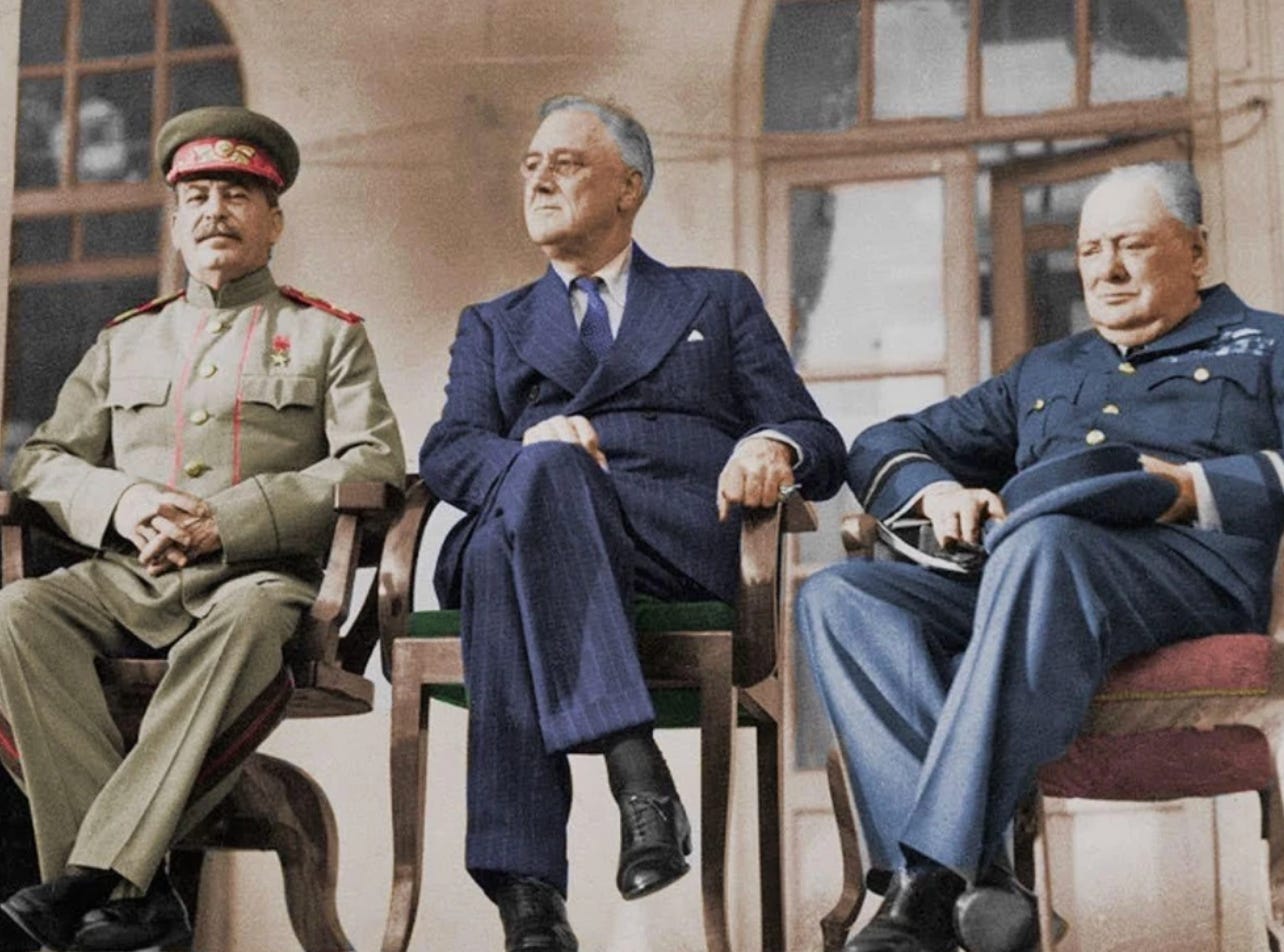
The Iranian state was one of 50 sovereign nations that ratified the founding of the United Nations in 1945. In Tehran in 1943, Iran hosted Winston Churchill, Franklin D. Roosevelt and Joseph Stalin, the threesome who embodied the pinnacle of the Allied leadership in WWII.
At this meeting the role and structure of the United Nations was contemplated and planned for. The Tehran conference is mostly associated with Roosevelt’s decision to give over half of Europe to international communism.
Iran’s participation in this planning process for the UN pointed the country, for better or worse, towards a co-operative approach towards the organization’s workings. The diplomatic finesse of the UN was itself rejuvenated when the international organization provided the framework for the negotiation of the Joint Comprehensive Plan of Action, the JCPOA, concerning the regulation of Iranian nuclear energy.
Iran was deeply involved in one of the most consequential technological transformations ever in the history of the energy industry. Under the orders of Winston Churchill, First Lord Admiral of the British Navy, Iran became the site of the Anglo-Persian Oil Company. This Company provided the Royal Navy with its primary resource source to fuel the transformation away from coal. In 1914 Lord Churchill arranged for the British government’s purchase of the oil company which continues today as BP.
This transaction was pivotal in the partial transformation from coal to gas throughout the industrialized world. Moreover, it helped set in motion a sequence of famous historical events that have put Iran on the front lines of the harsh politics governing proprietorship and transport of oil and gas right up to the present day.
In spite of Iran’s various roles in the making of world history, the likes of Donald Trump initially viewed this core polity at the heart of Eurasia as a savage terrorist entity just emerged from the stone age. This disgraceful propaganda meme emerges from the cess pool of messaging produced by the likes of the Israel First Lobby. For decades this Lobby has been injecting such poison into the impressional minds of many ill-educated Americans, Donald Trump included.
The current US President was absorbed into this dishonest meme as illustrated by Trump’s public announcements made in the course of supposed “negotiations” with the Iranian leadership. Only now are large numbers of people in the West waking up to the understanding that Iran is in fact the contemporary expression of the Persian civilization where the native tongue is Farsi, not Arabic.
The roots of Iran run far deeper than those of the United States as well as of Israel, a country of immigrants which has followed the model of a settler colony in its treatment of the native Palestinians.
This current war is providing a platform for Iran to become more fully integrated into the wider civilizational realm of China and Russia. This deepening alliance with China and Russia is adding to the technological edge available to the Iranian Armed Forces.
China is the world’s most ancient continuing civilization. Russia’s origins run back to the 800s. Rather than embrace the multiplicity of humanity’s rich civilizational heritages, the advocates and protagonists of Greater Israel have sought to isolate and demonize Iran in order to prepare the ground for the destruction of the main obstacle standing in the way of creating “Greater Israel.”
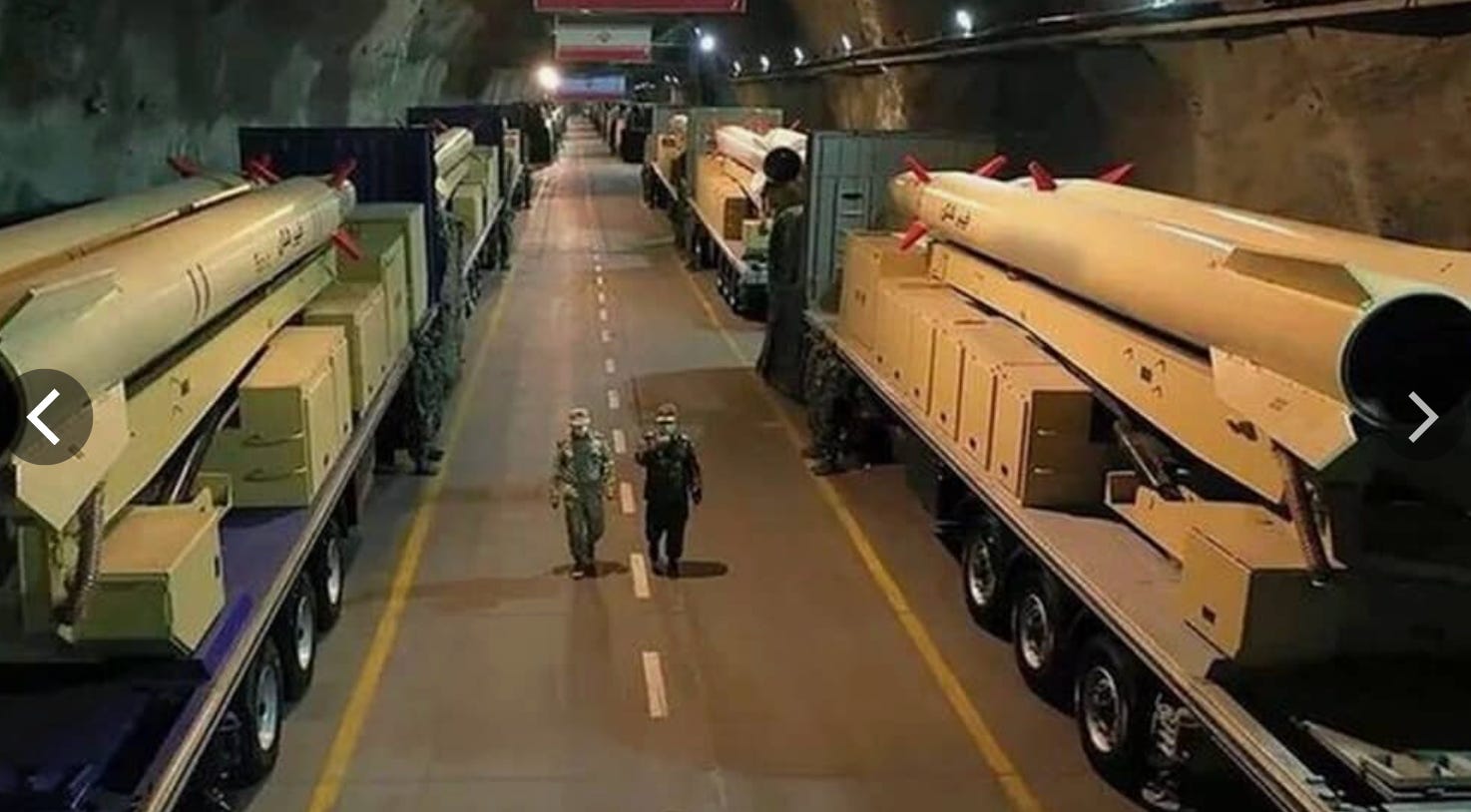
The Iranian wizardry in developing high-tech hypersonic ballistic missiles, cruise missiles, drones plus portable and hidden launching facilities, tells just part of a much larger story. There are many more elements in the decisive demonstration of military and strategic superiority in the Iranian conduct of its self-defence against the aggressive war initiated on Feb. 28 by the Armed Forces of Israel and the USA.
The rise of Iran’s missile program was significantly stimulated in the 1980s when Iran was at war with the US-backed government of Saddam Hussein’s Iraq. The nascent Iranian armaments industry was empowered when US President Ronald Reagan encouraged Iran to purchase weapons, including missiles, from the government of Israel. The US government used the profits it covertly derived from the transaction to secretly sponsor anti-communist militias in Central America.
Along with its huge and varied arsenal of unmanned projectiles, the Iranian government developed over decades massive underground fortresses connected by networks of tunnels. These fortresses, including storage, servicing and manufacturing facilities, were built deep under mountains protected from air attack by thick layers of solid granite.
All these initiatives unfolded when Iran’s economy was purposely stymied by thick webs of Zionist-imposed sanctions. In spite of this obstruction, Iranian leaders found ways to prepare their own self-defence against an Israeli-US invasion. They had much hard evidence to indicate that such an invasion would eventually take place. As it turned out, the Iranians were right. In spite of their victories, the war is still underway even as its continuation is highly favoured by a majority of Jewish Israelis and by many US-based Zionists and Christian Zionists.
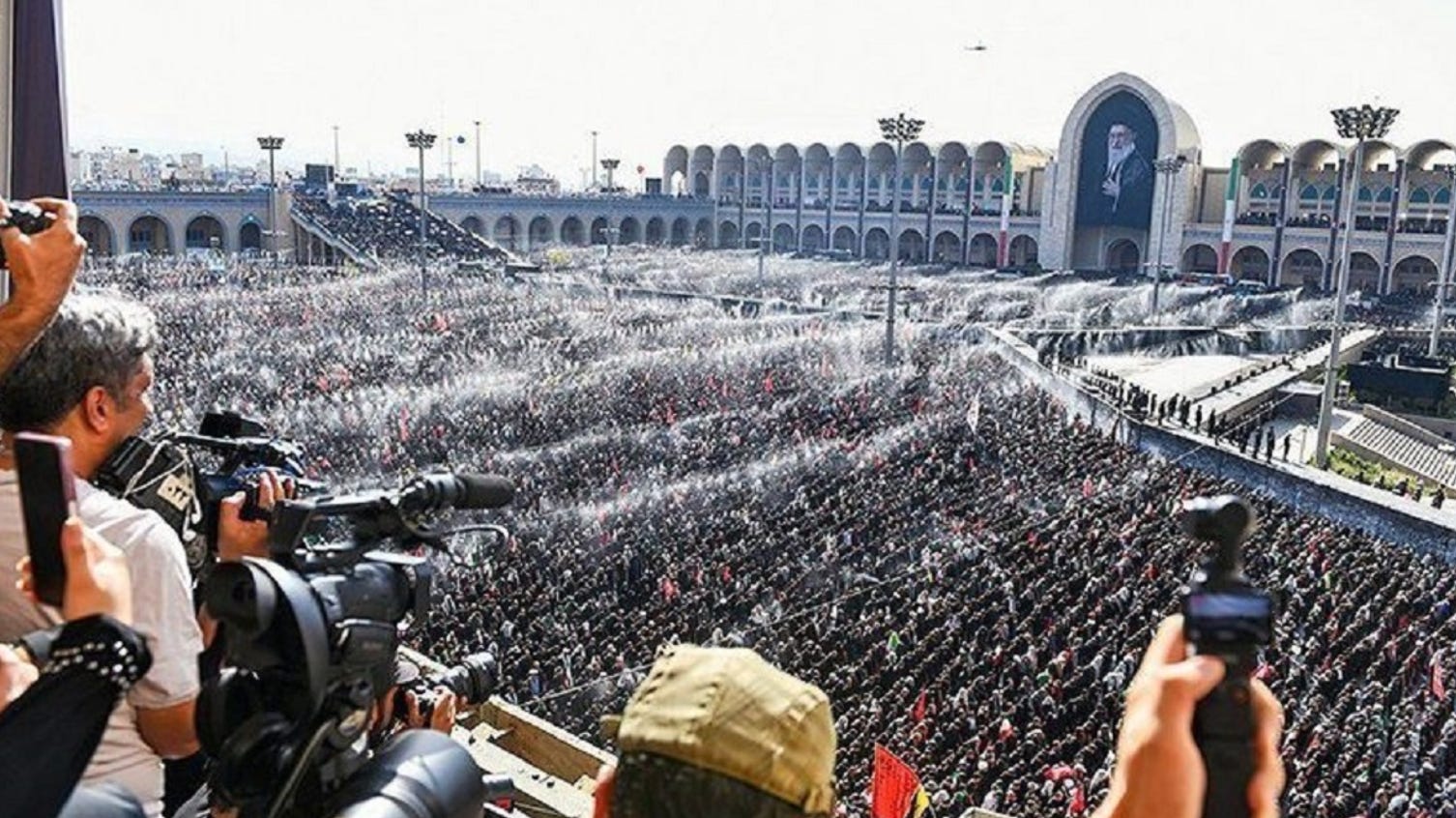
Much of the credit for the planning and preparation for the the Iranian victories so far must go to Ayatollah Ali Khamenei. He was handed power as Supreme Leader of Iran in 1989. Ayatollah Khamenei remained in this position for 37 years until the inception of the Feb. 28 war. In the early hours of the invasion, the Supreme Leader and much of his family, and the government officials around him, where assassinated in a US-Israeli air strike. The overwhelming participation of millions of Iranians and Iraqis in the funeral starting on July 4 is becoming a testimony to the public embrace on his immense legacy.
While there are have been many dissident strains of internal opposition to the Islamic Republic of Iran. Iranians, have pulled together at a time of great danger to support the stability and leadership provided by the governing traditions set in place during the long tenure of Ayatollah Khamenei. They did so in the face of the aggressive warfare conducted by the Armed Forces of the USA and Israel. Part of Iran’s war successes has been to insert new strains of division into the Zionist solidarities that have drawn United States into Israel’s anti-Iran obsessions.
In spite of its flaws, it seems that the government of Iran is based on a somewhat flexible mix of structures and institutions with important latitude for the decision making of Islamic clerics, of national security as secured by the Islamic Revolutionary Guards Corp as well as the regular Iranian Armed Forces.Not to be underestimated is the democratic role of parliamentarians who gain office in carefully regulated Iranian elections.
The Iranian government is of course, like every government, a work-in progress. If peace was to be secured no doubt the people and government of Iran would work out a series of significant structural reforms.
As far as the Germans, they faced vicious retaliation after both WW I and II. A major reversal in both world wars took place after the United States entered the conflicts. At the Versailles Treaty in 1919, Germany was placed under the burden of an enormous imposed war debt. As John Maynard Keynes and others observed at the time, that this outrageous punishment prepared the ground for the making of WWII.
In the early years of the post-1945 peace deal, many millions of Germans were murdered, maimed, and disabled. In his 1989 book, Other Losses, James Bacque introduced the complex subject of the assaults on Germans by the US Armed Forces and Eastern Europeans in military occupation camps and through mass rapes, starvation and many random killings.
At a conference in Tehran in 2006 Prof. Robert Faurisson gave his view of the outcome of World War II. He concluded that the “principle beneficiaries are the State of Israel and international Zionism,” whereas the “principal victims are the German people -- but not their leaders -- and the entire Palestinian people.”
https://revisionists.com/revisionists/faurisson.html
https://codoh.com/library/document/faurisson-risks-jail-for-60-word-summary-of-his/
No posts
Comments
Nothing yet. Say the first thing.
Sign in to join the conversation.