
We spent last weekend in Galicia planning a wine tour.
It sounds like a good way to spend a few days — and in many ways, it is — but there’s a bit more to it than that.
We left Caravaca early on Friday morning and drove up to Albacete to catch the AVE, Spain’s high-speed rail network, to Ourense. It’s an easy run once you’re on the train — about four hours, comfortable, quiet, and surprisingly civilised. You sit down, and the country just changes outside the window.
It’s one of the better ways to move through Spain, especially when you’re trying to cover ground without losing half a day.
By the time we arrived, it already felt like a different place.
The plan was simple enough: spend the afternoon in Ourense, get a feel for the city, and find somewhere that served proper Galician beef — Rubia Gallega, the one we’d mentioned to guests as something they’d experience at some point on the trip.
That part didn’t quite work.
We looked, asked around, checked menus, but nothing really landed in the way we wanted. It’s one of those things you realise quickly when you’re planning a tour — finding something isn’t the same as finding the right version of it.
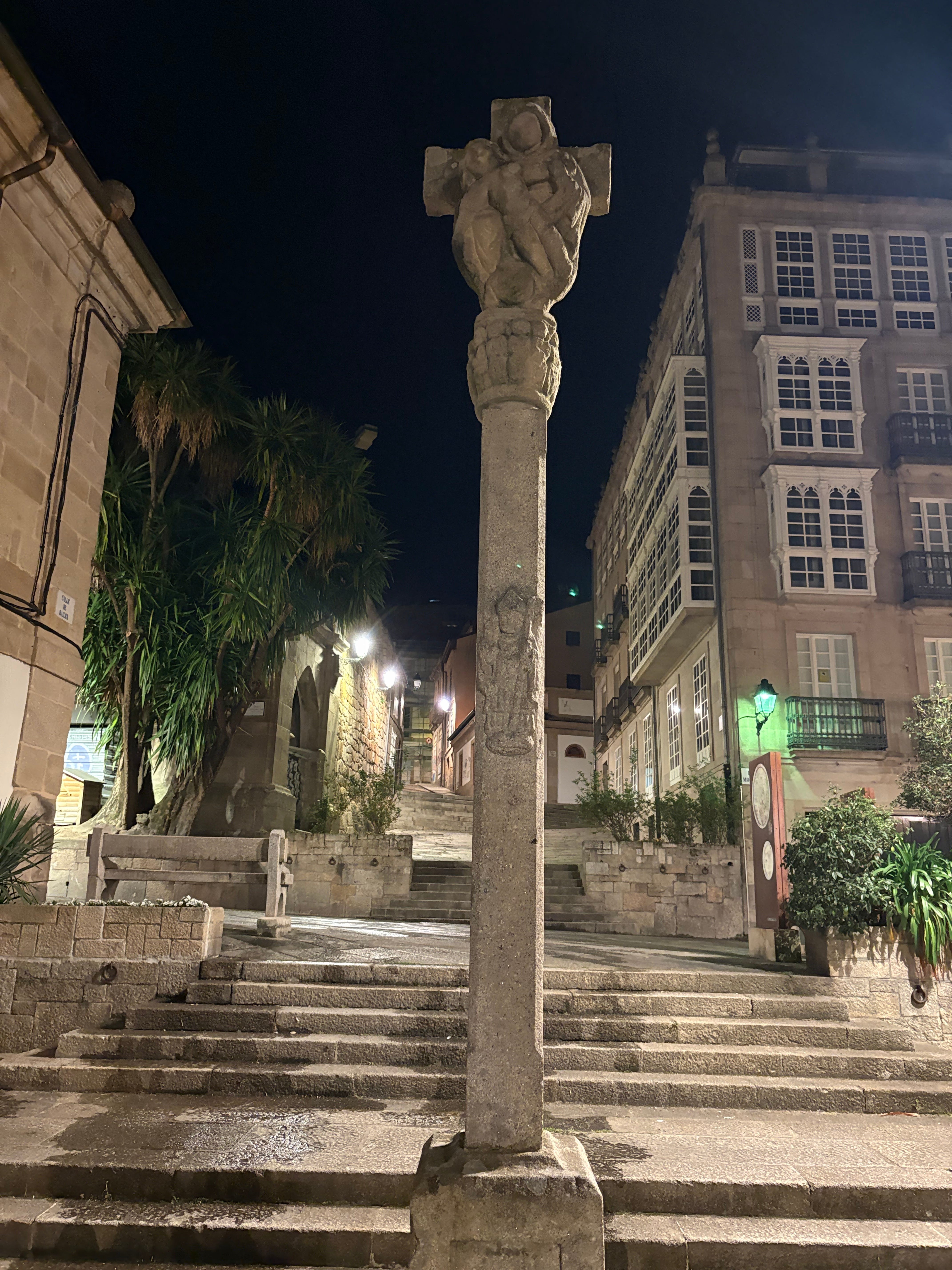
Still, the night itself was good. Ourense has a certain looseness to it in the evening, and we ended up just going with it rather than forcing anything.
On the walk back to where we were staying, we came across a small group in the street playing the gaita, the traditional Galician bagpipes, with people dancing around them. It stopped us straight away.
It wasn’t a performance, there was no crowd gathered in any organised way — just a few people playing, a few more joining in, and others standing off to the side watching. The sound carries in a way that’s hard to ignore, and before you realise it, you’ve slowed down and stayed longer than you meant to.
We ended up standing there for a while, taking photos and a bit of video, just watching it unfold. It felt completely unforced — something that belonged to the place rather than something put on for it.
It’s a small moment, but it tells you more than most planned visits.
https://www.instagram.com/reel/DXU1A8gCBAh/?igsh=OWloZ2p0cjBnZjVk
The next morning we hired a car and followed the River Miño for a while before heading west, cutting up through the countryside towards the coast and into the Salnés Valley.
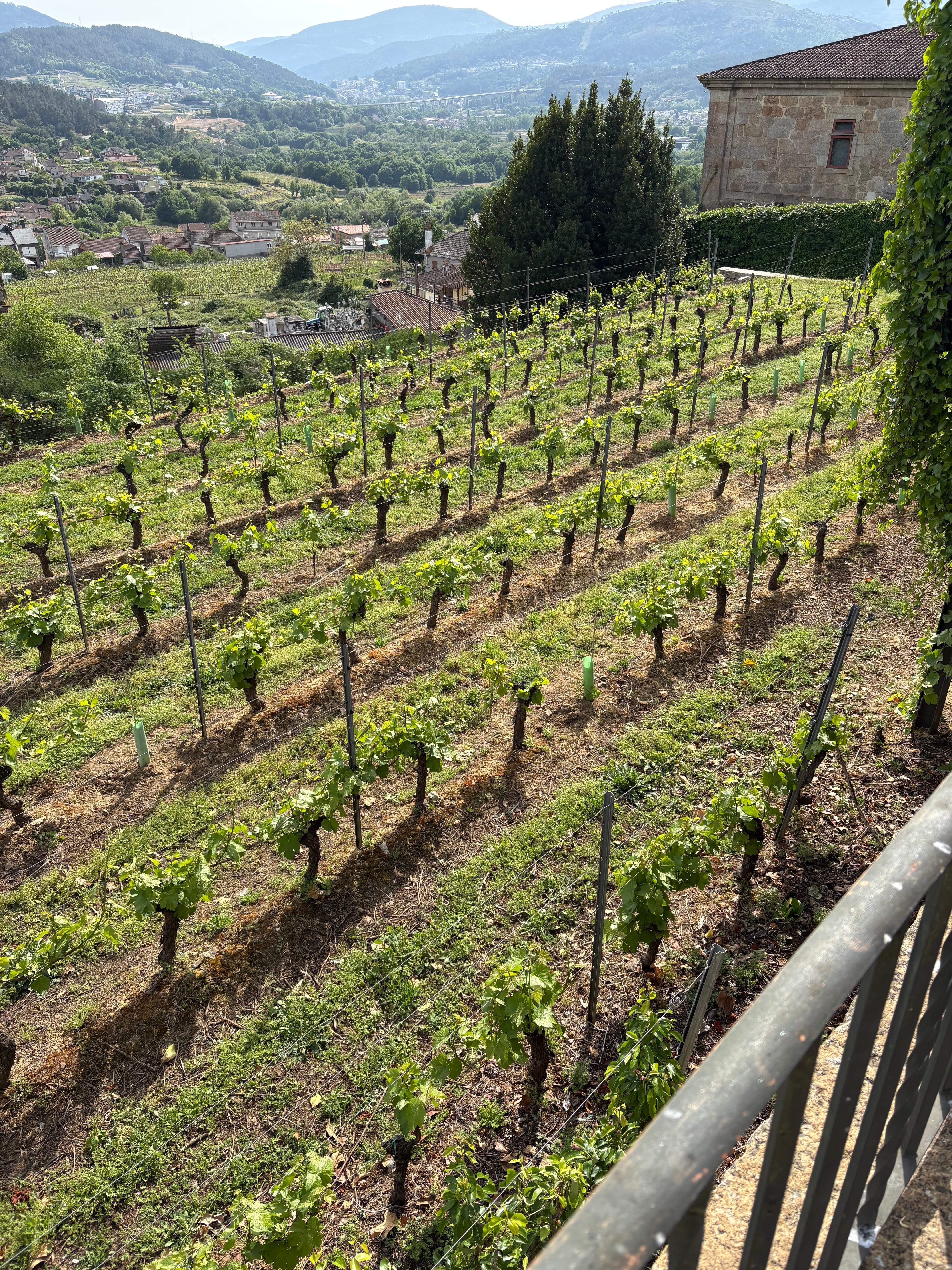
This is where Galicia really starts to show itself. It’s greener than most people expect — properly green — with small plots, vines broken up by trees, stone walls, and villages that seem to appear and disappear as quickly as you pass through them.
You also start to notice how fragmented the vineyards are. Small parcels, often with their own names, sitting side by side but clearly separate. It’s part of what’s known as the minifundio system — land divided over generations through inheritance — and it gives the landscape a patchwork feel that’s quite different to more uniform wine regions.
We made our way to Cambados, often described as the capital of Albariño, and the centre of production in the region. It’s the kind of place that feels tied closely to the wine around it, without needing to say much about it.
We stopped in at Enoteca Ribera de Fefiñáns, one of the places we’ll be using on the tour, and took a bit of time to sit and see how it actually works in practice. A couple of glasses of Albariño and something small to eat was enough.
The wines had that saline edge you get in this part of the world — not in an obvious way, but something you notice as you go back to the glass. It’s the Atlantic influence more than anything, and it’s difficult to explain until you’re actually there.
After that, we had a walk around the town. Cambados sits low and open, close to the water, with a sense of space that’s quite different to inland towns. There’s a quietness to it, even when it’s busy — stone buildings, small squares, glimpses of the estuary, and that constant presence of the Atlantic just beyond it.
It’s not a place that tries too hard. It doesn’t need to.
We were staying at the Hotel Maroa, the hotel we’ll be using for the group — a comfortable four-star right on the waterfront, with a rooftop terrace looking out over the bay. From up there you can see the bateas, the floating platforms used for mussel farming, which are a constant presence along this stretch of coast.
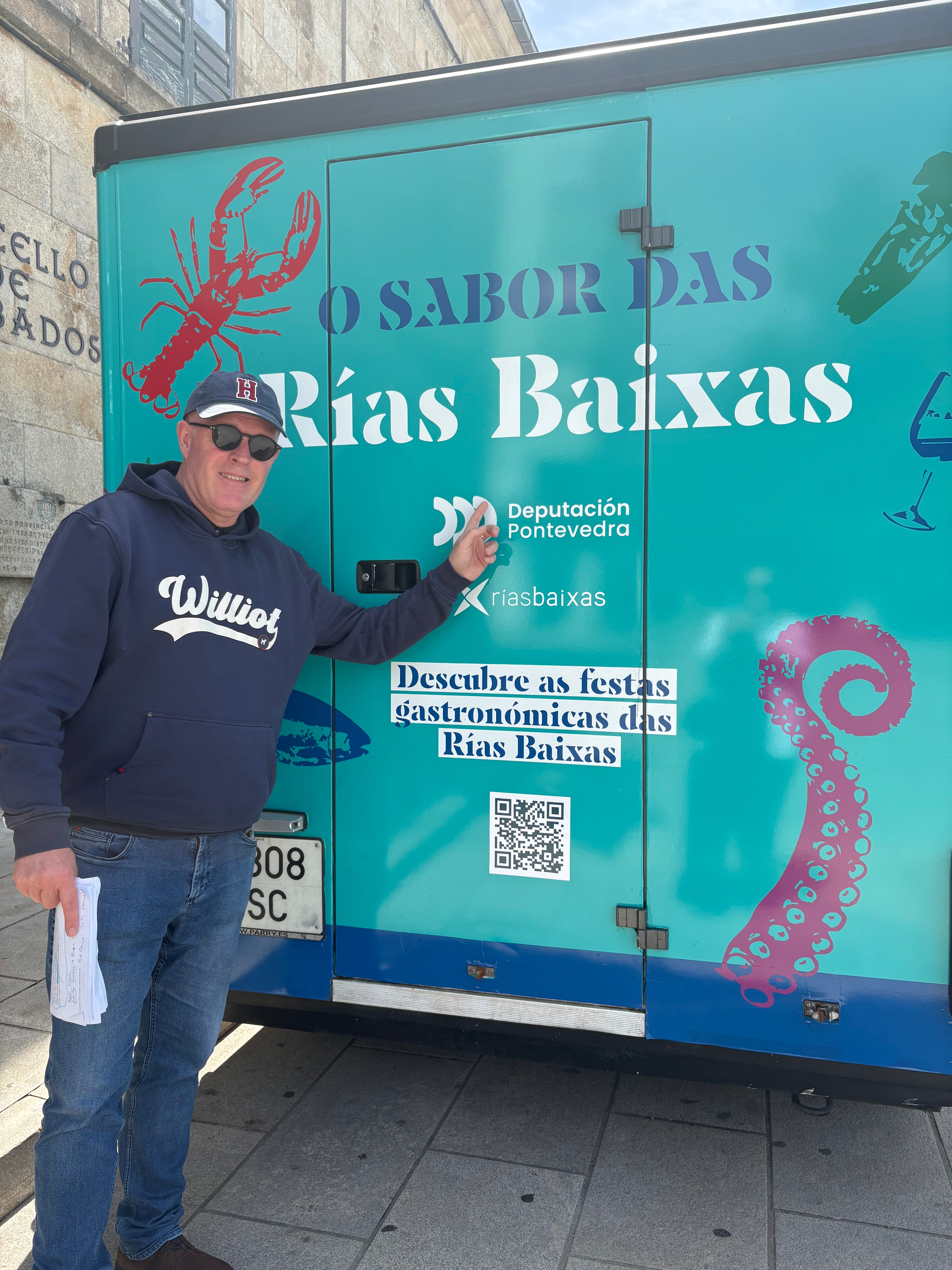
There’s also been some experimentation in recent years with ageing wine under the water around these structures — not something you come across every day, but another example of how closely the region ties its wine to the sea.
Later that afternoon we walked along Rúa Príncipe, the main shopping street — a mix of the usual high street names alongside smaller local shops, including a Celta Vigo store with a café upstairs that felt very much part of the place rather than just retail.
That sense of everyday life sits quite comfortably alongside everything else.
That evening we went to La Central, in the middle of the old town, where we’ll be bringing the group in June. It was a chance to sit properly and see how the place feels over the course of a meal rather than just passing through.
We tried a bit of everything — local dishes, simple preparations, things that make sense in the region. The scallops stood out. Served in the shell, they’re hard to miss, and you see them everywhere once you start looking. The scallop shell, the vieira, is the symbol of the Camino de Santiago, something that connects this part of Spain in a way that goes beyond just food. It’s familiar as well — in Caravaca, as another of the five holy cities, you see echoes of that same idea.
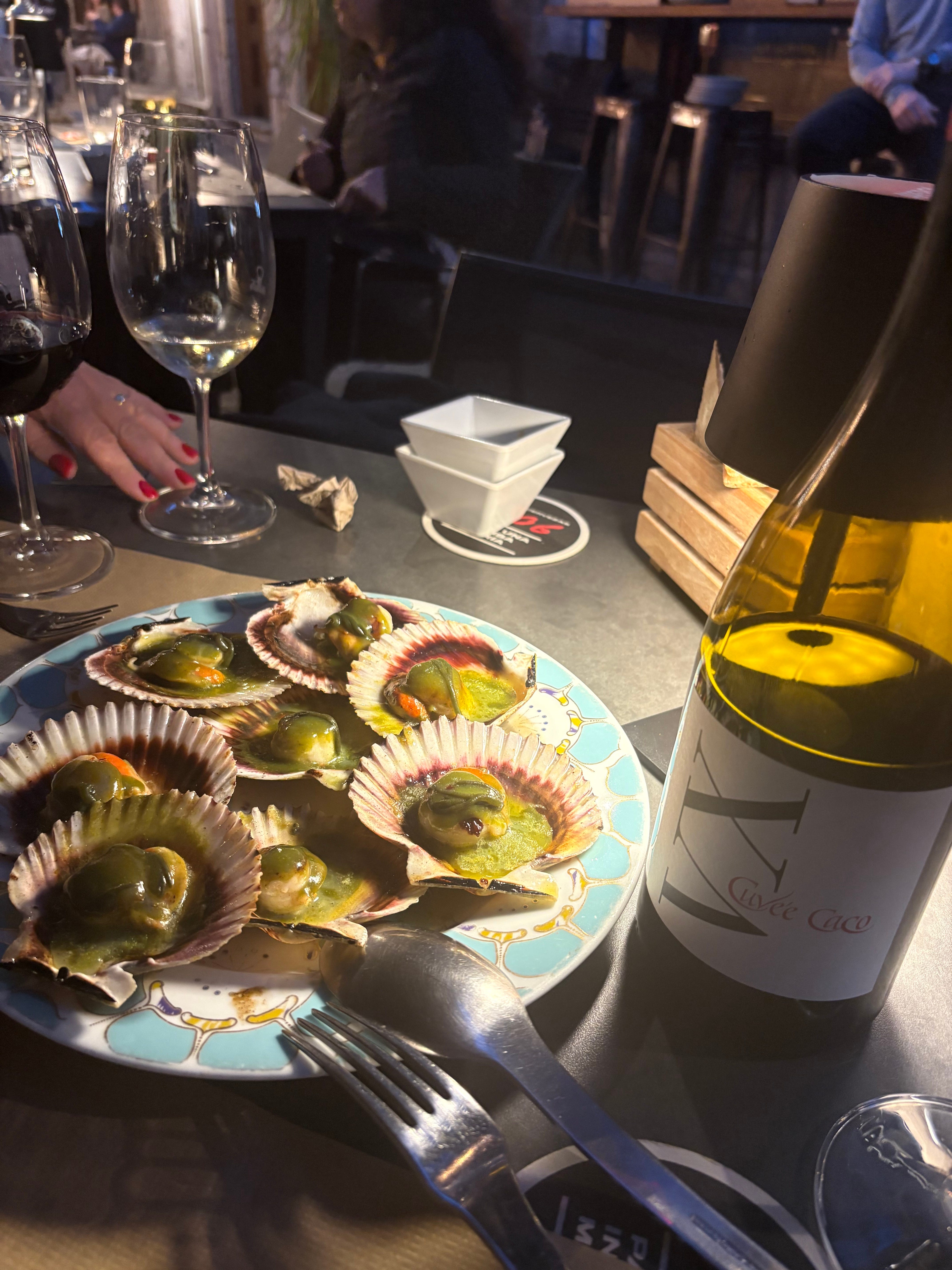
From there, we wandered back out into the town without much of a plan, just letting the evening move on its own.
By the time night settled in, the city had shifted again. We ended up in Templario, a disco bar in the old town, which that night was hosting a New York-themed event sponsored by Seagram’s. It was a slightly unexpected turn, but one that made sense in its own way — especially with two of our three kids now living in New York.
What’s interesting is that Templario forms part of the wider Palacio de la Oliva project, where the food and drink offering is shaped by the work of chef Pepe Solla. It’s something you don’t immediately notice when you walk in, but it explains a bit about how different parts of the city connect — from more structured dining to places like this.
https://www.instagram.com/reel/DXU1A8gCBAh/?igsh=OWloZ2p0cjBnZjVk
What stood out more than anything was the contrast. The same city that had been slow, local and understated earlier in the evening had another side entirely — louder, more outward-looking, a different energy altogether.
It’s easy to think of places in one way when you’re planning a trip. In reality, they rarely are.
On Sunday, on the way back towards Ourense, we made one last attempt to track down Galician beef, heading inland and away from the coast. We didn’t end up eating, but we did come across Cuñas Davia, a small bodega-restaurant that fits very naturally with the kind of places we look for.
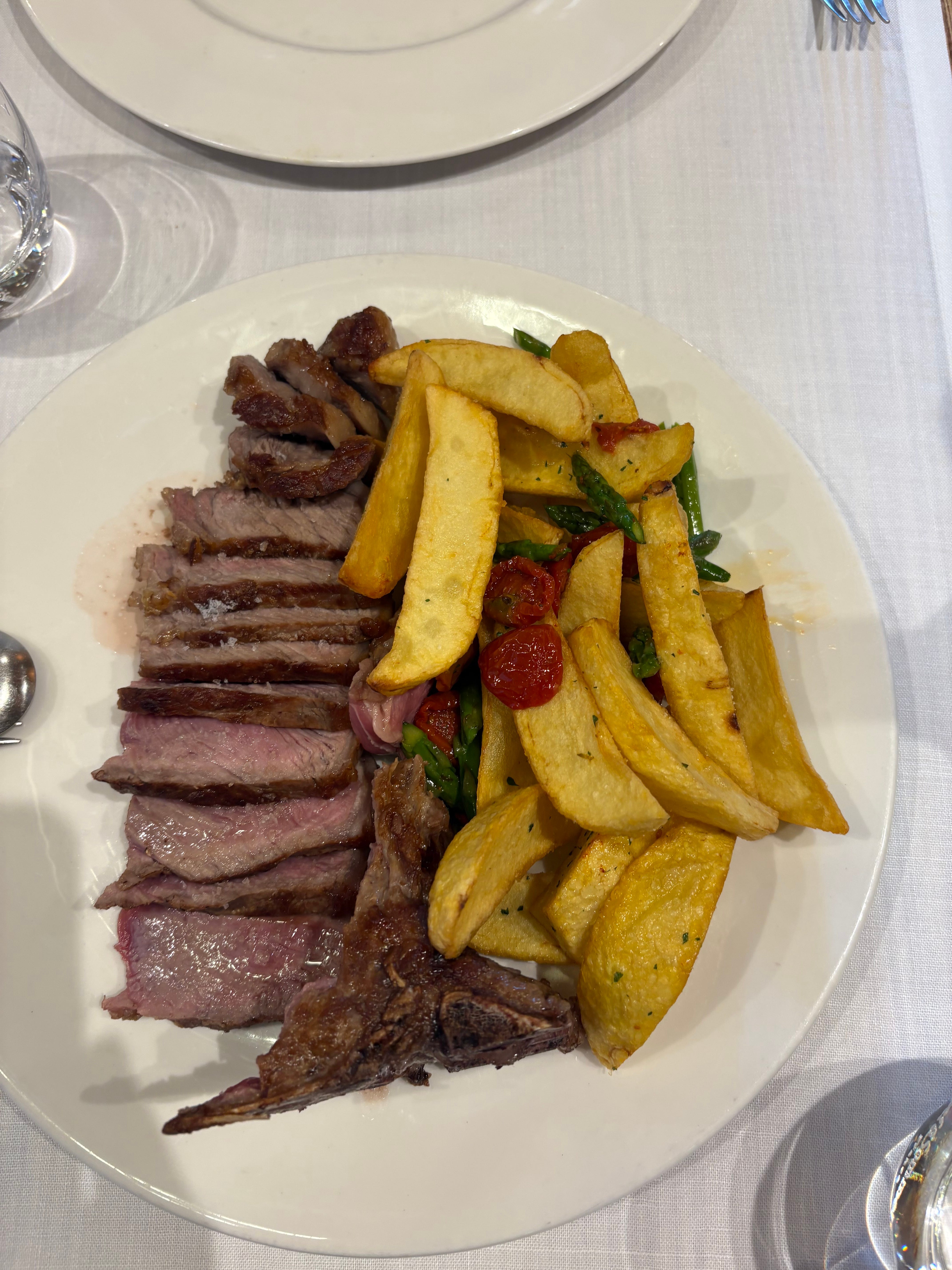
It’s a project built around its surroundings — vineyard, kitchen, and a clear sense of place — rather than something designed purely for passing trade. It felt considered without being forced, and very much in line with the values we try to build into the tours.
Sometimes that’s enough. You don’t always need to sit down to know whether something works.
By the time we made our way back, the structure of the trip was clearer. Not fixed — that comes later — but understood.
We took the AVE back on Sunday evening, retracing the same route south. By the time we were back in Caravaca, Galicia already felt a long way off.
The job isn’t just to find good places. It’s to make them work together.
A quiet thanks to Noah Chichester, whose guide to Galicia we’ve been dipping into along the way, and to Miguel Coruña of Atlantic Sommelier, whose perspective on Atlantic wine culture adds another layer once you start to see it for yourself.
No posts
Comments
Nothing yet. Say the first thing.
Sign in to join the conversation.