
The Tim Atkin Best of Spain tasting in Madrid has the potential to become one of the most important events in the Spanish wine calendar. Bringing together around 160 bodegas from across the country and more than 300 wines rated 95 points or higher by Tim Atkin MW and his team, it felt far more than simply another large wine fair.
For producers, importers, sommeliers, writers and wine professionals, events like this offer a meeting point for understanding where Spanish wine is heading. Established historic names stand alongside newer, smaller and often more terroir-focused projects, all sharing the same space. In many ways, it offered a fascinating snapshot of modern Spanish wine itself.
That was exactly why we went.
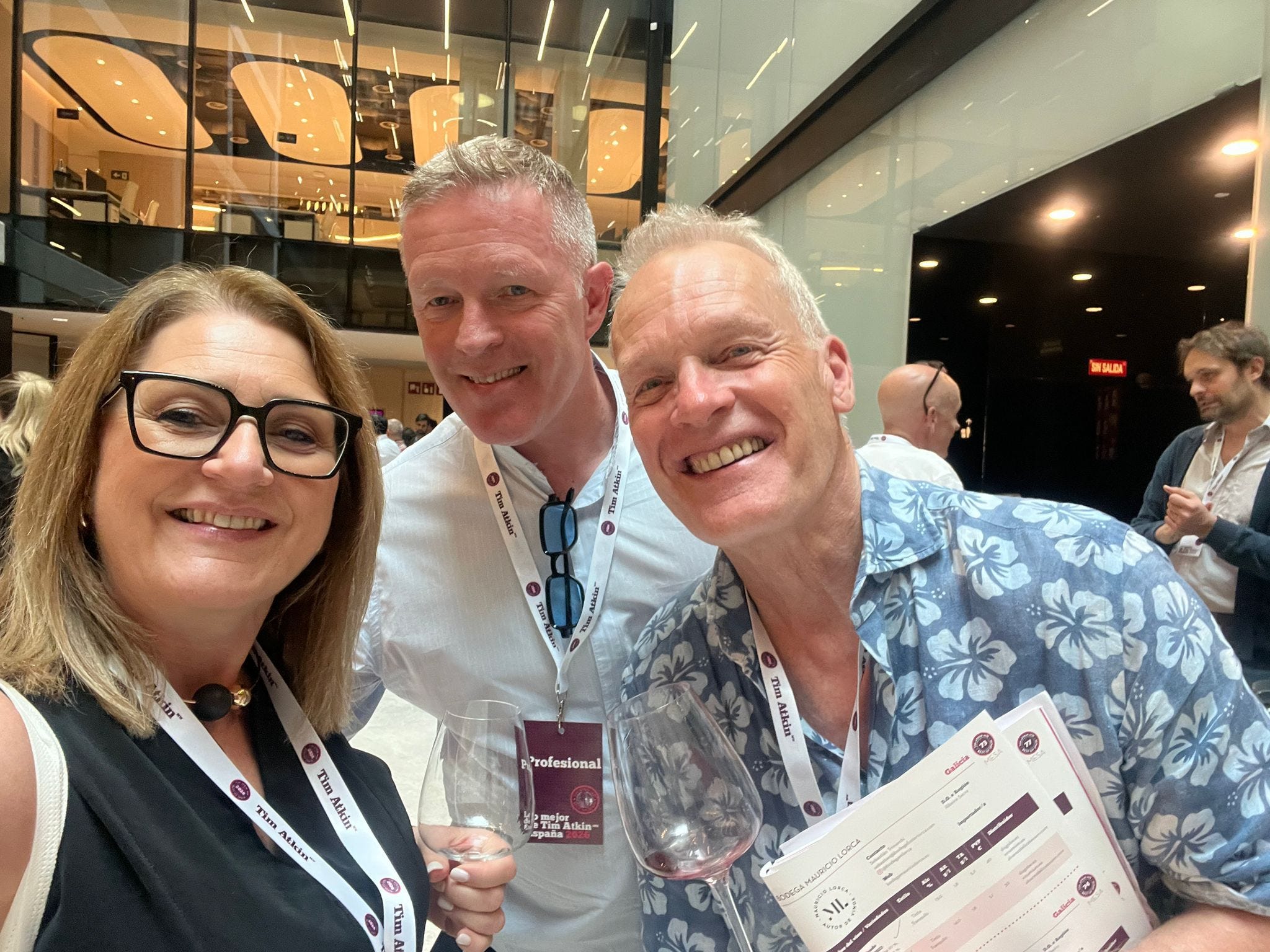
Rather than trying to taste everything, our focus was very specific: Rioja and Galicia.
Over the next 12 months we are developing new tours to both regions and events like this provide a rare opportunity to speak directly with the people behind the wines, all in one place and in a much more relaxed setting than a formal winery visit.
I have to admit something about Rioja. For a long time I resisted it slightly.
Partly because Rioja is already one of the world’s most recognised wine regions and hardly needs help promoting itself. But also because, unfairly perhaps, I associated parts of Rioja with a more traditional and heavily oak-driven style that personally never excited me as much as some of Spain’s lesser-known regions.
However, after many conversations over the last year with David Harker from Newcastle Wine School, alongside a bit of my own research, I started to realise that another side of Rioja exists entirely.
A movement often associated with the group “Viticultores Independientes de Rioja” has helped push attention back towards vineyards, villages, altitude, old vines and indigenous varieties. The focus is often less about ageing classifications and more about terroir, freshness and site expression. Rather than rejecting Rioja’s history, many of these producers seem interested in rediscovering forgotten parts of it.
Yesterday confirmed that for me.
We spent a long time speaking with producers such as Juan Carlos Sancha, Sandra Bravo Marín of Sierra de Toloño and Elías López Montero regarding their Rioja projects and philosophies. Despite their different personalities and approaches, there was a common thread running through all the conversations: authenticity, vineyard identity and respect for place.
Juan Carlos Sancha’s work was particularly fascinating. Beyond being a winemaker, he is also Professor of Oenology at the University of La Rioja and has been heavily involved in research surrounding indigenous Rioja grape varieties such as Maturana Tinta, Maturana Blanca and Tempranillo Blanco. His wines from the cooler, higher-altitude Alto Najerilla area of Rioja Alta felt completely different to the stereotypical image many people still hold of Rioja.
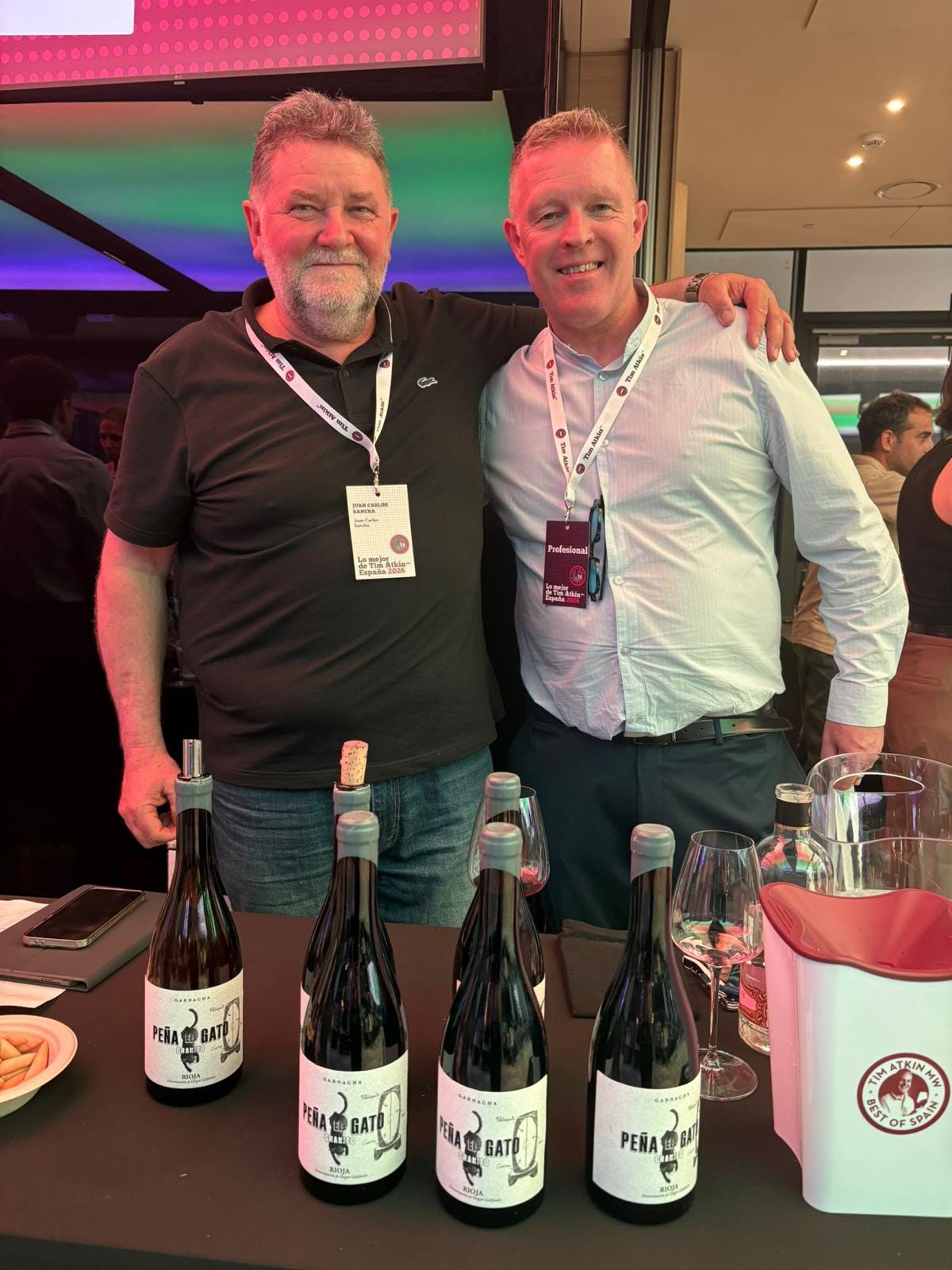
Sandra Bravo’s biodynamic approach and high-altitude vineyards in Rioja Alavesa offered another perspective entirely — fresher, more precise and deeply connected to the landscape itself.
And then there was Elías López Montero, somebody we already know through Verum in Castilla-La Mancha, now bringing similar vineyard-focused thinking into Rioja projects too.
What struck me most was that none of these producers felt interested in reinventing Rioja. Instead, they seemed more interested in rediscovering parts of it.
Alongside Rioja, we also spent time with several Galician producers, including Rodrigo Méndez of Forjas del Salnés, whose wines I have admired for a long time. I first properly read about Rodrigo’s work in Luis Gutiérrez’s book The New Vignerons, and then later tasted the wines themselves — wines with such a clear Atlantic identity that I was immediately hooked.
Rodrigo’s story is deeply rooted in Galicia. His grandfather originally founded Forjas del Salnés as a forge business before the family became associated with viticulture in the Salnés Valley. Today Rodrigo is regarded as one of the key figures in the revival of serious Atlantic red wines in Galicia, particularly through indigenous varieties such as Caiño and Espadeiro, alongside some of the most characterful Albariños in the region.
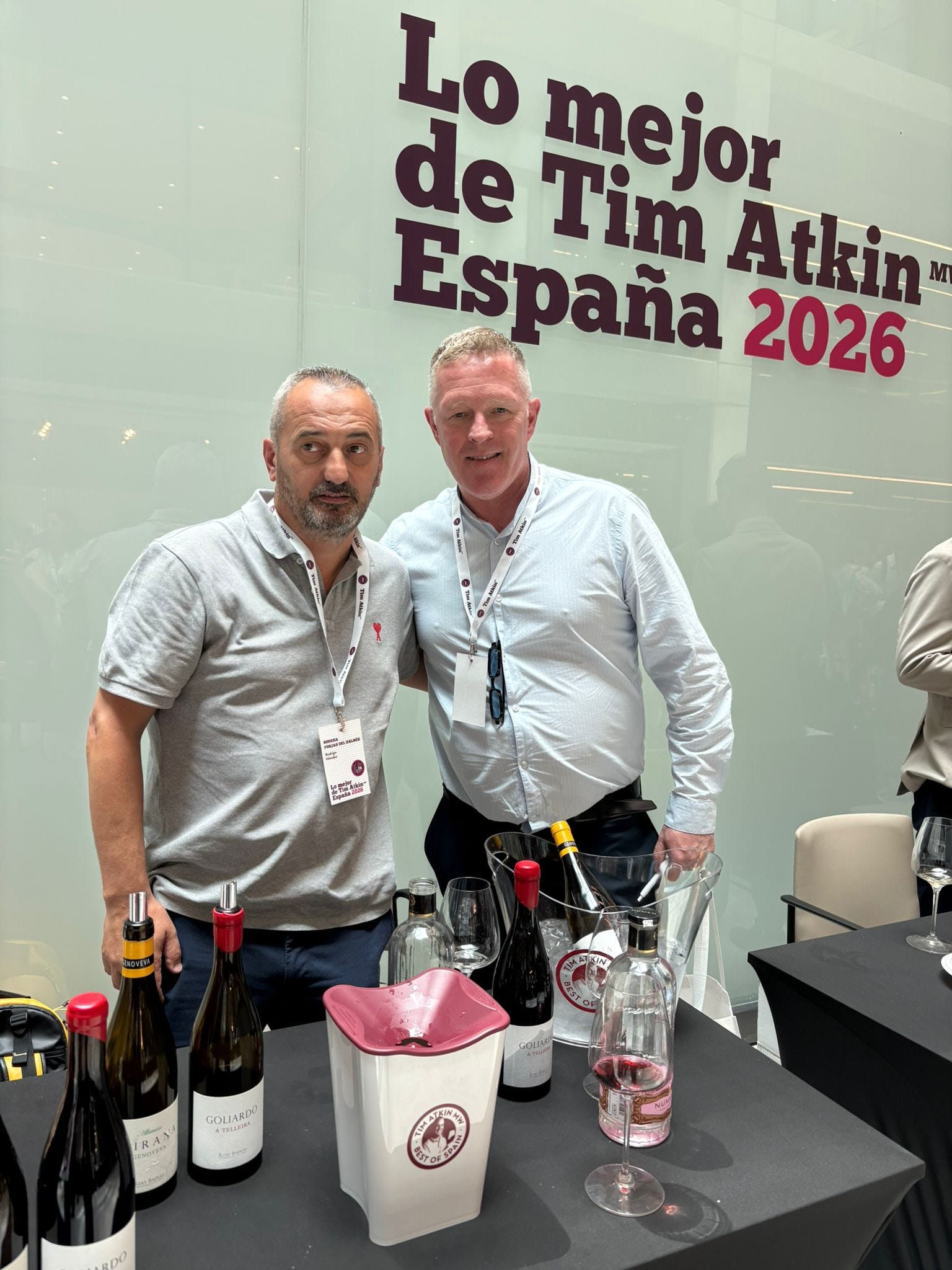
One of the nicest moments of the day was hearing that Rodrigo’s project will soon begin receiving visitors, something that we very much hope to include within future Galicia tours from 2027 onwards.
The day was not only about discovering new projects though. It was also about reconnecting with familiar faces. It was lovely to see old friends such as Bodegas Cerrón from Fuente-Álamo in DO Jumilla and Jorge Piernas, whose winery in Bullas is one of the closest to where we live near Caravaca de la Cruz.
We also spent time tasting with Rafael Palacios in Valdeorras, whose wines continue to receive extraordinary recognition internationally, including scores of 99 and 100 points from Tim Atkin for some vintages. The precision and energy in those wines were remarkable.
And finally, one wine much closer to home deserves a mention. Casa Agrícola Tinto 2023 from Pepe Mendoza Casa Agrícola in Alicante was probably one of the best-value wines we tasted all day. A blend of 70% Monastrell, 27% Alicante Bouschet and 3% Giró — a local Alicante variety now enjoying a small revival — it offered freshness, Mediterranean character and remarkable quality for around €12 a bottle.
In the end though, the best part of days like this is rarely the scores.
It is the conversations.
Because behind every future itinerary, winery lunch or tasting our guests eventually experience, there are usually months of conversations, research and relationship-building that most people never see.
And honestly, that is probably how it should be.
No posts
Comments
Nothing yet. Say the first thing.
Sign in to join the conversation.