
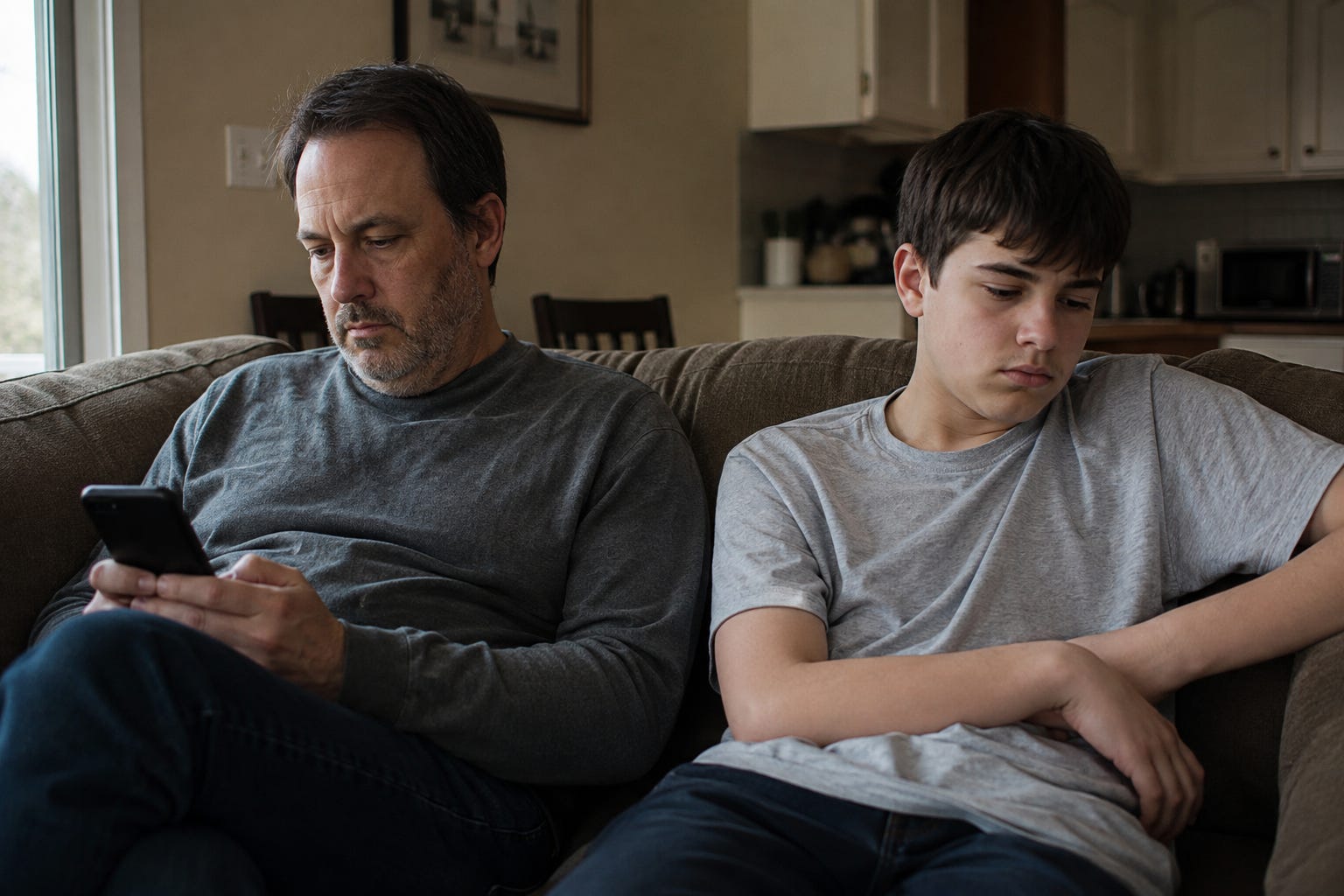
This is the next installment in the series on fathers and their children based on the work Susan Swartz. This post is the first on fathers and sons. Fathers may not realize that they are failing to connect with their sons. This post explains the consequences and offers tips on what fathers should look for. Sons may already be providing clear feedback, and fathers may not be aware of it. Sadly, this is the kind of content churches don’t teach fathers, schools can’t provide, and you will not find it in most parenting books.
For boys, when fathers do not form secure attachment with their sons, in sets their sons up for struggle. Susan Schwartz paints the picture well:1
The absence of a father obstructs growth, learning and comprehending of self and the world. The empty spaces are saturated with the father’s absence, leaving an emotional void. His absence is shattering, bringing shame and massive disquieting silences. . . Melancholy arises from this unsatisfying relationship, and the son feels objectified, degraded, lacking. Apprehension weighs upon his essence. In this situation, the father and son relationship is precarious and will worsen if a son displays emotion or rebellion. Letting the father know his distress and betrayal makes a son vulnerable. However, if the feelings are withheld, they are written on the son’s psyche and body.
In the 21st century, if fathers do not securely attach to their sons through intentional engagement, the consequences can be dire. Schwartz argues that fathers can “no longer stay in the shadow of the mother or be narrowly jammed into the role of provider, denying his position as a nurturer and provider of emotional support” for his son.
We need to change the narrative about what “provider” means. When a young man says, “I want a career that allows me to provide for my sons,” what he should mean is, “I want a career that allows me to nurture and provide emotional support for my son from boyhood into adulthood.” This is what it truly means to provide beyond material provision.
The challenge with fathers and sons is that a lack of connection can go unnoticed even when they are in the same room, or the same car. No good father sets out to do this to his son. That is precisely why fathers need to understand it — so they can recognize the signs early and course correct. When a father doesn’t know what he’s looking at, he misreads his son’s behavior.
I cover this at length in my next book on fatherhood, The Fatherhood Effect.
Comments
Nothing yet. Say the first thing.
Sign in to join the conversation.