
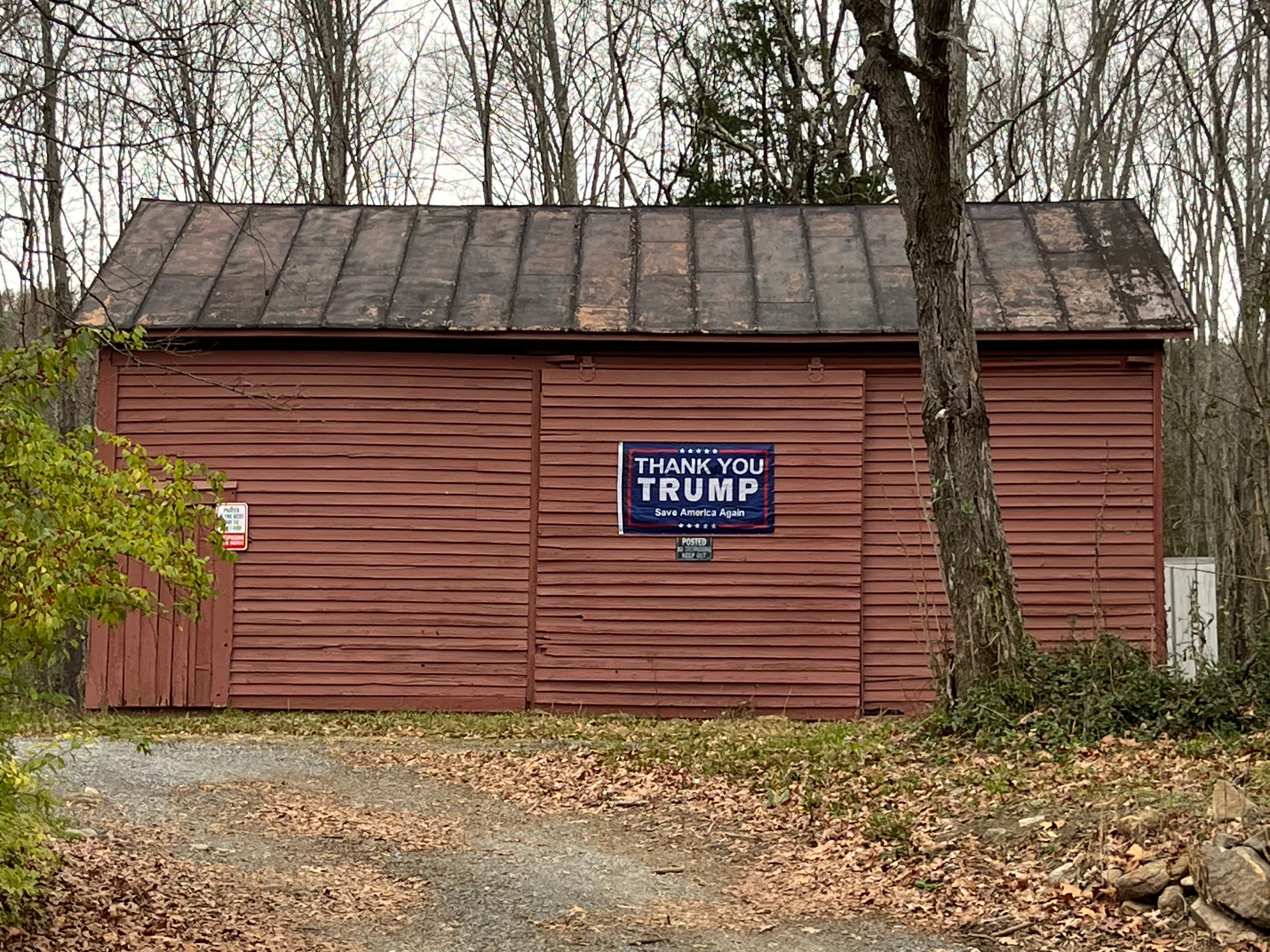
When Trump was first elected in 2016, there was widespread recognition it stemmed to a large degree from decades of neglect of rural and ‘working’ communities. Biden, of course, won the subsequent election. But shift in President aside, I was wondering, was the underlying neglect being addressed?
When we travelled 35 states in the US before and after the 2024 election, we heard that to some degree it was. But not enough, it seems, at least not in that single term of government. And certainly, when it came to electioneering, that government was tone deaf - ‘Bidenomics’? ‘You’re not really suffering out there, look at my KPIs.’ To say nothing of the rest of what followed.
Meantime in Australia, with a not dissimilar electoral backdrop, a democratic resurgence continued. At the previous 2022 election, a contemptuous government was ousted, seven new community independents were elected, all women, comprising a cross bench of 16 in total. Incumbent independents increased their margins. Other so-called safe seats around the country became a contest too, as the major party vote continued to decline to around 33% each, level with minor parties and independents for the first time.
This time, at the federal election of May 2025 while we were still in the US, the Labor government won an increased majority, largely on the back of an imploding Liberal Party opposition further taking its cues from Trump’s approach. But those primary vote splits remained around the same, and all incumbent independents won again except Zoe Daniel in Goldstein (while Kylea Tink’s seat was dissolved due to boundary redistribution). Often again with notable increased majorities.
Two more independents were also elected - Nicolette Boele in the north of Sydney, and Andrew Gee, a former National Party member who became independent over the Indigenous Voice to Parliament referendum. While a number of other seats were also more hotly contested, not the least of which being the prominent WA seats of Durack, Forrest and Fremantle, challenging both major parties.
The resulting parliament had the most diverse composition to date, including 50% women for the first time, and more Indigenous and multicultural members than ever. The government itself had a number of women and young people elected for the first time, including Charlotte Walker, who turned 21 on polling day and became the youngest senator in Australian history.
Communities are clearly still looking for more integrity, transparency, equality, representation and responsiveness from parliament.
A year later in Australia, another party taking its cues from Trump’s approach is surging in the polls, and just won its first House of Representatives seat at the by-election stemming from the resignation of the former Liberal Party leader, Susan Ley.
One Nation and its leader Pauline Hanson were, like Trump, ridiculed widely in political circles for a long time. In Trump’s case, right up until he won in 2016. In One Nation’s case, right up until it was briefly out-polling even the government recently (notwithstanding suspicions of internationally generated AI ‘slopaganda’ - which further emphasises the point being made here).
The threat appears to be becoming real for those who ridiculed (which included me, to be honest, when Hanson first appeared on the political scene 30 years ago as a Liberal Party MP). And again, it is widely recognised that it has stemmed to a large degree from decades of neglect of rural and ‘working’ communities.
And yet, as concern grows about One Nation’s incendiary stunts, racism, lack of policy, often contradictory statements, previous ethical and organisational rots, and Australia’s richest billionaire woman now backing the Party, the response I most often hear is a call for Australians to fight One Nation, to save our country.
It’s as if the response is playing from Trump’s songbook too. We heard it plenty over there. And we’ve seen how that’s working out.
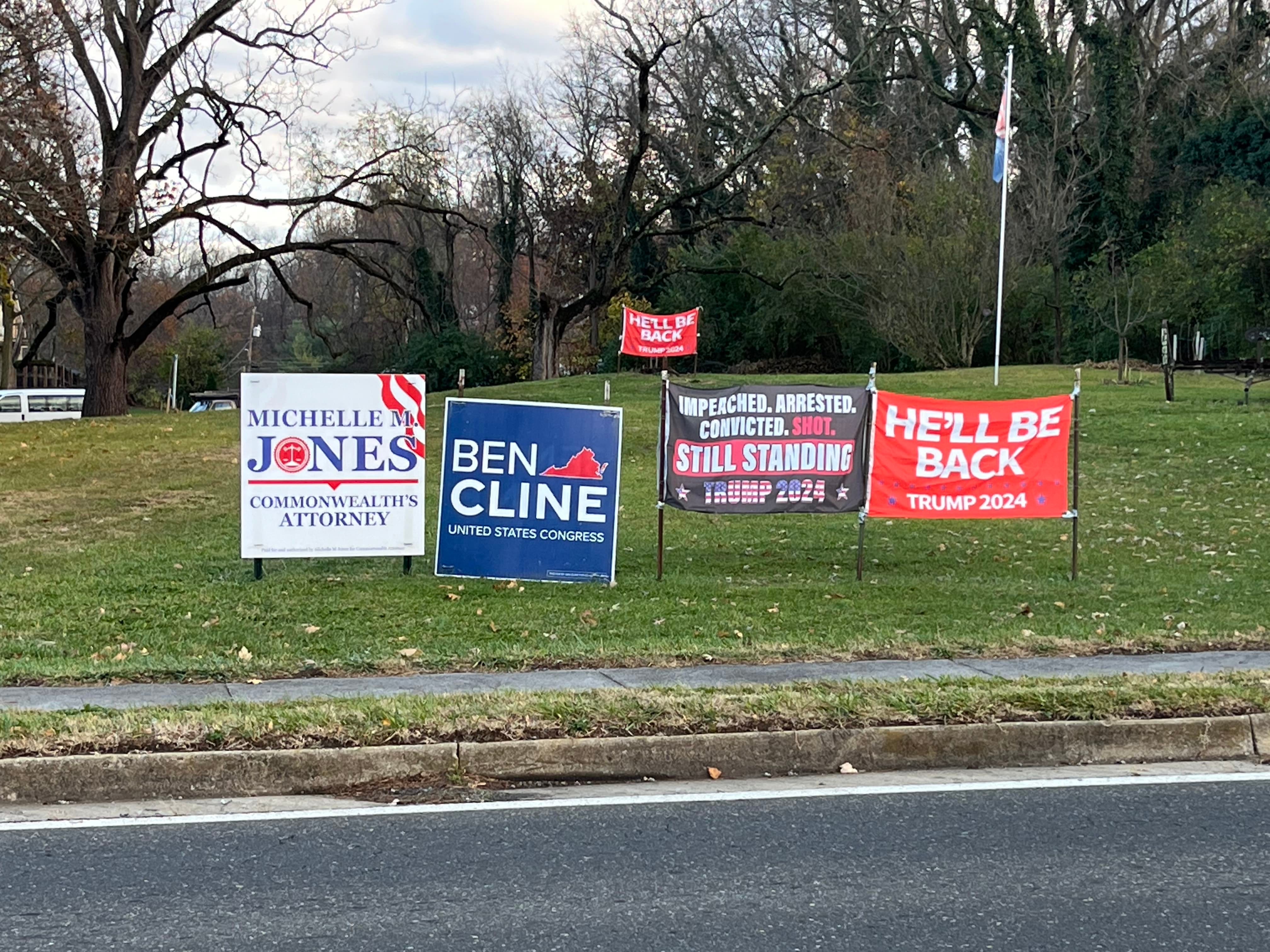
That’s not to say I’m not concerned too, nor that parties and their leaders aren’t to be challenged, held to account, and debated on the issues and their policy positions. But if we widely recognise what has given rise to their positions, and that fighting the symptoms generally worsens the problem, why not try to get closer to the heart of the matter? To the heart of the country, as it were?
Rather than fight the party or a figurehead profiteering in the moment from a chronic problem, what if we stopped neglecting the people who suggest they’re going to vote for them?
The 7am Podcast had former federal Greens MP and current head of the Green Institute, Max Chandler-Mather, on last week. The blurb ran:
Amid the seismic political shift currently underway in this country, there’s been one party missing from the conversation: the Greens. And it’s curious, because the conditions that have seen One Nation rise – frustration with the major parties, a slip in living standards, appetite for change – should suit the Greens and their anti-establishment politics. So why are they lost in the political wilderness?
Chandler-Mather talked about enjoying his conversations with would-be One Nation voters. He mentioned meeting one particular woman who lived in public housing and has voted Labor all her life. This time, she’s going to vote One Nation, she said. And they proceeded to agree on a lot of the reasons why.
Chandler-Mather put it this way on the podcast:
There is this misconception in politics at the moment that because people are thinking about voting for Pauline Hanson, that makes them right wing.
This is also consistent with what we found across the US. Despairing at voters’ alleged far right politics didn’t really fit the picture we saw. It was far from that simple. And funnily enough, just as I was writing this, a post popped up in my feed from Amanda Litman, founder of Run for Something over there Stateside:
18 months ago people were freaking out about how even somewhere like NYC moved right. Now we’re seeing: People aren’t actually more conservative. They’re just hungry for change. For big swings. For a refusal to accept the status quo.
It feels like we’ve been saying for decades that the whole right-left duality is getting old. At this point, its carcass is putrefying.
Now, I’m not a member of the Greens, and I’ve got my critiques of the party, and of Max Chandler-Mather, but I listen to them too, and his experience speaking with people mirrors what we have also seen and heard around Australia:
When actually what is happening is people are just feeling rejected by a political system that no longer listens to them. But then, when you put to them what used to be very basic tenets of social democracy and now considered radical because of where the political system has shifted, they say, well yeah, I still agree with those things. Because it’s not the case that the population is moving away from politics. The political system is moving away from people.
And every conversation I have had with a One Nation voter has become very apparent to me over the last few months that they would be perfectly willing to vote for a transformative platform.
If it was offered, and if you were able to reach them at their door and show that you cared and showed you were willing to listen and showed you were willing to recognise that we can’t agree with everything and not to judge them for their political views, but to ask and understand where they’re coming from. Which, you know, when you say it sounds pretty simple, but I really, really fundamentally believe that’s where that needs to start. And yeah, it gives me a lot of hope actually when I have those conversations.
We were front row here in the seat of Curtin in WA when community independent candidate Kate Chaney won in 2022, and it was stark. A politics that asked, didn’t tell. Listened, didn’t sell. Represented, didn’t dismiss.
She won again with an increased majority in 2025, despite an increased intensity of misleading attack ads and general major party muck.
Labor engaged in that too, in seats like Fowler in Western Sydney. And there too, the independent candidate Dai Le won again with an increased majority. Afterwards, she pointedly asked Prime Minister Albanese to use his mandate to do politics differently now, not to feed off and worsen fear and insecurity with people who are struggling to get by.
The Labor Party in the UK seems to be getting this. A surge in the polls of the Reform Party, for example, could not stop the likely next Prime Minister Andy Burnham winning a by-election in a conservative seat recently. And he reportedly did it without demonising people or leaning into lowest common denominator rhetoric and policy, but by listening to people, taking them seriously, and taking a vision of politics he’d forged successfully as Mayor of Manchester, to the national level.
Would the Labor Party do this here? Certainly, on the back of its successive electoral wins, the party has, for example, made the first serious attempt in my lifetime to address the speculative profiteering and literal rent-seeking in property. That had become a practice so excessively rewarded at the expense of people simply being able to afford a home.
And yet, in the face of a democratic resurgence that it has benefited from, and could be championing to its continued benefit, in step with the country as a whole, the party has colluded with its imploding major party adversary to marginalise the electoral prospects of future community independents. While also seeking to tighten Freedom of Information laws, repeatedly siding with influential corporate lobby groups, and failing to protect whistle blowers. This is the sort of stuff that continues to frustrate large parts of the country.
In response to all that, the Community Strong party enters the fray, announced last week by a couple of former independents. To be able to meet the challenge of the changing rules, they say, and to field more candidates for the Senate. Another experiment in democracy. We’ll see how it goes.
Here in Curtin, Kate Chaney continues as an independent, and recently said that in all her ongoing door-knocking (notably not just at election time), she asks people what are three words that describe the country they want to live in? The answers, from all sorts of people, converge on these words: fair, just, healthy, safe, respectful, kind, sustainable, prosperous and democratic.
Drawing on words I also often heard in the US, we’re not as divided as we’re led to believe, and most people still want better options than what the major parties are currently offering.
So there’s the opening, in the US and the UK as much as here, and certainly elsewhere. Will we fight the symptoms and worsen the cause? Or listen to people on the ground, and genuinely take each other seriously enough to hear all we share? There is growing evidence that might just tip decisive power towards those communities we want to live in.
Thanks for reading! This post is public so feel free to share it.
Comments
Nothing yet. Say the first thing.
Sign in to join the conversation.