
Way back in 2011, I was working in bicycle advocacy and noticed something frustrating: new bicycle infrastructure wasn’t being built where people actually needed it. Council capital works budgets were being allocated based on assumptions, not actual rider experience. I thought, what if we could capture the collective knowledge of all the existing riders about where they don’t feel safe riding? That data could factor into capital works budgets and prioritisation for improvements.
This was probably before open data was really a thing. Open crash data certainly didn’t exist, at least not in each state and territory. The idea of pulling together government data in one place felt like a distant possibility.
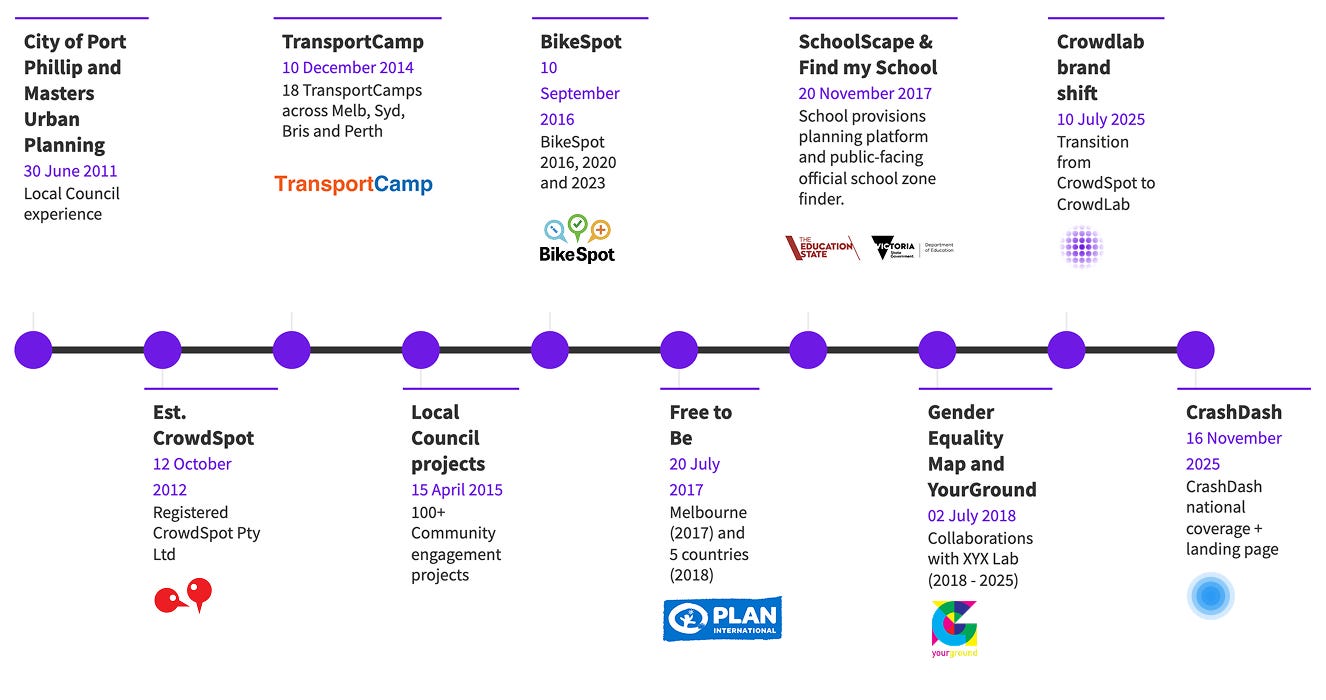
So I built CrowdSpot. It was a simple idea: give councils and communities tools to collect place-based feedback. Maps, surveys, the basics. It worked. We completed over 100 projects, built BikeSpot into a campaign series (2016, 2020, 2023), produced the Free to Be project with Plan International, first as a pilot in Melbourne and then in five countries around the world in 2018. We built YourGround with XYX Lab for Victoria and New South Wales, ran three iterations of the RAC’s Risky Roads projects, and worked on multiple integrated transport strategies and master planning projects.
But somewhere along the way, I realised the name, and what it represented, was starting to hold us back.
Why “CrowdSpot” Stopped Working
The problem wasn’t the work. CrowdSpot projects were successful. BikeSpot 2023 collected 70,000+ submissions from across Australia, our first truly national project. But I’d made a shift in how we worked: instead of doing lots of small-scale projects, I decided to focus on fewer, larger-scale projects that could have greater impact. That led first to a statewide approach, and eventually to BikeSpot 2023 as our first national project.
The real issue was what happened outside the CrowdSpot platform itself. We were collaborating on TransportCamp events, building tools with partners like SGS Economics and Planning. First Schoolscape, then the public-facing Find My School app that lets anyone simply understand what school zone they’re in.
In a way, this created confusion. Is CrowdSpot a tool or a consultancy? I was caught and stuck in between the two from a service offering perspective. The name “CrowdSpot” suggested we did one thing, community engagement, when we were actually building a portfolio of civic data tools. Every pitch became a conversation about why the brand didn’t match the work. That cognitive dissonance started to feel heavier each time.
The other issue was scope. “Spot” implies a place, a location, a specific point. But we weren’t just mapping community feedback anymore. We were analysing national datasets, building planning tools, creating platforms that councils used for evidence-based decision-making. The word felt too small for what we were actually doing.
What “CrowdLab” Represents
That’s where CrowdLab comes in. It’s an umbrella over all the things that we do, and more accurately resembles our capabilities, our drive for innovation, and pushing the boundaries. It’s about doing things in a new and improved way.
The shift to CrowdLab wasn’t just a rebrand. It was a way to talk about the broader vision without apologising for it. “Lab” suggests experimentation, building, iteration. It acknowledges that we’re not just running one type of project. We’re exploring how civic data can solve different problems for different communities.
CrowdLab is a platform for building civic data tools and collaborating on new projects. CrashDash is the first product under that umbrella. CrowdSpot, the original community engagement tool, will be rebuilt as another product in the same ecosystem. Same principles, same approach, just organised differently. Instead of “CrowdSpot does engagement and sometimes other things,” it’s “CrowdLab builds civic data tools, and here are the products.”
The name also leaves room for what’s next. CrashDash covers road safety data. CrowdSpot (rebuild) will cover community engagement. But what about environmental data or property data? The “Lab” framing says “we’re building tools, and here’s what we’ve shipped so far.”
What’s Staying
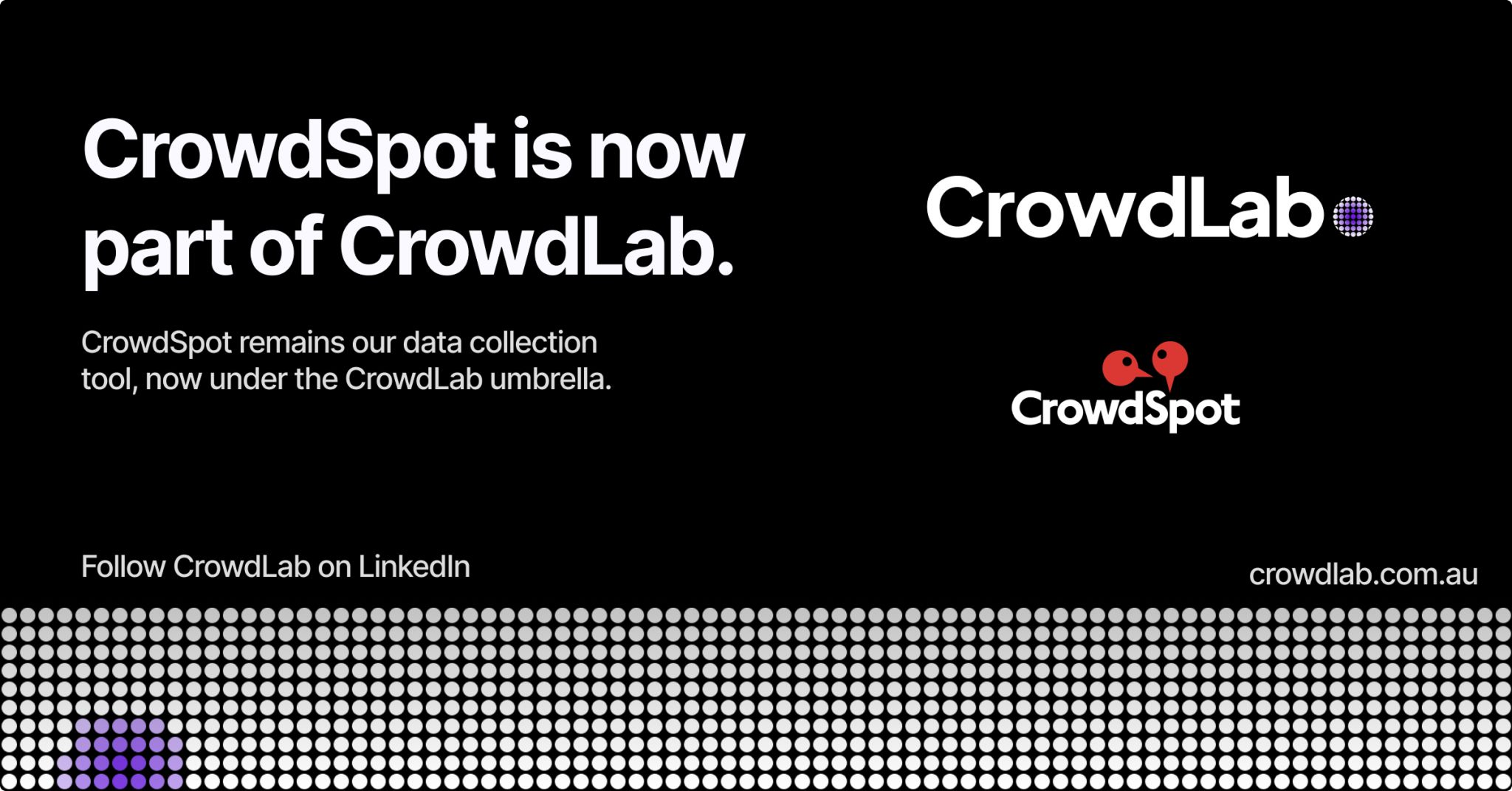
CrowdSpot isn’t disappearing. The original community engagement tool exists but will be rebuilt as a CrowdLab product. Same functionality, same approach, just better organised. BikeSpot will still run under CrowdSpot. We’ve completed over 100 projects across the CrowdSpot series so far and look forward to many more CrowdSpot engagement projects.
The difference is positioning. Instead of “CrowdSpot: the company that does community engagement,” it’s “CrowdSpot: the CrowdLab product for community engagement.” Cleaner, clearer, easier to explain.
We’re also keeping the principles that made CrowdSpot work. Fast, accessible tools. No specialist skills required. Open data where possible. Community-first design. Those haven’t changed. They’re just being applied to a broader set of problems. The goal hasn’t changed: capture the collective knowledge of communities and turn it into data that drives better decisions.
What’s Staying
I’m sharing this because CrashDash launches nationally this week, and it’s the first major project under the CrowdLab brand. It felt like the right time to explain where the brand came from and why the shift mattered.
If you’ve been following CrowdSpot projects over the years, this explains the change. If you’re new to the work, this explains where CrowdLab came from and where it’s heading. Either way, the principles are the same: fast, accessible, data-driven tools that help communities make better decisions.
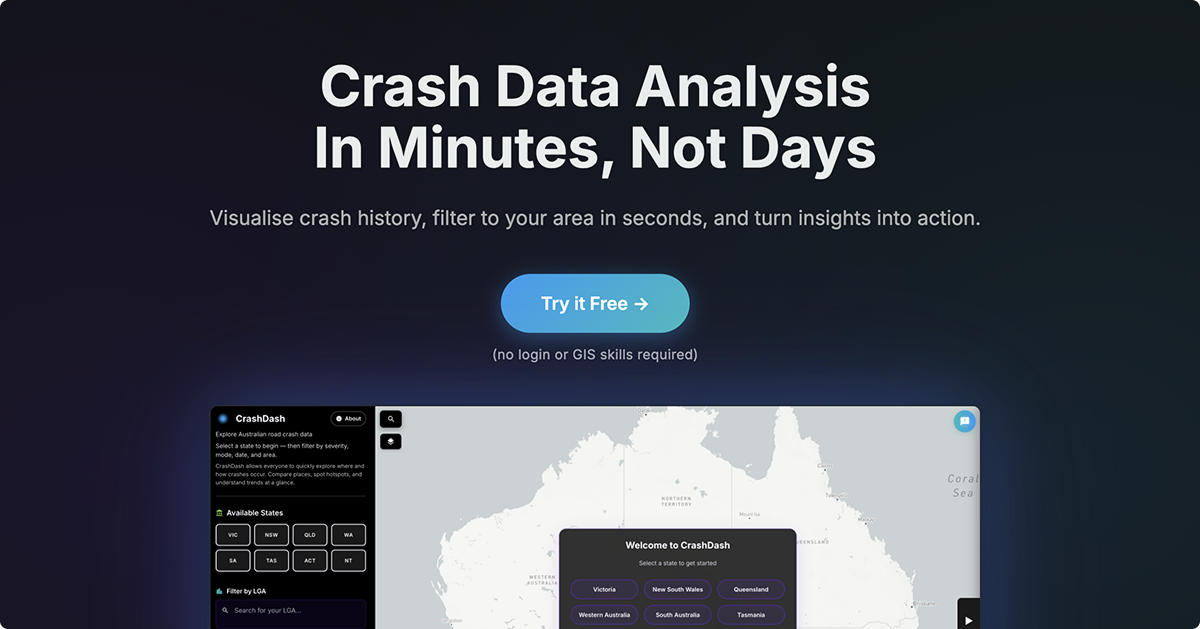
CrashDash is live at crashdash.crowdlab.com.au. 180k+ crashes across 7 states and territories, all in one platform. It’s free, it’s fast, and it’s the kind of tool I wish existed all along. If you work in transport planning or local government, give it a try and let me know what you think.
We’re also keeping the principles that made CrowdSpot work. Fast, accessible tools. No specialist skills required. Open data where possible. Community-first design. Those haven’t changed. They’re just being applied to a broader set of problems. The goal hasn’t changed: capture the collective knowledge of communities and turn it into data that drives better decisions.
Next up: Article #3 will dive into the road safety insights we’ve uncovered while building CrashDash. The data story behind the national launch. Subscribe here to get it when it drops.
Comments
Nothing yet. Say the first thing.
Sign in to join the conversation.