
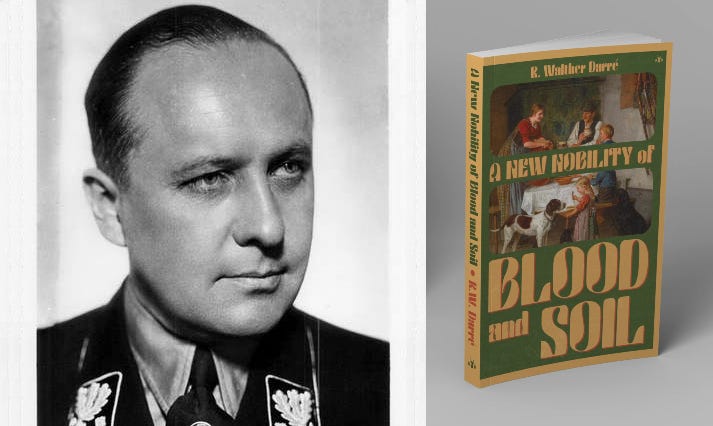
This is an article version of a thread we did on Twitter/X, which you can find here. This information is presented for purposes of historical education.
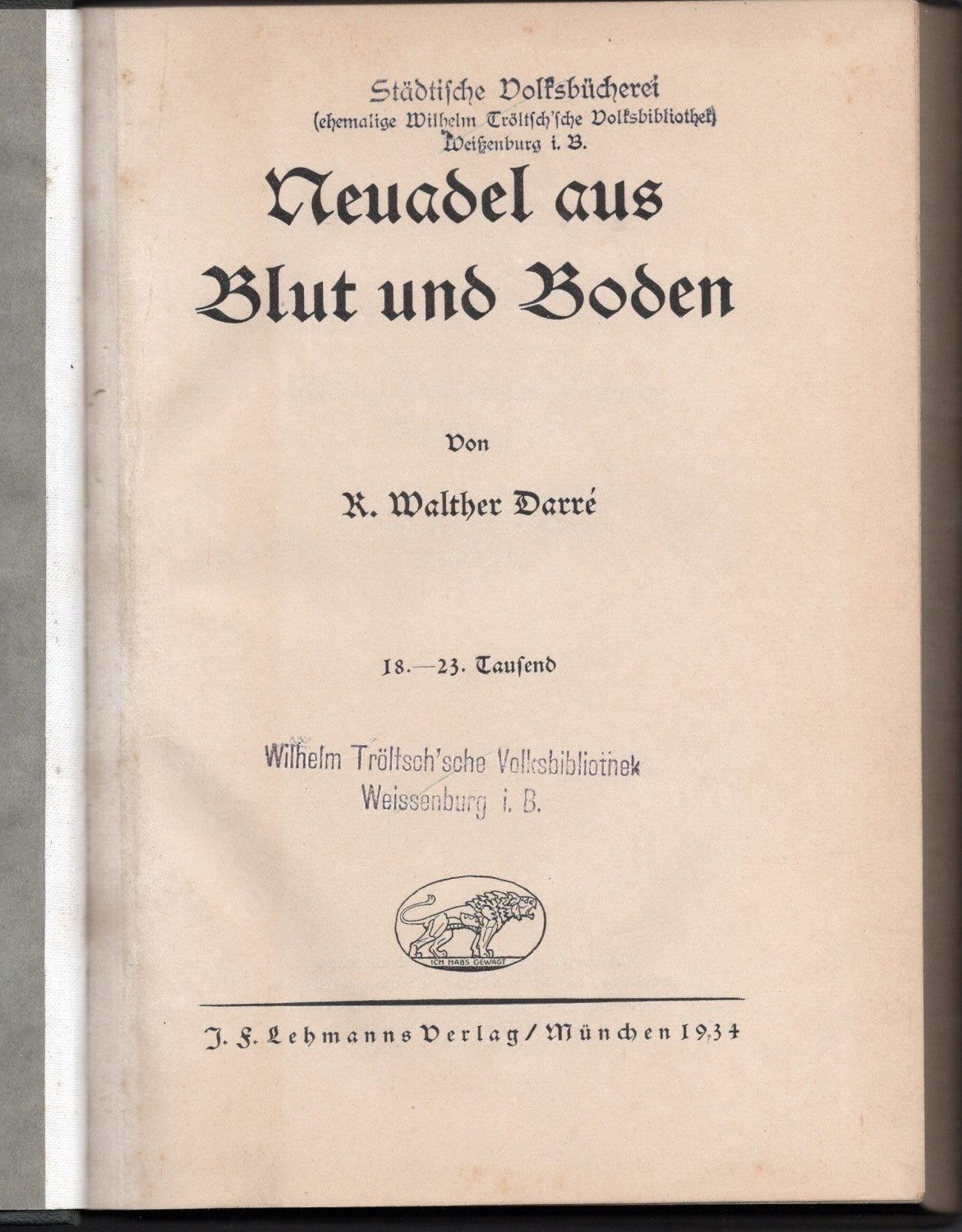
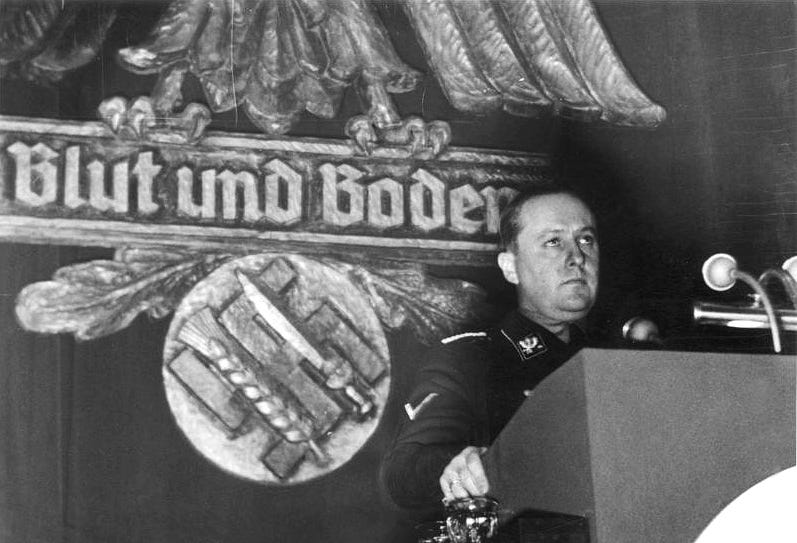
Richard Walther Darré was a famous theorist of the concept of “Blood and Soil” in National Socialist Germany, who would become a high-ranking member of Hitler’s government. We have published Darré’s two books in English for the first time:
Darré was born July 14, 1895 to a German family in Buenos Aires, and sent to school in Germany as a child. He was also an exchange student at Kings College School in Wimbledon for a year, before studying colonial agriculture.
Like many of the National Socialist leaders, he was a decorated war veteran, being awarded the Iron Cross, Second Class for his service in an artillery regiment during the Battle of the Somme.
After the war, he completed his doctoral studies on agriculture in 1929.
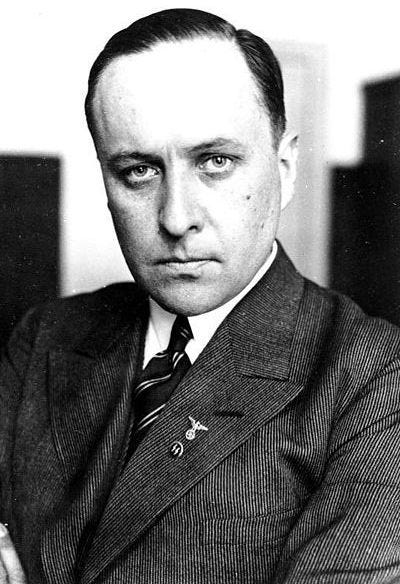
The famous phrase Blut und Boden, “Blood and Soil,” though not coined by Darré, was popularized by him in the two works we have translated and republished. His work was well received and popular, and caught the attention of Hitler, who recruited him into the NSDAP in 1930 as a subject matter expert on agriculture, as well as race and breeding.
Darré was tasked with developing the NSDAP’s agricultural policy and organizing the rural population of Germany into the movement.
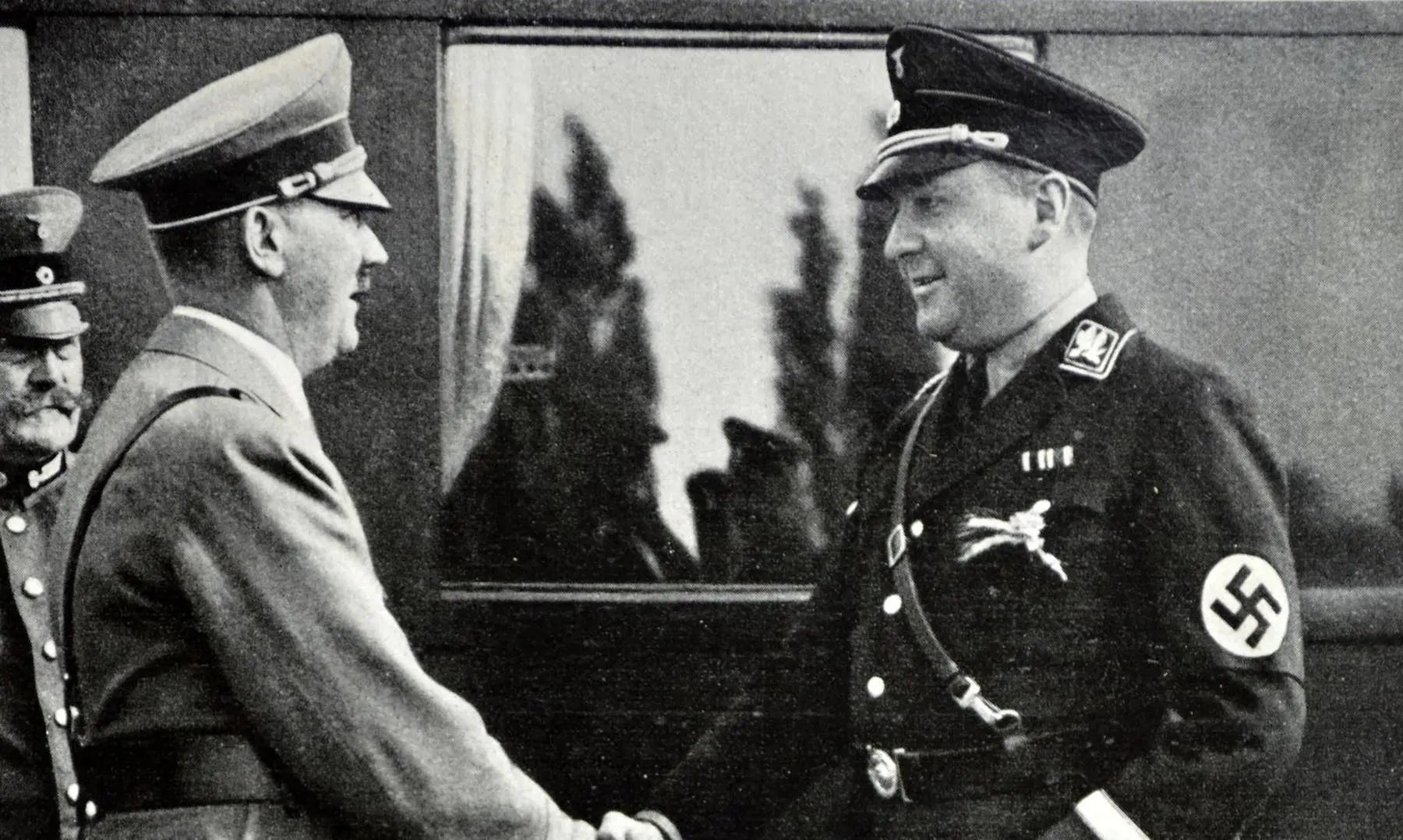
Under Darré’s leadership, the NSDAP’s agricultural organization, the ApA, became arguably the most successful of all of its professional organizations.
Using a combination of external pressure and infiltration, Darré was able to displace the influence of the DNVP, the mainstream conservative nationalist party, which had previously dominated the Landbund, Germany’s largest farmer’s association.
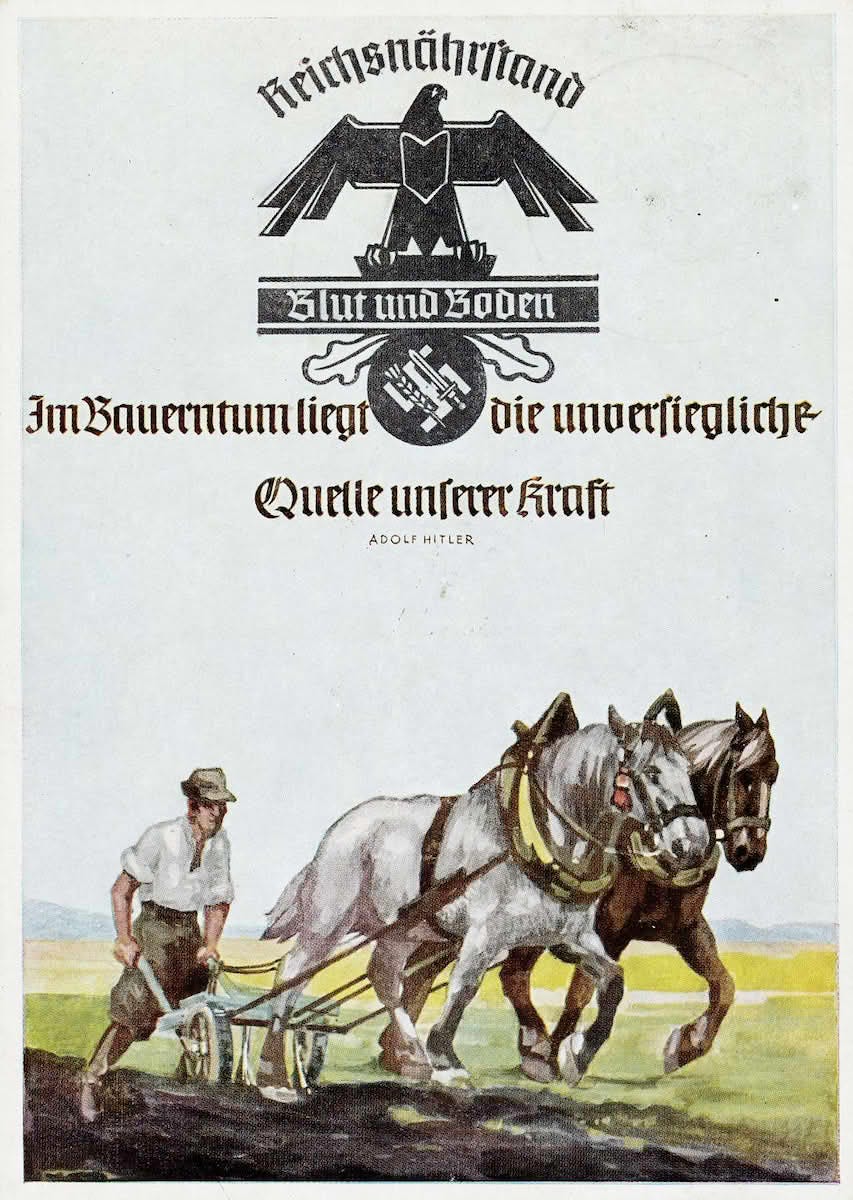
Darré likewise saw success in the application of his theories to German agricultural policy. In an interview with American journalist Lothrop Stoddard, Darré summarized the goals of his policies:
When we came to power in 1933, one of our chief endeavors was to save German agriculture from impending ruin. However, our agricultural program went far beyond mere economic considerations. It was based on the idea that no nation can truly prosper without a sound rural population. It is not enough that the farmers shall be tolerably well-off; they should also be aware of their place in the national life and be able to fulfill it. Here are the three big factors in the problem: First, to assure an ample food supply; second, to safeguard the future by a healthy population increase; third, to develop a distinctive national culture deeply rooted in the soil. This ideal logically implies an aim which goes far beyond what is usually known as an agrarian policy.
Three pieces of legislation in particular defined Darré’s achievements as Minister of Agriculture in the Third Reich: the National Food Estate, the Market Control Statute, and the Heredity Farmlands Law.
Warren Balogh notes that even virulently hostile mainstream historians such as Adam Tooze have been forced to admit the astounding success of these policies:
What the RNS [National Food Estate] was able to achieve was not only a substantial increase in domestic food production, but also a substantial improvement in the resilience of German agriculture in the face of shocks…. The true story is told by the level of prices paid to German farmers compared to those that German farmers would have received if they had been exposed to the full force of foreign competition. On this basis the record is completely unambiguous. Though it is true that grain producers clearly enjoyed a larger margin of protection than dairy farmers, for all major types of farm produce the prices paid to German farmers under National Socialism were at least twice those prevailing on world markets…. The promise Hitler made on the night of 30 January 1933 was to restore the economic fortunes of the German peasantry within four years and the RNS certainly made good on that pledge.
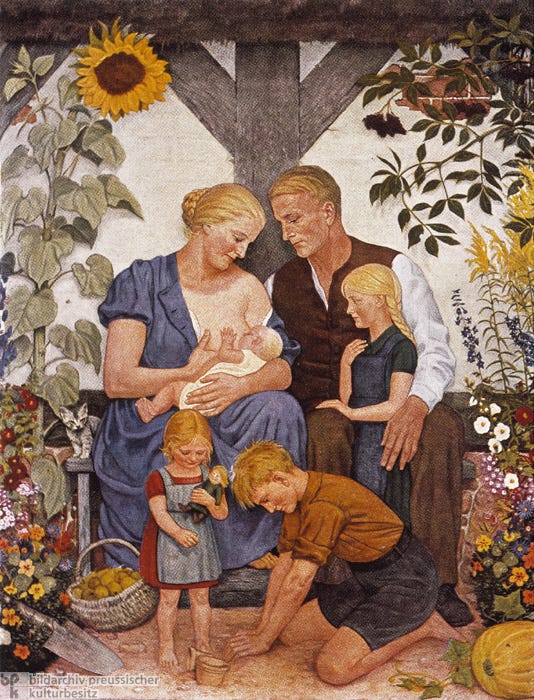
Due to the short duration of the Third Reich government, many of Darré’s more racially focused policies, which were an investment in the regeneration of the German people over generations, lack enough time for observation.
However, a couple relevant facts stand out.
In the first place, contrary to modern stereotypes and lurid tales about Nazi race science or breeding policies, historians such as Anna Bramwell have noted that:
The key point, though, is the voluntary nature of these activities. Darré did not try to enforce compulsory breeding laws. He did not incite riots against Poles and Jews and demand the compulsory sterilization of the unfit…. He looked to racial education to create what he called a “positive racial consciousness,” rather in the way in which today, especially in the USA but to some extent in England, television and other media make special efforts to present the black minority in a favorable light in drama series, children’s programmes, and so on. Darré wanted farmers and their families to be educated into racial consciousness—White is Beautiful—as part of a process of instilling a sense of identity. It was seen as a rescue operation for a vanishing breed.
Additionally, Darré’s vision was also prescient and inclusive, in contrast again to popular misconceptions of a strict “Nordicism” or self-consuming supremacism. As Warren notes, the implementation of Darré’s laws could be considered “White Nationalist.” Quoting from historian Brendan Simms:
… the criteria… were racial, rather than national. Those specifically excluded from “the capacity to become farmers” were Jews and Africans. By contrast, the law placed peoples of “tribally related blood” on the same level as non-Jewish “Germans.” The Ministry of the Interior defined these as peoples who “had lived in coherent national settlements in Europe some time back in historical time.” Gypsies were explicitly excluded, even if they were sedentary, but the list of acceptable farmers included not only all supposed “Aryans,” but also many other “races” such as the Hungarians, Estonians, Finns, Slavs, Danes and Lithuanians. If they had German citizenship, they could become or remain farmers. In other words, the potential racial pool comprised virtually the entire European continent.
In conclusion, Darré’s works were extremely influential on National Socialist thought and policy, making them essential to understanding NS Germany and its ideology.
They are also fascinating in their own right, and remain highly relevant as the issues Darré was confronting of historical, social, and racial degeneration and its associated costs have not gone away. Throughout his works, Darré refuses to give easy answers, but tackles complex issues with subtlety and extensive historical and philosophical examination, making them valuable not just for the ideology of National Socialism, but also the practical value of his prescriptions and ideas, and the information about the deep history of German social organization and customs surrounding marriage, breeding, and inheritance.
We have covered A New Nobility of Blood and Soil with Warren Balogh and our translator on an episode of our Book Club podcast. Listen here:
Book Club Podcast
A New Nobility of Blood and Soil
·
June 20, 2025

Shawn and Taylor review Richard Walther Darre’s book A New Nobility of Blood and Soil, joined by two esteemed guests: Warren Balogh, subject matter expert and author of the foreword to our English tr…
We have also covered The Peasantry as the Lifeblood of the Nordic Race in another episode, with Eric Aarvoll and Zach Kidd. Listen below:
Darré’s books are now available through us in English for the first time, and can be purchased individually…
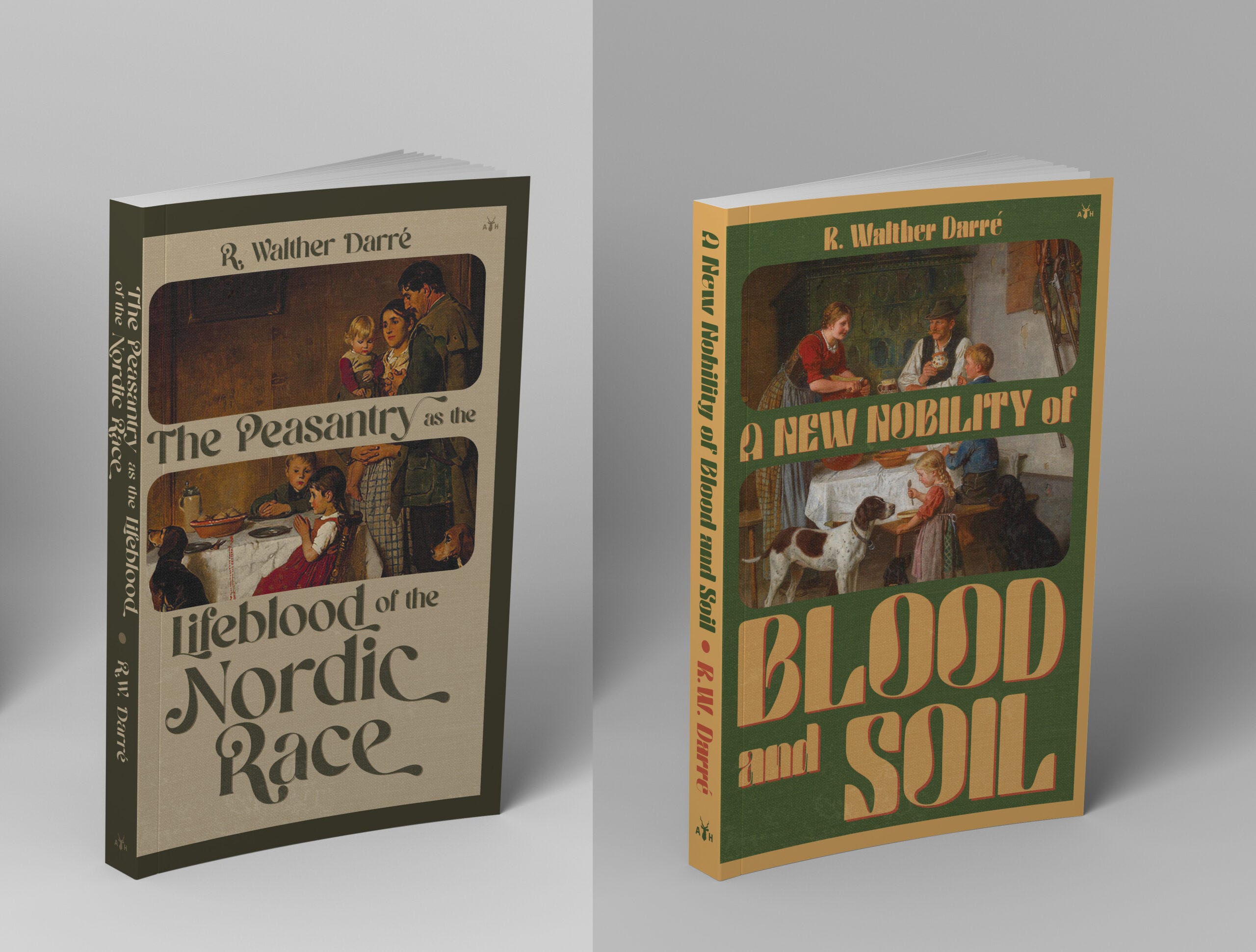
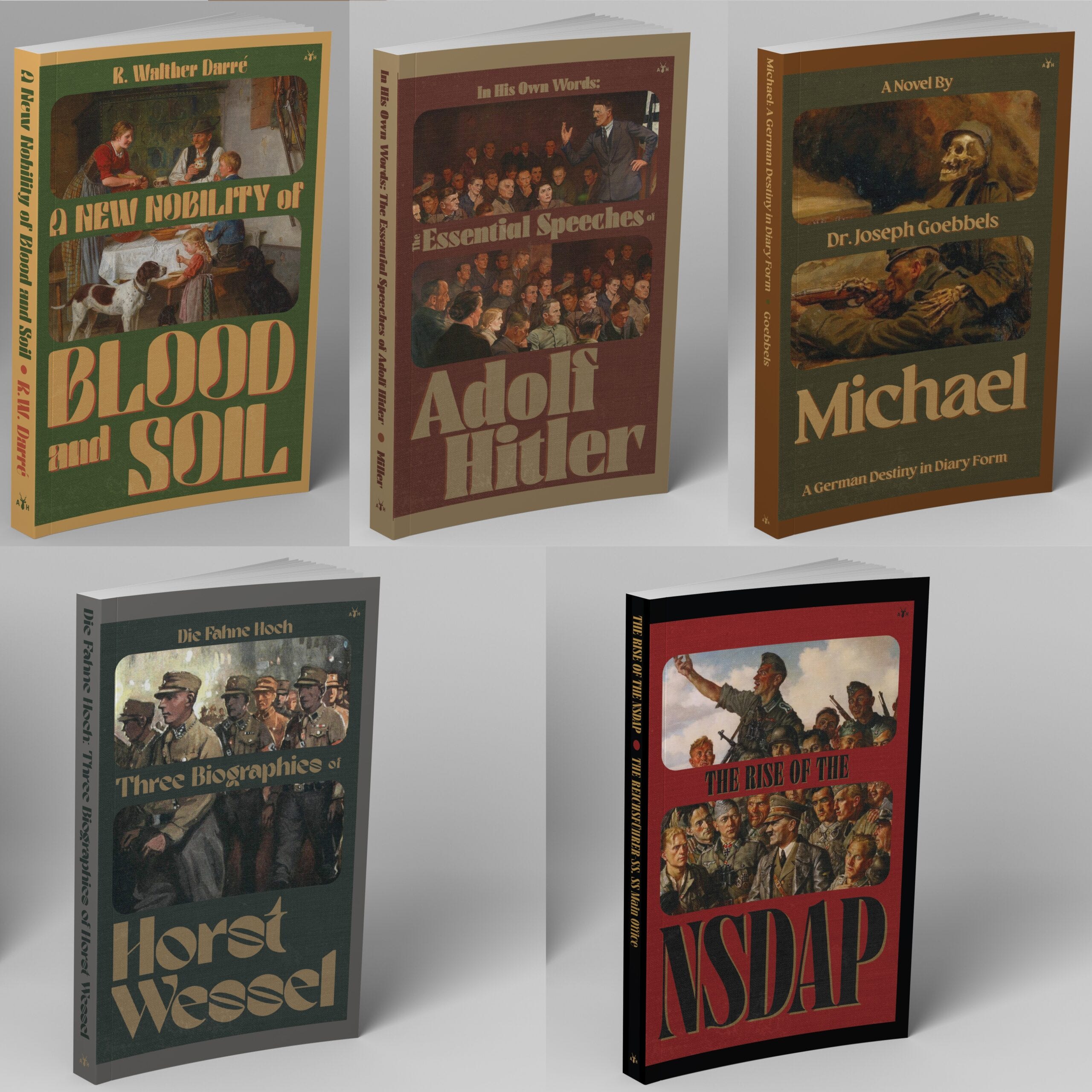
… or bundled together, or as part of our larger Third Reich bundle (our book bundles give a ~15% discount over purchasing the books separately). Pick them up today!
Comments
Nothing yet. Say the first thing.
Sign in to join the conversation.