
🎙️ Joe, our editor, takes us behind the scenes with a sound design walk through. Give it a watch and a listen here.
🖼️ Sabrina grapples with the future of art in an increasingly automated world. Watch her latest video here!
✨ We have new bonus content! The extended cut of Sabrina’s interviews with the Adam Welch from the Art Gallery of Ontario and Rob Cowley the art appraiser! You can check them out on our website using this month’s password: ART.
🎧 Mixtape by Taha
I got my political education when I got my first iPod and started listening to artists writing protest songs against the war on terror. I remember looking up lyrics and finding hope in a time of despair and a soundtrack for my post-9/11 existentialism. Some of these songs are from my childhood, others written recently. The eerie relevance of music protesting a different war and a different kind of dehumanisation is not lost on me. In these songs, I hope you find energy to face this new chapter of political despair.
Like I did when I was a kid, I’d love it if you looked up lyrics and learned something new - I’d love to hear what your favourite song was and what it meant to you! - Taha
📚 Book Nook by Sabrina
I just wanted to by the Albert Camus classic that uses the myth of Sisyphus to argue for the value of life in the face of meaninglessness. Unfortunately, the only thing more impossible than getting that boulder up the hill is buying that book in Toronto.
No matter how many copies online inventories claimed, every shop clerk let me know it wasn’t available because pocket-sized philosophy may just be the most shoplifted genre in town.
What is going on? If you know anyone who specializes in stolen books, please get in touch! The closest lead we have is a 2017 article published in The Guardian that claims Toronto book thieves have elevated tastes compared to the average Brit.
Fortunately, I did find a copy — I’ll leave the nature of its acquisition up to the imagination.
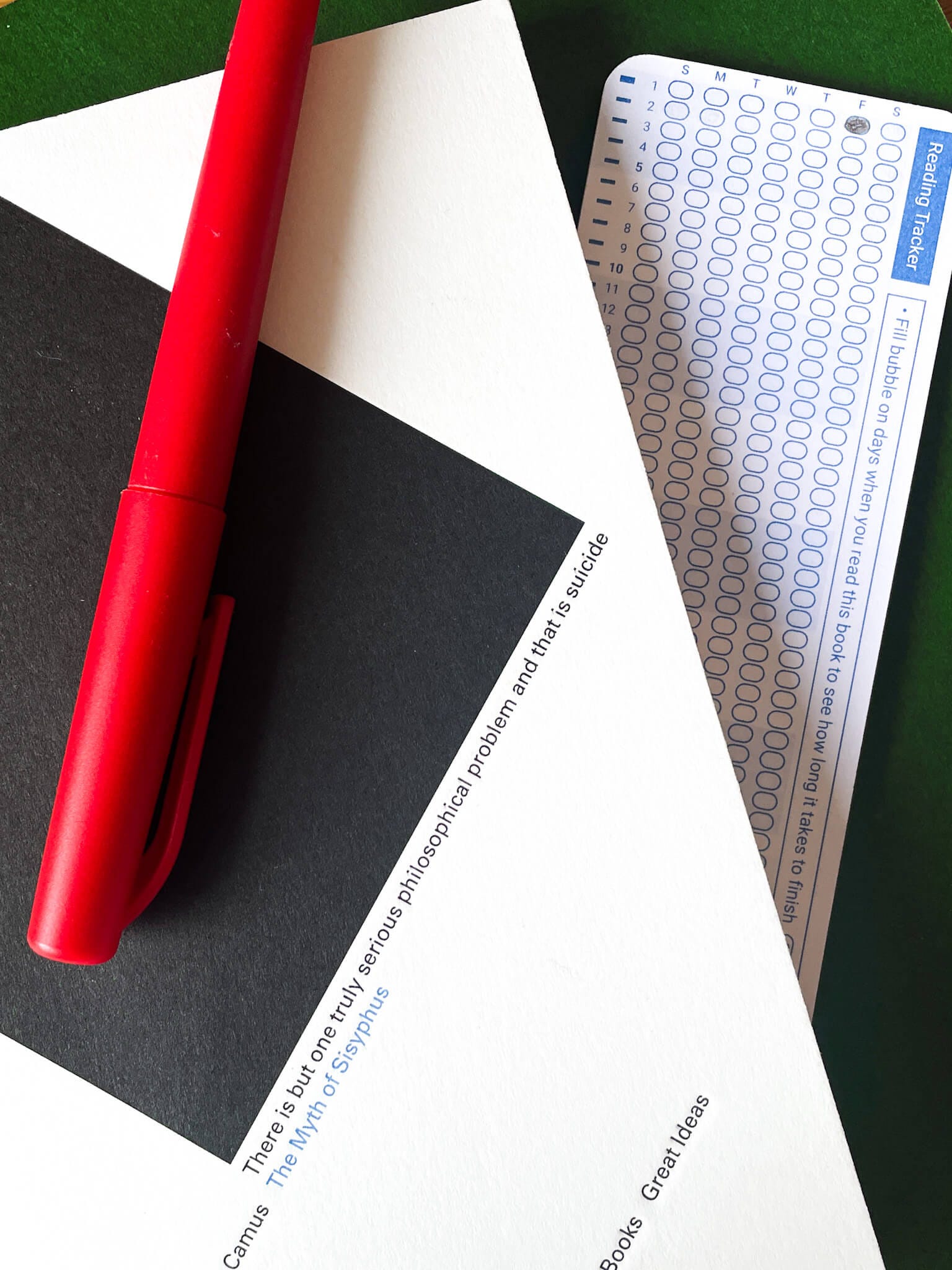
P.S. I designed the bookmark in the picture to track my reading habit and document my thoughts on the book. You can buy it in our shop now and get 10% off if you buy 2 or more — talk about a steal!
🔓 Patreon Unlocked
After every upload, we record a Patreon aftershow where we dive behind the scenes and answer questions submitted by patrons. We unlocked this aftershow to complement the main video on the channel — warning: we get a lil existential by the end of it all.
If you want to support our work and get access to even more bonus content and aftershows, consider subscribing to our Patreon :)
✂️ Cut for Time by Sabrina
While working on the AI art video, I kept running into this claim that AI creates art like a human by (1) extrapolating patterns in what it has seen and (2) using those patterns to inform what it returns.
The idea gets a lot of attention which is a shame because it’s wrong.
I was going to include a debunking in the video but I couldn’t figure out where it fit so do y’all mind if I just do that here?
Generative AI does not “create” like a human and it never will. In an attempt to convince you, let’s break the claim down into two parts:
AI creates art like a human by extrapolating patterns in what it has seen…
This part of the claim buries the very significant difference in what a human and a generative AI model has “seen”.
Machine learning models are running out of training data — they have finished the internet. No human is capable of this feat, no matter how much we keep scrolling. This limitation is meaningful because it means humans need to curate their own “training data” based on their taste. When something is “highly represented” in their “training data”, it isn’t just because it was popular — it’s because there is something about it that dug into their brain. It begged them to care; and, sometimes, to create.
This can mean sharing a fan theory on a show’s next plot twist, or picking up an instrument to learn their favourite song, or even starting a D&D game because they used to watched CollegeHumour and stumbled on Fantasy High.
Humans cannot consume everything; so, we are careful with what we let occupy our thoughts. We become community members in these spaces and when we choose to create something, it’s out of a want to respond, to contribute, to honour the culture that moved us. It’s why we have award shows and comment sections. We don’t create in a vacuum, we create for our community.
An AI model will never be a community member; it will never feel compelled to honour or even acknowledge the shoulders on which it stands because it is a tool. It doesn’t care and never will.
AI creates art like a human… using those patterns to inform what it returns.
There is a really popular story in AI circles about a machine learning model that was amazing at distinguishing between pictures of wolves and huskies. It was later discovered that the model was actually just successful at classifying if snow was in the background but since wolves are generally seen in snowy environments, we unintentionally gave the machine the wrong credit.
I think something similar is happening with AI art.
We assume it understands human creativity because it can do a rough approximation of human art that we’ve seen before. However, this approximation falls apart when we prompt for something entirely original.
I asked chatGPT to generate a picture of a mirato (a word that does not exist). Here’s what it came up with:

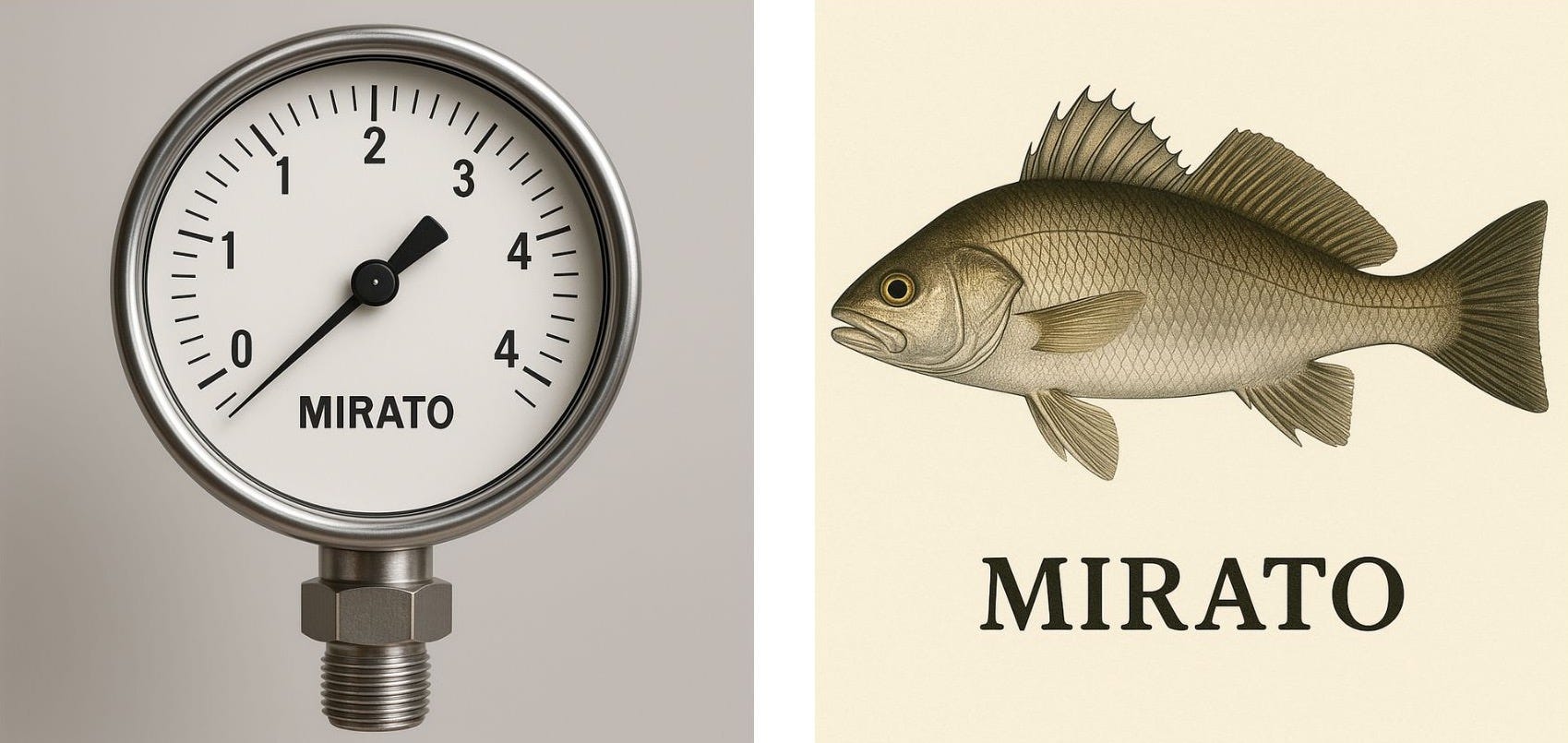
There was no intention or motivation in the AI responses. It was hallucinations or random images with the label “mirato” tacked on.
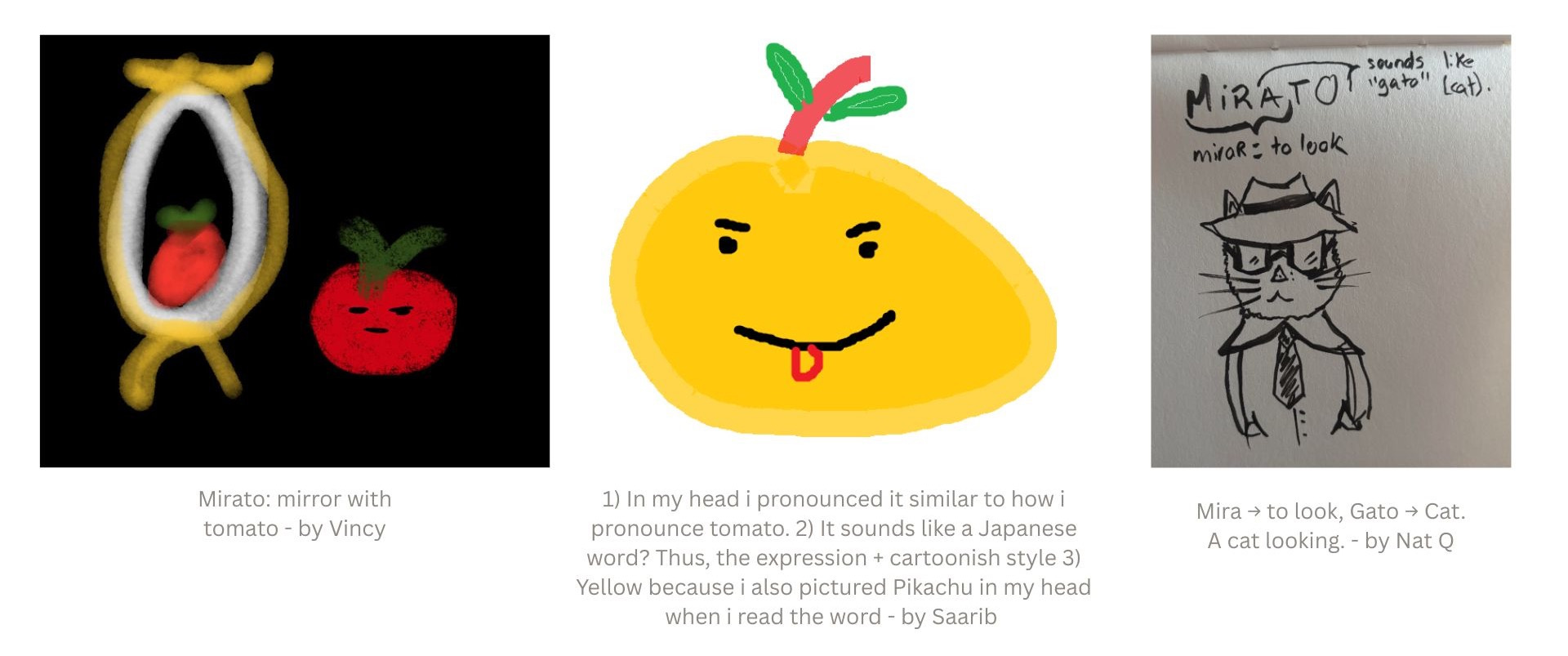
In contrast, when I tasked humans with the same challenge, two patterns emerged almost immediately.
People either interpreted mirato as a portmanteau — with a few even being in another language!
Or people thought mirato sounded like something else and made it a part of that broader category.
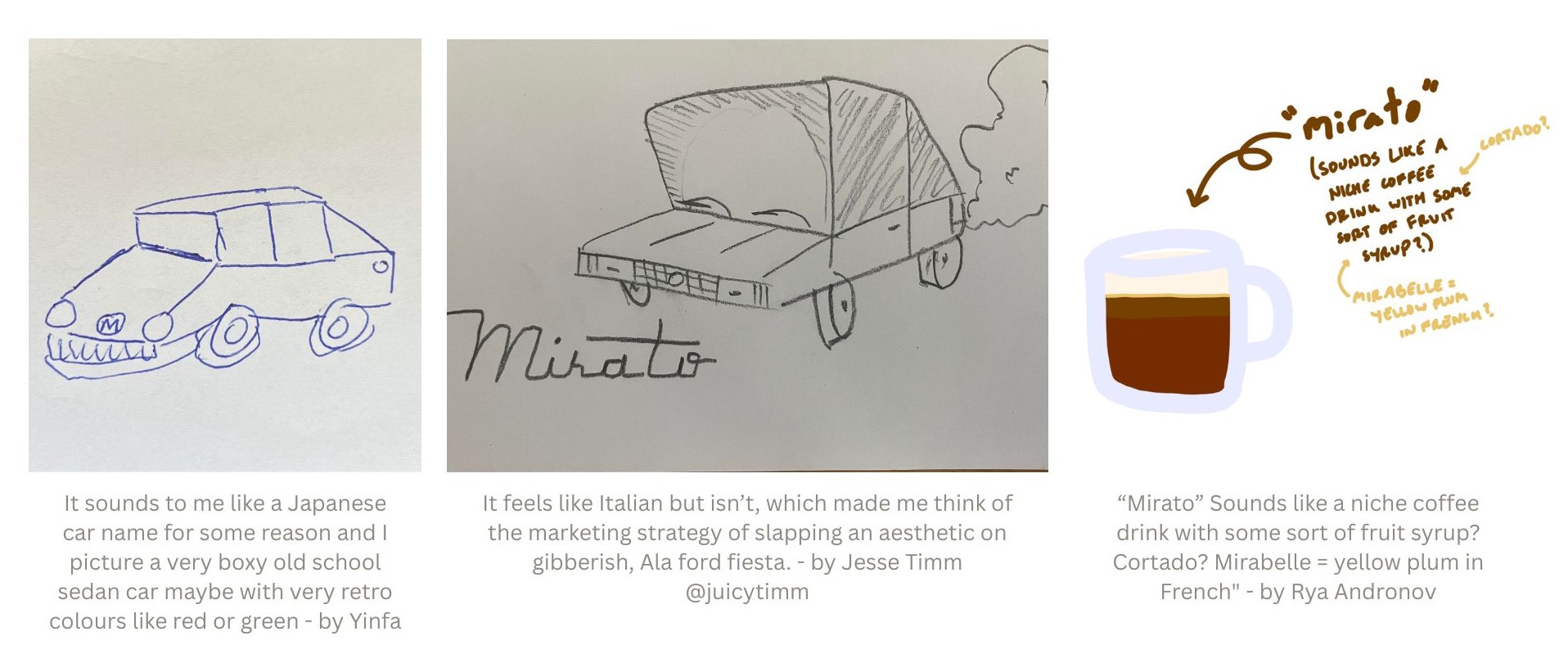
It’s kind of beautiful that a dozen human strangers had more in common in their creative process than the same machine learning tool prompted a dozen times.
So, while the claim is technically true: generative AI and humans do create art by extrapolating patterns in their training data and using those patterns to inform what they returns; however, this metaphor is so abstracted that it obscures the very thing that makes human creativity so unique.
We curate our own “training data”.
We have internal “prompts” to create.
We find patterns that are weirdly human because we are human.
Anyway, hope that was interesting!
FEEDBACK PLEASE: Did you enjoy this cut for time essay? Was it too long? Did it make this newsletter more or less valuable to you? Let us know!
🔦 Creator Spotlight
Chris Spargo is here to take over with extremely matter of fact, down to earth videos about the small details of everyday life in the UK, from colour-coded milk to why supermarkets have clock towers. In A day in the life of the UK he uses national time use statistics to see and demonstrate what people are doing throughout the average day. Chris may just fill a bit of the hole left in your heart since Tom Scott retired.
📣 Audience Participation
Sabrina’s working on a new video and needs your help! Do you know anything about Netflix Games, if you’ve played them or if you even knew they existed?
Thank you for subscribing and following our chaotic little journey - see ya next month!
from ur neighbourhood nerds,
Sabrina, Melissa, and Taha <3
Comments
Nothing yet. Say the first thing.
Sign in to join the conversation.