
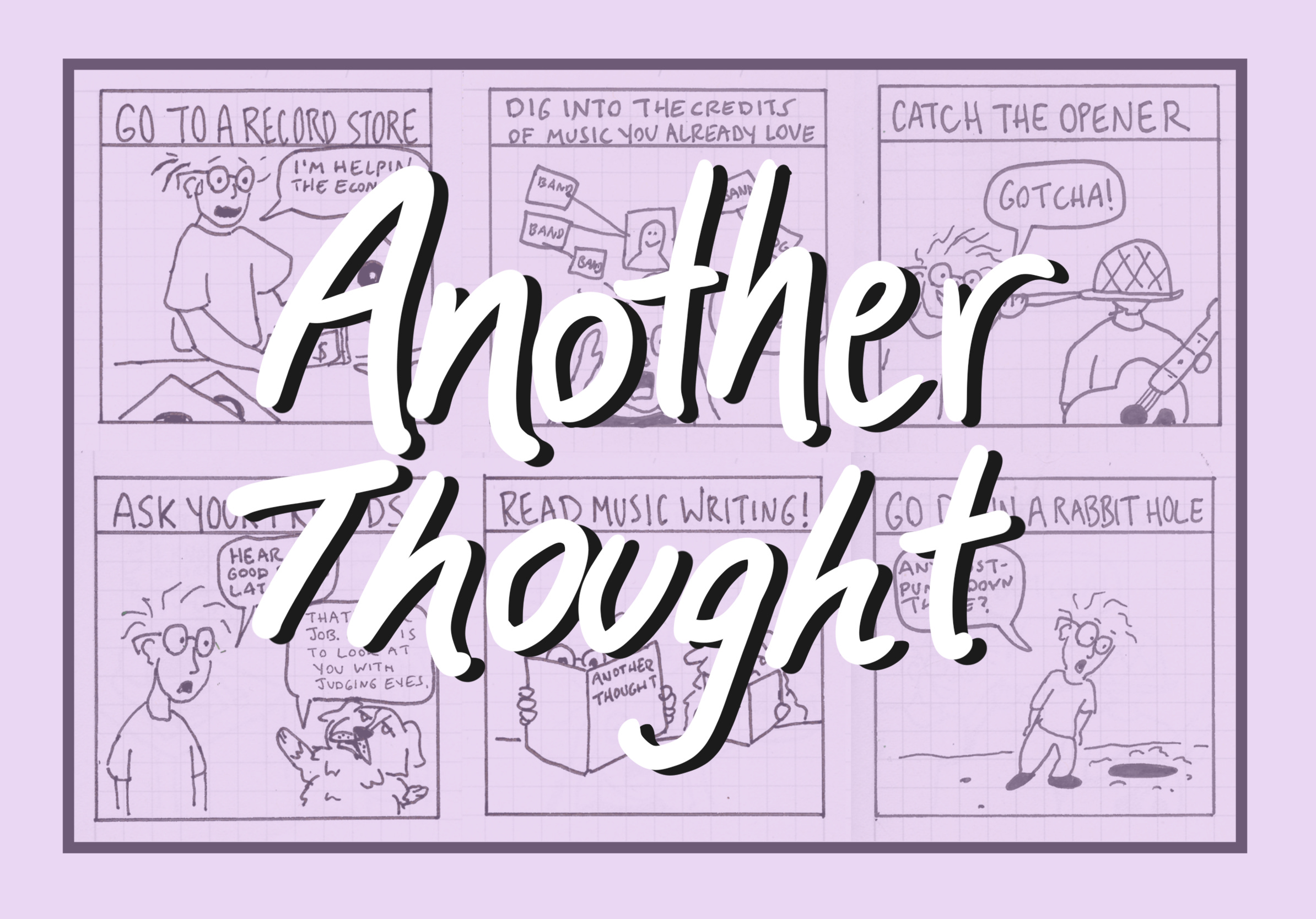
One of the questions I get most often is “where do you find new music?” New music is being dropped basically every second, but with the overwhelming amount of other “content” being constantly fed to us, it can be shockingly hard to keep up with what’s coming out. But at the same time, we also have more resources than ever for finding great stuff.
I’ve written before about the practice of building in time for new music in your life and giving yourself the best shot of enjoying it. I find having new music constantly in my life to be deeply rewarding. It’s exciting to find a new sound or discover an artist whose music affects you that you might never have guessed. Pushing my boundaries with music has opened my mind to so many different ideas, and to learning new history from scenes and countries all over the world.
But the actual act of finding new music can feel difficult, especially if you’re trying to expand your taste and try something new. So this time I wanted to try something different and lean more practical.
There are plenty more ways and places to find music than what I’m listing here. These methods work for me.
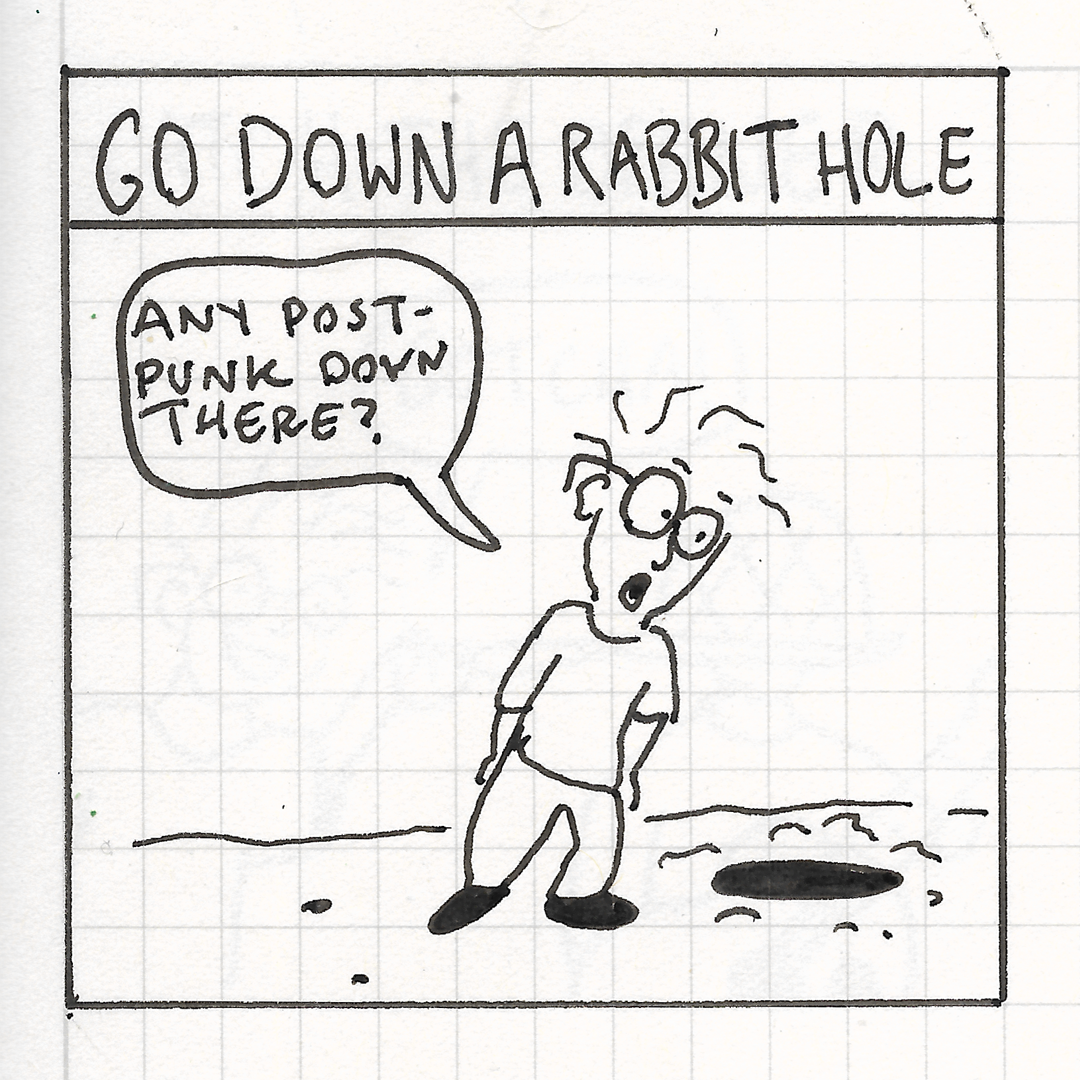
The Internet can be a drag. But it’s still great for going down a music rabbit hole. Researching music is honestly one of my favorite things to do. And we have so much of it out there. This is incredibly overwhelming, but also exciting. I like to think of it sometimes like you’re actually exploring, roaming through the depths and seeing where each path will lead.
Bandcamp remains one of the best websites for music discovery. There are plenty of streaming services out there (most of them with questionable ethics), but there’s nothing out there quite like Bandcamp. For starters, it’s not really a streaming service. Streaming is just one of its functions. The main idea is to (believe it or not) buy music.
I have sunk so many hours into digging deep into the depths of Bandcamp. Especially during the pandemic, when going to the record store and shows wasn’t an option, Bandcamp became a lifeline for discovery.
There are many ways you can go about this, and the more you poke around, you’ll certainly find the way that best suits you. First, the writers and editors behind the site’s editorial arm, Bandcamp Daily, are top notch. The curation is always excellent and goes beyond just what’s buzzy and really leans into discovering new sounds and ideas. They are truly doing the lord’s work.
You can also use their browse function to dig into certain genres, locations, etc. When I focused on writing the local Seattle music beat, this was crucial for me to find new sounds coming up in my own city. Try some odd combinations of things or pick genres you don’t know. It’s amazing what you’ll find just from that. My favorite thing to do is find something I like, then look up the labels they’re on, if they have one, and explore even further in those catalogs, branching out in even more directions.
YouTube is also a powerhouse for discovery. Especially if you have any interest in rare recordings, demos, live performances, unreleased records, and rips of unstreamable music. But it works just as well for exploring the bulk of modern music.
I think the key here is to really get into a flow with clicking suggested videos and continually narrowing down your search. Find a good place to start with something you like or pick an artist you’re curious about and see where it goes. My only gripe with YouTube for discovery is that I find it easily distracts me into other directions with unrelated videos. For a more music-centralized experience, Bandcamp’s got you.
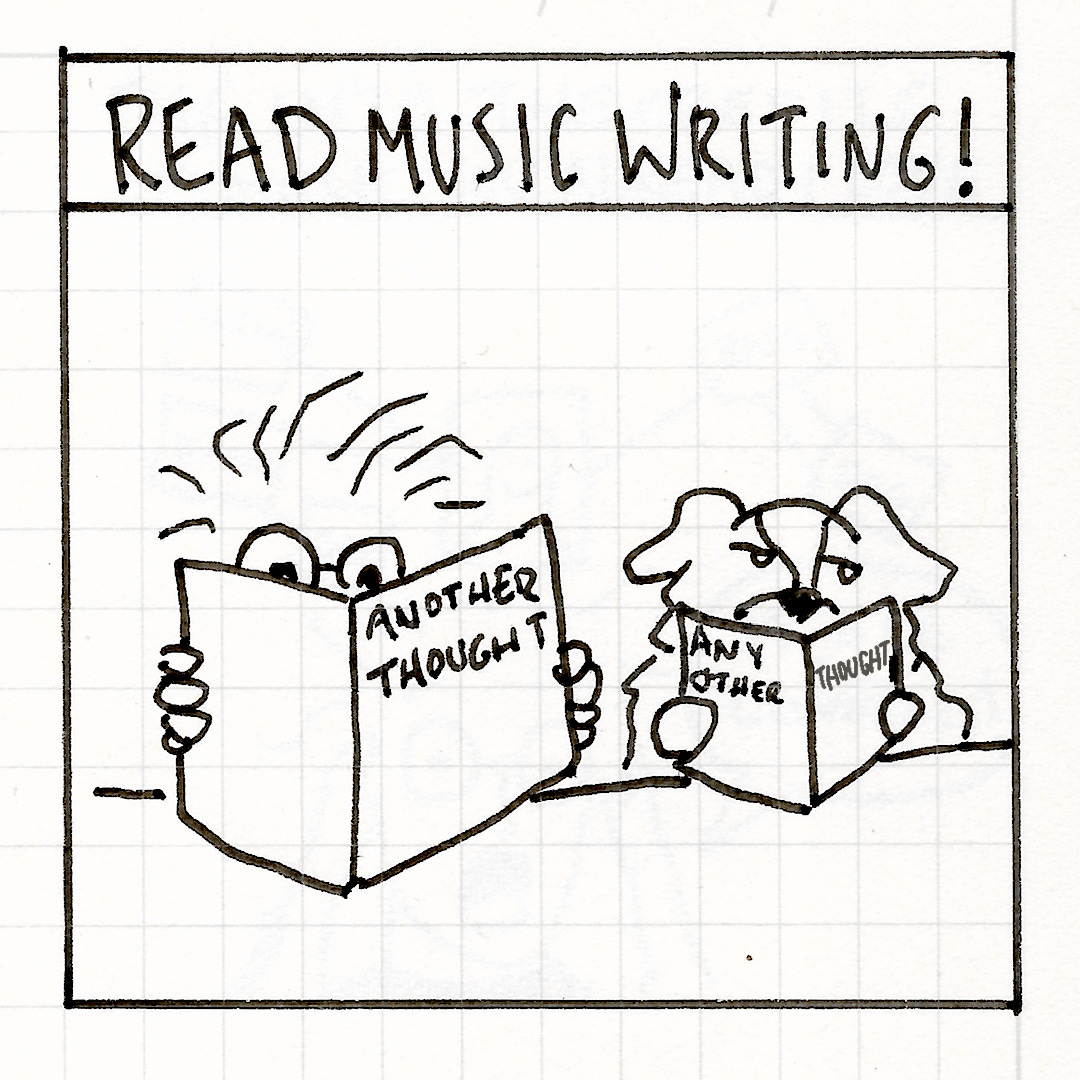
Well, well, well. Look what we have here. If you’re reading this, then you’re likely already in the know. Music writing has long been a great source for learning about new music.
Websites like Pitchfork and Stereogum are still great places to find new music. I love The Quietus for more experimental sounds. Of course, there are many excellent music writers here on Substack as well.
And this isn’t just about checking out album reviews. Interviews, essays, columns, and other types of pieces are all great ways to find out about new music. Plus, there’s the added bonus of finding writers you like whose taste you trust. There are plenty of people I know and read who convince me to try out an album I might have skipped just because I know they’ve steered me faithfully in the past.
(For a lot more on this, check out my piece “Why Write About Music?”)
Why Write About Music?
·
Jan 7
I’m going on multiple decades of people telling me that going into music journalism is a bad idea.
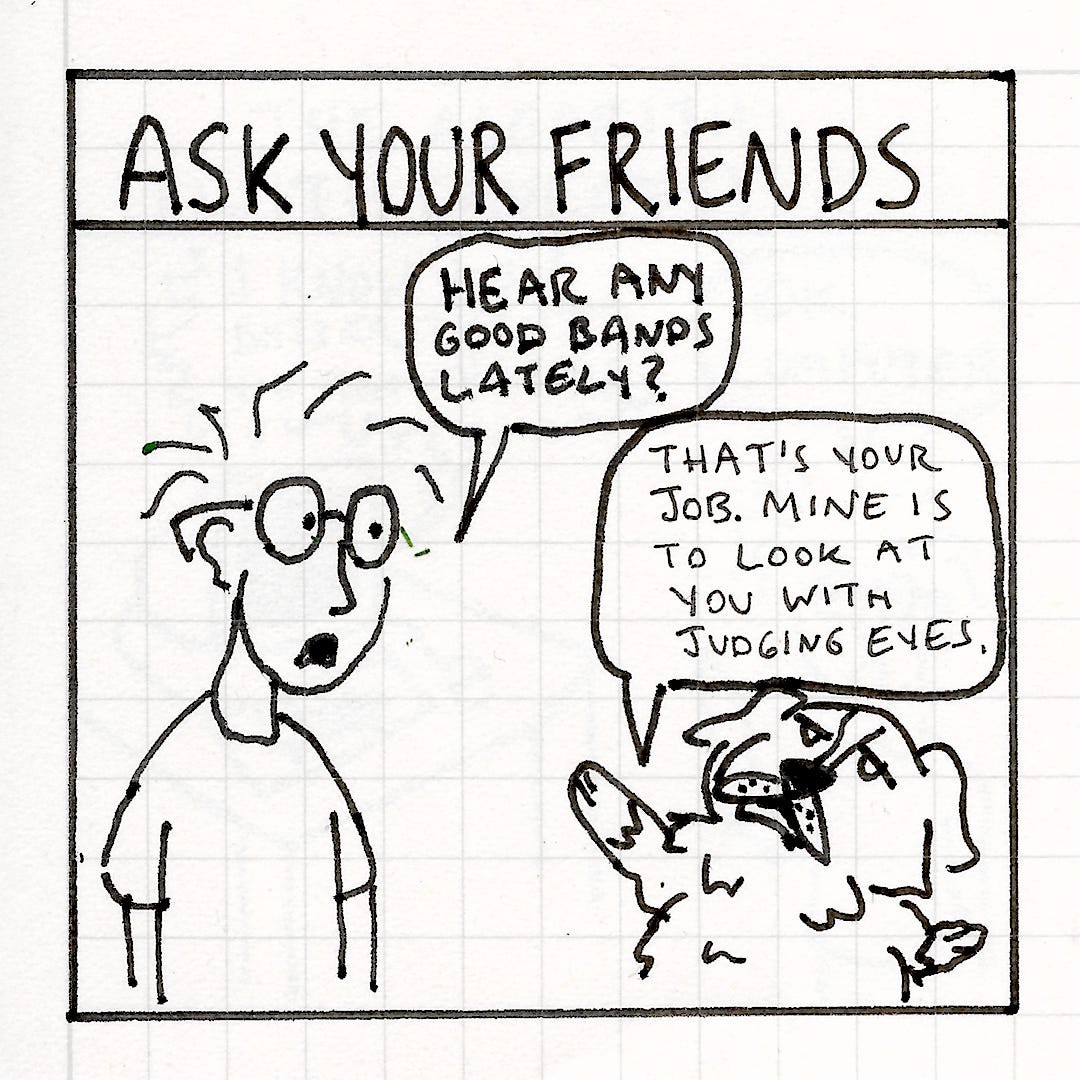
Here’s a fairly obvious but very effective one. Just talk with your friends! You might not always have the same taste as your friends… but that can also be a great advantage. That’s a great opportunity to push your boundaries and hear something totally new.
I’m constantly saving albums mentioned in my various group chats. Or when I’m hanging with someone and they mention a new band or record they’re listening to, I quickly save it or write it down in my phone so I don’t forget.
We’re all getting recommended stuff all the time and it’s easy to lose track of it all. For me, getting it documented quickly means I’ll have a much higher chance of listening to it later. Even if it takes me a minute to get to it, I can come back to it when the time is right.
Plus, really, there’s nothing better than getting put on to a great record by a friend and likewise getting them into something good too. It’s fun to share music and it’ll be even sweeter with memories attached to it.
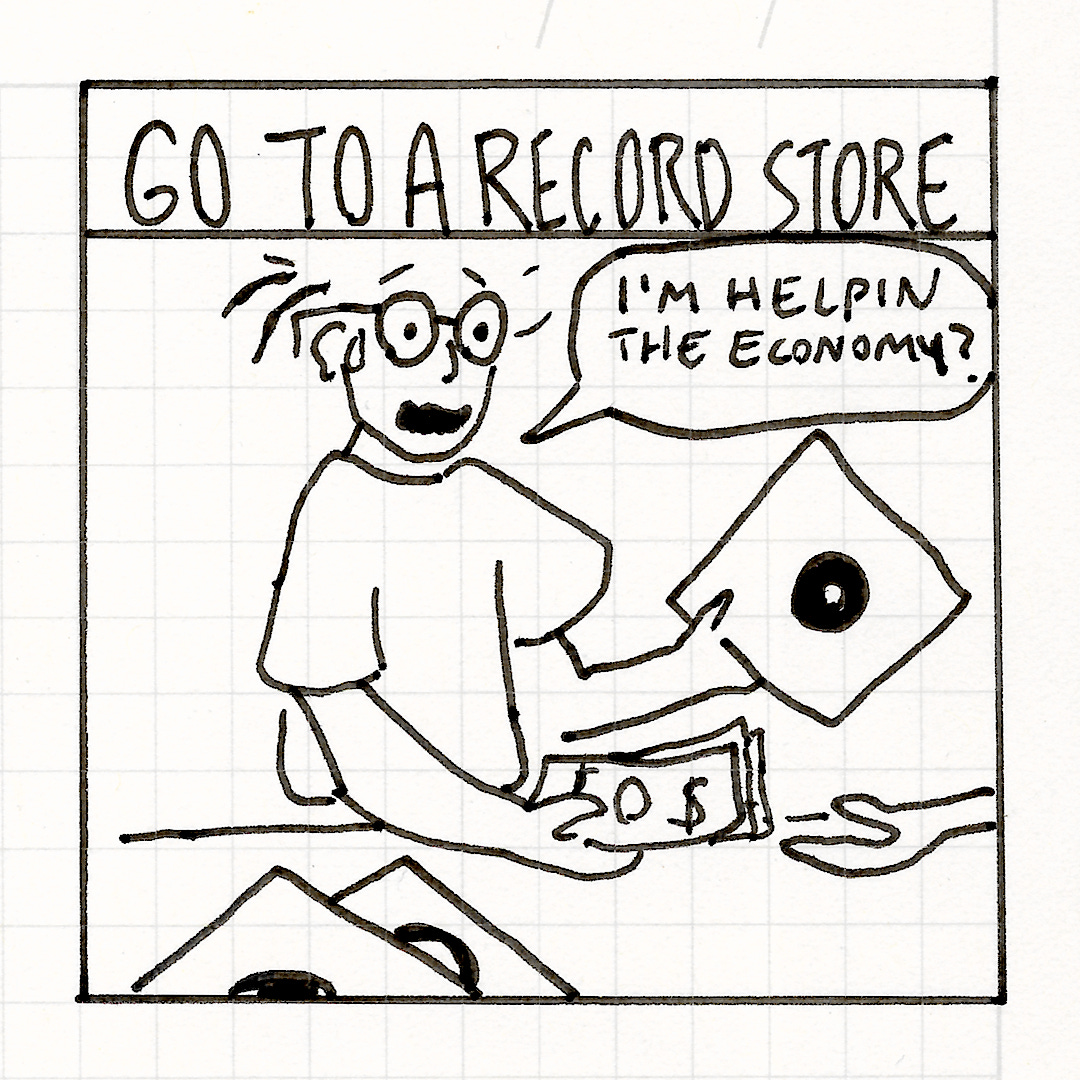
Sure, I know, this also feels very obvious. But I think your local record store is entirely underrated. And especially with how much I’m mentioning phones and streaming above, physical media still reigns as the supreme way of enjoying and supporting music.
Usually I have at least some idea of what I’m looking for when I go into a record store. Even if I come in on a whim, there are usually a few records already on my mind. But, inevitably, I’m going to browse… for a very long time if not stopped. Just through the physical act of walking through the aisles, you’re going to notice records you never have before. Or sometimes you’ll even find new stuff by artists you already love. If I don’t pick up things I spot at the store right away, I write them down and make a note to check them out later. And a good store will surely have some good music playing.
There’s an old stigma about cranky record store clerks. Certainly they still exist and your mileage may vary, but I do feel like that tide has changed quite a bit. If you’re feeling bold enough, talk with the people working in the shop and let them know what you’re into. I did this recently on a trip to Spain and ended up spending an hour or so with the shopkeeper just spinning records back and forth and leaving with a stack of music I never would’ve found otherwise. It’s fine to break those comfort zones.
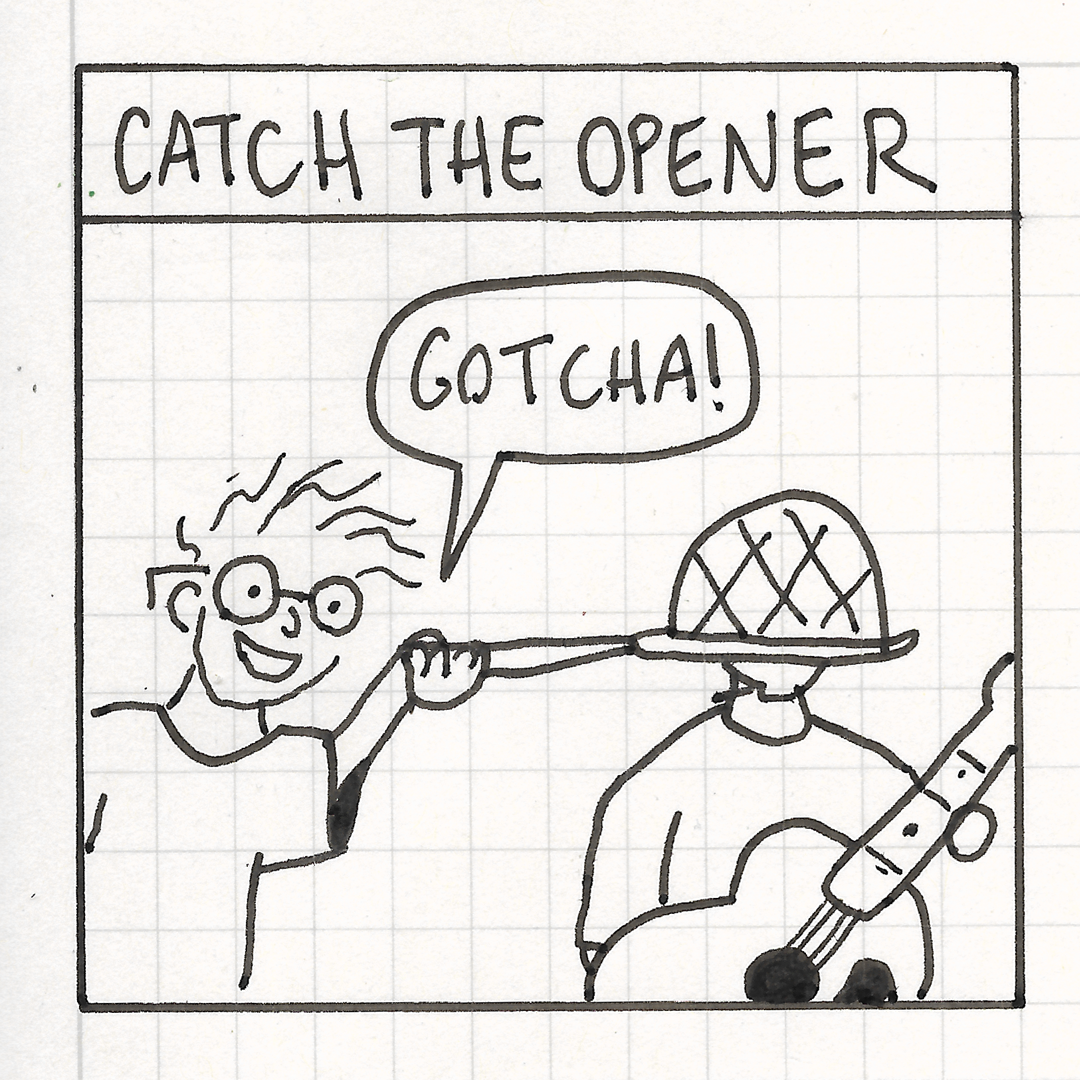
If you’re active and able to attend shows, try and make it a point to catch the opener. The temptation to skip is understandable (and, I’m not perfect, I’ve done it before and likely will again), but you could be missing out on something great. Or maybe not! As Smash Mouth once said, “You’ll never know if you don’t go.”
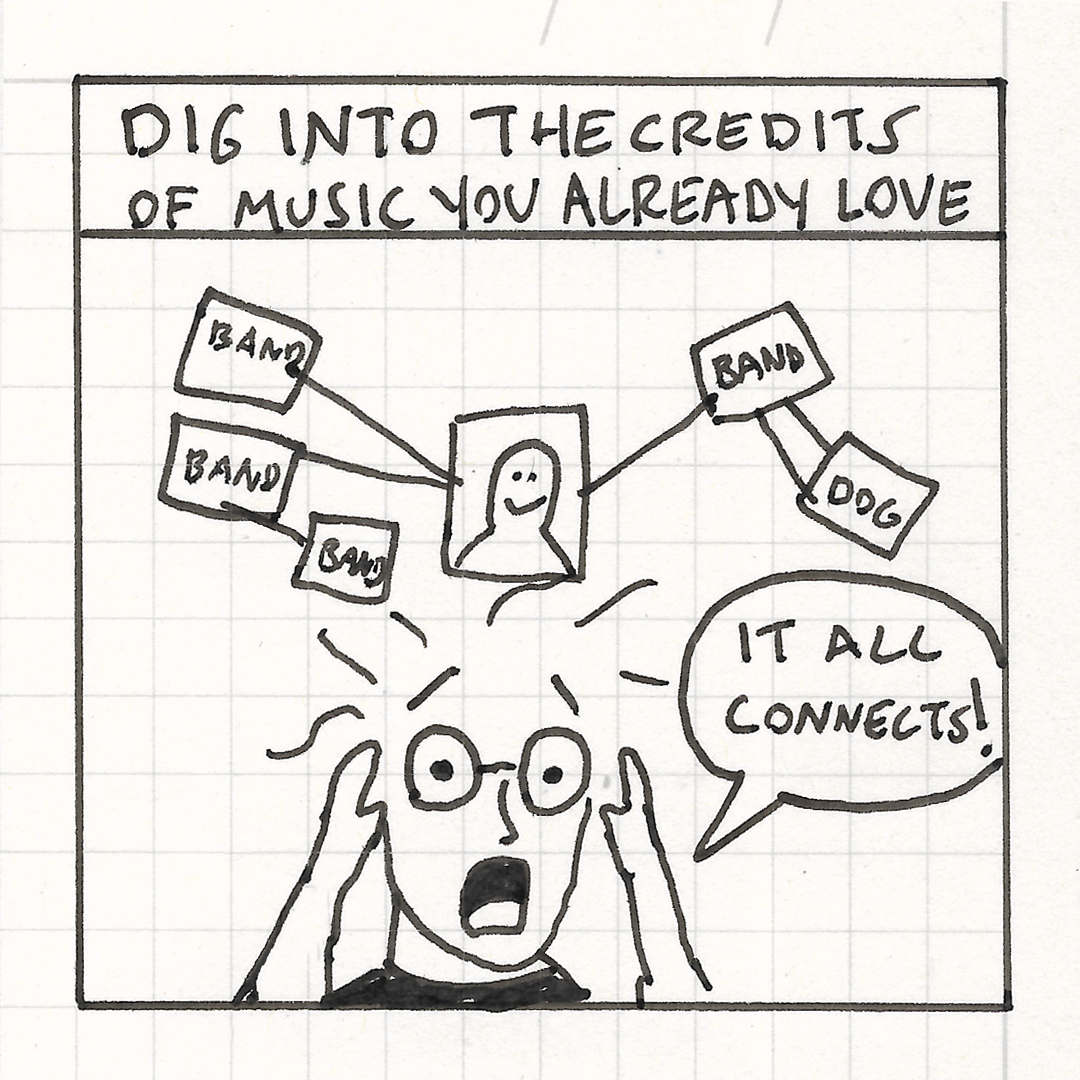
Now we’re getting a little nerdy. But this is easier than ever in the modern age.
Every artist’s music is a universe in itself. This goes for the albums as well as the musicians behind them, even if it’s a solo artist or moniker. You’d be surprised how deep the rabbit holes between band members, producers, and featured players can go. If you’re into jazz, you could probably just spend the rest of your life doing that.
It doesn’t have to be complicated. If going through an album or song’s credits feels like a lot, just clicking on featured artists on tracks on streaming can send you in a whole slew of directions.
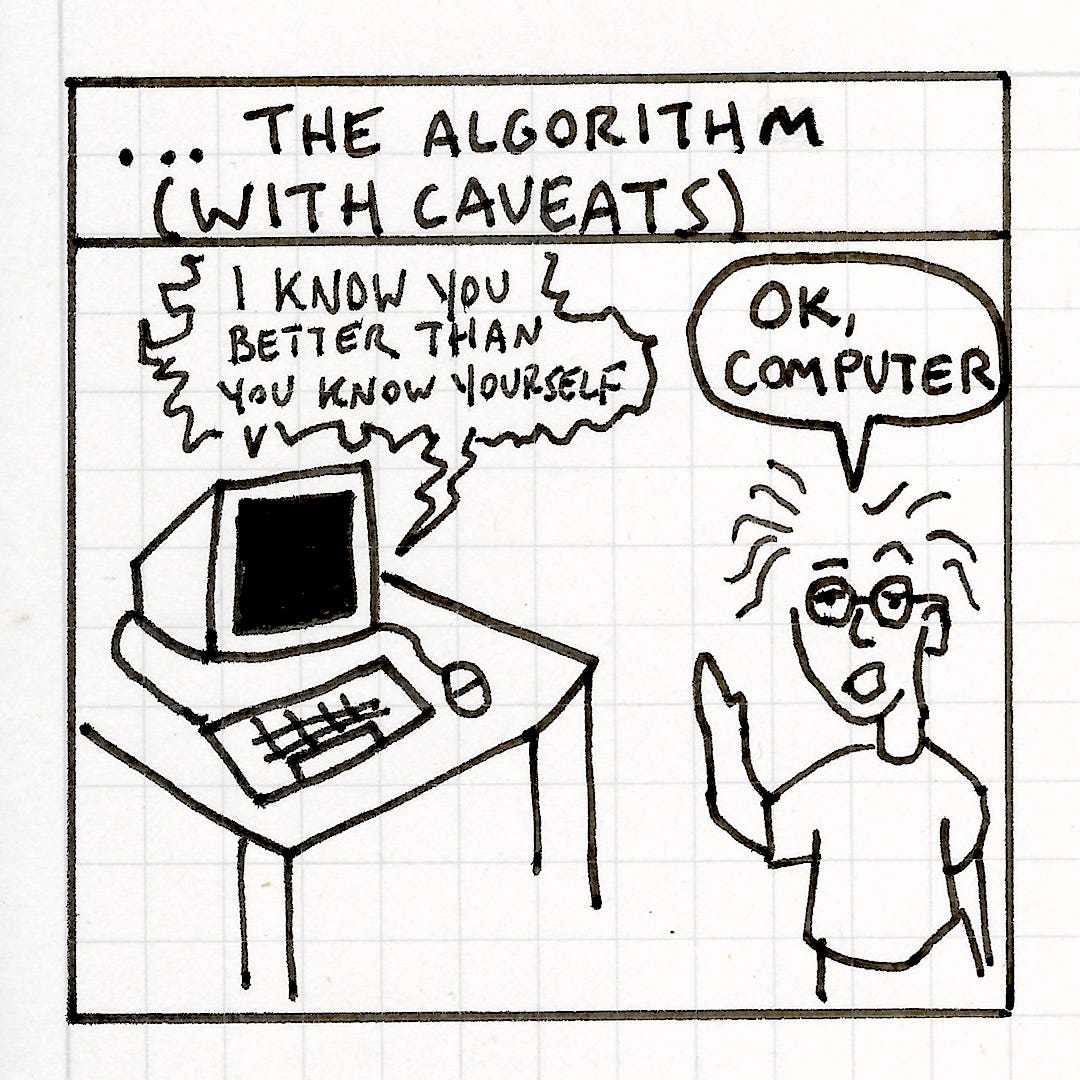
Look, I want to be high and mighty and say I’ve never discovered something from “the algorithm.” But that would be a lie. And when we talk about “the algorithm,” we’re really talking about a bunch of different algorithms we have creepily structured around our taste and interests. There’s one for your music streaming, your socials, YouTube, TV, on and on and on. Surely I don’t have to tell you all this. This is the 21st century, baby!
My main goal is to hear more music. So I’m not going to deny myself listening to something just because of how it’s been served to me. But I’m very wary of making it a primary source.
Algorithms cater to what they already think you like. So you’re going to be put in a bubble very quickly. I find it to be really stifling. And for me, the point isn’t always to find something that sounds like what I already like. It can be fun to hone in on a sound, but when the algorithm thinks you only like lo-fi folk music, for example, it can be hard to get it “back on course.” These services are often less interested in helping you discover and more interested in retaining you for longer durations. Like I said, that’s the 21st century, baby!
For me, I look at the algorithm as a passive function. It’s there. It’ll come up. But if you’re putting in effort in any of these other areas for finding music, you won’t need to rely on the tech industry’s content strategy to get you “fresh finds.”
Again, these are all just methods I find myself using regularly. This is all without getting into radio (terrestrial and Internet), the excellent playlist curators that are out there, and more.
That’s the beauty of it to me. Great music is everywhere and more of it keeps piling in. We don’t have to reach far to find something cool and new. There’s a ton out there to explore. Maybe it’s Sisyphean to try and make a dent in listening to it all. But I’m pretty happy pushing this particular boulder.
I appreciate you reading Another Thought, whether this is your first post or you’re a long-time reader. Another Thought is a labor of love fueled by very long deadline nights, lots of art supplies, and espresso at ungodly hours.
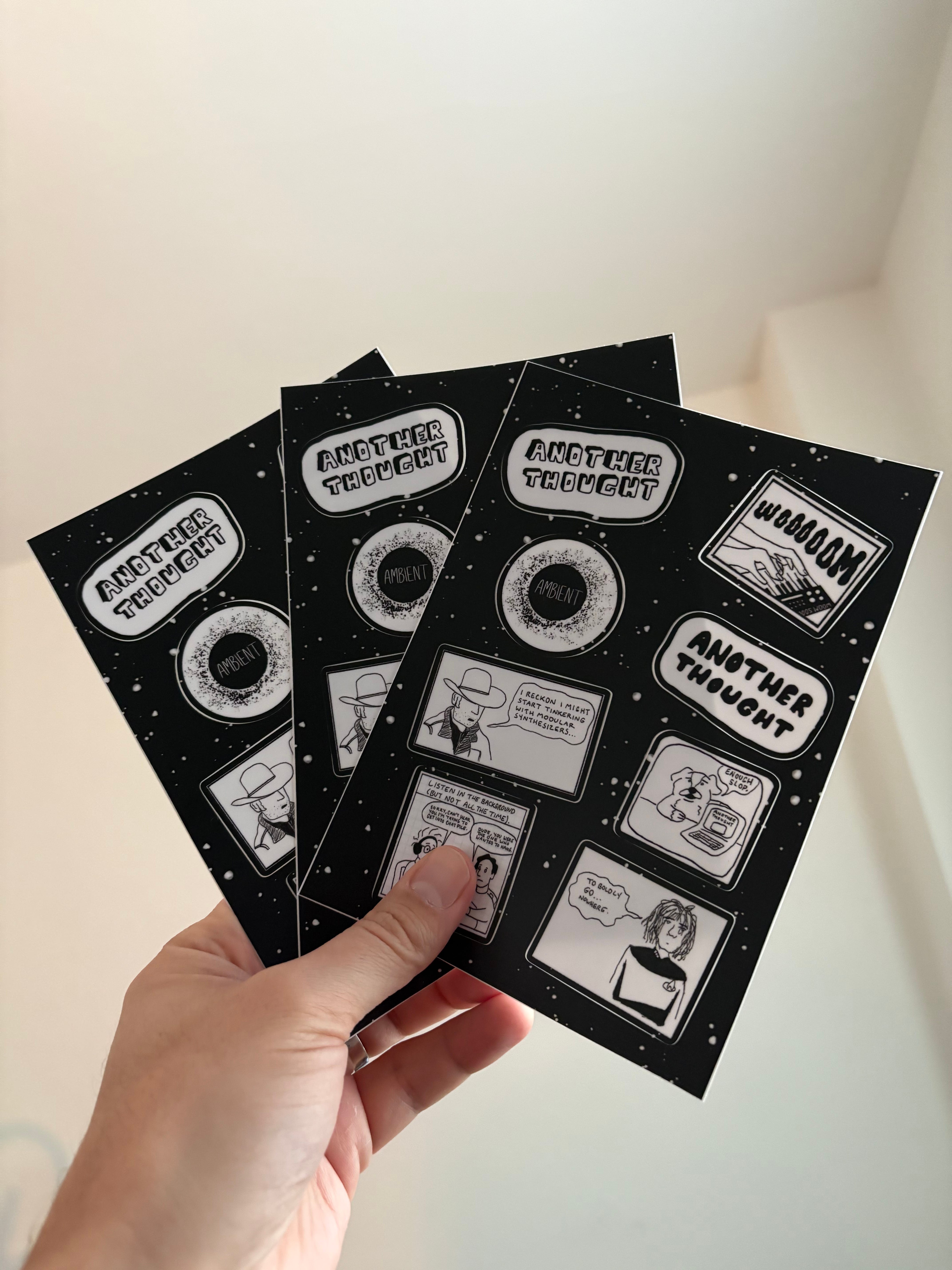
If you want to support the newsletter, please consider becoming a paid subscriber at $5/mo. You’ll get exclusive newsletters, early access to upcoming physical media, and a sheet of stickers featuring drawings from the newsletter and my book mailed to you!
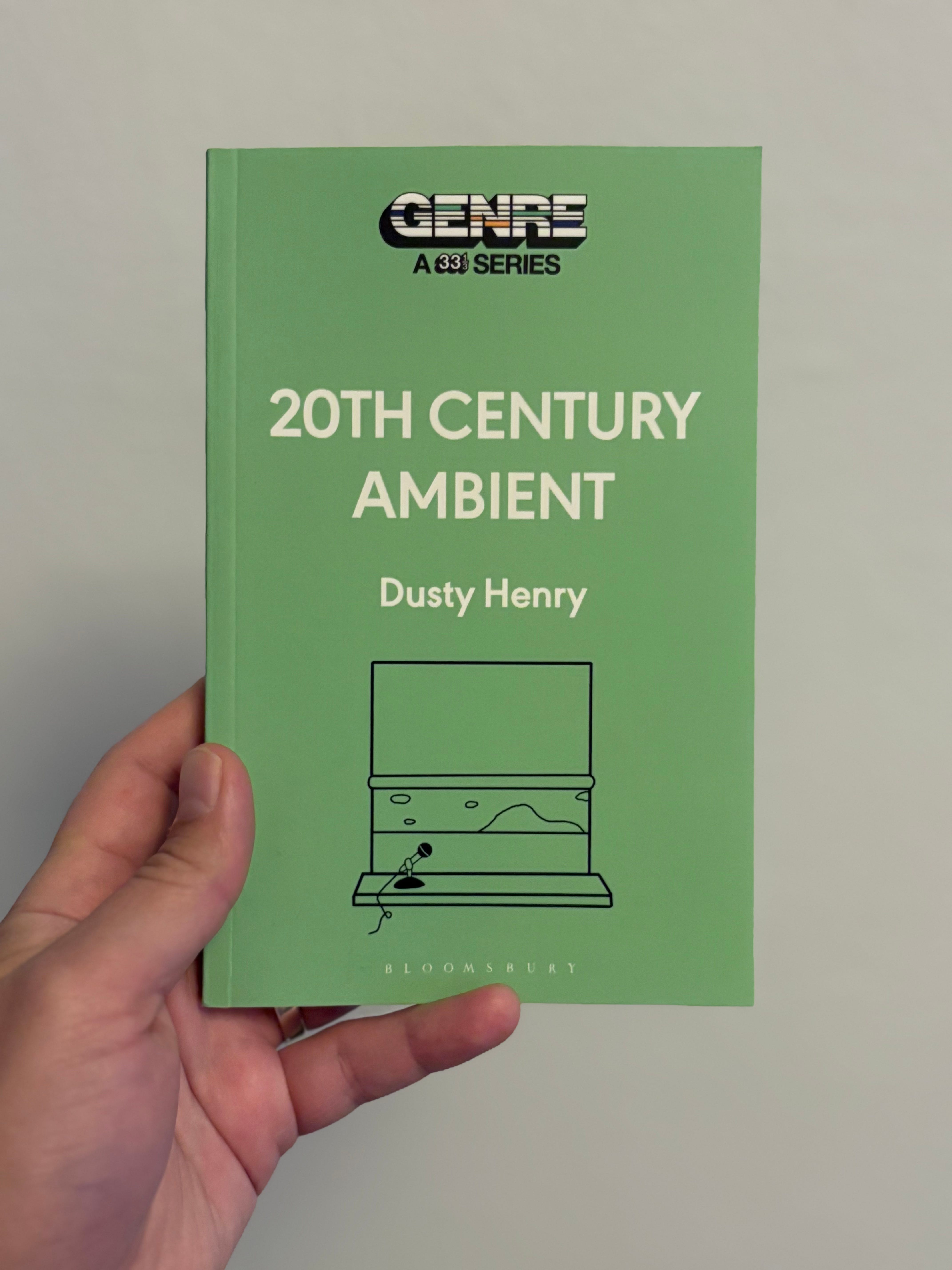
Through text and comics, 20th Century Ambient traces the recent history of ambient music to uncover how the genre has evolved and the role it plays in our daily lives. If you dig the combination of art and essays on Another Thought, I think you’ll love this book.
“Enriched by vivid profiles of the genre’s practitioners and capped by a list of essential tracks, it’s a quirky love letter to an enigmatic sound.” - Publishers Weekly
“Dad! Your book isn’t boring! It has pictures in it! It’s hilarious. Kids can read it too!” - my child
20th Century Ambient is out now from Bloomsbury Books.
No posts
Comments
Nothing yet. Say the first thing.
Sign in to join the conversation.