
A human grows the most when he/she realises and accepts their flaws. Then they un-tap a potential growth phase with exponential growth. That’s probably one of the most important thing standing between them and their best version.
If you don’t trust me, and think this is a bogus idea, trust those self proclaimed productivity gurus who snort such productivity hacks for breakfast-lunch-and-dinner and their sole life gets spent on to-do lists, journals and analysis of where did they spend time, after they took an ice cold bath everyday, leaving no ice for their evening’s whiskey on the rocks.
However, knowing and actually doing are two different things. I didn’t really think about how can I explore the biggest my growth zone until very recently. That too because I don’t really have many flaws to work on. I may or may not have issues with procrastination, constantly thinking of jokes in situations where it is not needed, lack of consistency when it comes to my health and journaling, being anxious about how AI is going to change the world, not having a festival for Rajma Chawal, but these are the one which everyone has right? RIGHT?
But all this while, I was ignoring the one thing which I wasn’t good at since the beginning and the world seem to get a default setting for it — the small talk!
Heck, I didn’t even know they call that weird intros to conversations, small talk. I always thought I didn’t know how to initiate phone calls or talk to relatives. Then it turned out it has a name to it. Fancy!
And this is not the beginner version that I was exposed to where random strangers in the US talk shows ask how are you and how have you been? This was the A-game. The one you arrive at once you’re a legend in your community.
The one one which starts with ‘Haanji aaj bade aadmi ko kaise hmari yaad aa gyi?’ (Translation: What in the actual fuck do you want now? Let me put you on a higher pedestal just this while so I can drag you down repeatedly till you die of shame.)
Now there is a certain way the crème de la crème of small talk is done. This is a classic four act tragedy. Go take out your notes and highlighters, things are about to get very serious.
Act 1: The Setup: Don’t let them breath
No this isn’t your choke me daddy/mommy moment. Just don’t give them an iota of chance to breathe or think. “They never knew what hit ‘em” (any counter strike fans here?) is what we want to achieve. The moment they greet you, either in person or over the call — bam! Done. The war is over guys. There’s fire in the hole.
You do not want to give them a single second to think, because if they think and say something logical, how will you give them a choke-slam of illogical small talk?
And this is how is goes:
‘haanji, aaj bade aadmi ko kaise hmari yaad aa gyi?’
translation: hello sir, big man, what made you remember us today?
That’s it. That’s the opening move. Before you’ve even said ‘main theek hoon (I’m fine)’ you’ve already been sentenced. No evidence submitted, No defense heard. Just a verdict, delivered with a smile, over the sound of someone’s TV playing a saas-bahu serial in the background.
Act 2: Response: Put them on a higher pedestal
Remember potential energy from school? Not the one your teachers said you had in front of your parents. The one which had a formula to it. The one which makes the water stored in humongous lakes come down with so much force it produces electricity.
Potential energy ∝ Height.
The higher pedestal you put the person on, the more damage you can inflict on them.
Example:
‘arre bhai tu to ab bada aadmi ban gya h, tu kahan call karega mujhe.’
translation: you’re a big guy now, why would you call me?
what it actually means: you didn’t call me regularly, so I will slow-roast you by calling you a very busy person who doesn’t have time for me.‘aur bhai, manager sahab, aaj kaise yaad aa gyi hmari?’
translation: what’s up, Mr. Manager, the busy guy, how come you remember me now? you finally got time for me?

But why is this needed in the first place?
Well, go back to your childhood and revisit the memory of falling while learning to walk, versus falling off your bed, versus your elder sibling throwing you while imitating a choke-slam from WWE. Which one hurt more? Obviously the choke-slam. That’s the power of potential energy. It hurts more when you’re at a height.
Once they’ve put you on a higher pedestal, you’ll try your best to come back down to their level and that’s where we fall into the trap. It’s like drowning in a swamp. The more you try, the more you drown.
And this sets the tone for the whole conversation. Once they’ve established that you’re the higher being, they can bring this up any time later too. Like this:
‘han yaar, thoda busy tha, quarter closing thi to zyada kaam tha.’
(yeah, because of quarter closing, it got really hectic at office.’)
‘ohho, bade sahab ki quarter closing thi. han bhaiya, aap bade log ho. hmari kahan quarter closing. hum to khaali pade rehte hain office mein.’
(‘ohho, the most important employee, running the whole company alone at quarter-end. we don’t do anything at our offices, we’re not that important no.’)
See? There’s no coming back from this. It’s a very potent cheat code. If you can’t do it naturally, please ask whichever God you like for this specific boon. It is very handy.
Act 3: The Attack: Take any big event of theirs and blame it on it. Gold, if they got married recently.
Remember all that potential energy you built up in act 2? this is where it gets spent.
This is where they mimic a washerman doing laundry: first they drag the cloth (you), then it’s time for the slam part of choke-slam turning all that potential energy into kinetic, then into light and sound energy. And they repeat it again. and again. and again. and because they’re a fun loving person, once again.
No matter what reasoning you give them in act 2, no matter what you’re telling them, they can always blame it on your most recent achievement or change.
‘College jaake hawa lag gyi tujhe. pehle nahi tha tu aisa.’
‘You’ve changed after joining college. You weren’t like this before.’
or, the most favorite of all:
‘Shaadi ke baad badal gya h tu. biwi kisi se baat nahi karne deti hogi. Tu pehle badhiya tha, ab to bahut badal gya h.’
‘You’ve changed so much after getting married. Pretty sure your wife doesn’t let you talk to your relatives now. You used to talk so much before, now you don’t.’
For the record, logic has never been invited to this conversation, and it’s not about to start now. So defending your wife/mother does not work.
They work on a simple rule, when nothing else works, you either bend it like Beckham or blame it on the women.
Once someone says something like that, the whole conversation becomes a defensive act. You just try to disprove a baseless, illogical claim with logic and that’s totally your problem, not theirs. They just want to see you struggle. How is that fun to them? Don’t ask me. I still struggle with it.
Act 4: The Climax: Tell them you were just joking.
This is the mercy killing. The part where, after three acts of relentless psychological rage-baiting, they finally show a crack. Their voice changes. There’s a slight pause before they respond. Congratulations, you’ve broken them and now they’ll destroy you.
‘arre yaar, joke kar rha tha. itna serious kyun le rha h?’
‘Hey relax! I was just joking. Why are you taking it so seriously?’
This line is doing three jobs at once. One, it lets them retreat with zero accountability. They were never actually attacking you, you were just too sensitive to take a joke. Two, it subtly makes you feel bad for reacting, so now they’re apologizing to you, the original aggressor, for being ‘too serious.’ And three, the real genius of it is that it keeps the door open for round two next Diwali!
Because here’s the thing about the climax of a small talk tragedy: it’s never actually the end. It’s an intermission. You haven’t resolved anything, you’ve just paused the war with a ceasefire both parties silently agree isn’t real. Next family function, same uncle, same ‘aur bete, ab to bahut bade aadmi ban gye ho’ as if this conversation never happened. As if you didn’t just spend fifteen minutes performing an elaborate four-act play about how little time you give people, only to say ‘just kidding’ at the end and reset the scoreboard to zero.
It’s the equivalent of that clinic in Brazil which claims to reset your body count. You know it is crap and it doesn’t make sense, but you do it just for the sake of it.
Like people taking a dip in a sacred river to wash away their sins only to come back ready to commit more.
What’s fascinating is how consistent the choreography is across generations. My father has probably been on the receiving end of act 4 from his uncles and aunts. I’ve been on the receiving end from mine. And somewhere, right now, a cousin of mine currently in class 9, who thinks phone calls are a war crime, is watching all of this from across the room, quietly filing it away as future ammunition. Nobody teaches this. There’s no gurukul for it and yet every single person in a large Indian family somehow graduates with a black belt in it by the time they’re thirty. (Except me. Its me, hi! I’m the exception its me!)
It’s less of a skill and more like an inheritance: passed down like a family heirloom nobody asked for, alongside the gold and the property disputes.
And the worst part is, you know it’s coming. Every single time. You can see act 4 approaching from a mile away, the way you can see a school bully deciding they’ve had enough fun and are about to let you off with a warning. And still, every single time, you fall for the ceasefire like it’s real. You laugh along. You say ‘arre nahi nahi, sab chill h,’ like the last twenty minutes didn’t happen. Because the alternative of actually holding someone accountable for the choke-slam they just performed on your entire adult life takes more energy than just letting it go and pretending you’ll call more often next time. Which you won’t. Which they know you won’t. Which is exactly why there’ll be a next time.
I’ve always felt like Abhimanyu while dealing with such situations. I know how to get myself deep inside the four acts, but never know the way out. I’ve died countless deaths trying to find my way out of this setup, but I always fail. This consistency needs to be studied, because I fall into the same thing in the same way, over and over again.
Those productivity gurus probably have a cure for this as well, but then who will watch their complete videos to find the cure at the end of it? They probably have one-liners that shut the whole four-act play down before act one even starts.
Maybe someone, somewhere has mastered the art of picking up the phone and saying ‘haanji chachaji, sab badhiya, aap batao?’ (‘Yes, all is well uncle. How are you?) with such disarming warmth that the uncle simply has nothing to work with. No pedestal to build, no achievement to weaponize, no wife/mother’s upbringing to blame. Just two people talking. I don’t know these people personally, but I choose to believe they exist, the way I choose to believe in world peace or a cheaper E20 petrol.
I apologize that I couldn’t tell you the way out of it, but hey I decoded the ragebait small talk for you to try on others. Because it is better to bully a bully then getting bullied. Offence is the best defense?
And for me? I’m still out here in act 3, getting blamed for a wife who, for the record, is very real, extremely patient with me, and has never once stopped me from calling anyone. And yet, in the next family function, some uncle/aunt is going to look me dead in the eye and tell me that I’ve changed after marriage, as if she’s running some kind of authoritarian regime out of our living room where the only law is no phone calls to relatives. I’ll probably just nod along. Because by that point in the conversation, I’ll already be three acts deep, and correcting the premise never actually helps. It just adds more fuel to fire.
Liked what you read?
👉🏻 I publish light hearted and gluten free essays every fortnight which will have you smiling and grinning from ear to ear. If that appeals to you, please consider subscribing to my newsletter.
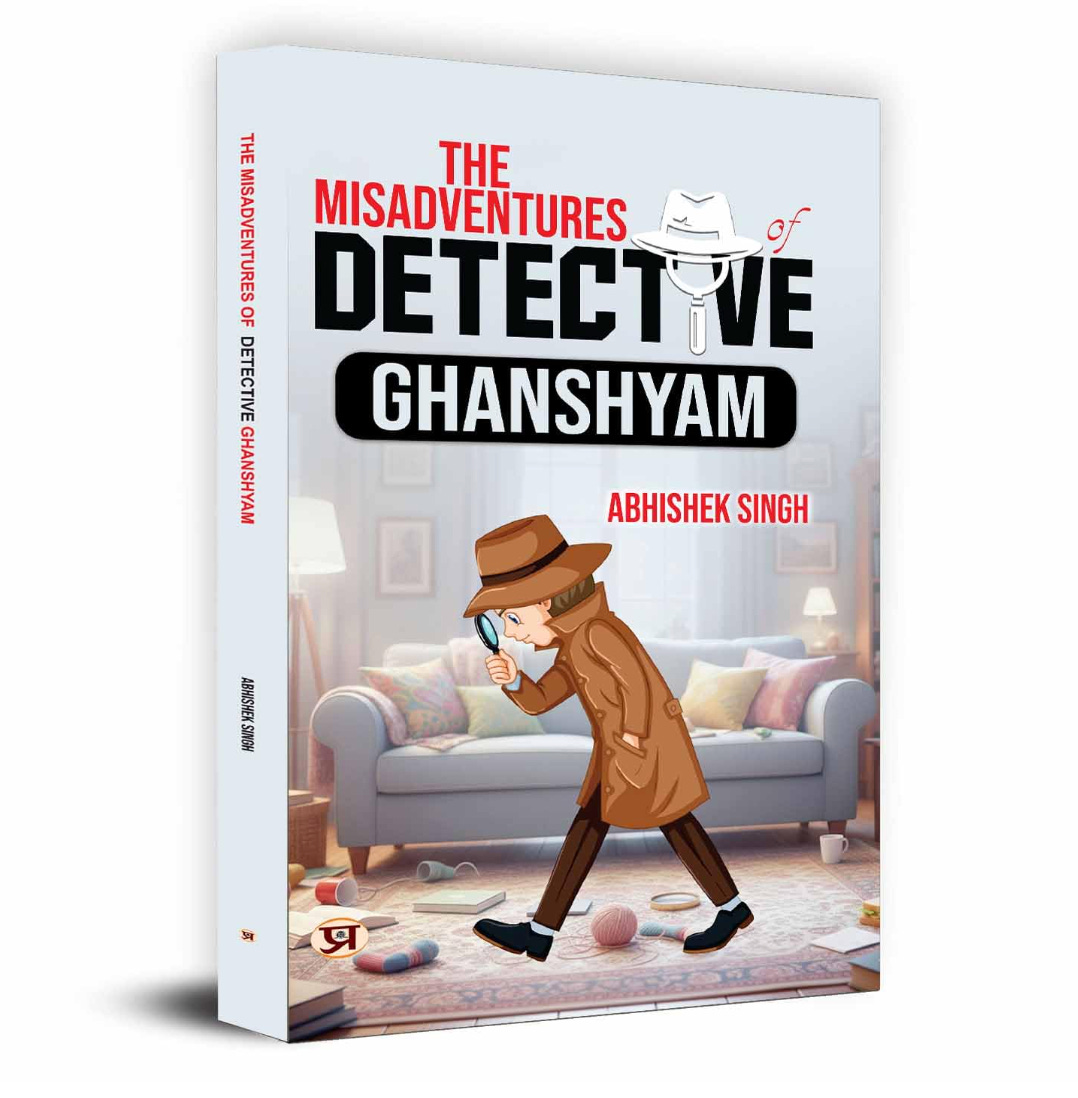
👉🏻 It would mean the world to me if you buy my debut book — The Misadventures of Detective Ghanshyam. It is a light hearted short novella about the life of wannabe teenage detective who gets outsmart by his younger evil sister while he tries to be like his idol, Mr. Holmes. If humour and sibling rivalries are your thing, you’ll love it! ❤️
️
You can also choose to support me by buying me a tea/coffee/diet coke by clicking on this link to keep the words (caffeine) flowing.
See you in the next one! ❤️
Comments
Nothing yet. Say the first thing.
Sign in to join the conversation.