
One of the happiest memories of my life is the day I scored a hundred out of a hundred in mathematics. I was nine; Class: Std. 3-B. I will be thirty-four soon, and two and a half decades later it’s one of the oldest things my memory still holds on to, every detail in its place. Not because life has been bad or I’m sad. Life has been fine, so am I. But that was the one day nobody could take a single mark off. Not one thing was wrong. Not one complaint. The whole world ran out of feedback for a day. My father made sure every guest who walked through the door, along with chai and namkeen, was served a photocopy of the answer sheet. He had requested the school to let him keep it. Being on display never felt better.
I have been chasing that feeling ever since. A moment where there’s nothing to subtract. I’m thirty-three and I haven’t found it again.
I don’t know when it started. Maybe it was always there and I was too young to catch it. But at some point I picked up a reflex. A reflex of having a problem with everything.
The way someone breathes. The way someone exists. From people having too many opinions to someone not having an opinion. The AC is too cold and the friend’s startup idea is interesting but the market is not ready. The colleague wrote a farewell post on LinkedIn and it was sincere. But I spotted a grammar mistake in the second line and that’s the thing I carried home. To my credit I also ruined a perfectly good vacation, sitting in front of Kanchenjunga, trying to make sense of everything happening around me except the one thing that was there at the moment. It felt like I had forgotten how to sit in a room where nothing is wrong. I realised it might be all my doing, and that all it takes sometimes is being aware of your surroundings. Be it the mountains in front of me or the tall buildings around you with their small matchbox flats lit yellow, each having two stories, the one they are living in reality and the other one in your head.
Every Indian family has an uncle like this too. The one at the wedding for whom the puri & sabzi was better last year and the dal was a bit too salty. The baraat was late and the groom was not good enough. He’s the most knowledgeable person at every table he sits at, and no one invites him to sit twice. My society has these uncles too, who have a problem with the speed of the lift and humans, volume of your music and your speech. I used to think I was nothing like them. Only to understand that sometimes you become the person you despise the most.
There is a study from 1983 by a Harvard psychologist named Teresa Amabile. She took book reviews from The New York Times, edited them into positive and negative versions with the same content, and asked people to rate the intelligence of the reviewers. The negative reviewers were rated smarter. More competent. More expert. Even independent judges found the positive reviews to be better written. Her summary of the experiment was:
“Only pessimism sounds profound.”
Comics figured this out and called it a career. And the ones who couldn’t, updated their Hinge profile to list ‘sarcasm’ as a personality trait. The news industry has been running on this for decades. Gordon Ramsay built a goddamn global empire telling people their food is terrible. The chefs who say “lovely, well done” do not get a show. The one who calls it a disaster gets twelve seasons.
This is the game — Complaint is a good costume. A convincing one. It makes the one shouting look like a man with standards. And the best part — It costs nothing.
Praise is the riskier act, because to say “this is good” means vouching for something, attaching your name to a claim that only adds responsibility. Whereas, to say “this could have been better” attaches your name to nothing. It makes you the one who told you so, and if proved wrong, the language shifts to “couldn’t be happier to be wrong.” Such a man can never lose. He borrows the authority of the flaw. And the flaw is always there. Because there are more ways for a thing to be wrong than right. The fault-finder is betting on the wider target, and he will usually win.
Being right about failure is the cheapest form of being right that exists.
The internet figured this out before the rest of us. A study published in Nature in 2023 analysed over a hundred thousand headline variations across 370 million impressions. Each additional negative word in a headline of average length increased clicks by 2.3 per cent. Each positive word decreased them. The dataset came from Upworthy, a website literally built to spread good news. Even their own readers clicked on the dark.
Maybe ‘Bad Is Stronger Than Good,’ and we are not wired for positivity. Baumeister’s most cited paper in social psychology found that negative events register with roughly five times the force of equivalent positive ones. Our neural response is faster and stronger to negative stimuli. The brain reaches for what is wrong before it can sit with what is fine. And this isn’t a choice, it’s wiring.
The science above might not be mine, but this is: the position I’m in is not something I reasoned my way into. It’s the factory setting. The reflex of having a problem with everything is probably the oldest language of mankind.
Having a why for the things that happen to you is important. It keeps you sane. Take suffering for instance. The pain of suffering without meaning is the worst kind there is.
Without one the whole thing just eats you.
The same thing torments me here because I don’t think I will ever truly understand why people are the way they are. But I have a theory.
People love being right. They will burn a friendship over it. They will hold a grudge for eleven years over a fact they half-remember from a Wikipedia page they skimmed drunk. And when being right isn’t available, being smart will do. Not smart. The smartest. The one the room looks at. You know the feeling. You have had it at a dinner table, that little hit when you said something and everyone went quiet. It’s ok, I have had it too.
But there is a difference between knowing something and needing everyone in the room to know you know it. One man reads a book and puts it down. Another reads the same book and won’t shut up about it for six months. The third hasn’t read the book but has a take on it anyway. He’s on X. He’s on Instagram. He’s also on Substack these days.
There’s always a difference between what is and what you tell yourself about it. What you do with the gap between the two is pretty much the whole game. Some people live with it quietly. Some keep it private. And some of them have a comment under every post and a rating on every restaurant and an opinion louder than anything they have ever built.
अध जल गगरी छलकत जाये
The half-filled pot makes the most noise. The full ones just sit there, heavy and quiet. And the room turns only to where the noise is loudest. It’s who we are, to mistake volume for authenticity. Maybe that’s why truth these days is not a matter of what is said but of how many are saying it and how loud.
Nobody pays attention to quiet. Quiet doesn’t get followers.
These people, they are a very different breed, The cynics, hereinafter to be referred as ‘The C’s’. As the world progressed and we started to undress modernisation, progress and development, their population multiplied. Not because the world got worse, but because shitting on things became a career. It was the cheapest audition for intelligence.
You can never know when they decide to sneak up upon you. My daughter’s birth is one of those. My wife had been in the OT for longer than I had anticipated. Something which my semi-medico brain had started contemplating if something was wrong. Luckily all went well. Soon the doctor came by and gave the happy news that I had become a girl dad. There was a sudden rush of emotions and I went a little fuzzy after it because I was elated beyond measure. (you can read about this experience here) When that feeling subsided a little, calls started pouring in to congratulate me.
I was in the waiting room with all the other attendants and many of the calls had the same content. ‘Oh wow, a girl. Is she healthy? Thank God. How’s Shristy? Good as well! Nice. Very good. Beta, but it feels bad, to be honest. Had your first born be a son, you could’ve had a daughter later and your family would be complete then. Don’t get us wrong, but we feel sad about it. Your brother also had a daughter. But don’t worry beta, nowadays girls are the same as boys. In some cases even better. Congratulations once again. Take care of them.’
Now this was unexpected, like the NEET exam leak. Disheartening, considering this came from women. Maybe there is a wild possibility that considering the atrocities against women and how difficult it is to survive as a woman, they felt sad. But had this been a reason, they wouldn’t have justified their statement.
Why was one of the biggest days of my life laced with doubt, sadness and disappointment?
Why does every happy situation has to have a negativity ka tadka? Did you really ask me how I felt? If I even had a preference? I wanted a healthy wife and a healthy kid, gender no bar. And I got that. What more could I have asked for?
When I work at my desk and my daughter is sleeping next to me in her bed, the first thing she does after waking up is to smile at me. I don’t have words to describe how good that feels. I’m sure the ones who were feeling sad about having her in my life, have also experienced this. And yet they let negative thoughts get the best of them. Crazy! Says a lot about being a cynic. Always seeing the glass half empty and in this case broken too.
Black holes, that suck everything known to us, follow laws of physics. These pessimists don’t. They’ve doubted the old Gods and the new, equally.
And the framework is simple: you do not need to have built anything; you do not need to have risked anything; you only need to have a problem with what someone else built, and say it with enough confidence that the room mistakes it for competence.
Take any happy occasion for that matter. At any wedding there will be more comments on how the bride’s makeup was bad or how dark the groom was, or the most common one, the food wasn’t up to the mark. Trust me, even in those picture perfect and intimate Bollywood weddings with guest list smaller than the catering staff, there is someone who says ‘I’ve eaten a better Dal Makhni elsewhere at half the per plate cost.’ (sorry the middle class mind won’t imagine beyond Dal Makhni even if it is a Bollywood wedding.)
Maybe there is a hint of care that fuels this fear, maybe the person saying this wanted you to be safe, or maybe to do better. But then where are these folks when the work is being done?
Amabile proved it in a lab. The internet proved it at scale. I proved it every time I sat at a table and the man who tore the food apart was called a man of taste and the man who enjoyed it was called simple.
But here’s where it turns.
A Stanford psychologist named Jamil Zaki surveyed people and asked who was the smartest of them – The C’s or non-cynics. The C’s got seventy per cent of the votes. Then Zaki tested them. It turned out that they weren’t. In fact, they were worse. At tasks. At reading people. At telling who was lying.
Turns out, telling the difference between right and wrong, what is and ought to be, what you think you are and what you actually are, was never their forte. They assumed the whole world was full of shit so they stopped checking. They were wrong about almost everything but they said it with such confidence that nobody noticed.
Now irrespective of whether these negative words come to you disguised as care, advice, precaution, or fear, long exposure to this will make you think negatively in every situation. Slowly and steadily you’ll start turning into that grumpy man who has an issue with everything and the one who never returns the cricket ball that lands on his verandah.
Every C thinks himself/herself of as a rebel, unable to comprehend that the rebel says no in defense of something he/she loves, whereas the resentful man says no because it’s all he has.
हम को मालूम है जन्नत की हक़ीक़त लेकिन, दिल के ख़ुश रखने को ‘ग़ालिब’ ये ख़याल अच्छा है।
We know the truth about paradise, but the idea is nice for keeping the heart quiet. Every cynic I have ever met, including me, thinks he sounds like that. Like Ghalib. Weary, wise and arrived. I was no Ghalib.
I’m just a stupid common man at a dinner party with an opinion about biryani.
The solution to all of this is apparently the other trending thing on the internet– “Toxic Positivity”. If the complaint is the best costume, toxic positivity is right behind it on the podium.
It is everywhere, being shoved down our throat on every feed, every reel, every caption. Everyone is so full of love, good vibes, gratitude and positive energy that you would think they shit rainbows. They don’t. I just know. But the brand requires it. There’s a reason the stars of the 90s and early 2000s, the actors, the writers, even the nobodies, carried something the current lot cannot fake. There was no constant monitoring and curation of their profiles. The personality was the personality and not some collection of posts. Now everyone is living an image. A dual life. Like a mirage, you can see it from a distance, and can almost believe it too, but the moment you get close enough to touch, it disappears and you are standing in the same sand as everyone else. Except now you are part of the mirage too.
I see it infecting Substack too. Everyone loves everyone. Everyone is part of one big happy family. Every comment is a hug. Every reply is a blessing. Maybe some of it is real. But sometimes it’s not just the shit that a man avoids, he doesn’t need the flower either. He just needs to let him be. Even if all is not well. Because it cannot always be. And it’s not a flaw.
Barbara Ehrenreich wrote a whole book about this. What it means to be bright-sided like a well cooked sunny side up and how mandatory optimism in America punished cancer patients for not being cheerful enough. The patients were told their attitude was the problem. That if they just believed harder, tried harder, smiled harder, the body would follow. Some of them died smiling not because it helped, but because the room needed them to. It must have been beautiful, I’m sure.
That’s what toxic positivity means to me. It doesn’t fix the man who is drowning. It tells him the water is lovely.
Finding fault is statistically the easiest path to follow. It is thermodynamically cheap and proven: there are vastly more ways for a system to be disordered than ordered, meaning there are infinite ways a thing can be wrong and only a few ways it can be right. The man looking for the flaw will find it every time. But it is also true that sometimes the noise hurts because we know it is true. Acceptance is the key.
Sometimes he’s right. Sometimes the biryani is bad. Sometimes the idea has no market. Sometimes somebody needs to say it and everybody else is too polite or too scared. The question is not whether you are the man who says it. The question is whether you have become the man who can only say it.
I have worked for years in startups, and have a lot to talk about how toxic they are. But I can also not deny that they are the best place to learn how to get shit done while everything around you is on fire and the fire is also on fire. That is basically what a startup survives on. People who look at the mess and don’t leave the room.
Those people are the most honest and self aware kind of optimists because they are the most unkind to themselves. They know the place is broken and stay anyway. Not because they are stupid but because they understand something the cynic does not, which is that the whole point of being alive is to give a shit about something at your own cost. That’s it. That’s the entire job. And the only way to do it is to live convinced it is worth it rather than confused about whether it is.
Sisyphus was happy. Remember.
Two men who come to mind, who lived this and wrote it down are– Charles Bukowski and Jaun Elia. Pick any of their work. Even the happiest line they ever wrote will hit you in the gut with how real it is.
Bukowski wrote about misery for forty years and never once sounded like a man performing sophistication. He always aimed it at himself first. Always. That’s what made it readable instead of unbearable. He was not standing on a stage pointing at the audience. He was sitting at a desk with a bottle, pointing at the mirror. Jaun Elia, across the Arabian Sea, did the same thing in a different language. An anarchist, a nihilist, and a poet. He drank his way through Karachi and his despair packed mushairas because he confessed instead of accusing. The crowd loved him for the same reason they love any honest man. He never said the darkness made him better. He just said it was his.
I think they both knew something the rest of us keep forgetting. That there will never come a day when a man is not judged. Not even in his death. Because people will count who came to the funeral.
They knew the limitations.
बंदे को चैन कहाँ, ख़ुदा को भी नहीं छोड़ा।
Man cannot rest. He didn’t even spare God.
The difference between Bukowski and the reply-guy, between Jaun Elia and the uncle at the wedding, is not the negativity. It’s the price. Charles Bukowski paid with a body and a life. Jaun Elia paid with everything he loved. The modern hater is a miser. He borrows the aesthetic and pays nothing. He is Diogenes’s barrel without Diogenes in it.
I don’t have an answer. I’m suspicious of essays that do.
What I have is a memory of being nine years old, holding an answer sheet with no red marks on it, and a father who photocopied it for strangers. That was not a day I was smart. It was a day nobody in the room needed to prove anything. Including me.
And a reminder to search my own heart first.
बुरा जो देखन मैं चला, बुरा न मिलिया कोय, जो दिल खोजा आपना, मुझसे बुरा न कोय।
I went looking for what was wrong with everything. I found it in my chest. Beating.
There are a lot of Abhishek Singhs out there. But two of them writing together is new. Maybe this is one of the many reasons that makes this post special, or maybe working with someone with the same name as yours is just that easy.
Our readers have confused us for years. “Which one’s this Abhishek Singh?” We heard it enough times, more than the number of times Rakhi Sawant got married. What seemed like confusion for others became an angle we wanted to explore. And as it turns out it’s not just the name we share. There are certain traits and reflexes too, and this post is an example of one of them.
Hope you like what we have tried doing here.
You all know Abhishek Singh (the comic dreamer) very well now. If you don’t, well sad. And there are so many reasons for the same. I had few thoughts on this topic and I thought of collaborating with him since he writes so damn well. I went to him with an idea and he found just the right words for it. From Bukowski to Ghalib, he brought in everyone and in spite of our busy schedules we could stitch this piece together. I always thought how does he write so well consistently and this essay was an attempt to try to understand this a little more. I guess I now know 0.01% of it. So will probably do more of this :)
If you’re someone who wants to read long essays on life learnings and philosophies and connect them to mundane life events, he is the one you need. And if you’ve been hearing a lot about his essays, well those rumors are true. He does write brilliantly. Please give yourself a favor and subscribe to him.
And now something about me.
👉🏻 I publish light hearted and gluten free essays every fortnight which will have you smiling and grinning from ear to ear. If that appeals to you, please consider subscribing to my newsletter.
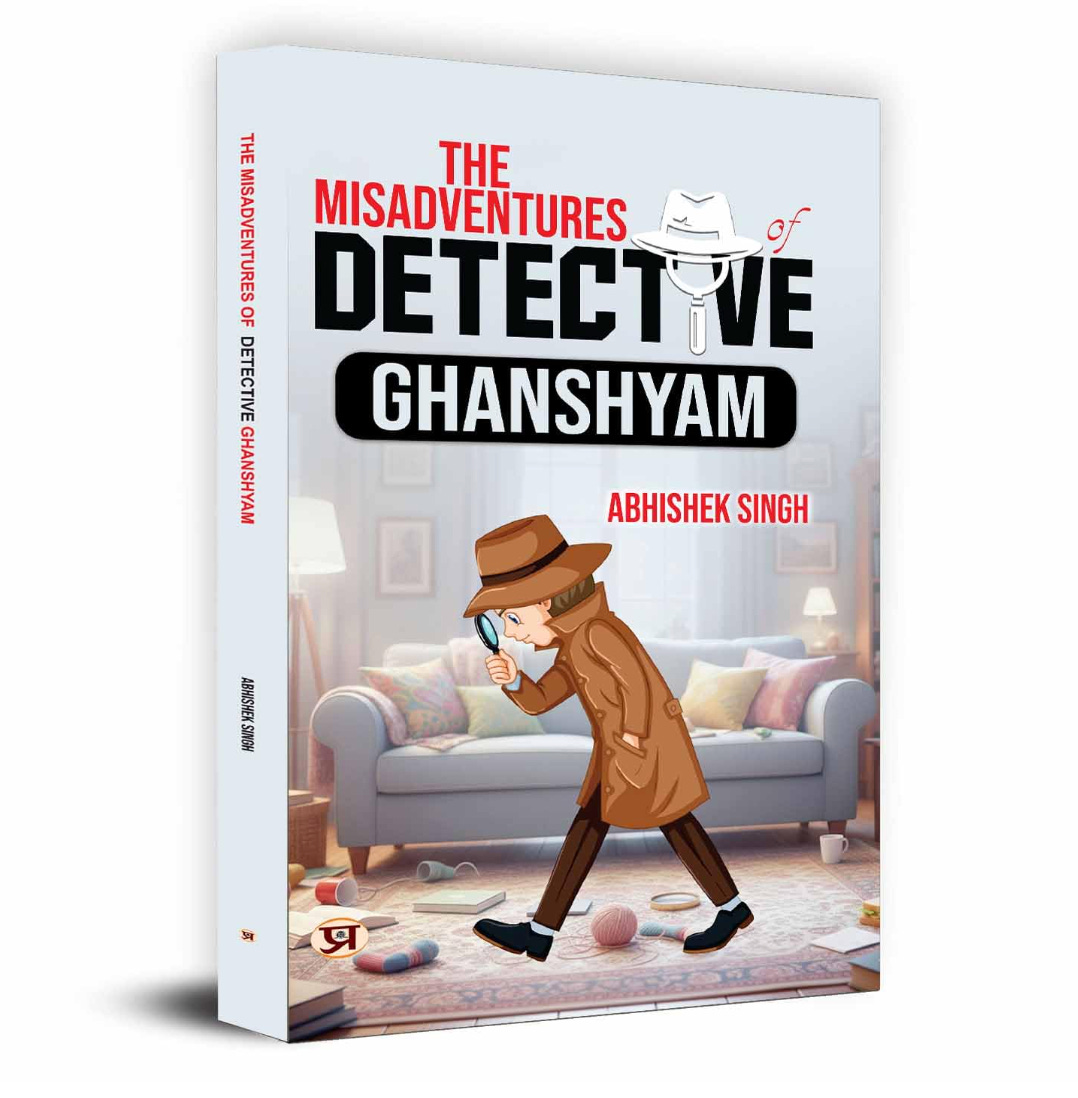
👉🏻 It would mean the world to me if you buy my debut book — The Misadventures of Detective Ghanshyam. It is a light hearted short novella about the life of wannabe teenage detective who gets outsmart by his younger evil sister while he tries to be like his idol, Mr. Holmes. If humour and sibling rivalries are your thing, you’ll love it! ❤️
️
You can also choose to support me by buying me a tea/coffee/diet coke by clicking on this link to keep the words (caffeine) flowing.
See you in the next one! ❤️
Comments
Nothing yet. Say the first thing.
Sign in to join the conversation.