
there was a boy who often used to walk instead of taking an auto.
not because he enjoyed the exercise. not because the weather was kind. but because those five saved rupees mattered. the twenty he saved by squeezing into a crowded bus instead of taking the Delhi Metro mattered. whatever was left from his weekly food-and-travel allowance mattered. every small saving, stacked quietly on top of the last, would slowly become enough to buy a book.
this wasn’t a one-time thing. it was a system. a ritual. he knew exactly which route was shortest. he knew which days the canteen had nothing worth eating anyway. he counted money the way other kids counted scores. every rupee had a destination.
nobody knew. it wasn’t the kind of thing you said out loud that you were walking twenty minutes in the afternoon heat so you could afford a paperback. it would have sounded strange. maybe even sad. but it didn’t feel sad. it felt like something worth doing. like he was working towards something real.
that boy was me. and books, for him, were never just books.
it started with 2 States in 11th grade. it was my brother’s, slightly battered at the spine, finished in three days despite coaching classes and school running side by side. my father didn’t approve, and for all the right reasons. competitive exams were the goal. novels were a distraction. he wasn’t wrong. but I had tasted blood, and there was no pulling me back.
with no income and exams swallowing everything, I couldn’t buy books freely. so I got strategic. Flipkart, back in those days, waived delivery fees for orders above ₹500. this became my entire financial philosophy. I would save up to ₹500 over weeks and then spend a genuinely embarrassing amount of time calculating the maximum number of books I could fit into one order. this is how I ended up reading a lot of Indian authors and slim classics like Animal Farm. Not out of literary ambition, but because they were cheaper. budget constraints, it turns out, are an excellent curator.
along the way, a dear friend from college introduced me to Agatha Christie, the lady who took me out of my fear of not being able to read and comprehend good English. I fell so completely into that world that I chased down every series she had ever written. Miss Marple, Poirot, the standalone thrillers. it was the first time I understood what it meant to not just read a book but to live inside an author’s entire universe. to trust someone so completely that you’d follow them anywhere they wanted to take you.
good English books that everyone raved about used to be expensive back then, which led me deeper into Indian writing. I found Ashwin Sanghi, Preety Shenoy, Manu Joseph, Jerry Pinto, Vivek Shanbhag, Sachin Kundalkar before any of them became names people casually drop at dinner parties. there’s a quiet happiness in that — in having found them on your own, on a shoestring, before the world caught up.
and while we’re being honest, Chetan Bhagat deserves more credit than he usually gets. had it not been for his books, the idea that English novels were somehow too difficult, too foreign and too much. This stigma would have stayed with me far longer than it did. he was the bridge. I crossed it and kept walking. I’m not embarrassed to say that anymore. it is funny to even think that I and many others used to shy away from admitting that we enjoyed some of his work. the problem, I feel, is when you stick to only these books. once you’ve had a glimpse of English literature, go ahead and explore. there is so much out there that you’ll genuinely enjoy!
then there is Em and the Big Hoom by Jerry Pinto.
at times when I wanted to see what good money could get me, I would deliberately avoid sorting by cheapest to most expensive. I wanted to be tempted. and in one such pursuit, I encountered Em and the Big Hoom. the book that was critically acclaimed, had really nice cover, and written by someone whose work I wanted to read badly. the only problem was the price. the book was listed at ₹250, and that was just too much for me then.
I put it in my wish-list and waited.
and boy, did this book test my patience. I checked back every few weeks, the way you check for a reply from your special someone. sometimes the price went up. mostly it stayed exactly the same. it just never dropped. months passed. at some point I stopped checking as obsessively and just kept it there, in my wish-list. like a quiet promise to myself.
I finally bought it at ₹233 (yes, I remember the exact number) after more than two years of waiting. I had been doing content writing on the side by then, small gigs here and there, just to have some money that was entirely mine. and ₹233, on that particular day, felt like something I had genuinely earned.
I read it in one sitting.
it was everything I had hoped it would be. and the waiting all two years of it, somehow made it feel even more important. like the book knew I had come for it seriously.
that’s the thing nobody tells you about not having money when you’re young. it doesn’t just make things harder. it makes you more intentional. every book I bought meant something. every page had weight. I never picked up a book carelessly. I never put one down without finishing it. when you’ve saved forty-five days worth of loose change for something, you don’t abandon it halfway through.
it is only now, more than fifteen years after picking up my first novel that I allow myself to stop reading a book midway if it isn’t working for me. that kind of freedom takes a long time to feel earned.
so when someone returns one of my books with pages falling out of the binding, dog-eared corners, a stain I would rather not investigate and then says, “arre chalta hai yaar, kya itna senti ho raha hai? book hi toh hai” (that’s okay, don’t create such a fuss. it is just a book.) when I get angry.
I want to explain. I really do. I want to tell them about the boy who mapped his week around a ₹500 threshold. about the afternoons he walked home in May, in the kind of heat that makes the road shimmer, thinking about which book he was going to buy next. about the content writing gigs, writing things for other people, under other names, for money that went straight into a mental account labelled books.
I want to tell them that when they fold a page corner, they are folding something that cost more than just money.
but mostly I just say nothing. I’ve stopped lending my books. I’d rather avoid the conversation altogether — and honestly, the answer is always going to be no anyway. some people think I’m being arrogant. some think I’m odd. what they don’t see is that each one was earned in a way that’s hard to explain to someone who has never waited two years to buy a book.
the boy who walked understands. everyone else will have to take my word for it.
here is something else about me as a reader — I feel books more than I remember them.
I cannot name the main characters of Shirt ka Teesra Button by Manav Kaul, a book I have gifted and recommended so many times I’ve genuinely lost count. I cannot quote you a single line from The God of Small Things. but I can tell you exactly how both of them made me feel — unsettled. heard. like someone had quietly located the words for something I had been carrying around without a name for it.
there are books I read during particularly hard stretches — lonely cities, uncertain years, the kind of nights where you don’t quite know what you’re feeling or why and those books held something for me that I still can’t fully articulate. they didn’t fix anything. but they made the not-knowing feel less isolating. like someone had been there before me and had left a note.
it took me at least two hours and three modes of transport to reach college every day. I made the most of that time by reading. I fondly remember standing in a packed local train, Animal Farm open in my hand, the crowd pressing in from every side. I was completely immersed in the book. I never had photographic memory, but somehow the way a book makes me feel stays, long after the plot has faded, long after I’ve forgotten the names.
that’s what I’m recommending when I recommend a book. not the plot. not the themes. the feeling. the specific, private feeling of being understood by something that didn’t even know you existed.
if it resonates, look it up, read the reviews, decide for yourself. but trust that I wouldn’t be pushing it into your hands if it hadn’t left a mark on me that I’m still carrying.
of late, I’ve caught myself doing something that would have once felt unthinkable: marking my books.
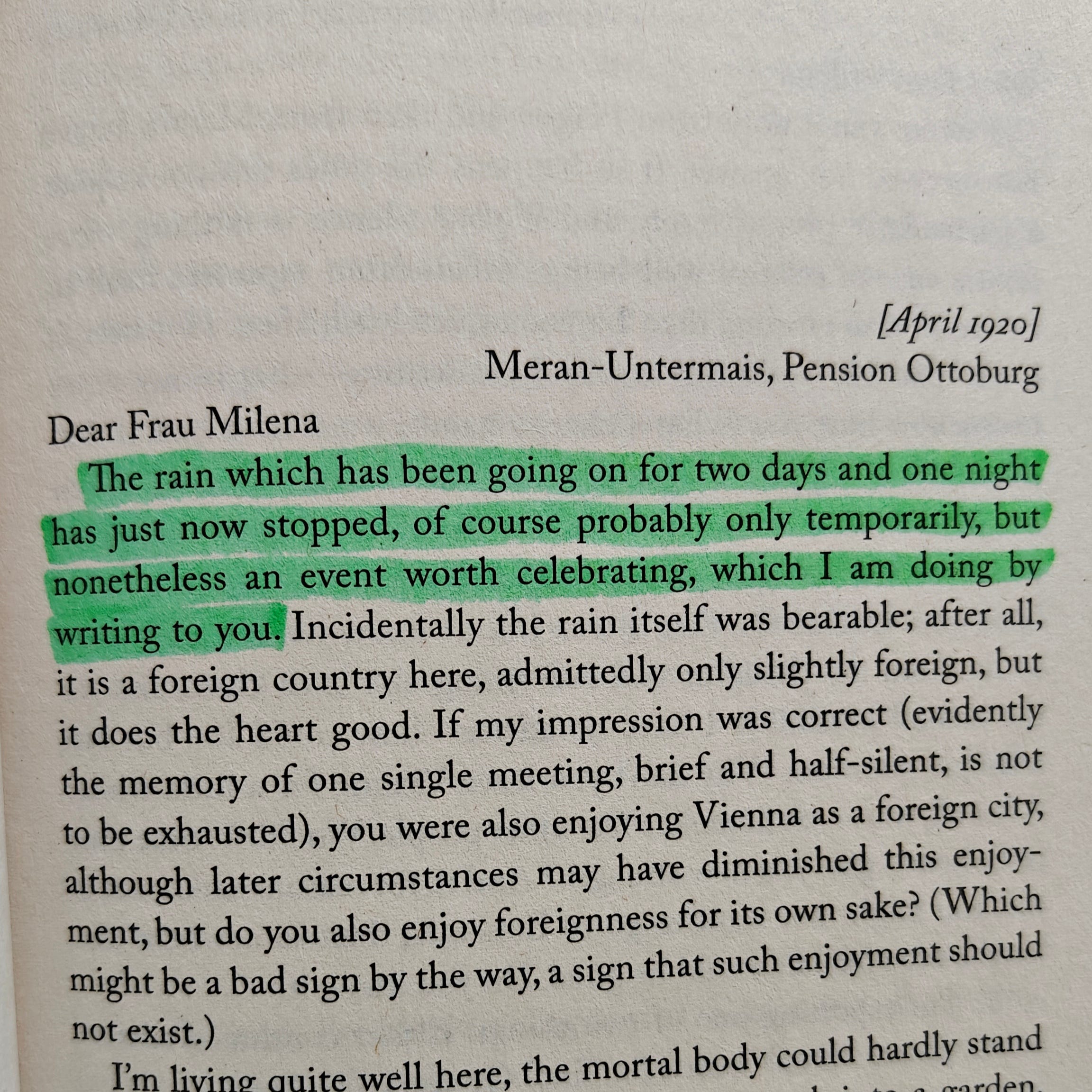
I’ve used a highlighter cautiously, guiltily, like someone committing a minor crime in broad daylight. and one fine day, in a moment I can only describe as a temporary departure from all good judgment, I marked a page with a ballpoint pen. I know. I know. we all make mistakes. mine are now preserved in blue ink across a page of a book that deserved better.
the boy who walked home in the may heat to save auto fare would be absolutely horrified at the ballpoint incident.
he would also, i think, understand exactly why it happened.
maybe highlighting is my way of trying to hold on. of hoping that if I mark something, it will stay with me longer. maybe the boy who memorised book prices to the last rupee is now desperately trying to memorise the books themselves. though I’m not sure if it’s working since I still cannot tell you what happens in Shirt ka Teesra Button.
writing, I’ve slowly realised, is just another way of loving books. of giving back to something that gave you so much.
I hope that one day, there is a someone who wants to read something I wrote. who checks the price and thinks, not yet. who puts it in a wish-list and waits. who saves up, counts rupees, watches that listing the way I once watched Em and the Big Hoom. and when they finally buy it in whatever year that is, I hope they read it in one sitting. I hope it makes them feel heard. I hope it gives them words for something they’d been carrying without a name.
I hope they feel, when they turn the last page, that the wait was worth it.
because that boy who used to walk home in the May heat, the one who counted every rupee, who stood on one leg in a crowded train with Animal Farm open in his hand, who waited two years for a book and remembered the exact price he paid, that boy didn’t just fall in love with reading.
somewhere along the way, without quite realising it, he was also falling in love with the idea of writing. and that, I think, is where this was always meant to be.
Liked what you read?
👉🏻 I publish light hearted and gluten free essays every fortnight which will have you smiling and grinning from ear to ear. If that appeals to you, please consider subscribing to my newsletter.
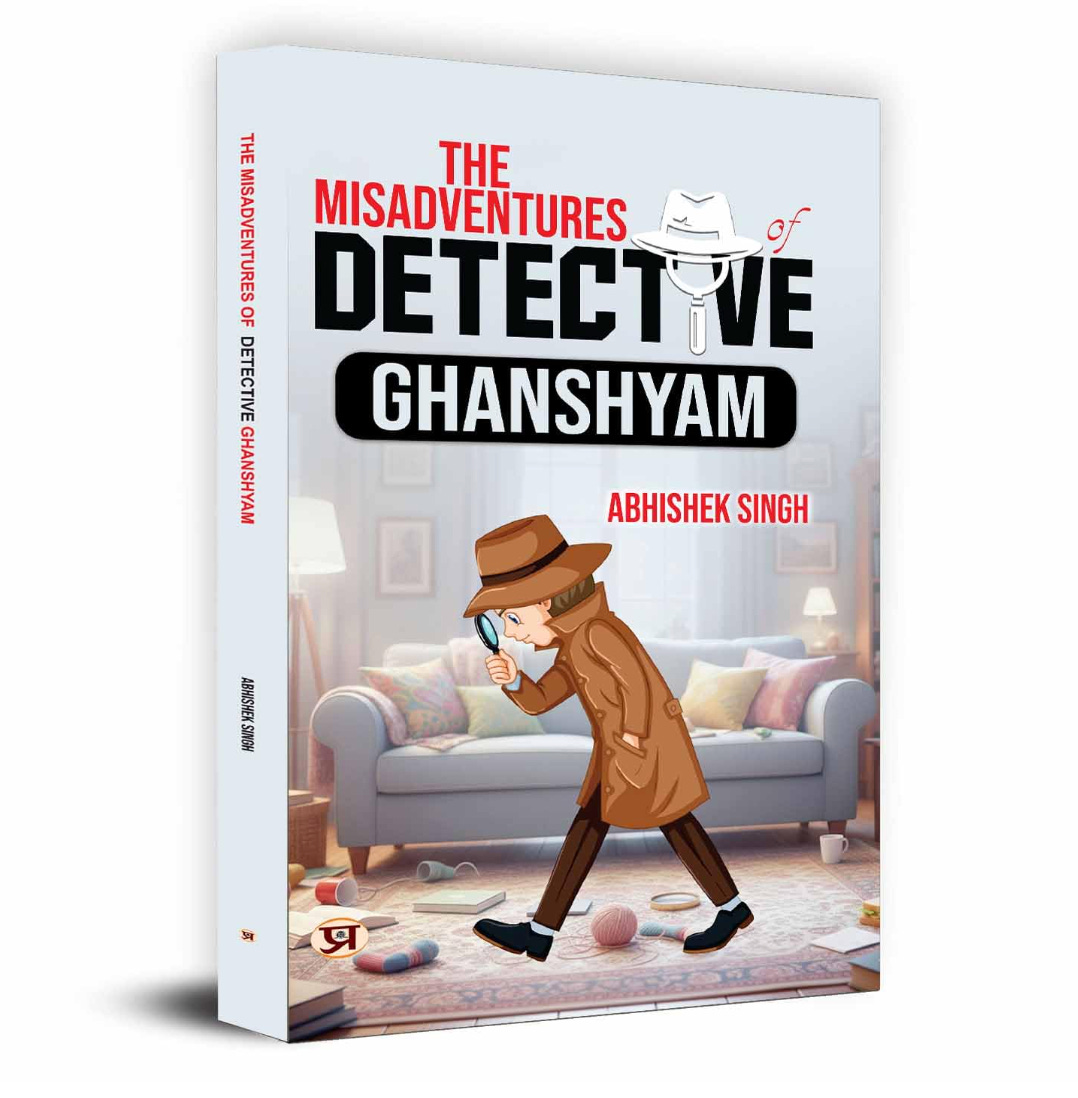
👉🏻 It would mean the world to me if you buy my debut book — The Misadventures of Detective Ghanshyam. It is a light hearted short novella about the life of wannabe teenage detective who gets outsmart by his younger evil sister while he tries to be like his idol, Mr. Holmes. If humour and sibling rivalries are your thing, you’ll love it! ❤
️
You can also choose to support me by buying me a tea/coffee/diet coke by clicking on this link to keep the words (caffeine) flowing.
See you in the next one! ❤️
Comments
Nothing yet. Say the first thing.
Sign in to join the conversation.