
This post is part of a new series where I reflect on my ten-year journey as a professional illustrator. I’m deep diving each year, one hard-earned lesson at a time. So, whether you're just starting out or feeling stuck on your own path, I hope this series helps you feel less alone in the messy hullabaloo of trying to figure it all out.
If you missed Lesson #1, you can read it here. Or watch the full video on YouTube!
Lesson #2: Make the Most of What You’ve Got
In 2015, I was freshly graduated, newly relocated to Canada, and trying to start a creative career with no real clue of what to do post-grad. I didn’t have any industry connections since I moved to a completely new continent, nor a degree from a famous art school (fun fact; I found out in my last semester that my art school degree was unaccredited… yay!).
BUT I had moxie!!!
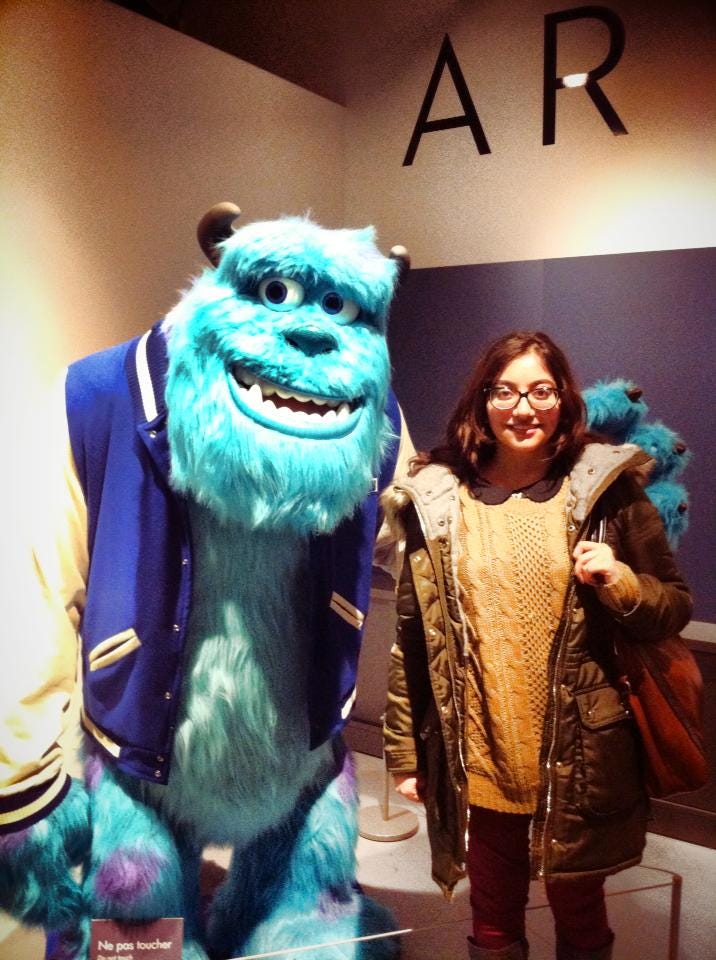
And resourcefulness (plus and can-do attitude) can go a long way when you’re starting from scratch.
Looking back, I realize that so many of my early wins came from squeezing every drop of value out of the things that were already within my reach.
So today’s lesson is:
You don’t need the perfect start, you just gotta to work with what you’ve got.

If you remember from the last post, I attended a tiny, French-speaking art school in Switzerland called Ceruleum Ecole d’Arts Visuels. My graduating class was literally ten people!
We didn’t have visiting pros or career fairs or any of the studio-to-job pipelines you’d see at places like Sheridan or CalArts. And because I felt like I was lagging behind my peers who got to have these great student internships, I felt like I had to work 10x harder to catch up. I knew that a degree (AN UNACCREDITED DEGREE??!) alone wouldn’t get me hired. So for every class assignment, I’d go above and beyond the requirements, finding ways to turn schoolwork into something folio-ready.
Knowing that I wanted to potentially pursue children’s illustration, I decided to write and illustrate an entire picture book, as a way to get some experience, a portfolio piece, and maybe even try to get it published.
That book was Chip and the Rainy Day, and did actually lead to some of my first book gigs!
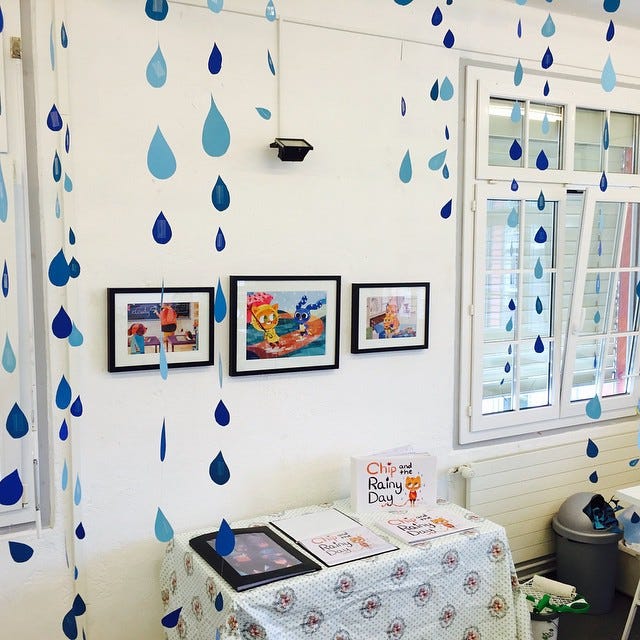
Then after school, I spent most of my personal time creating even more portfolio pieces and studying how to develop my career after I graduated. Since I was in the illustration department, not animation, I knew I needed to create some pieces that a recruiter would be interested in.
Through some online digging, I came across a now-defunct program called Motivarti, and applied for a mentorship in the hopes of getting some guidance from someone actually in the industry. I had submitted to several mentors in both the animation and illustration spheres, but in the end was paired with illustrator Meg Hunt (who is now also a friend!).
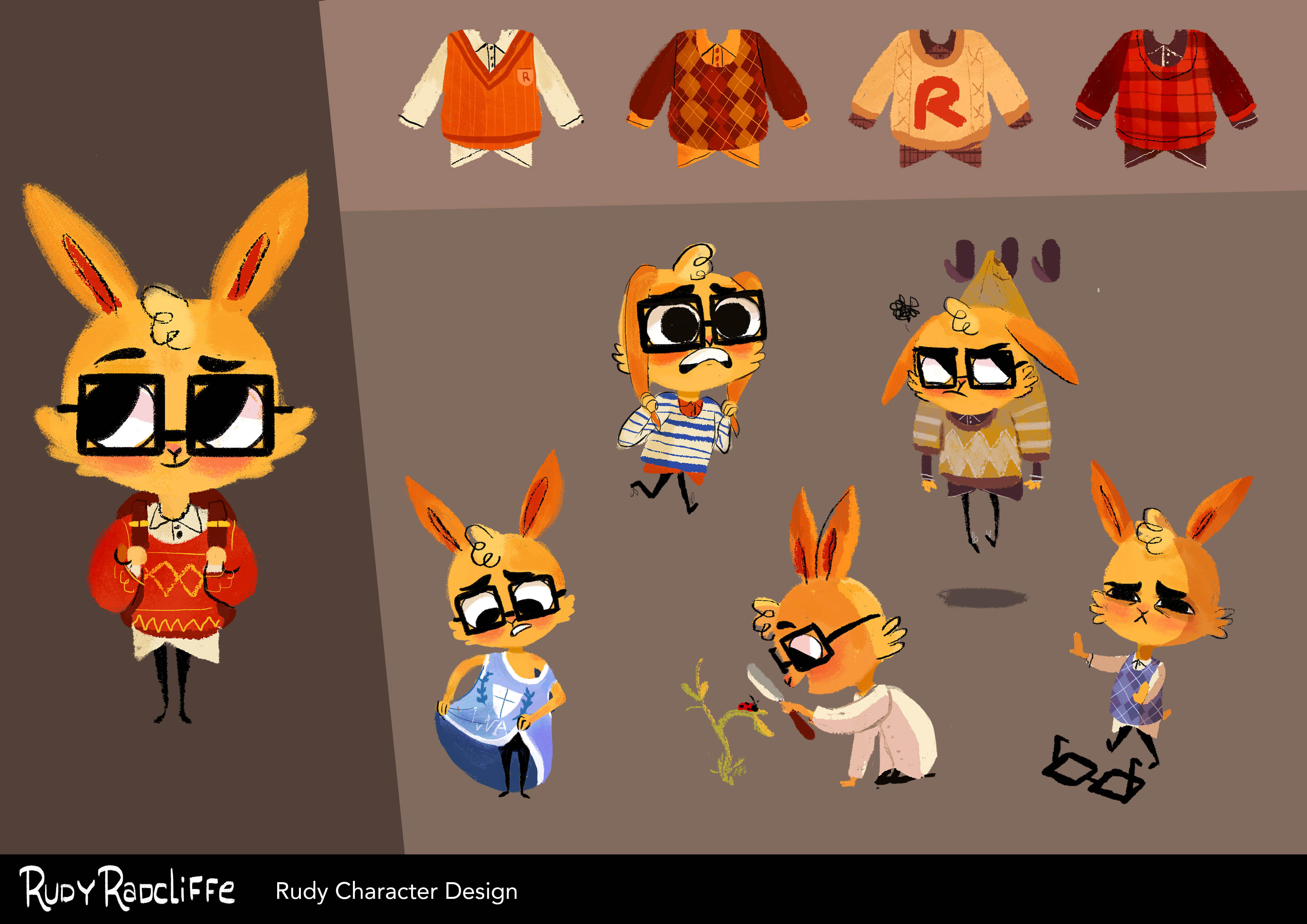
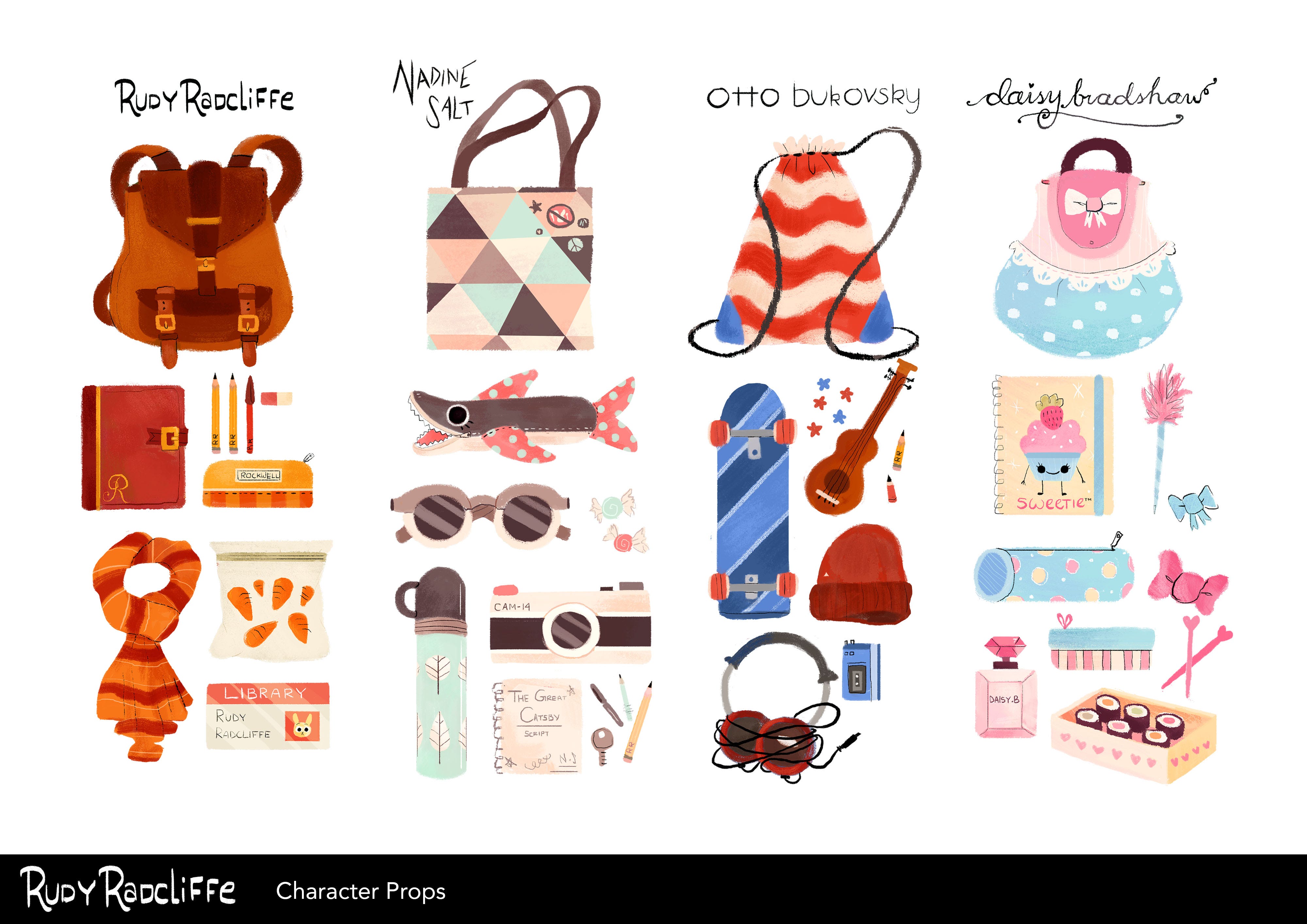
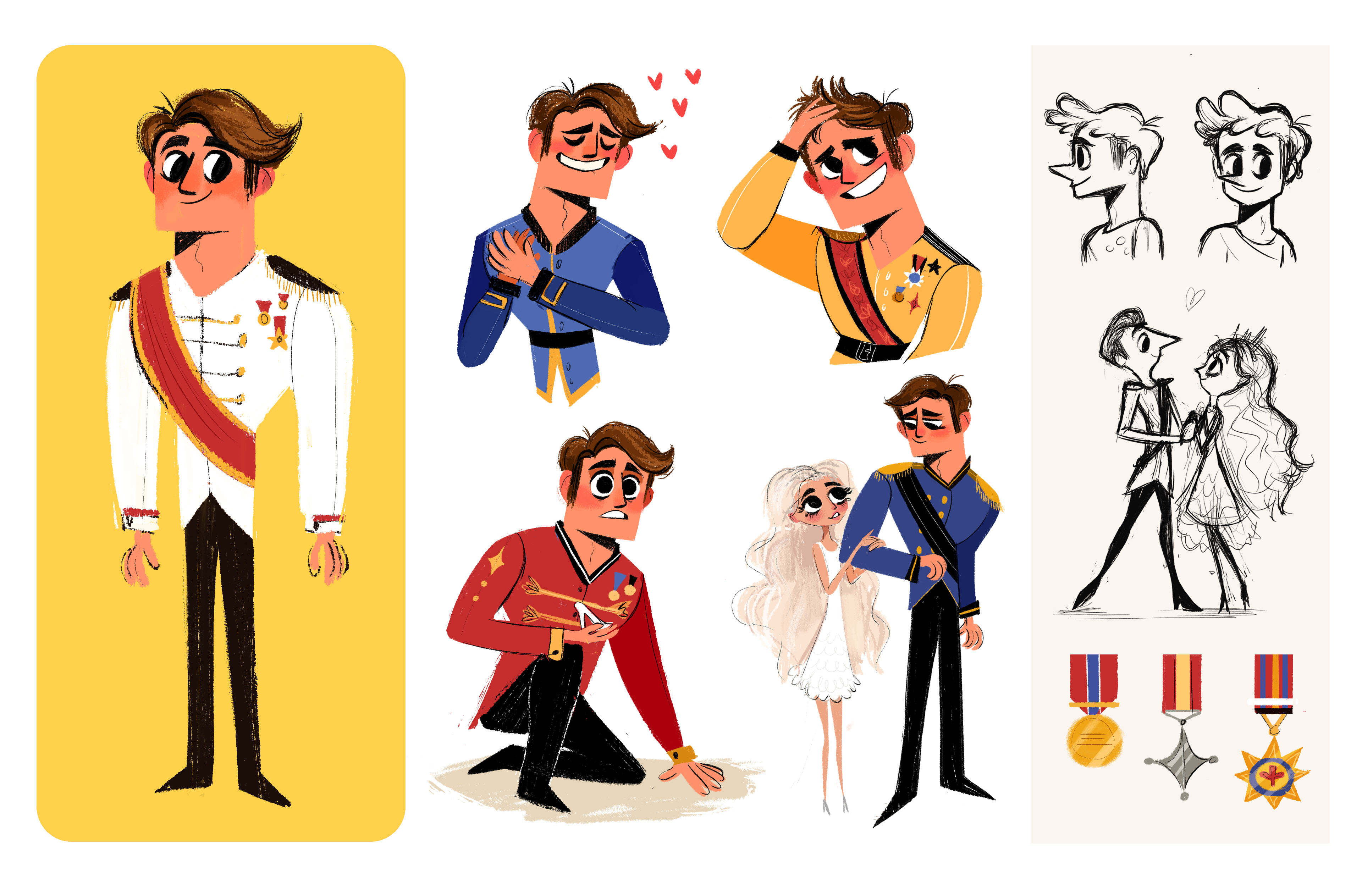
For several months under this virtual mentorship, I built a visual development portfolio based off of an original idea I hatched up that was essentially Zootopia but in high school (this was before Zootopia came out, so I’d say Disney owes me a pay cheque), as well as a retelling of Cinderella. I spent months working on my pieces at night after school, designing characters, props and backgrounds for a world I invented. It was a lot to add onto my plate, but that portfolio later helped me land my first studio job, and she taught me a lot about what working as an artist was like.

In my last semester at school, I went to the Bologna Children’s Book Fair with my classmates.
This was my first real exposure to the publishing world, which until that point, was still an abstract concept to me. I walked around wide-eyed and eager, spent way too much money on picture books, and nervously showed my portfolio to anyone who would look. I did a review with Nosy Crow who gave some very negative feedback that might have broken my spirit a little.
But among many places, I also handed my portfolio to two booths that stood out:
✸ The first was a Canadian publisher called Flowerpot Press. I had approached them and shown my portfolio, and initially brushed me off, saying they only work with Canadians. WELL WELL WELL, I said, I AM CANADIAN! And they took my card, and actually ended up reaching out a year and a half later for a book project.
✸ The other was an illustration agency called Lemonade Illustration.
At this point, I didn’t even really know what an agent did. I didn’t even understand the difference between a literary agency or an illustration agency. But it was a concept I had heard about through my online research and I figured maybe this was a way into the industry. So I applied to two dozen agencies… and only two responded.
And, yup, one of them was Lemonade.
If you’ve been following me for some time, you might already know that they were not a good fit for me. Looking back, my art definitely wasn’t ready; My portfolio could’ve used a lot more work, and I didn’t ask enough questions. I should’ve taken all those rejections as a clue that I should take a step back, rework my portfolio, and try again later. This definitely wasn’t something to rush into.
But at the time, I was so eager to get started that I took the first open door. But that’s a story for another day.

That same month, I got my first freelance job: a book cover for The Bling Queen, published by Macmillan.
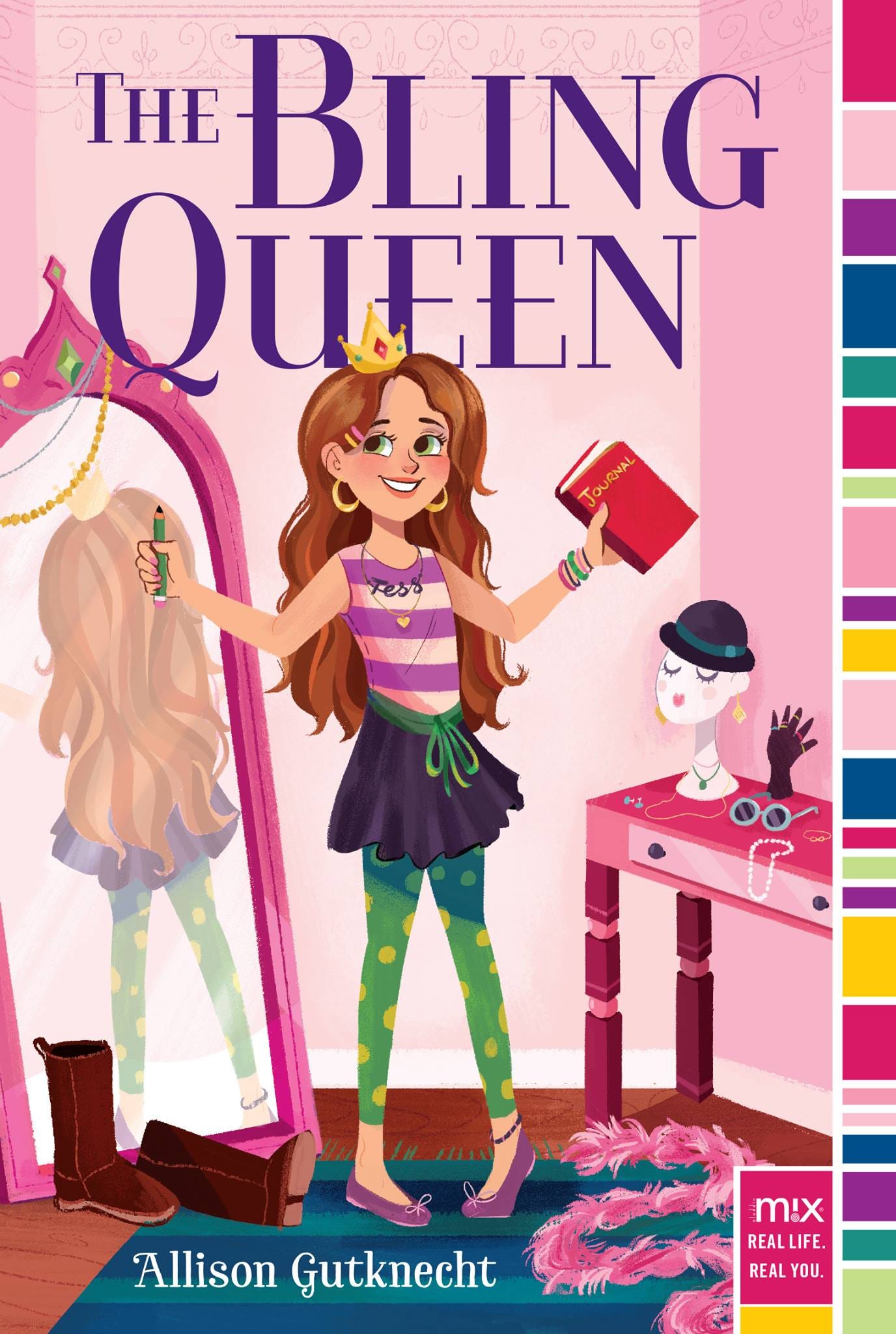
The art director actually found me through Tumblr. I had been posting online for the past few years on a fan account (called nevillegonnagiveuup, mostly making Disney and Dr Who graphics) and during schoo, I started been posting a lot of fan art.
A piece I did for Big Hero 6 caught the attention of the AD. She reached out, offered the gig, and I said yes!
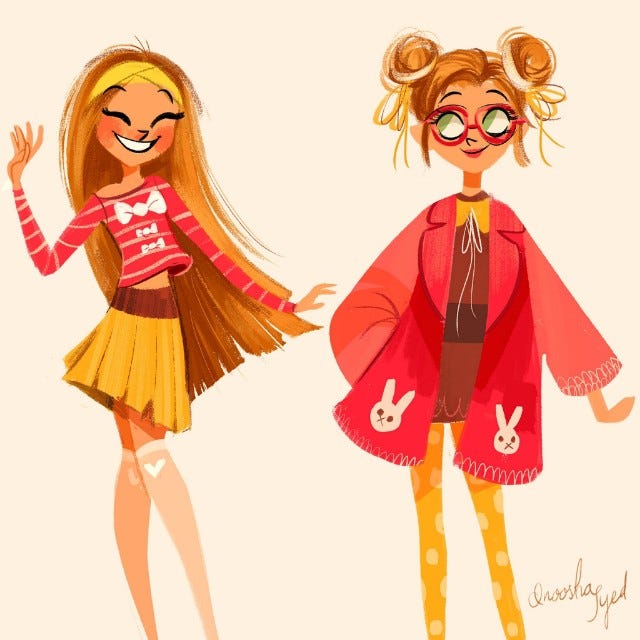
I can’t even look at the cover now haha, I truly had no idea what I was doing. But! It was my first real paid project. And it only happened because I was sharing my work online, especially the stuff I was passionate about.

After graduation in May, I landed a short-term job at a small indie game studio called Sunnyside Games, that was housed in the top floor of my art school’s building. They had seen my Chip and the Rainy Day art work during our thesis exhibition, and hired me to work on a mobile game they were working on for the summer.
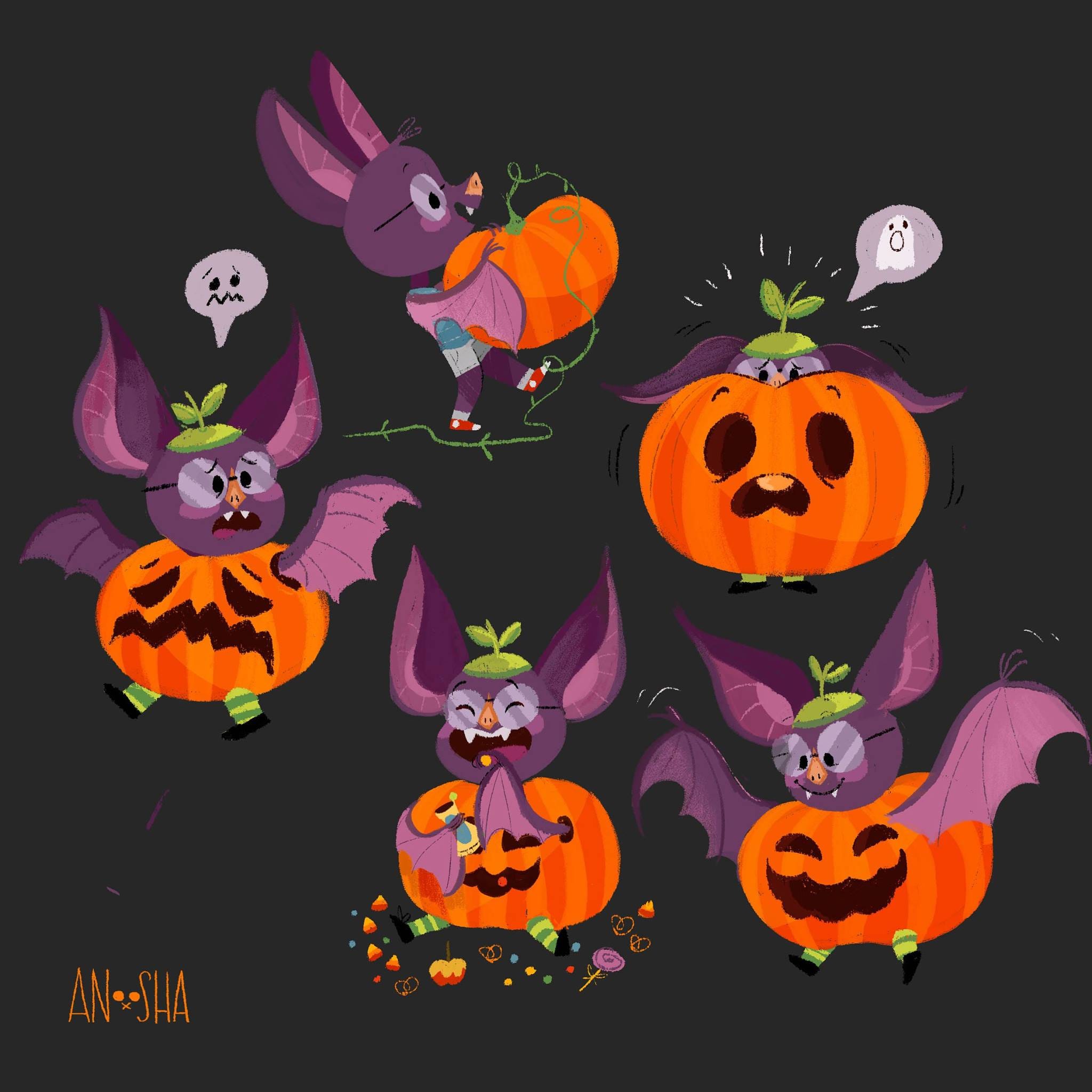
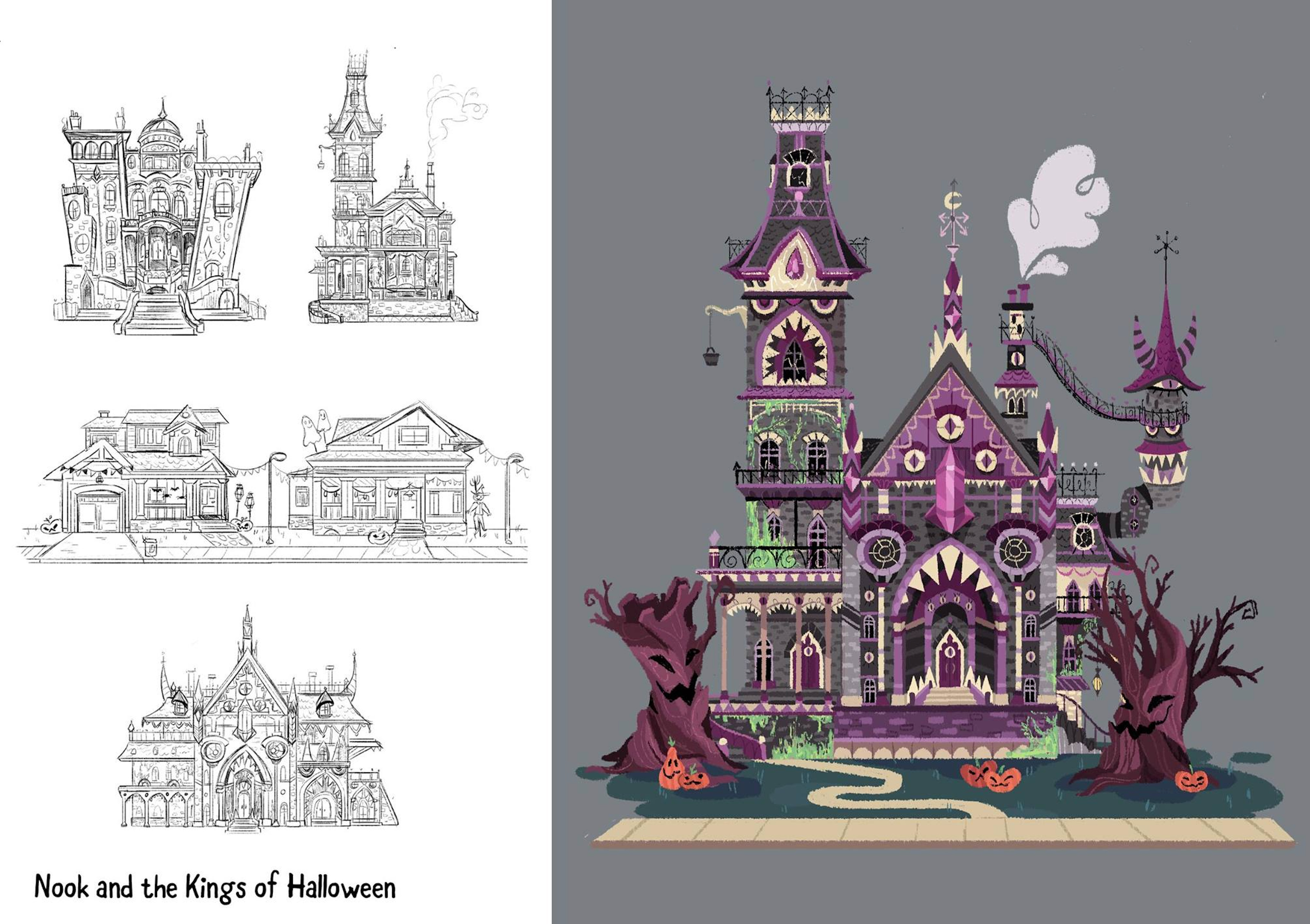
I got to design characters and locations for the first time in a real studio environment. I didn’t know how to do any of it professionally, but I learned as I went, and that job helped bridge the gap between school and the working world (especially since it was literally in the same building). I briefly got to experience a European work ethic. We had a two hour lunch break where we all went out and chilled in the park! No eating lunch at your desk. What a life!!!! Can we have that here please?
Then in July, shortly after signing, my agency booked me my first picture book gig: Busy Noisy School, a board book with Cottage Door Press.
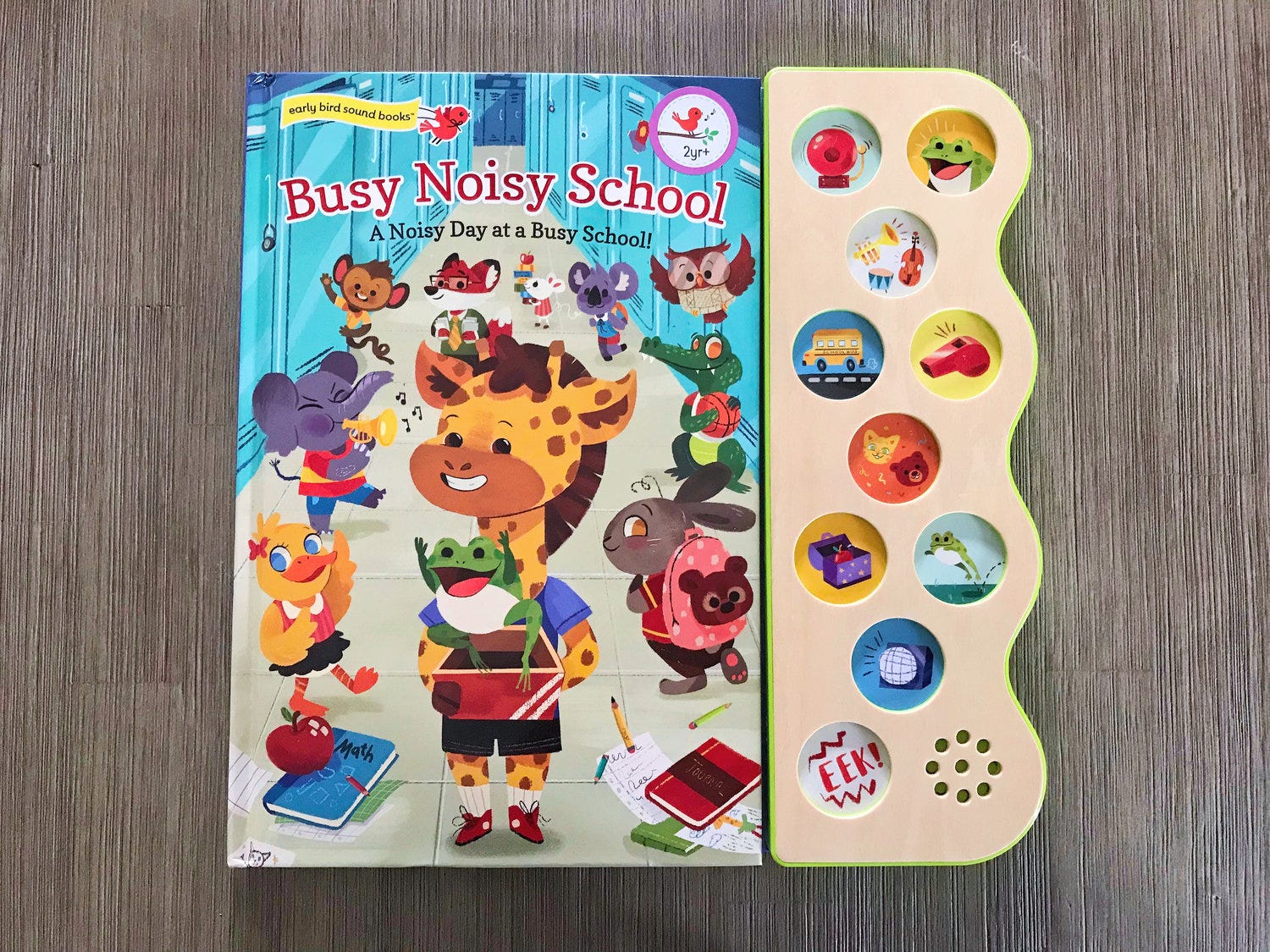
I was so excited to work on my very first book! I was coming in completely new with no background knowledge so I didn’t realize that this was a weird little project haha. The art director had already sketched roughs for every spread, and all I had to do was draw over them in my style. I’ve never had that happen again for another book, and it was weird, and I wouldn’t want to work that way now, but it was great since it was the training wheels I needed at the time.

In August, my family moved to Canada. I was 21, fresh out of school, and…. starting over in a brand new country. Anything I had built while I was in Europe was gone instantly. No network. No industry ties. No knowledge of how anything worked in North America.
But Toronto had an animation industry, and I had a brand spankin’ new portfolio from my mentorship with Meg Hunt, so I started applying everywhere I could. Look out world!
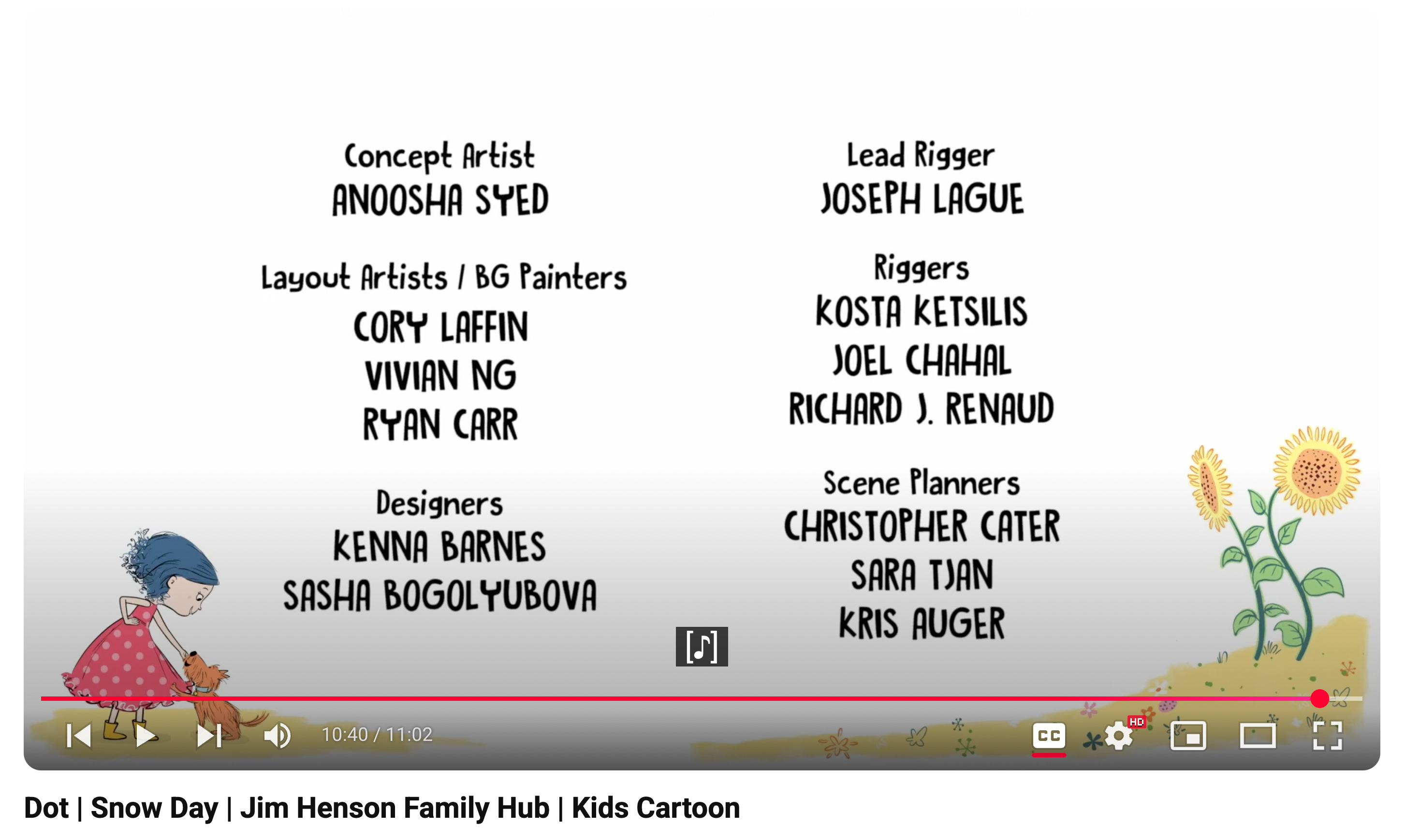
In October, I got hired Industrial Brothers, a small animation studio in Toronto. I worked on a preschool show called Dot as the sole designer doing a bit of everything characters, props, backgrounds, title cards. It was a lot of fun, and under my AD, I had a lot of control over how this little world looked.
Around this time, I also joined Twitter. Which, not to be dramatic completely changed the trajectory of my career. Since I hadn’t studied in North America, I was starting at zero. But Twitter, due to it’s conversation-based platform, was a place where I could easily connect with other artists, illustrators, animators, even recruiters and art directors.
I began posting regularly, joining challenges like Inktober, and collaborating on loads of fan zines. I made friends, actual art friends!!! Suddenly, I wasn’t just watching from the sidelines, I was in the industry! Social media has been crucial to building my career and connections, and it was entirely accessible to me.
It didn’t matter that I hadn’t gone to CalArts or Sheridan; I was slowly building my place in the industry one tweet, one DM, one piece of fan art, one zine at a time. It’s funny, I’ve had so many people assume that I was a Sheridan grad, because I became friends with a lot of their alumni. (And now that I’ve done a bunch of guest events for them, maybe I should get an honorary degree!!! To replace my unaccredited one!)

You don’t need to go to a famous school or live in a major city, or whatever criteria to have that perfect start.
Obviously, it can help! But we live in an incredible age where you can work from anywhere in the world and have infinite FREE knowledge on the internet.
So, yes it might be tougher, but you have so many tools in front of you, you just gotta work with them.
After my series is over, I’ll make another post on THE POWER OF THE INTERNET and how I got 90% of the gigs I’ve worked on.
But let’s wrap it up here for now!
See you next time!!! BYE
No posts
Comments
Nothing yet. Say the first thing.
Sign in to join the conversation.