
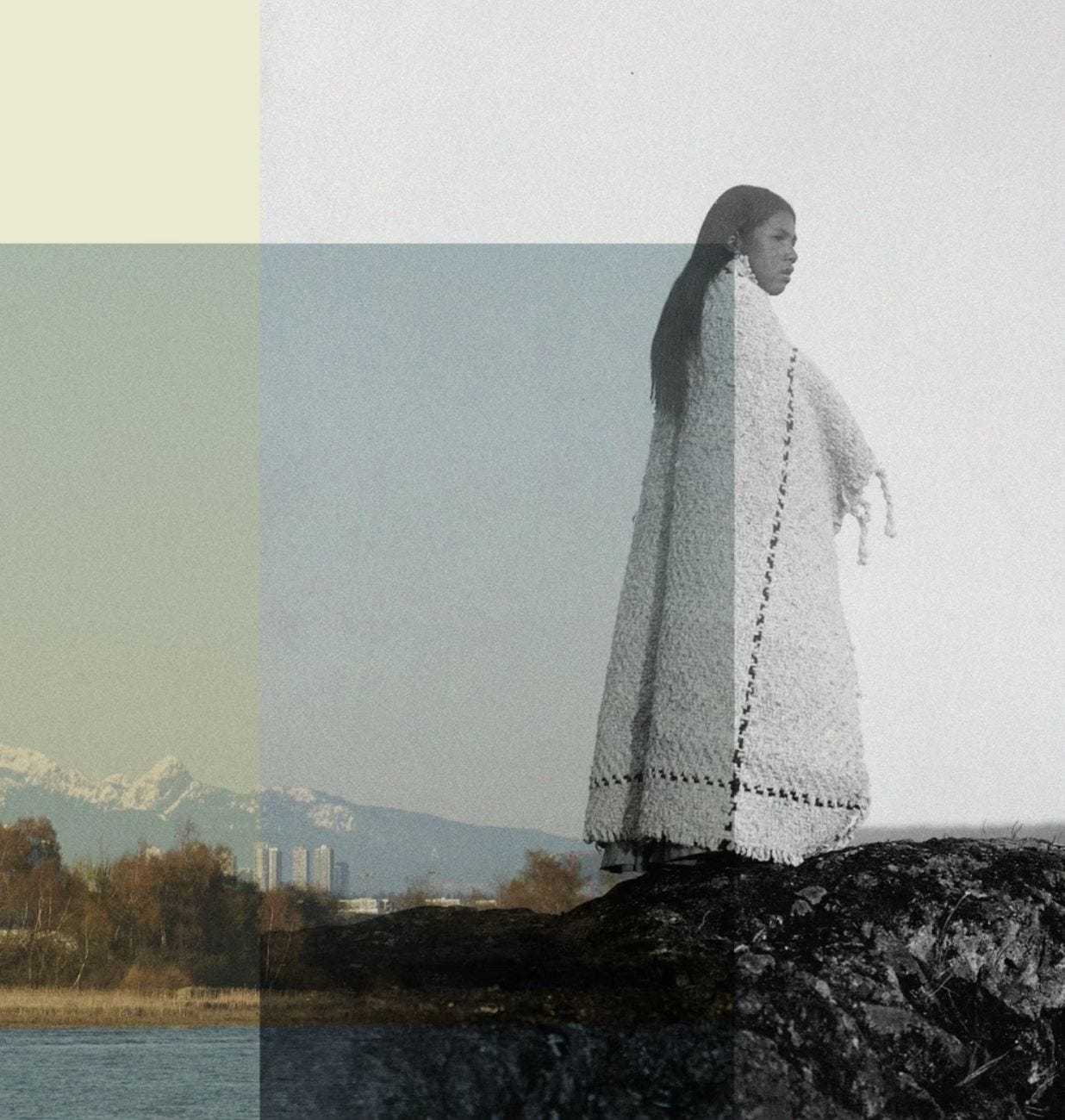
Image Source: The Atlantic, December 27, 2025
David Frum, a well-respected writer and political pundit recently wrote an interesting article for The Atlantic (published on December 27, 2025) titled Good Intentions Gone Bad: How Canada’s “reconciliation” with its Indigenous people went wrong1. Frum is a long-time resident of the U.S. and former speech writer for George W. Bush when he was President. Notwithstanding, he is Canadian born and therefore we think he should be given some latitude in commenting on a Canadian issue. The Canadian approach to indigenous relations and political policies should ordinarily not be influenced by an American perspective which will naturally be informed by an alternative perspective and divergent experiences. However, Frum maintains some entitlement due to his birthright and because he does his research, writes eloquently and presents a viable argument.
In fact, it is difficult to provide a counter-argument to some of the points he raises precisely because they are anchored in facts that cannot generally be refuted. For this reason, it is worth reading and understanding. It is also worth discussing and pointing out why the position he adopts as a result of his take on the circumstances is flawed.
He begins with the assertion that “Land Acknowledgements” which have become trendy in the opening of many meetings and public events are not harmless. Rather he submits that a land acknowledgment can be in some contexts an admission of guilt and, in Frum’s words a legally enforceable admission of wrongful possession. Unfortunately, Frum does not expand on this in a way that provides the reader with potential guidance on what land acknowledgements should or should not be.
The context in which he places his assertion is the relatively recent British Columbia Supreme Court decision in Cowichan Tribes v Canada. In particular, he links the concept of Land Acknowledgments and the courts’ general acceptance of “oral history” as evidence pertaining to the existence of Aboriginal title. As such he points out that accepting oral history runs counter to the usual rules against hearsay evidence precisely because the truth can be “elusive” when dealing with such evidence. Frum concludes that it ought not to be relied on in cases like the Cowichan claims for land in the lower B.C. mainland, which is worth many billions of dollars. Sidebar… the magnitude of the claim and the potential outcomes of an adverse decision are not relevant or at least should not be relevant to the courts’ deliberations.
So, here is another take on these arguments. With respect to Land Acknowledgements the point Frum raises with respect to recognizing that they ought to be considered as the possible and likely conceding of wrongful possession seems to be a valid concern. However, in the broader context of land claims across Canada we need to understand that Aboriginal title is not a pervasive reality. In fact, a great deal of land across the country was ceded through treaty arrangements and therefore any land acknowledgement related to those lands ought to be qualified as a past condition, for example “we acknowledge this meeting is taking place on the lands once inhabited as the traditional territories of the X peoples”. Other land in Canada was not in fact land occupied or used or improved or otherwise legitimately claimed by anyone. In those cases no acknowledgement would be appropriate. It was truly vacant land.
In yet other instances there may be disputes between different indigenous groups with respect to who actually can legitimately claim title. In one instance the Ontario government acknowledged Metis title with respect to lands in the Eastern part of the province which is also subject to claims by the Anishinaabe Algonquin Nation. Clearly the title for a parcel of land cannot be shared across multiple claimants. In those instances, the most appropriate thing to do in any Land Acknowledgement statement is recognize that title is under dispute (rather than taking sides per se).
And in other instances Aboriginal title has been proven and acknowledged and therefore a Land Acknowledgement stating such is entirely appropriate.
The point is that Land Acknowledgements should not be used as performative acts of appeasement. They have to consider the established facts and when the facts warrant, include wording in the statements with respect to any disputes that may exist and when relevant recognize that treaties exist in which the land was ceded etc. In the case of a dispute, special care must be given to ensure that the Land Acknowledgement does not itself become evidence of an admission of wrongful possession. Frum’s argument does not distiquish this reality, therefore his sweeping conclusion and argument just seems incomplete in this regard.
For emphasis it is important in Canada to understand that circumstances vary across the country. In many cases, like with the Numbered Treaties entered into after Confederation land was actually ceded. In other cases, such as the Peace and Friendship treaties one has to look at the specifics of each treaty to determine what was and wasn’t actually ceded. In others like in Newfoundland there are no Indigenous interests that can lay claim to any land. Yet in other cases, such as we find in most of B.C. there simply are no treaties and therefore the courts and anyone else required to determine if Aboriginal title exists, has to rely on historical evidence. .
This brings us to Frum’s issue of allowing oral history as evidence. While the assertion that such hearsay evidence may have the problem of dealing with “the elusive nature of the truth” the same thing can be said of other historical accounts, often written, which have codified history with inherent biases, which equally obfuscate the truth. Incorporating oral history as evidence is an important element in reconciliation as it is integral in blending indigenous law and customs with Canadian legal norms in a way that leads to outcomes that properly consider both the traditions, customs and needs of the indigenous people and the “settler” community.
Granted, doing so puts an onus on the courts to give proper weight to oral history as evidence and compare that to the weight given to alternative settler accounts. And that is the role courts properly do and should play. So again, Frum raises a solid point but one that fails when considered against the alternative. In other words, if the courts did not consider oral history at all they would rely on other historical evidence that it has been proven over and over again can be seriously flawed and is also susceptible to eluding the truth. Just because the issue at hand is material (i.e. worth billions of dollars) and the outcome is of significant consequence (people who currently “own” the property are impacted) does not negate the underlying principles that recognize the value of historic oral accounts.
A real issue that this debate brings to light is the chill created by the impact the Cowichan case has had on private landholders who own land that is part of the overall claim area. Even though the court has not dealt with those lands directly it has echoed the decision of other courts to say, in some instances legitimate claims of Aboriginal Title take precedent over fee simple claims. The court in the Cowichan case sent that matter back to the parties to negotiate a solution rather than taking a specific position with respect to its disposition and prescribing a solution or award.
Regardless, it is true the impact has been the loss of land values as the land in question remains in limbo waiting for the parties to get together and negotiate a more decisive outcome, or for a higher court to make a determination on appeal. Those losses are very real. The market has reacted because of the uncertainty created by the dispute and exaggerated by fear mongers who seem to suggest that the courts have ruled incorrectly and that claims for Aboriginal Title ought to be dismissed. Frum joins these fear mongers when he asserts that what is at stake may be all privately held land across Canada (and maybe in the U.S.) – that simply is not a fair characterization of the situation nor true in this case.
These recent land value losses may have been avoided through a negotiated settlement that took into consideration how private interest could be preserved. It is completely in the interests of the Cowichan Tribes to preserve land values and ensure that their interests, which absolutely coincide with the existing private interests, could be protected. It is the fact that the government did not consider the consequences of their actions (to appeal the case)) that has developed into the current state of uncertainty.
As we pointed out in past articles, in the case of Haida Gwaii treaty (formally the Chiix̲uujin / Chaaw K̲aawgaa “Big Tide (Low Water)” Haida Title Lands Agreement) provisions were made to allow fee simple land owners to retain their title to their property, it also allows these current owners them to sell their land, it allows the Haida to buy that land directly or to acquire the land and incorporate it under Aboriginal title. That agreement is not only a specific land claim settlement but also goes further to recognize the Haida Nation as the holder of inherent rights of governance and self-determination.
So, we must accept that the Cowichan decision has resulted in certain adverse effects with respect to land values because the final outcome remains uncertain. The reality is land value losses might have been avoided by adopting a more proactive stance and to have undertaken immediate work to begin negotiations. It has long been our assertion that relying on the courts to resolve these disputes is the wrong approach as it does not further reconciliation as effectively as bargaining does. The inconsistency of approach and strategy that governments continue to exhibit across Canada and even within a province (such as B.C. in the contrast between the Haida Gwaii negotiated agreement and the Cowichan claim being appealed and litigation brought forward by the same government) simply creates more uncertainty for all stakeholders and provides no assurance as to expected outcomes.
To reiterate, Frum’s claim that the uncertainty regarding land claims and current fee simple property rights extends to all land in Canada is simply not true. The Cowichan decision cannot undo the ceding of land by treaty, as it cannot retroactively change decisions of the past including appropriations. Cowichan case deals with a specific set of circumstances and should not be interpreted as the beginning of some massive effort by indigenous people to grab all the land back and return Canada to some state that existed several hundred years ago.
It is accurate many indigenous people, but in particular First Nations groups, are attempting to ensure that they can reclaim some semblance of their rightful title to some traditional lands that will allow them a place where they can exercise self-government and self-determination. Moreover, with land to call their own they will gain the prospect for economic development that will allow them to escape the welfare dependence settlers have imposed on them. This will allow them to take charge of their economic well-being and become productive partners and viable contributors to a more diverse confederation of sovereign entities resulting in a better and unique Canada.
What we need is to continue to implement our joint commitments as enshrined in our Constitution which honours our shared Indigenous, French and English roots. At its highest level, the constitution offers guidance and a vision for what Canada is and looks like and we need to work hard to expedite the process of reconciliation so we can continue on our path, in unison.
Comments
Nothing yet. Say the first thing.
Sign in to join the conversation.