
A “Minsky moment” is a sudden, severe market collapse that marks the end of a prolonged period of debt-fueled speculative growth. Named after American economist Hyman Minsky, it happens when investors can no longer cover their spiraling loan payments, triggering a frantic, chain-reaction sell-off.
First we turn to the passing of Alan Greenspan - the ‘maestro’ - one of the most powerful of American Federal Reserve governors. He died two days ago, on 22nd June. Described by the London Times as “one of the giants of financial history” Greenspan was 100 years old. On Gordon Brown’s advice he was granted an honorary knighthood in 2002 by the Queen of England for - let me just lay this out - his
outstanding contributions to global economic stability.
In a moment of déjà vu the NASDAQ chose June 22nd to get the AI ‘jitters' and declined 2.2. per cent over two days. Just after that Korea’s tech-heavy benchmark stock market index fell 10 per cent on Tuesday, 23rd, with Samsung Electronics recording double-digit drops.
Global financial instability - a dangerous feature of Greenspan’s tenure - had returned.
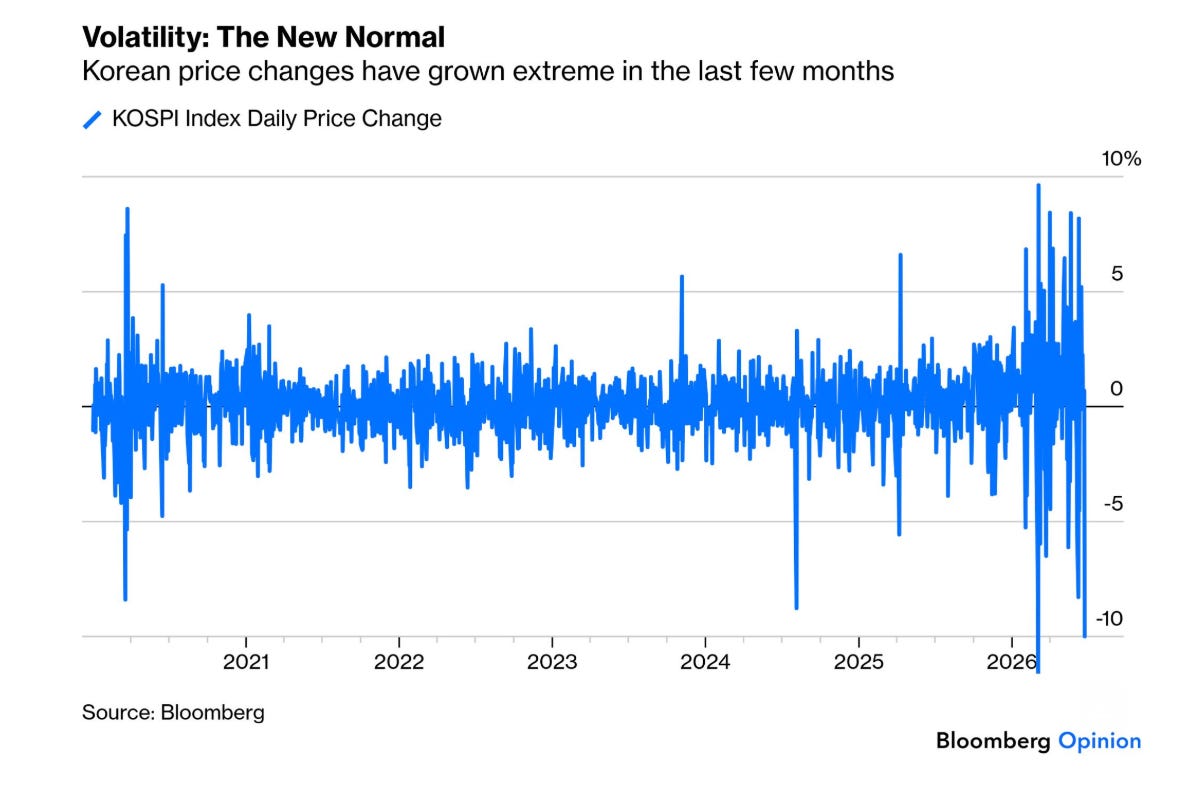
Some are suggesting current volatility was caused by the hawkish statement issued a week earlier by Kevin Warsh, new Governor of the Federal Reserve. If so, then Warsh is sailing close to Greenspan’s ‘free market’ iceberg by threatening to raise rates against the heavily indebted Tech sector. If today’s market volatility is the beginning of a serious AI downturn, then dependence on expensive debt financing could lead to a wave of AI-relatied credit defaults.
AI debt, as Oliver Wyman explains, is
concentrated, lumpy, and vulnerable to idiosyncratic risks.
Déjà vu and an earlier volatility
Back in February 2007 - months before the implosion of ‘Debtonation Day’ on 9 August, 2007 - the Dow Jones Industrial Average suddenly fell 3.3% while in the Far East, Chinese stocks slid by 9 per cent. Volatility rose too, as this chart illustrates..
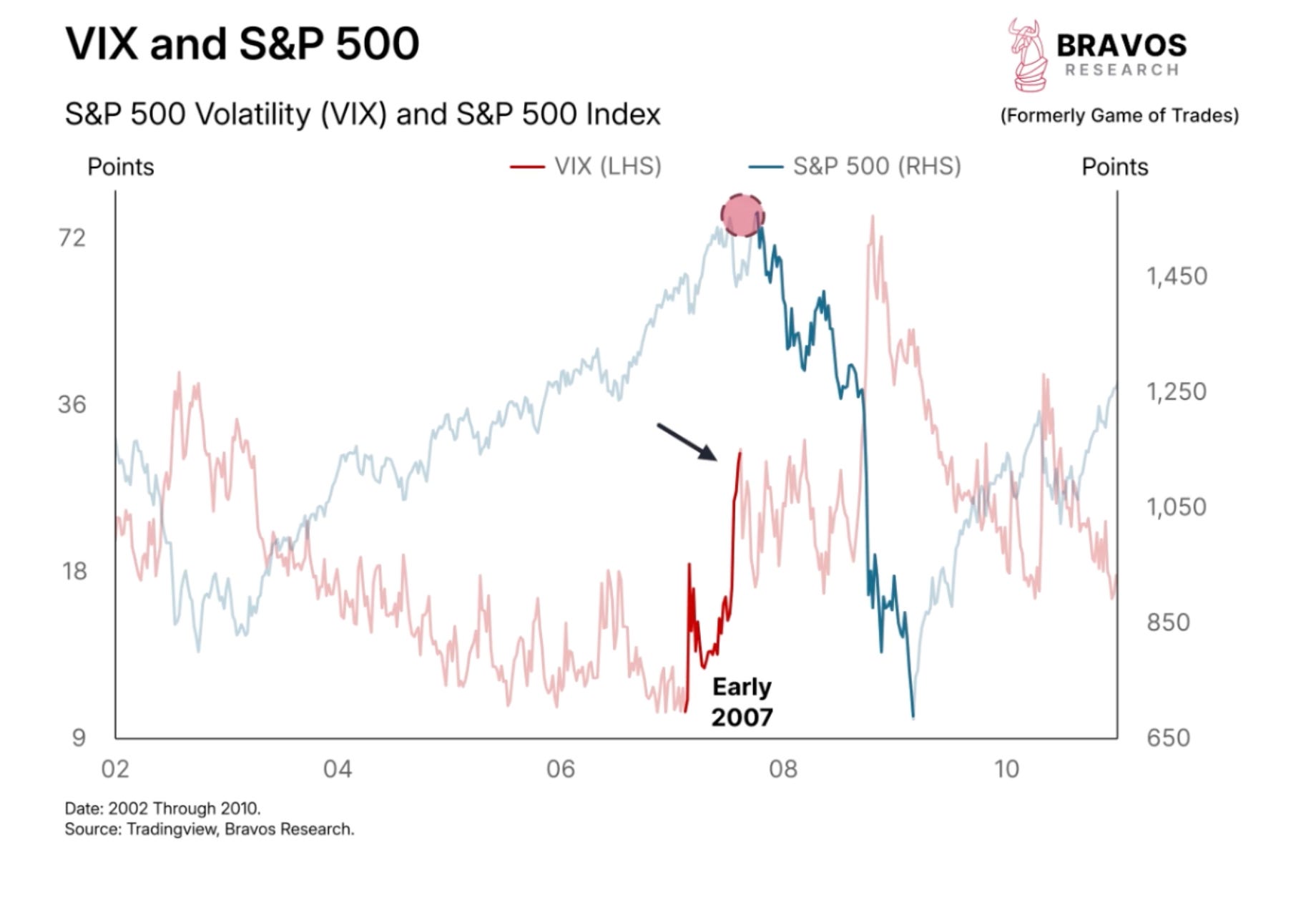
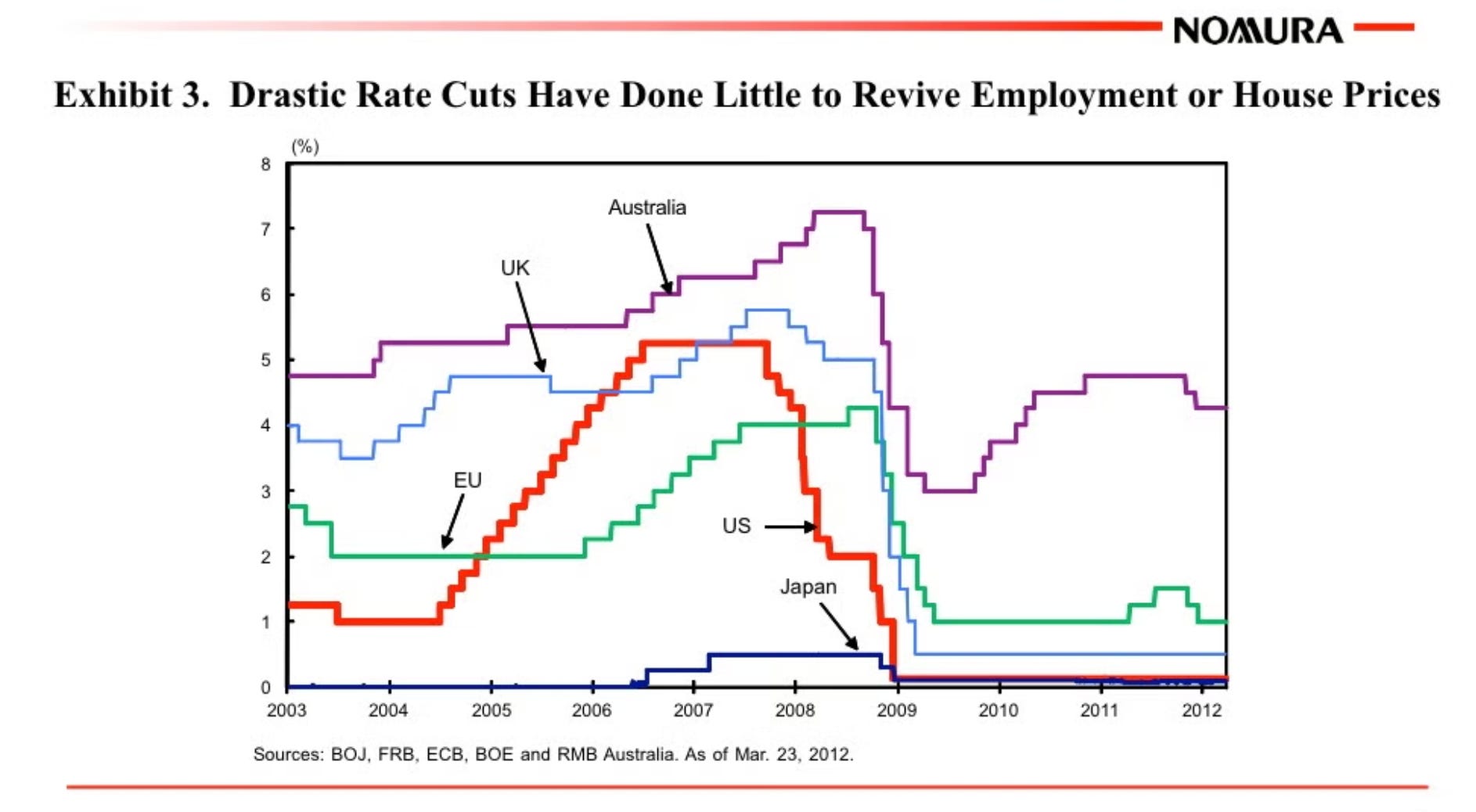
Governor Greenspan and the Fed’s Open Market Committee had been ratcheting up interest rates to curb the ‘excessive exuberance’ of markets drunk on the bubble of easy, cheap credit overseen and deregulated by “the giant of financial markets”.
Instead of curbing markets, rising real interest rates were bankrupting heavily indebted households and corporates. It took an agonisingly long time before Greenspan faced economic reality. Only late in 2008 did the ‘maestro’ begin to acknowledge the economic wreckage and instability - just as the US economy spiralled into freefall. Only then did he and the FOMC reverse the Fed’s high real rates.
It was too late. And in any case, we can be sure Greenspan never took responsibility for global economic failure.
As Oliver Wyman explains the GFC imploded in 2008 as
..banks discovered they owned far more US housing risk than their internal reports suggested. They might soon discover the same about data-center and digital infrastructure risk — only this time, exposures are spread across corporate, real estate, infrastructure, fund financing, and alternative credit books.
As the liquid and private credit markets continue to advance, we see an incremental $35 billion to $50 billion of existing revenues potentially at risk for wholesale banks. This represents 8-11% of the total credit revenue for these players today.
The more leverage, the more fuel, the hotter the fire.
Musk: will investors ever learn?
After the GFC - when governments and central bankers had folded and bailed out Wall Street - the New York Times published a rigorous and in-depth report in 2016: How Donald Trump Bankrupted His Atlantic City Casinos, but Still Earned Millions. In it, investigative journalists explained Trump’s looting of bondholders and stockholders.
His casino companies made four trips to bankruptcy court, each time persuading bondholders to accept less money rather than be wiped out. But the companies repeatedly added more expensive debt and returned to the court for protection from lenders (i.e. bondholders).
After narrowly escaping financial ruin in the early 1990s by delaying payments on his debts, Mr. Trump avoided a second potential crisis by taking his casinos public and shifting the risk to stockholders.
He said he abhorred junk bonds, which were then popular, because they carried a bigger risk of default and thus came with higher interest rates.
Within months, he reversed course, issuing $675 million worth of junk bonds, with a 14 percent interest rate, to finish construction and get the Taj open. In recent interviews, Mr. Trump has said that with each financing he routinely took money out of the casinos to invest in Manhattan real estate. Total debt on the Taj exceeded $820 million.
And he never was able to draw in enough gamblers to support all of the borrowing.
During a decade when other casinos thrived, Mr. Trump’s lagged, posting huge losses year after year.
Stock and bondholders lost more than $1.5 billion
…..even as his companies did poorly, Mr. Trump did well. He put up little of his own money, shifted personal debts to the casinos and collected millions of dollars in salary, bonuses and other payments. The burden of his failures fell on investors and others who had bet on his business acumen.
Plus ça change, plus c'est la même chose: Elon Musk’s Giant Red Flags
At the heart of today’s debt-fuelled conflagration is Elon Musk. Before the launch of his IPO, Musk borrowed $20 billion from Wall St banks to to refinance $17.5 billion of high-interest junk debt inherited when he merged his heavily indebted X (formerly Twitter) and xAI platforms under the SpaceX umbrella.
Now Musk is issuing $25 billion in bonds to persuade retail investors and mutual funds they should help pay down what the FT calls the company’s onerously expensive “bridge loans” tied to Musk’s purchase of Twitter.
In return investors are demanding higher interest rates - 1.1. to 1.75 percentage points above US Treasuries - from SpaceX as a condition for bankrolling Musk’s debts and the company’s gambles on rockets for Mars and AI. Other tech companies have issued large debt issues, but there is a big difference because .
they are hugely profitable software-centred companies… SpaceX is lossmaking to the tune of $9bn a year. Nonetheless, rating agencies S&P Global Ratings, Moody’s and Fitch have assigned Musk’s company investment-grade scores within the BBB band.
Here we go again. Spinning the wheels of The Global Casino while credit markets and rating agencies fuel the fires of the hyper-financialised economy.
No posts
Comments
Nothing yet. Say the first thing.
Sign in to join the conversation.