
I have always loved the idea of doing a residency. Getting into a different environment with little to no “real life” baggage sounds heavenly. Unfortunately, the way I work, I kind of need a lot of my stuff with me. Plus, completely stepping out of your life is harder than you might think.
At some point it occurred to me that I could take the concept of a residency and create my own. While I understand that an important aspect of a “real” residency is the connections you make, what I really needed was a specific block of time devoted entirely to my art practice.
Most residencies require an application process. I think there’s actually value in that process beyond simply making you jump through hoops. It forces you to sit down and clarify what you want to do, why you want to do it, and how you’re going to spend the time.
Because I’d had several sabbaticals in the past, I went back and found one of my old applications. Filling it out helped me get organized and clarify what I wanted to accomplish. In a way, it became a contract with myself.
Here’s what I came up with. I’ve shared my answers to the first three questions; after that I’ve just written an overview of how I approached them.
Residency proposal: February 2026
1. Why: briefly state the purpose of your residency.
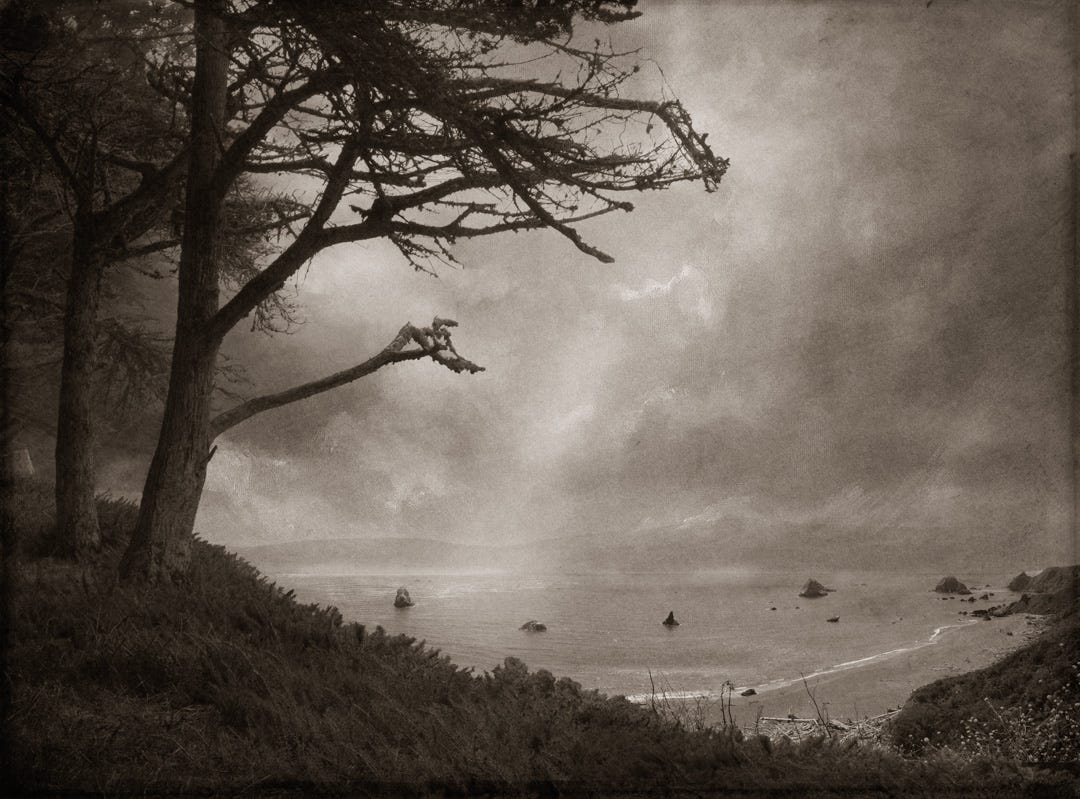
I’ve been working on a project inspired by insomnia (working title: Between Dusk and Dawn) for the past two years and I need to feel finished with it so I can both move on and start showing the work. I’ve done so much experimenting and exploration that I’m not even really sure what I have.
2. What: give all pertinent details of your proposed plan including research, activities, and desired outcomes.
Create a list of all potential existing images from the series.
Do a hard edit and bring it down to 15+ final candidates.
Create a printed portfolio of the final images, while evaluating what method is best for each image.
The bonus would be to start on the gum over platinum as well. Not sure if all are suitable for this method.
3. When: provide a timeline that indicates how the activities in your plan will be completed.
Catalog and organize all existing prints and images.
Clean studio and prep for working-check on chemistry and paper.
Darkroom set-up, printing negatives, and then positives.
4. Describe how this will contribute to your goals.
This section turned out to be more valuable than I expected because it forced me to place the activity within a larger goal for the work. It’s easy to focus on tasks (editing images, making prints, organizing files) but stepping back and asking where those activities are leading can change how you approach them.
In my case, the larger goal was to move beyond a limited-edition portfolio approach and begin exploring what an installed body of work might look like. I also wanted to investigate which images might benefit from becoming variable or unique works rather than treating each image the same way.
5. Describe how you will share the outcomes.
What happens next? Will you apply for exhibitions? Schedule portfolio reviews? Create a book? Share the work online? Thinking about the next step helps ensure the work doesn’t simply return to a shelf when the residency is over.
6. Any needed preparation for the residency or obligations during this time?
If you’re like me, there are some real world obligations that need to be addressed before you can start this process. Basically, this is where you figure out how to clear the decks.
The whole process was surprisingly valuable. Filling out the application forced me to see where I was in the series, what was still missing, and what would actually constitute “finished.”
I gave myself ten days and accomplished a tremendous amount. Oddly enough, the catalog ended up being one of the most useful outcomes. Seeing all the work together helped me realize I had more finished pieces than I thought. It also revealed gaps and possibilities that were harder to see when I was looking at images one at a time.
Would I have gotten some of that done eventually? Probably. But having a defined period of time, a written plan, and a clear set of outcomes made all the difference. In many ways, the application was as important as the residency itself.
So, if a formal residency isn’t practical right now, consider designing your own. Borrow the structure, write yourself an application, define a time frame, and see what happens. You may discover that the act of planning is part of the creative work.
Thanks for reading The River: Notes From the Studio! Subscribe for free to receive new posts and support my work.
Comments
Nothing yet. Say the first thing.
Sign in to join the conversation.