
About once a week, a pregnant mom who has already had a normal, reassuring 20-24 week ultrasound asks me to order another one that I don’t think is medically necessary.
These requests put me in a difficult position. I want moms to like me! I also want them to feel reassured, confident, and excited about their pregnancies. I completely understand the appeal of ultrasounds—seeing your baby on the big screen is fun. The pictures and videos are cool. They can be put on the refrigerator, shared on social media, and given to partners and grandparents to help them bond and make the pregnancy feel real. I feel like such a giant killjoy when I have to say no to these requests!
And sometimes I have lingering doubts about my decision. What if I reassure her that everything is fine, something goes wrong, and then she blames me for a bad outcome because I did not order an extra ultrasound? Intellectually, I know an additional scan would not prevent most complications, but many people have an inflated sense of how important ultrasounds really are, believing that they ensure the safety of a pregnancy.
They are viewed as perhaps the most important part of prenatal care, even though strong evidence that routine or repeated ultrasounds improve outcomes is lacking.

So I don’t say “no” to extra ultrasounds because I want to be dismissive of a patient’s concerns or take away a meaningful experience. I am mostly just trying to provide responsible maternity care in a system where many people seem unaware of the costs and downstream consequences of unnecessary medical testing.
This essay is my attempt to explain those consequences.
I wish more pregnant people understood what ultrasounds do well and when they are helpful—but also where they fall short and why more isn’t always better. I also want to give some information that may help moms advocate for themselves if they have concerns about the number or frequency of ultrasounds that are being recommended for them. Read on if this topic is of interest to you!
Why Are So Many Ultrasounds Being Ordered These Days?
I had three kids between 2009 and 2015, and had a total of four ultrasounds, which now seems like a drop in the bucket. Recent research suggests that women have an average of 4-5 ultrasounds per pregnancy, and that this number has increased substantially in recent years.
I’ve definitely noticed inflationary ultrasound use in my 20 years as a midwife. When I first started, our patients were getting one ultrasound in pregnancy. Now it’s at least two, with many patients having five or more. Many times, I will send a mom for her anatomy ultrasound at 20-24 weeks, and she will come back with several additional ultrasounds recommended by the maternal-fetal medicine physicians with whom I work. Personally, I think some of these scans are a good idea and warranted…and some are not.
So my critique here isn’t just of patients who want extra ultrasounds. It’s also of a medical system that prioritizes generating revenue and overvalues technology even when it hasn’t been shown to improve outcomes. This system frequently leaves moms in the dark about why additional ultrasounds are being ordered, presenting them as essential care instead of optional. The message moms receive, implicit or explicit, is that declining these ultrasounds could put their baby at serious risk. And what mom can say “no” when she believes her baby’s health is on the line?
What is rarely shared with patients is that many recommendations around additional or repeat ultrasounds are based on Level C evidence—meaning expert opinion rather than strong evidence that additional scans improve maternal or infant outcomes. This includes many recommendations around the frequency and follow-up use of ultrasounds, and the use of ultrasound for a biophysical profile test (BPP).
In practice, increased ultrasound surveillance is often applied to patients labeled “high risk,” such as those with obesity or advanced maternal age. But there is actually limited evidence that specific protocols—like weekly BPPs rather than nonstress tests (NSTs)—improve outcomes. While certain patients may have a higher baseline risk of stillbirth, it does not necessarily follow that more frequent testing reduces that risk.
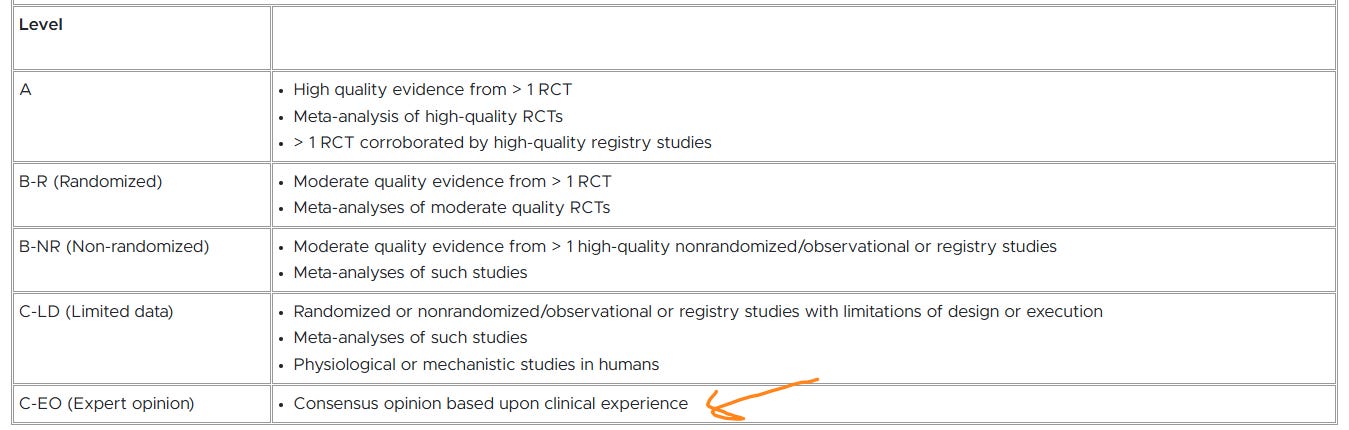
I don’t want to completely devalue expert opinion here—we don’t always have perfect data to go on, and in these cases, physicians and scientists who have spent years caring for pregnant moms definitely have valuable opinions to offer. But these experts also carry their own biases.
First, they are strongly motivated by “CYA” (cover your a#$) medicine and worry about being sued if they fail to uncover a health problem, and a stillbirth occurs or a very disabled baby is born. These fears aren’t unreasonable: a study of malpractice suits showed that missing an anomaly on an ultrasound is a common reason to sue, and there have been lawsuits for “wrongful life” of a baby with a congenital abnormality. I’m going to be honest: I find this incredibly frustrating and unfair, and I wish there were laws protecting health care providers from this kind of legal action.
Another reason for ordering a lot of ultrasounds is that, in my experience, physicians tend to come from a school of thought that prioritizes tracking every detail with scientific precision and uncovering every possible abnormality, however minor or unlikely it is to affect the end outcome. Sometimes there is an unwillingness to accept uncertainty which can bias caregivers toward making firm recommendations based on imperfect data rather than simply admitting that they don’t know, for example, the severity of an abnormality or the prognosis for a baby. Instead, it becomes, “Let’s do one more ultrasound,” even when another ultrasound is very unlikely to yield useful, actionable information.
While trials have shown that routine ultrasound improves detection of anomalies and multiple pregnancies (moderate-quality evidence), they have not demonstrated improvements in perinatal mortality or other hard clinical outcomes. Yet clinicians don’t always take the time to explain this to a mom, ask what her priorities are, or give her the option of deferring another ultrasound versus following up with one.
Meanwhile, a mom may have a very different perspective. She may want to accept things as they are, and avoid the inconvenience of missed work and difficulty finding childcare to attend additional appointments. She may want to avoid bills piling up for several additional ultrasounds. She may find that the information gleaned from the ultrasound isn’t all that helpful to her, and that the process of attending multiple follow up appointments is anxiety-provoking rather than reassuring.
Sometimes it’s just a matter of miscommunication: the clinician assumes the mom wants all possible knowledge and data (that is, after all, often their personal bias as a scientist, and probably what they would want as a patient!), whereas the mom just wants reassurance, or to know if the family should start preparing for a catastrophic or life-changing diagnosis.
In my experience based on conversations with patients, ultrasound findings are not always communicated by physicians in a way that clearly distinguishes between clinically significant abnormalities and incidental findings. Over the years, I’ve talked with many moms who were frightened by ultrasound findings that were actually quite benign.
To be fair, I work with a lot of Spanish-speaking patients, so things can get lost in translation. But even well-intentioned providers can sometimes amplify anxiety by blowing minor findings out of proportion and ordering unnecessary follow-up ultrasounds ad nauseum. I’ve spent countless hours in my office talking moms off the ledge because minor or insignificant ultrasound findings were not explained well and triggered a cascade of questions, usually prompted by the “need” to return for another ultrasound. I hate to see someone’s otherwise normal pregnancy derailed by an obsession over some minor ultrasound finding.
I’m going to pause here and try to put into words why this bothers me.
Pregnancy should be a special, exciting time where a mom feels confident and supported in her ability to birth a healthy baby. When we rely too much on technology in a way that doesn’t meaningfully improve outcomes, we risk shifting that trust away from the mother and onto machines. Over time, I think that has a real psychological effect on moms, decreasing belief in their innate ability to give birth and care for a newborn.
And while we pour money into this expensive intervention, other things that could potentially improve maternal and infant outcomes a great deal more—like doulas, midwives, birth centers, mental health care, and nutrition support—are under resourced or cast aside. That really bugs me.
How Much Does An Ultrasound Cost?
There’s an uncomfortable reality that rarely gets discussed: ultrasounds cost money. A lot of money.
Sometimes patients don’t see the financial impact of ultrasounds directly, which is honestly part of the problem. I care for many women on Medicaid, which means ultrasounds are ultimately paid for by taxpayers.
For patients with private insurance, the costs are spread across the insurance pool and show up later in premiums and overall healthcare spending. And because care during pregnancy and birth are expensive, many privately insured moms will meet their deductible or out-of-pocket maximum during the year anyway, so an additional ultrasound may not feel like it changes their personal financial situation very much.
And obviously, when you’re pregnant, it is normal to want reassurance. Moms might justify extra ultrasounds and feel like their expense is secondary to the peace of mind they bring, especially if a trusted midwife or doctor is recommending them.
But even when a patient doesn’t personally feel the financial impact of too many ultrasounds, the system does. Every ultrasound requires equipment, technicians, physicians to interpret the images, and administrative infrastructure. Multiply that by millions of pregnancies each year, and the costs add up quickly!
How much does an ultrasound actually cost? The answer is complicated. It depends on where the ultrasound is done (hospital versus outpatient clinic), what type of ultrasound is performed, what region of the country you live in, and what rate your insurance company negotiates.
Some patients pay very little out of pocket, while others receive bills for hundreds or even thousands of dollars for a single scan. In some settings, ultrasounds are covered entirely by insurance or Medicaid, while in others they are offered at low or no cost through pregnancy resource centers. The wide variation makes it easy for both patients and providers to lose sight of the true financial impact—but regardless of who pays, the cost is real and it adds up across the healthcare system.
Is all of this medical spending resulting in better outcomes for moms and babies?
Well, not always.
This is why I take the responsibility of ordering ultrasounds seriously. Before I recommend one, I want there to be a plausible medical benefit—something that will meaningfully change how we care for the pregnancy or improve outcomes for mother or baby. And ultrasound does have benefits! When used appropriately, it is an incredibly valuable tool—one that has improved pregnancy care in important and meaningful ways. Let’s talk about that!
What I Love About Ultrasounds
At the beginning of my career, I worked at a clinic that cared for many low-income moms with no insurance or Medicaid. The delivery hospital and clinic had a deal: for a mere $500, moms would get all necessary prenatal visits, birth at the hospital, and one ultrasound only. What a steal!
But this presented a challenge for me as a clinician. If I thought the dating was off—which was common—an early ultrasound could help clarify. Yet to screen the baby for anatomical abnormalities, the ideal ultrasound is around 22 weeks. I often tried to compromise by ordering a scan in the 15-20 week range: early enough to get a good estimate of the due date, but late enough that major fetal anomalies would likely be visible. Sometimes it worked out, and sometimes it didn’t.
The radiologist would often report “anatomy incompletely visualized,” meaning it wasn’t really possible to see every structure they were supposed to identify and assure it was normal. Moms didn’t always love this either! Sometimes it was too early to determine the baby’s sex, so they’d have to wait and find out the old-fashioned way on the day of birth (obviously, this was also prior to the advent of genetic tests that can reveal a baby’s sex as early as 6 weeks).
Other times, the dating might seem a little off, but the ultrasound wasn’t done early enough to confirm it. We use a strict protocol to decide when to adjust the due date. So at 18 weeks, a 10-day difference between the last menstrual period (LMP) and ultrasound due date still wasn’t enough to officially make a change (it needed to be 11 days!)—but it left me doubting the “real” due date and wishing we had more clarity.
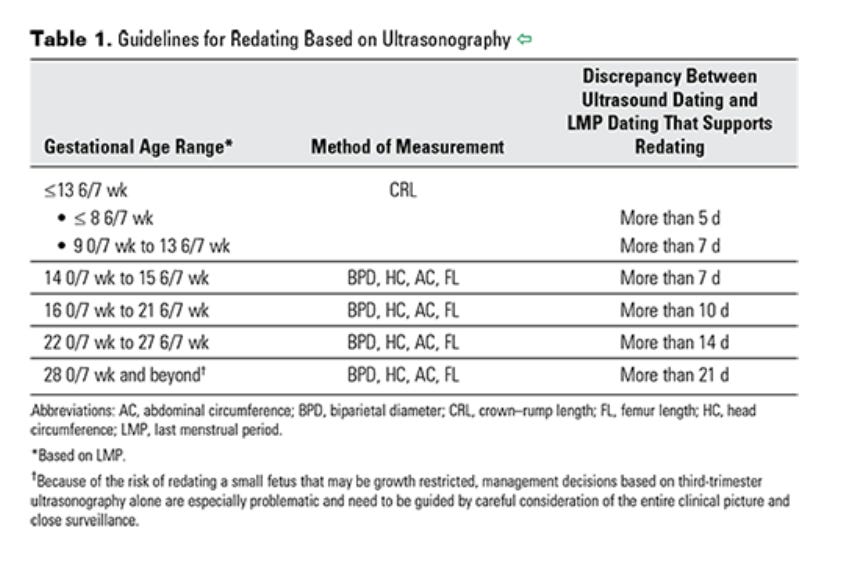
So when do I love ultrasounds? I love ultrasounds when they help me date the pregnancy! Early ultrasounds reduce uncertainty about dating and help avoid unnecessary inductions for pregnancies that aren’t truly overdue.
For example, a Cochrane review found that early ultrasounds were associated with a 41% reduction in inductions for post-term pregnancies. Another smaller study showed that 41% of women who had a dating ultrasound in the first trimester had their due date adjusted, compared with only 11% of women who had a dating and anatomy scan in the second trimester. These adjustments mattered: women who didn’t have an early ultrasound were more likely to undergo postdates inductions than those who did.
The truth is, due dates based on the last menstrual period (LMP) assume that everyone has a 28-day cycle and conceived on day 14—but nothing could be further from the truth.
Menstrual cycle variability is the norm, not the exception. Large modern cohort studies like this and this use digital tracking data show that cycle length varies widely between individuals and within the same individual over time, with only a minority of cycles clustering around a 28 day cycle. Ovulation timing is particularly variable, making last menstrual period (LMP) based dating inherently imprecise even in women who consider their cycles “regular.” So even moms who keep careful track of their LMP don’t necessarily give us an accurate gestational age of their pregnancy! I suggest the book Period: The Real Story of Menstruation by Kate Clancy if you want to know more about this!
For better or worse, ultrasound technology gives us a tool to see just how often LMP-based due dates are off. Some moms may feel confident about the day they conceived and want to date based on that. I personally was one of these moms: without an ultrasound, I convinced my midwives to change my due date based on my knowledge of the conception date. My daughter was born at 40 weeks 4 days, but by LMP she would have been 42 weeks 2 days—a gestation that would have freaked most people out! And, my 20-week anatomy ultrasound actually aligned perfectly with my conception dating, which reinforced that I was right.
Some moms might bristle at the idea of “needing” technology to know when you’re due. Why can’t we just trust our bodies and wait for labor? Well, as a midwife, I basically agree, and if moms are sure of their date of conception, I will go with that.
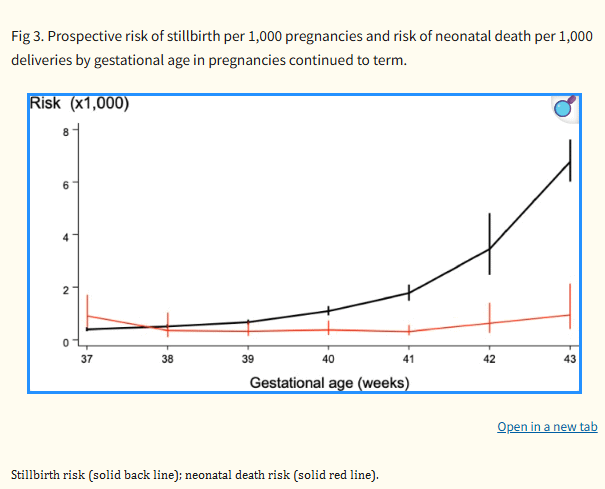
But that kind of certainty among my patients is extremely rare. And we also have to be honest about the risks of going too far past term. The stillbirth rate rises substantially after 41 weeks, so having an accurate idea of gestational age is pretty important. The same applies if a mom goes into preterm labor: the recommended interventions vary based on the weeks gestation, and if that is unknown or inaccurate, it can have consequences.
Another time I really appreciate ultrasounds is when they allow us to diagnose a serious fetal anomaly and help parents come to terms with it. Over my career, I’ve cared for patients whose babies had diagnoses such as serious heart defects, gastroschisis (when intestines are outside the body rather than inside), or, in the most tragic cases, conditions where the baby was clearly not viable, such as anencephaly. But thankfully, serious congenital anomalies are rare—occurring in only 2-3% of births.
While obviously heartbreaking, identifying these anomalies during the anatomy scan gives parents and care teams critical time to plan. Sometimes it means delivering in a hospital with a higher level of neonatal care, such as a Level III or IV NICU, because the baby may require immediate interventions or surgery after birth. Other times, it allows parents to consider palliative care options, organize support for siblings, and emotionally prepare for a baby who may not survive long outside the womb.
This experience is highly individualized. Some moms don’t want extensive information or follow-up ultrasounds after the first diagnosis—they prefer to focus on each day as it comes. Others feel empowered by the knowledge, finding reassurance in having all the details and knowing what to expect.
Finally, I’d be remiss not to mention another clinical situation where an ultrasound can be incredibly helpful—identifying breech or transverse lie babies. I’m pretty good at identifying this through Leopolds (the maneuvers where you feel a mom’s belly to determine position), but on occasion, I’m just not sure. In these cases, ultrasound is invaluable—it helps us identify the malposition in time to offer external cephalic version, or discuss the risks/benefits of breech vaginal birth versus planned C-section ahead of time rather than in a moment of chaos with a late diagnosis of breech during labor!
Also, in some of my higher-risk moms, particularly those with hypertensive disorders or gestational diabetes, having a maternal-fetal medicine specialist evaluate through ultrasound can be critical in determining whether the baby is compromised. Interventions based on that information have undoubtedly saved some babies’ lives over the years! In fact, this study showed that specialized ultrasounds in the case of certain high-risk pregnancies—fetal growth restriction, hypertension, and placental insufficiency—lowered the risk of perinatal death.
Ultrasound can also catch placenta previa, a condition that can lead to life-threatening hemorrhage during childbirth, allowing us to plan a safer delivery (C-section, in that case!)
And obviously, there are many other situations where ultrasound can be helpful—this is not an exhaustive list! There are definitely things to love about ultrasounds.
What I Hate About Ultrasounds
Now that I’ve tried to honestly present the good things about ultrasound, let me tell you what I don’t like.
Not infrequently, I’ll be seeing a mom for prenatal care. We listen to the baby’s heartbeat, measure her belly, talk about symptoms and concerns, and everything looks reassuring. Then she’ll say something like, “But how do we know the baby is okay without an ultrasound?”
And the honest answer is: how do we know the baby is okay with an ultrasound? Ultrasound can tell us some things, but it can’t tell us everything. If the baby is moving, has a strong heartbeat, is clearly growing, and an earlier ultrasound showed normal anatomy, there often just isn’t much additional information another ultrasound will provide.
But I sometimes have a hard time communicating this in a way that feels reassuring. Many moms have been taught—by the medical system, friends, or other clinicians—that more ultrasounds equal better care. So when I don’t automatically offer one at every visit, it can feel to them like I’m being negligent. In reality, I’m trying to provide evidence-based care and avoid expensive, unnecessary testing that is not shown to improve outcomes.
I also hear a lot of comparisons: “My friend had five ultrasounds,” or “My friend’s doctor does an ultrasound at every visit.” Sometimes, it’s because their friend had a higher risk pregnancy than them, and what they’re not understanding is that they’re the lucky one—with no major risk factors or known congenital anomalies!
But in other circumstances, even low-risk pregnant women are getting tons of ultrasounds. I once worked as a L&D nurse with a physician who routinely performed ultrasounds at every prenatal visit. Even though he frequently missed important things that were essential to prenatal care, did a ton of unnecessary C-sections, and cut giant episiotomies for every vaginal birth he attended (basically, not a physician who practiced evidence-based medicine) some women in the community gravitated toward him because they associated more imaging—and more intervention—with higher quality care.
Other moms have the opposite experience: they come in extremely anxious because something was flagged on ultrasound and they were told to follow up without much explanation. For example, a worried mom once told me, “They said something is wrong with my baby’s spine and I need to come back in four weeks!” When I reviewed the report, it simply said the spine was poorly visualized—meaning the baby was in a position that made it hard to get a clear image.
During an anatomy scan, there is a checklist of over 20 structures that need to be seen, and if any one is not perfectly visualized, patients are often asked to return for another scan, sometimes without a clear explanation that this is largely precautionary. As I explained earlier in the essay, I spend a lot of time doing damage control—helping moms understand incidental findings that are clinically insignificant but still cause a great deal of worry.
Another issue is how minor anatomical “soft markers” are sometimes followed ad nauseum. Common examples include fetal pyelectasis, intracardiac echogenic focus, echogenic bowel, and choroid plexus cysts. These are usually benign variants that do not affect outcomes, and there is often nothing that can be done during pregnancy anyway.
In addition, many follow-up ultrasounds are triggered not by true abnormalities, but by borderline or technically limited findings—such as “suboptimally visualized” anatomy, borderline amniotic fluid levels, or fetal size measurements that fall slightly outside the expected range. Even findings like low-lying placenta or marginal cord insertion often prompt serial imaging despite a high likelihood of normal resolution or minimal clinical significance.
Yet these findings are frequently tracked with repeat scans, creating a cascade of appointments, anxiety, and sometimes additional “findings” that were never clinically meaningful to begin with.
And then there is fetal size, which is my absolute worst pet peeve. A perfectly healthy pregnancy can be reframed as high risk simply because the baby is estimated to be “too big.” Yet according to ACOG guidelines, elective C-section for suspected macrosomia is generally not recommended unless estimated fetal weight exceeds 5000 grams in non-diabetic patients. Despite this, parents are often scared or subtly pressured into a C-section based on estimates that can be off by a pound or more.
I once cared for a patient who was extensively counseled about the risk of shoulder dystocia if she attempted a vaginal birth. She was frightened, but ultimately chose to proceed with a vaginal birth. Her “huge baby” weighed 8 pounds and literally slid out. It was a reminder of how imprecise these estimates can be—and how often decisions are made based on projections that may never have been accurate in the first place. The truth is, shoulder dystocia occurrence and severity is largely unpredictable, and the majority of cases occur in babies with normal weights.
So what I hate about ultrasounds is that they can create both a false sense of security and reassurance, and a false sense of alarm.
Final Thoughts
A few times in my career (a very few times), I’ve had a mom decline all ultrasounds during pregnancy. This honestly didn’t bother me much at all. If a mom is confident in her dates, not experiencing unexplained bleeding, baby’s head is clearly down at the end of pregnancy, and she accepts the possibility that a serious defect might not be discovered until birth, I am generally supportive of that decision. Think back forty years—people like my mom had four pregnancies in the late 70s and early 80s with zero ultrasounds, and babies like me were still born healthy every day. My mom swears she carried both of my brothers to 44 weeks, but that’s another story!
Ultrasound is a diagnostic tool, not a treatment. Most of the time, it helps us identify potential problems, but it rarely fixes them. So given that, here are my overall takeaways.
Dating ultrasounds: 👍👍Helpful if last period is unknown, cycle lengths are typically more than 28 days, is worried about miscarriage and wants to confirm a viable pregnancy, or there is any doubt about when conception occurred. Best done at 8-12 weeks! Too early (4-6 wk) can be inconclusive and cause unnecessary worry if no heart rate is identified. Too late and they’re not as accurate for dating. Helpful at preventing unnecessary post-dates inductions!
Anatomy ultrasounds:👍👎They have a benefit if the goal is to identify anatomical abnormalities in the fetus, but with very few exceptions, these abnormalities cannot be treated during the pregnancy anyway and will likely lead to several follow up ultrasounds to “monitor” the abnormality, which may or may not be helpful to the mom. Advantages are being able to plan for care and high level intervention if a serious anomaly is found, but disadvantages are the additional time, money and stress of follow up ultrasounds that likely won’t affect the end outcome anyway. Moms should think about whether these ultrasounds bring them peace of mind versus stress, and communicate that clearly with their providers.
Growth ultrasounds:👍👎Helpful if we’re worried about growth restriction, but sometimes the opposite of helpful if baby is large, causing self doubt and worry among moms, and unnecessary intervention by healthcare providers (like C-section or induction of labor).
Biophysical profiles (BPPs): 👍👎They are known to reduce fetal death rates in certain high risk patients (those with high blood pressure, known growth restriction) but for many “high-risk” moms (people with obesity, advanced maternal age), they are not that much better than an NST, which is a cheaper and less time-consuming intervention.
Recreational ultrasounds: 👍👎This is my first time mentioning it, but there are companies that offer ultrasounds for parents who simply want to see their baby. The difference between a medical/diagnostic ultrasound and an elective/recreational ultrasound is explained here (note I am NOT endorsing this company or elective ultrasound in general, just thought this website did a pretty good job explaining the difference).
The FDA recommends against these services, largely due to concerns about safety and lack of medical oversight.
I’ll admit—I see this a little differently.
If what a parent really wants is connection or just to see their baby, I actually think there’s something to be said for separating that desire from medical care. A recreational ultrasound, paid for out of pocket (usually around $80–100), may be a more honest and appropriate way to meet that need than asking a clinician to order an ultrasound that isn’t medically indicated.
In some ways, it could even reduce unnecessary medical imaging and the cascade that sometimes follows. At the very least, it acknowledges an important truth: moms tend to like ultrasounds in part because it is fun and meaningful to see the baby!
What are your experiences with ultrasounds?
Now that I’ve word vomited all my deepest thoughts and opinions about ultrasounds, I would love to hear about your experiences. Did you like getting ultrasounds? Do you think you had too many? Too few? Did you understand why ultrasounds were being ordered? Did you get a “choice” to have more or were you simply told it was necessary? How did ultrasounds affect your relationship to the pregnancy?
No posts
Comments
Nothing yet. Say the first thing.
Sign in to join the conversation.