
I had fully intended to write an essay this week on the challenges of finding a suitable author photo to help promote my forthcoming book of short stories, Bad Romance, an effort I estimated would take me about two mornings to finish, Saturday and Sunday of this weekend. And then Friday night, after feeding dinner to my demented ex-husband (that’s a story for another day), I began to suffer strange chest pains, like an angry fist clenching and unclenching for hours. I thought, This can’t be happening. I had a clean bill of health from my cardiologist on Thursday, after going through an echocardiogram, an EKG, and a two-hour stress test. He pronounced the pump in perfectly good shape for an ex-smoker of a certain age.
Nonetheless the pain continued throughout the night, with me thinking, Jesus, should I call 911 and get an ambulance (and what a sight that would make on our back country road)? Am I in good enough shape to drive myself? I’ll have to change my clothes and my hair really needs washing (yeah, that’s the kind of dumb stuff that goes through your head in these situations). I got a few hours’ sleep and woke up feeling exhausted but somewhat better. In no shape to write, though, or sit at my desk for a few hours. So I said to myself, “Ann, why not just take a day off? Spend it in bed, read, nap when you need to.”
And so that’s pretty much what I did all day (with a break of a couple of hours to watch “The Crown,” my go-to comfort series). Because short stories are so much on my mind, because right now I don’t have the energy or the desire to tackle a novel, I decided to revisit some stories I’ve especially loved in the past. I recommend them to you, with links when I can find them, in roughly chronological order
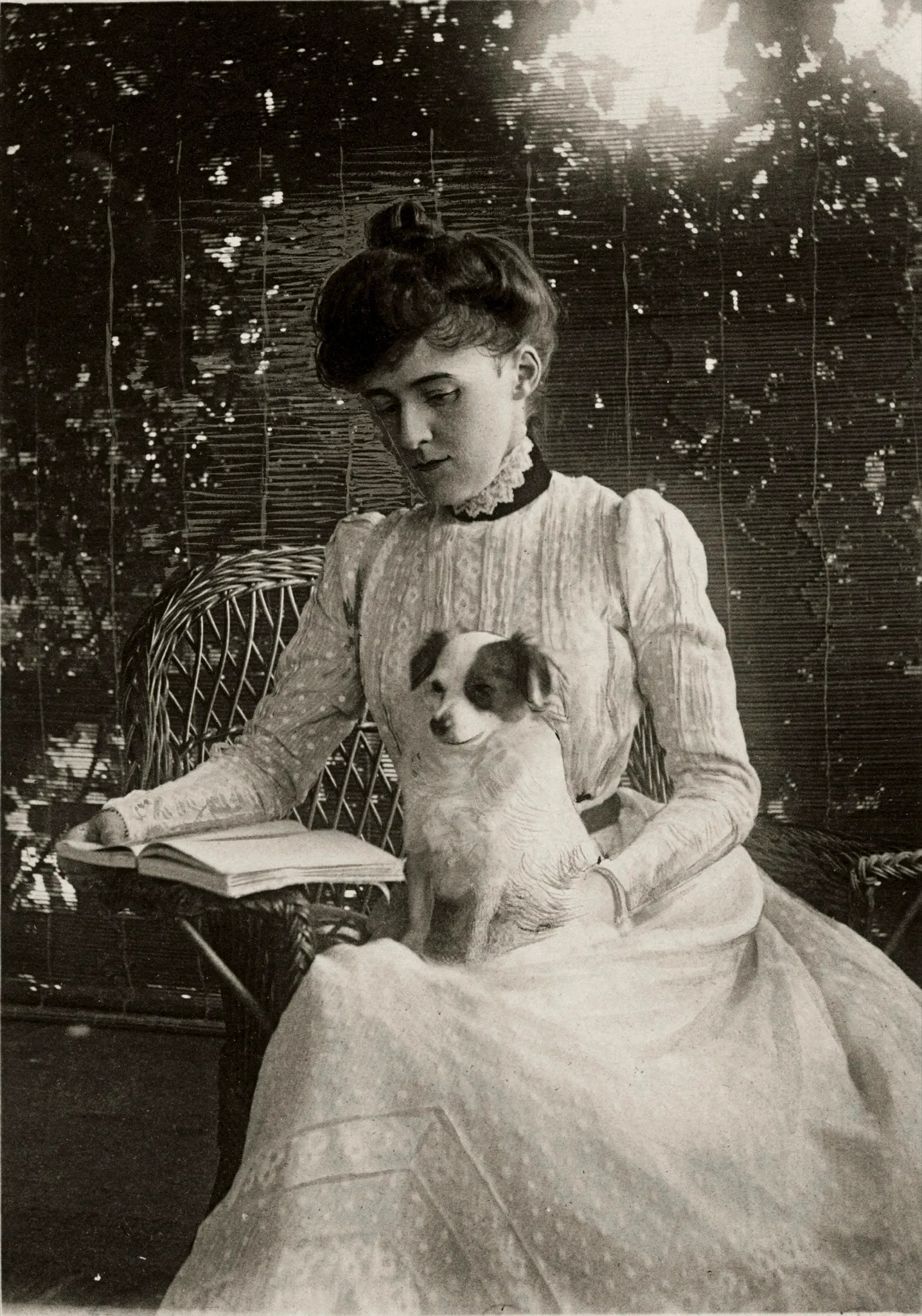
Edith Wharton, “Roman Fever” (1934): Two upper-crust women in well-kept middle-age meet on a terrace in Rome, and reminisce on past rivalries and histories. The two, Grace and Alida, compare their daughters and their marriages, recalling over the course of their conversation how one forged a letter, purportedly from Alida’s fiancé, Delphin, inviting Grace to a rendezvous at the Colosseum. In fact, Alida sent the letter in an attempt to entice Grace into a fruitless outing and expose her “delicate throat” to the “deathly cold.” Grace is upset at this revelation, but explains that she was not left alone at the Colosseum; she responded to the letter, and Delphin arrived to meet her. A surprise twist at the end reveals a smart comeuppance to this peculiar rivalry. I’ve always loved this story, with its undercurrents of long-festering jealousy and its final shock, and one of these days I hope to find a way to do a retelling. Only eleven pages, but wow!
John Cheever, “The Swimmer” (1964). An American classic. On a fine midsummer morning, Neddy Merrill is lounging poolside at the home of his wealthy neighbors, the Westerhazys, when he decides to make the return journey to his house eight miles away by way of the swimming pools of his suburban neighbors. Styling himself a new-age explorer, he dubs the series of pools the “Lucinda River” in honor of his wife. I quote here from Wikipedia, because this was one of the stories I did not reread yesterday: “Midway through his journey, some of Neddy’s friends mention his serious financial misfortunes, although he seems unaware of these. He meets with undisguised hostility at the poolside party of the Biswangers, a couple whom Neddy and Lucinda have persistently snubbed. At the home of Eric Sachs, one of Neddy’s closest friends, he is informed by Sachs’ wife that Eric survived a life-threatening operation three years prior, of which Neddy has no recollection. At the pool of his discarded mistress, Shirley Adams, she informs him that she will not lend him any more money or serve him a drink, and dismisses him.” His physical stamina gradually slackens, and in the end….well, you’ll just have to read it. It’s a quietly devastating story that tosses the suburban dream into the dumpster.
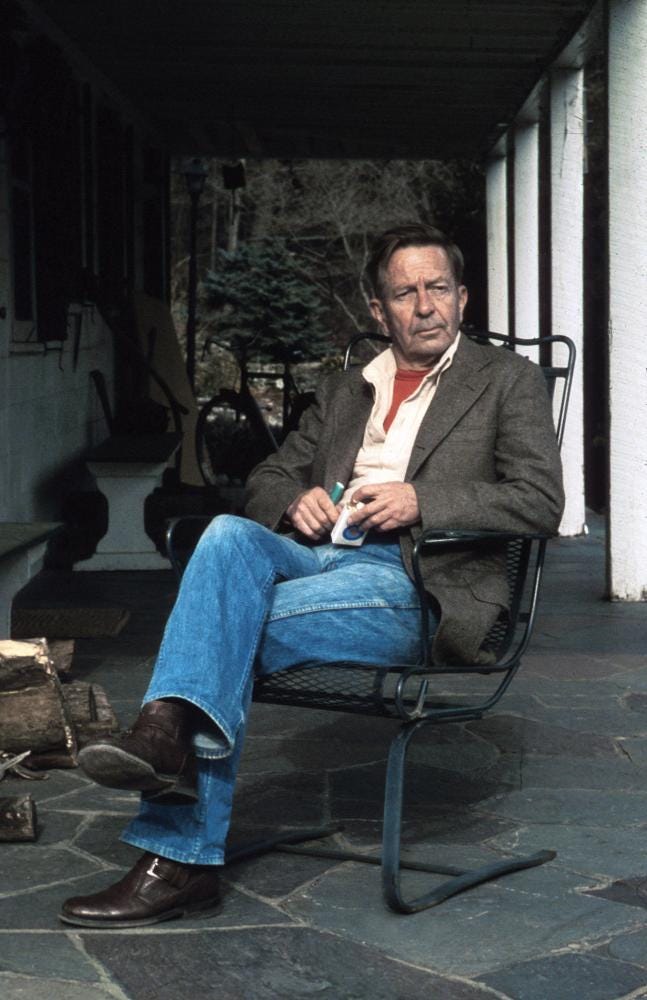
Alice Munro, “The Bear Came over the Mountain” (1994). Fiona and Graham seem to be deep into a contented retirement, cooking and reading together at night, cross-country skiing near their Canadian home, when Fiona begins to struggle with Alzheimer’s. The couple find an upscale community for her, where Fiona falls in love with another resident, whose wife forcibly parts them by bringing the elderly beau back to their family home. This is the barebones of the story, but so much is revealed in the interstices—Graham’s infidelities and his love of Norse mythology, the impact of the swinging sixties on university life, Fiona’s winsome magnetism, and their different backgrounds and passions—that you come to the story’s moving and satisfying conclusion believing you have entered a world as all-encompassing as any full-length novel. Munro was a masterful, multilayered storyteller whose legacy has been forever tarnished by her collusion in the abuse of her daughter, but her stories’ power and her unique gifts as a writer can never be denied.

Randy F. Wilson, “The Woman from Khao Lak” (sorry, this is not online but you can buy a copy as a small stand-alone from One Story for $2.50, well worth the tiny investment). I subscribed to One Story, a publisher that delivers a worthy new story every month, until finally I couldn’t keep up with the flow. In this powerful narrative, a mysterious older woman arrives at a local municipal swimming pool and captivates the young lifeguards with her stamina and almost otherworldly allure. The source of her energy is revealed later in the narrative in a one-two punch of scorching power. I’ve read this one a couple of times to try to discover how Wilson, a professor emeritus of English at Davidson College in North Carolina, works his magic, but sometimes I don’t think this kind of power can be explained. “Nelson, like all great writers, makes it look easy, effortless,” noted one reviewer. “His prose is fresh and confident, breezing along the page like a motorboat on smooth water.”

Sigrid Nunez, “Greensleeves” (The New Yorker, 2024). Like many New Yorker stories, this one dribbles off inconclusively at the end, but I like Nunez’s work so much, especially the novels The Friend and The Vulnerables, that I will follow her anywhere. I also love the “New Yorkiness” of her stories, conjuring as they do a heart space with which I am intimately familiar. In this tale about upscale urbanites, a therapist meets a beguiling young filmmaker at one of his glamorously eccentric neighbor’s soirees. Her descriptions bring the characters vividly to life: “She stared at him from under thick bangs, the only part of her black hair that had been streaked blond. Kiss Me Deadly red lipstick, and a long-sleeved forest-green dress of some suède-like fabric that looked vintage. His gaze kept being drawn to her gleaming manicure, each copper-colored nail like a Japanese beetle.” In the course of the tale there are revelations of the therapist’s sad family life and many meditations on urban craziness (or maybe it’s just any kind of contemporary lunacy), ending with some insight into the story’s title. Do they or don’t they? That’s where we leave our protagonists, and I kinda wish Nunez would take up more of the tale somewhere down the road.
So these are your recommendations for the week, dear readers, and if you have a little down time in the hammock, with your phone or tablet, I highly recommend the four that are available online. They pack quite a wallop for their small size and should fill the time between heavier engagements.
Till next week.
No posts
Comments
Nothing yet. Say the first thing.
Sign in to join the conversation.