
I was away from New York recently, convalescing at the sea while undergoing self-prescribed age regression therapy—my host drove me to Aventura Mall to spend the afternoon rifling through drawers, selecting the choicest 10 for $40 panties at Miami’s premiere Victoria’s Secret establishment. Sometimes one must put their scruples aside to heal her inner preteen.
While walking the hallowed halls of USA Today’s Readers’ Choice: America’s Best Mall, we came upon an importer of fine foreign wares, a quaint little shop on the upper level called SUKOSHI. I’ve been known to dabble in the world of Asian cosmetics such as those which lined their walls. Myself a merchant of the finest Japanese makeup brushes in the Western Hemisphere [BUY KRAUM], I had to stop in to do a bit of market research.
I zigzagged my way through the aisles, swatching and smelling SUKOSHI’s impressively organized curation of the typical Korean and Japanese brands you’d find at most US Asian beauty retailers: CORSX, Canmake, Rom&nd, Clio. . . all well and good, but no need to make space in my carry-on for new purchases (now even scarcer with the addition of 30 fresh stretch-lace rhinestone thongs).
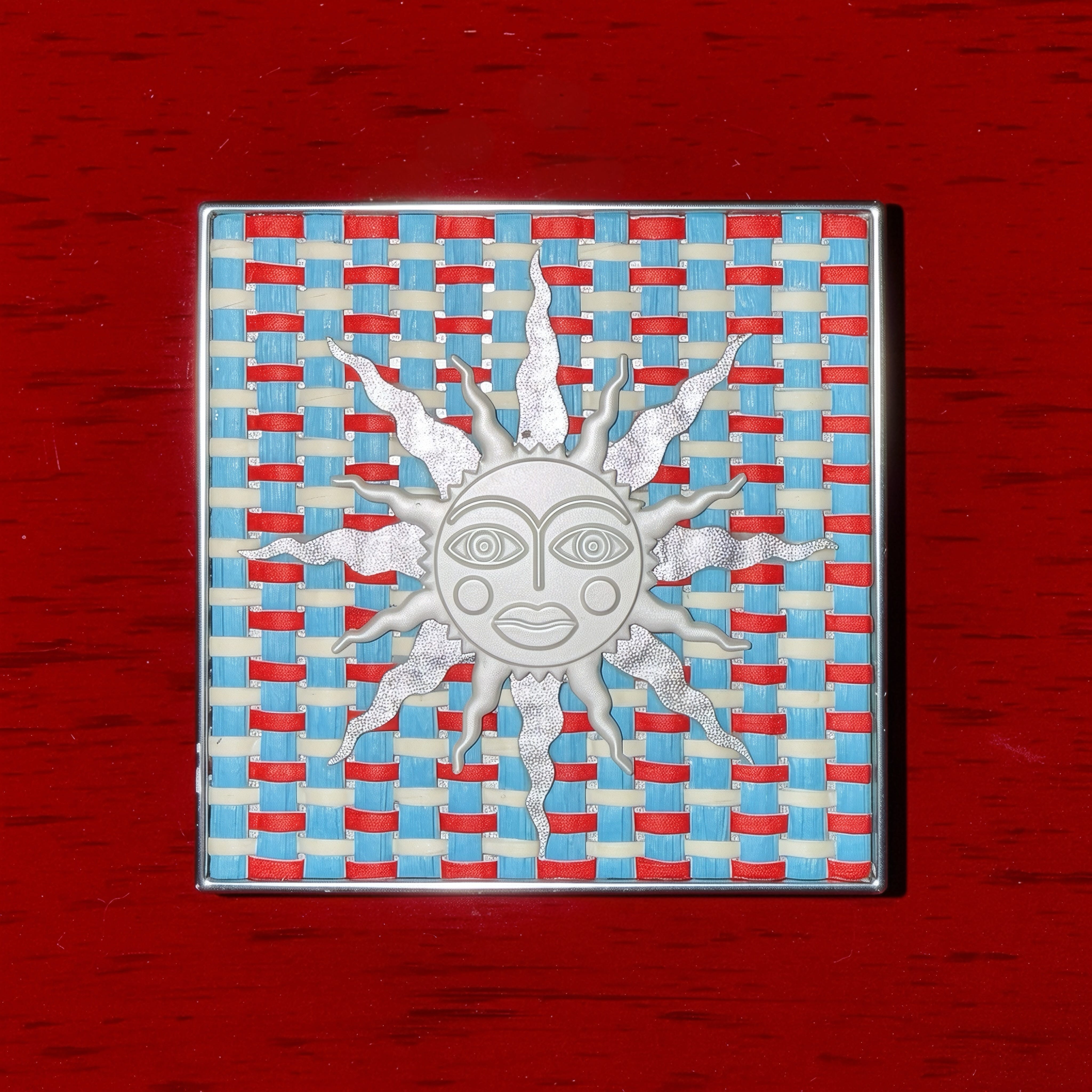
On the very last gondola, at the back of the shop, a hideous little compact caught my eye. Then another, and another. Those two shelves challenged everything I understood about beauty branding. Though painful, I couldn’t look away. Every product was purportedly from the same brand, but nothing matched! Nothing was pink! Surfaces were fabric, lip gloss was rectangle, up was down, and time stood still.
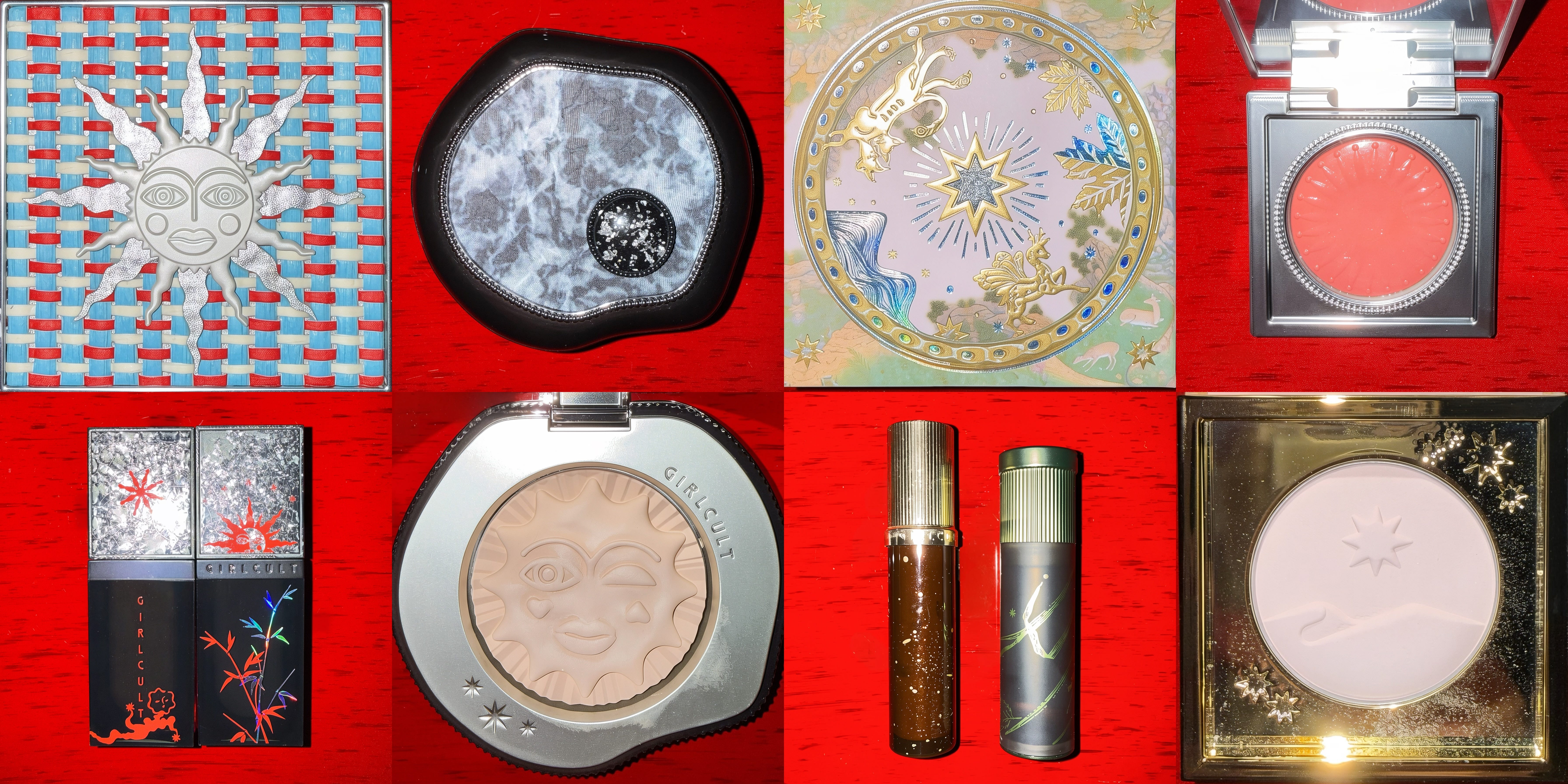
This type of intricate, varied packaging is simply not done for today’s consumer products. The voice of a phantom MBA sneered into my ear, “It’s not scalable!” If startup world has taught me anything, it’s that your brand’s visual identify should fit within the bounds of a single slide in a six-page Canva deck. If not, reign it in!
I seethed with envy. It’s something I’ve always admired about Asian brands: being closer to specialized production facilities, both geographically and culturally, must allow them greater freedom with materials and design.
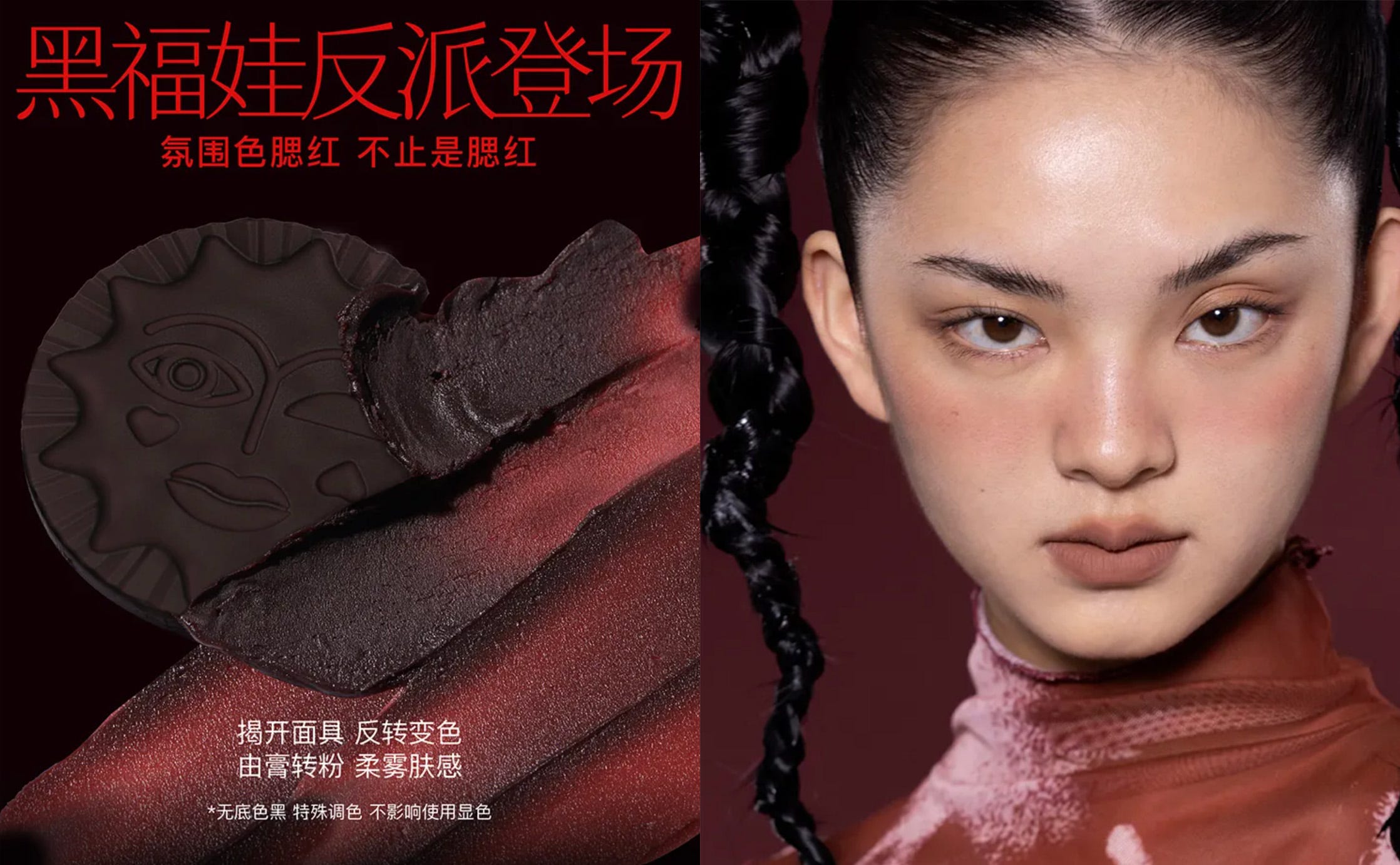
What was inside the little packages further melted my brain. The formulas, the textures, the shades—all at once cute, cryptic, random, and creepy. Jelly blush in shade “Blood.” Hallucination Liquid Eyeshadow in shades “Demon” and “Old Doll.” Every brand needs a hero nude lipstick with a catchy name, so this one went with “Bencaogangmu.” Truly un-marketable by most standards…….I bought 10 things. Herein lies the magic to China’s GIRLCULT.
Firmly hooked on whatever the fuck they were selling, GIRLCULT seduced me into parts of the internet I had long feared and avoided. Without a real US d2c presence, I spent the subsequent days scouring the depths of TikTok Shop and their Amazon storefront for out-of-stock shades of several products (two .coms exist; I’m not sure if either is official, or if they are just profiting from Amazon affiliate links). At one point I even downloaded Shein!
Much like their branding and retail strategy, GIRLCULT’s origin story was an enigma. Google only took me so far. I learned it’s a popular Gen-Z Chinese brand, founded in Shanghai in 2018. Google’s clumsy AI translator-aggregator referred to it as “avant-garde,” and “dark-goth,” and misgendered one of its cofounders. I could tell that the base of the iceberg existed on Chinese internet—platforms like Xiaohongshu, Douyin, and others I may have never known existed if not for the siren call of GIRLCULT.
I needed a native Chinese speaker, and importantly a beauty girly to help me go deeper. Enter: Yining Wang, a Vanity Project subscriber, “currently on a self-anointed sabbatical from the tech world, trying to figure out a Plan C.” She’s based between NYC and Montreal, but spent her childhood in China, and she kindly dedicated her time, energy, and thoughts to this article. Everyone in unison: THANK YOU YINING!
As I pored over Yining’s notes and emails, I learned that most interesting thing about GIRLCULT is its reflection of a proudly Chinese youth culture. It completely challenged my own cursory understanding of the market, which filtered through a painfully millennial, star-spangled lens.
I was always taught that USA’s greatest export is pop culture, and that our greatest invention, the Internet, fast-tracked all of our addictive stories, sports, songs, and celebrities straight into the veins of The Global Youth. O beautiful for spacious American monoculture! It was supposed to be the thing that saved us—all of us—from the backwards religious fanatics in the Middle East and those shadowy, sinister communists in the further East. As you know, we don’t have misogynist religious nut jobs or Big Brother government agencies here in God’s Country.
Throughout my career there was always this promise, especially by my Chinese-American colleagues, that the Chinese consumer is desperate for American brands. The strong counterfeit and grey markets of Western brands in China are cited as evidence of this. If only we were clever enough to properly invest in China—especially mainland China—as a legitimate market, we’d be met with open wallets.
(In Western online beauty discourse, though, there’s a sinophobic smear against China, lead by PETA-types who will boycott any Western brand which enters the Chinese market, claiming that they had to perform animal testing to do so. I don’t have time to get into this today, just know that this is not true and China’s use of animals in cosmetic testing is wildly mischaracterized and misunderstood.)
In trademark conversations I am often told to pay special attention to China, that there’s a whole industry of Chinese trademark hawks who will swoop in and snatch up American IP before you can even dream of international shipping. Such is the power of American ideas!
All of which is to say, I was fascinated to learn about 新中式 or the “New Chinese” movement in Chinese marketing, and GIRLCULT’s youth-focused version of it, which cofounder Suo Zhi calls 潮流式新中式 or “trendified New Chinese.”
Comments
Nothing yet. Say the first thing.
Sign in to join the conversation.