
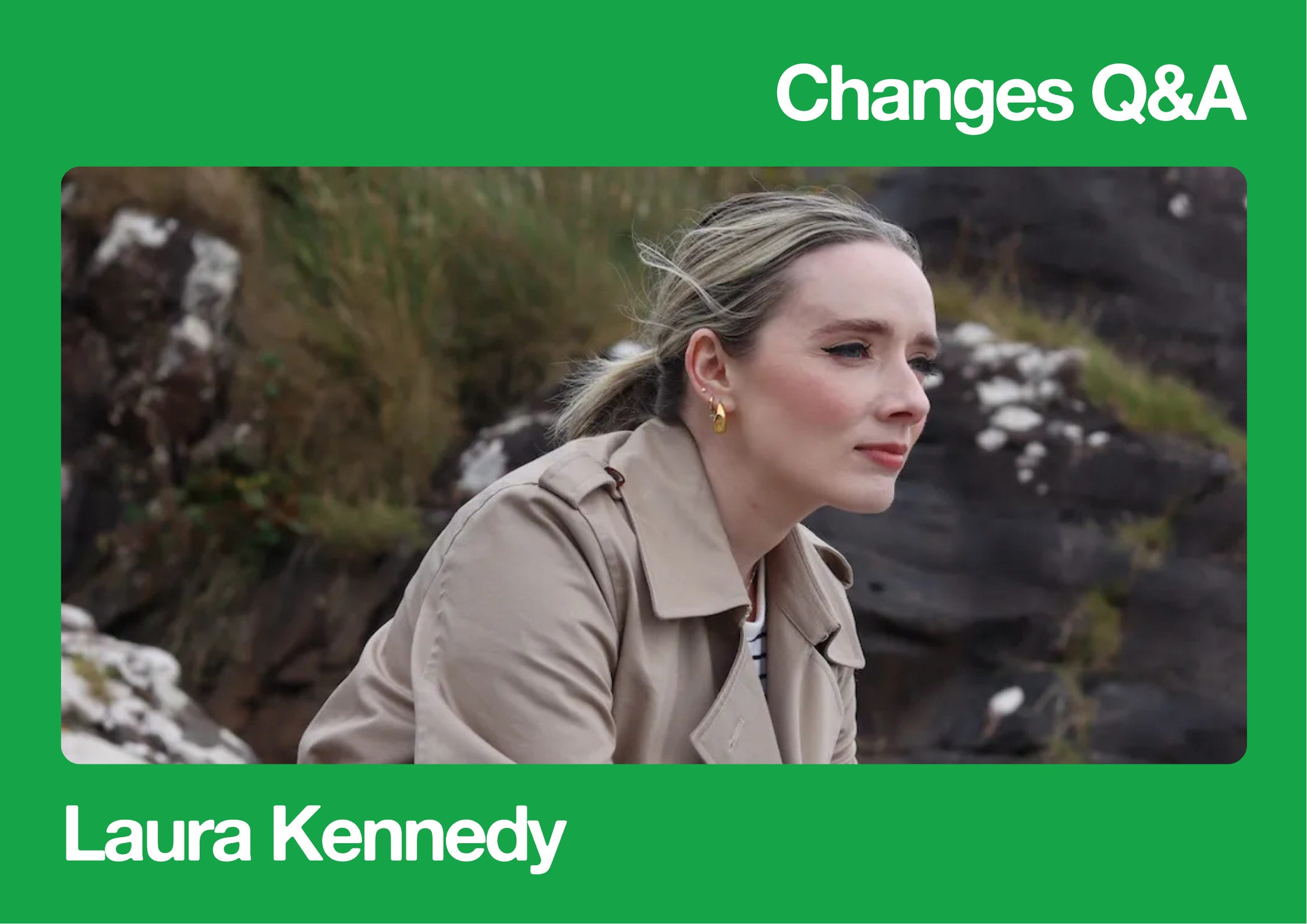
Dr Laura Kennedy is one of my favourite essayists on here. An author, a Doctor of the philosophy of psychology and a columnist for The Irish Times, her Substack is called Peak Notions and on it, she writes mind shifting pieces about philosophy, psychology and culture, in which she demands the reader to climb out of their conditioned assumptions and think differently. Some of my favourite essays of hers have included a meditation on volunteering at a dog shelter, an essay in which she explored antisemitism in Australia and the death of her estranged father, and an essay entitled The Unbearable Lightness of Bring Irish in which she analyses Ireland’s cultural capital through the lens of Irish people’s self restraint. (spoiler alert: Irish people are not good at allowing themselves to have nice things).
Laura’s critically acclaimed book ‘Some Of Our Parts’ is a series of interlinking essays exploring identity told through the labels that shape our lives.
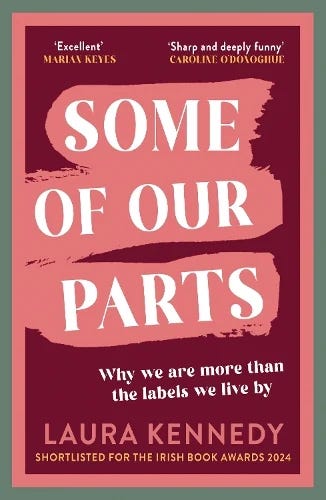
Here’s Adrienne Murphy talking about Some Of Our Parts in her glowing review in The Irish Times,
Feminist, depressive, working-class, poor, one half of a mixed-race marriage, Limerick native, Irish, an emigrant, a beauty journalist, a philosopher – these are some of the personal identities Kennedy artfully examines. The intellectual challenge of Kennedy’s sentences scorches new neural pathways. But this book is also funny, surreal, aesthetic and redemptive. William Blake wrote, “It is the most sublime act to set another before you.” Kennedy sets us before ourselves. Through eyes made compassionate in her forge, we see the irreducible, unique mystery that is each of us.
The paperback of Some Of Our Parts has just been released. You can get it here.
But for now, please enjoy Laura’s absolutely gorgeous and thoughtful answers to our six questions on Change.
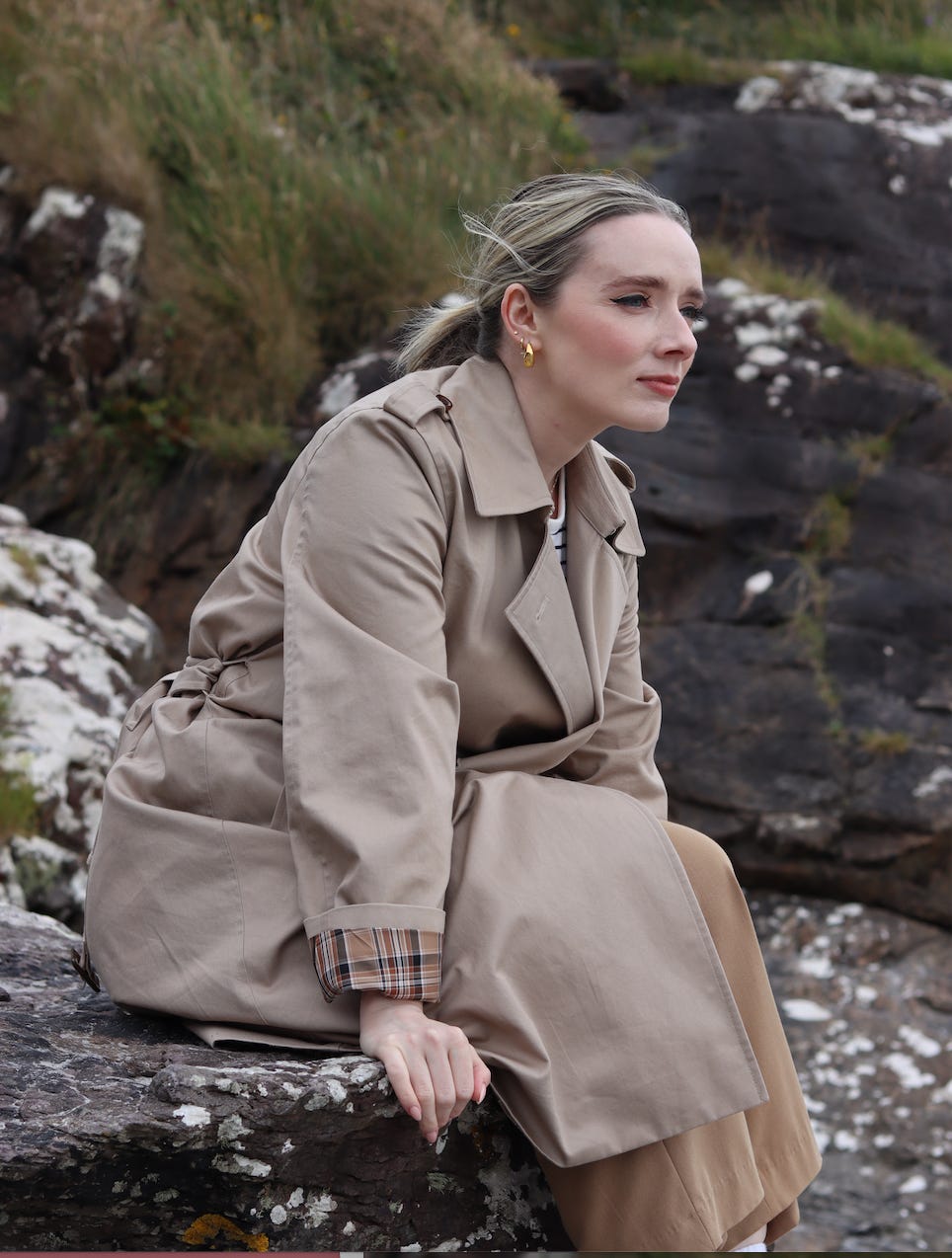
What is your relationship to the word Change?
Ambivalent. In theory, I fear change and feel a lot of resistance to it, but then I think about that in the context of a life that has been full of big, sometimes sudden changes, many of which have been my own choice, like moving to Australia when I’d never even visited, and finishing a philosophy PhD before setting aside my plan of becoming an academic.
So while I think of myself as someone who isn’t great at change and really feels quite frightened of it, I also seem to opt to remake my life in dramatic ways rather than sit in that stuck feeling for too long. What I feel and how I behave seem to be in conflict around change. To be afraid of something and yet engage in it in this high stakes way... I haven’t had great success in reconciling these two realities! I just accept them.
I was raised by a single mother in Limerick (a small city in the Southwest of Ireland), and in childhood it always felt as though my life was set in stone. Opportunity would be minimal, my freedom to deviate from the expected path felt non-existent. There was low social tolerance for nonconformity and anything indicating ambition beyond your immediate environment (like studying philosophy, pursuing a career as a writer, or wearing sheer tights!) was understood to indicate ‘notions’ (of grandeur). The result was the culture moving to course-correct you. To tell you how you were permitted to move through the world. In response to that, I raged for change in my youth. I barrelled toward it, perhaps too reactively. I’m still scared of it though!
Who was the last person to change your mind and what opinion/perspective was changed?
This is such an interesting question, because I think that in general changes of mind (especially the big ones we reach through a process of reason) are slow and incremental. They can take a village, as it were. We might change our mind on our belief that, say, there’s no cabbage-based dish we’ll ever enjoy when a friend makes an absolutely banging sauerkraut, but I don’t think one person or conversation is enough for us to confidently shift our position on a big issue. It probably shouldn’t be. It’s definitely enough to initiate that process though by creating healthy doubt and curiosity, or concern that we’re missing something important.
Multiple conversations with smart women I know, all of whom identify as feminists, convinced me to stop identifying as one. Not because I’m not in favour of women’s equality (that would be something of a self-own!), but because it made me realise that the word doesn’t give clear insight into what a person actually thinks. A sort of ‘whatever-you’re-having-yourself feminist might tell me it’s ‘just’ about being fair and kind, but that’s a pretty insulting and inadvertently misogynistic distillation of hundreds of years of evolution of a complex political philosophy. Mary Wollstonecraft would probably slap you if you gave her that definition.
A second waver who believes sex work is exploitation calls themselves a feminist, and so does a third waver who believes sex work is liberation. A fourth waver who believes a trans woman is a woman calls themselves a feminist, and so does someone who believes that only a biologically female person can call themselves a woman. If ‘feminist’ can mean all these things, and each faction claims theirs is the ‘true’ use of the word, then the word has lost its use. If ‘feminist’ can mean everything, it means nothing, so I don’t use it to describe myself anymore.
(But it was my friend Ciara who changed my mind about the sauerkraut)
When have you felt the most ‘changed’ in your life?
Often, I think, we only recognise change once it’s already happened. You react to something in a way you wouldn’t have before, or something happens and you feel differently about it than you anticipated. The change I value most has happened gradually over the last ten years. The death of my mother after a short illness when I was in my twenties snapped me in half but it also gave me the (unwanted but valuable) opportunity to rebuild myself in a conscious, deliberate way.
I want to be considerate, compassionate and to engage with others in good faith, but I don’t want to betray myself. When I was younger, I thought the former entailed the latter – that caring about people meant being responsible for how they feel. Now, I do not manage, intuit or internalise the discomfort or expectations of other people. It took serious work to make this change.
I trust and expect other capable adults to regulate themselves. If asked my opinion, I’ll give it respectfully even in an environment where it’s a minority view. Inviting me to the function? If I’m attending, my whole heart is in it. Otherwise, I’m not going. My days of doing things resentfully are done. There’s no self-betrayal; no blaming others for failing to acknowledge feelings I’m afraid to express. Now, I say the thing. That’s a change I feel proud of.
What book changed you and why?
Choosing one book feels like a betrayal of all the others, and I suspect the books that change us speak as much to where we are in our lives when we happen to read them as the books themselves. Also I’m aware that it’s so gauche to choose anything by French Algerian philosopher Albert Camus here on Substack, where everyone secretly dreams of donning a trench coat and being a mysterious, magnetically attractive public intellectual.
But (there’s always a but!) we read The Stranger last year as part of the book club I run on Substack, and it meant a lot more to me this time round than it did when I read it as a student. Maybe it’s one of those catalysts that helped me recognise a change that’s already happened. But I think questions of meaning are the primary questions of our time. Many of the shared cultural and religious frameworks that traditionally gave people a ‘why’ have fallen away.
As a philosopher, I’m fascinated by questions of meaning but personally I struggle deeply with them. In our time, many people either veer toward existentialism – by which meaning is something we have to make for ourselves —or absurdism, where we accept the fact that there just isn’t any. That’s the context of The Stranger.
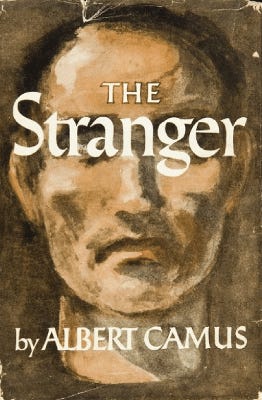
We need all this to mean something so that we can get up in the morning – meaning is the antidote to the despair, chaos and alienation we can all experience. And yet we live in a world where it can feel so hard to come by. There are lots of ways to think about meaning, but The Stranger immerses you in a deeply unsettling world of absurdism, and the questions it prods out of you can put you face to face with some uncomfortable ideas. That’s the beginning of change, I think. It’s one book that changed me.
What change are you going through right now?
As usual, more than feels comfortable! I’ve worked this last year on rebuilding my mentality around my body. Like most millennial women, I spent much of my life denigrating and fearing it, and like many others, developed a disordered relationship with food that I’ve long struggled with. My body didn’t feel like me – it felt like a hindrance, a failing, an advertisement of my internal incapacities.
I’ve been focusing on taking care of it and building its competence. I wanted to know how it would feel to be able to do things like move a piece of furniture by myself or scale a few flights of stairs in a rush without meeting this wall of physical limitation which registered as shame. I set aside emphasis on how I look and put my energy into what I’m able to do.
A few weeks ago I wanted to move a bookcase but I was the only person at home. When I pushed it, it moved! I got it across the room without major effort. That was one of the best feelings I’ve experienced in a long time -- incontrovertible physical evidence of the change I’ve wrought through consistent effort, and that I’m not just entombed in outdated, unhelpful stories about my body and what it’s capable of. I proved myself wrong and I’m delighted about it!
I’ve also been pursuing other changes and am on the cusp of a potential big one right now -- you know that terrifying liminal place where it might happen and it might not, but almost everything about your life will look different if it does? I hate that place. It’s life’s stuffy, fart-scented waiting room. I’m working on getting better at sitting calmly while I wait to see whether the change is coming, and to reorient myself with equanimity regardless.
What change would you like to make to your life in the future?
I would love to be able to reframe the concept of change itself. I spend a lot of time pursuing change, avoiding it, feeling anxious about it. Trying to control it! This is despite the fact that experience has by now clearly taught me that change is inevitable, much of it is desirable and crucially, I’ll be able to handle the change that does come. Not always elegantly or with maximal efficiency or comfort, but I should trust myself by now to figure it out. That’s just what change demands of us all.
If I could just remember all this before I decide to leap, shrieking and full of doubt, into the ‘next’ big change, I’d experience less friction each time. Also I’d love to remember when I most need it that excitement and anxiety are identical physical experiences. Somatically, they feel the same. As a pessimist, I’ll assume these sensations mean I’m anxious about the change, but I could choose to interpret them as excitement instead. I’m working on it.
Comments
Nothing yet. Say the first thing.
Sign in to join the conversation.