
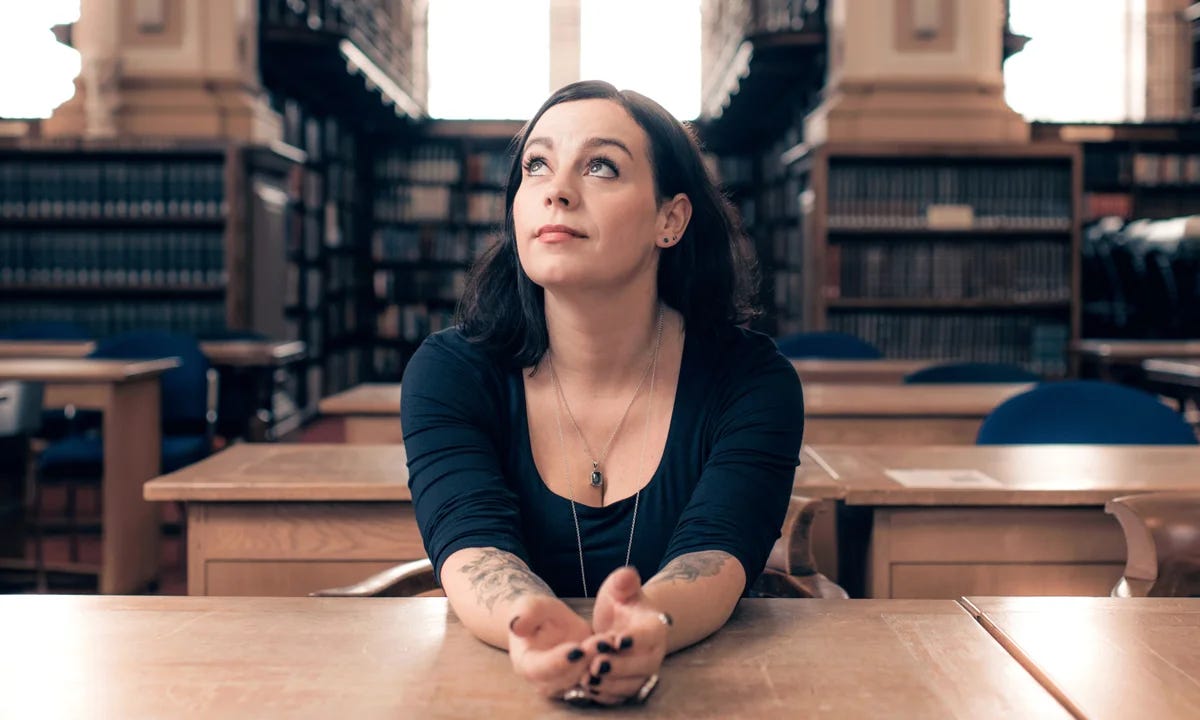
Jenni Fagan is one of Scotlands finest writers. She has published five fiction books , screenplays, eight books of poetry and a memoir.
Her debut novel, The Panopticon, saw her selected as a Granta Best Young British Novelist, and her second novel, The Sunlight Pilgrims, gained her Scottish Author of the Year. Jenni has been listed for the Encore Award, the James Tait Black Memorial Prizes, the Desmond Elliott Prize, the Sunday Times Short Story Award, and the Pushcart Prize. She is a Doctor of Philosophy, a member of Liberty, and a Royal Society of Literature Fellow. She lives in Edinburgh with her son.
I first discovered Jenni’s writing when I read an early proof of her memoir Ootlin. It’s one of those books that sears itself onto your brain, impossible to forget, haunting and heartbreaking, yet awe-inspiring. Published in Summer 2024, it was written initially as a suicide note when Jenni was twenty three years old, and chronicles her story of growing up in the care system with twenty seven placements, four legal names, two failed adoptions, homelessness and child abuse.
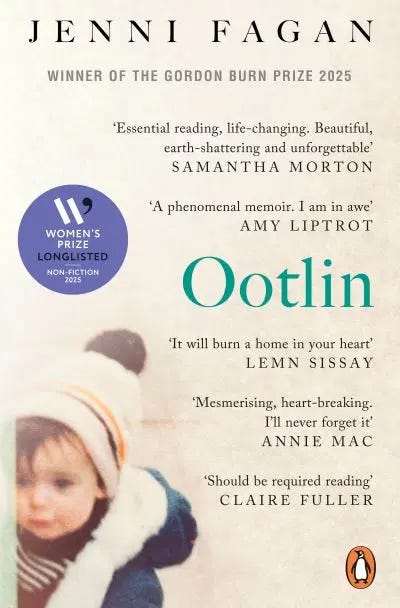
After writing the manuscript she hid it away. Twenty years later, Jenni, now a successful novelist and writer, finally revisited the manuscript and decided to publish it. I feel like it should be compulsory to read. Jenni’s story is memorable for the cruelty inflicted on her but more remarkable for the force of life she feels throughout and for her courage and determination to survive. There is so much beauty in the book. Ootlin went on to win the Gordon Burn Prize and was long listed for the Women’s Prize for Non-Fiction.
The good news is that Jenni has written a fifth novel and it’s out now. Entitled The Delusions, it is a metaphysical satire about what happens to our souls when we reach the afterlife. The Guardian said it, ‘fizzes with impatience, invention and humour.’ I’m so excited to read it.
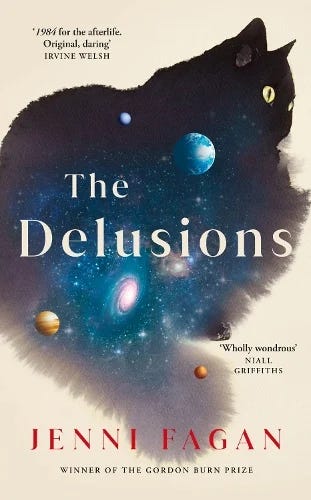
In honour of the release of The Delusions, Jenni has kindly stepped up to the Changes Q&A for March. Please enjoy…
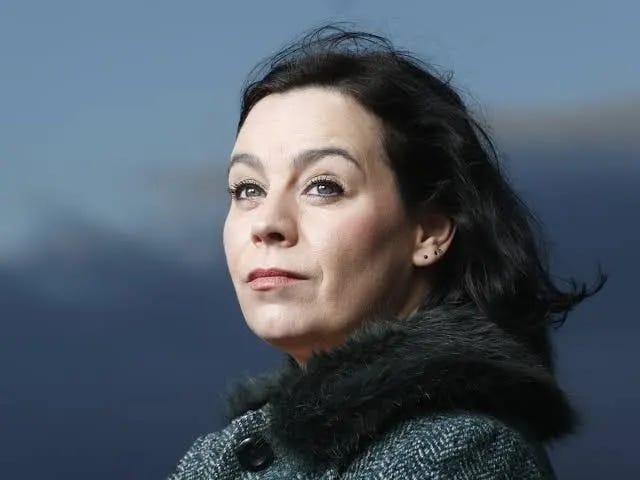
What is your relationship to the word Change?
I am someone who has experienced a lot of change in my lifetime so far, I have moved all of my life so at forty eight years old, I’ve lived in around fifty places now. Change to me was part of the natural ebb and flow of my life and I realise it has made me more likely to take risks, to walk out on something if it isn’t right for me and to have a willingness to do so even if I don’t always know if that will work out. Then there are the things that feel harder to change like your relationship with your own body or health, sometimes those things can feel much more stuck or privy to influences out of our own control.
It isn’t easy to live in such a peripatetic way all of your life and I would like to put down roots, maybe in another few years time. There is a grace that comes from living without certainty or knowing always what will come next. Einstein said
‘The measure of intelligence is the ability to change.’
Learning to lean into whatever comes is a life skill worth learning.
Who was the last person to change your mind and what opinion/perspective was changed?
I have been in a conversation for some years with a friend about forgiveness. They have freed themselves from a lot of things in life by choosing to forgive no matter what, it seems. I really struggled with the idea that it is up to each individual to have to forgive or they are just somehow less evolved, less giving. That was part of the
feeling I got from this unconditional forgiveness as a concept everyone must fulfil.
When you have come from a complex life as I did growing up in the care system, and you have seen and experienced so many challenges that are not always talked about in life, you really have to learn to live with a lot of things you would not have chosen to go through for yourself. One of the ways in which I have made more peace with
my own life was to feel like it isn’t actually on me to have to forgive every thing I have gone through or things that I see in the world that are heinously, to me, unforgivable. What it is on me to do is to not remain connected to those things or people as if they are mine to absolve or resolve or continue to carry. So whilst my friend and
I have different journeys when it comes to forgiveness, I think the outcome of our personal approaches is perhaps more similar than it is different in certain ways. I decided for me it was easier to forgive life full stop, than break it down into instances and individuals. Their actions are not mine to carry. I can set them down and walk on free of them regardless. Of course for all less important things I forgive easily and forever, some actions can’t be resolved like that though. So, I think my perspective has changed as in I feel my stance is very valid. I don’t think everyone has to approach things in the same way.
When have you felt the most ‘changed’ in your life?
Probably when I became a mother. I had never lived with or met, or seen a photograph of anyone I was related to when I was growing up and as an adult, my child is the only biological relative I know. I felt like I had been given the keys to some secret feeling of belonging that I had not experienced before. He was born in early Spring
in London, on the bluest skied day. Despite complications around it all I remember being so excited to take him for walks in the park or just to look into eyes that were almost identical in shade to mine. I also knew I would never again live without worrying for someone else before myself and that would change my focus on most things.
I always say that life and death are the twin fates and nothing changes you more than bringing life into the world and taking on that role as a mother, on the other side losing those you love is equally impactful. Both have changed me more than I imagined possible.
What book changed you and why?
Metamorphosis by Franz Kafka is a book I have returned to throughout my writing life.
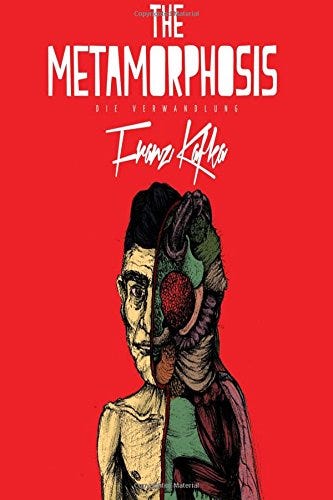
Gregor Samsa, a travelling salesman, wakes up one morning and discovers he has been changed into an ungeziefer, some kind of monstrous unclean creature, which, when translated into English was then depicted as a cockroach, which was not at all what Kafka intended. In the story Gregor’s family and employer are horrified to find the young man who was serving them all with good work and providing financially and maintaining the presentation of respectability, now has a scaly large shell of a back, hundreds of legs, and a voice that lets out indecipherable screeches rather than
conversation. The reader is so compelled by Gregor as he tries desperately to show his humanity is even more alive than it was before but nobody understands him, they are instead repelled by his vulnerability as much as his new form. Metamorphosis explores the relationship between self and other, between capitalism and vulnerability,
between the casual flick of fate that can render a life forever changed in an instant.
What change are you going through right now?
I recently had a radical hysterectomy and so I am going through surgical menopause which is sometimes described like driving a truck off a cliff hormonally. It is a huge change to go through. When it is radical they remove all the organs instead of just the uterus and so everything else shifts a bit as well. Menopause is a neurological
condition as much as it is physical and it is going to take some time to figure this one out.
What change would you like to make to your life in the future?
I would like to work less. I work all the time. I have always been like that. I started working full-time when I was fifteen years old but even before that I would have night jobs in the fish and chip shop, paper rounds, Saturday jobs. I played in bands for years in my teens and early twenties and I’d fund that and my wee housing association
flat by working a day job and a night job too, even then you’d often be struggling to cover everything.
This year I am finishing my modern Frankenstein adaptation, a novella that will come out next year. I am releasing another big fiction novel The Delusions and will be touring that. I am writing the film script adaptation of my memoir Ootlin.
I am writing and directing a short film. I will be mentoring. I am doing advocacy for kids in care behind the scenes. I start work as a literary fellow in the Autumn. I was meant to be writing another novel as well but I have managed to push that back.
I am always doing too much. Decorating, renovating, taking on this thing or that. On top of all the usual things like parenting and sorting the house out, keeping on top of cleaning and taxes and all the historic stuff, I’ve sort of coped with life and myself by just endlessly doing stuff. It’s crazy because I have fibromyalgia and other health conditions and so often I take care of all the stuff and then just don’t have enough energy to look after myself properly or socialise or do things I’d like to do. I would like to change that. I think it’s vital to do so actually.
I’d like to have time to breathe, be in the garden, take time off for a holiday or to actually look after all this health stuff instead of still just trying to outrun it, it doesn’t work. I’d like to keep changing the world in any small or bigger way I can with my work. I care so much about literature and storytelling and the lifelong study of
humanity and nature and what it means to live on such a challenging planet in a finite existence. I’d like to keep cheering on and supporting anyone who is fighting for something better for themselves and those around them. Maybe I’d like to stop wanting to change myself and start giving myself more grace for who and what I am right now, actually slow down and look at where I have got to in life, do more stargazing, clean the house less, sleep more.
Buy Jenni’s new novel Delusions here.
Buy Jenni’s memoir Ootlin here.
Comments
Nothing yet. Say the first thing.
Sign in to join the conversation.