
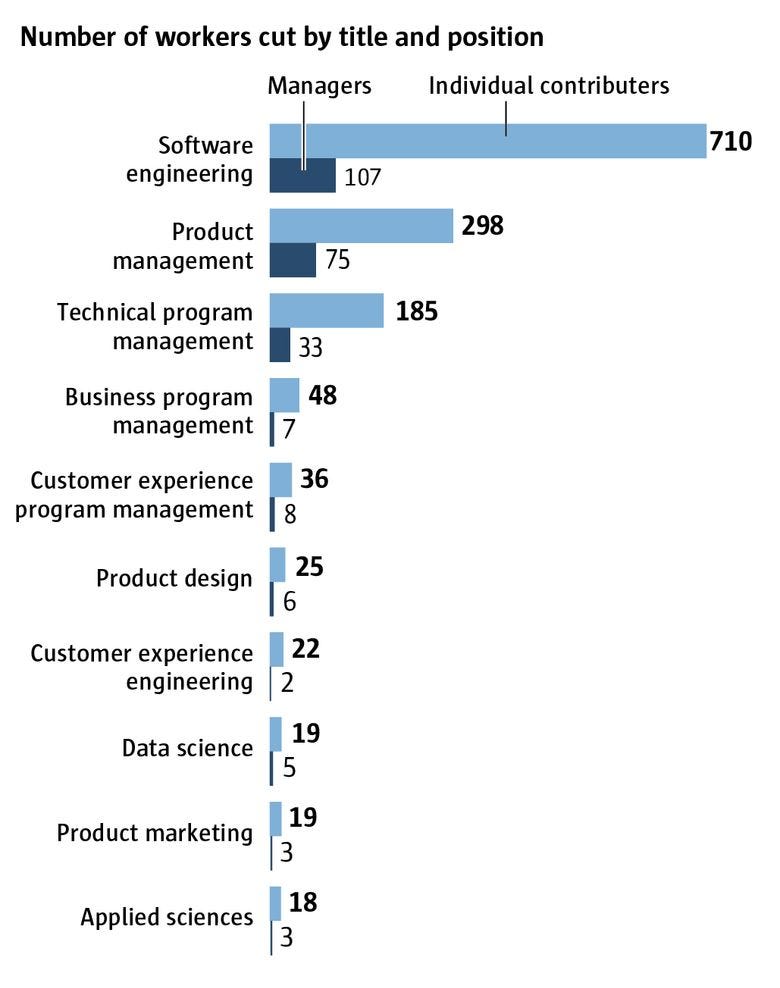
Are tech layoffs happening more frequently? Certainly since the Covid pandemic started. Layoffs.fyi’s data shows that in the past 3 years, tech layoffs happened a lot more frequently compared to 2020-2021. At least multiple times more by both company and employee count.

Layoffs don’t happen because employees are actually underperforming; companies already use individual performance reviews and improvement plans (PIP) to handle those cases. At the same time, anyone who worked at tech companies will know, if a company wants you out, they don’t need any concrete proof of alleged “underperformance”.
Over-hired? Maybe. But hiring budgets and strategies are decided by management and leadership. So if they made the mistake, why aren’t they taking responsibility?
Moreover, companies conducting layoffs actually hire back some positions they eliminated. Even Elon admitted to rehiring after his big Twitter layoff in 2023, and I personally know people who were rehired by their former companies post-layoff.
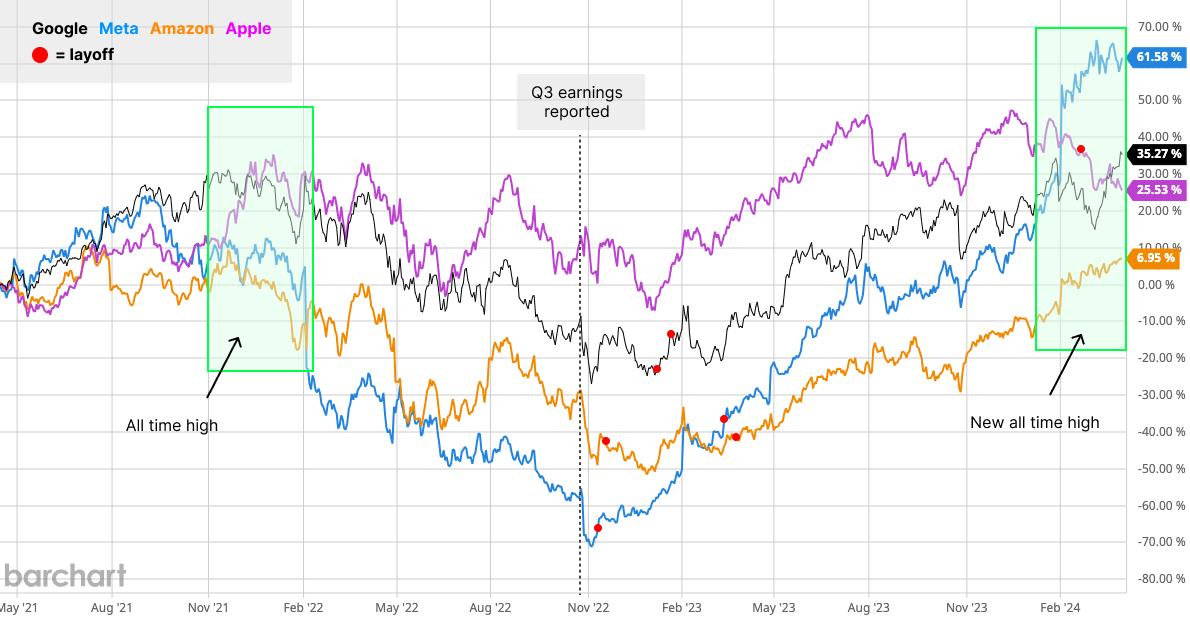
One of the most likely reasons for layoffs is to increase company stock prices and be seen more favorably by investors (read: greed 🤑). Tech investors look at what’s called “revenue per employee”, which is calculated by dividing total revenue by employee count. This metric could tell investors how efficiently the company is operating. If revenue per employee decreases, investors move from a buy to a sell position. Between 2022 to 2024, after Google, Meta, Amazon, Apple announced layoffs, all but one company’s stock prices started to rise.
So what can you do as a jobseeker to protect yourself and stand your ground?
I noticed European tech companies lowballing offers a lot more this year, in one case mid-level software product managers being offered only 50k+ EUR in Berlin (the actual median for mid-level PMs in Berlin is probably 65-75k) and some senior product managers were even asked to work for free.
If you don’t have urgent financial needs, ask for the salary you know you deserve. If everyone rejects lowball offers when they can, we will collectively increase the market rate for us all. Check out this previous article for specific salary negotiation strategies.
A working student candidate went through 4 stages of interviews. A female candidate I know got asked to go to the founder’s personal home for the final interview. Another candidate was told he was not professional because he showed up in a sweater not a shirt. Not to mention the countless cases of interviewers constantly rescheduling, showing up late with no apologies, patronizing candidates during the interview, discriminatory speech…
If you were rejected from these processes, email the recruiter and the hiring manager, give them professional yet honest feedback. Write a review on Glassdoor or Google. Don’t let them off the hook.
This advice might sound counterintuitive: if job searching is a numbers game, and I need to find a job, then shouldn’t I apply more?
Trust my tech recruiter experience when I say this: job searching is only a numbers game if your conversion rate is low, and if you have time to kill. A coaching client I worked with sent over 1,200 applications over 10 months before we started working together; after working out a clearer job search strategy with him and a few rounds of mock interviews, he landed an ideal job only after 30 applications within 3 months (the job offered over 50 days of annual paid leave!). The majority of my clients were able to land job offers after sending 40-60 applications, and in one case, the person landed a job after only 5 applications.
Not only does too many applications raise the bar for everyone (I elaborated on the process in “LinkedIn is not your friend”), but also if most jobs get hundreds or thousands of applications, companies can afford to be shitty and picky, and still make great hires. This is exactly what we’re seeing in a buyer’s market (employer’s market). If you see red flags, and you know this might not be a good fit, don’t apply and withdraw your application when you can.
No posts
Comments
Nothing yet. Say the first thing.
Sign in to join the conversation.