
I’ve been feeling the pull of the past quite profoundly these last few days - since our recent 44 year anniversary. And that date suddenly took me back further. Well, to my early days at Veddw, but then to a hundred years ago, when Marion Cran was writing about garden making.
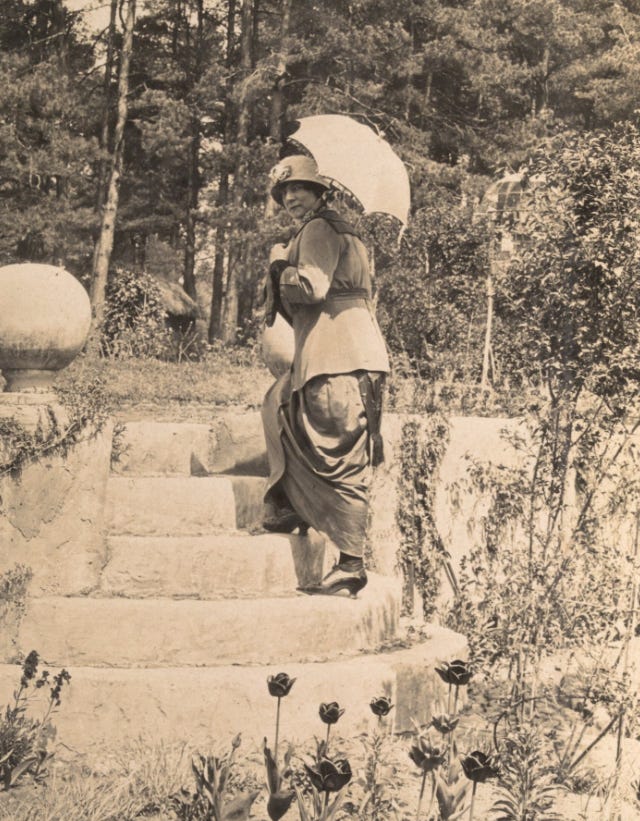
She had quite some life, for her time - here’s her story, written and illustrated.
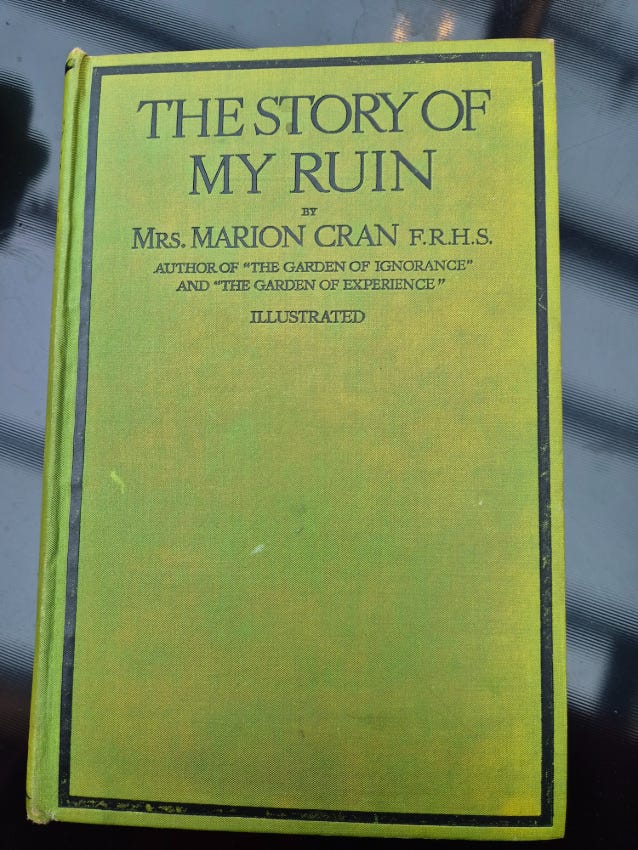
Days out in our beginnings at Veddw often became focused on efforts to find her books in secondhand bookshops. I bought ‘The Story of My Ruin’, written 102 years ago, for 75p. Here’s how it begins:
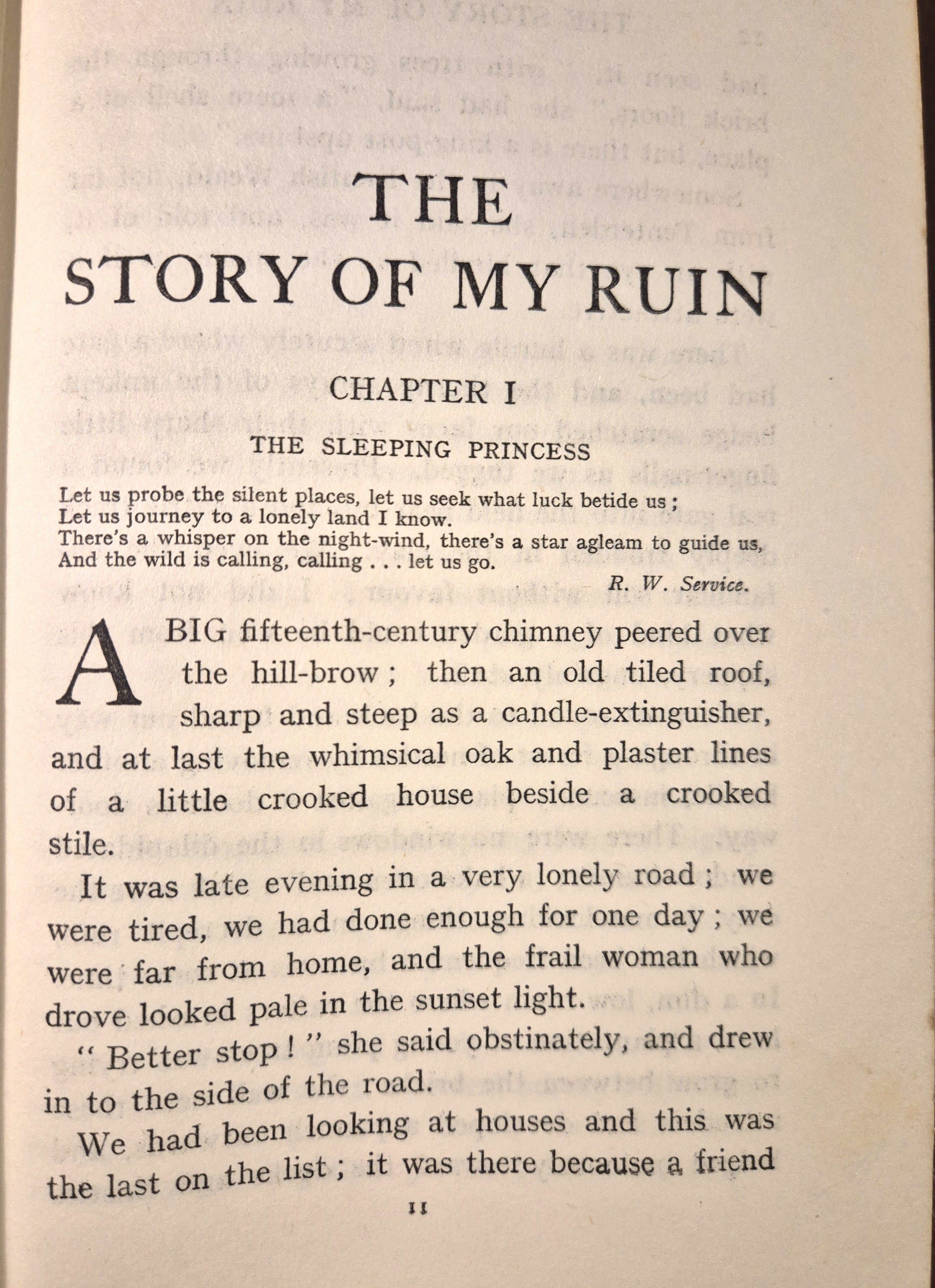
Opening the book again after many years I’m drawn in all over again. It’s a great read for a romantically inclined garden maker. And what it is, to share so many concerns, so intimately, with someone so long gone. Someone with no experience of AI or the internet, but absolutely relatable: a garden maker. Maybe the first Influencer. That part is embarrassing, as you can imagine.
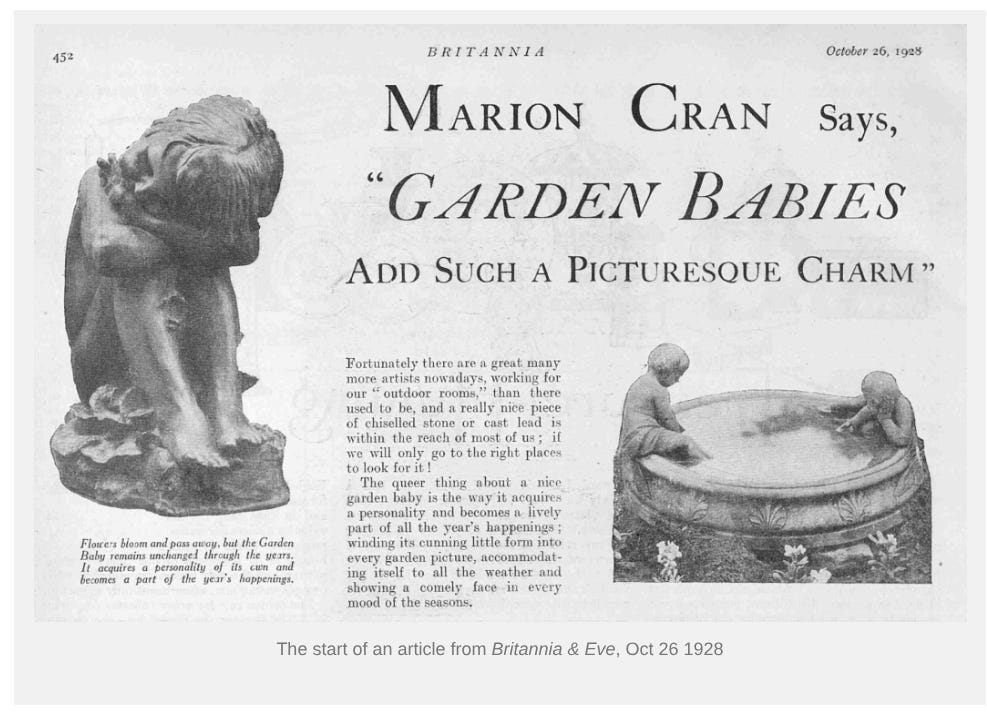
Let me share some of the book. You can still get a copy if you search the web and get there before all the other eager readers who’ll have read this post.
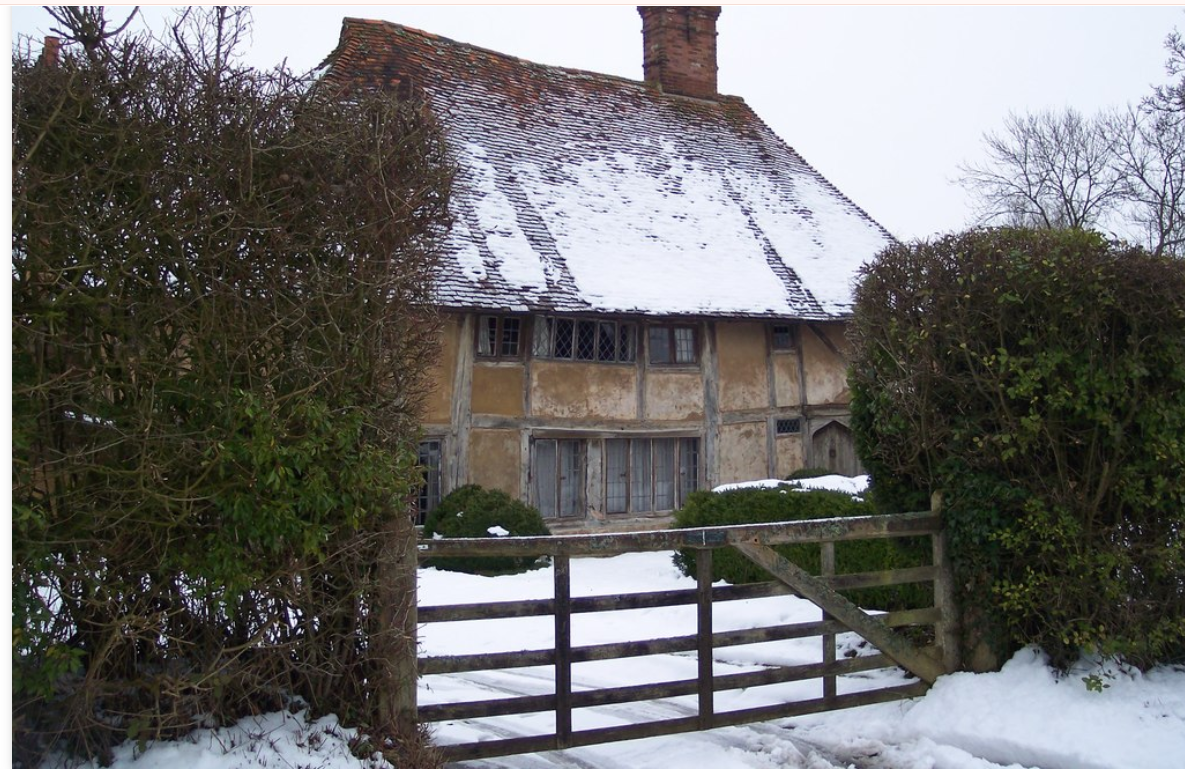
So, having been ditched by her last husband and needing a new home, she finds her ruin. And after despairing of a place so decrepit: “a sodden, tottering ruin”, she goes on searching but not forgetting it, and then treks back again by public transport. And - you’ve guessed it! Decides to have it. This is it - it still exists! -
Somehow it all happens and the work begins:
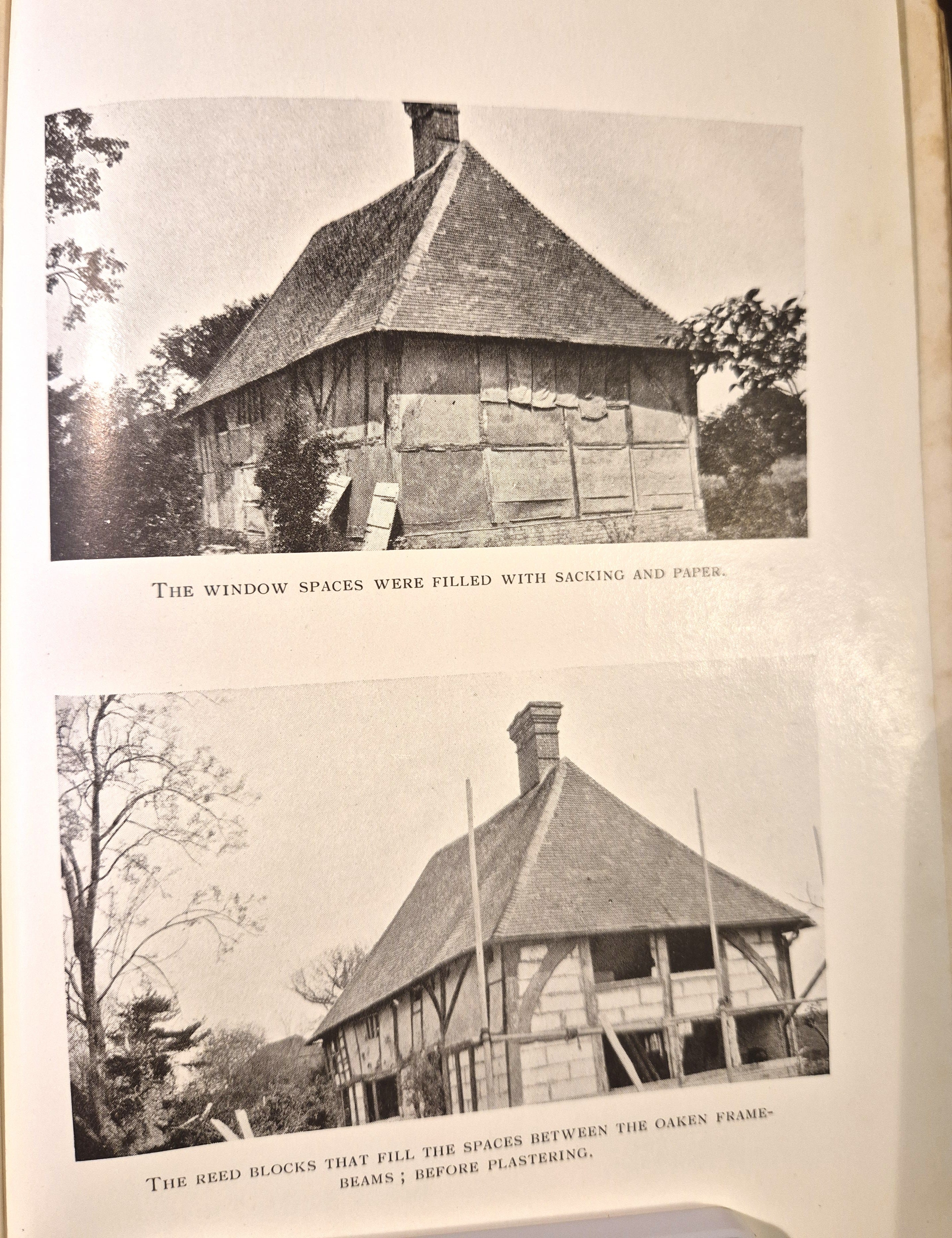
It goes on for so long (you see - lots of things don’t change) that she gives up her rented rooms in the local village and moves into the house with no windows or running water, while the builders go on.
She goes into fascinating detail about what making a kitchen involved then - her hatred of contemporary British stoves, the necessity of knife cleaning, and the joy of an ‘Easiwork cabinet’. (I had something similar in an early rented place).
She contemplates the garden: “Indeed it is no light matter to start a garden from the raw! If there is much happiness there is generally also a premonitory sense of fatigue in starting a great task all over again.” But there are many interesting digressions on the way. I love the digressions - it’s a casual, human style which I think Substack has recently re-introduced into garden writing.
This is one which fascinated me when I first read of it. She passes through a village one day: “where every garden grew Madonna lilies - many of them in large quantities….. That whole village loved lilies - either because they grew particularly well in its soil, or because some artist in landscape gardening lived there and taught people how to plant in broad effects”.
She persuades her own new (to her) village of Benenden to grow daffodils and roses. And she dreams of villages everywhere doing the same, to “settle on a flower to grow for a communal picture, so that in time people will speak of this one as the village of lupins, that, the village of roses, another the village of irises and so on…..that every single garden should grow at least one of the chosen flower, and then those who love it very much…will make a fine display of it…”
I fell in love with this idea when I first read this book. Discussing it though, I only got scorn. People want many different plants, not a specialism. Don’t they? It’s still a wonderful idea - I would dream that the drama of it might possibly shake the plant potpourri obsession.
It is good, I find, to read a book which is not telling us how to do things except incidentally, and which is passionate in opinions without being preachy. She has a great turn of phrase and excellent opinions.
About hedges:
“The top of this perfect hedge is rounded so exquisitely by the man who planted it and who loves it, that you feel you could rub your hand along it with the smooth pleasure one feels in running a billiard ball through the hands…. I do not exaggerate. Every time I pass the village green I look upon that hedge and marvel, but do not covet it. Its awful tidiness terrifies me; it is without reproach.” She continues with a description of a nearby hedge of Rosa rugosa: “There is something satisfying to my heart, though not always to my colour taste, in that rugosa hedge. It is free to express itself, which is more than can be said of its smug and faultless neighbour.”
And her visit to a garden, loved and praised relentlessly by a friend, makes me feel less alone in the world.
“So, the mood of of journeying was all it should be for a garden’s journey’s end; kind and happy, receptive and sympathetic.” But - the garden was, as gardens often are, horrid:
“I was so staggered that I utterly lost courage to explain how I felt to the mortified dear soul by my side. I could only admit that O’rthewell was not to my liking and leave it at that. You can’t express yourself in clear and critical manner when your teeth are on edge and you want to get away and forget the thing that did it.”…….”I had to re-adjust many values, realising how far she must move out of herself to seek me and my simple ways and how little after all I could give to her. It was a most soul searching day”.
The book is full of my markers. I think that with a little encouragement I will continue this in another post - and this is just one of her many books. I will end this post though with another digression:

Marion refers to a fruit seller in Tottenham Court Road, (see above and the link!!) that she passed one day when she was pregnant:
“I walked past his shop at the close of a day’s work, long, long ago on a hot August afternoon… There were baskets of grapes displayed - large grapes, green and velvety. My eye caught their bloomy coolth; I stayed and asked their price. I could not afford them and went on.
When I had gone some way, the man who told me the price ran after me, panting, and put a bag in my hand.
‘Take these. It’s all right. I have too many of this kind.’
Speechlessly shy, I took his gift. That exquisite act of humanity out of the dust of Tottenham Court Road has dwelt in my heart and refreshed it ever since….Just as the cool, delicious muscats refreshed my tired blood that evening.”
If this interested you, you may like this (if you missed it) -
Comments
Nothing yet. Say the first thing.
Sign in to join the conversation.