
Sometime early March, I shamefully admitted something to myself. Ennui had settled after such a prolonged winter. The blustery season had not fully given itself over to spring. And the long stretch of cold tightened my fists, keeping me from certain tasks.
One in particular.
I didn’t want to cook. Or bake. Or eat.
How does one write a cookbook, food memoir being a more correct description, and not cook?
*
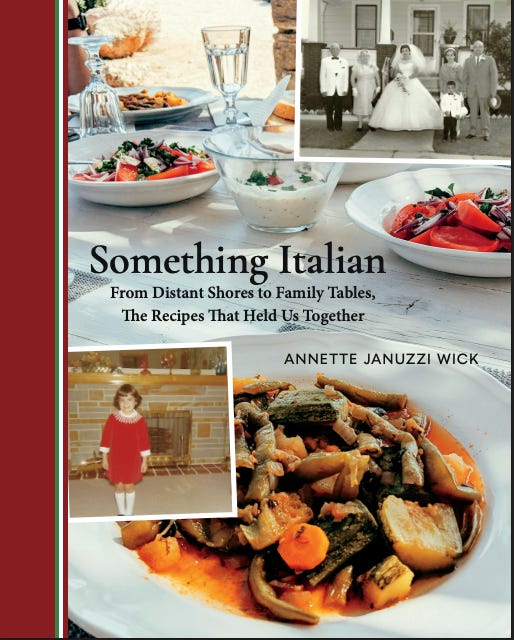
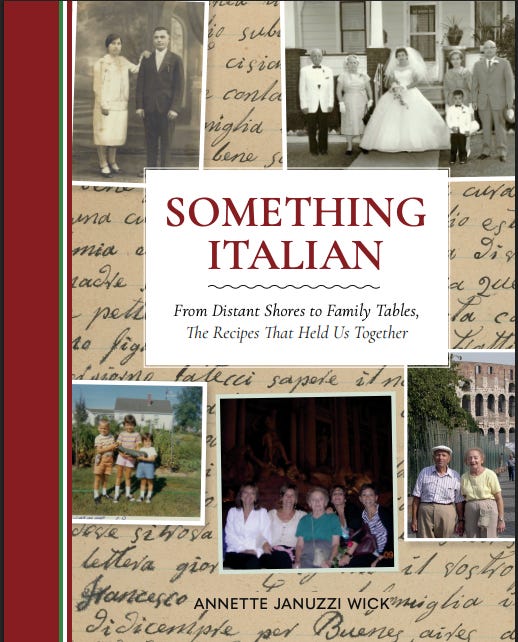
By last summer, edits for Something Italian had been completed. Fall arrived. My time was consumed with additional duties that occupy a self-published author. Ensuring ISBN numbers were active, and filing for a copyright and a Library of Congress control number. Design work was tedious as covers were declined and modified and modified again, as tedious as deciding page layouts and correcting the corrections in the copy along the way.
Thanksgiving and Christmas and New Years blew in. And blew out.
Working fulltime in my own business, scheduling required new heft. It isn’t called a book launch for nothing. Like any product introduction, one must ensure placement. For me, that included bookstores, book festivals, book festivals that decided to take a hiatus the one year I could participate, or book events that moved to Zoom, or bookstores and events where I evaluated what the appearance was worth, or I made my own deals to reach to new readers.
What I hadn’t done was cook.
Several times, I dipped into Chicken Ruby, a favorite dish from a trip to London where we dined at Dishoom. Or I reverted to sheet pan cooking, a New York Times Cooking staple from pandemic times. The sheet pan recipes were a healthier version of crockpot soups and a warmer version of salads. Or I entered my salad days because my pants had “shrunk.”
Then, food prices skyrocketed. Leftovers, for which waste reduction had always been important to me and with which I love to cook, took on a greater urgency. While dining out was part of the social fabric when living in city, $16.00 for a hamburger was one wagyū cow too far. I could no longer overlook my disgust for restaurant grease pits in the back alleys of Over-the-Rhine. Once, we were charged $2.00 extra at a local pizza parlor after asking for a second small plastic thimbleful of salad dressing.
We were at the stage of bringing our own dressing to the table? I hoped not.
The confluence of circumstances chased me away from the kitchen, unenamored by the desire to cook. Traveling to see our adult children, or separately for work, we ate popcorn for dinner.
Food became the simple sustenance it should be in these times. Maybe, always.
*
One notion that has been rattling around in my brain is how food occupies an oversized portion of our conversations these days. As if nothing else is safe. While I’ve been a huge proponent of food as the place where we can all peacefully break bread together, partaking cannot remove what simmers beneath. And what simmers eventually roils and boils over.
To the extent of that occupation, I recognized the proliferation of cookbooks and food memoirs in the market, in particular as I’ve followed one literary agent on her Substack and social media. She repped a well-known cookbook author who recently released Every Salad Ever by Greta Podleski. Was this something we really needed?
Was my book needed? Was it ego-driven? In the age of GLP-1s, and an oversaturation of the cookbook/food memoir market and the obsession with everything Italian such that towns in Italy are in complete ruins from tourists, what was it all for?
*
As my parents aged, family meals no longer bogged them down. They stopped scrubbing the myriad of pots and pans my mother soiled in preparing supper. They became sinkies. They ate over the basin in their kitchen and gazing out the window that overlooked the backyard where grass had grown patchy in the shadow of the silver maple trees’ umbrella. Kickball games and yelling were all in the distant past. In the present? The chomp of an apple, the slurp of a tangerine, the satisfying um of swallowing a bit of tomato sauce slathered on bread, all while standing before the altar of the harvest gold porcelain sink
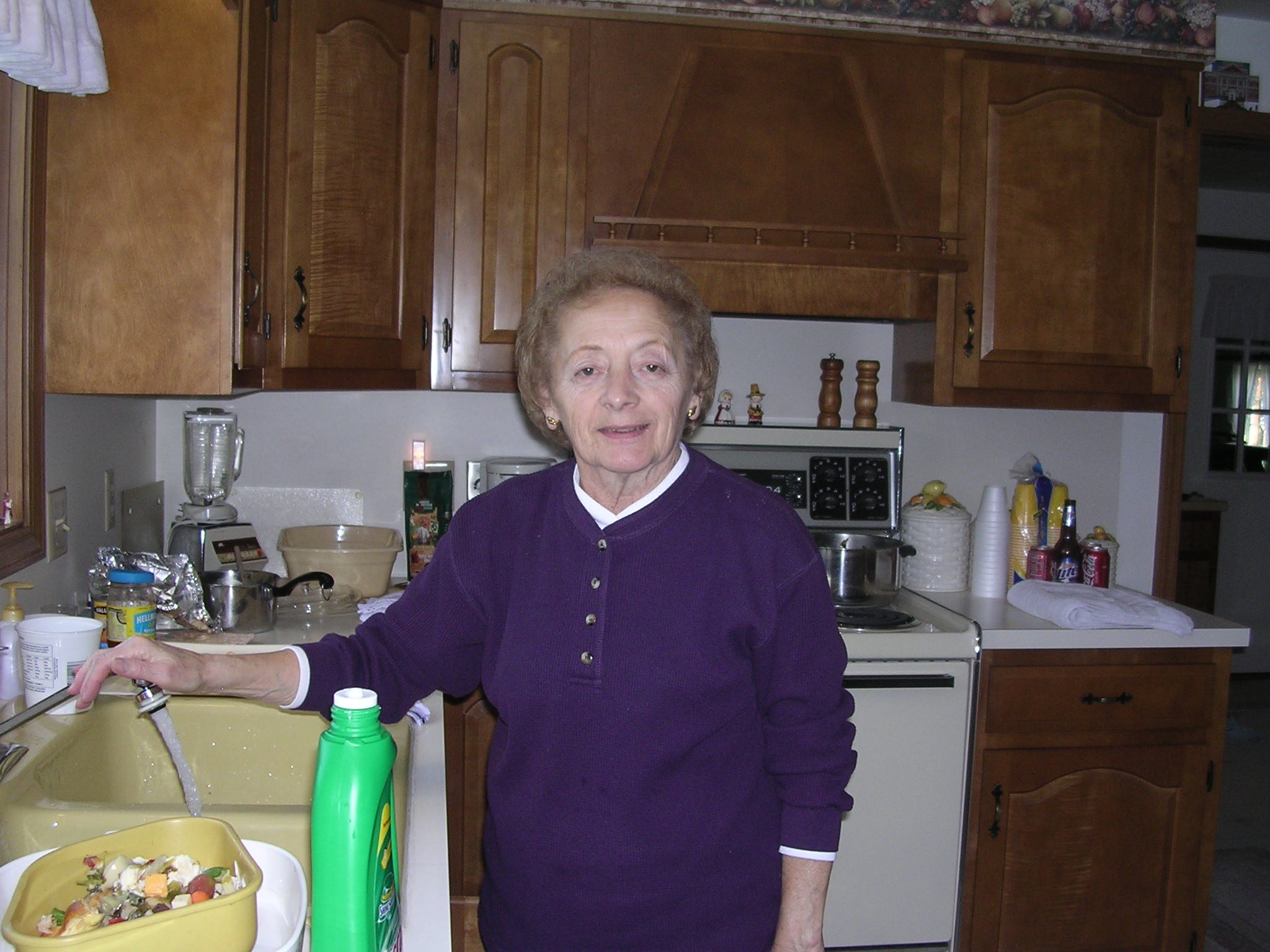
.When my mother developed dementia, my father was the substitute chef. Not that he hadn’t ever cooked and he was our chief griller and thus chief cusser, but sometimes, he bought dinner for the two of them consisting of fried chicken from Convenient, the store where years ago, we bought milk, buns, eggs, or whatever else my mother ran out of, with the nickel or dime or quarter in our hands, and tarried home while my mother impatiently waited, and her cooking did too.
Had I now hit the Convenient Food Mart level of convenience?
Throughout book events, snow, ice, and overpriced food, I missed cooking. Oh, I had cooking assignments of cookies, zucchini squares, lentil soup. Shortbread, or pasta di frolla, pizzelles for cannoli.
But I missed cooking in the way that I missed my parents. I missed that part of myself that allowed me to be free, mind to wander, hands to experiment, to hold something messy, clean it up. But allowing myself to be unmotivated after such a time of ensuring all was tidy with the book, appearances, and talks, had also freed something else. The people I once loved.
Working on Something Italian, I hadn’t allowed for myself to be untethered. From my desk, from the ideas, from my sights on the finish line.
I wanted to float again in my kitchen with all its accompanying and lovable spirited spirits.
*
Spring happened. The bulk of my book commitments were halted temporarily—by me—with our son and his wife expecting a new grandbaby any day. I gifted myself fresh space on the page for new notes, new ideas, a remodel of the office for new projects.
I asked a friend to join me dinner, which consisted of a spring chopped salad. She offered to bring an appetizer. A nudge told me I couldn’t leave it at just that. Rhubarb was in season. At the market appeared a deep garnet-colored rhubarb. With some raspberries in the refrigerator, I decided on a rhubarb raspberry crisp that included some chopped pecans too. Before my girlfriend arrived, I tasted the rhubarb. The bitterness was now tamed by very ripe raspberries and spoonfuls of brown sugar, releasing some need inside of me.
The following Sunday, my niece Sophia joined Mark and I for our final Sundays with Sophia dinner until she returned to UC DAAP for the Jan 2027 semester. We made spring risotto and watched the final round of the Masters.
And, along the way, as my father-in-law’s health declined, as was true for anytime in my life, I went back to some basics—with lasagna to provide nourishment and comfort in difficult times.
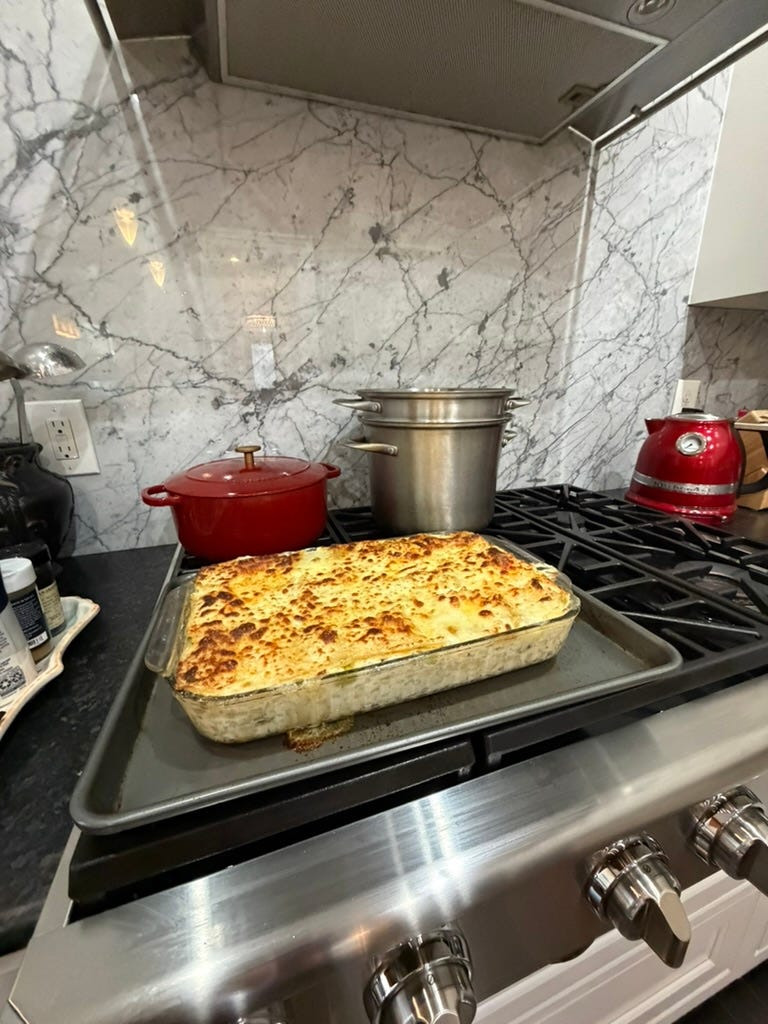
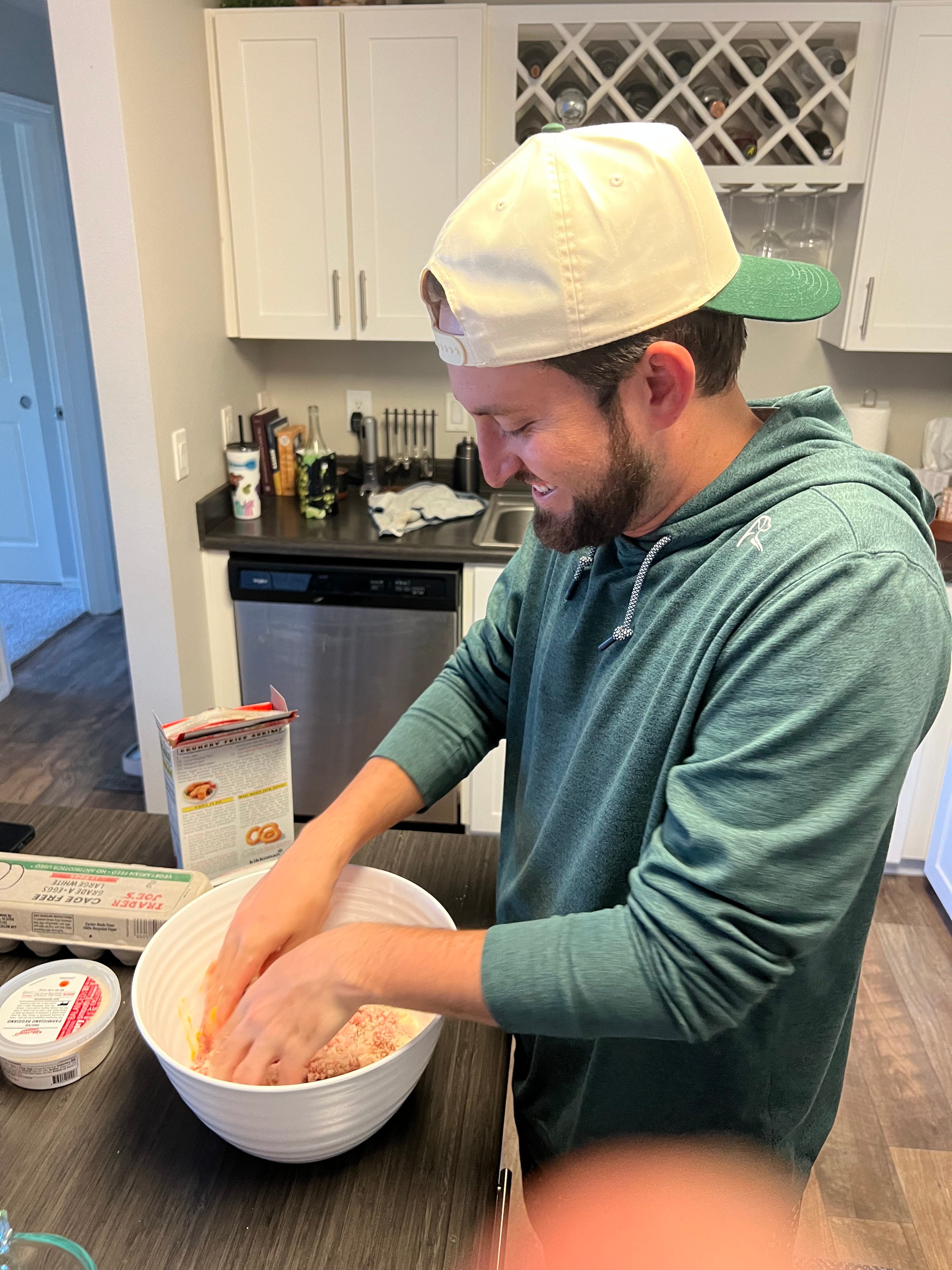
As he left us, with families all around, meals began to proliferate. Ruth Reichl’s turkey chili, Dishoom’s Chicken Ruby again, my famed brunch frittatas, tacos for the grandchildren, and finally, spaghetti and meatballs, which my granddaughter Nora so desperately wanted to help roll.
I explained to her how children should not handle raw meat. She later translated the the story to her parents as “children should not touch rotten meat.” She wasn’t wrong.
But oh the joy that came in those sparse moments of presence while we grieved.
*
And in the end, I recalled a line from my book about what my mother had tried to find of herself in the kitchen.
In my analysis of an Italian American woman at work, in this catalogue developed by hands rubbed with Vaseline in wintertime, I find an archive of my mother’s thoughtfulness, her intention to get something right for herself, and to demystifying the culinary inheritance she had received from her ancestors. Between the lines, she had left extra space; room to think, change her mind, or manifest her own creations. In those blank spaces, I heard her voice and felt an emotion she rarely expressed out loud: the desire to be known.
If I flayed open the thin pages, with the mere touch of my hands, a whoosh of air brought my mother, Raffaela and her mother Annantonia, Stella and her mother Nellie, and the other parenti into my kitchen, with the memory of so many meals stuffed with laughter and salted with tears. Their soft arms muscled through turns at kneading dough, while their big Italian hearts burst open with every dish consumed by someone they loved.
If I had conquered one thing with my book, it was that I had also had conquered something else in the kitchen. The questions I had about imposter syndrome, about the obligation of women in the kitchen, and about the need to conquer anything. I could return to my messy ways of being—the need to be perfect existing only on the page. And, given a few typos I’ve found on my reading tour, thankfully, not even that.
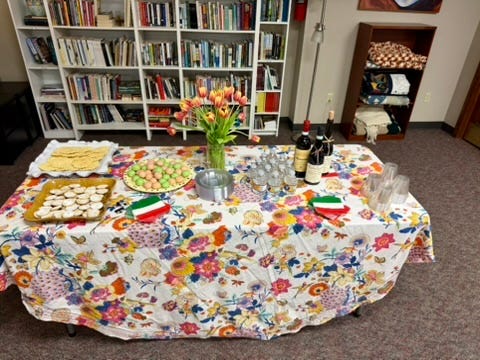
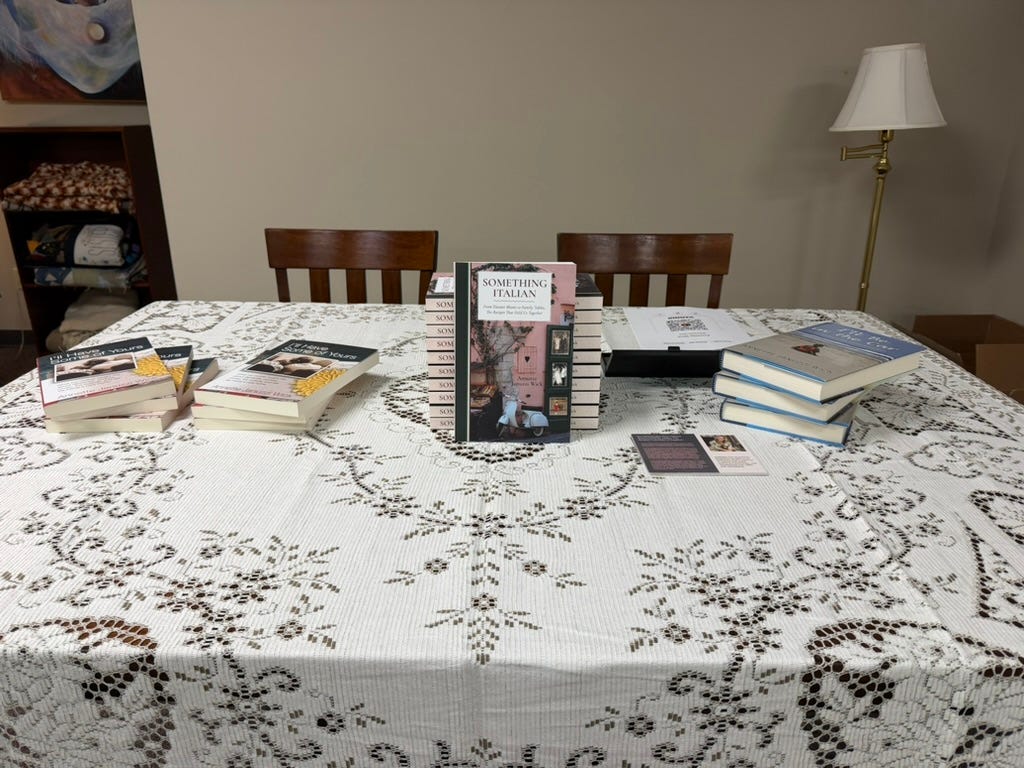
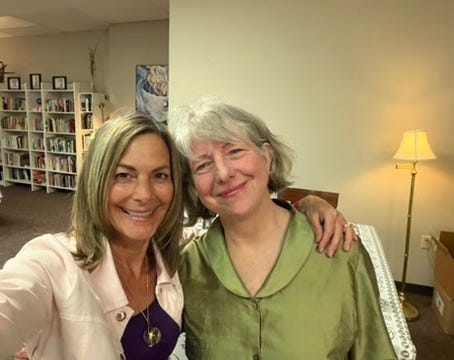
We had an amazing night at Women Writing for (a) Change, talking about our origins. How we have all sorts of origins - ancestral, physical, parental, spiritual, religious, and vocational. Women Writing for a Change was foundational as my vocational home.
Here’s some pictures from the event:
*
The summer is limited in my appearances, as I hope to be spending time ruminating on my next project. Other upcoming events will be posted here as they become clear.
July 28 - Caring for the Caregiver Writing experience, virtual, FREE. REGISTER. Contact Kara Pierson Harper. Phone: (513) 244-5494. Email: kpierson@muchmorethanameal.org.
September 1 - West Virginia Italian American Festival.
Oct 15 & Oct 29 - LitCleveland - Finding Memoir in Food. Sign up for LitCleveland, or return here for details.
October 21 - Lloyd Library and Museum in partnership with Fotofocus, Presentation - Chestnuts: The New Comeback Kids.
November 14 - Books the Banks
Annette Januzzi Wick’s Morning Finds is a reader-supported publication. To receive new posts and support my work, consider becoming a free or paid subscriber.
Comments
Nothing yet. Say the first thing.
Sign in to join the conversation.