
In that place, a shoe store once stood, I wrote in January of 2001, mimicking Toni Morrison in Sula writing, "In that place, where they tore the nightshade and blackberry patches from their roots to make room for the Medallion City Golf Course, there was once a neighborhood."
In that place, a family once stood, eventually torn from their roots by shoes.
Toni Morrison and I shared more than references to place. We shared Lorain, Ohio, where my grandparents immigrated, where my parents and their siblings and children were raised, where I was born, where our family’s shoe store once stood.
Recently, I gave copy of that essay to my older cousin, Paula Januzzi-Godfrey. After 20-plus years of estrangement, Paula and I reconnected through social media and Substack. And life.
She’s the daughter of Uncle Albert, the brother of my father, Ettore. Albert was also Ettore’s partner in the Januzzi’s Shoes enterprise after it was founded by my grandparents, Enrico and Stella, in 1926, and eventually passed along to their sons. Together, the four of them grew the shoe business such that its reach extended beyond the many corners of northeastern Ohio. And my uncle and father grew their families, Albert and his wife having four children, one girl, Paula, and three boys. Mostly older than us. And Ettore and my mother, Jean, having five, four girls and one boy.
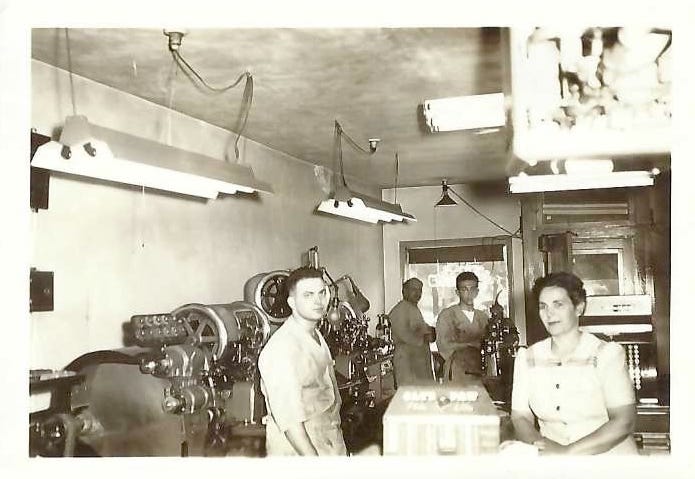
After Stella, then Enrico died, Albert and Ettore found their current circumstances too difficult in which to work together. The store had bound them all their lives, like pieces of leather sewn together meant for protection and practicality. But its purpose ceased to exist when their relationship did. The brothers dissolved Januzzi’s Shoes Corporation. Our family enterprise was no more.
*
My writing files are filed with references to the family business (a poem titled Selling Ourselves for Shoes, another titled Escaping the Crown, In That Place essay and now, Something Italian. There is not one period in my life in which the shoe store did not take up valuable real estate leading into my head and heart. I supposed the same for my father.
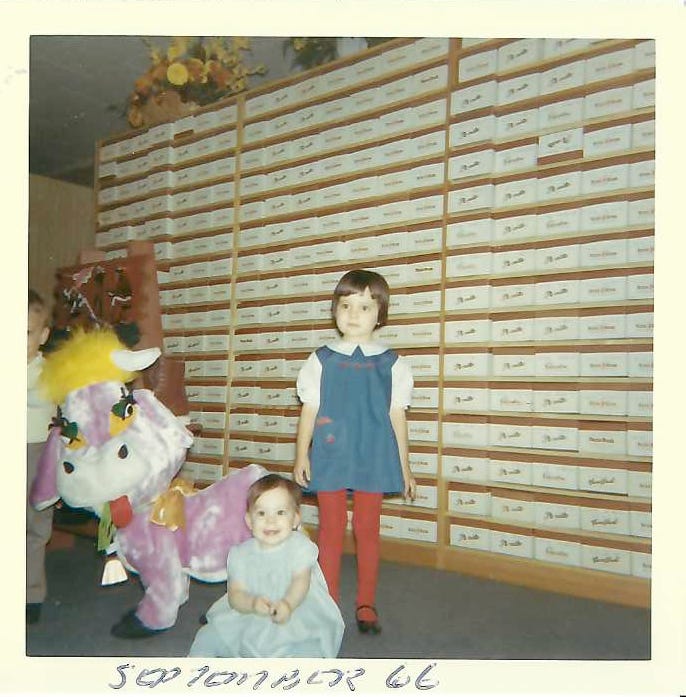
Lines from another poem came to me: We only knew that the odor of unwashed feet / would cause us / to seek out Grandpa’s shoe glue / or steal away to the store room, / relieved for a moment / from the duty and pride / of selling the shoes, the business, our selves.
What had we all lost in this wholesale dissolution of a retail way of life?
After the separation, my uncle and his oldest son established Januzzi’s Footwear Solutions (unable to use the original moniker of Januzzi’s Shoes).
Our lives that summer of 1984 were miserable. For my cousins and their families too, whoever had yet to move away. We had buried Enrico that spring, and with him, the any shot at repairing the family shoe tree, despite his magical repairs of soles. My siblings, father and uncle, cousins, employees, spent much of our time dismantling shelves, boxing up memories, avoiding each other, and ignoring our friends.
No individual was separate from the collective. And thus, the family units, who we were as individuals, and our way of being were dismantled too.
My parents carried much shame and bitterness around that event. My siblings felt it, each in our own way. Me, when I write. I feel the pain of my father, how his dreams of becoming something else, anything else, had been snuffed to follow in the family footsteps. How lost he was now. How free he would become. My mother never worked in the store. But she carried enough emotional intelligence to recognize the machinations of it all. Her heartache was evident in her time in church, releasing the heaviness with her sweet soaring voice with the choir, serving the priests, and somehow finding the time and energy to serve us.
Home still before college, the devastation hit hard. l left Amherst, Ohio, in hurry when fall arrived. Years later, in my poem about escaping the cloud of anguish that hovered over our home, I wrote: My grandfather, a scion of shoes / had died, me at his sterile side. / I wanted to abscond from this / instance of death, and its aftermath. / The crash of shoe shelves toppled and sold. / A family tree with a crusty old branch / broken off, split on the ground.
Uncle Albert died early in 2003. By then, I inherently understood a bit more about death than my older cousins and siblings. Yes, I had been present at Grandpa’s side in the hospital when he died. But I had also experienced death three years earlier. That of my young husband, which taught me how we must reconcile with regrets before we leave this state of being.
I believe Albert and Ettore had enough of a reconciliation that my father found peace after his brother died. He worked harder to stay in touch with cousins. And sometimes his nephew. In his files, I found Dad’s handwriting all over his attempts to recreate family trees. His lists were endless—an endless source of joy for me when they were discovered, and a source of frustration that he too might have been working out repairs of the trees’ trunk.
Time shortened the distance between those deaths and family now.
My journey of Something Italian, begun in April 2020 with a recollection about my father’s (and my) obsession with fennel, started me on a longer journey to obtain Italian citizenship, commune with the ancestors and cousins on page and discover other progeny in Italy, cook more of my mother’s meals.
And sit with the separation from the shoes that bound us all. What I didn’t know at the time is that I too would find reconciliation, along with my cousin, Paula, between the pages of my book.
When I announced its publication, how I would be including family migration stories of Januzzi’s and Mazza’s, of Scurti’s and DeLuca’s and Giuliani’s, Paula reached out to me.
Her simple, I want to come to your book event, would change me in ways I’m still discovering.
*
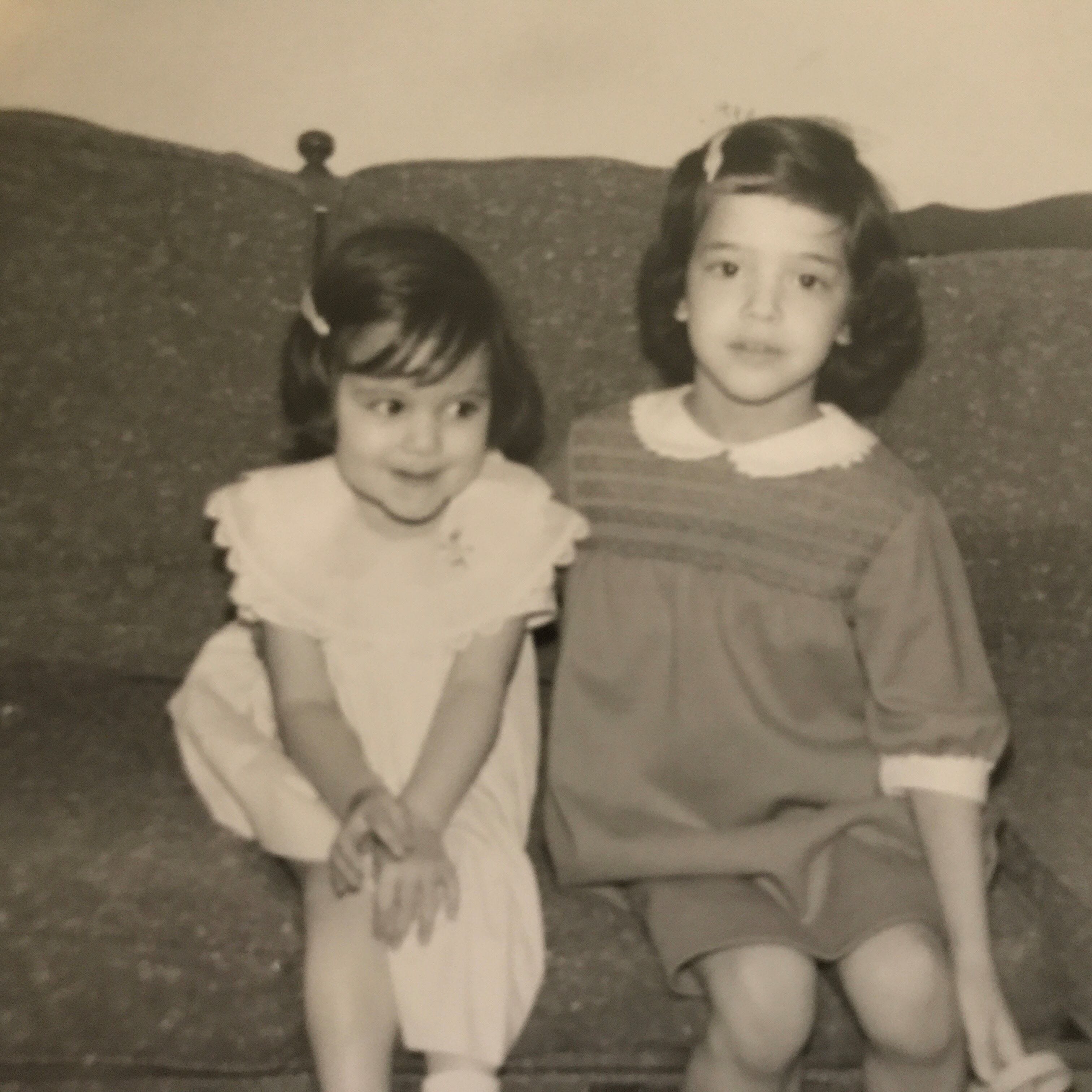
When I was younger, my dad told me to be more like Paula Marie, my older cousin.
One Saturday this past February brought her to town. She settled into her Airbnb. Sunday morning, I picked her up. I was nervous, but public speaking again with this book, I’d taken a “the show goes on” attitude. After a long, long embrace, our catch up talk lasted thirty to forty minutes before I realized the cold air had seeped into the car.
Our conversation never stopped. We were like teenagers gossiping about our own lives. Mid-afternoon I needed to shower and prepare for my event. This particular book talk included many of my writing friends. Given Paula’s work as a children’s librarian, she fit right in. And she fit into the family profile of short, along with my niece, my sister, and me.
*
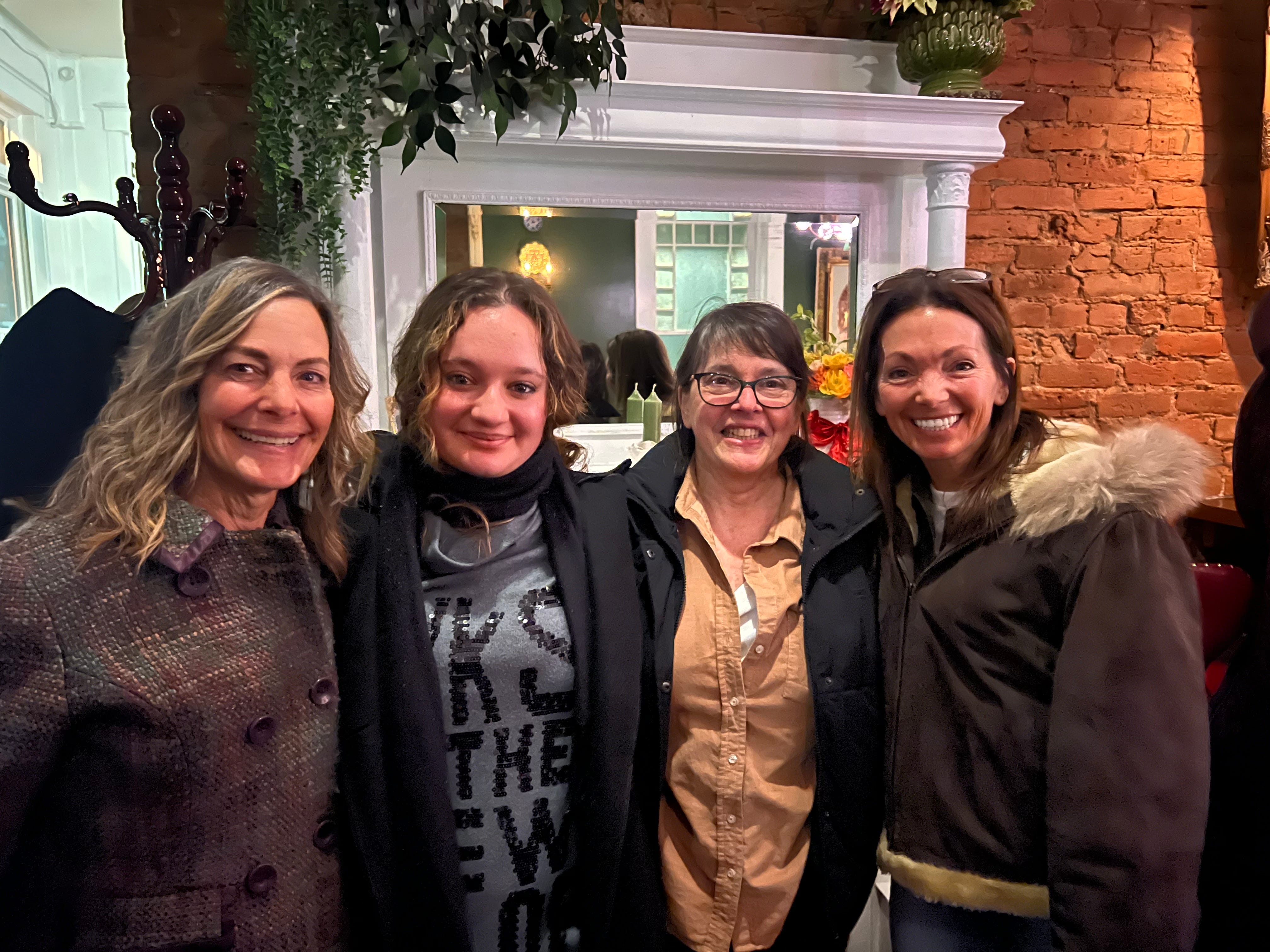
Our drive to the airport the next morning left me mournful many hours later. Paula’s recollections of family went deeper than mine. Her reach too. Her nieces were now reaching out to me. Her brothers too. One sprinkling of this holy water of words had provided some growth for all of us. How thirsty might we be for more? Very.
After removing her suitcase and paisley travel bag from my car, we embraced again. For a long while in the cold. Our chat en route had left me somewhat pensive, knocking loose a few startling words from my lips I didn’t confess often. Finally at the curb, we agreed my parents and her father would be happy, maybe dancing (her mother was still alive) on some deep level to experience this.
Putting the car in drive, I couldn’t look back, instead pushed on into the wintery morning.
Somewhere along I-275, before the interstate split north to Cincinnati or to all points south, where she was headed via plane back to North Carolina, our conversations came to me in a single phrase - the missing piece.
Snowflakes and mind spun in the air. Those words had landed softly in my ears, my missing piece. I’d been floating around in the familial space of the past, chasing second cousins once removed and dead great-grandparents, the relics and mementoes, when all this time I only needed to reach for a present filled with snowflakes swirling, temperatures plunging, and Paula’s hugs. In my father’s last years, his hugs were mostly grasps onto the scant time we had left. Dare I say, I felt him in that cousin hold.
Paula wrote her own reflections on our encounter. For a time, the words were a blur. I couldn’t believe we’d actually met again, experienced a different sort of sacrament between two women cousins. Please consider taking in her words too, which included: “All the years that I missed as you grew into a young woman, a wife, a mother, a writer, a passionate advocate for kindness and equity in the world. It was all there in your face.”
Paula had been a window and a mirror for me. I’d seen our families as an outsider. How much had been wrought. And I’d seen myself in her. How many memories had been lost. I felt so much pride in standing at Paula’s side that weekend, hearing about her life in North Carolina as a mother, a wife, a sister, a devoted librarian to children many of them from immigrant families, a self-starter when it came to her community’s needs. And she, a daughter still. She spoke with such gentleness with my younger sister, Beth, asked curious questions of my niece, Sophia (hers too). Her fondness for my parents, her quiet respect, I craved, given their absence.
As always, my father was right about Paula Marie.
For twenty-some years, Paula wasn’t around for me to model myself after, but we lived somewhat parallel lives, patterning our choices after those we admired. Our grandparents, our mothers, our fathers. And the likes of Toni Morrison. We had little knowledge how the blood of one person, whose life mimicked ours, ran as Italian and true as our own.
In the last lines of In That Place, I wrote:
Maybe all that expansion cemented over the older building and its footing, and kept our families from seeing the value of what was truly inside. Or maybe this was its fate, to sit in that place, staring vacantly inward at its own past, with no more shelves for shoe boxes or rooms for bricks, to remind us of what empty really is.
In that place, two cousins stood. Having been reminded of that emptiness, they vowed to not repeat.
March 28 – Lorain Historical Society, book talk and signing. 11 a.m. Details here.
April 4 - Contemporary Arts Center, Creative Writing Project, Winter series SOLD OUT. Check out the CAC website for details on the Spring Series.

April 6 - Moderator, in conversation with Amanda Becker and Nan Whaley. More information here.
April 7 - United Italian Society, monthly meeting. Book talk and signing.
April 11 - Italian American Museum, Cleveland. Date postponed.
May 10 - Mother’s Day, Something Italian is the perfect gift for Mom! Subscribers will receive a special discount. **Look for an upcoming information in my next posts.
May 15 - 7 p.m. Women Writing for a Change - Friday evening book talk
May 16 - 10 a.m. WWfaC - Finding Memoir in Food writing workshop. Renowned chef James Beard writes, “Food is our common ground, a universal experience,” providing us with a center as we seek commonalities among others.
July 28 - Caring for the Caregiver Writing experience, virtual, FREE. REGISTER. Contact Kara Pierson Harper. Phone: (513) 244-5494. Email: kpierson@muchmorethanameal.org.
Upcoming in the Fall
West Virginia Italian American authors conference, Tuesday, August 25
Cleveland Book Festival
Cincinnati’s Books by the Banks
LitCleveland - Food as Memoir workshops, details coming soon. October dates.
October 21, Library and Museum in partnership with Fotofocus: Chestnuts: The Comeback Kids.
No posts
Comments
Nothing yet. Say the first thing.
Sign in to join the conversation.