
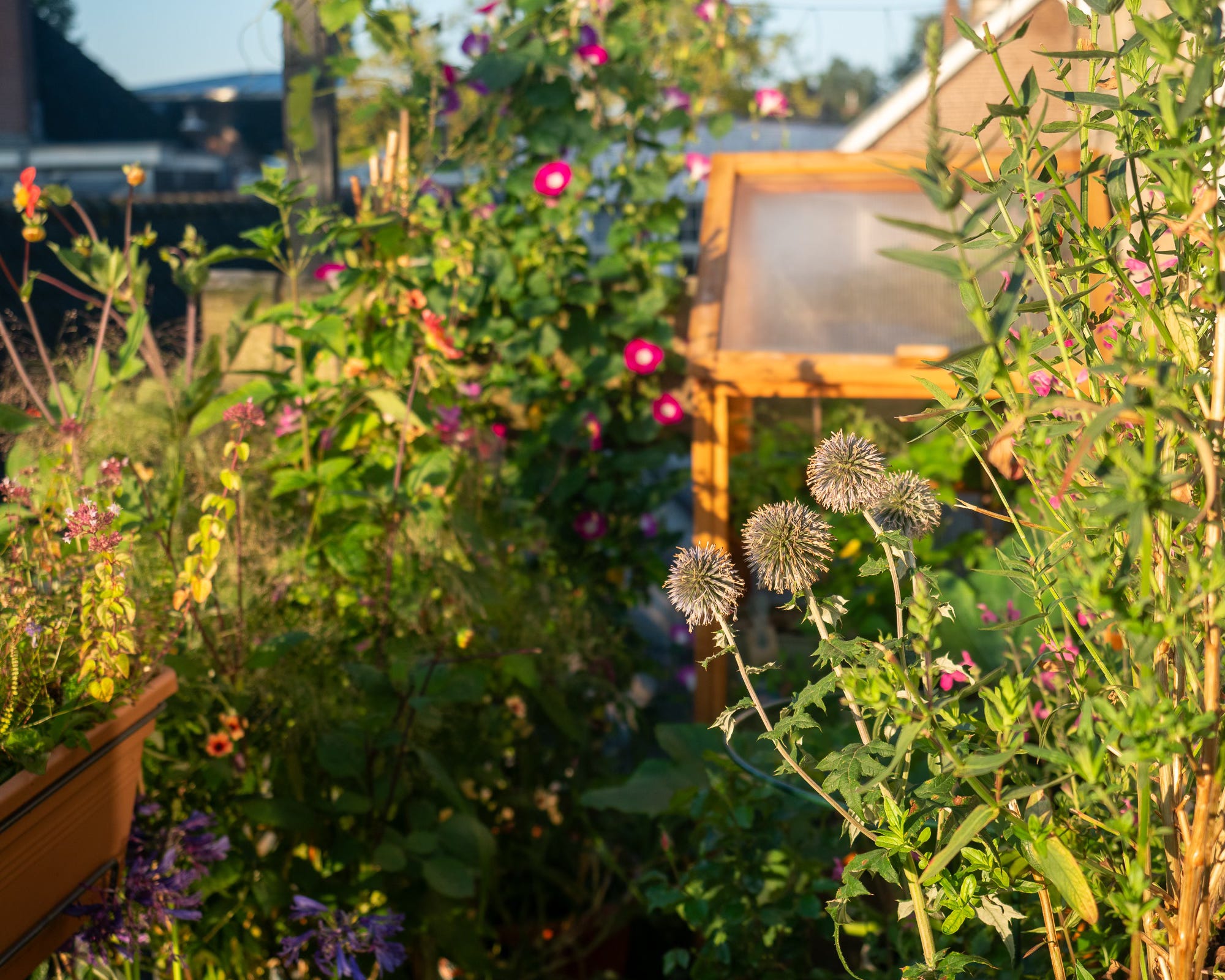
A bit about loss and exactly how big a balcony can feel to a housebound gardener
How my French bean harvest became dinner
Climbing bean varieties for colour addicted gardeners
A review of three tomatoes
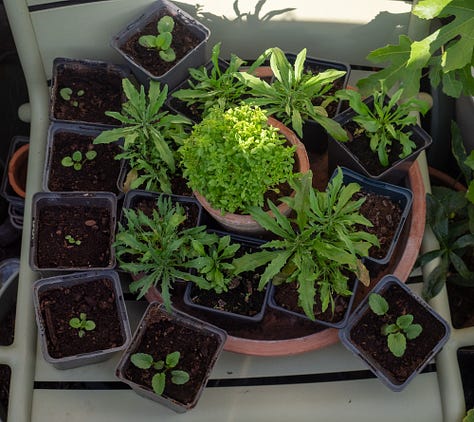
More things I’m sowing in September
A footnote I may have spent too much time on about the etymology of the Dutch ‘sperzie’ beans
Writing these blog posts is a cognitive milestone for me and gives me a new sense of purpose and a way to structure my thoughts. It makes me feel healthy, even though my sports watch is currently lighting up bright orange to tell me I’m having lots of !!STRESS!!. However, I was recently reminded that spending all my free time thinking, photographing, writing about and gardening on a 9 m2 balcony isn’t typical behaviour for a healthy thirty-year-old. I guess you’d expect more work, parties, holidays and general being-out-of-the-house-ness. I hadn't thought of that myself. I sometimes feel that there’s so much going on for me in my apartment, where all of life is lived, that I forget that not only the surface area I spend all my time on is small, but that my whole life is small.
I’m not constantly aware of everything I’ve lost. My newly developed tendency to forget all kinds of things helps me with this. It’s one of the blessings of my weakened attention, concentration and memory. I never used to forget anything, there’d be a constant list of things in the back of my mind. If I don’t write anything down now I really do forget. I’ve got a couple of things to do each day, and when I do something, anything, I’m fully distracted.
Being ill and housebound is hard. Missing out on loved ones’ big life events; not experiencing life myself; being unable to see all my friends and family; being in pain; the unknown perspective. I often feel like I can’t fully explain it but a lot of things are missing in my life and there’s a lot I can’t do, because any kind of activity can aggravate symptoms. I can shower, make breakfast and lunch, watch tv, scroll my phone, write for 15 minutes, and pick one short activity per day that’s not too physically or mentally challenging. I can’t sit for long without my feet up and back supported, and at some point my neck gets tired, so I’m always half-lying on the couch. Visits and appointments are the most demanding, at this point only possible for 30 minutes once a week.
It’s as hard as you’d expect, I guess, but the way in which it’s hard is not what I expected it to be. The whole first year of my illness I didn’t really feel sad at all. I either felt acutely ill and miserable, or quite unaware of my reality and what I’d lost. There wasn't a lot of grief. Some say it comes when you start to feel better but even in the months I temporarily improved it didn’t really come.
This year grief has come, unexpected, all-encompassing and suffocating. I think because I realised I’m undeniably, inevitably stuck, and nothing is certain. At times the future feels like a gaping hole to me. The feeling isn’t there all the time; it’s mostly kept within the confines of specific moments, milestones like my thirtieth birthday, the loss of my job and my two-year long covid anniversary. The less I can do, the more I feel it. Right now I can do a lot less and there are two concurrent milestones so it’s all too real. Still, I’m in a constant state of contradiction: I feel it and I don’t feel it. I'm angry and I’m not angry. I’m sad, often uncomfortable, but I still enjoy things, however limited.
I’ve noticed that many things that used to feel normal now feel gigantic and undoable. There are certain things I don’t miss because I can’t imagine doing them. I can’t imagine traveling or being at a party. I just think of how painful all the noise would be and how I wouldn’t be able to stand. It can already feel like a big thing to walk from one room in the house to another. So small things tend to feel big.
The balcony feels larger than life to me. Also because it has so many functions: distraction, activity, growth, learning, change, inspiration. Things I don’t have in most other areas of my life. Not to speak of the endless metaphors of varying helpfulness I can derive from it, e.g. however dark the winter, spring will always come; even when you don’t tend to a plant it can still grow; even when you do tend to a plant it can still die. Or the whole ‘seasonal living’ thing (although the term itself feels increasingly empty because I keep seeing the same clichés written about it). One time a few months into being ill I sat on a bench after a short walk and dramatically declared to myself that ‘I’m in the autumn of my life.’ I was wearing an oversized lammy coat with a few buttons missing and somewhat atypical boots covered in fake fur and I apparently looked so sad slash homeless that a woman coming home to the houseboat across from the bench asked me whether I had a safe place to go to. After which I said quietly ‘yes, thank you, I’ll be alright.’ I wondered all the way back home whether I should’ve told her I have a mortgage and why it apparently isn’t acceptable to be in the autumn of your life and dress accordingly.
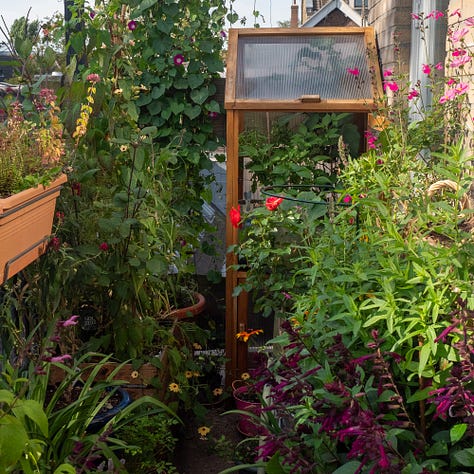
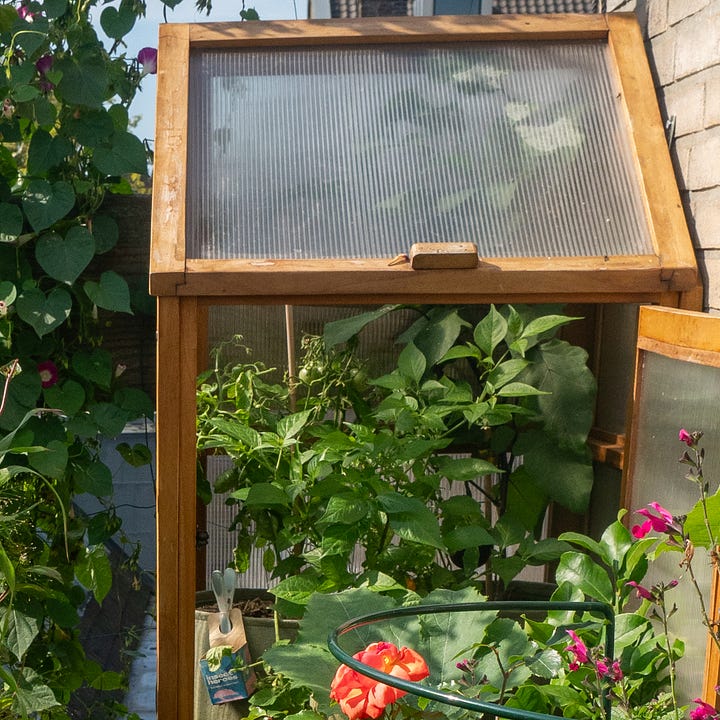
After I’ve woken up and seen the sun is shining, I remember I need to open the greenhouse so my tomatoes don’t get fried. When I do, I notice the eggplants are growing fast, and the chillies have changed colour to a soft yellow. The mint is growing beautifully, its flowers delicate. I lift the courgette grow bag, it feels light so I know it’s in need of water. I can see a new female flower growing in the centre. I go back inside to have a cup of coffee and rest on the couch.
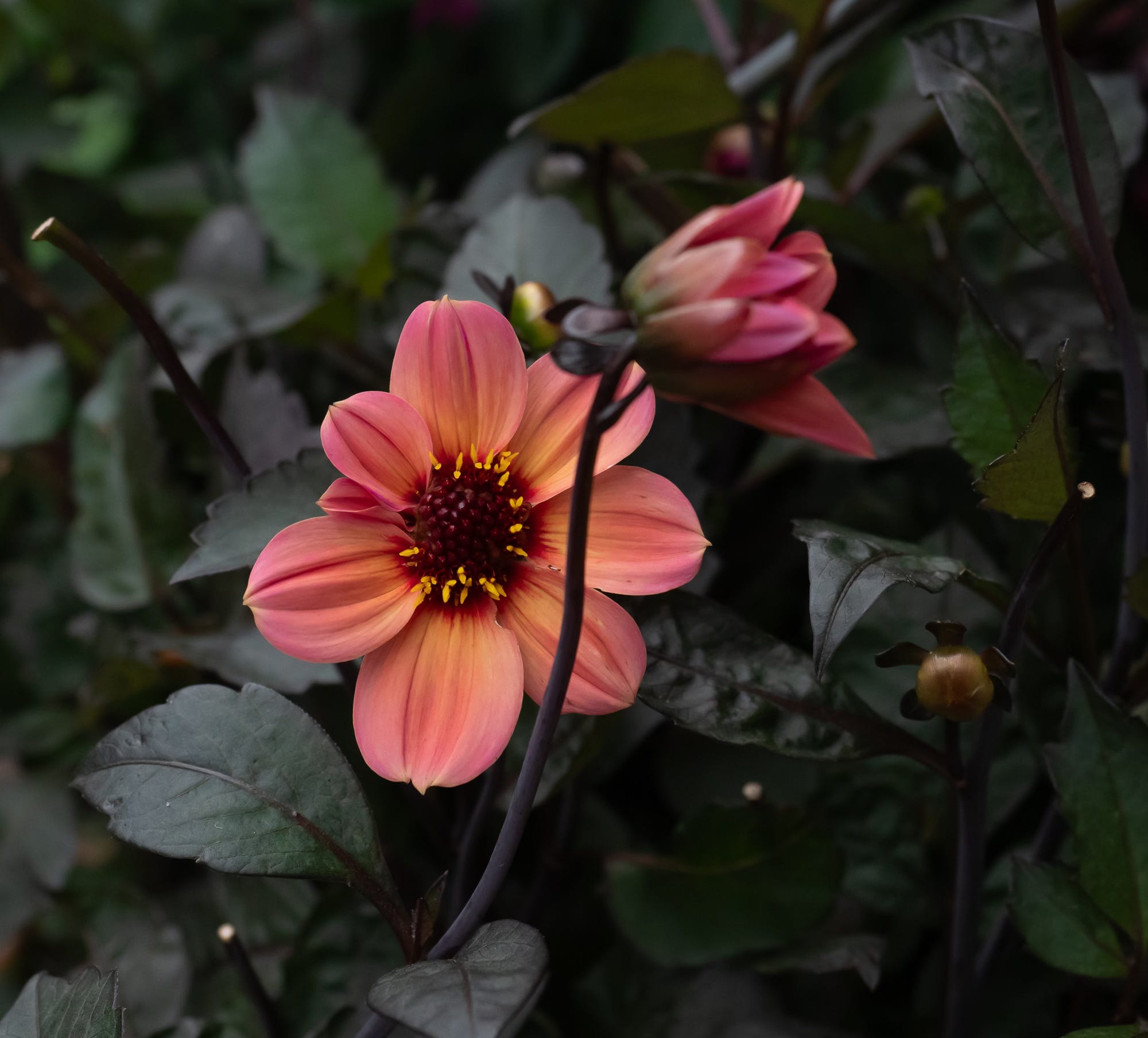
Later that day I have some energy so I return and sit on a chair in the sun. I see the dahlias aren’t flowering so well anymore and I ask myself once again whether the little dots on the leaves are signs of spider mites or thrips. Probably spider mites, because they’re everywhere else on the balcony too. Maybe I’ll buy predatory mites again to contain them for a while. I see how beautiful the light is and take out my camera. I try to capture this moment. There are small changes daily but when I keep track of the garden like this, I see the big changes that happen every month.
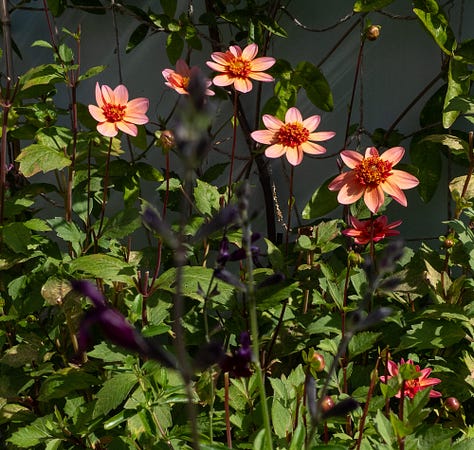
That afternoon I feel inspired to write about what I’ve seen and experienced. The feeling of summer. I post some of the pictures online and a couple I proudly send to my parents. I get replies, people tell me they love the photos, someone asks how I’ll prepare my French beans. Simply cooked, perhaps with some nutmeg, like my grandma prepared them fresh from her garden. My grandma had the very best French beans and as kids my sister and I always hoped we’d eat beans when we visited (but we never called them green fries, because that’s just blasphemy).1
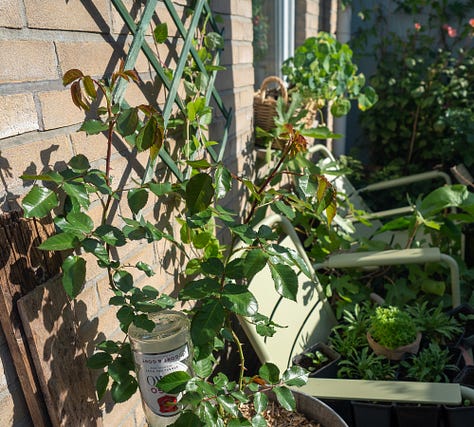
After dinner, I go outside for a last look, I water the courgette and close the greenhouse for the night. I go to bed, and when I turn off the lights I decide I’ll fall asleep again thinking of what I want to do in the garden the next few days. Sweep up the leaves and the deadheaded flowers. Ask my boyfriend to dig out plants and soil from a pot and plant the new climbing rose. Water the grapevine. Perhaps water everything depending on how dry it is. Where was I? Sweep up the leaves. Plant the rose. Water. Sow. Sweep. Plant. Water.
I’ve fallen asleep. And tomorrow I hope I can do it all over again.
* * *
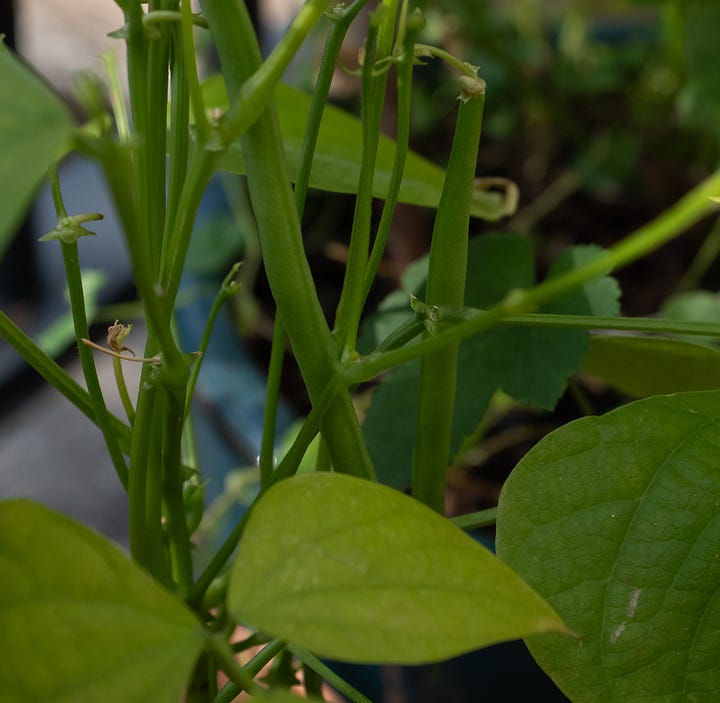
In the end I decided not to just cook my 60 grams of homegrown French beans ‘Ferrari’ (a monster harvest!) because I found a recipe in Marcella Hazan’s The Essentials of Classic Italian Cooking that she calls potentially the best of the whole pasta repertoire, provided all ingredients are of good quality. It’s a good recipe for anyone with a kitchen garden, because you can grow the beans, basil and new potatoes yourself. And that’s basically it: make pesto; cook potatoes, pasta and beans; slice potatoes; and mix it all well with pasta and cooking water.
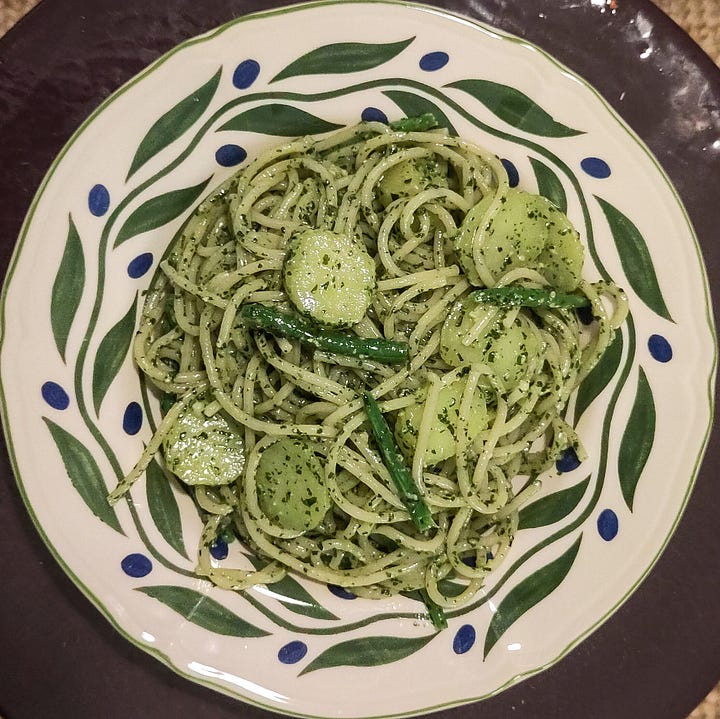
And oh my. This was really good. The beans didn’t taste like my grandma’s and perhaps being frozen (necessary because of the verrrrry gradual harvest) made them a bit floppy, even though there was still a good bite to them. They still tasted very bean-y (you gardeners will know what I mean). This dish in short: crispy French beans; waxy potato slices; umami parmesan, pecorino and pine nuts; al dente spaghetti; and garlicky basil all over. The recipe can easily be found on the internet, search for ‘Marcella Hazan pesto potato’ (there’s another idea).
The size of this year’s bean harvest isn’t anything to brag about, so I plan to grow climbing beans next year. It’s a bit of a risk with all the spider mites around so I’ll sow some back-up climbing flowers. Right now I’ve got my eye on a particularly vibrant number called ‘Black Knight,’ with dark purple runner beans and orange-reddish flowers (I’m hoping for more orange than red, although ‘hope’ probably explains how I stray from my intended colour palette time and again). Other purple podded climbers often have pink or lilac flowers, like ‘Blauhilde’ or ‘A Cosse Violette’ (French beans). Two-toned snap pea ‘Magnolia Blossom’ is also a good pink-flowering contender, or runner bean ‘Sunset’ if you prefer pastels.
This year I started off my vegetable growing career and of course I had to try some tomatoes. Determinate tomato ‘Ida Gold’ did quite well but is too tangy for my taste. The plant started looking worse for wear at the beginning of August. Perhaps it’s the spider mites, although I haven’t seen definitive evidence (I have to admit it’s nice to be able to blame everything on them). I’ve been picking a couple of tomatoes (literally, two) every few days since early July. Probably could have been more because it’s in a 10 liter grow bag and I only watered every two or three days.
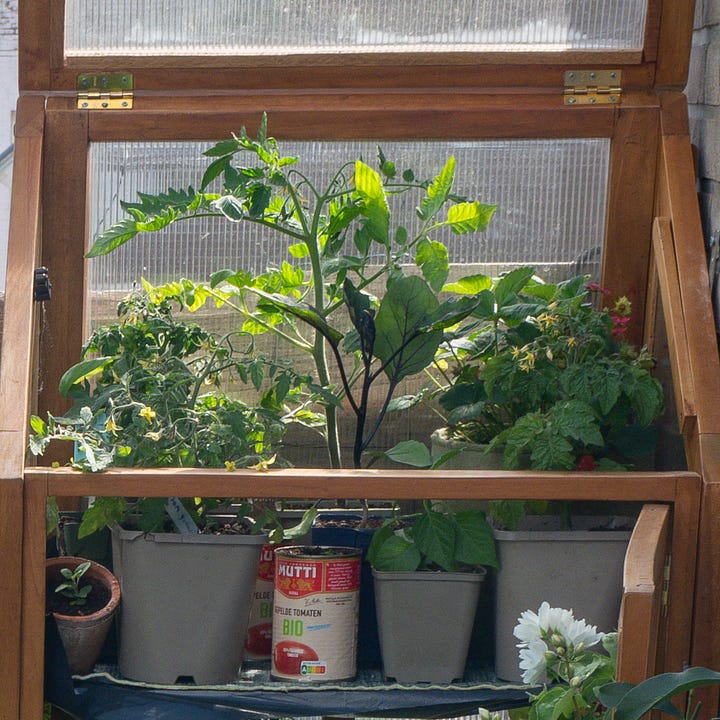
I also grew two tiny bush varieties inside on a windowsill, in three liter terracotta pots, which looked very pretty. They didn’t have ideal conditions, around 6 hours direct sunlight per day and varying temperatures, with heat one time causing part of the plants to die (whoops). ‘Tumbling Tom Yellow’ lacks sweetness and started looking unhealthy rather quickly, although I haven’t discovered why. Maybe it wanted a bigger pot, more sun and less spider mites (I suspect they’re inside too). But ‘Tiny Tim’ is very good, very sweet, even when the tomatoes aren’t perfectly ripe. I’d grow this again and next time I’ll try to find a spot for it outside.
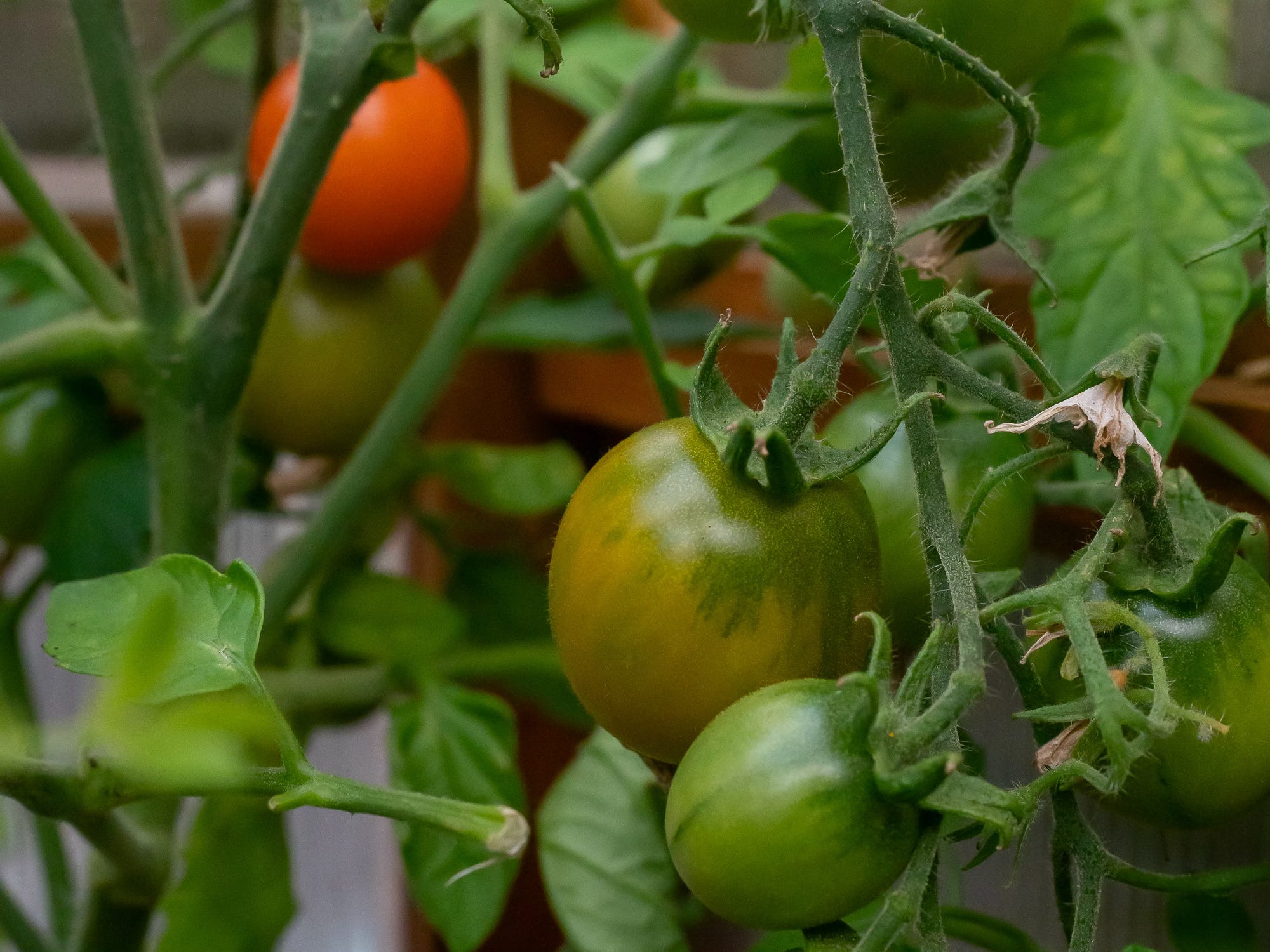
I often eat cherry tomatoes in salads or roasted to make pasta sauce. But what I really love is a big beefsteak tomato, sliced and topped with good olive oil, fresh herbs, maybe some mozzarella. So for next year, I want a beefsteak variety known for its good taste that’ll fit in the 170 cm tall greenhouse. ‘Rosella Purple’ (or its descendent ‘Adelaide Festival’) and ‘Early Wonder’ were contenders too, but I’ve decided to go for the popular classic ‘Marmande.’
The first part of the September sowing list is in the previous post.
Flowers:
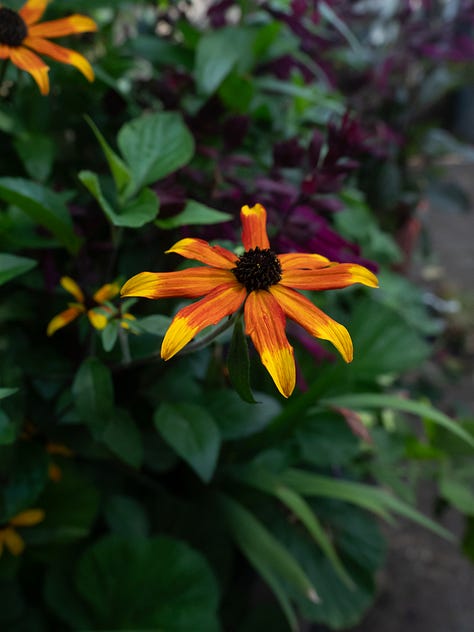
Calendula officinalis: I loved this warm orange so much this year and I saw so many tiny wild bees flying around it.
Cerinthe major ‘Pride of Gibraltar:’ I love the blueish tinge in the leaves!
Vegetables:
Winter purslane: I don’t think I’ve ever eaten this before. It can be used in salads or cooked like spinach. It looks pretty too!
In The Netherlands French beans (the green pods of phaseolus vulgaris) are very popular and we call them ‘sperzie’ beans, and they’re not exactly the same as the French ‘haricot verts’ (which are sold separately under that name) because those are supposedly a bit thinner, fancier and French. Now I’m thinking about this word, ‘sperzie’ sounds very strange, even for the Dutch. I looked it up (I love etymology) and apparently it stems from the word asperge (asparagus) because it used to be prepared the same way: with butter and nutmeg (source: https://neerlandistiek.nl/2022/02/etymologica-prinsessenbonen/).
Comments
Nothing yet. Say the first thing.
Sign in to join the conversation.