
It’s the middle of summer and I’ve been looking forward to this for a long time. Last winter wasn’t so great for me, with a huge deterioration of my health after some very pared-back Christmas celebrations, which I have yet to recover from. And I didn’t have any gardening to do. To keep the gardening spirit alive, I looked at all my previous pictures and made plans for the upcoming season. I determined that July and August were the months when things really started to skyrocket. So on the first day of July, I said to myself ‘IT’S FINALLY TIME’ and looked outside to determine that yes, it did look quite good.
I love summer for other reasons too. I like to open up all the windows and the balcony door and feel a warm breeze flowing through the whole house. It flows all the way from the balcony, gathers momentum in the study (or garden room, as I like to call it), speeds through the hallway, and ends with a whisper in the kitchen and living room. This is my favourite thing about my house, I feel like I’m outside. Even though it’s on the edge of the city centre, there are trees on both sides of the apartment and lots of birds around, so with a bit of imagination and all those open windows I live in a treehouse. There are trains coming by and the occasional singing human but I barely hear the former and rarely mind the latter.
Colour and contrast
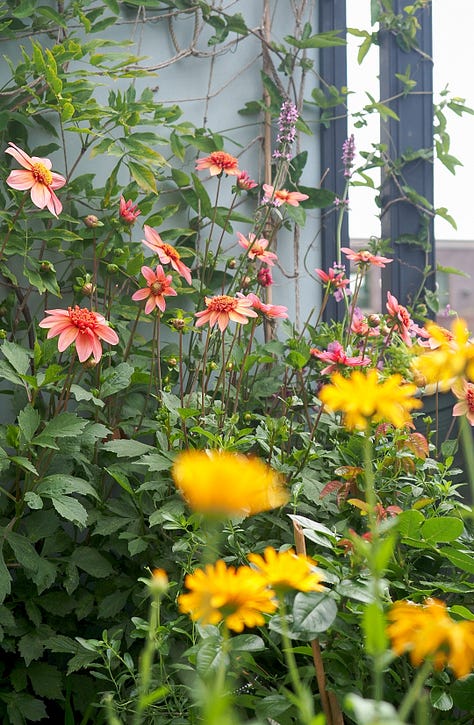
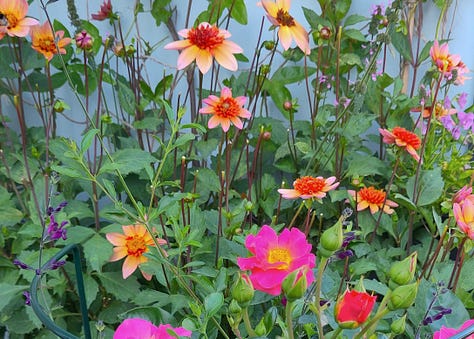
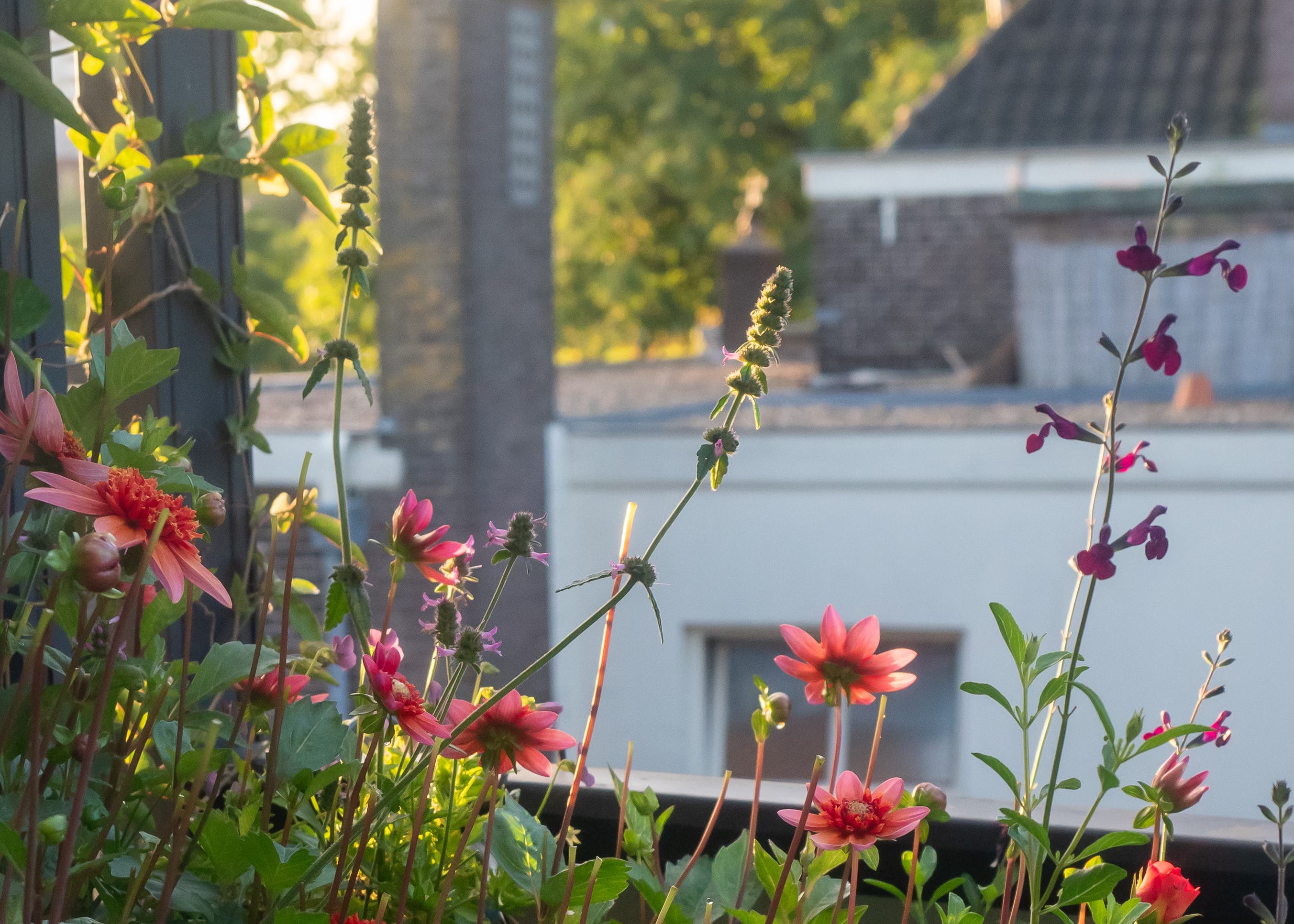
I’m currently really loving the left side of the garden. The orange dahlias, bright pink roses and yellow calendulas look perfect together. The calendulas weren’t even planned but I had lots of seedlings and some space in the parasol pot (as you might have guessed, this is a pot in which a parasol stands). Sometimes they’re a warm yellow, other moments bright orange. The dahlias also shift colour from orange to a reddish pink. I love orange with pink, I first saw this in my aunt’s garden and they felt so pleasant and vibrant together that I want to have them as main colours in the garden.

Contrast is really the word I live by when making up combinations in the garden. Big flowers need small flowers, bright colours need other bright but also dark colours. In a contrasting and supporting role here are salvia ‘Nachtvlinder' in dark purple velvet (with a delicious scent), passion flower leaves (sadly no flowers anymore, probably due to insufficient space) and betony. I don’t think I’ll change anything about this corner next year (a first in the short history of my balcony garden!), except for the heucherella and astrantia I have yet to add to the front.
A new rose
What I will be changing on the left side, just next to the balcony door, is what grows on the trellis. I’ve been growing a star jasmine there for almost two years but it’s growing so very slow. The black-eyed Susan vine ‘African Sunset’ and pink asarina scandens that I added there are both… acting like they’ve been crammed in too close together (it’s a challenging spot, let’s not blame me).
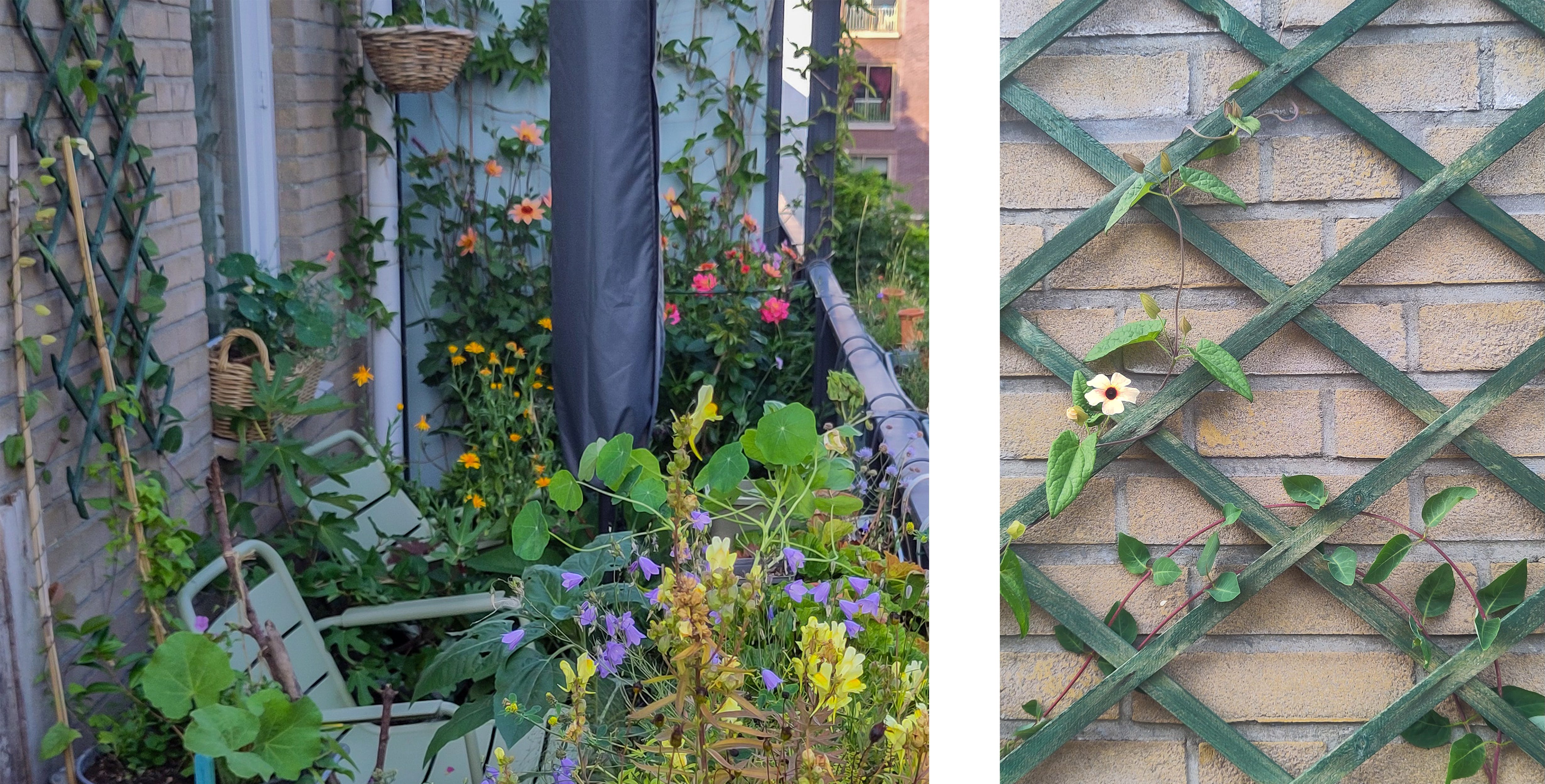
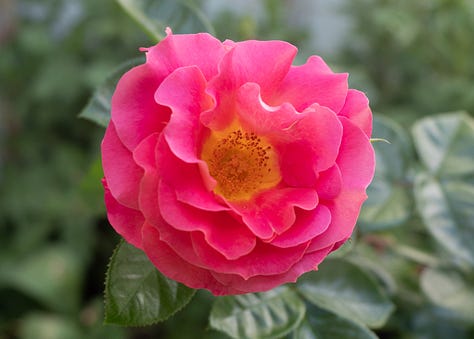
I felt the pot and the wall needed something else and I’ve had my eye on that something else for about a year. I loved this rose even before it appeared, in all its glory, in Jo Thompson’s 2025 Chelsea garden. I’m talking about Wild Rover of course (of course! OK, Tuscany Superb was good too but too full and frilly for my taste). I love open roses, not just because pollinators favor them but for the relaxed, elegant flair they bring. This one is stunning with its plum-purple-and-pink colour and bright yellow stamens that make it look like it lights up (check it out here at Bierkreek.nl, no ad, just my favourite and organic nursery). I think it’ll be marvelous climbing through the wild honeysuckle, which has what I’ll call all-the-bells-and-whistles flowers in white, pink and/or yellow.
It’s not really suitable for growing in pots, according to the rose nursery... but I’m just going to spoil it (the opposite of) rotten. If it doesn’t work I’ll either move it to a gigantic pot I have yet to find space for or give it to someone I trust with such a gem.
Vegetables and olive oil
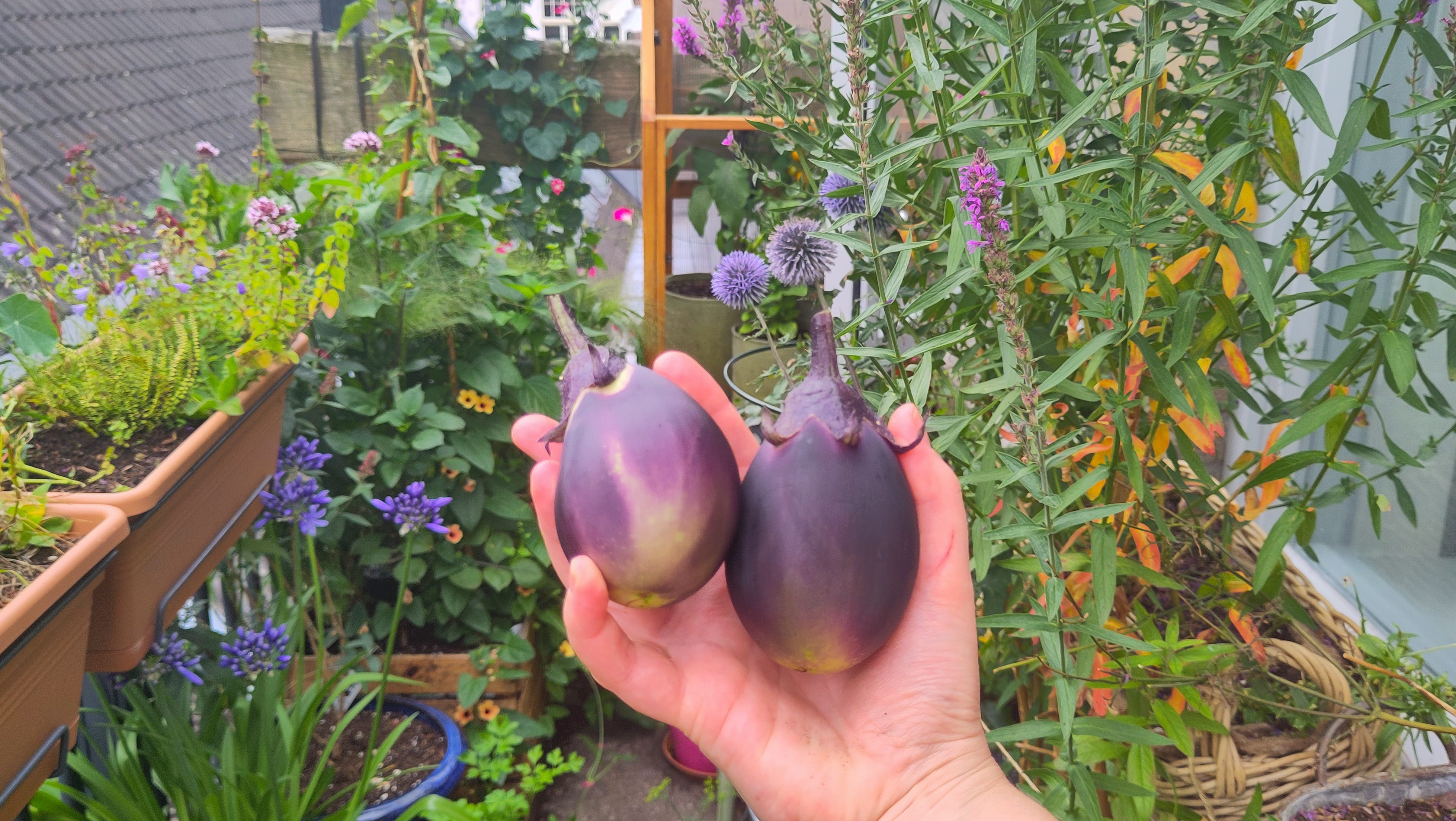
In other news, I harvested my first eggplants on July 26th! I heard it can be hard to grow them and don’t know what exactly I did right. All I know is that I’ve given them very rich compost, sugar beet molasses, a spot in the mini greenhouse and a warm spring and summer. The variety is ‘Early Black Egg’ and I ate them roasted in a lunch salad. With sufficient olive oil and salt eggplant can be elevated to new and creamier heights.
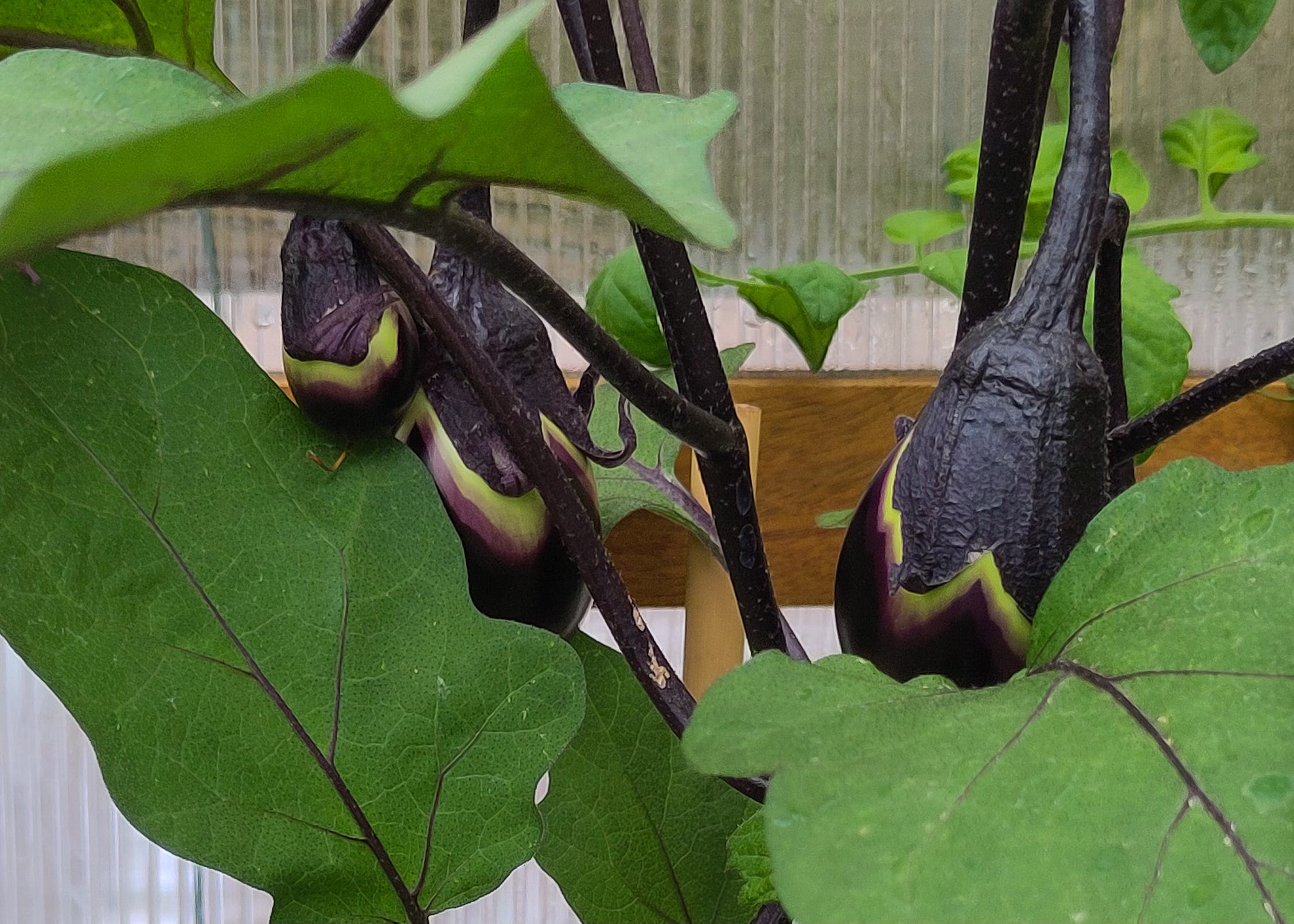
I think sufficient olive oil and salt is the secret to a lot of good cooking and it’s really important to add salt during cooking, not after. Julius Roberts talks about this in his book ‘The Farm Table:’ salt will give more taste to your food, and you don’t want the salt to just sit on top of your food. I realised this too after I’d made eggplant taste good for the first time by using Ottolenghi’s directions. Without those copious amounts of salt and olive oil, neither the full taste nor the creaminess materialised and there was no point in adding salt afterwards. It was a bit like eating a piece of rubber with a dressing of salt.
‘Grow what you love to eat’ is something that crosses my mind every now and then. The olive oil + salt trick also works its magic on courgettes. So I sowed a lastminute courgette at the beginning of July, which I haven’t done before. I finally decided to grow one because I recently learned from a gardening book that courgettes do not need at least 40 liter pots, contrary to what many (if not all) other sources state and I don’t have space for (because let’s be honest, I need that space for flowers). So when just one book tells me I can grow courgettes in a 10 liter pot, I will do it (I know it’s a risk and I may need to water daily but I don’t want to hear about it!). It’s a small bush variety called ‘Piccolo,’ which produces striped courgettes the shape and size of tennis balls. I’m already looking forward to the pictures.
Review of a container gardening book with recipes
It’s become my favourite treasure hunt to scour online second-hand bookshops for a gardening gem. I just want to soak up what’s inside like a sponge (can you imagine how intense the arrival of a new book is?). I finally found this one second-hand, after it was recommended a while ago by Fiona Cumberpatch, a garden journalist with a marvelous city garden in pots, and Jemima Bowker, campaign and events lead at Sarah Raven and regular guest on her podcast’s container garden episodes.
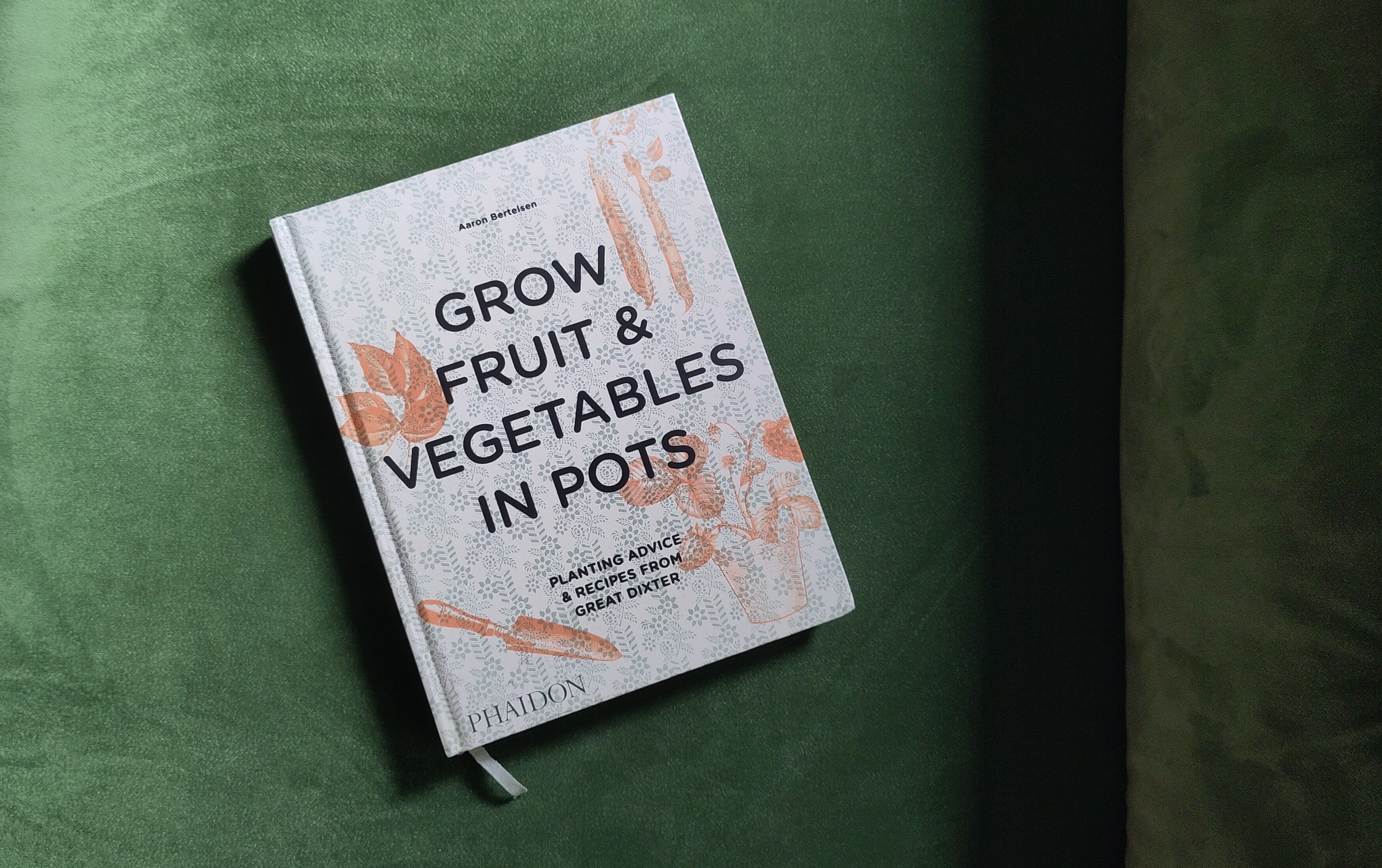
‘Grow Fruit & Vegetables in Pots’ by Aaron Bertelsen makes you feel like you need to grow more vegetables immediately (sorry Aaron, I’m all out of space this year). The attractive photography conveys the feeling of a quintessential rainy English summer, perhaps indicating that you don't need the climate of the riviera to grow something. I may not be English but I spent many childhood holidays in the UK and I really can’t remember a summer without it bucketing down. (So much so that when I smell rain I think of summer.)
There’s lots of valuable advice in this book. The section on soil and compost makes me especially happy, as it contains the main three forms of composting for a small space (Bokashi, worms and leaf mould). They’re absent in many container gardening books but so useful and easy. The ‘growing guide’ is the most interesting to me now I’m no longer a beginner (but only just, I started out 6 months ago with veg). It discusses many kinds of vegetables and fruits, one to three favourite varieties, key dates and common problems. For me (being a sponge), this section could not have been long or detailed enough but it should be more than sufficient when trying a new vegetable. I do miss specifics on pot sizes for some of the vegetables and fruits, which I think are essential when growing something new. Like most container gardeners, I always want to know the minimum size because I have minimum space.
I’ve added this book to my stack of cookbooks because the second part consists of some great recipes. They’re simple and short, just enhancing what’s already there, like baked apricots with bay and honey. I think an important requirement for a gardener’s cookbook is that it involves chard, because it’s so easy to grow, and this one does (creamed Swiss chard). Even though my ‘kitchen garden’ is really small (six grow bags and some herbs), I counted twenty recipes in which a main ingredient was or will be grown by me in 2025, and I’m not counting my marble-sized carrots. For the others I’ll just have to buy the ingredients, the old-fashioned way.
What I’m sowing in August
Flowers - these will flower next year, hopefully
Verbascum ‘Southern Charm:’ to prevent another June gap next year
Viper’s bugloss: that blue is just stunning and it’s a native plant, amazing for wildlife
Cornflowers: another native plant, I’m sowing the OG because it’s a great colour as is
Vegetables - for a harvest in autumn/winter
Kale ‘Nero di Toscana:’ SO excited for this one. Sowing this in early August. There are lots of Italian recipes for cavolo nero and it’s very decorative, like a little palm tree
Rainbow chard: also a winter vegetable, I’ll make gratins with this and try out Aaron Bertelsen’s recipe for creamed chard
Spinach ‘Giant Winter:’ a hardy spinach variety so I’ll have another reason to go out onto the balcony in those cold months. I might sow this every month for an ongoing harvest but I’m not sure I’ve got the space nor determination
Comments
Nothing yet. Say the first thing.
Sign in to join the conversation.