
7. Do people face barriers in accessing support for drug or alcohol addiction?
Yes. This has been one of the central arguments of my work and of the Right to Addiction Recovery Bill.
The first barrier is availability. People are frequently offered what the system happens to have rather than what their assessed needs and recovery goals require. Same-day prescribing can coexist with long waits or unclear pathways for psychological treatment, detoxification and residential rehabilitation.
The second is fragmentation. Addiction, mental health, housing, social work and criminal justice services often operate through different systems, budgets and eligibility rules. The person in crisis is expected to coordinate the coordination professionals have failed to coordinate.
The third is geography. Access can vary sharply between health boards and local authorities. A supposed right that changes when someone crosses a council boundary is not much of a right.
The fourth is professional gatekeeping and stigma. People are told they are not ready, not ill enough, too complex, insufficiently motivated or unsuitable for a particular service. Families are often left carrying the consequences of refusals they had no power to challenge.
The fifth is the absence of enforceability. Scotland has charters, standards, strategies and statements of intent. But when treatment is unavailable, the individual generally has no practical mechanism to require the system to provide it. That was why we pursued a legal right to treatment. A right without a remedy is an aspiration wearing a legal-looking hat.
The Scottish Parliament’s own scrutiny found a high level of dissatisfaction with the availability of and access to support. Internal government papers nevertheless argued that existing policies already met or exceeded the intentions of a statutory right. That contradiction says a great deal about the distance between institutional confidence and human experience.
My article examining that contradiction is here:
The FAVOR UK myth-busting paper on the Right to Recovery Bill is here:
https://facesandvoicesofrecoveryuk.org/wp-content/uploads/2022/03/FAVOR-UK-MYTHBUSTING.pdf
8. What should major investors prioritise to make a difference in years to come?
Investors should stop funding an endless succession of awareness campaigns, temporary pilots and organisations that are excellent at describing the problem but remarkably coy about solving it.
The priority should be infrastructure that builds recovery capital over many years. That means residential rehabilitation with proper therapeutic programmes, detoxification, recovery housing, peer-led recovery communities, family support, employment pathways, social enterprises, mutual-aid access and long-term aftercare.
Investment should also build leadership and organisational capacity within authentic grassroots recovery groups. Many of the most effective communities operate from church halls, borrowed rooms and volunteers’ mobile telephones. They have trust, credibility and relationships but lack accountants, buildings, development staff and reliable core funding. Meanwhile, large organisations can employ an entire communications department to explain why their outcomes remain impossible to measure.
Major investors should require transparent outcomes. Not glossy stories alone, and not just numbers “engaged”. They should ask how many people entered treatment, completed it, secured housing, improved family relationships, entered work or education and sustained recovery over time.
Research funding must also change. We have spent decades studying pathology. We need much more serious research into how people recover, how recovery spreads through social networks, how families heal and how people move from survival to flourishing.
My article on the future of recovery research is listed here:
Understanding the Future of Addiction Recovery Research
·
February 24, 2025
For too long, addiction research has been overwhelmingly focused on the problem of why people get addicted, the damage it causes, and how to stop using drugs or alcohol. This problem-based approach has dominated funding, policy, and academic discourse, leaving a significant gap in our understanding of what actually helps people recover and rebuild their lives (White, 2024). The reality is clear: we don’t need more research confirming that addiction is a crisis, we need research that maps out the solutions.
Dame Carol Black’s review, which supports a whole-system approach including treatment, housing, employment and accountability, is here:
9. What kind of infrastructure do we need more of in Scotland, and in which locations?
Scotland needs a complete recovery pathway, not one flagship project surrounded by deserts of provision.
We need adequate medical detoxification, residential rehabilitation for different needs, including women and parents, therapeutic communities, recovery housing, supported accommodation after rehabilitation, recovery cafés, community hubs, family centres and employment programmes.
We also need integrated mental health and addiction provision. The phrase “dual diagnosis” has become an elegant description of a closed door. People should not be denied mental-health care because they are using substances or denied addiction treatment because their psychiatric needs are considered too complex.
Every local area should have a visible recovery hub connected to treatment that helps free people from dependency, housing, primary care, employers, churches and mutual aid. Larger cities require several neighbourhood-level hubs rather than one centralised monument. Rural and island communities need locally rooted provision, outreach, transport support and digital services backed by actual human contact.
Some specialist residential provision will necessarily serve larger regions, but people should not have to leave Scotland or fight through a bureaucratic maze to access it. Aftercare must also return home with them. Sending someone to rehabilitation and returning them to the same isolated flat, the same drug-using network and no meaningful daytime activity is not a recovery plan. It is a relapse plan with a discharge summary.
Recovery housing deserves particular attention. Housing is not merely somewhere to sleep. The social environment around a person can support recovery or steadily pull them back towards addiction. Dame Carol Black’s review and recovery-capital research both recognise housing, employment and social networks as central rather than peripheral.
Absolutely. But I think the Church’s greatest contribution is often misunderstood.
The Church should certainly support professional treatment, but it should resist becoming simply another treatment provider. Government can commission services. It cannot commission love. It can purchase treatment. It cannot purchase belonging. It can reduce risk. It cannot manufacture hope.
Those things grow within families, friendships, churches and communities.
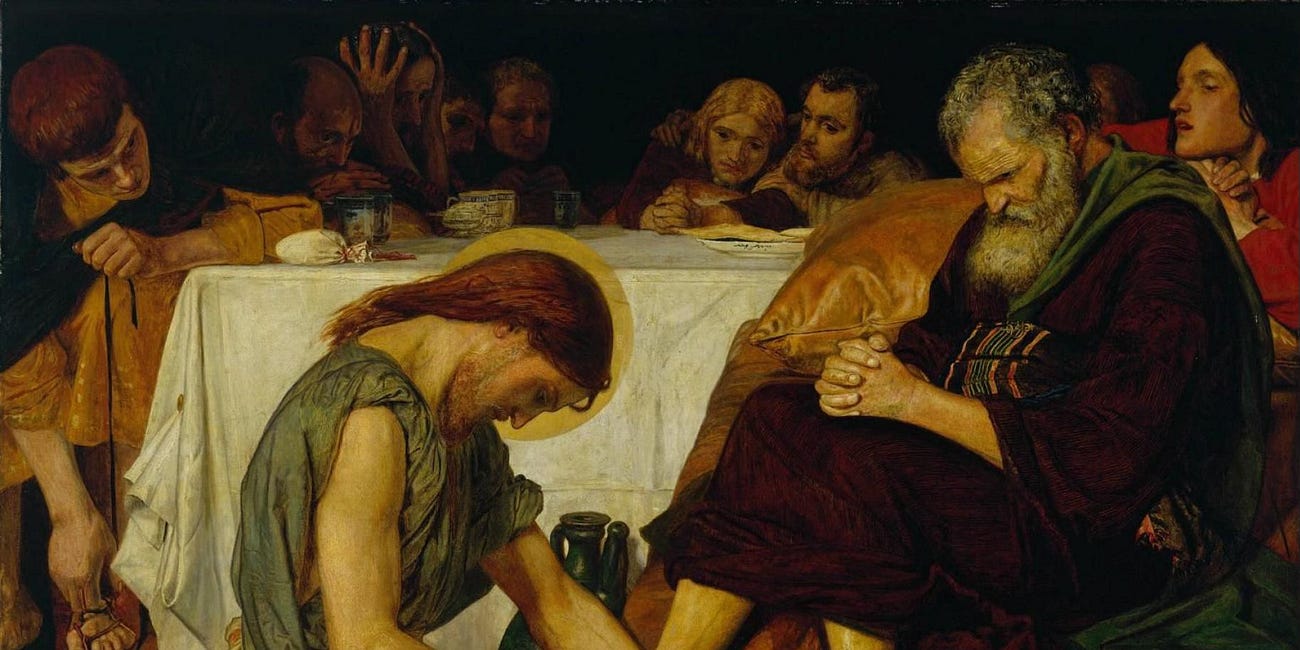
The Church possesses assets that governments struggle to create: community, belonging, forgiveness, meaning, purpose, identity and hope. More importantly, it begins with an understanding of the human person that modern public policy has too often forgotten. It does not see people primarily as diagnoses, service users or collections of risk factors. It sees them as men and women of inherent dignity, made in the image of God, whose lives always remain open to redemption.
That is why I believe Catholic social teaching has so much to offer this debate. Principles such as human dignity, solidarity, subsidiarity, fraternity and the common good provide a much richer understanding of recovery than one centred solely on managing symptoms or reducing harm. Recovery is not simply about reducing drug use. It is about restoring the person to relationship, responsibility, contribution and ultimately human flourishing.
Practically, churches should open their doors. They can host recovery meetings and family support groups. They can provide inexpensive or free rooms, food, transport, mentoring, befriending and practical help with forms, appointments, clothing and household goods.
They can create volunteering opportunities that allow people in early recovery to become contributors rather than simply recipients of care. That matters enormously because people recover not only by receiving help but by becoming helpful. Service restores dignity in a way that another appointment rarely can.
Churches can also support families without encouraging enabling behaviours. They can accompany people to court, treatment assessments, hospital appointments and residential rehabilitation. They can maintain relationships while someone is in prison or treatment and ensure they are welcomed back into community afterwards.
They can become recovery-friendly employers and encourage members of their congregations to offer work placements, apprenticeships and employment. A job provides much more than income. It provides rhythm, responsibility, identity and colleagues who notice whether you turn up.
Clergy and pastoral workers should receive basic training in addiction, safeguarding, overdose awareness and local referral pathways. They need to know where the limits of pastoral care lie. Good intentions are holy, but they are not a substitute for clinical expertise.
Perhaps most importantly, churches can rebuild something that has quietly disappeared from much of modern society: the social itself. Recovery communities and healthy Christian communities often succeed for remarkably similar reasons. Both offer belonging, accountability, service, moral formation, shared identity and hope. Both create places where people are known, expected, challenged, forgiven and loved.
Ultimately, I do not believe the Church’s primary vocation is to build better addiction services. It is to build the kinds of communities in which addiction is less likely to flourish and recovery becomes more likely to endure.
The Gospel offers something no public policy can ever manufacture: the conviction that no human being is beyond redemption.
11. What actions should central and local government be pursuing to make a difference?
Government needs to stop measuring activity and start measuring recovery.
For too long, Scotland has confused spending with success, strategies with change and compassionate rhetoric with compassionate outcomes. We have produced action plans, standards, taskforces, commissioning frameworks and endless consultations, yet we continue to record one of the highest drug death rates in Europe. At some point, a mature society has to ask not whether we meant well, but whether what we are doing is actually working.
The first responsibility of government is to ensure that every person, regardless of where they live, has a genuine right to timely, evidence-based treatment across the full continuum of care. The Right to Recovery Bill attempted to move Scotland from aspirations to enforceable rights. I continue to believe that principle is essential. A right without a remedy is simply a political slogan.
Government must also stop pretending that offering one form of treatment constitutes meaningful choice. Harm reduction has an important place, but choice is an illusion when detoxification, residential rehabilitation, abstinence-based pathways, psychological therapies and long-term recovery support are unavailable or inaccessible. A truly compassionate system allows people to choose the pathway that best fits their needs, not the pathway the system happens to fund.
We also need radical transparency. Every publicly funded service should be able to demonstrate what difference it makes. How many people enter treatment? How many complete it? How many are drug-free one year later? How many are in employment, reunited with their families, securely housed and contributing to their communities? If we cannot answer those questions, we should be asking why taxpayers are funding the service in the first place.
Mental health, addiction, housing, criminal justice and employability should no longer operate as isolated bureaucracies. Addiction does not occur in departmental silos, so recovery cannot be delivered through them.
I also believe Scotland should fundamentally review the Alcohol and Drug Partnership model. Too often it diffuses responsibility rather than creating it. When everyone is responsible, no one is accountable. We need named leadership with the authority to act and the responsibility to answer for results.
I’ve written extensively about the ADP’s here
Finally, government must rediscover the courage to stop funding interventions that consistently fail to improve people’s lives. Public money should never acquire diplomatic immunity simply because it has been wrapped in the language of compassion. Compassion is measured by outcomes, not intentions.
12. If you could change anything about the state’s approach in this area, what would it be?
I would change the philosophy that sits underneath it.
The greatest failure of Scotland’s addiction policy is not a lack of money. It is a failure of imagination about what human beings are capable of becoming.
Too often the state now sees people experiencing addiction primarily as collections of risks to be managed: overdose risk, blood-borne virus risk, offending risk, homelessness risk or reputational risk to the service itself. That inevitably produces systems whose ambition is to minimise harm rather than maximise human flourishing.
I reject that philosophy.
Every person struggling with addiction possesses inherent dignity and an extraordinary capacity for change. They are not simply patients to be managed or service users to be maintained. They are sons and daughters, mothers and fathers, neighbours, workers, citizens and, for those of us of faith, people made in the image of God. Public policy should reflect that truth.
That does not mean denying the complexity of addiction or pretending recovery is easy. It means refusing to lower our expectations of people simply because they have become addicted.
There is a profound moral difference between accepting people as they are, meeting them where they are, and believing they must remain there, and accepting them as they are while never giving up on what they might yet become
Survival matters. Of course it does. Every life saved matters. But survival cannot become the final destination of a compassionate society. If all we offer people is another day of dependency, another prescription, another appointment and another year without hope, then we have not solved the problem. We have simply managed its continuation.
Compassion without hope can become a subtle form of abandonment. We tell ourselves we are being non-judgemental, when in reality we have stopped believing transformation is possible.
I want Scotland to become unapologetically recovery-oriented. That means keeping people alive, certainly, but always with the expectation that life can become more than survival. It means rebuilding families where possible, restoring purpose, creating opportunities for work and service, strengthening communities and ensuring that every person has access to the treatment they need, not merely the treatment the system prefers to provide.
Ultimately, the measure of a civilised society is not how efficiently it manages human suffering. It is whether it helps people overcome it.
No posts
Comments
Nothing yet. Say the first thing.
Sign in to join the conversation.