
Somewhere in Scotland today, a mother is wondering whether her son will survive the weekend. Somewhere else, a father is attending another funeral, asking himself whether things might have turned out differently had help arrived sooner, or had his daughter been offered a different pathway into recovery.
It was for families like these that the Right to Recovery was conceived.
The Right to Recovery was not dreamed up in a think tank, a government department or an academic seminar. It was born out of the lived experience of people in recovery and families who had buried loved ones, many of whom had concluded that Scotland’s treatment system too often offered neither meaningful choice nor realistic hope.
With a new Scottish Parliament now elected, speculation has already begun as to whether Scotland’s Right to Recovery Bill might return. If it does, those of us who helped give birth to that movement must first acknowledge an uncomfortable truth: simply bringing the same Bill back again will not be enough.
The previous campaign taught us something important about the nature of policymaking in modern Scotland.
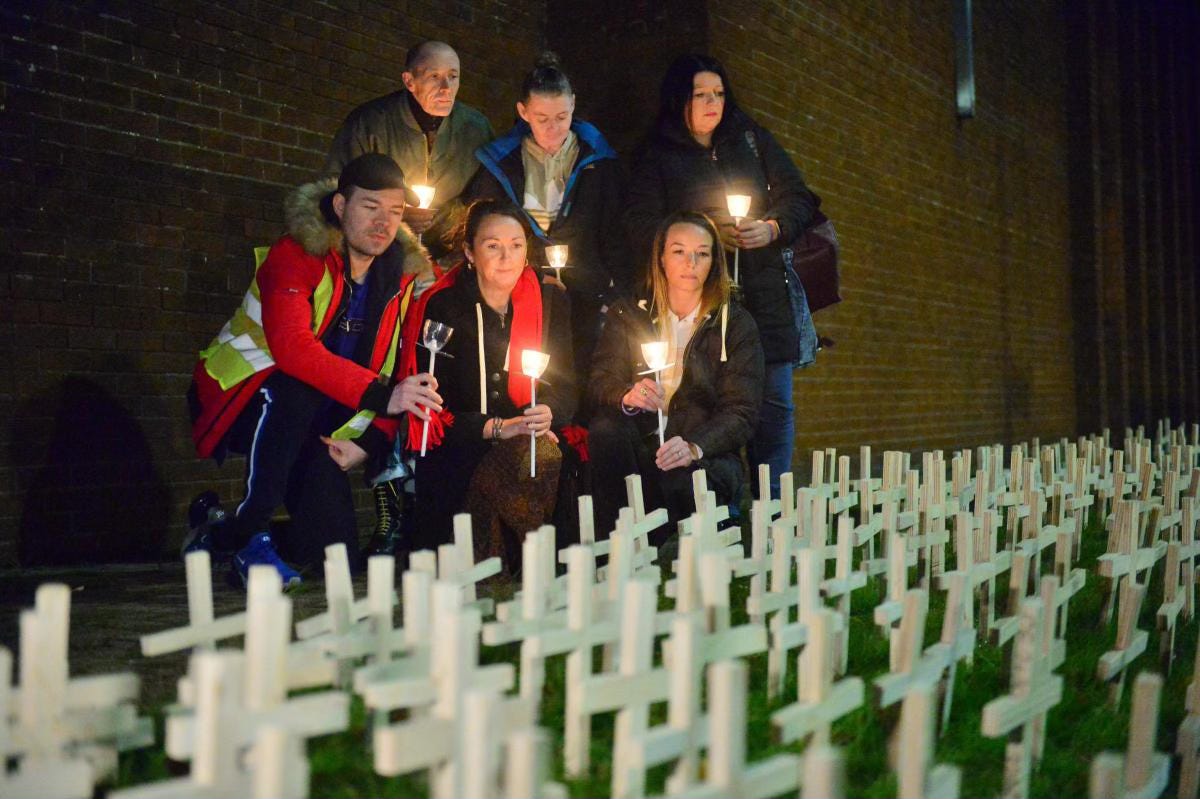
Many campaigners assumed that a proposal designed to increase treatment choice, strengthen accountability and place the needs of individuals and families at the centre of the system would naturally command widespread support.
Instead, the Bill encountered opposition not only from the Scottish Government but from much of Scotland’s addiction policy and treatment establishment.
Why?
The answer is neither sinister nor particularly unusual.
The Bill challenged an entire institutional ecosystem.
Modern addiction policy in Scotland is shaped not simply by ministers and MSPs, but by a complex network of government departments, local Alcohol and Drug Partnerships, publicly funded treatment providers, national agencies, professional bodies, advocacy organisations, academic centres and third-sector organisations. Collectively these institutions distribute hundreds of millions of pounds, employ thousands of people and shape both policy and public discourse.
Most people working within these organisations are dedicated, compassionate and doing extraordinarily difficult jobs. But institutions, by their very nature, tend to defend existing arrangements.
The argument for a Right to Recovery was never that those working within the system lacked compassion. On the contrary, many are deeply committed and often work under immense pressure. The argument was, and remains, that compassion without accountability is insufficient. Good intentions alone cannot comfort bereaved families or compensate for systems that repeatedly fail to deliver the outcomes people deserve.
The Right to Recovery represented something fundamentally different.
At its heart, it proposed a simple but radical idea: that the person seeking help, rather than the institution providing it, should become the primary holder of power within the system.
It proposed that people experiencing addiction should possess enforceable rights rather than simply receiving whatever services happened to be available locally. It proposed greater treatment choice. It proposed stronger accountability. It proposed that individuals and families should have recourse when the system failed them.
In short, it shifted power.
And systems rarely surrender power voluntarily.

Some organisations feared the creation of legal duties that services might struggle to meet. Others worried about cost implications. Some believed the Bill privileged certain forms of recovery over others. Others simply took their lead from the prevailing policy consensus.
Whatever the motivation, the effect was clear. A broad alliance of institutional voices emerged in defence of the status quo.
Those who genuinely wish to see reform, whether politicians, struggling grassroots organisations, bereaved families or campaigners, therefore face a strategic choice. The previous campaign demonstrated that the existing system is unlikely to reform itself voluntarily.
The next campaign cannot simply seek the endorsement of the existing system or assume that institutions will voluntarily support reforms which redistribute power, increase accountability and expose systemic shortcomings. That approach has already been tested and found wanting.
Instead, it must build something broader, more independent and more resilient.
Firstly, it must be explicitly and unapologetically cross-party. The moment a Right to Recovery becomes identified too closely with any one political party, it will fail. Recovery is not a Left issue, a Right issue, a nationalist issue or a unionist issue. Addiction respects neither ideology nor constitutional preference.
It devastates families in every constituency, every community and every social class. Yet the burden is not evenly shared. In Scotland, those living in our poorest communities are around eighteen times more likely to die a drug-related death than those living in our most affluent. The moral scandal of our age is that such inequalities have become normalised.
But whether in a housing estate in Possilpark or a townhouse in Morningside, the suffering of families confronted with addiction is recognisably human. Grief does not vote. Despair does not carry a party membership card.
A future Right to Recovery movement must therefore be broad enough to unite people across Scotland’s many political, social and cultural divides.
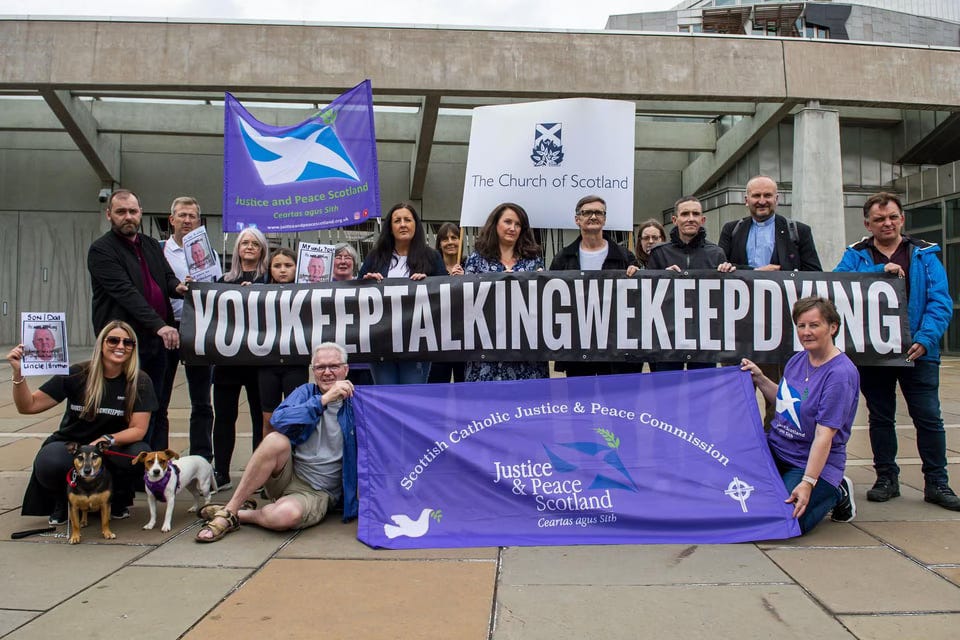
The previous campaign drew support from across the political spectrum and any future campaign must do the same. Those of us who gave birth to the Right to Recovery movement must guard carefully against allowing it to become the property of any one party or faction. Recovery belongs neither to the Left nor the Right. It belongs to the families and communities who have borne addiction’s terrible cost.
Political parties will come and go. Governments will rise and fall. Families living with addiction remain. The measure of any proposal should never be who advances it, but whether it offers a better chance of saving lives, restoring families and helping people recover.
If a future Right to Recovery campaign is to succeed, it must be broad enough, principled enough and independent enough to attract support from anyone prepared to place recovery above party loyalty.
Secondly, it must become citizen-led rather than institution-led.
Bereaved families. People in long-term recovery. Frontline workers. Clinicians willing to speak independently. Faith communities. Academics. Grassroots recovery organisations. Community leaders. Local campaigners. Anyone prepared to place the lives of vulnerable citizens above institutional self-preservation.
A coalition rooted not in organisational interests, but in lived experience and real-life outcomes rather than bureaucratic outputs. One concerned less with activity and process, and more with the simple but uncomfortable questions: Are fewer people dying? Are more people recovering? Are families being given genuine hope?
Thirdly, the debate itself must change.
The question cannot be whether institutions support a Right to Recovery.
The question must become: are Scotland’s current outcomes acceptable?
If the answer is no, then the burden of proof should rest not with those proposing reform, but with those defending the existing arrangements.
Finally, campaigners must recognise that significant reform is rarely achieved through evidence alone.
Evidence matters. But so do stories. So does moral authority. So does public pressure. So does political courage.
The history of social reform is not the history of institutions changing themselves. It is the history of citizens insisting that institutions change.
Scotland does not lack expertise. It does not lack strategy. It does not lack spending.
What it has too often lacked is accountability.
Success should not ultimately be measured by the passage of a Bill, important though that would be. Success will be measured when no parent in Scotland is told that there is only one treatment option available, when families no longer have to fight for access to care, when recovery pathways are genuinely diverse and when far fewer Scots die preventable deaths.
A future Right to Recovery campaign will succeed only when enough Scots conclude that access to meaningful treatment, genuine choice and the opportunity to pursue recovery are not privileges to be bestowed by systems, but rights inherent in human dignity itself.
The next time Parliament is asked to consider a Right to Recovery, every MSP should ask themselves a simple question.
If this system had failed my son, my daughter, my husband, my wife or my parent, would I honestly believe that what Scotland currently offers is good enough?
If the answer is no, then the case for reform remains as compelling as ever.
Comments
Nothing yet. Say the first thing.
Sign in to join the conversation.