
When I met Sam Citro Alexander last week, she had just stepped off a redeye from Los Angeles, following a day of meetings on Capitol Hill, and was boarding another flight the next morning. Yet there she was — radiant, centered, wearing a camel turtleneck, boots, delicate layered jewelry, and a calm that belied her pace.
Lift by Anne Marie Chaker is a reader-supported publication. To receive new posts and support my work, consider becoming a free or paid subscriber.
Sam, at 32, is the founder and CEO of FoodHealth Co., a startup that has raised nearly $20 million to reimagine how we think about food. The company’s data platform helps consumers see the true “healthiness” of food purchases, and clients include everyone from major grocers to big food manufacturers. (It is also partnering with other big data providers to help the world better understand what’s in each of our individual grocery carts–and what that says about public health–but more on that in the days to come!)
As I’ve consulted with Sam over the past year, I’ve been fascinated not only by the mission — aligning everyday eating with long-term health — but also by the person behind the mission. The life of a founder is not for the faint of heart. Sam is rarely in one place for long. Her days stretch from early investor calls to late-night data reviews. But beneath the velocity, there’s a grounding intelligence — a sense that this, right now, is the season to go big.
It reminded me of something my friend and former Wall Street Journal colleague Jonathan Clements (who recently passed away) once said: that your 20s and 30s are the time to “go hard” — to work, earn, and save aggressively — so that you can buy yourself freedom later. Sam’s version of that idea is more modern: go hard, yes, but then take sabbaticals when life demands it — to raise children, to travel, to reset. Not to retire, but to live with rhythm. I wanted to hear more about her thinking on that, and so many other things.
And so below are excerpts from our recent conversation in a hotel lobby in Washington, D.C., where we talked about fashion, leadership, strength, and what it means to “start big” — not just in business, but in life.
On Style and Presence
AMC: You always look so composed, even after a redeye. Like right now you’re wearing this beautiful layered, autumnal look that looks pulled together but not stuffy. What’s your aesthetic and how do you think about the way you present yourself?
SCA: It’s funny - I’m not sure I have an aesthetic. It changes as I change. You’re just as likely to find me in a linen kaftan as you are in leather pants and a finely tailored blazer. I dress my body how it wants to be dressed that day.
Fashion is also in my blood. My grandfather was a New York City pattern maker who worked for some of the most renowned fashion houses in the world (family lore says he cut the pattern for Lady Bird Johnson’s inaugural ball gown, which now lives in the Smithsonian). In my family, dressing well was as much about self-respect as it was about presentation. I think I inherited my eye from him, and from my dad, who’s also an impeccable dresser.
I’ve also often been the youngest person in the room, whether that was in beauty, in finance, or even today, when I’m meeting with Fortune 500 C-suite teams. Early on, I learned that sharp tailoring could do what words sometimes couldn’t; it helped me assimilate, earn respect, and meet people where they were.
And I hope the composure people see comes from the inside, not the outfit. Just like fashion, I think grace should start within and let the exterior simply be a reflection of it.
On Leadership and Culture
AMC: Your leadership style is a unique mix of warmth and radical honesty. One of the things I’ve actually loved about working with your team is how non-hierarchical it feels. Everyone is there because they have unique expertise. Everyone’s voice matters. Decisions happen fast. It’s collaboration and clarity without ego. How have you tried to hone your leadership style?
SCA: I don’t really think about it. It’s just who I’ve become because of the leaders I’ve had. My career has been this fascinating mix: I spent time at [asset management firm] Bridgewater Associates, where I saw how radical transparency can actually build trust and cut through noise, and I’ve worked for some of the most powerful, extraordinary female executives - people like [Estée Lauder Companies Inc. board member] Jane Lauder - who modeled grace and strength in equal measure.
The warmth is just who I am. I see the humanity in people, separate from the work, and I genuinely enjoy all of the people I work with. I’m not quick to anger, and I’m pretty emotionally steady. I do, however, have a low tolerance for bullshit - as long as everyone operates with high integrity, we’re good.
Kindness-first is one of our company principles, and people often confuse that with “niceness-first.” I won’t always be nice (though I hope I usually am), but I’ll always be kind.
I’ve been managing people older than me since I was 22, and I think I just have a natural instinct for it. I understand how to meet people where they are and bring out their best, regardless of title or tenure.
On Vision and Purpose
AMC: From bootstrapping in early days to raising $20 million, the FoodHealth journey is a case study in persistence and determination. Investors, as you told Inc., didn’t buy a perfect product — they bought a mission. What’s your hope for the company?
SCA: My hope is that we leave the food industry better than we found it.
We have the privilege of working with some of the largest companies in food and beverage - the brands and retailers that shape what ends up on grocery shelves and, ultimately, in people’s homes. That’s an extraordinary position to be in. If we do our job right, healthier choices become the easier choices, not the privileged ones.
The goal isn’t to shame or disrupt the food system from the outside. I don’t think that ever really works. The best way to shape change is to partner with the people inside who have the power to take action. If we can make data the common language between health and commerce, we can redefine what “good food” means at scale.
At its core, the FoodHealth Co exists to make the health of our food system visible, measurable, and actionable.
On Going Hard — and Knowing When to Pause
AMC: My one-time colleague Jonathan Clements urged people to go hard in their 20s — to save, invest, and build aggressively so you can live freely later. You’ve talked about a version of that which made so much sense to me: Working intensely, but taking life sabbaticals when it makes sense — for parenting, travel, or recalibration. Or whatever! Why do you think that model makes sense?
SCA: Because we’re cyclical creatures. Especially as women, our bodies operate on smaller cycles, like our 28-day hormonal rhythm, and larger ones, like the transitions from peri- to post-menopause. So why wouldn’t we live our lives cyclically, too?
That shows up in how I work and how I live. Some days, I’m full of energy and vision - sprinting ahead, creating, pushing things forward. Other days, the tank is empty, and it’s time to retreat, hibernate, and recharge. Both states aren’t just okay, they’re essential. The body needs both. My work needs both. My life needs both.
The traditional model - work nonstop from 22 to 65 and then retire - doesn’t make sense to me. My goal isn’t to “look forward” to life after work; it’s to live fully all the way through. I hope to take a series of sabbaticals at natural inflection points: to travel, parent, explore, reflect, and then return with a new layer of perspective and creativity.
If I’m lucky, I’ll never really retire. I’ll just keep evolving in cycles.
On Strength and Staying in Shape
AMC: What’s your workout? How do you define strength?
SCA: I get one body in this lifetime - and I’ve certainly put it through a lot. Most weeks I’m on one, if not multiple, flights. I experience the same stress every early-stage founder does. And in my twenties, I drank too much caffeine and wine and slept too little.
So to me, strength means having a body that can live the way I live. A body that can lift a heavy suitcase, handle a red-eye, and - hopefully one day - carry a baby and lug a car seat. It’s about resilience: the ability to stretch and snap back like a resistance band when life pulls hard.
I walk a lot, I stretch, and after a decade of being a pilates girl, I started strength training about a year ago. It was sparked by the little aches that show up in your thirties, reminders that maintenance is a privilege. I want to equip my body now to dance with joy and move with ease well into my nineties.
My routine is cyclical. I do different things depending on how my body feels. When I feel strong, I’ll train hard and lift heavy weights. When I don’t, I’ll walk and stretch and rest.
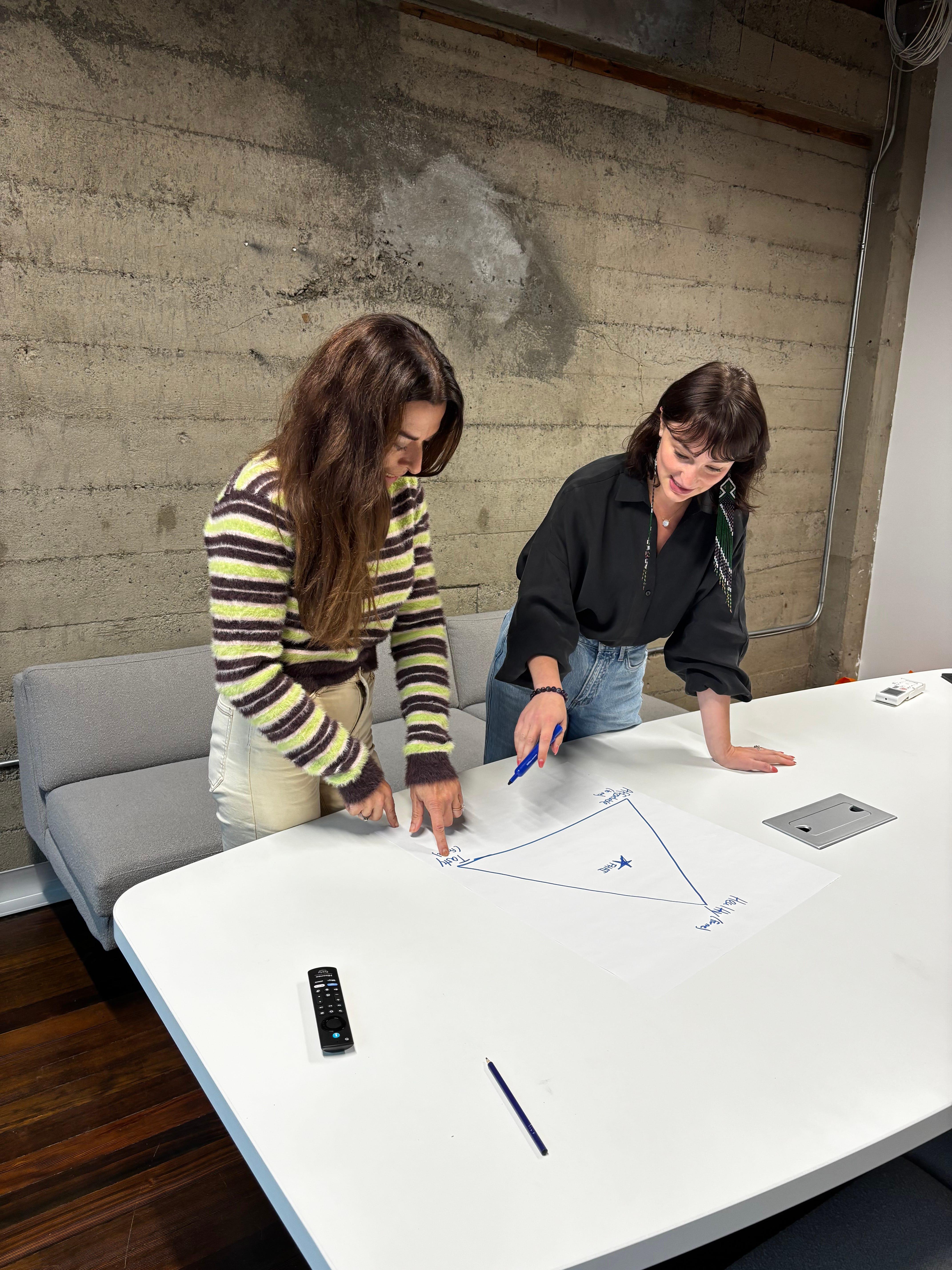
Watching Sam right now—on the edge of her company’s next big leap—feels like standing beside a launchpad. She’s proof that you don’t need perfect timing to begin. You start with conviction and with purpose, walking one foot in front of the other.
Her story is also a reminder that ideas evolve. What began as an app, with numerous flaws, soon revealed a better path forward. Instead of scrapping everything, Sam reimagined the model—turning it into a data platform that partners with grocers and health organizations through licensing. She didn’t start over; she iterated.
Because starting big doesn’t mean charging ahead blindly. It means knowing when to push—and when to pause long enough to think.
Lift by Anne Marie Chaker is a reader-supported publication. To receive new posts and support my work, consider becoming a free or paid subscriber.
Comments
Nothing yet. Say the first thing.
Sign in to join the conversation.