
A few weeks ago, I found myself deep in a conversation with Elli Kaplan about something that, at first glance, didn’t seem like her domain at all: muscle.
Kaplan runs Neurotrack, a company at the forefront of early Alzheimer’s detection. Her world is cognitive decline, neural pathways, and the quiet, devastating progression of memory loss.
And yet, we began talking about grip strength.
Because increasingly, the science is pointing to something both surprising and profound: our physical strength—especially something as simple as how firmly we can squeeze—may be one of the earliest indicators of our brain health.
My friend and radio show co-host Pattie Sellers just came back from her annual checkup crowing that her doctor declared her in fabulous health. One key marker, she explained, was that her grip strength was far above average for her age group.
Large-scale studies have found that individuals with lower grip strength face significantly higher risks of dementia and even dementia-related mortality. In one massive cohort, those in the lowest tier of grip strength had a 72% higher risk of developing dementia, according to the study of 466,788 participants, compared to those in the highest quintile. Other research has begun to connect leg strength, muscle mass, and resistance training to protective effects on the brain. One particularly fascinating study of 324 female twins showed that the twin with greater leg strength in midlife went on to experience significantly less cognitive decline compared with her genetically similar sister.
In other words: the body is telling us something long before the mind begins to forget.
Kaplan didn’t set out to build a company in brain health.
She grew up moving between Native American reservations, where her father worked as a pediatrician, witnessing firsthand the gaps in healthcare access. She thought she’d become a doctor herself. Instead, she detoured—first to the White House during the Bill Clinton administration, then into finance, then to Harvard Business School.
It was there that Alzheimer’s entered her life.
Her grandfather began to decline. Then, years later, her grandmother.
What shocked her wasn’t just the diagnosis. It was everything that came before it.
“There was no clear path,” she told me. “Even getting diagnosed was complicated. And once you had it, there was nothing to do.”
For a disease affecting millions—and poised to explode as populations age—the lack of progress felt inexplicable.
So Kaplan did what few people do when faced with a systemic failure: she decided to build something.
The breakthrough came from an unlikely place: obscure academic research.
Kaplan discovered a group of scientists at Emory University who had developed digital tools capable of detecting cognitive decline up to ten years before symptoms appear.
That was the unlock.
Because Alzheimer’s doesn’t begin when we forget names or lose our way home. It begins quietly, invisibly, years—sometimes decades—earlier. By the time symptoms show, the disease is already well underway.
Kaplan founded Neurotrack in 2013, raising capital from major Silicon Valley investors including Peter Thiel’s Founders Fund, along with firms like Khosla Ventures and AME Cloud Ventures, and set out to bring early Alzheimer’s detection into the real world.
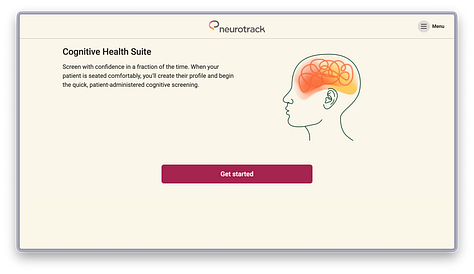
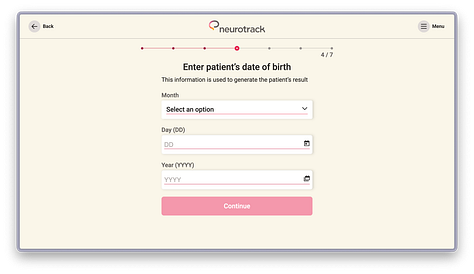
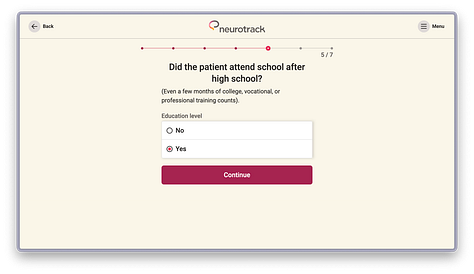
Today, her company’s tools are deceptively simple: short, game-like digital assessments that measure how quickly and accurately the brain processes information. They test executive function, attention, and memory—domains that begin to falter long before we notice.

.
Here’s where the story loops back to muscle.
For decades, Alzheimer’s was treated as inevitable—a disease of age, not behavior. But that thinking is shifting. Rapidly.
“There’s now overwhelming evidence,” Kaplan told me, “that lifestyle—exercise, sleep, diet—can delay or even prevent the onset.”
And not just any exercise. Strength.
Resistance training appears to play a uniquely powerful role in protecting the brain. Stronger muscles are increasingly associated with better cognitive outcomes. In a randomized trial led by researchers at the University of British Columbia, older women assigned to resistance training just once or twice a week showed significant gains in executive function—the very domain that declines earliest in Alzheimer’s—after 12 months. In other words: lifting weights didn’t just correlate with better brain health. It improved it. Grip strength, a proxy for overall muscle health, has emerged as one of the simplest, most predictive markers we have.
It’s a radical reframing: the gym not just as a place for aesthetics or even longevity—but as a frontline defense against cognitive decline.
For women, especially, this matters.
Nearly two-thirds of Alzheimer’s patients are women—and we are also the ones most often caring for them.
Which means the conversation about strength isn’t just about looking or feeling strong. It’s about staying present.
Neurotrack doesn’t cure Alzheimer’s. Not yet, anyway.
But it does something almost as important: it gives people time.
Time to intervene. Time to change behaviors. Time to plan, to prepare, to act.
And in a disease defined by loss—of memory, of identity, of control—that time is everything.
When I asked Kaplan what keeps her going after more than a decade building this company, she didn’t hesitate.
“We’re changing lives,” she said. “We’re giving families information they’re desperate for—and a path forward.”
It’s easy to think of Alzheimer’s as something that happens to other people, sometime far away.
But the truth is, the signals may already be there—in how we move, how we lift, how we hold on.
The body knows.
The question is whether we’re paying attention.
No posts
Comments
Nothing yet. Say the first thing.
Sign in to join the conversation.