
By any reasonable measure, Crunch Fitness shouldn’t be the company pushing the boundaries of recovery.
The brand built its following on irreverent marketing, serious strength training, and an almost shocking price point—memberships starting at $9.99 a month. Yet walk into a growing number of Crunch locations today and you’ll find red light therapy, hydro massage beds, expansive turf zones, and dedicated recovery suites that look more spa than squat rack.
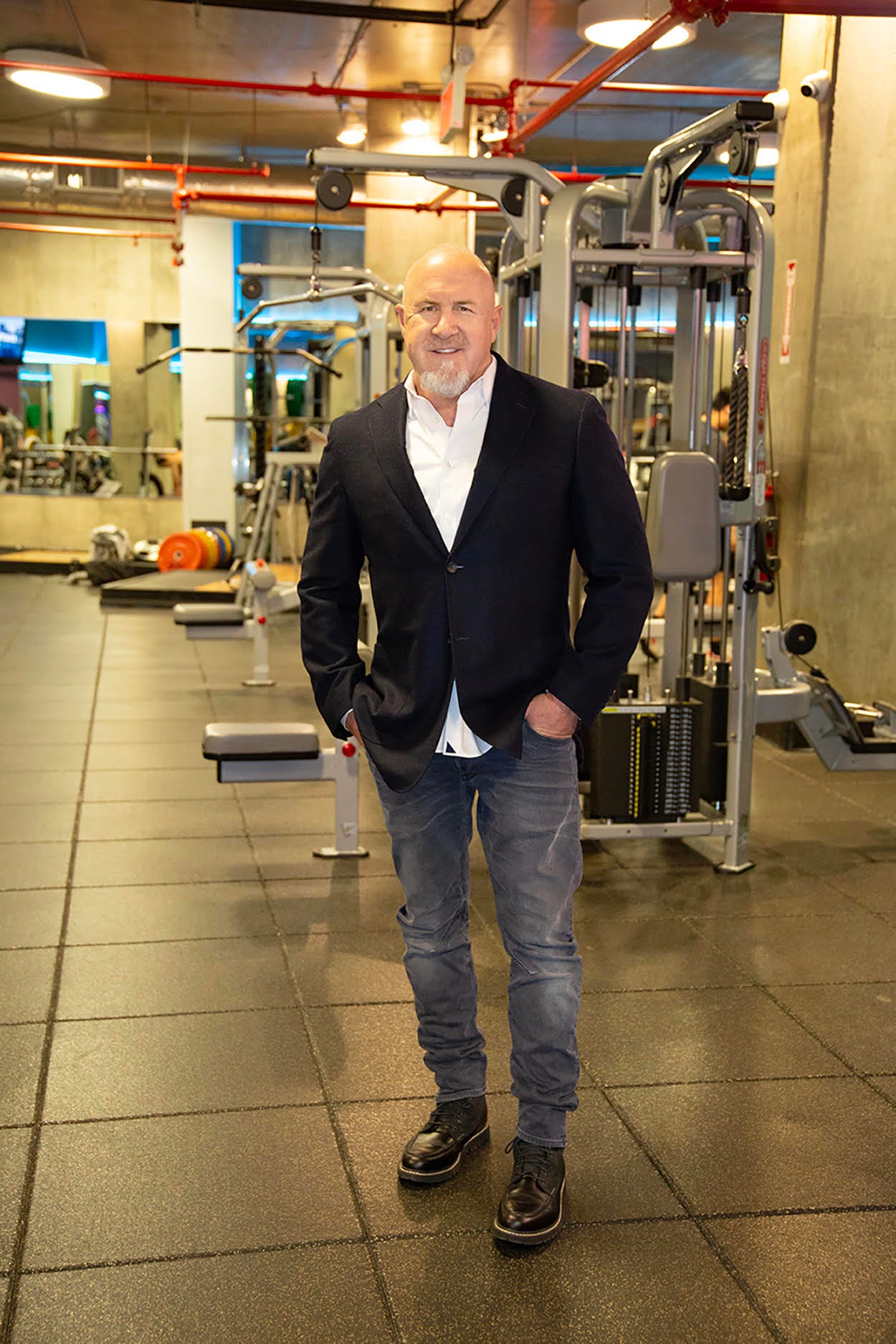
This evolution—branded internally as Crunch 3.0—isn’t a pivot away from value. It’s a calculated expansion of what value means now, according to Jim Rowley, the Marine Corps veteran who has spent more than three decades in the gym business and now oversees a network of more than 550 clubs worldwide.
“Everybody’s talking about recovery as we’re living in one of the most tense times we’ve ever experienced,” Rowley says.
Recovery has become a buzzword in the fitness industry—and what it entails depends on who you talk to, but cold plunges, IV drips, cryotherapy chambers, red light beds, and infrared saunas are all in the mix. At Crunch, about 150 locations offer suites that might include a combination of red light therapy, massage, tanning beds and market-by-market experiments like portable cryotherapy units.
Part of the appeal, Rowley says, is that these services enable consistency. “A member who’s fighting injuries tends to lose their appetite for exercise,” Rowley says. “If they stop working out, cancellations follow. Recovery keeps people training, performing, and progressing.”
Recovery spaces aren’t cheap. They require square footage, equipment, and often specialized staff. For a brand synonymous with affordability, the obvious question is whether the numbers work.
Crunch’s answer lies in tiered membership. The base $9.99 plan remains intact. Premium tiers—especially Peak Results, which bundles group classes, recovery, and other amenities—now average around $29 a month–up from $24 a month a few years earlier when offerings were more slimmed down.
“If you think about what people spend on DoorDash or Starbucks, this is incredibly affordable,” Rowley says. “For us, the model works when a higher percentage of the member base opts into premium.”
That’s exactly what’s happening. New 3.0 gyms are selling significantly more premium memberships—Rowley estimates an increase north of 25%. The recovery zones aren’t just amenities; they’re upsell engines.
Importantly, Crunch engineered the rollout to be cost-neutral for franchisees. “A 3.0 gym doesn’t cost more to build than a 2.0 gym,” Rowley explains. Through value engineering—lighting, turf, finishes, equipment—the brand kept build costs in line. Typical investments range from roughly $80 to $150 per square foot, depending on location, size, and landlord incentives.
Crunch 3.0 didn’t appear overnight. The company tested a “beta” concept as early as 2010, learned it strayed too far from the core brand, recalibrated with 2.0 around 2017, and officially launched 3.0 in 2024.
Today, roughly 150 locations operate under the 3.0 design, with hundreds more slated for remodels by 2027. Some clubs expand into adjacent space; others reconfigure existing layouts—often shrinking cardio zones to make room for turf and recovery.
“The gym floor is still the heart of Crunch,” Rowley says. “But how people use the space has changed.”
People aren’t just working out anymore—they’re lingering. While Crunch tracks check-ins rather than check-outs, Rowley says it’s obvious members are spending more time inside clubs.
“There’s often resistance to going to the gym,” he says. “But nobody’s ever had a bad workout. You get dopamine, adrenaline, a sense of accomplishment. And now, when the workout ends, people don’t just leave—they recover.”
This shift dovetails with a broader cultural trend toward “third spaces,” places beyond home and work where people feel good. For Crunch’s largest demographic—what Rowley calls “young, strong, and social” members aged 18 to 39—the gym doubles as community, content studio, and wellness hub.
“Like-minded people want to associate with one another,” he says. “It’s no different than meeting friends at a bar—except this is a healthier version of that.”
(“Meet me at the bar” has been a marketing slogan in recent years).
The recovery boom also reflects a deeper change in how consumers define health. “We know more about nutrition, supplementation, hydration, and movement than ever,” Rowley says. “And yet, as a civilization, we’re the fattest we’ve ever been.”
Today’s members aren’t just chasing PRs. They’re chasing healthspan—the ability to feel good longer. Alcohol use is down among younger members. Smoking is increasingly rare. Recovery, Rowley believes, is less indulgence than insurance.
It also spans generations. Older members may do a light treadmill session and spend 30 minutes in recovery. Younger lifters might be attracted to the modern approach of recovery combined with heavy lifting. The appeal cuts across age, gender, and experience.
Crunch now operates in roughly 38 to 42 U.S. states, with heavy concentration in California, Texas, Florida, and the Midwest—where growth has surged recently. Internationally, the brand has entered Canada, Australia, Costa Rica, and India, where a master franchisee has committed to as many as 100 clubs.
Within five years, Rowley expects Crunch to surpass 1,000 locations globally.
Yet he’s clear-eyed about competition. “Our biggest competitor isn’t another gym—it’s the living room,” he says, referencing Peloton, YouTube workouts, and AI training apps–or just staying home and doing nothing. The differentiator, he argues, is environment. “You can’t replicate community, energy, or accountability through a screen.”
Rowley’s leadership philosophy—rooted in his time as a Marine who served in the Persian Gulf—emphasizes ownership above all else.
“Everybody wants the outcome,” he says. “Very few are willing to put in the work it takes to get that outcome.”
His approach follows a simple loop: set clear expectations, train relentlessly, require people to “train it back” to prove comprehension, and then hold them accountable. “Where leadership fails most often is accountability,” he says.
Rowley is working on distilling these ideas into a book that he describes as a work in progress, Perspire to Greatness. His motivation remains deeply personal.
“I want to watch others grow into the best version of themselves,” he says. “I want everybody to win.”
Crunch 3.0 isn’t about becoming a luxury wellness brand. It’s about redefining what a $28 gym membership can deliver in an era obsessed with optimization and longevity.
“Recovery just feels good,” Rowley says. “And when people feel good, they keep coming back.”
No posts
Comments
Nothing yet. Say the first thing.
Sign in to join the conversation.