
WHY DO FRUIT PRESERVES taste better in Paris?
And is it possible to go back someplace that once meant something to you and experience that same wonder again?
These were two questions swirling around in my head in late May when I returned to Paris four decades after being a cooking school student there.
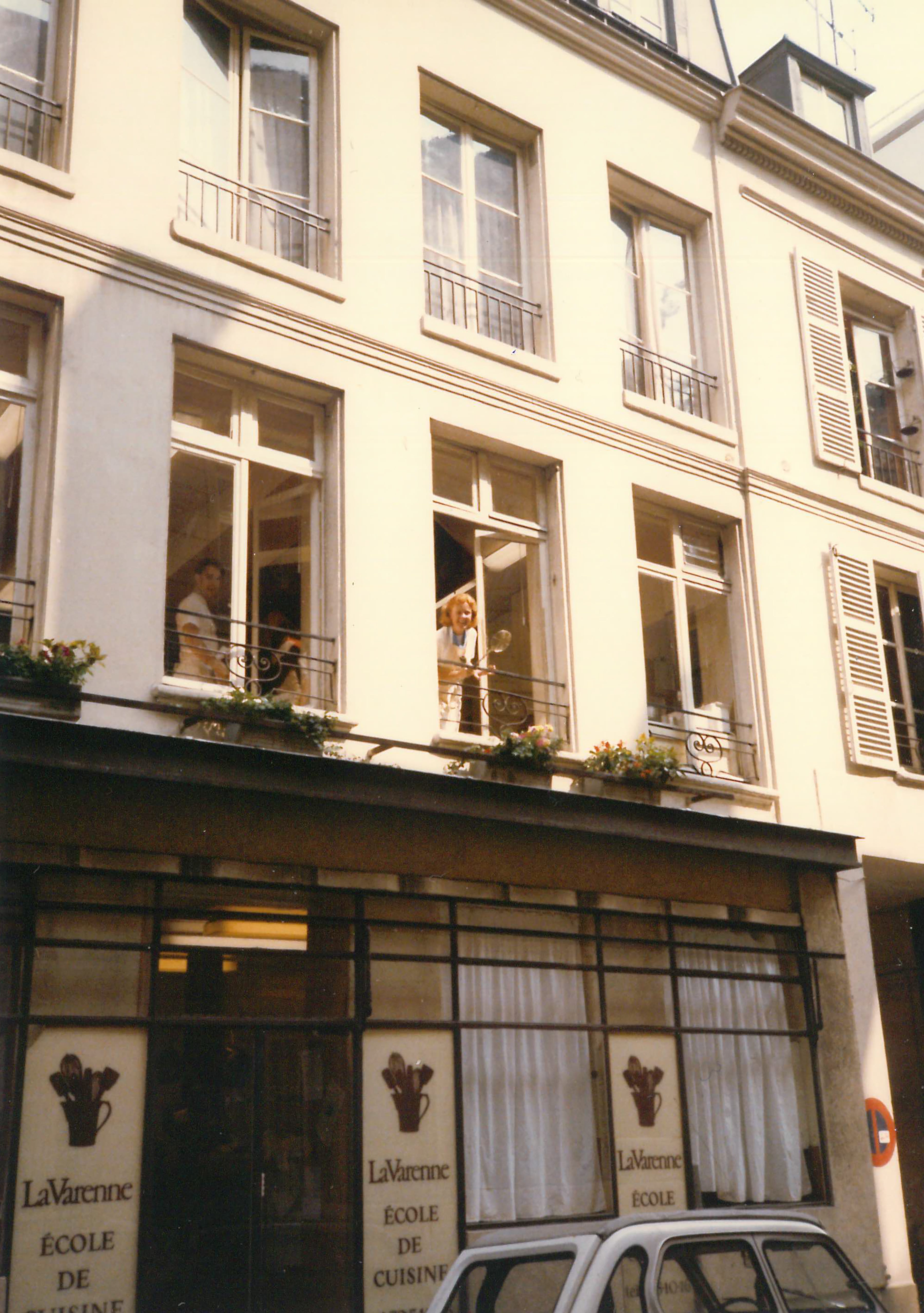
In the early ‘80s, sensing the need for a more solid culinary foundation, I took a leave of absence from the Atlanta Journal-Constitution and enrolled at La Varenne Ecole de Cuisine, at 34 Rue St. Dominique in Paris’s stately seventh arrondissement.
La Varenne had been founded in 1975 by British-American food writer and cooking teacher Anne Willan and was named in honor of Francois Pierre de la Varenne, the 17th century author of the founding text of modern French cooking. Classes were taught by French chefs and translated simultaneously into English. I did not know it at the time, but La Varenne graduates would become the editors of food magazines, heads of food and beverage programs, famous chefs and cookbook authors, as well as leading caterers and cooking school teachers.
Julia Child was well connected to La Varenne and would appear out of nowhere at a lunch or Sunday brunch in someone’s nearby apartment. It was truly a pinch-me-to-make-sure-this-is-real kind of experience.
The way I finagled leaving a full-time job and hopping on a plane to Paris was to agree to write weekly for the newspaper while I was gone. This was before email or fax, so I wrote my columns longhand and put them in the mail.
Which might sound like an Eleanor Roosevelt way to live out Emily in Paris, but if it allowed me to be away and learn and grow, so be it. A small hiccup was that Delta Airlines lost my bags for a week. Other than that inconvenience, I lived in an apartment on Quai Voltaire along the Seine River, walked to class each morning like a Parisian, and traveled a bit around Europe after classes concluded.
Back then, I soaked in the small things I still love most about Paris—the morning greetings even when you don’t feel like talking—“bonjour madame” (you do feel better after you say it.)
I remember fresh flowers on every corner and how people carried bouquets of flowers to give to other people. I remember thinking that the French dressed with such style and I needed to ditch the American white tennis shoes.
I skinned an eel, made my own croissants, perfected béarnaise, and tasted goat cheese for the first time. I took a weekend train trip to the Champagne region. I was in the same room with Julia Child and her co-author Simone (Simca) Beck. I bought my most favorite copper pans at the legendary cookware shop called E. Dehillerin.
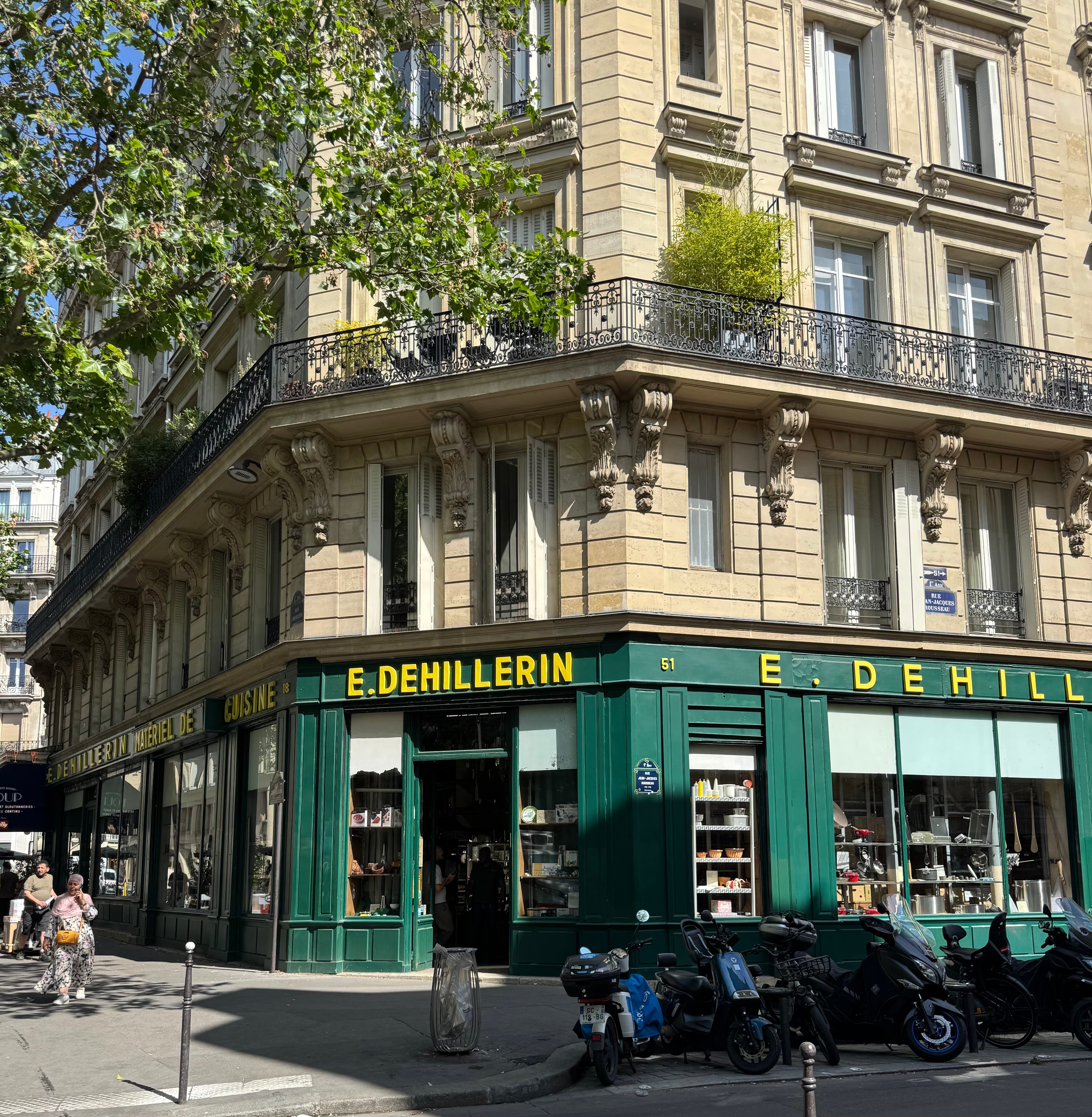
So top of my list when I returned to Paris with my husband was a walk right back to “Dehillerin” to find a copper preserving pan in which to make jam. I was delighted the crusty clerks who once scoffed at my French were no longer there. The clerk who helped us search for the right “jam pan” effortlessly floated between English and French with customers.
And in this little shop of wonders where I once had to steel myself to grace its door, a new friendliness flowed. We cooled from the Paris heat wave by walking the narrow steps downstairs to the cellar to look at more stacks of copper pans and meet other Americans coming back or here for the first time, each helping the other decipher the heavy three-ring book of prices that dangled from the wall.
I’ve always loved Paris, and maybe it’s because I lived here for a tiny portion of my life. It belongs to me a bit. I forgive its heat—old apartments and hotels simply weren’t built with air conditioning. I forgive its rudeness—Americans need to stop thinking the world should cater to us. I deeply love its food and the way the French make the simplest meal, even jam on toast with tea, an occasion.
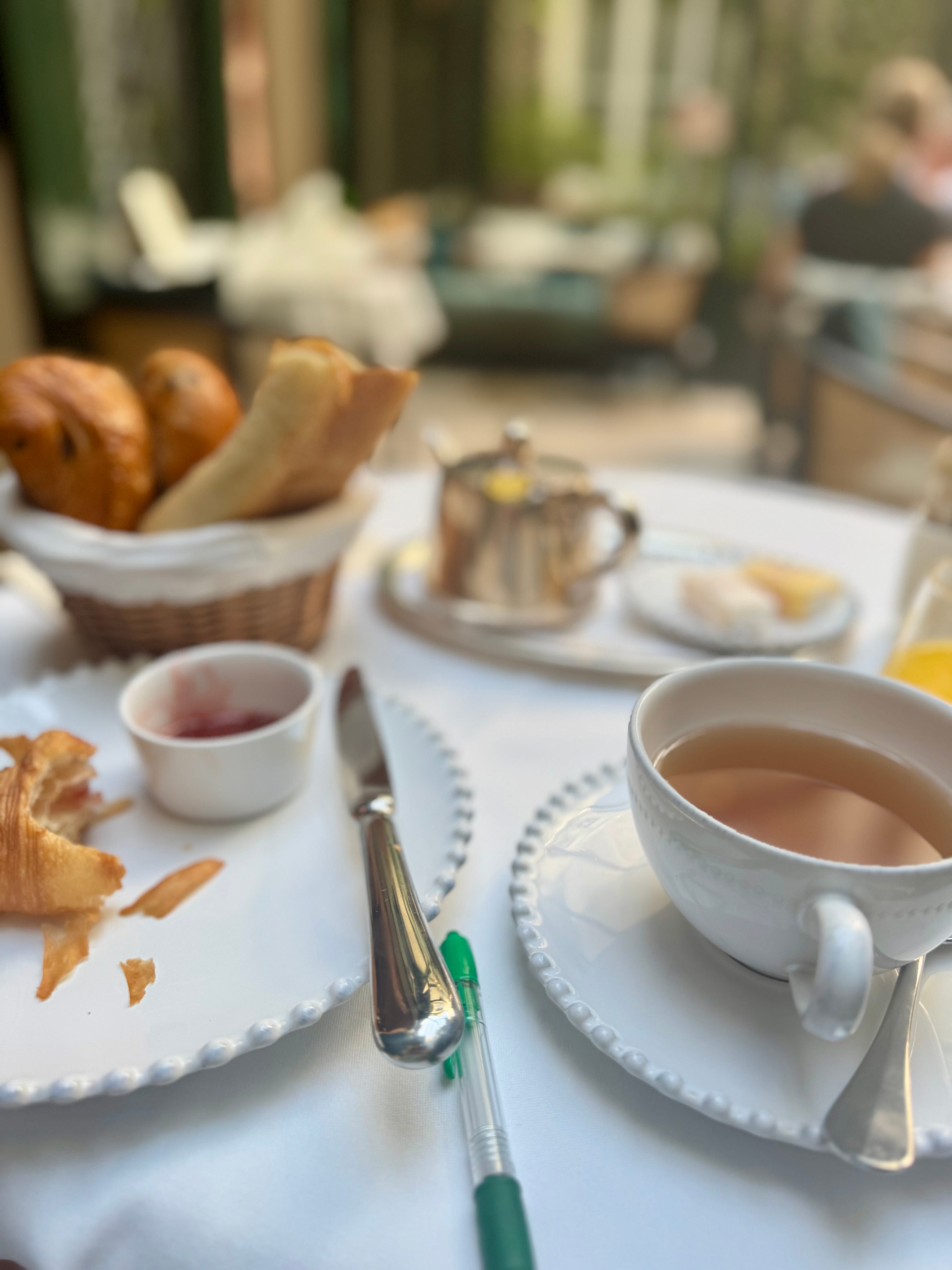
Back to that first question: Why do preserves taste better in Paris? Maybe because they haven’t been overcooked, aren’t stiff and rigid, are more loose and syrupy, and taste of fruit.
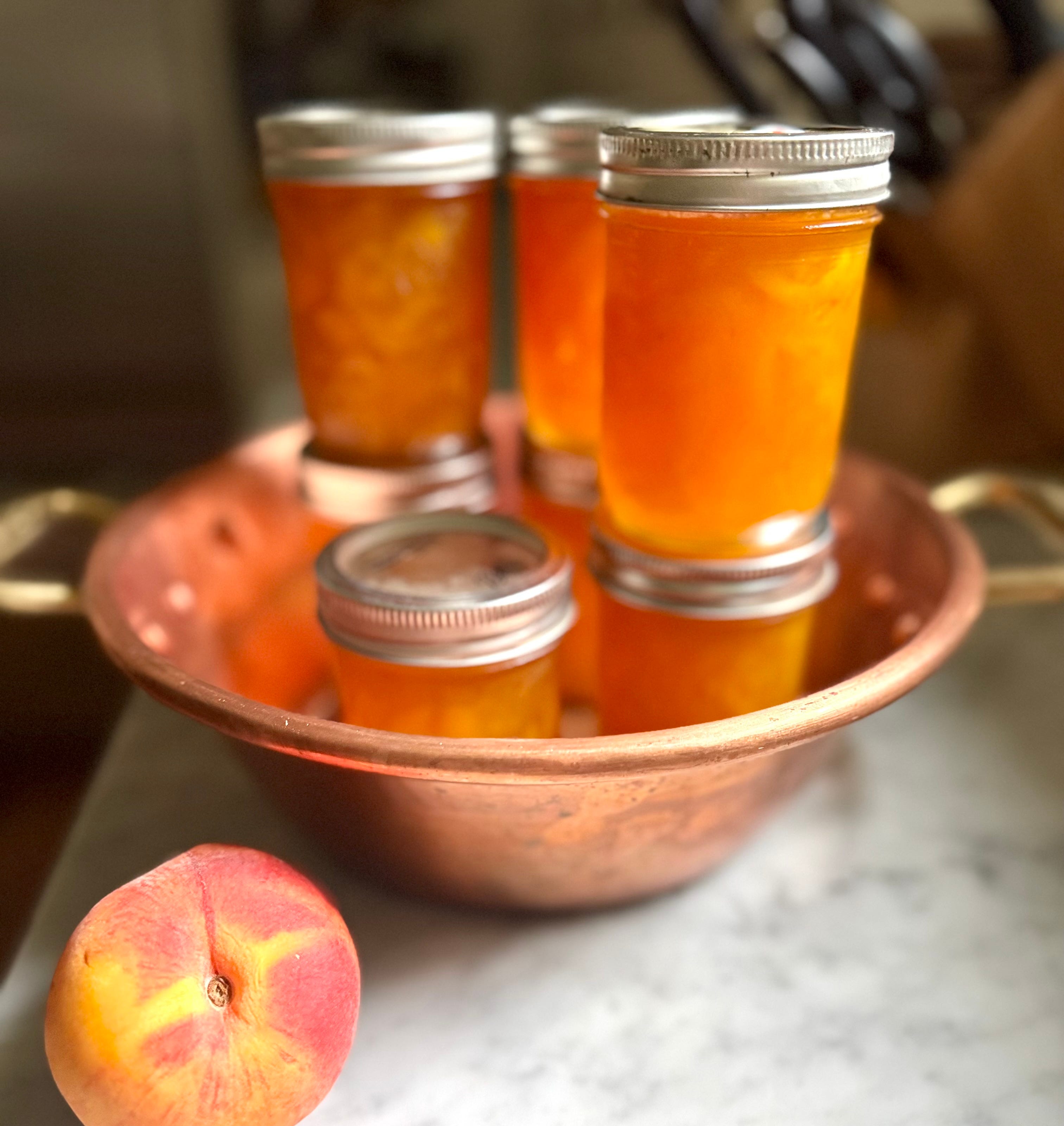
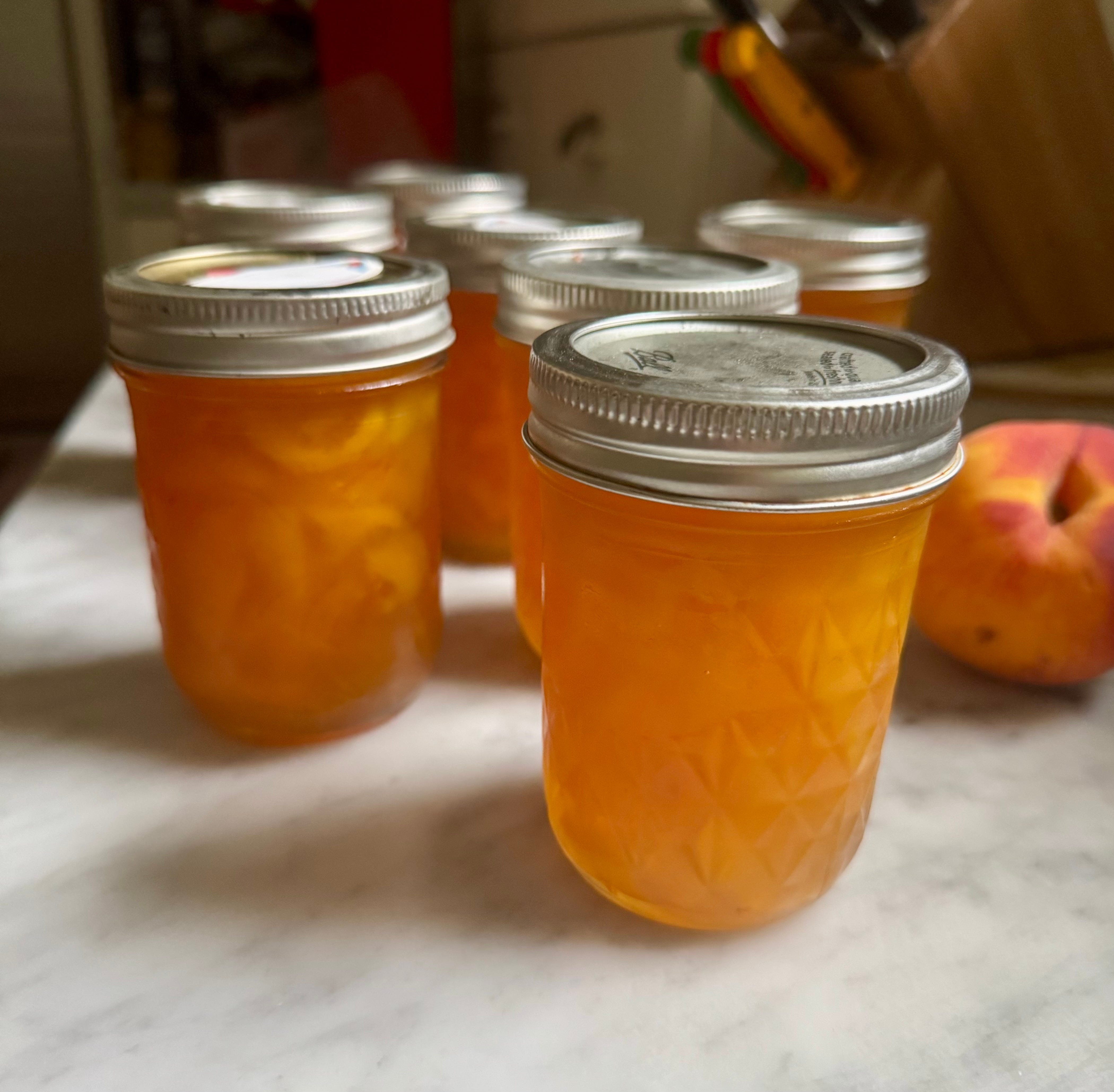
Eager to use my new jam pan and also anxious to preserve the peaches, blueberries, blackberries, and all the other goodies of my Nashville summer, I dove into French preserves in my kitchen. I wanted to find a universal formula that might work for any fruit.
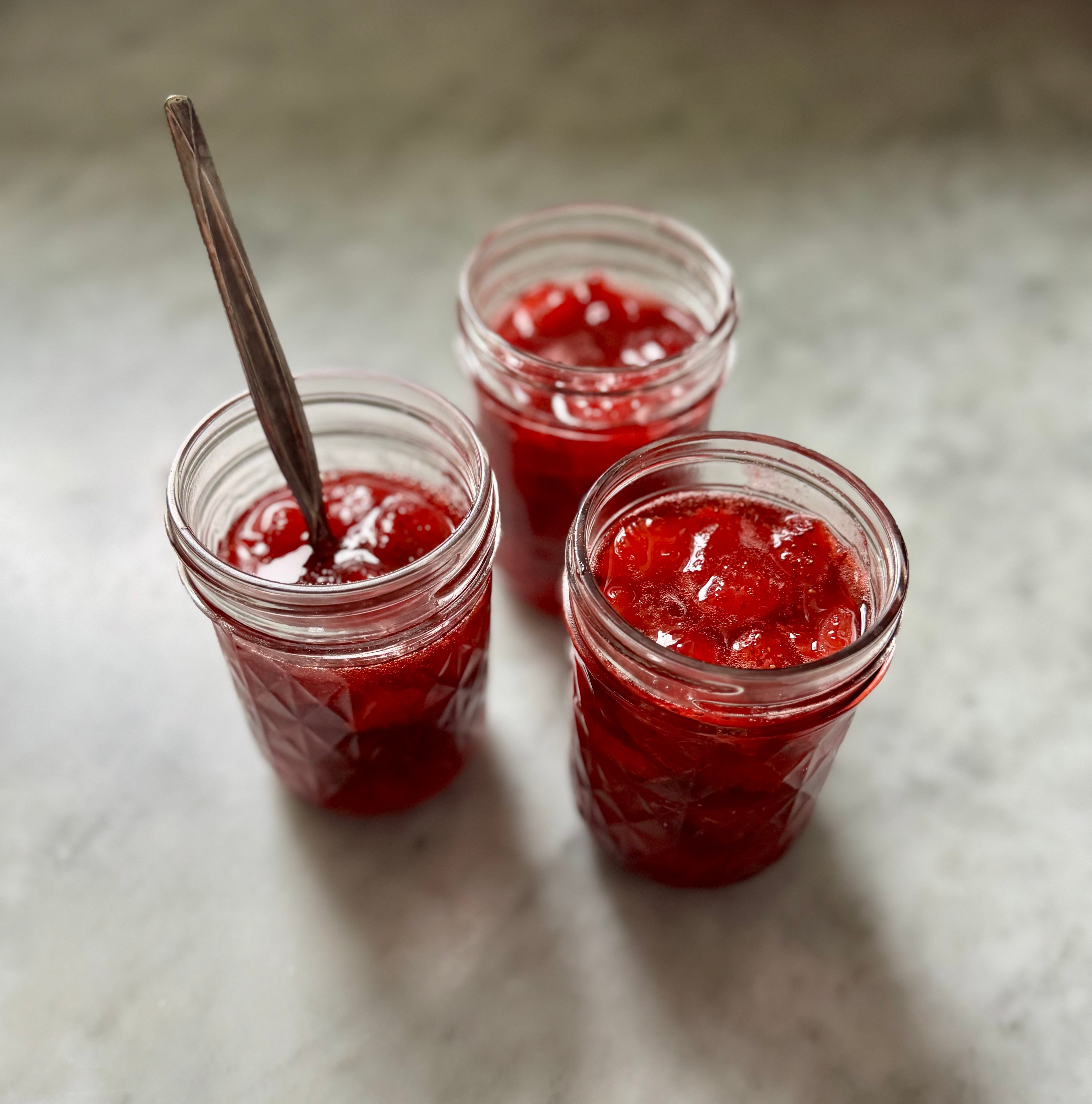
And the process was absolutely timely because preserving fruit is a smart way to cook berries what with the horrid gastrointestinal illness called cyclosporiasis sweeping this country.
Fresh produce like cilantro, parsley, basil, berries, and salad greens are most vulnerable to the microscopic parasite. According to the Public Broadcasting System (PBS), Michigan is at the center of the outbreak, and reported cases have crept over 3,000. While not fatal, the symptoms are unpleasant including diarrhea that can last far longer than you might like.
Unfortunately last year the Centers for Disease Control made state reporting of cyclospora optional when it scaled back the Foodborne Diseases Active Surveillance Network. Until America gets back on track with proper food regulatory agencies and sage guidance, we should buy local, watch the news for recalls, and cook berries.
The good news for jam makers is that cyclospora dies at 158ºF. Jams and preserves set at 222ºF.
It was walking the aisles of La Grande Epicerie in Paris and seeing the beautiful jams and jellies from figs, plums, cherries, and strawberries that inspired me to come home and make jam with the new pan. No matter that I had taken a three-month food preservation course at the county extension service in Atlanta. I’ve struggled to get the right proportions of sugar to fruit and to produce a product that is loose and syrupy but intensely flavored like French preserves.
And then I remembered the goddess of French preserves—Christine Ferber. Her beautiful jams were on the shelves at La Grande Epicerie, and our hotel served them with croissants in the morning.
Her secrets are to soak the fruit with sugar (and any other flavorings like a sprig of lemon verbena, or vanilla, or lemon rind) first to draw the juice from the fruit and let the sugar dissolve. Then you simmer it briefly and skim off the foam that collects at the top. Then you let the mixture cool and refrigerate it overnight. Lastly, you strain off the fruit, and simmer the syrup until it reaches setting point—222ºF. (Yes, you need an instant-read thermometer and a scale to make perfect preserves.)
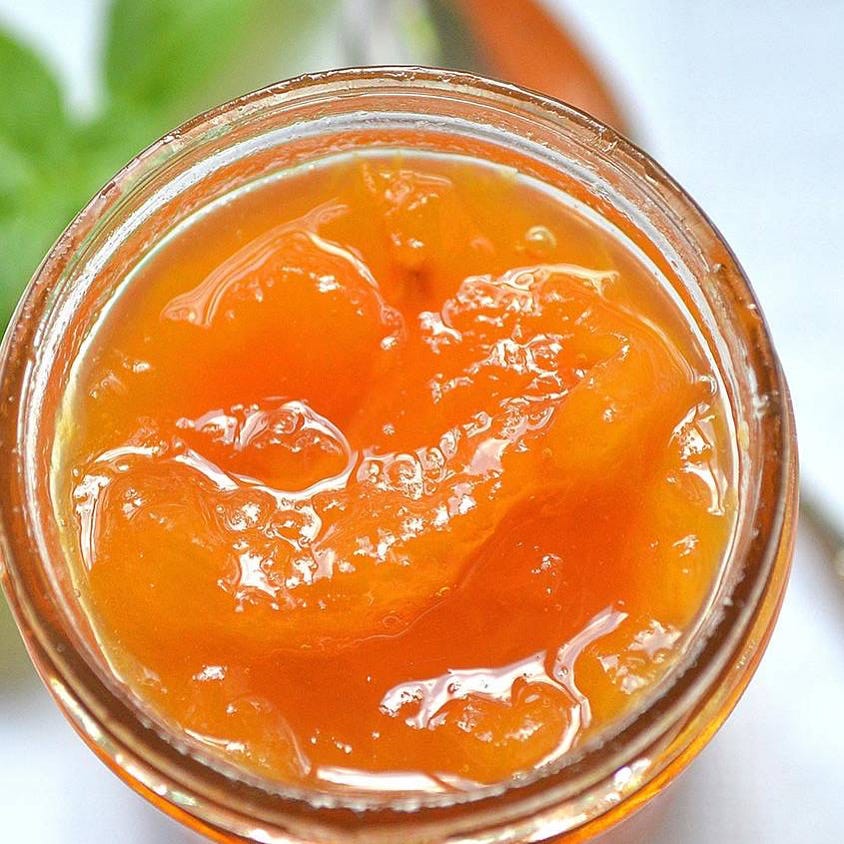
Stir the strained fruit back into the hot syrup and ladle it into jars and seal. I make small batches and don’t process them in a water bath for room temp storage, but if that’s your thing, then 5 minutes in the water bath.
She also advises a clever ratio—use 80 percent of sugar to fruit. I made two batches of peach preserves and one of strawberry. It was in the middle of the second batch of peach preserves that the light bulb went off. Weigh your prepared fruit (peeled and sliced in the case of peaches) in grams. Multiply that by .8 (80 percent) and you arrive at how many grams of sugar you should use. There are about 150 grams in one cup of sliced peaches. There are 200 grams in a cup of sugar, if that helps.
Tomorrow (Wednesday) I am teaching a noon class on peach preserves to the Friends of the Arlington (Virginia) Public Library. At 6:30 pm, I will talk about baking in the American South as part of the library’s Arlington Reads Stirs it Up series. Registration is encouraged.
We’re never too old to learn a new trick.
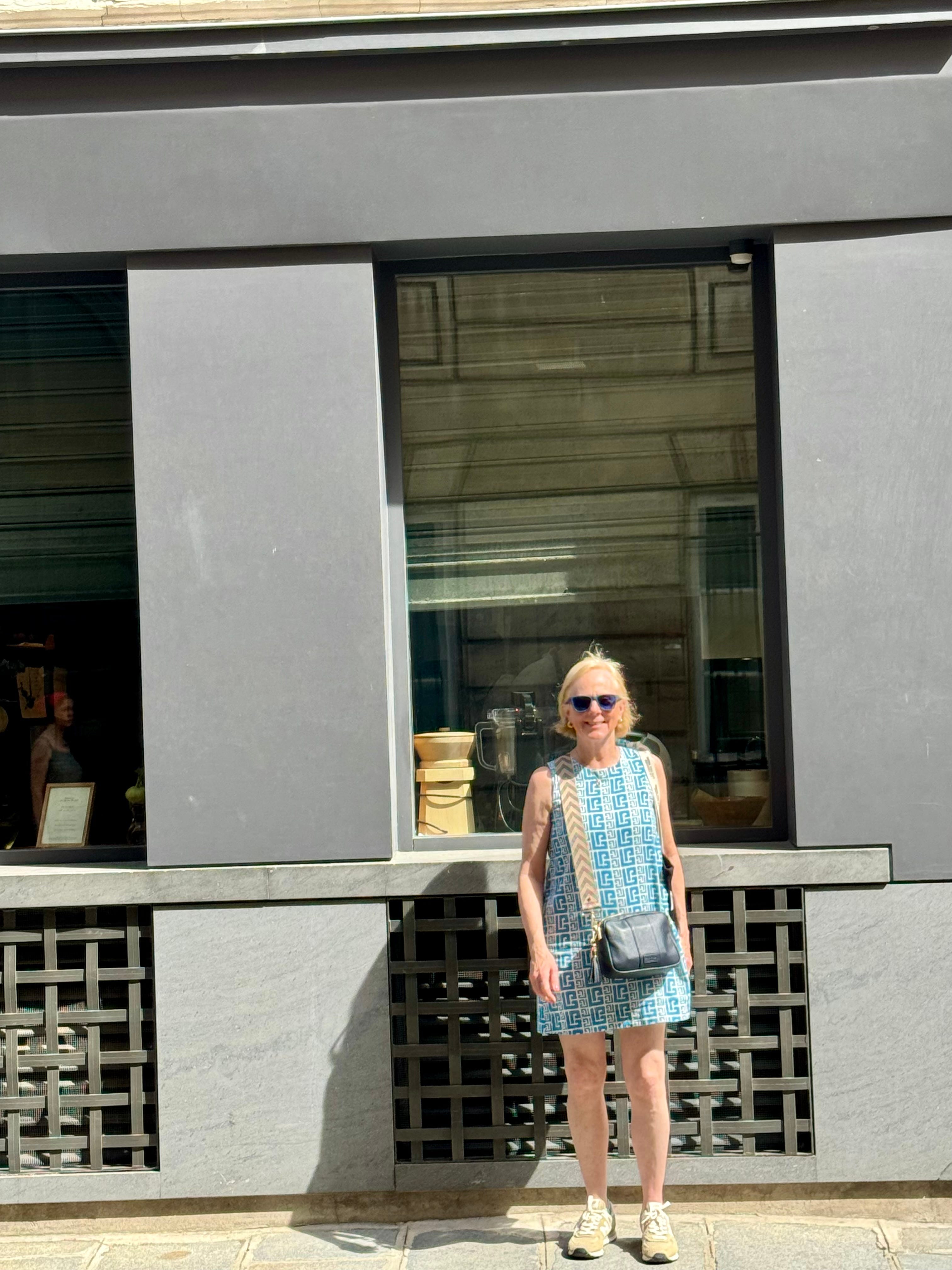
It took going back to Paris for me to realize that I didn’t just gain a culinary foundation there. I gained a valuable part of my life.
A life of learning, of still experiencing the thrill of a new recipe, of taking fruit that is half-ripe and some that is fully-ripe and placing them together in a pot, sweetening, flavoring, and not simmering too long and then spreading over buttered toast.
Fruit preserves taste better in Paris because we want them to. And yes, it’s possible to go back 40 years later as long as we realize we’re not that same person anymore.
Happy Cooking!
- xo, Anne

THE RECIPE:
This recipe is a work in progress! It is based on the fresh flavor of my Aunt Mary Jo’s recipe for making preserves in which she places the peaches and sugar in a covered glass dish in the sun for three days and Christine Ferber’s method of marrying fruit with sugar in stages. If your peaches are fabulous, add the lemon juice and sugar, but nothing more. If they are - meh - that’s when you add the teaspoon of vanilla or go grab a sprig of lemon verbena or basil from the herb garden and simmer it along with the sugar. Happy Bastille Day!
Makes about 4 to 5 pints
6 cups (900 grams) sliced peeled ripe peaches (from 8 to 10 peaches, depending on size)
Rounded 3 1/2 cups white sugar (720 grams)
Juice of 1 large lemon (2 to 3 tablespoons)
Peel and slice the peaches and place in a large ceramic bowl with sugar and lemon juice to rest until the juices come out of the peaches, stirring occasionally, about 1 to 2 hours.
Turn the mixture into a large saucepan over medium heat and bring to a simmer, skimming off the foam from the mixture as it simmers for about 10 minutes. Discard the foam. Remove the pan from the heat and turn the peach and sugar mixture back into the ceramic bowl. Cover the top of the peaches with a round of parchment paper. When cooled to room temperature, place the bowl in the refrigerator overnight.
The next day, strain the syrup into the clean large saucepan, letting the fruit remain in the strainer set over the ceramic bowl. Bring the syrup to setting point, about 222ºF, which takes about 5 minutes. Remove the pan from the heat, return the peaches to the pan, and ladle the warm preserves into sterilized canning jars, leaving a 1/4-inch head space. Place on lids and rings and seal.
Store in the fridge for up to 6 months, or process the jars in a boiling water bath for 5 minutes and store at room temperature.
No posts
Comments
Nothing yet. Say the first thing.
Sign in to join the conversation.